30 myths
Each story names the sources it was written from.
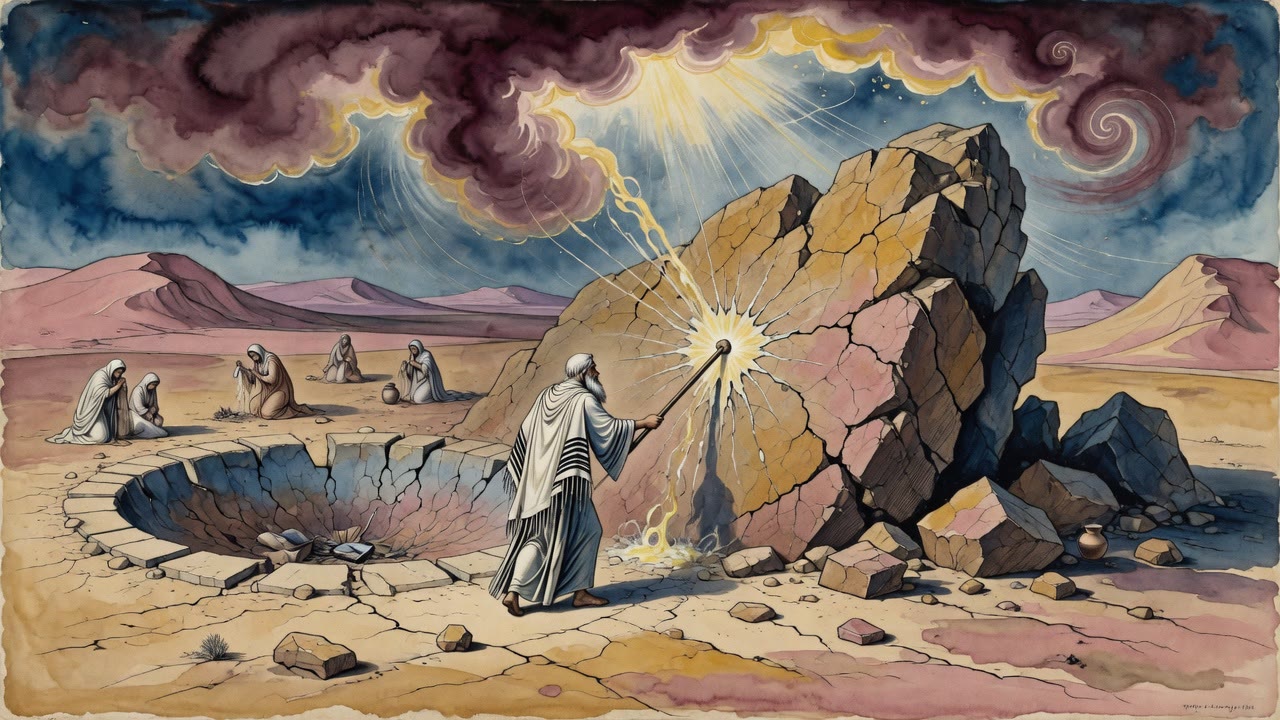
The animals went to drink and found stone. Moses was away from the camp, mourning his sister. He wept six hours before the thirsty crowd came for him.
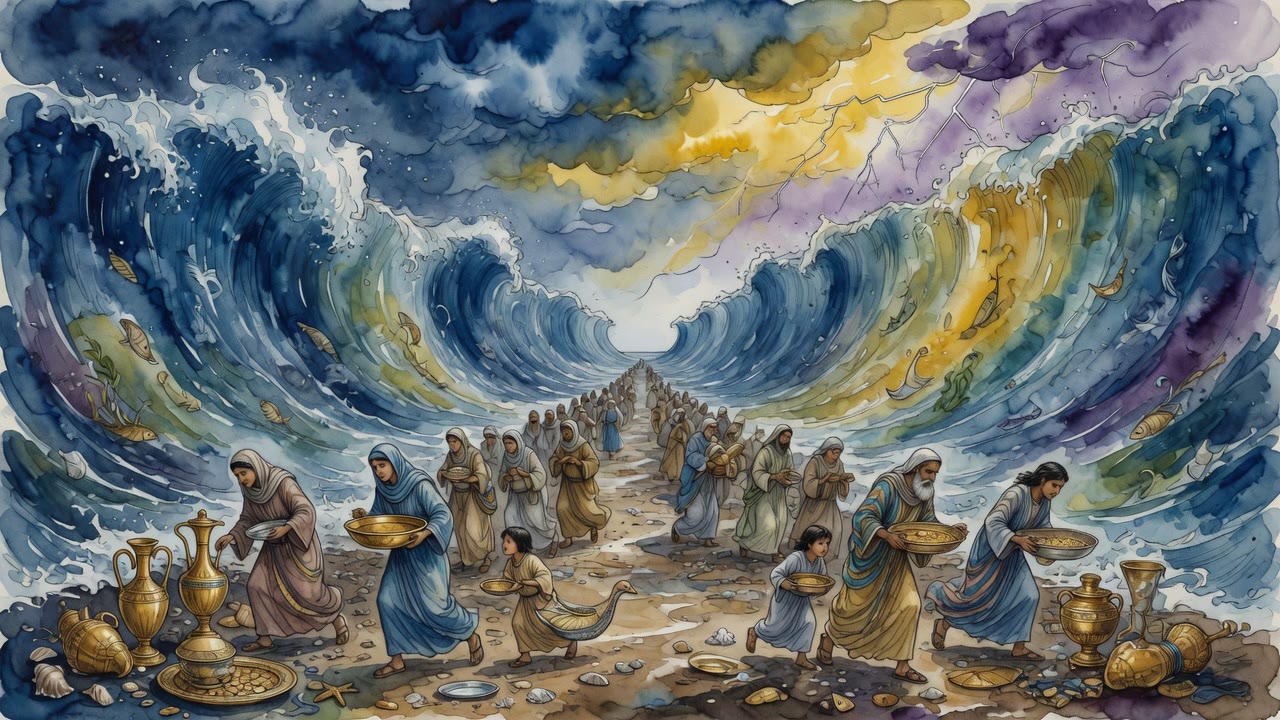
Israel filled their vessels with sweet water from the parted walls of the sea. Three days into the wilderness, every last skin ran dry.
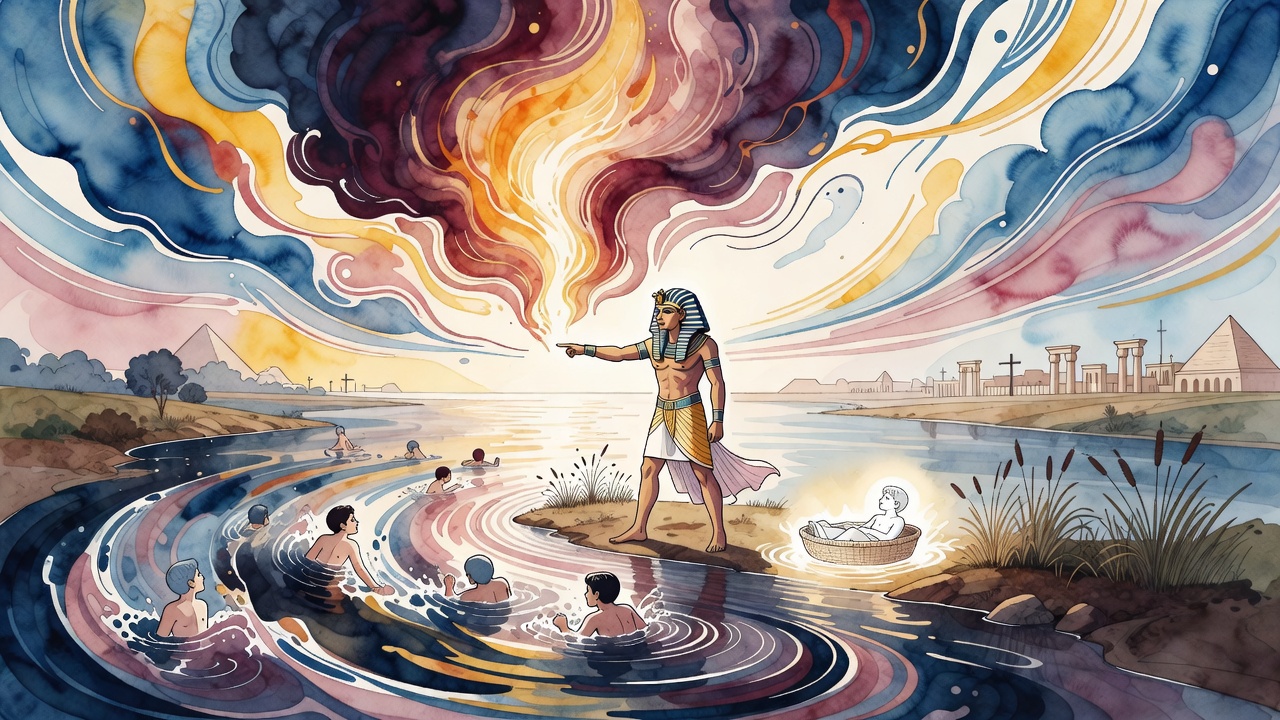
The seers saw water beside Israel's redeemer. Pharaoh made the Nile an executioner. The water they meant was still years away.
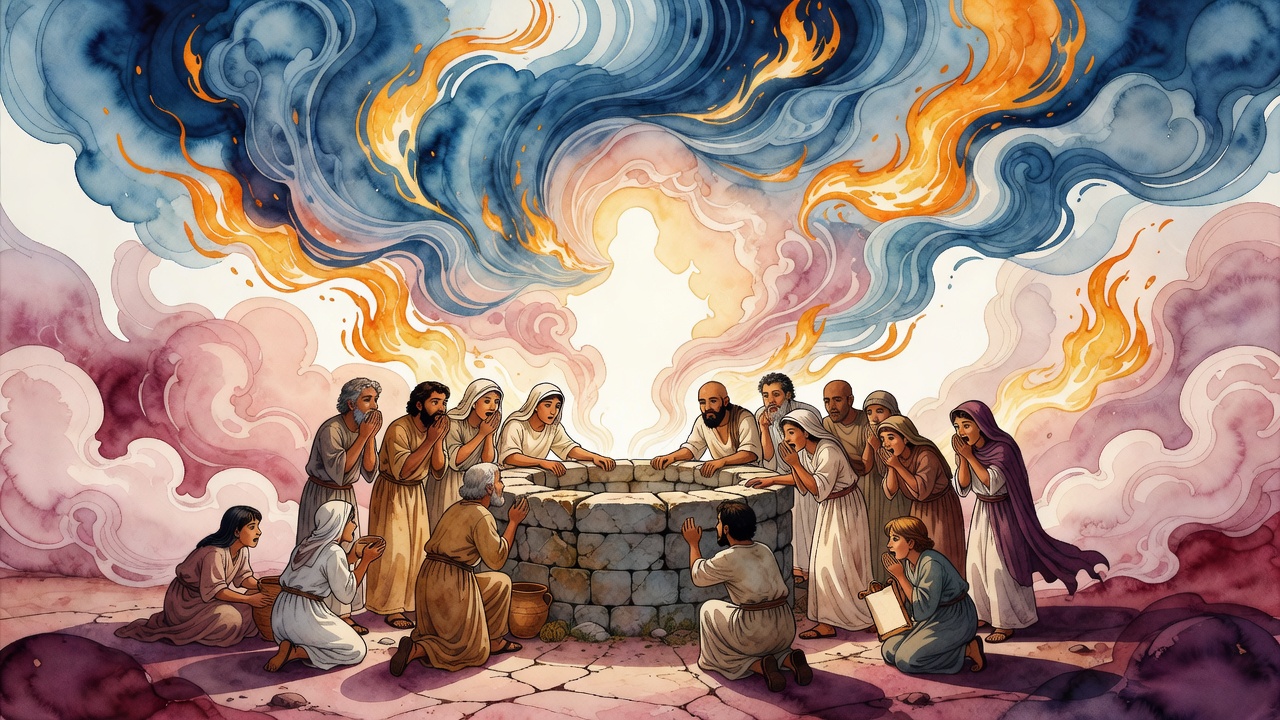
For generations nobody dared draw from it. Israel arrived after forty years in the desert and found cold water with no marker and no warning on it. They drank.
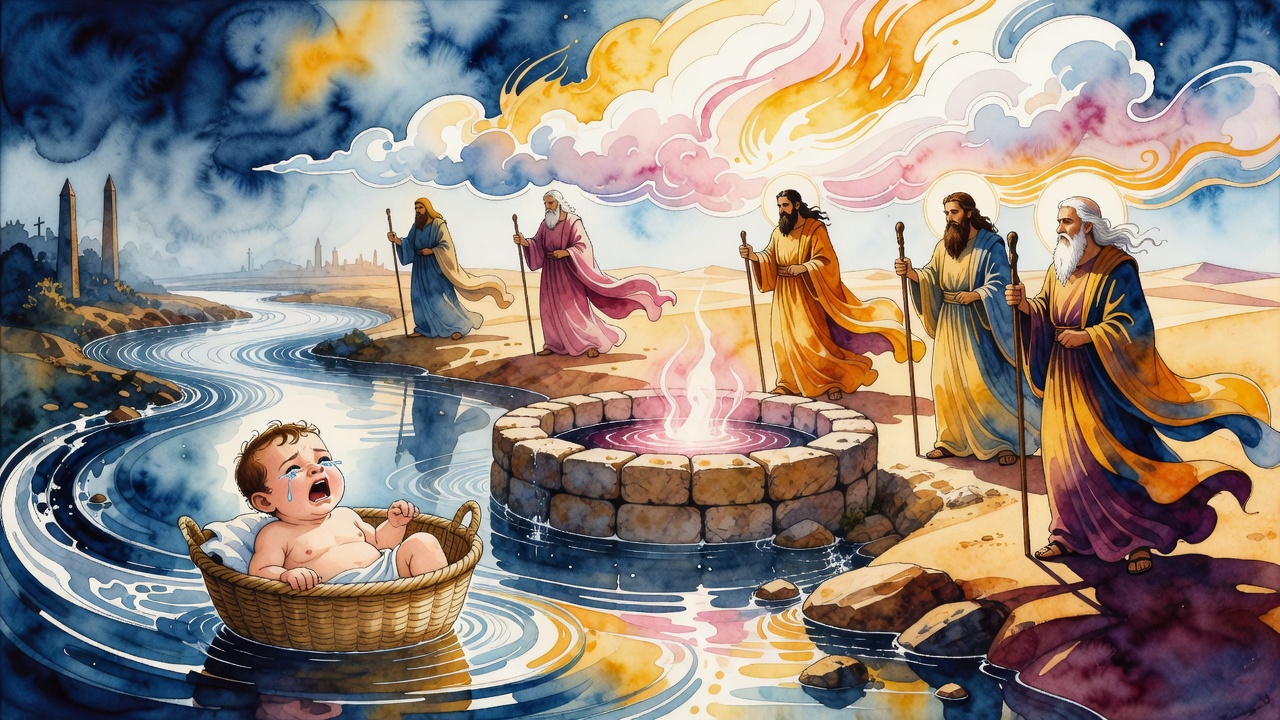
A crying child in a basket on the Nile became the redeemer of Israel. The rabbis followed the water from Pharaoh's river to Miriam's well to the desert clouds.
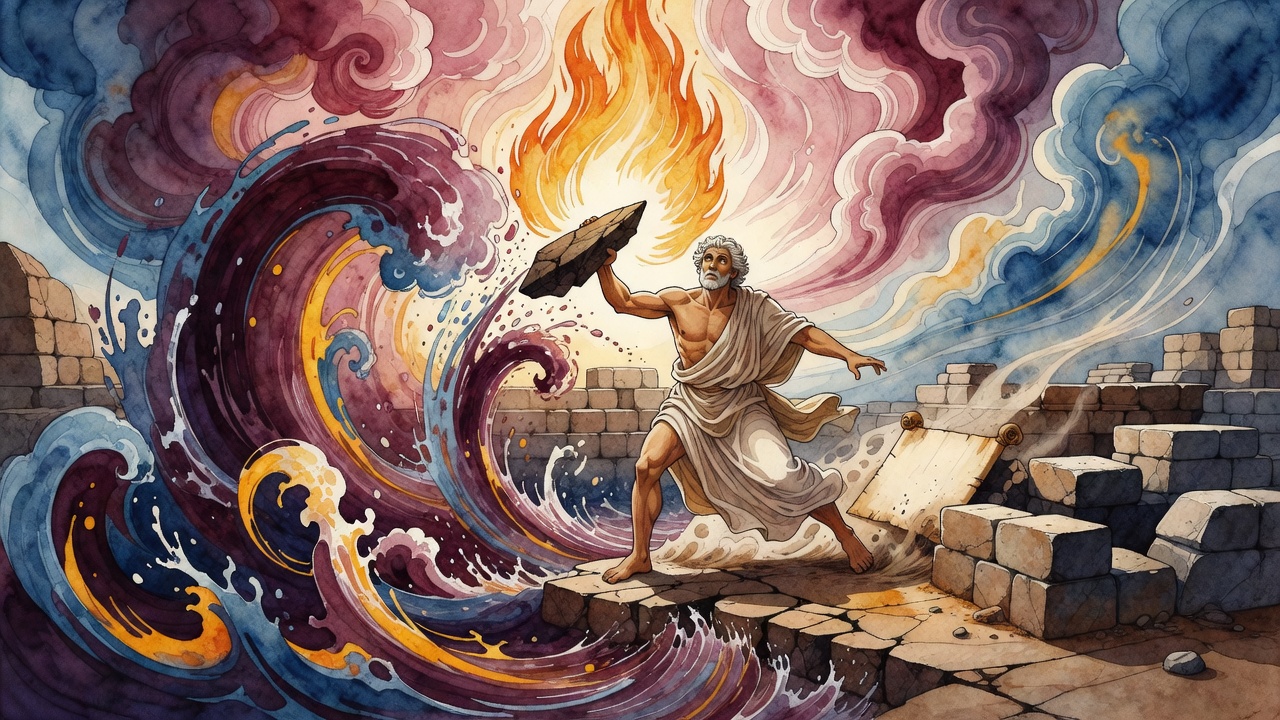
While digging the Temple foundations, David struck a shard that sealed the abyss, and when he lifted it, the waters of the deep began to rise toward the world.
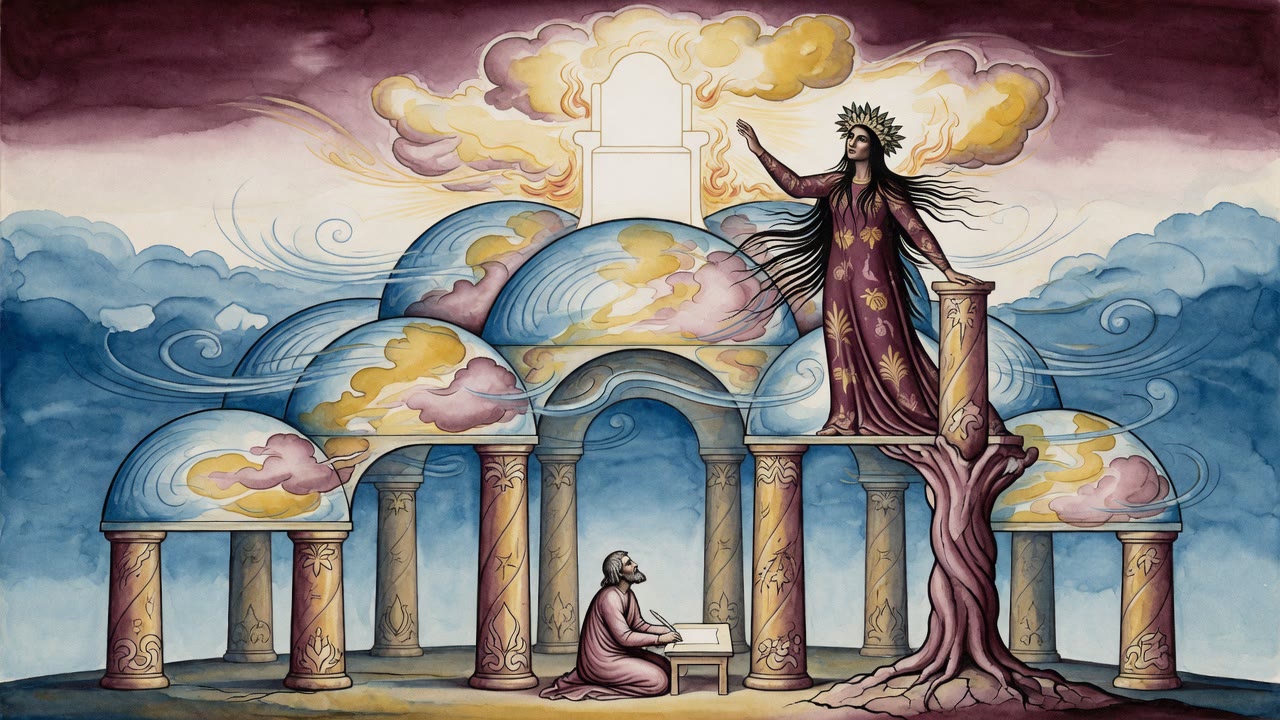
The upper waters flew up to the Throne singing. The half left underneath said woe to us and started climbing after them, and the world nearly ended.
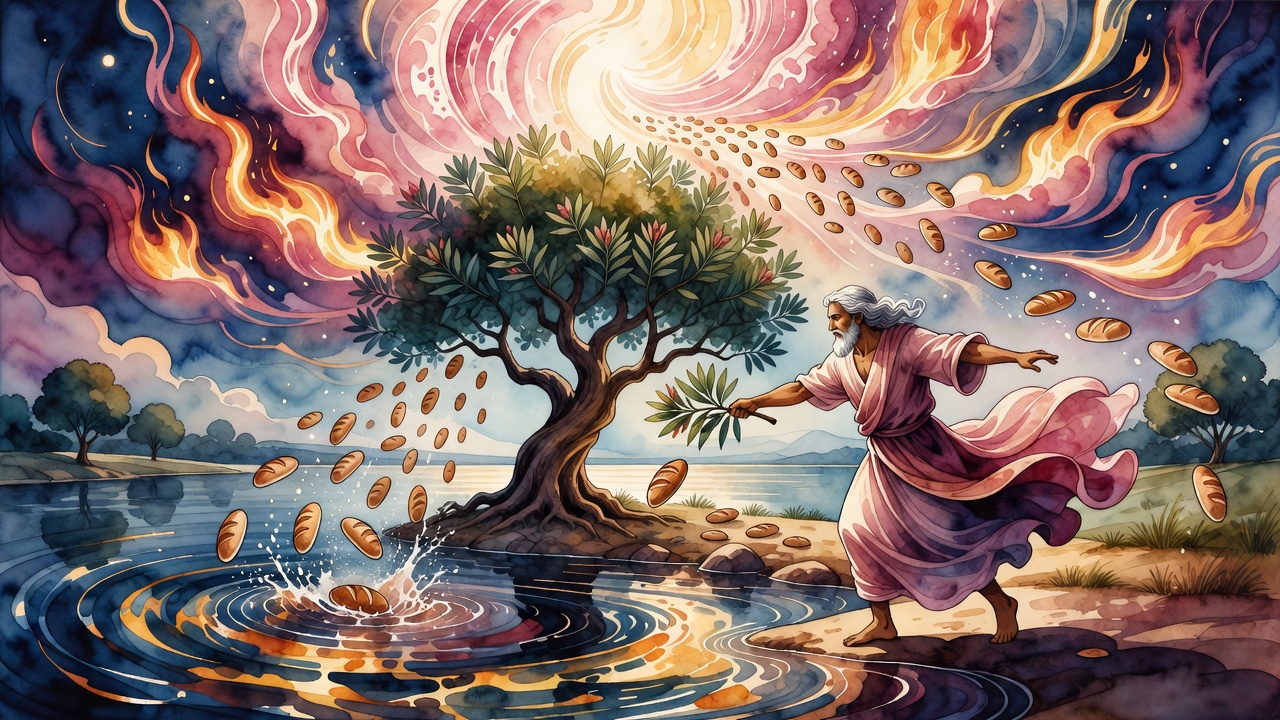
Moses writes God's Name on poisonous oleander and throws it into bitter water. Weeks later, heaven drops bread stored there since the first week of creation.
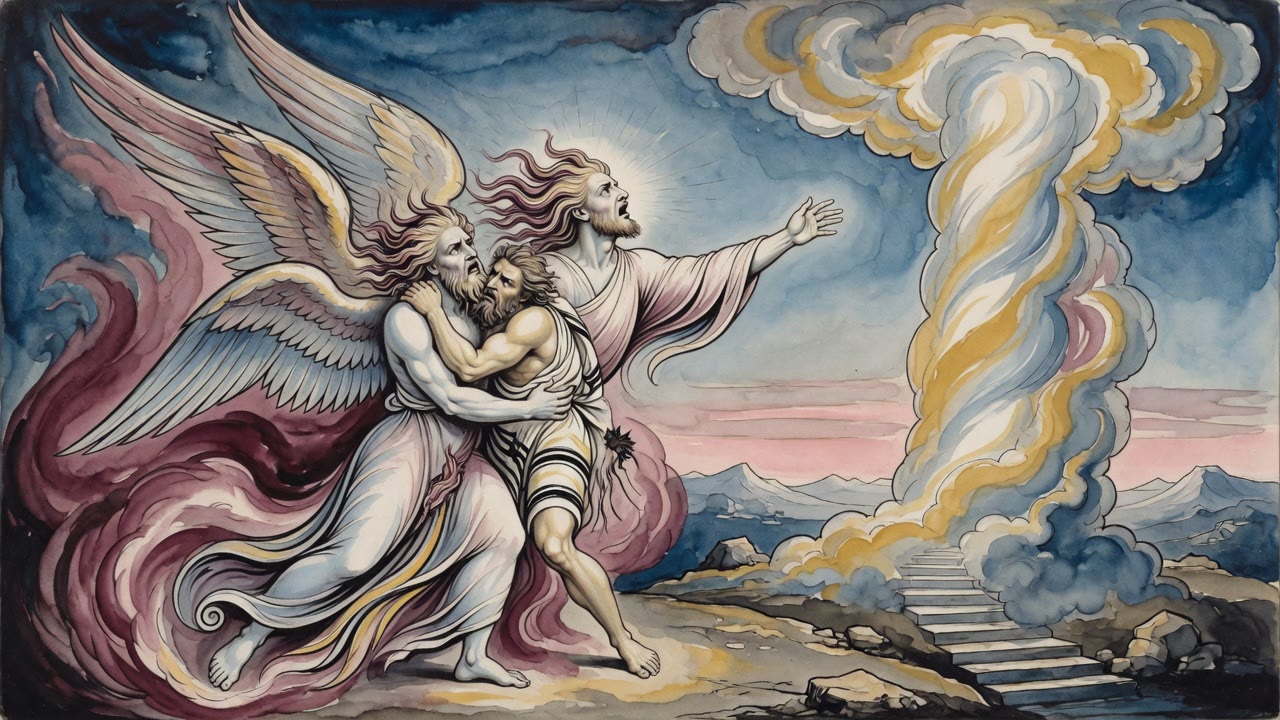
A king moved mute tenants into his new palace. They greeted him at dawn with fingers and a kerchief. He wanted voices instead.
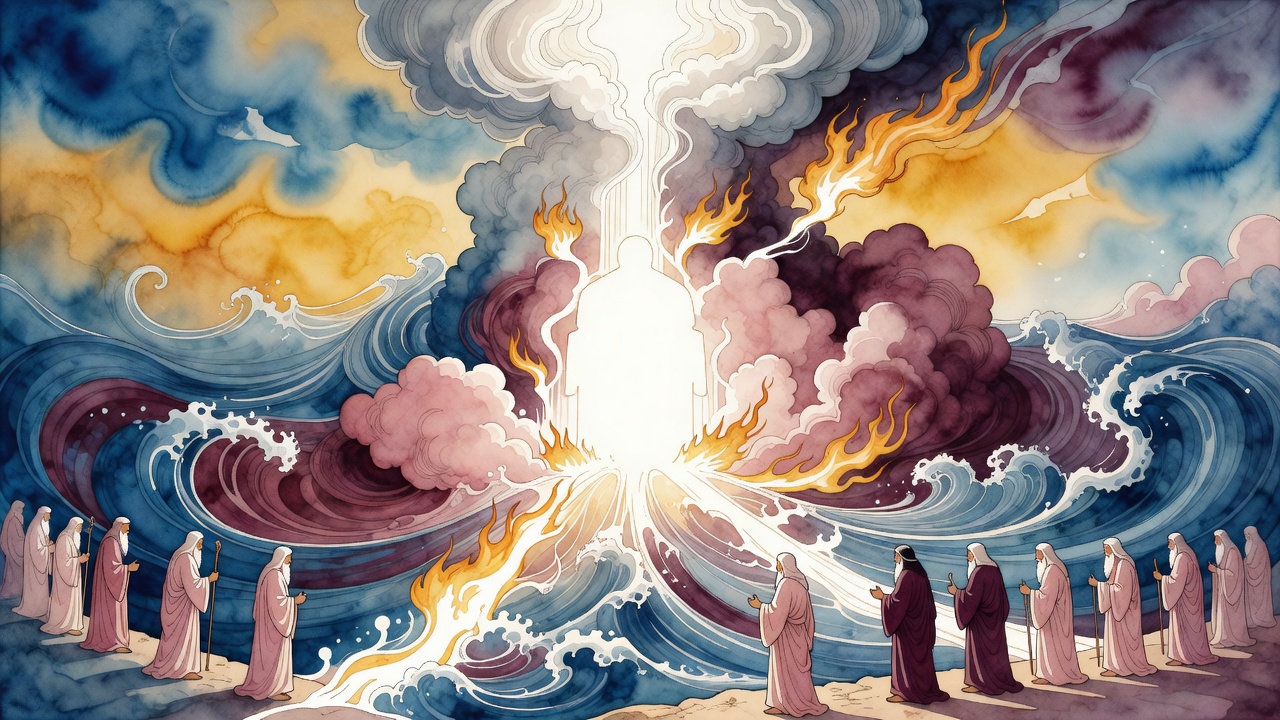
Every other day of the making ended with the word good. The second day did not, and the reason was a man who would not be born for centuries.
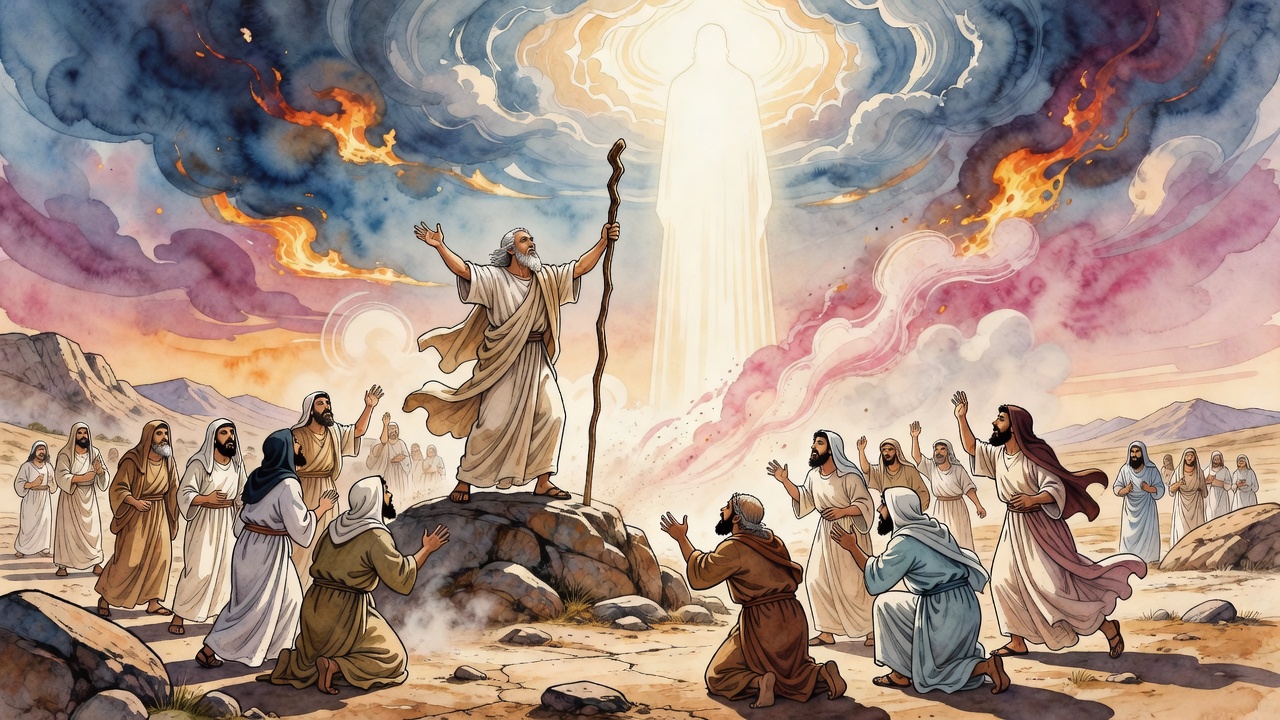
The camp was ready to stone Moses. God told him to pick up the staff they feared and walk ahead of them until the rock opened.
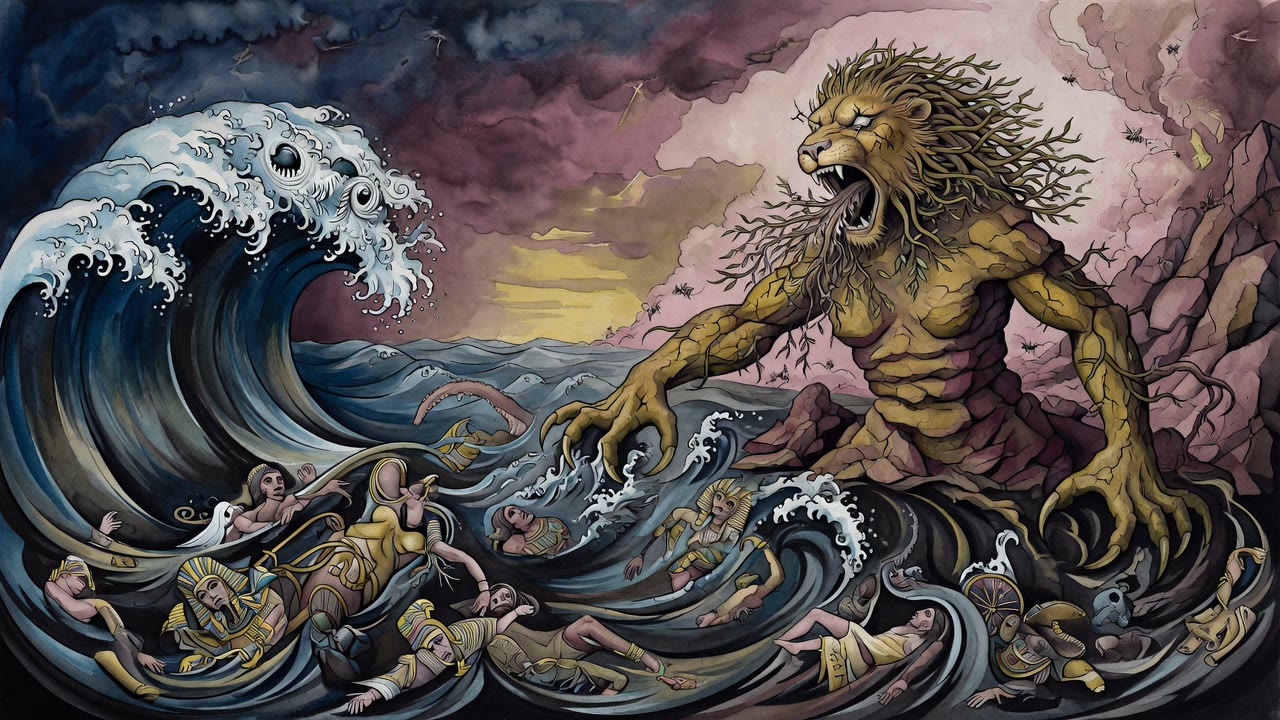
God orders Rahab to swallow the waters of creation. He refuses and is slain, and then the sea and the earth quarrel over who must take the dead.
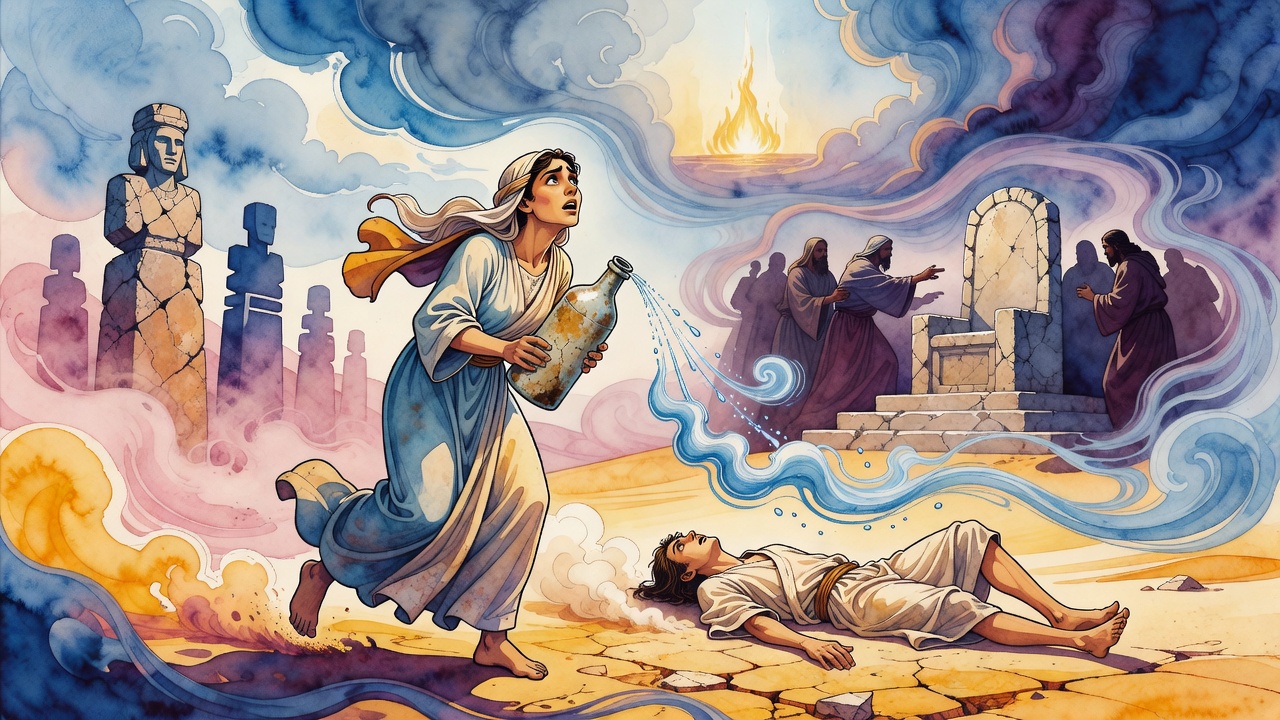
The bottle should have been empty days ago. It lasted on Abraham's merit until Hagar's heart went back to Egypt. Her son was seventeen when he fainted.
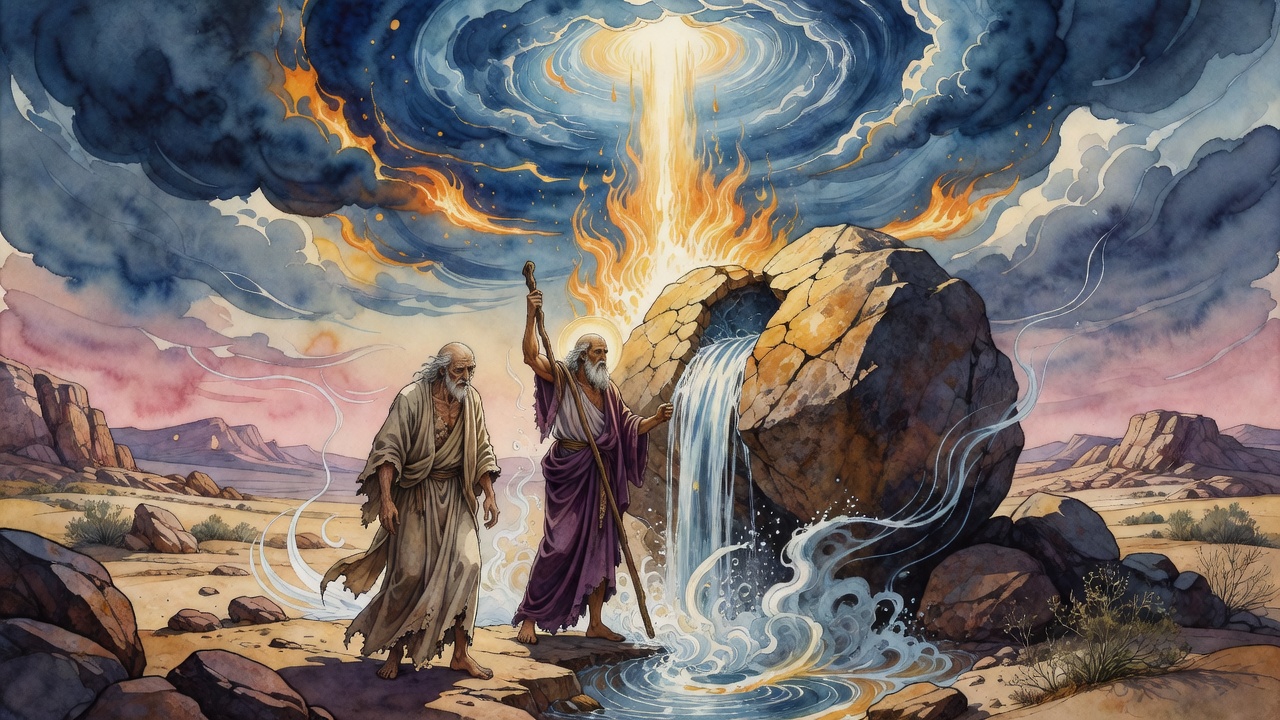
After nineteen years near Kadesh, thirst turned on Aaron, Moses struck the rock for water, and a deeper sin sealed him out of the land.
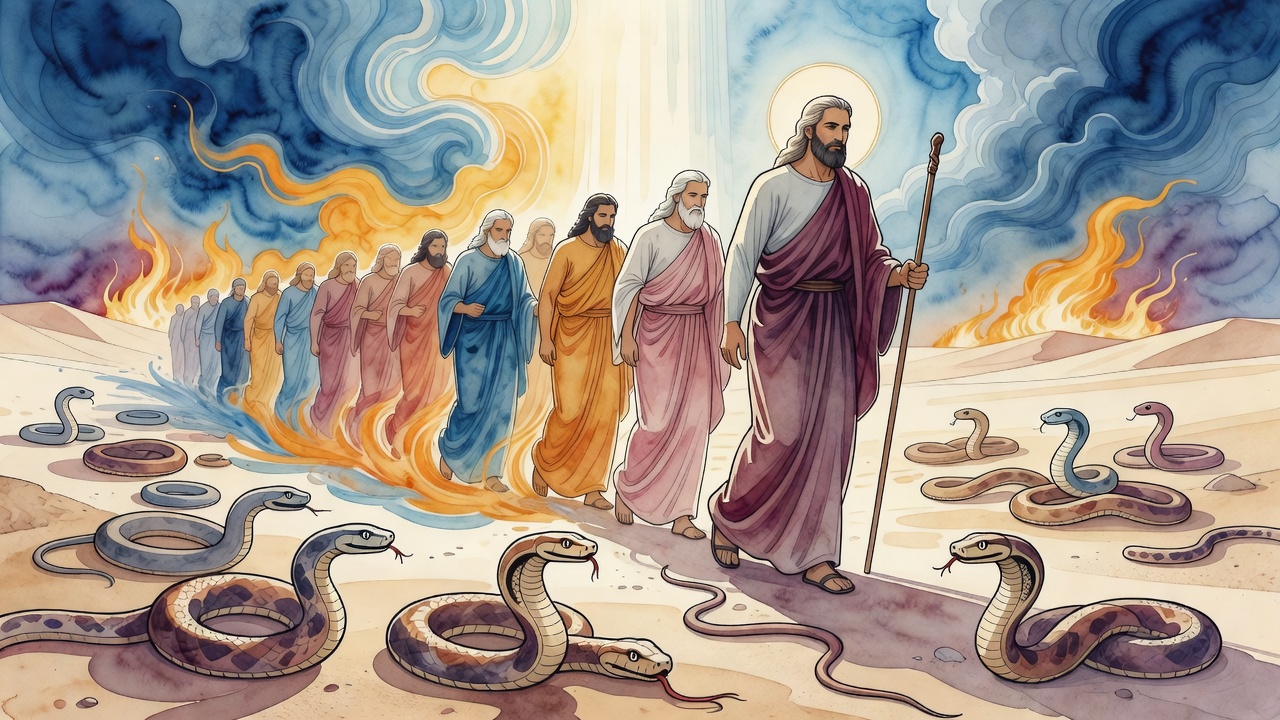
Israel followed Moses onto sand that had killed travelers for years. The snakes went still. Three days later the skins sagged and the camp turned.
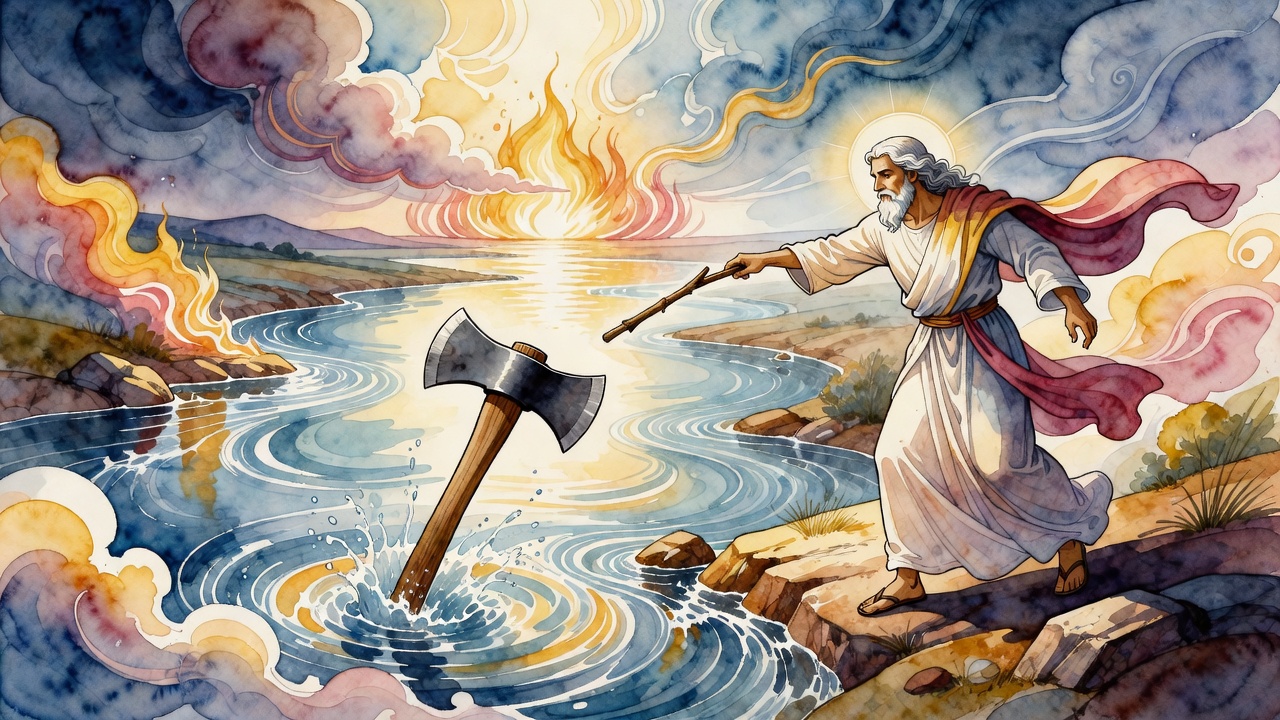
The ax head slipped and the Jordan kept it. The student had borrowed the blade and had no silver to quiet a lender.
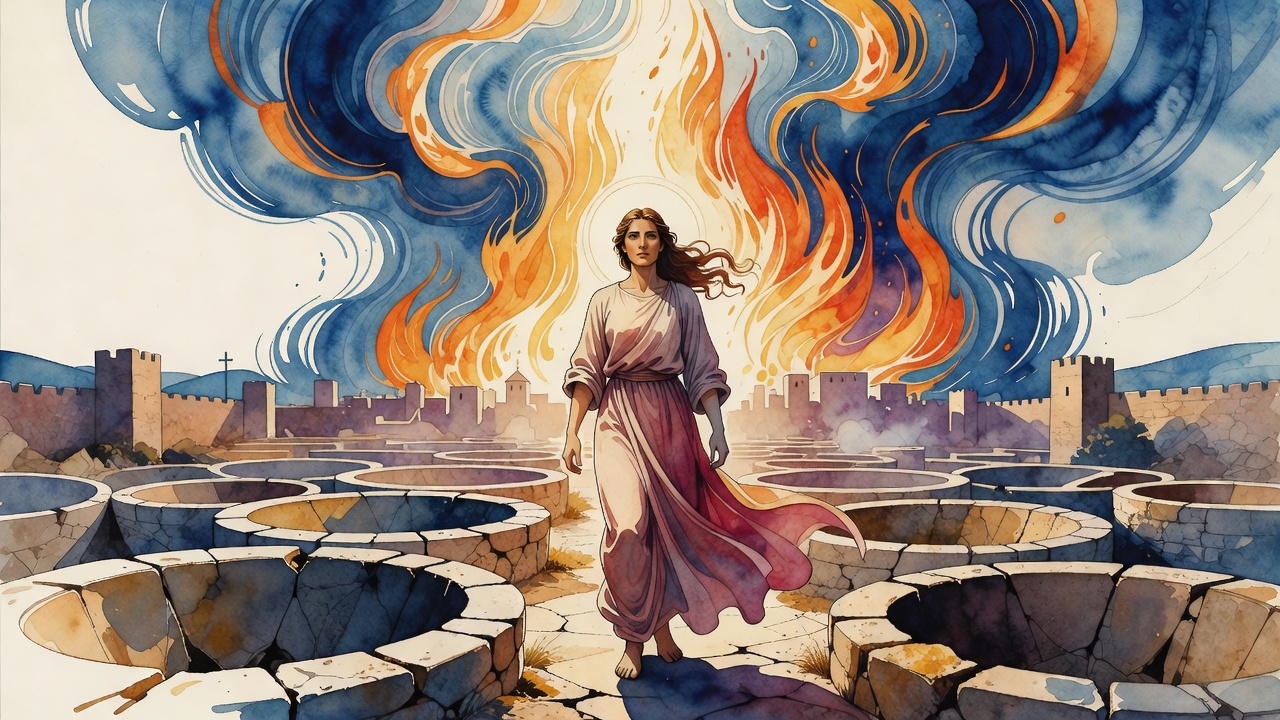
Siege dried the cisterns of Bethulia. Judith, daughter of a long Israelite line, rose while the city talked of surrender.
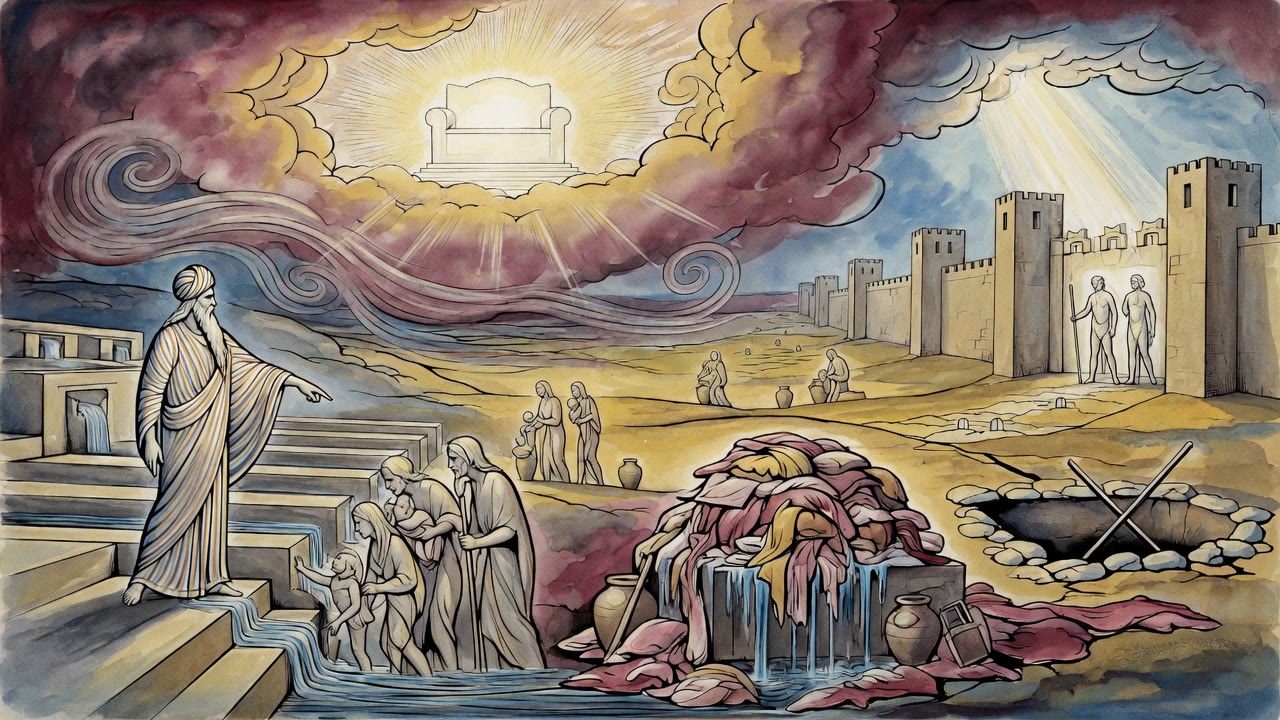
A spring at a Levite gate ran cold enough to hurt the teeth. Women with wet cloth argued with a traveler whose child could not drink.
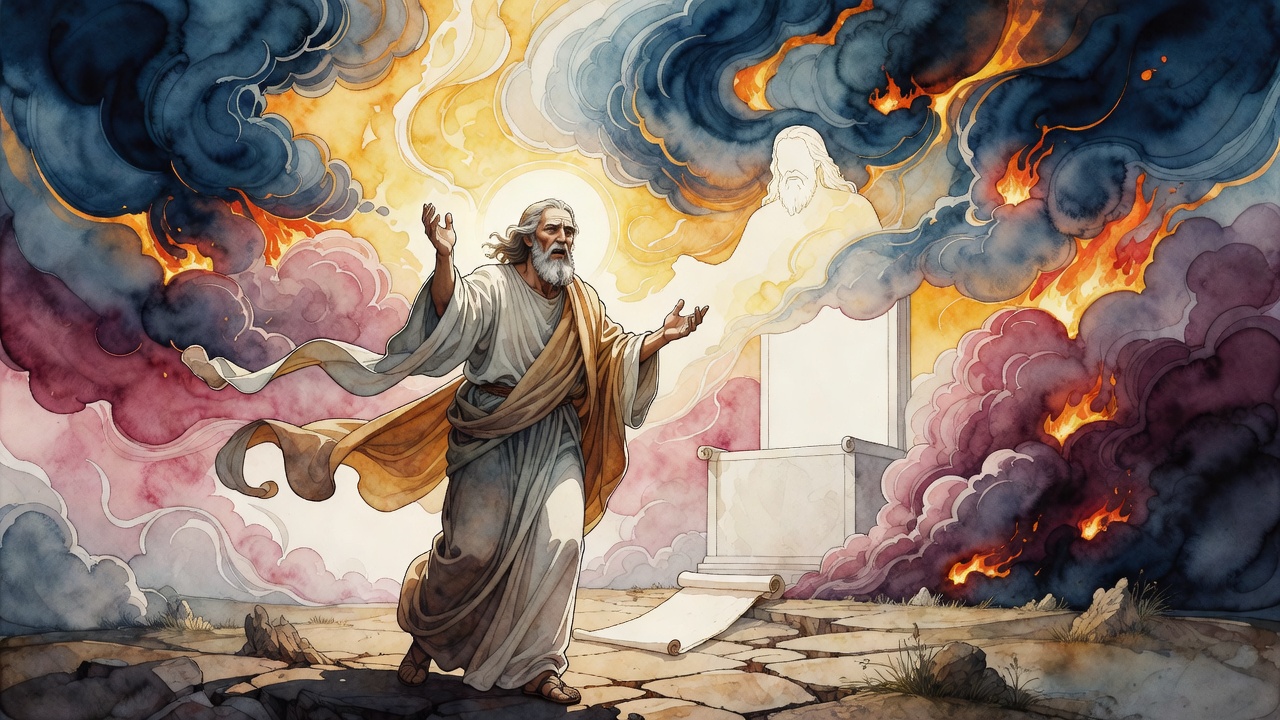
At Meribah an oath of death settled on Moses. He begged for the mercy he had won for sixty myriads and heard that fate was no longer his.
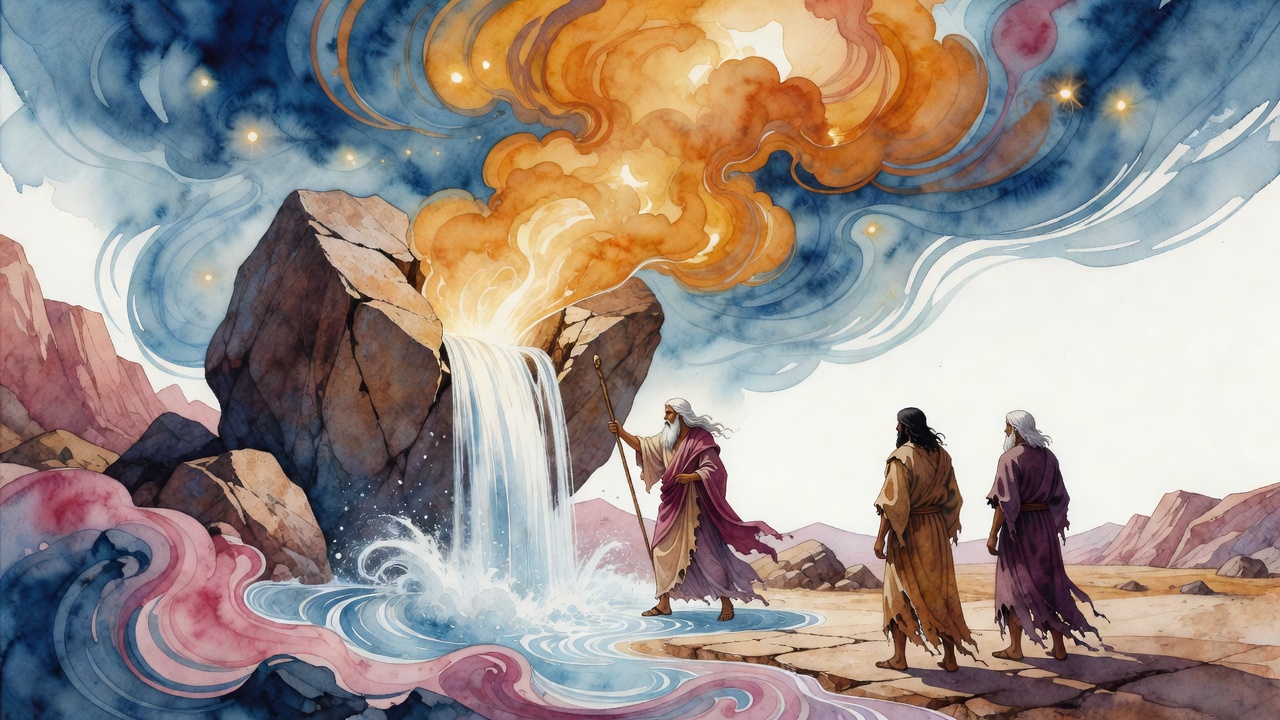
Speak, they had been told. They struck. Water ran. After that the Holy One could not pass the place without saying the brothers' names.
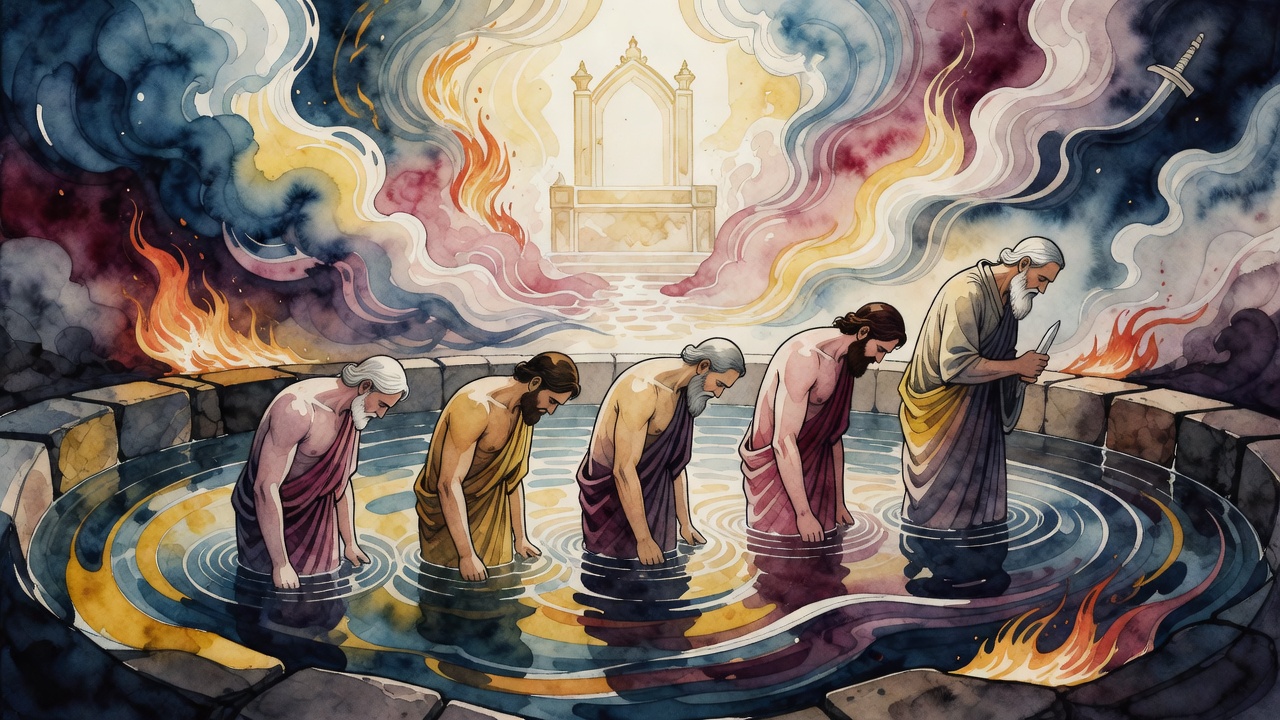
Confession left his mouth with the water still at his throat. He walked home with wet hair and no argument left in his chest.
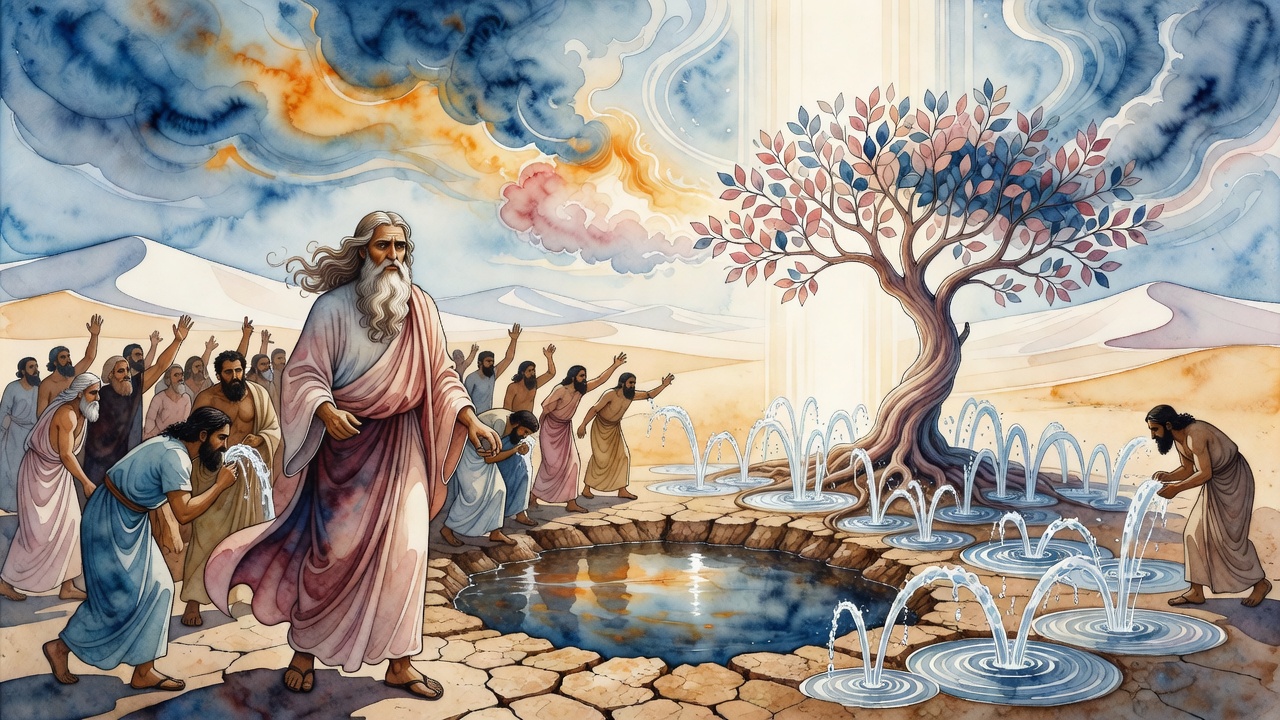
Three dry days ended at a bitter pool and a mob against Moses, then a sweetened tree and twelve springs made for tribes not yet born.
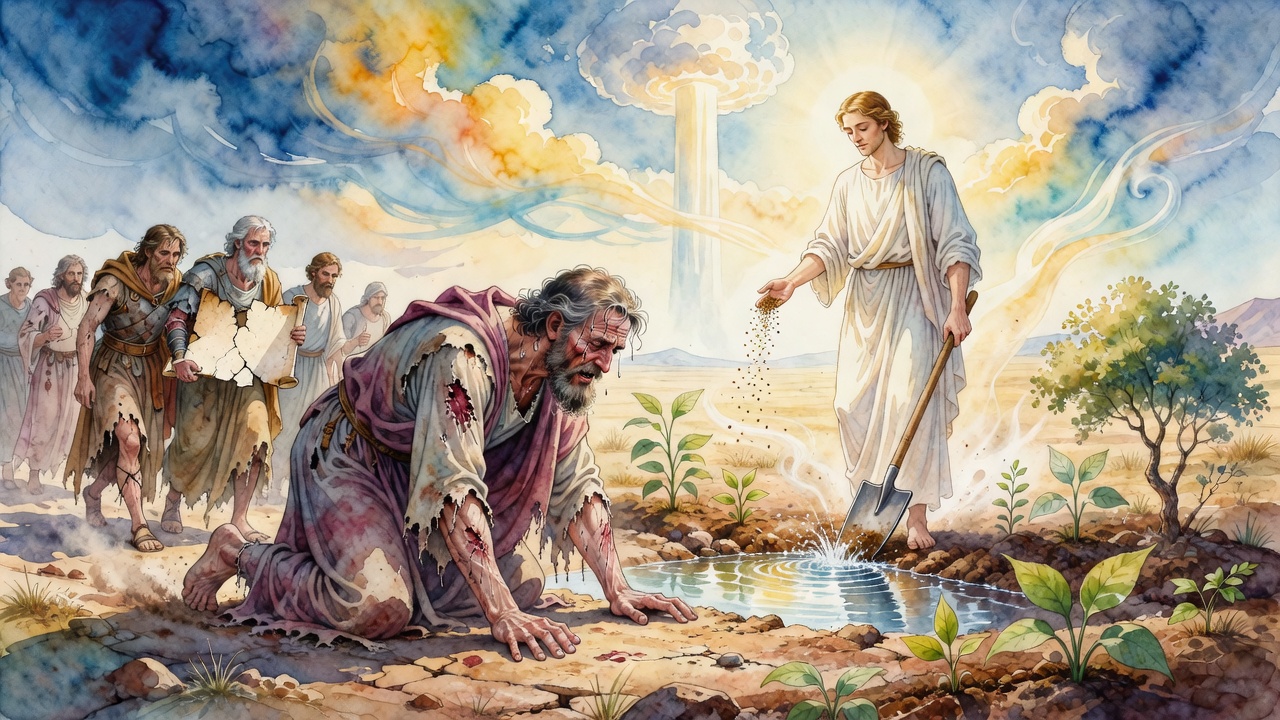
Robbers and sores empty Abimelech's pride. He comes to Isaac with captains and half a peace, while Isaac sows charity, digs living water, and outgrows Gerar.
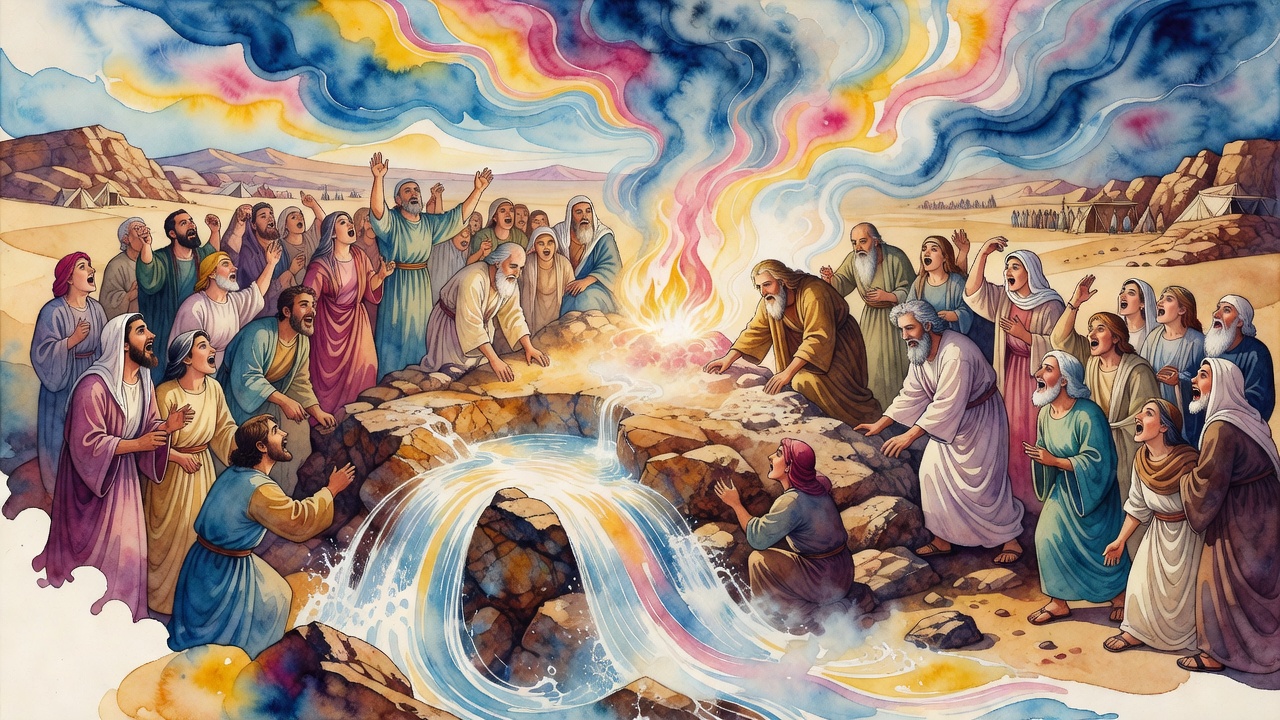
Dust still coated their lips when the rock gave way. Moses had walked stone after stone with the staff idle, until the Presence marked one.
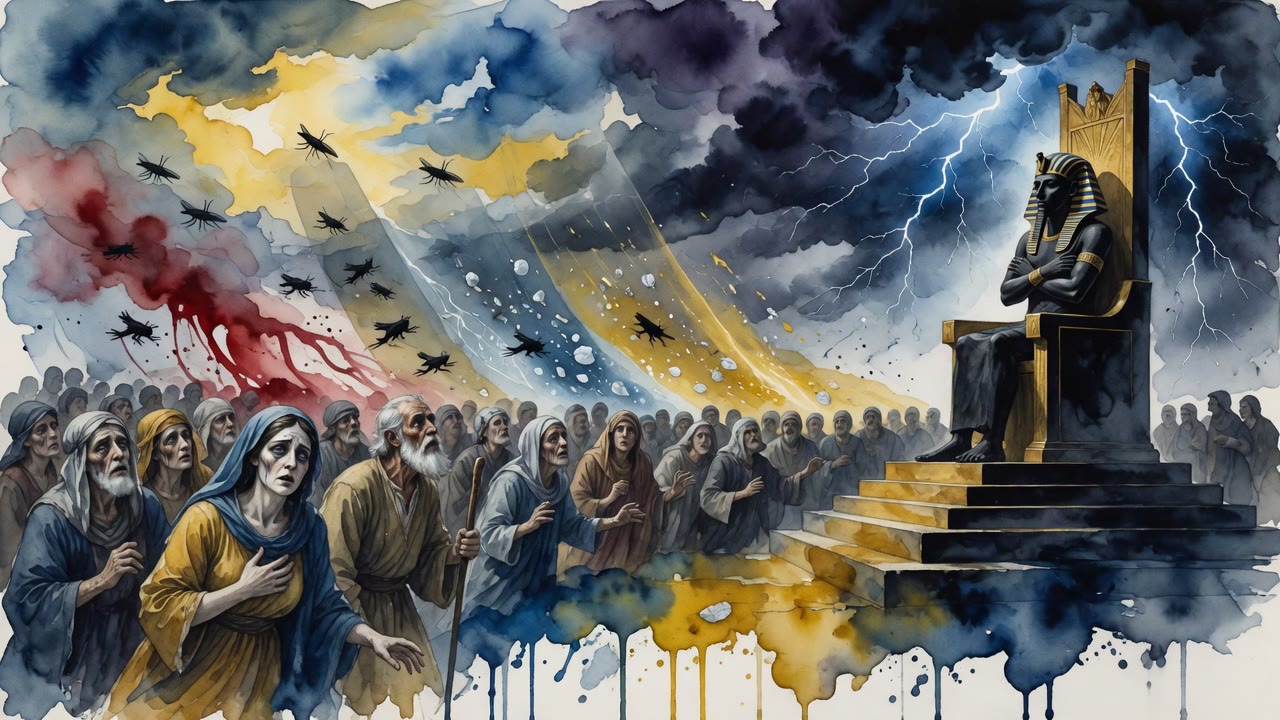
They knelt an arm's length apart. The Egyptian drank blood. The Israelite drank water from the same river, and Goshen believed it was over.
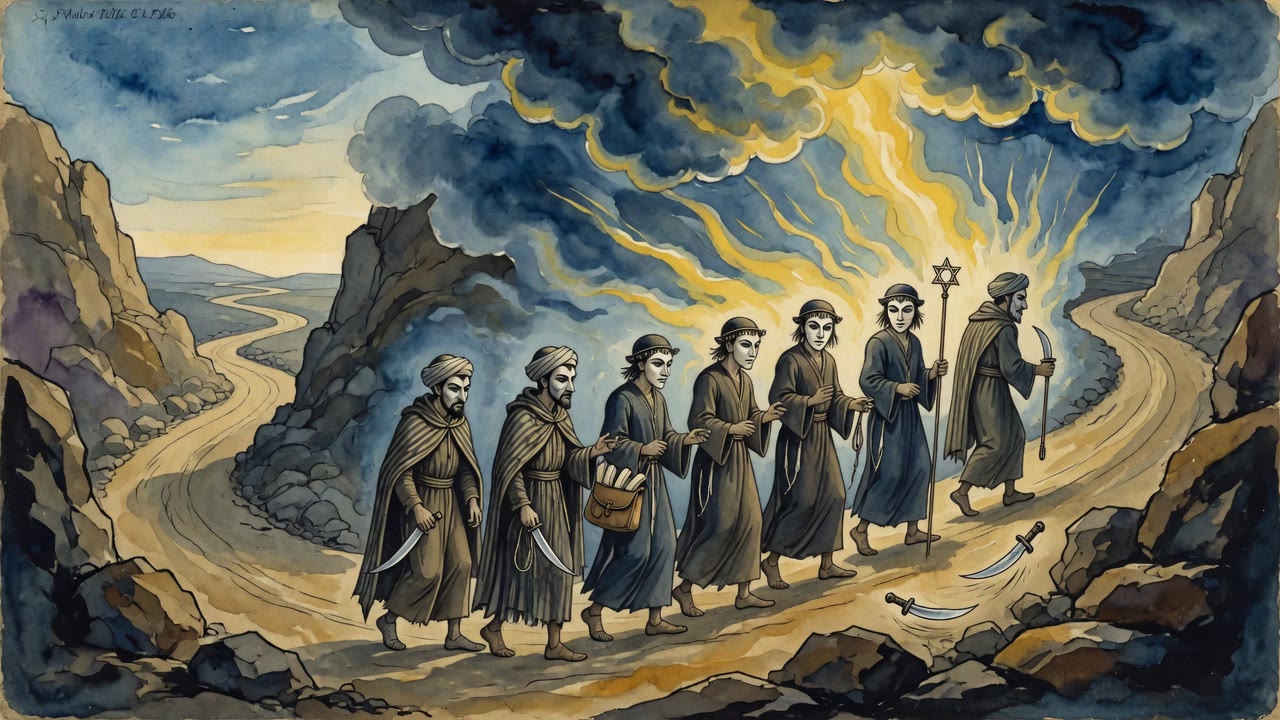
The guard left one small cup of water in the cell. Akiva poured half of it over his hands and ate his bread, then went thirsty the rest of the day.
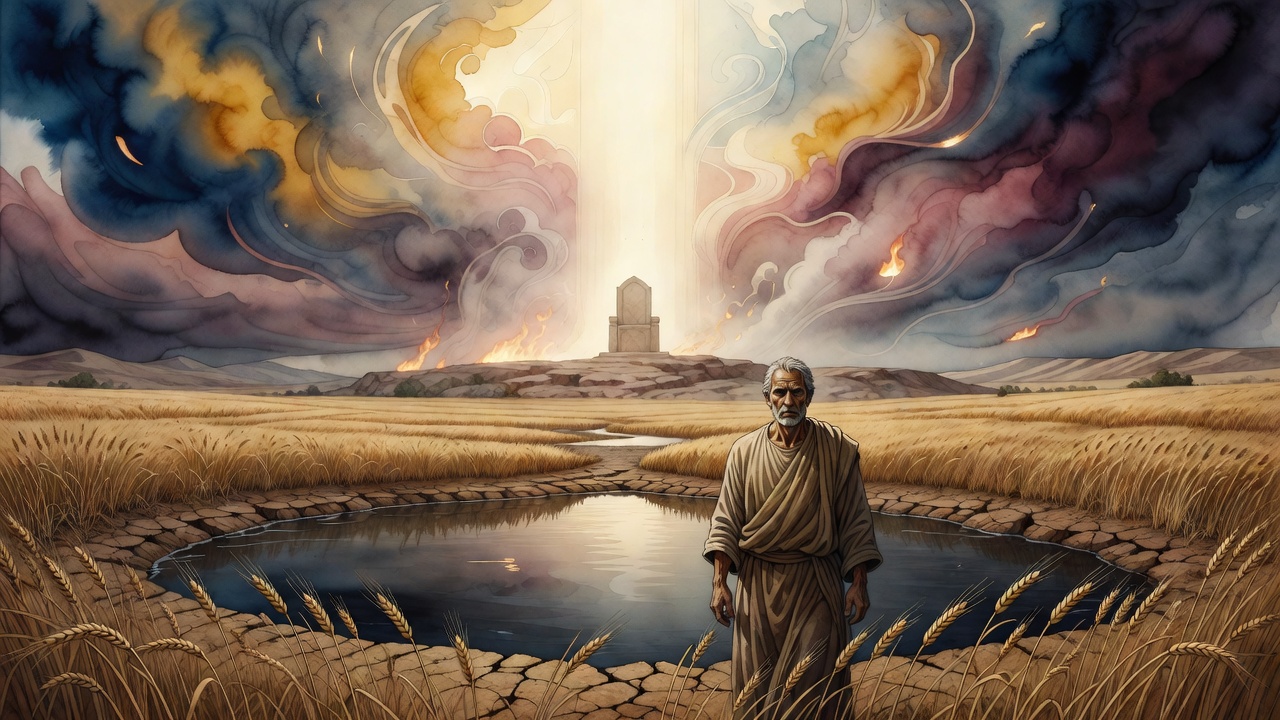
A man who tithed without shaving a grain split his field for a reservoir. In the drought his water sold for three times the price of wheat.
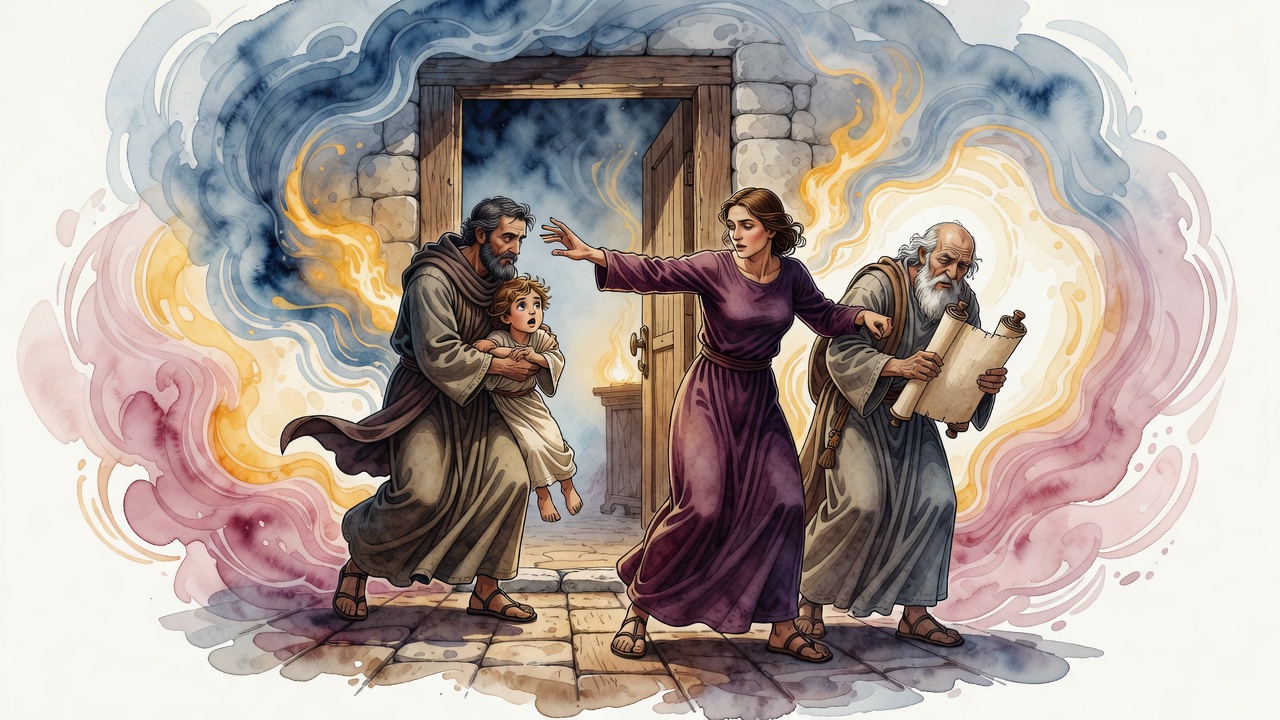
The mother blocked the doorway with her body. Take him to the study house, the father said. Better we both die, she answered.
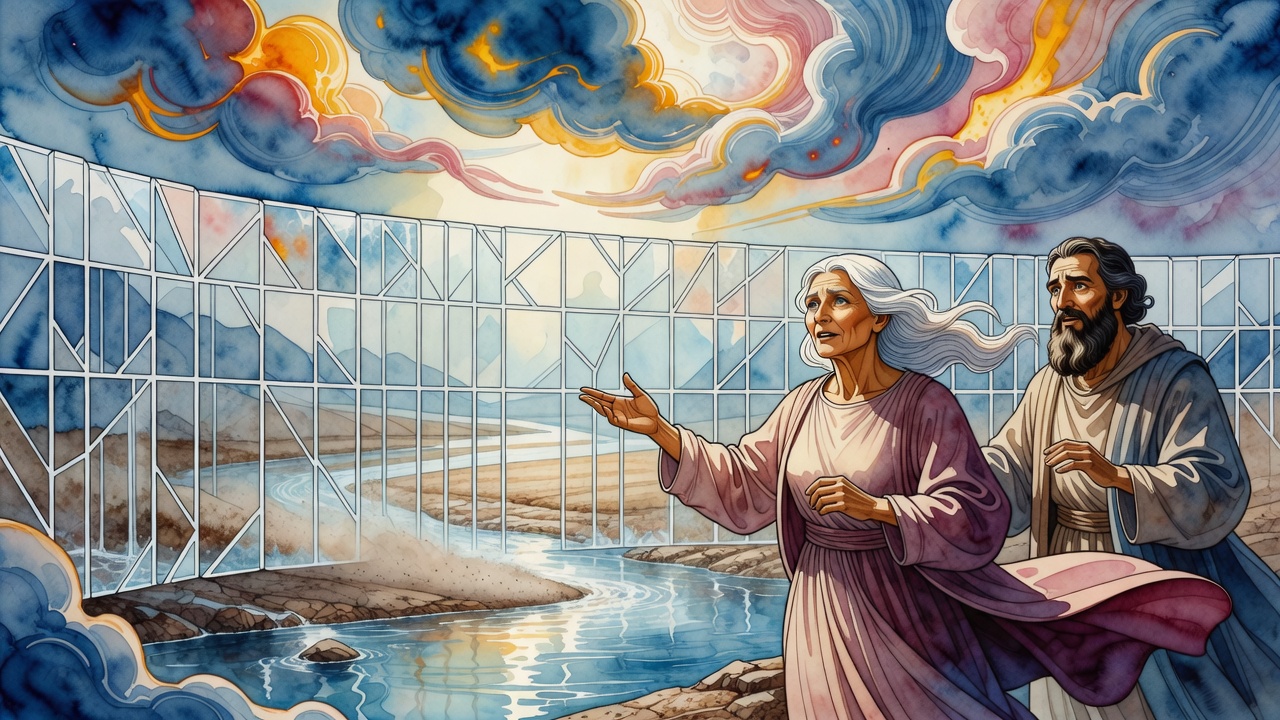
Rabbi Yochanan taught the water as lattice. A woman at the back of the hall stood and said she had walked through it, and it was glass.
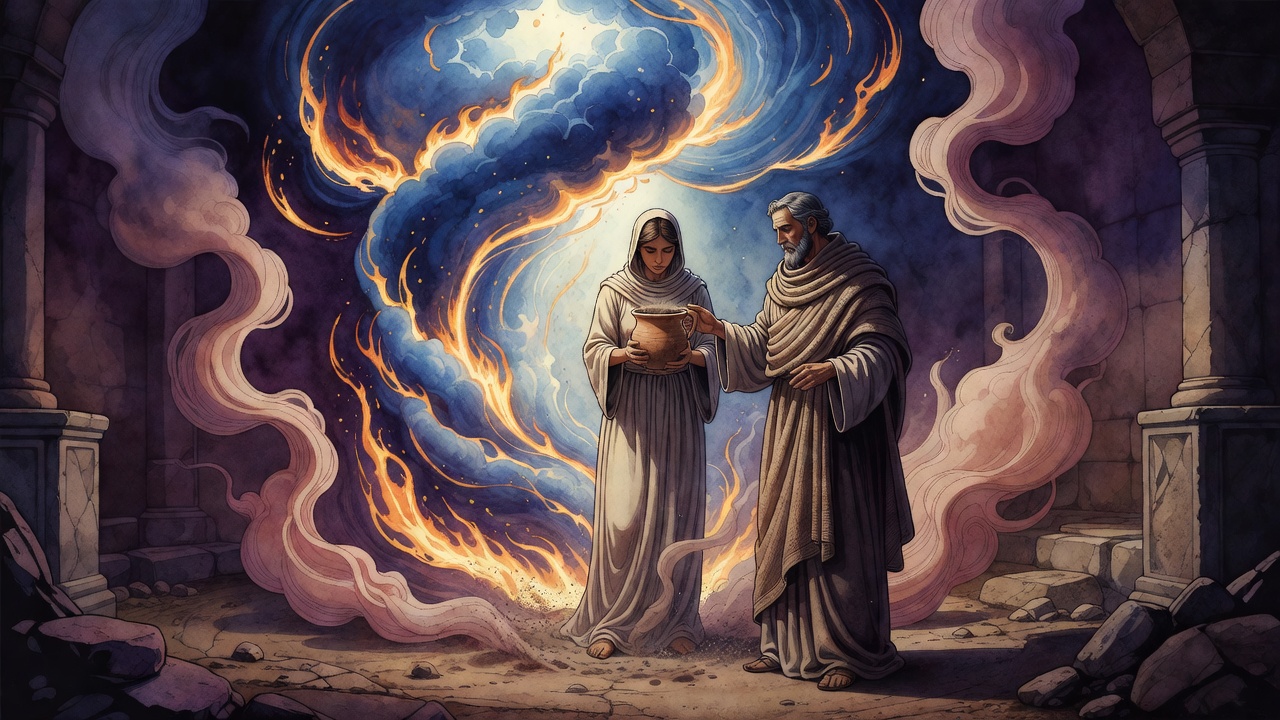
Dust from the sanctuary floor mixed with water and erased curses. A woman stood before the priest with a cup that could clear her name or write her as a curse.
