Pharaoh Drowned the Wrong Children in the Nile
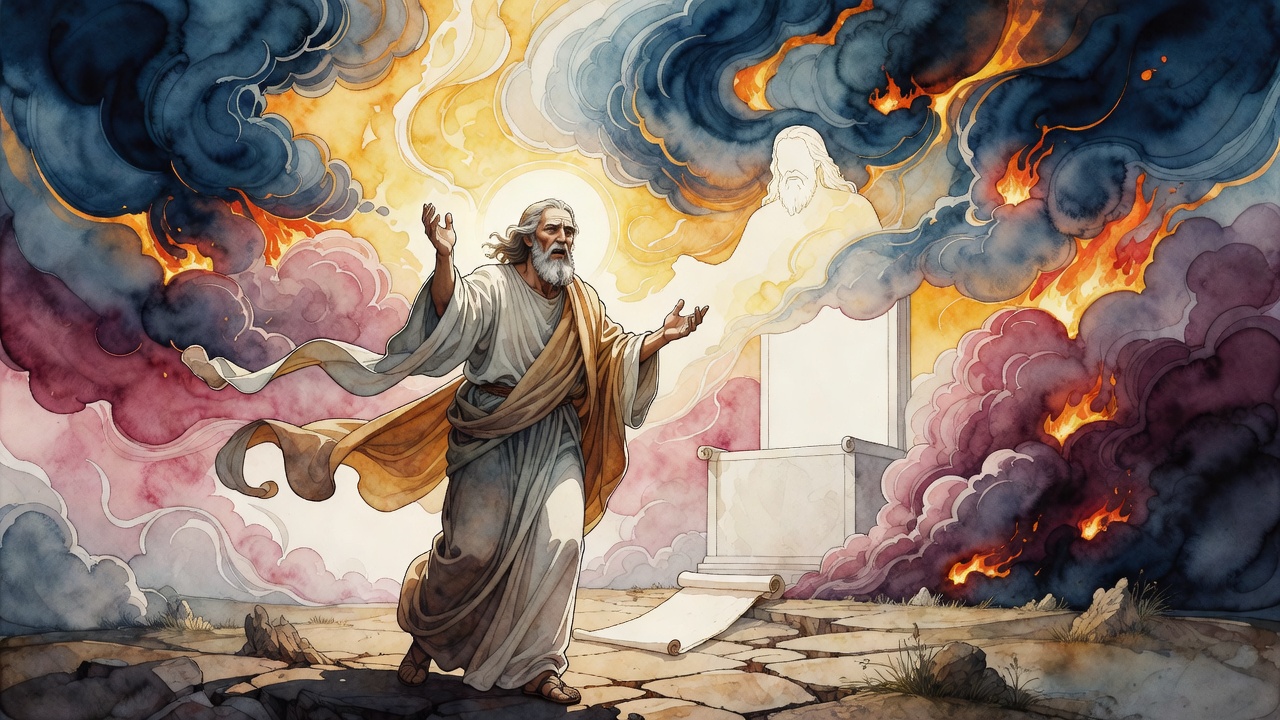
The seers saw water beside Israel's redeemer. Pharaoh made the Nile an executioner. The water they meant was still years away.
Table of Contents
Pharaoh did not know which cradle held the danger, so he made every cradle guilty.
 Click for full size
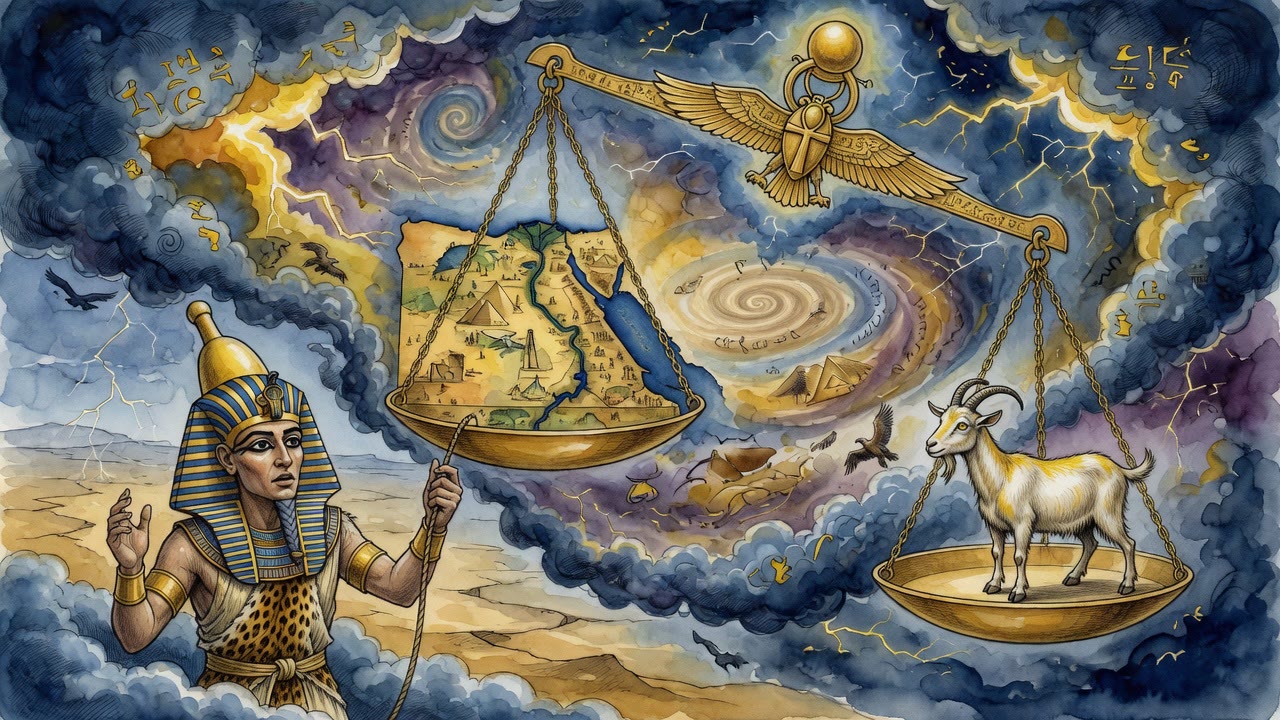
The sky-watchers had brought him a sentence with one blurred word. A redeemer had been conceived. Water stood near his fate. But the child's mother would not come into focus. Hebrew or Egyptian. Slave house or palace street. The uncertainty spread through Egypt faster than soldiers.
Every Cradle Became Guilty
Pharaoh could have narrowed the decree. He could have waited. Instead he chose the widest cruelty available. If the astrologers could not tell him the child's nation, then every newborn boy became a possible redeemer. The sons of Israel were marked. Egyptian sons were not safe either.
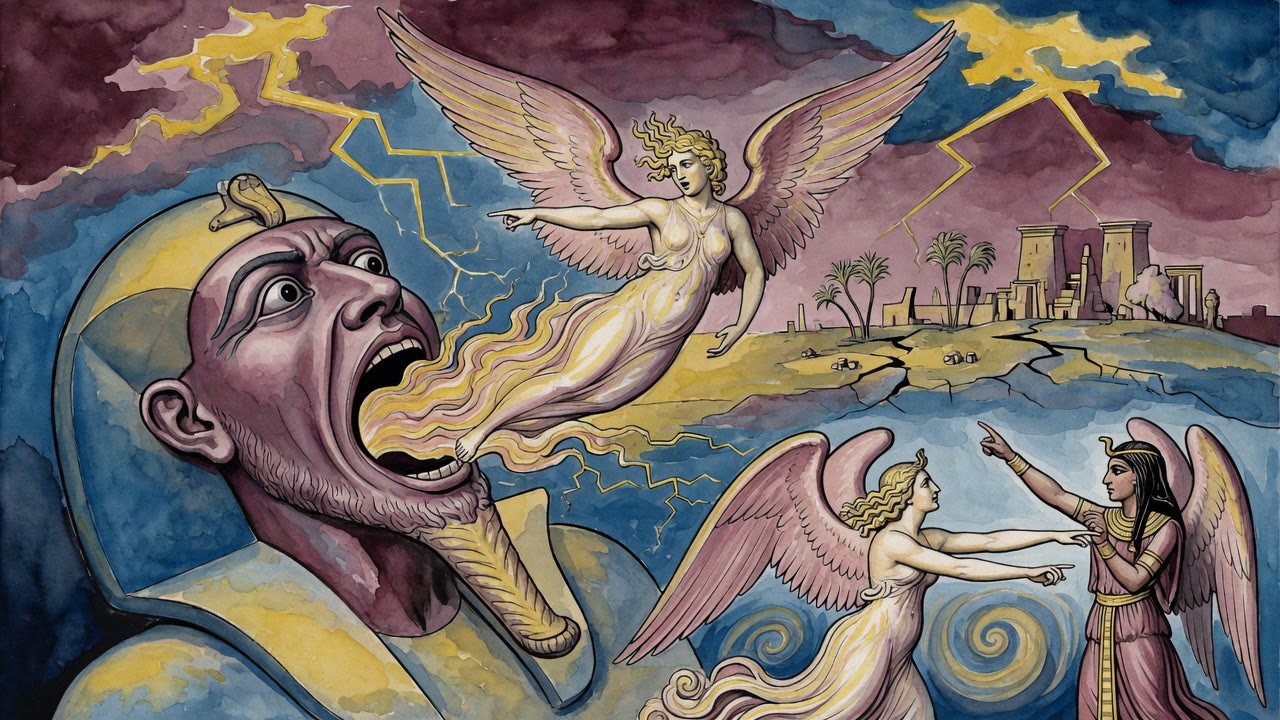
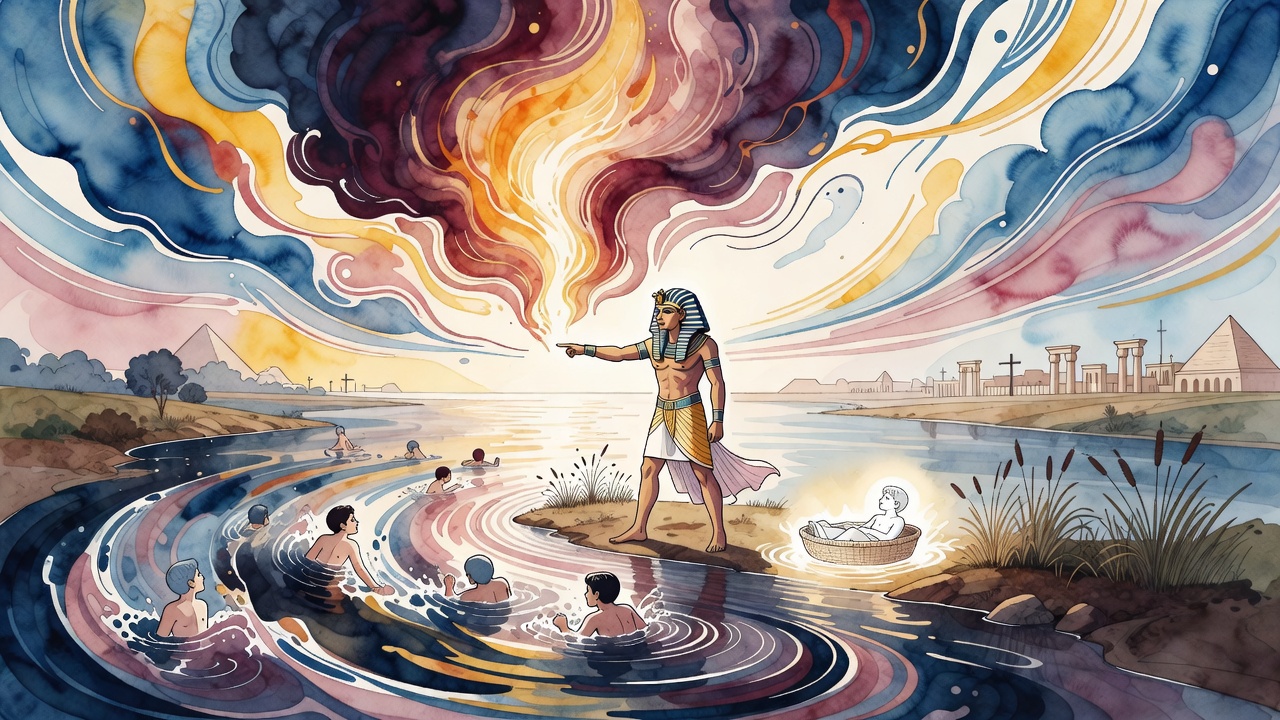
The king called his own people to him and dressed murder in the language of borrowing. Lend me your sons for nine months. The river will take them, and the river will pay back its worshipers. The sentence sounded like finance, like ritual, like statecraft. It was a demand for babies.
The Nile waited outside every argument. Mothers counted months. Fathers watched doorways. Pharaoh had changed an uncertain warning into a calendar of slaughter, and everyone knew when the soldiers might come.
Egyptians Heard the Door Break
The Egyptians pushed back. A Hebrew savior should come from Hebrew blood, they argued. Why should Egyptian houses empty their cradles for a slave-born threat? They had learned to live beside Israel's suffering. Now the decree crossed the threshold and sat inside their own rooms.
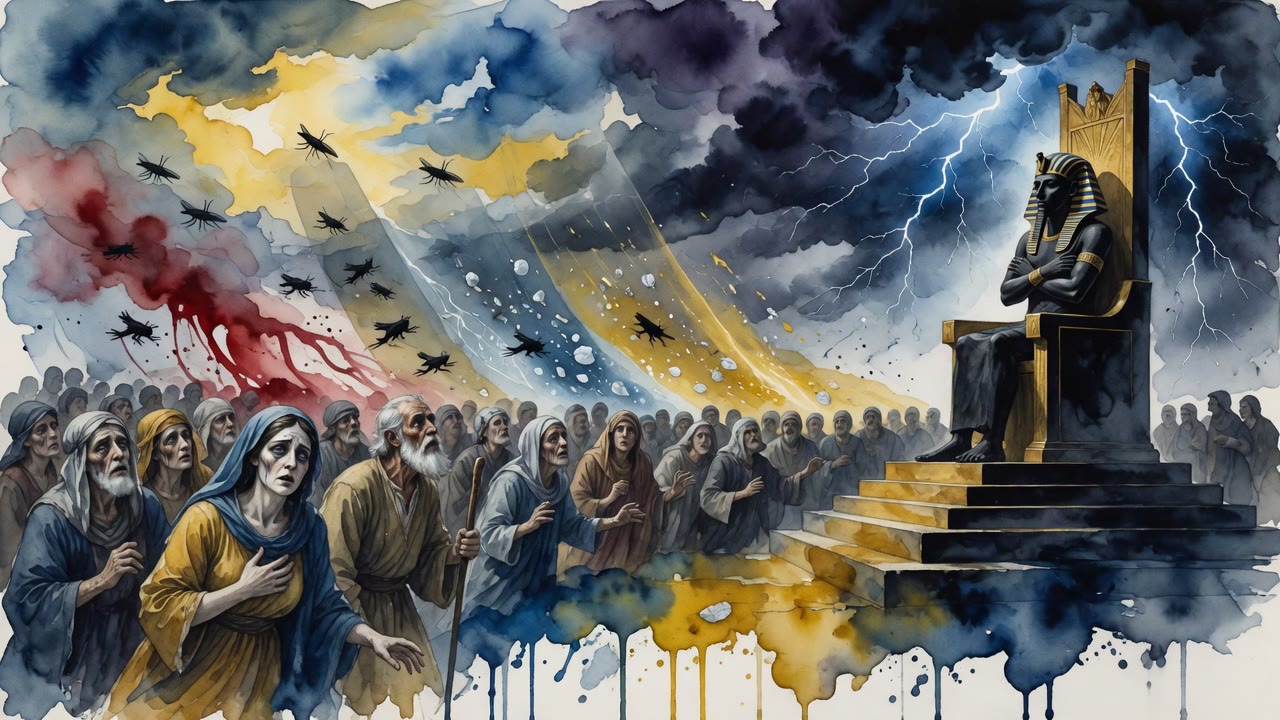
Pharaoh had no use for their smaller reading. Fear had made him generous only with death. Every house became a question the king could not answer. A crying newborn, a wrapped bundle, a midwife's hurried step, all of it could be called evidence. Pharaoh had not found the redeemer. He had only taught Egypt to fear its own sons.
Jochebed Chose the River Last
Jochebed had already refused Pharaoh in the birthing rooms. The hand ordered to end life had chosen to save it. Her reward did not arrive as comfort. It arrived as a child she could not keep hidden forever.
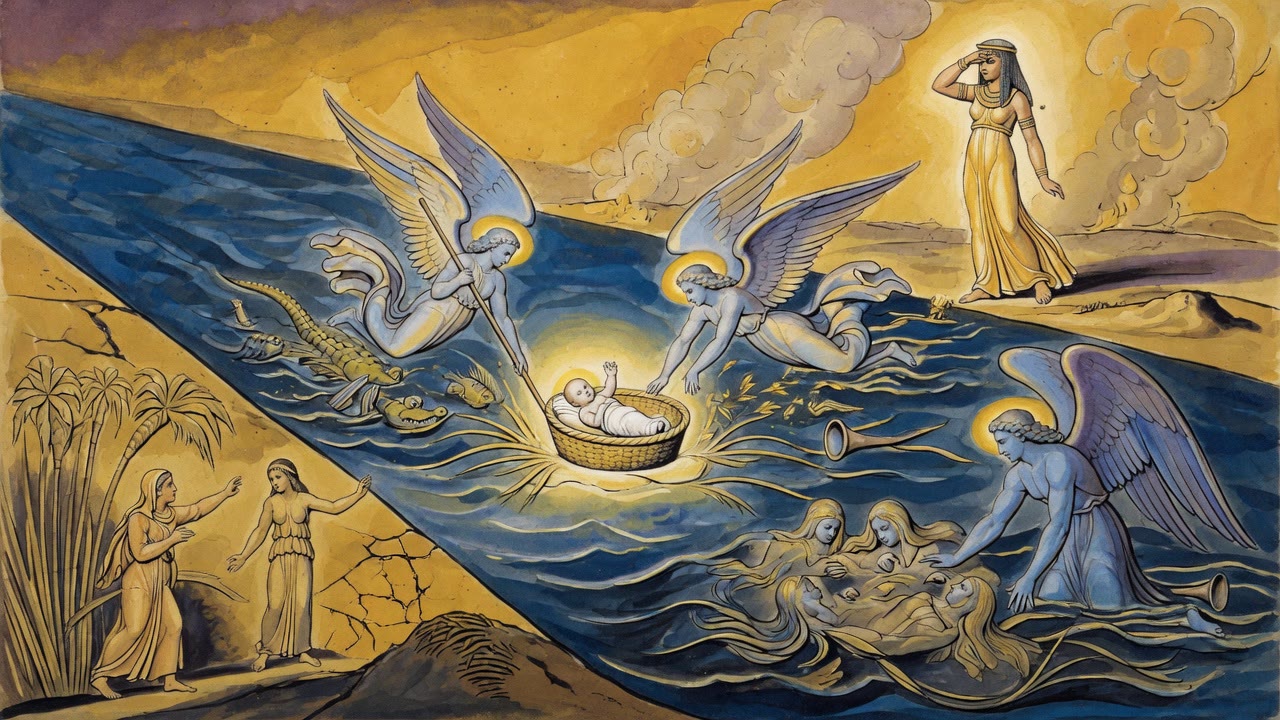
Amram and Jochebed held Moses while the decree pressed against the walls. The river that had swallowed sons now became the only path left. They pitched a small ark, laid him in it, and set him on the water Pharaoh had chosen for death. No soldier needed to drag him there. His parents did it with their own hands.
The Nile took the basket. Reeds closed behind it. Jochebed's arms were empty, and the child was already where the seers had told the king to look.
The Palace Called It Finished
That same day the astrologers returned with relief in their voices. The danger tied to water had passed. The threat had been averted. Somewhere in the palace, a king who had demanded sons from Egypt heard exactly what he wanted to hear.
Pharaoh rescinded the decree. The machinery slowed. Doors that had been listening for soldiers opened a little. Mothers breathed. The seers were not inventing comfort. Moses had touched water. The star-mark had shifted. But Pharaoh again mistook the sign's edge for its center.
The palace heard absence as success. No body had to be shown. No grave had to be counted. A sign had brushed water, and the king let the decree loosen because he mistook contact for completion.
The child was not dead. He was afloat.
The Other Water Waited
Long after the Nile, long after the palace, long after Egypt's road fell behind, water met Moses again in the wilderness. This time there was no infant ark. There was a thirsty people, a rock, a command from God, and the terrible difference between speaking and striking.
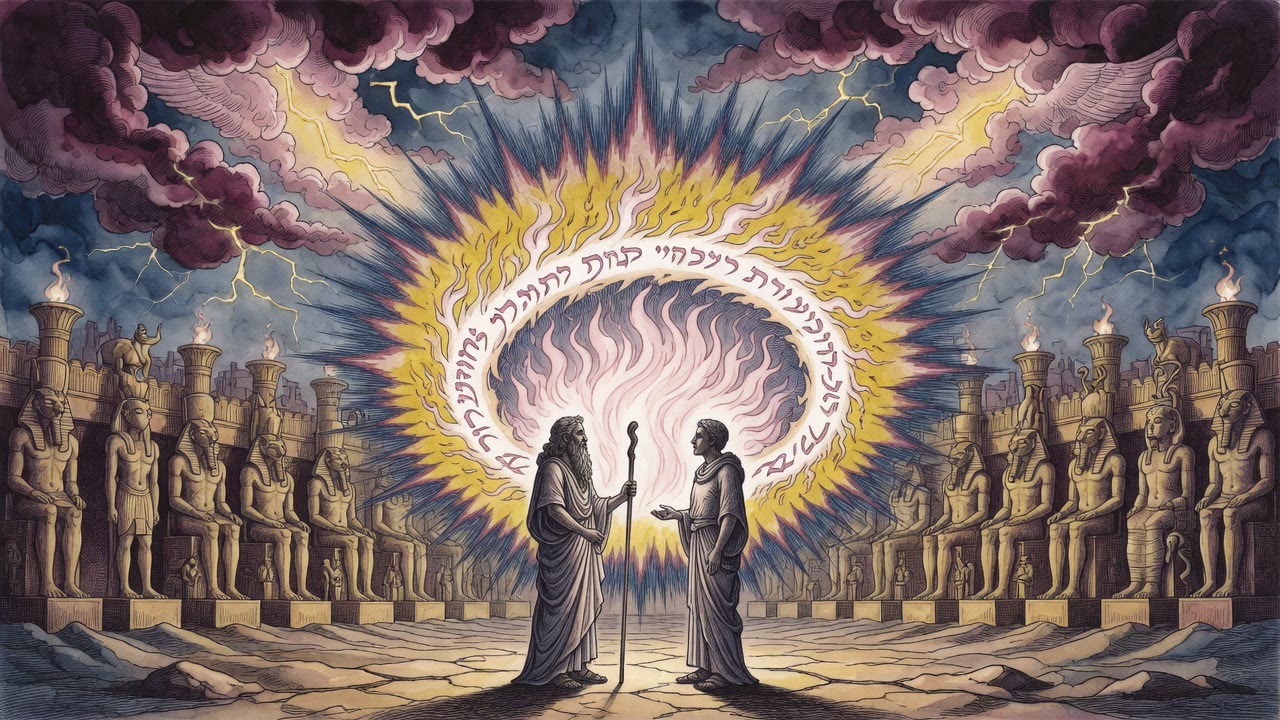
At Meribah, the water of strife, the old vision closed around its true meaning. Moses and Aaron did not fulfill the command as given. The verdict fell through one small word: therefore. Lachen (לכן). A word that lands like an oath. Because of this, they would not bring the congregation into the land.
Pharaoh had drowned children in the wrong river. He had heard "water" and made the Nile into an executioner. The water that barred Moses was not the water that held him as a baby. It was the water at the rock, decades later, where a leader's hand moved and the promised land receded beyond reach.
The seers had seen truly. They had named the element. They had never named the hour.
← All myths