The Vessels Israel Filled Between the Walls of the Sea
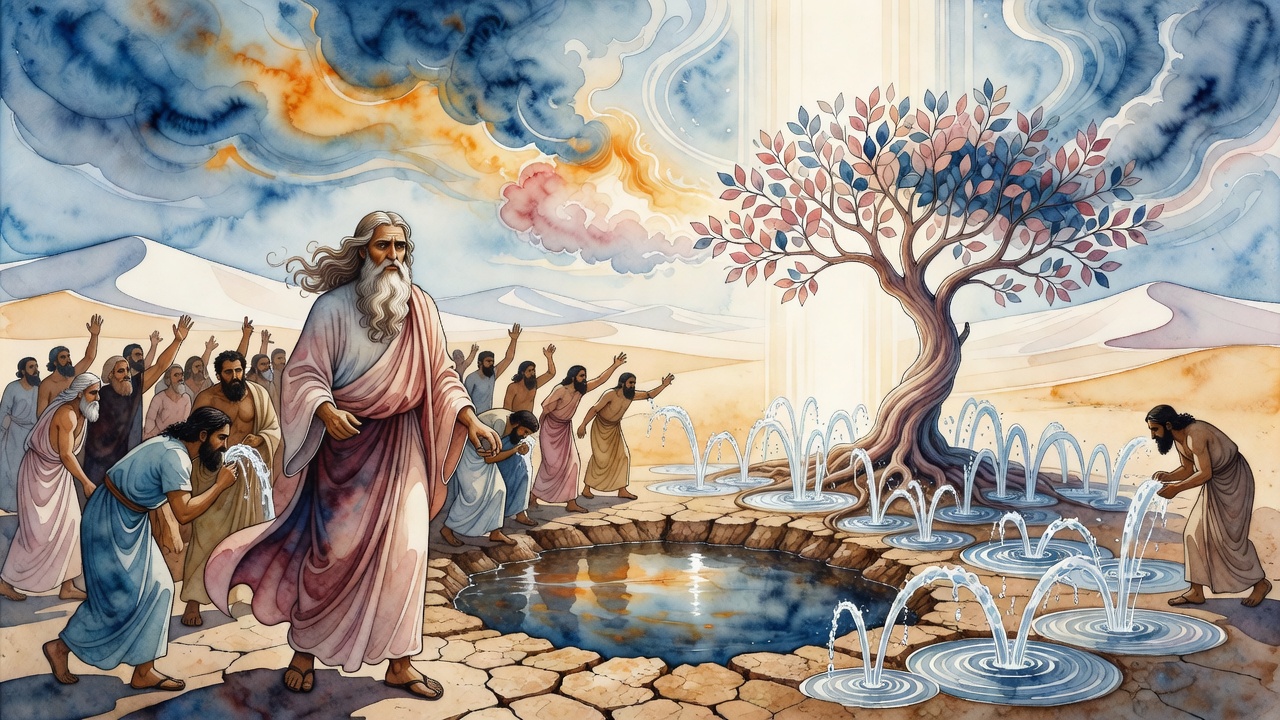
Israel filled their vessels with sweet water from the parted walls of the sea. Three days into the wilderness, every last skin ran dry.
Table of Contents
The dust cloud came first. Then the glint of bronze inside it, six hundred chariots wide, rolling down on a nation of former slaves pinned against the water. Israel stood on the shore of the Yam Suf, the Sea of Reeds, with Egypt's army behind them and the deep in front of them, and there was nowhere left to walk.
 Click for full size
Moses did what a prophet does. He turned his face from the chariots and began to pray.
Heaven cut him off. My beloved are in danger of drowning, God said to him, and you stand there praying? This was not the hour for words. Tell the people to go forward (Exodus 14:15). Lift the rod. Divide the sea.
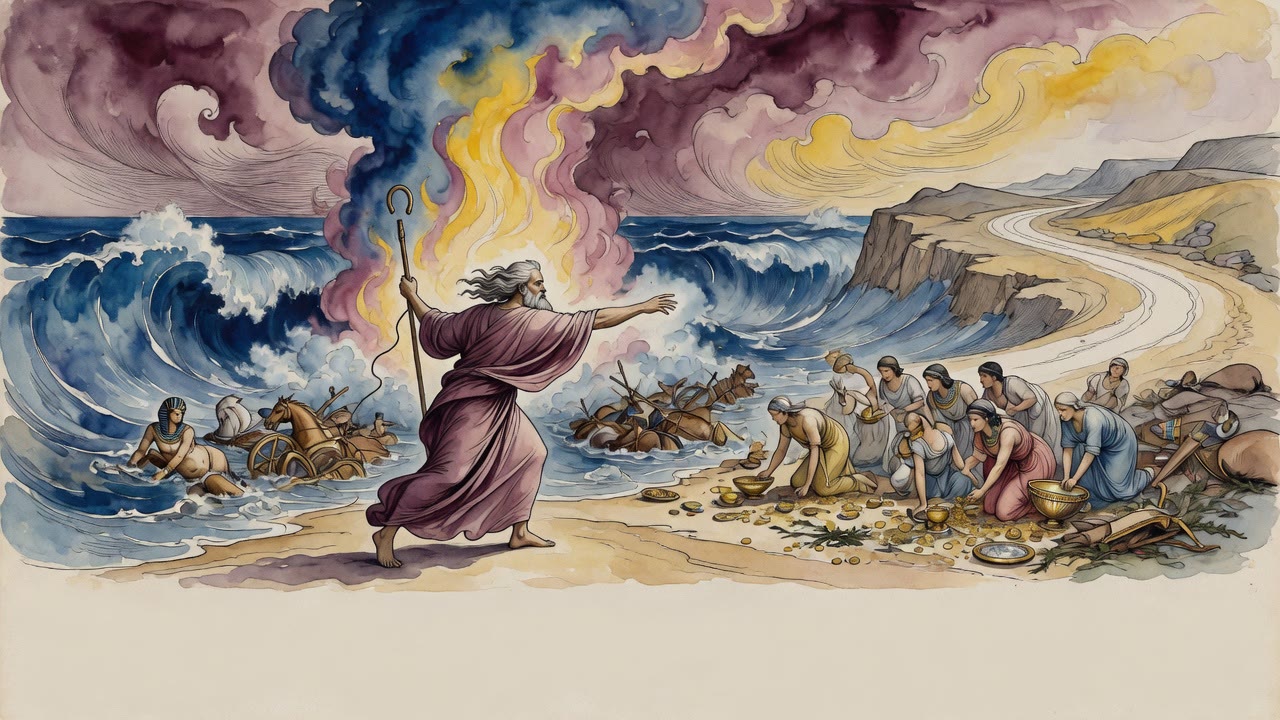
So Moses raised his arm over the water, and the water obeyed.
Twelve Roads Through the Deep
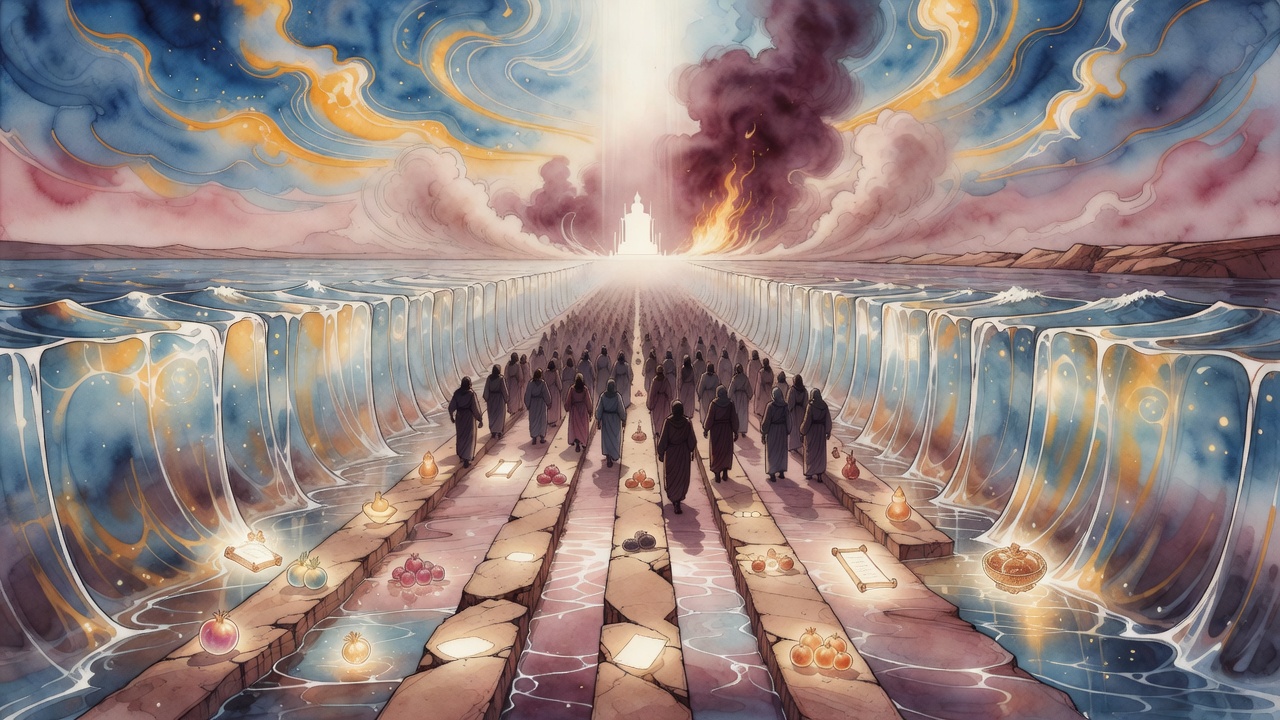
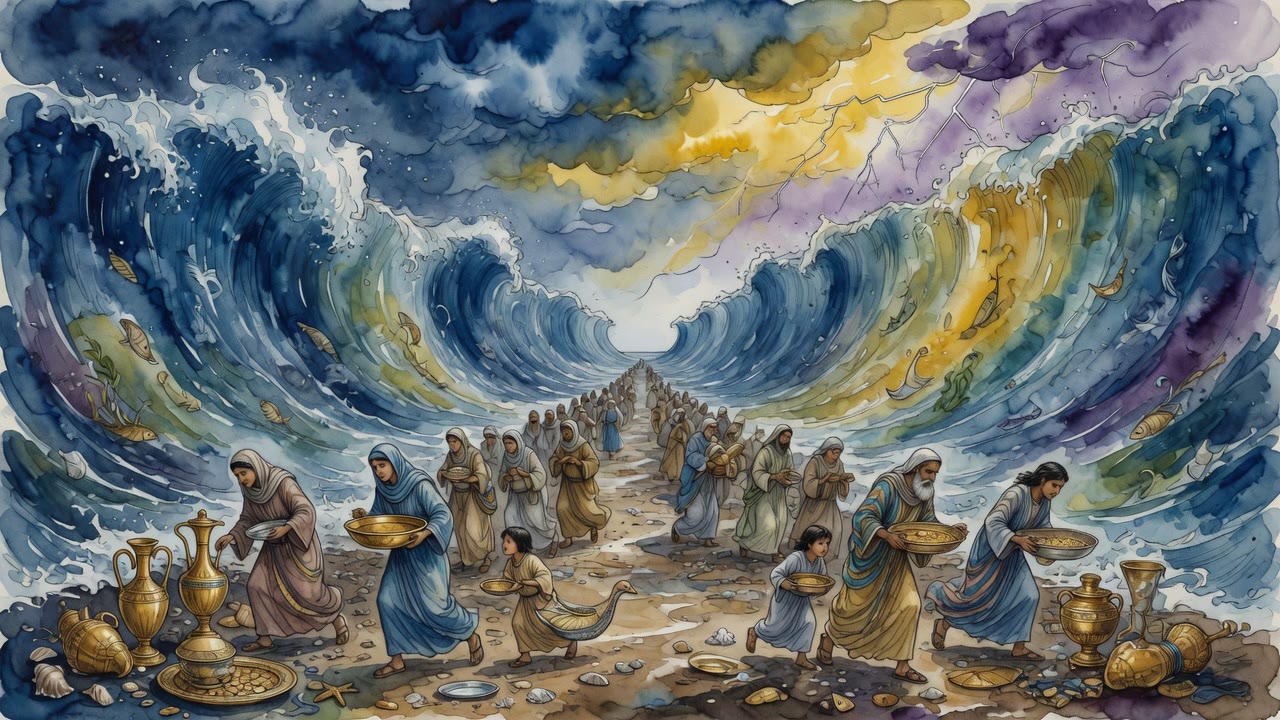
The sea did not simply pull back. It built. The waters climbed and locked themselves into walls, and the walls arched until they met overhead, a vault of sea suspended above the marchers like a roof no hand had laid. And the floor of the deep cracked open into not one road but twelve, one lane for every tribe, so that all of Israel walked the bottom of the sea at once, each family between its own two walls of standing water.
Light came down through the vault, wavering, green and silver. Children put their palms flat against the walls and felt them hold. Old men who had hauled bricks in Goshen that same season now walked a corridor cut through an ocean, and the ocean waited for them to pass.
Sweet Water in the Walls
Somewhere in the middle of the crossing, somebody tasted the wall.
It should have been brine. It was sweet. The towering water on either side of the path was fresh, drinkable, good, a sea turned into a well. And the people, who knew exactly what lay on the far shore, did the most sensible thing a freed slave can do in the presence of a miracle. They unslung their jugs and their goatskins and they filled them.
Up and down the twelve lanes, between the clefts of the divided sea, Israel drew water. Mothers held skins against the wall until they bulged. Men stoppered jars and stacked them in the carts beside the dough that had never had time to rise. They were walking into a desert, and the desert does not feed anyone, but here was water standing upright and offering itself, so they took what they could carry. It was caution and it was faith in the same gesture. God had opened a road; they packed provisions for the far end of it.
The Song on the Far Shore
Then the last sandal touched the eastern bank, and the walls let go.
The vault came down. The twelve roads drowned in a single roar, and Pharaoh's chariots, axle-deep in the seabed, went under with them. Israel stood on dry ground with the sea boiling behind them and the army gone, and the whole camp sang, Moses and the men in one thunder of voices, Miriam and the women answering with timbrels, horse and rider hurled into the sea.
And when the song ended they turned east, into the wilderness of Shur, and the vessels rode heavy and full on their shoulders. That weight was its own kind of comfort. Whatever the wilderness held, they carried the sea with them.
Three Days Into the Sand
The first day they drank freely. The water tasted of the miracle it came from, and the camp moved fast on the strength of it.
The second day the skins rode lighter. Fathers began rationing without saying the word, a half cup where there had been a full one, a wet rag for the baby's mouth instead of a drink. The horizon stayed empty in every direction, no well, no green, no line of trees marking a stream.
The third day a woman tipped her jar over her son's cupped hands and nothing came out. She shook it. A few drops struck his palm and vanished into the creases. Around her, all through the camp, the same small desperate gesture repeated itself, skins wrung like laundry, jars turned upside down and slapped on the bottom, stoppers pulled and sniffed at as if smell could be swallowed.
They went three days in the wilderness and found no water (Exodus 15:22).
The Empty Vessels
Read quickly, that verse sounds like geography. Deserts are dry; travelers find no water in them; what else is new. But the old tradition heard something sharper in it. The problem was not the landscape. The problem was the canteens. Found no water meant they looked in their own vessels, the very jars and skins they had filled between the clefts of the split sea, and found them empty. The supply drawn from inside the miracle itself had given out.
The prophets knew this exact picture. Their nobles sent their youths for water; they came to the cisterns and found no water; they returned with their vessels empty, ashamed, their heads covered (Jeremiah 14:3). Containers built for one purpose, holding nothing. A whole camp of them, three days east of the greatest rescue in its history.
That was the shape of the third day. Behind them, an entire sea, the one that had stood up in walls for them, the one they had drunk from, now lying flat and unreachable across seventy miles of sand. On their shoulders, the proof they had been inside it, every jar dry. The miracle had been real. They had carried a piece of it away in their own hands. And it ran out anyway, because carried water always runs out, and the wilderness was only three days old.
← All myths