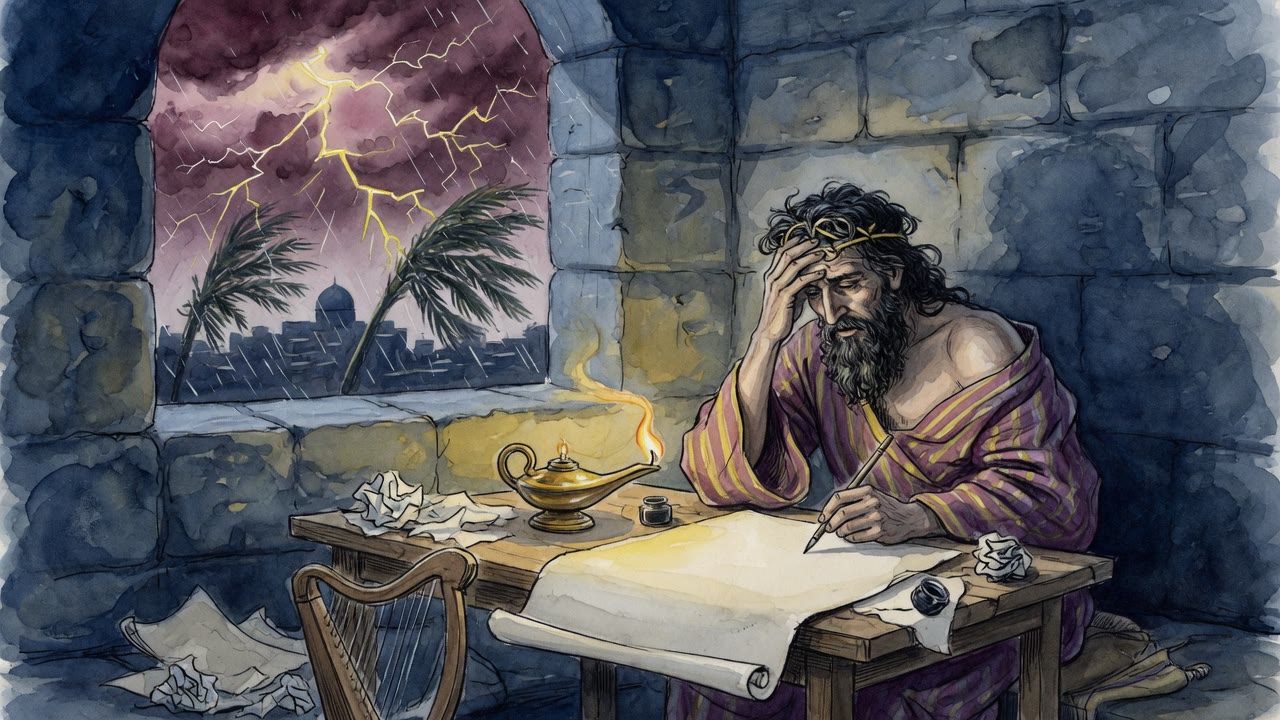
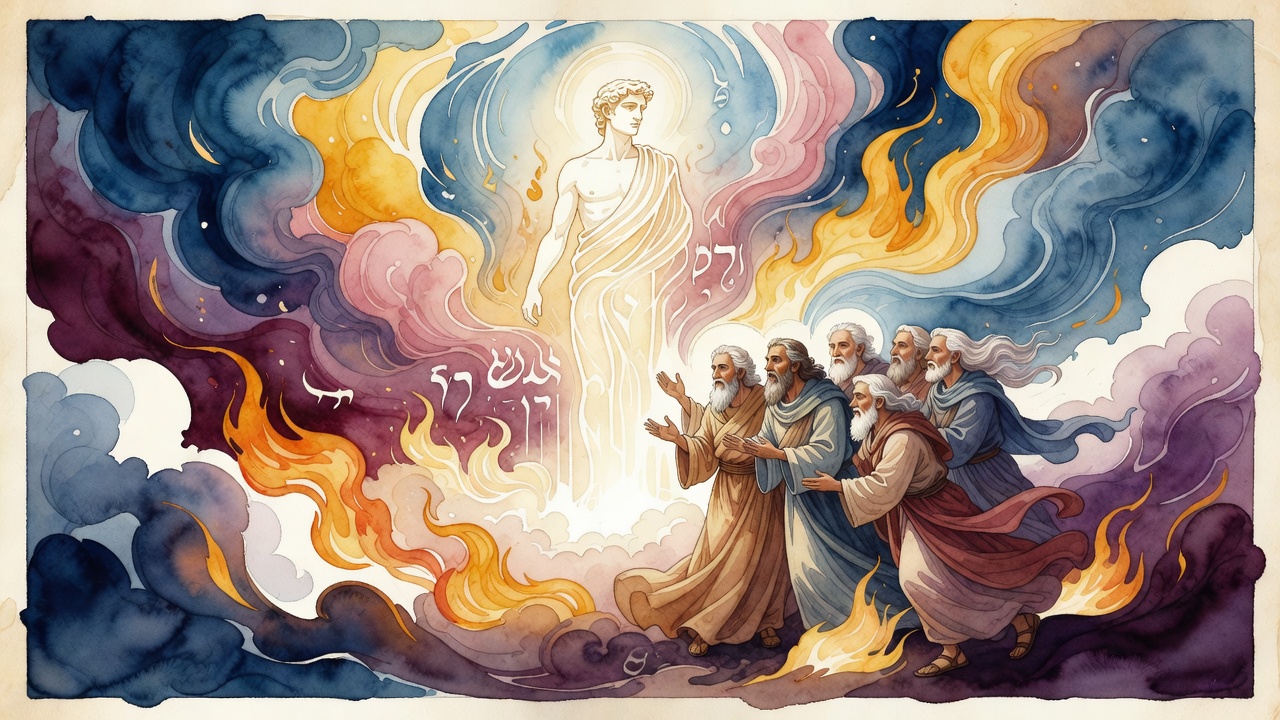
David Uncovered the Tehom Under the Temple
While digging the Temple foundations, David struck a shard that sealed the abyss, and when he lifted it, the waters of the deep began to rise toward the world.
Table of Contents
 Click for full size
The Foundations That Went Too Deep
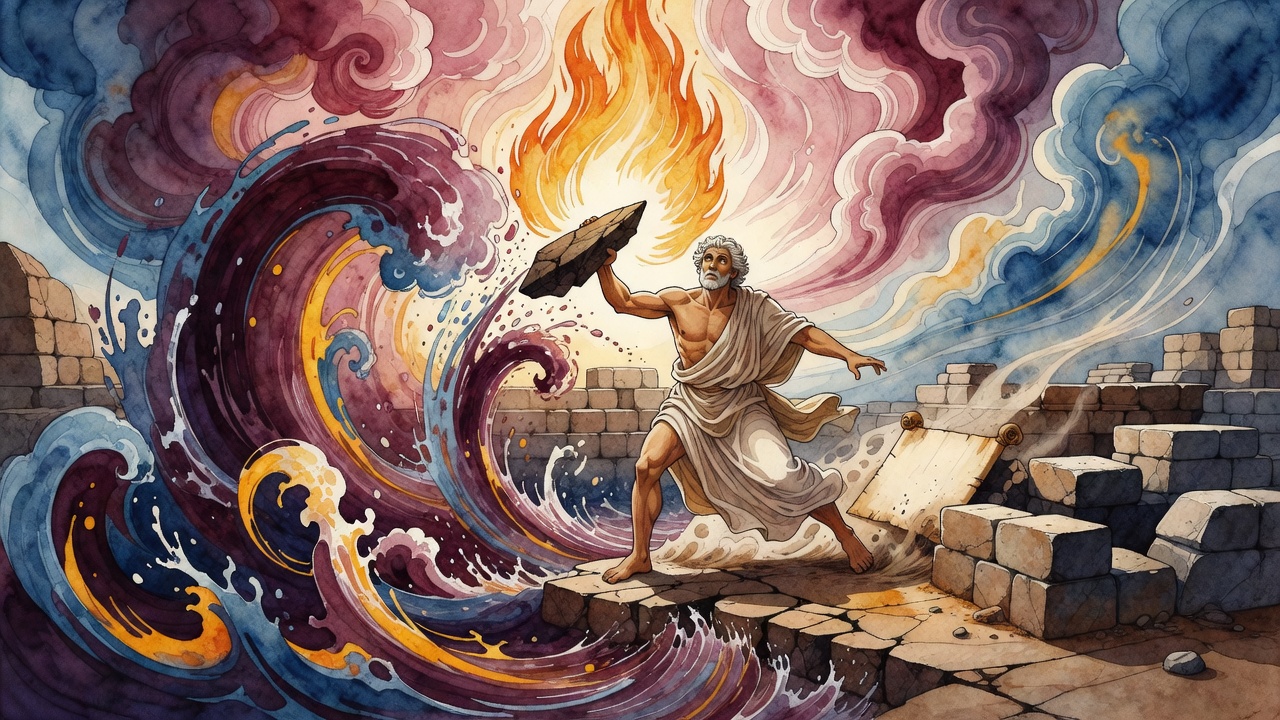
David was digging the Temple's foundations when the shovel hit something it could not account for. Fifteen hundred cubits down, in the earth beneath Jerusalem, the workers found a shard. A potsherd. A piece of broken ceramic resting on something underneath it.
David reached down and lifted the shard.
The tehom immediately began to rise.
The tehom is the primordial deep, the subterranean ocean that the Torah describes before creation, the same depths over which the divine spirit moved in Genesis 1. It is not a metaphor. In the rabbis' cosmology it is a physical place, below the earth, pressing against the foundations of the world from beneath. The shard that David lifted had been sitting over the opening to it, sealing it. When he removed the shard, the seal broke.
The Water That Would Have Drowned the World
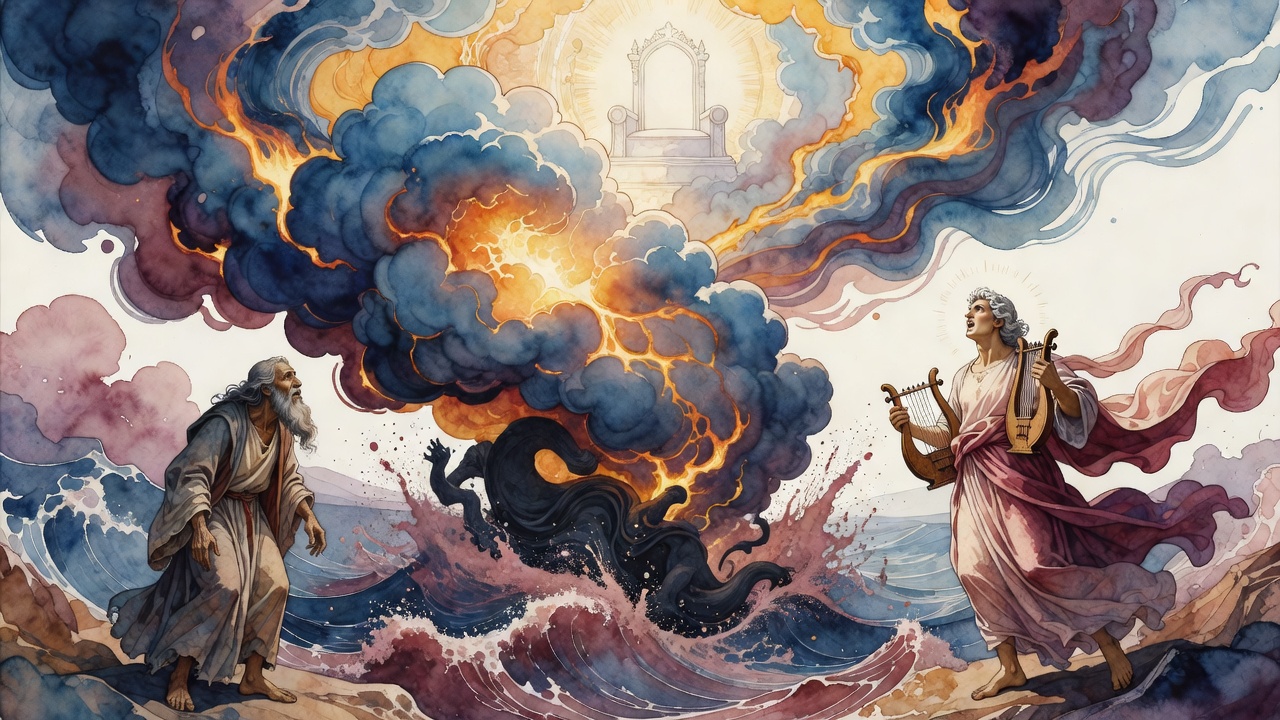
The tehom, once it started rising, did not stop because David put the shard back. It had been opened and it wanted to be open. The Ginzberg account, drawing on midrashic sources, describes David watching the waters climb toward the surface and understanding that if they reached it, the world would flood. Not a local disaster. The primordial waters covering everything, the pre-creation state returning.
David called out: who knows how to write the Ineffable Name on a shard and throw it into the tehom (the deep)? He was asking not for a prayer but for a technique. A specific inscription, placed on the right material, thrown into the rising waters, would seal the opening again. The king who composed the Psalms was now asking a technical question about the management of the deep.
Ahitophel, David's wise counselor whose wisdom the tradition treated as almost prophetic, supplied the answer. The Name was written. The shard was thrown. The tehom receded. The water went back down sixteen thousand cubits before it stopped. David recited the fifteen Psalms of Ascent immediately afterward, one for each thousand cubits the water had descended, as if counting it back into place.
The Deep Before Dry Land
Pirkei DeRabbi Eliezer, an early medieval midrashic text that expands biblical narratives, describes the state of things before creation's fifth chapter: before dry land, before even the gathering of the waters, there were the tehomot, the primordial depths. These were not empty darkness. They were the raw material from which everything would eventually be shaped, pressing against the not-yet-formed world from every direction.
The act of creation was partly the act of holding the tehom back. God gathered the waters and made them oceans. The earth appeared where the waters were not. The boundaries between sea and land are not natural features of an indifferent universe. They are boundaries established and maintained by divine decision. Below them, the tehom has been there since before creation and will be there until after it.
The Song of the Sea and the Depths
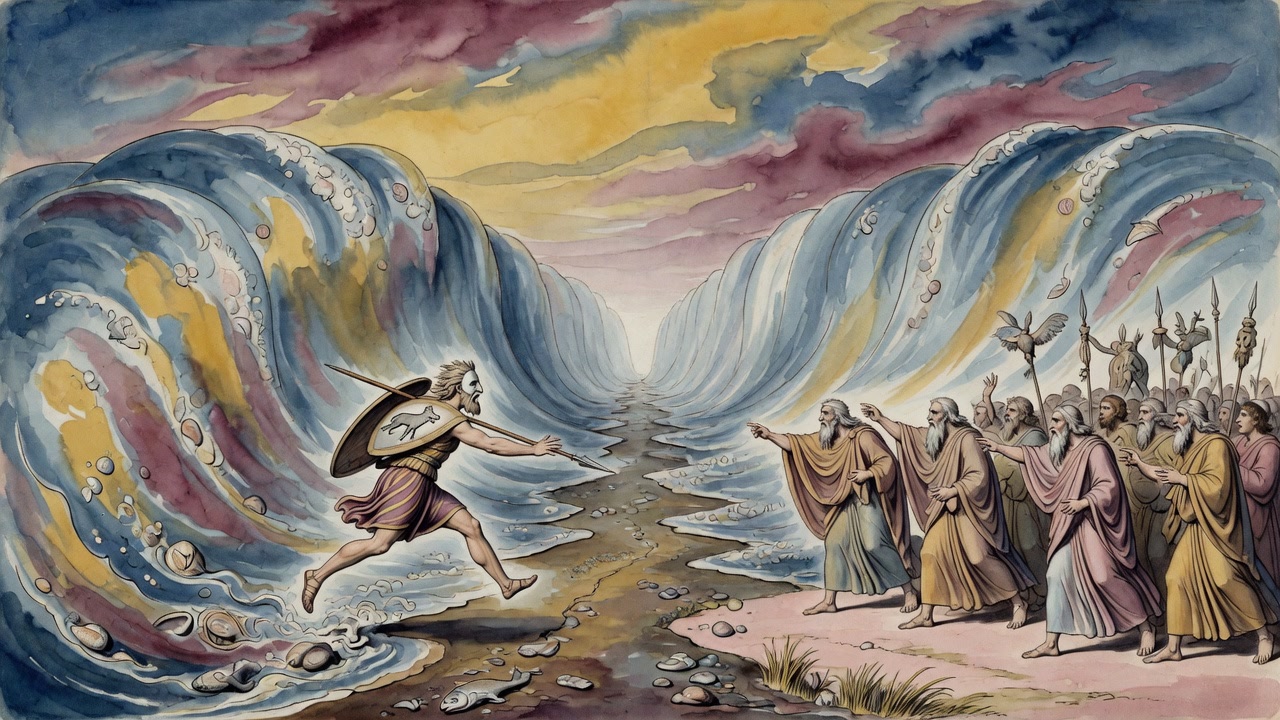
After the crossing of the sea, Miriam and Moses sang. The line in the Song of the Sea, The depths covered them (Exodus 15:5), attracted rabbinic attention because the Israelites had just crossed on dry ground. The seabed had been exposed. There were no depths there. The Mekhilta asked the question: what depths?
Its answer reveals the cosmological dimension of the Exodus that the narrative's surface does not show. The lower depths, the subterranean tehom, rose and covered the Egyptians from below while the walls of water collapsed on them from the sides. The miracle at the sea was not simply a wall of water. It was a coordinated event involving the deep that sat under the earth, the same tehom that had threatened to flood the world when David lifted the shard, now recruited for the protection of Israel.
← All myths