The Farmer Dug a Cistern Before the Drought Came
A careful tither cut half his field for a stone cistern. Neighbors mocked him until drought closed the wells and his watered half still fed the village.
Table of Contents
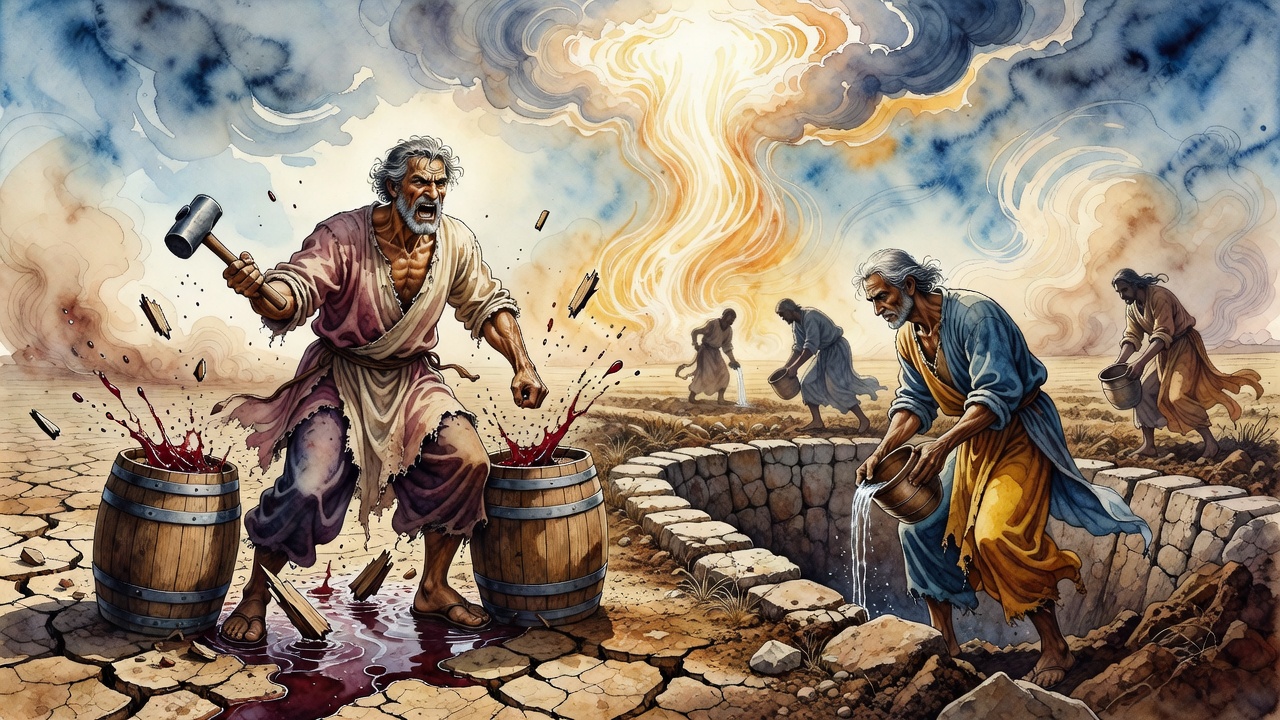
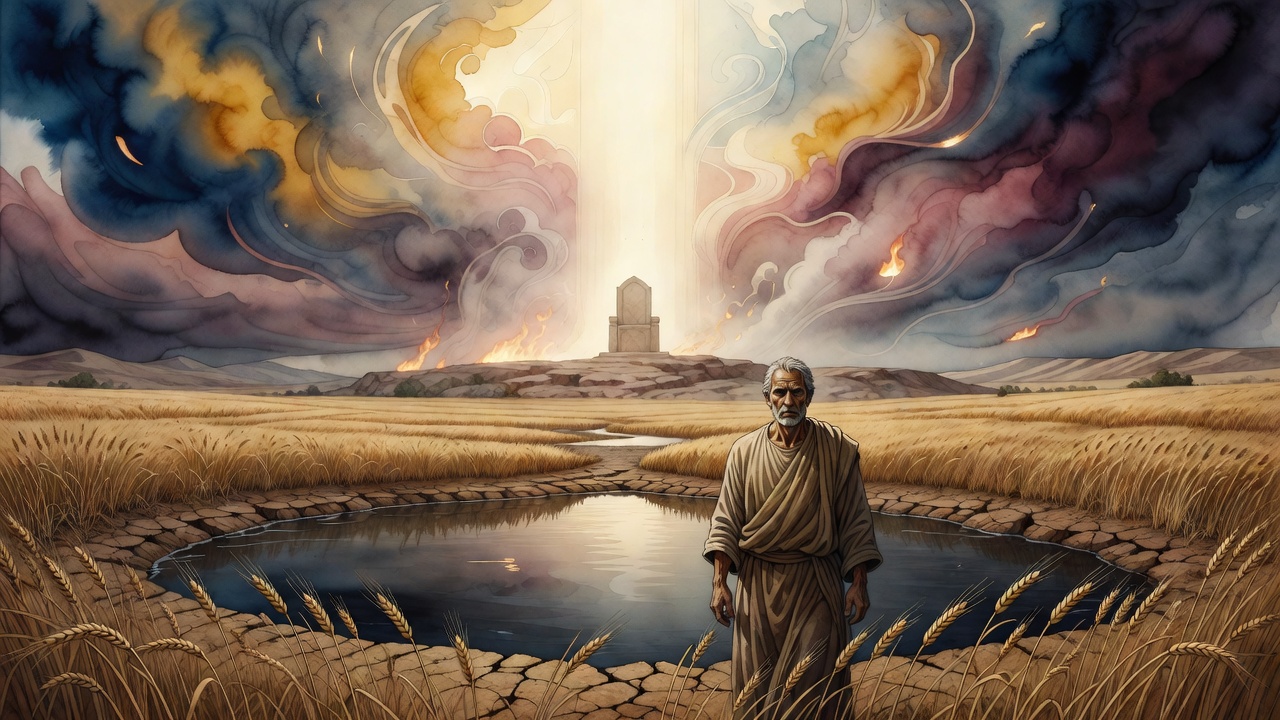
The farmer set stones in a ring while the rest of the village still trusted the sky. Half his best field stayed empty of seed. He lined a wide cistern and waited for winter runoff as if water were a guest that needed a proper house.
 Click for full size
Neighbors called it madness. He had cut his yield on purpose to dig a hole in good soil.
The Tenth Before the Miracle
Every season he had already given away what the law asked. Priestly portion. Levitical tenth. Poor-tithe. He did not shave the weights in lean years. He did not delay until the poor grew tired of asking at his gate. The habit of open hands made the next habit possible. When something in him pressed to take half a field out of cultivation, he listened without a prophet standing at the fence to force the choice.
In the Exempla of the Rabbis the tale is simple and stubborn. The cistern caught the rains. The next year drought came like a closed fist over the valley. Wells failed. Fields browned in rows. His remaining half, fed from the stone bowl, still put out grain and greens. He sold at drought prices and lived. More than that, he still had something left to give when faces appeared at dusk with empty sacks.
The hole in the ground had become a second field, only this field held water instead of stalks, and water was the only coin that still bought life.
When the Earth Distorts Under False Hands
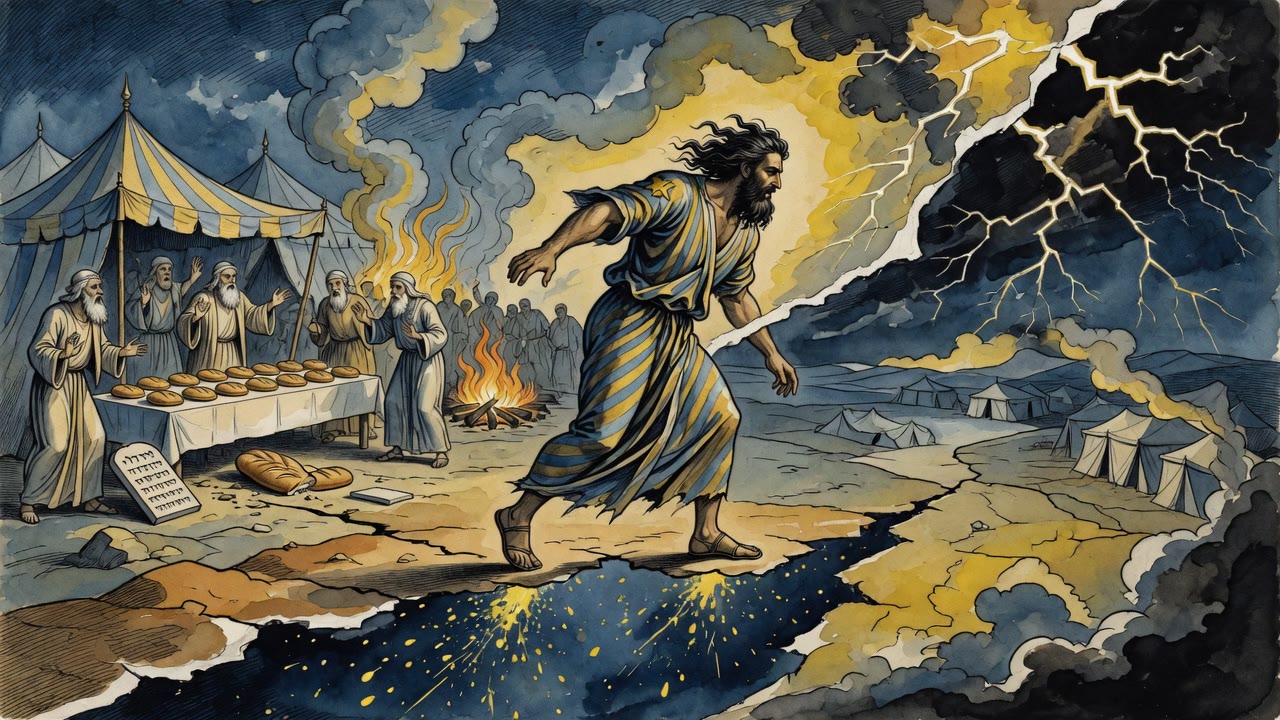
Midrash Tanchuma on the double command "you shall tithe, tithe" (Deuteronomy 14:22) hears the earth itself twist when statutes break. Standing grain appears, then never becomes sheaves. Sheaves appear, then never become a clean heap on the floor. A threshing floor shows promise and then refuses a winnowed pile. The midrash names the broken statute of tithes among the reasons the ground will not finish its work for people who finish nothing for heaven or for the poor.
The farmer's neighbors learned that lesson the hard way. Their fields showed early green and then collapsed under heat. His field finished what it began because he had not treated the soil as a private vault. Abraham, Isaac, and Jacob appear in the same midrash as men who separated portions before blessing settled. Isaac measured a hundredfold so he could tithe it. The measure was not greed. It was readiness to give with numbers honest enough for a priest to check.
Jacob vowed, "and of all that Thou shalt give me I will surely give the tenth unto Thee" (Genesis 28:22). The farmer's cistern was a quieter vow, spoken in stone rather than in a dream of ladders.
Sixth-Year Fullness and Heaven's Store
When the land must rest in the seventh year, the question rises like dust in a dry throat. What will we eat if we stop squeezing the dirt? Targum Jonathan on Leviticus answers from heavenly treasuries. In the sixth year blessing descends and the produce covers three years. The miracle is not a trick of better plows. It is a storehouse opened above a people who dare to stop taking for one full turn of seasons.
The cistern was a small echo of that sixth-year logic. He surrendered half a field in ordinary time and found that ordinary time still held a hidden reserve. The land is Mine, the Targum insists. Israel lives as sojourner and guest. A guest who digs for rain while others mock him is still only tending what was never fully his to hoard.
Jubilee and liberty trumpets belong to the same family of ideas. Debt is temporary. Ownership is lease. Freedom is the default. The farmer who frees half a field from seed is practicing a miniature release before the calendar forces a larger one.
Why the Hole Was Wisdom
The story does not promise that every honest tither becomes rich in a dry summer. It promises that fidelity trains the eye. The man who already gives a tenth can hear when half a field should become a bowl for water. The man who cheats the poor cannot hear anything but his own hunger, which grows louder the more he feeds it with withheld grain.
When the drought broke, some neighbors asked him for seed and advice. He gave both without a speech about who had been right. The cistern stayed in the ground like a quiet argument against panic. Tithe first. Then dig. Then sleep while the wind does work you cannot force with your hands no matter how early you rise.
In later years children pointed at the stone ring and told the story wrong, making him a wizard of weather. He was not. He was a man who practiced portion until portion taught him where to put a hole.
← All myths