The Farmer Who Shrank Until God Owned the Field
He shaved the tithe year by year until the harvest came in at a tenth. In the market his friends congratulated him. God, they said, was the landlord now.
Table of Contents
 Click for full size
He Cut the Tenth a Little Smaller
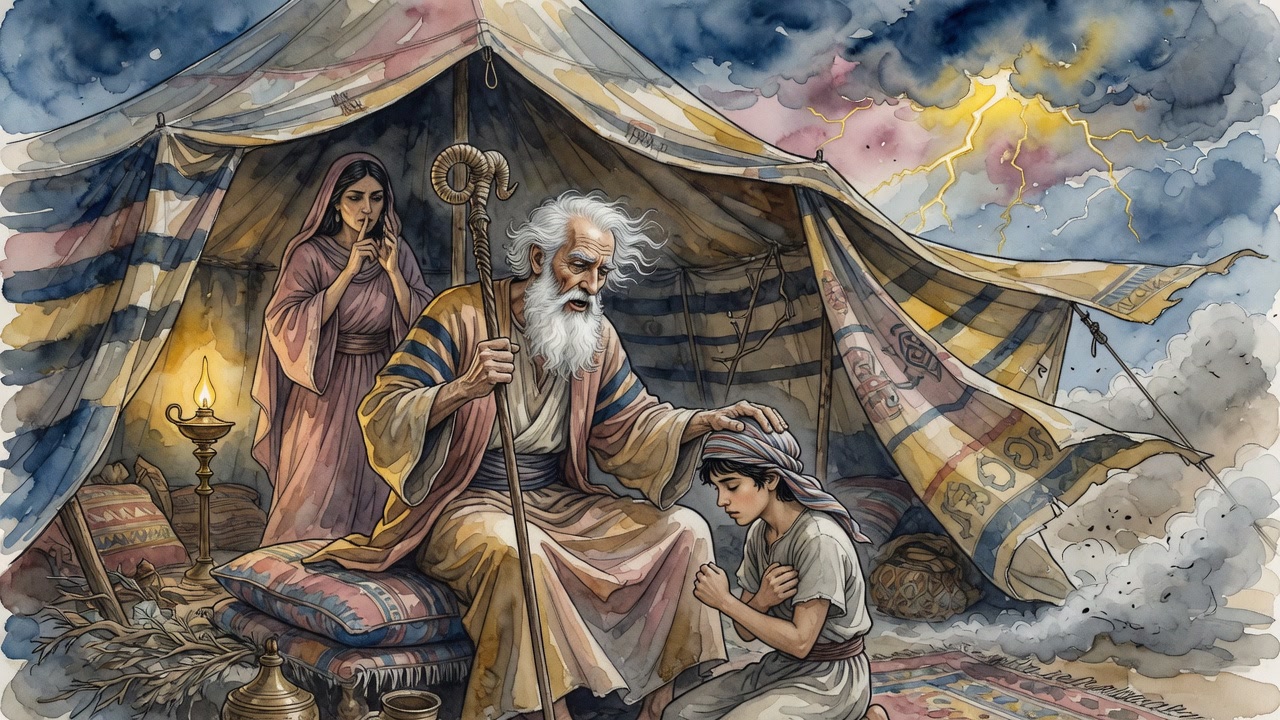
The farmer began with a full field and a small idea. The Torah asked a tenth for Levite, priest, or poor, depending on the year. He decided the tenth was negotiable. A little less this harvest. A little more kept under his own roof. No thunder answered. So he cut again the next year.
The harvest shrank with him. A hundred bushels became ninety, then eighty, then sixty. He still walked the furrows like an owner. He still named the rows. He still sent hired men to bind what stood. The numbers no longer agreed. He counted sacks in the shed and blamed the wind, then the seed, then a dry week that had not been dry when his neighbor's barley came in heavy.
He could have restored the tenth after the first lean year. He did not. Each smaller harvest confirmed the habit instead of breaking it. He cut again. The field answered in the only language fields have.
Friends Called Him Priest in the Market
Friends met him in the market with ironic congratulations. "Mazel tov," they said. "You have finally become a priest. You now receive only the tenth. God receives the other nine. You wanted to shrink God's share. You shrank your own until God was the landlord and you were the kohen collecting a tithe off your own field."
He laughed once, the way a man laughs to end a conversation. The joke had teeth. What he refused to give with a full hand, Heaven collected another way. He wanted to be master of nine-tenths. He became tenant of a tenth.
He walked home with the words still in his ears. Landlord. Priest. Field. He stood at dusk in the year the yield hit bottom and counted stubble. Somewhere a Levite household ate thinner too, because the pipeline of the tithe had clogged at the source. No angel with a ledger stood in the furrow. The audit was the harvest itself.
A Matron Asked What God Does Now
In a study house the farmer did not enter, a matron asked Rabbi Yose ben Halafta what God has done since the six days of making. "He sits and builds ladders," the rabbi said. "Raising this one. Lowering that one."
Why did Reuben and Gad end with so much livestock? A man may break his back in trade, sail from sunrise to sunset, climb peaks. The toil does not mint riches by itself. Rabbi Abba heard in the psalm not only mountains but lifting up. No one lifts himself by pure striving. The Holy One takes from one hand and lays into another. When God willed wealth for Reuben and Gad, He delivered Midian into Israel's hand, and only then came the much livestock.
Who is truly rich? The one who rejoices in his portion. Eating the labor of your hands with happiness is the only prosperity the psalm will bless without a smirk. The cheating farmer climbed no ladder. He sawed at the rung of the tithe and called the fall thrift. God had been building a ladder under him the whole time, and the direction was down.
Rain Fell for Abraham's Sake
God told Abraham, "I will bless those who bless you, and the one who curses you I will curse, I Myself." When God speaks of His own honor, the wicked are merely lightly esteemed. When the honor of the righteous is at stake, He steps in personally. He is stricter about their dignity than about His own.
The blessing is physical. Rains come for Abraham's sake. Dews fall for his merit. The world is watered because a righteous person lives in it. Nations find blessing through Israel not always in coin but in crisis. Mordecai saves a king. Joseph and Daniel unlock dreams. Jacob blesses Pharaoh.
A field that refuses the tithe is not only stingy toward Levites. It steps out of the weather system tied to righteous honor. The rain still falls somewhere. It may fall less where the hand has closed. Abraham's rains and dews were never a private weather system for one patriarch. They were the world's reminder that righteousness has climate effects. A closed fist over the tithe is a small climate denial. The farmer's rows learned it in bushels.
The Field Filed the Complaint
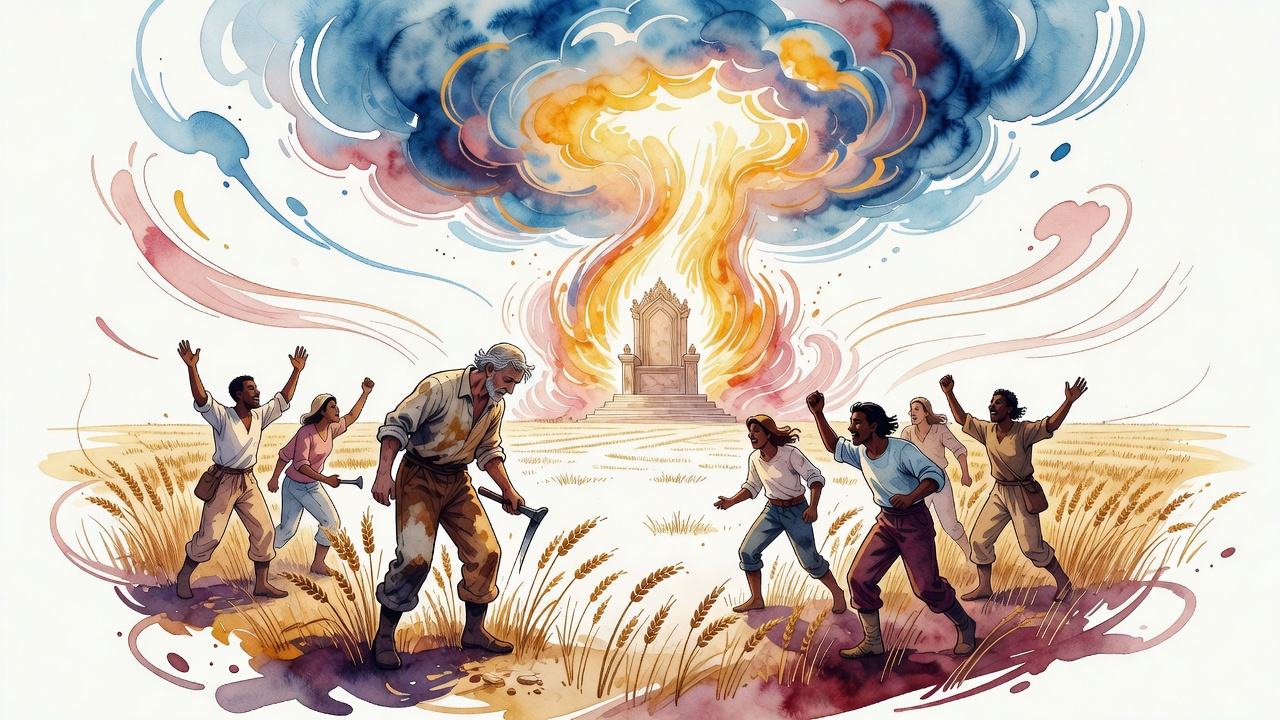
God's ownership did not begin when the friends joked. It had always been true. The joke only made the title deed audible. Walk that field at dusk in the year the yield hit bottom. Stubble. A man counting what is left. He still called it his. The soil had already changed the name on the lease.
He went to market the next week with a tenth of what he used to carry. The same friends did not need to repeat the blessing. He had become the priest of a field God owned, collecting a tithe off ground that would not swell for a closed hand.
He could still reverse course. He could still restore the tenth and watch whether the field answered. The ladders God builds after the six days run in both directions. That morning he stood in the stubble and did not open his fist. The landlord he had tried to shortchange did not need to appear in person. The harvest had already spoken.
← All myths