Ten Famines That Emptied Barns and Heavens
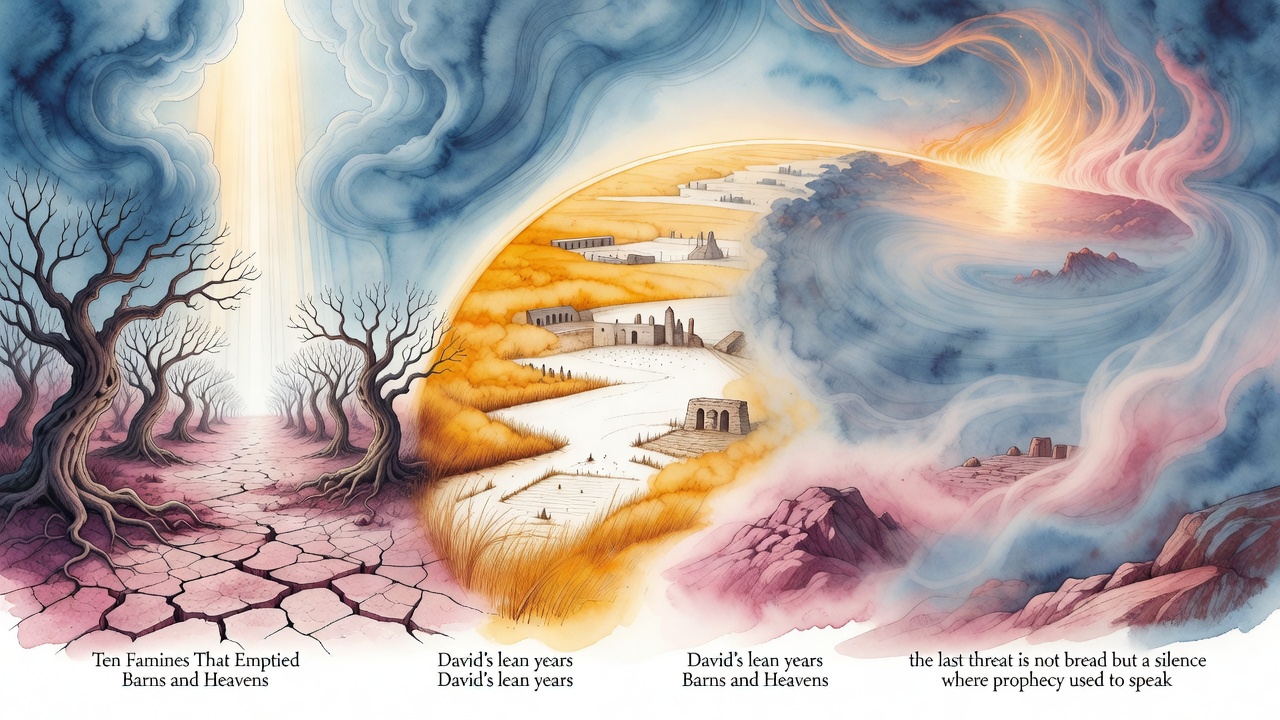
From Eden's cursed ground to David's lean years, the midrash counts ten famines. The last threat is not bread but a silence where prophecy used to speak.
Table of Contents
 Click for full size
The First Empty Mouth
The ground took the curse and learned how to refuse. From the ground which the Lord cursed (Genesis 3:17), hunger entered history as a recurring visitor. The midrash does not count casually. It names ten famines, a ledger of empty barns from Adam to a hunger that still circles the world.
Adam's field went hard. In the days of Lemekh the same cursed soil tightened again. Already the pattern was set: the earth can work against the mouth that needs it. Be'itzavon, the longer suffering of livelihood, was not a metaphor. It was a calendar of thin years waiting to be filled with names.
A mother in that first age measured seed with a shaking hand and learned that thorns grow faster than grain.
Patriarchs Under Thin Sky
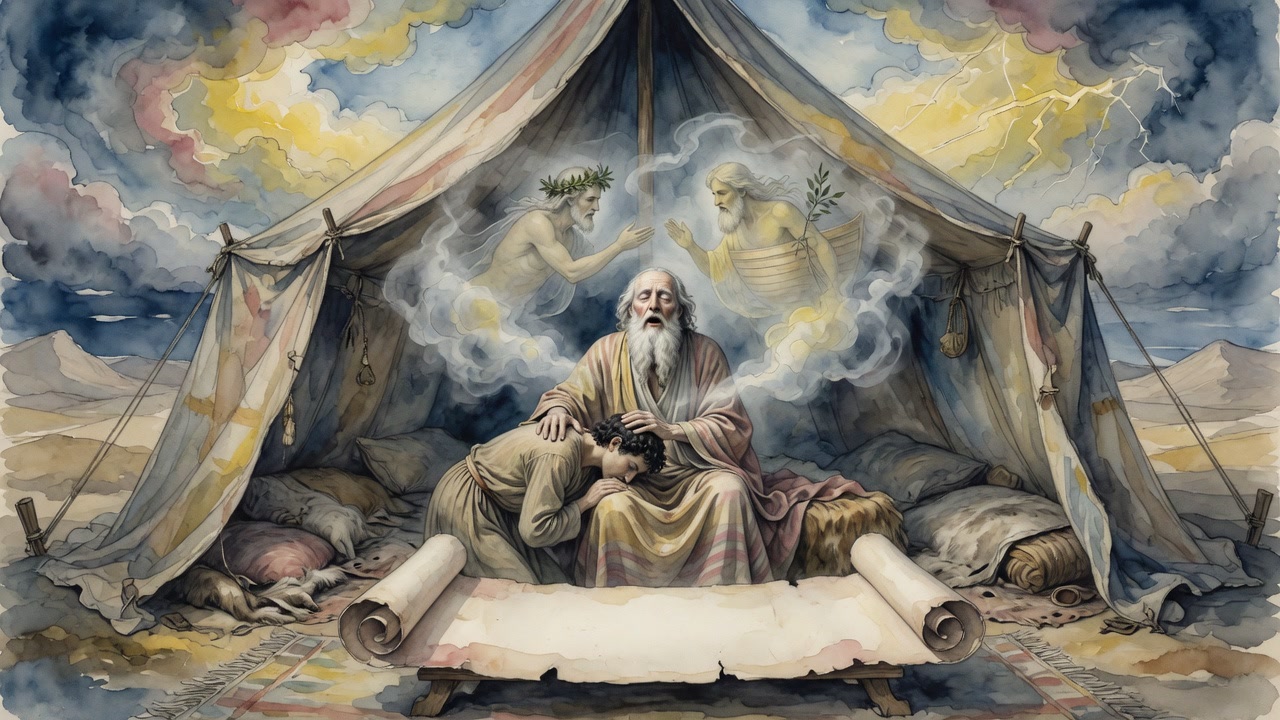
Abraham met famine and went down toward Egypt. Isaac met another, besides the first. Jacob sat through two years of it while his son, sold and risen, held the keys of grain in a foreign house. The brothers who once sat to eat bread over a pit would later bow for bread they could not grow.
Rabbi Berekhya notes Abraham faced two famines. The list is not a blur. Each name is a household that watched prices rise and children thin. Joseph's warehouses in Egypt became the hinge between a private family crime and a public rescue. The transgression that sold him became, in one hard midrashic turn, hope for a world that needed bread more than it needed clean hands in Canaan.
Famine does not ask who is righteous before it empties a jar. It only asks who holds the keys when the jars are empty.
When the Strong Carry the Weight
In David's time a famine stretched, and the sages refuse to blame only David's reign. The root, they say, reached back to Saul. Why wait? Saul was like the shoot of a sycamore, easily broken. God postponed the blow until a stronger king could bear it.
A glazier does not hang a basket of fragile goblets on a weak peg. He sets a strong peg first, then hangs the weight. Hardship prefers the shoulders that can hold without shattering. Rabbi Berekhya hears Isaiah: He gives strength to the weary. Famine is not always timed for the weakest hour. Sometimes it waits for a spine that will not snap, and still the spine aches.
David ruled and still watched the land refuse rain. Strength is not immunity. Strength is the capacity to stay standing while the ledger of hunger fills.
Judges, Prophets, and a Donkey's Head
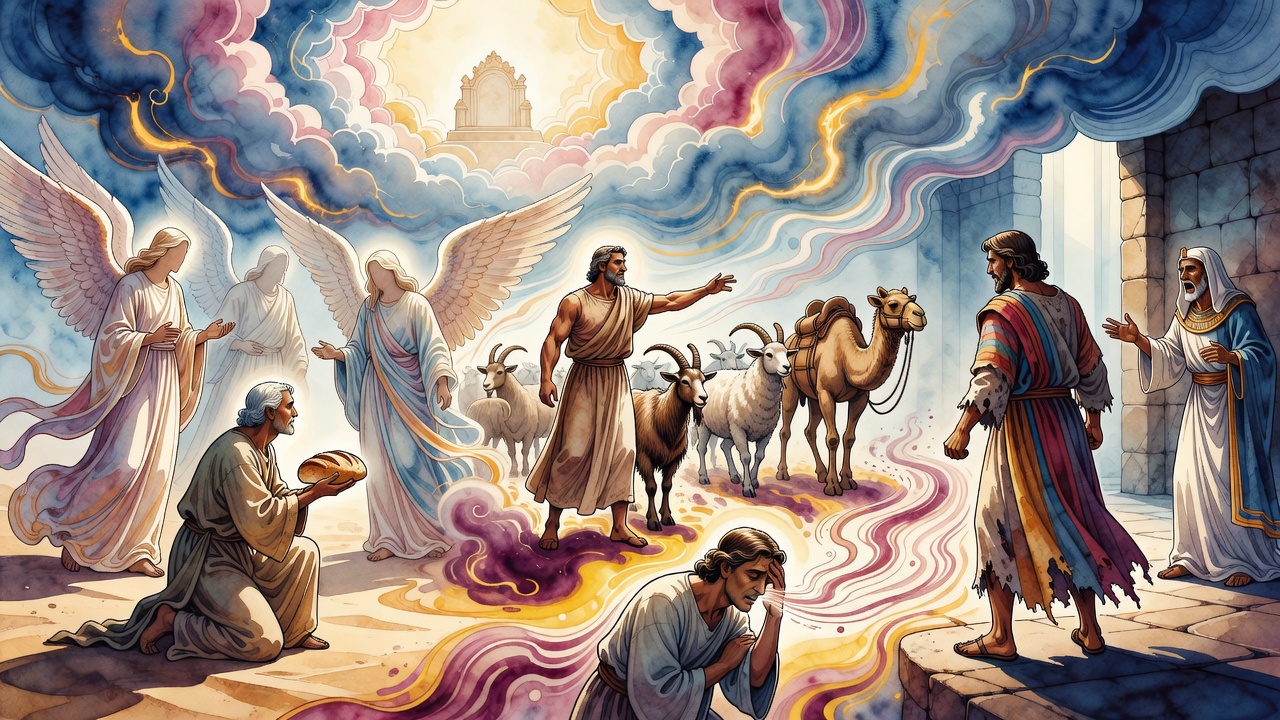
In the days when the judges judged, Ruth's book opens on famine. Elijah's sky shut until the word of the Lord opened it. Elisha's siege grew so cruel that a donkey's head sold for eighty pieces of silver. Numbers on a receipt become a scream in a marketplace where no one jokes.
The rabbis argue when a person may leave the Land for bread. Two se'a of wheat for one sela is a threshold in one teaching. Rabbi Shimon tightens it: only if wheat cannot be found at all. Elimelekh left and paid for the leaving. Hunger pushes. The Land pulls. The argument is not abstract. It is a family deciding whether to lock the door or walk toward Moab with a name that will later be judged for the walk.
Elijah's famine came as drought, years of sky like bronze. Elisha's came as siege, the kind that turns unclean meat into currency. Different engines. Same empty stomach.
The Tenth and the One Still Coming
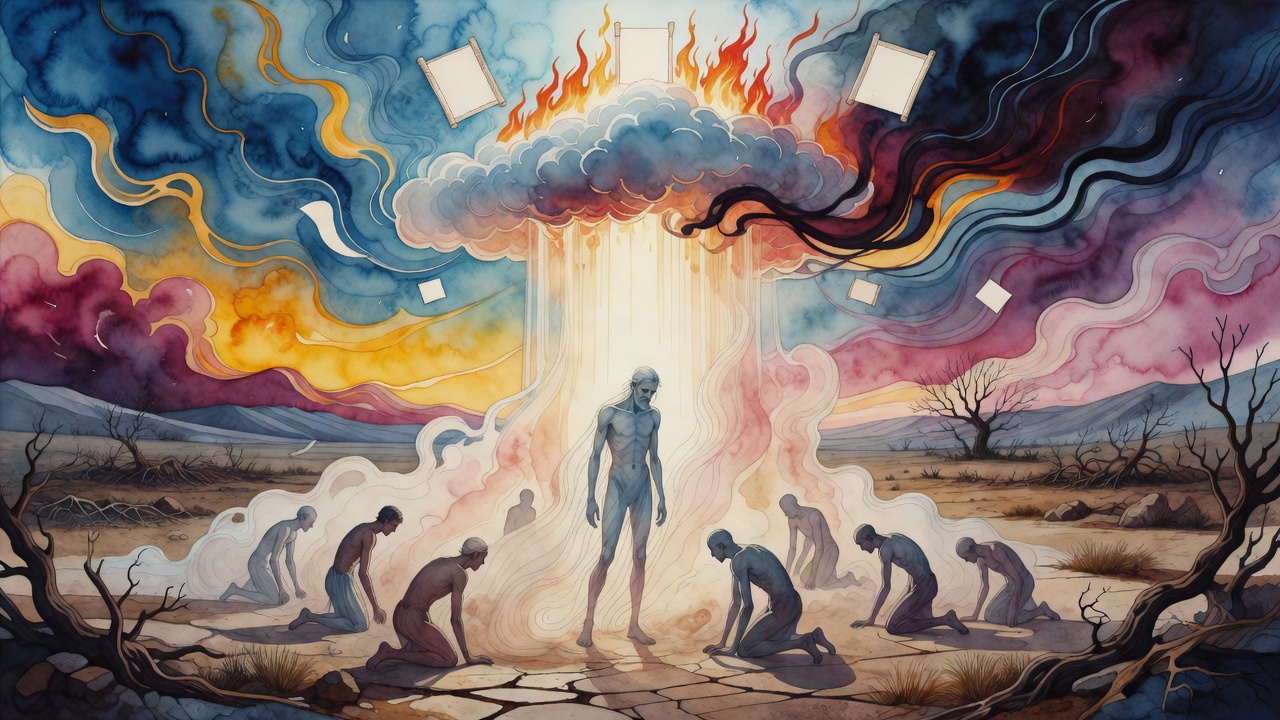
Nine named ages. Then one that circulates and comes periodically, a famine that never fully retires from the world. Beyond even that, Amos is heard: not a famine of bread or a thirst for water, but to hear the words of the Lord. A silence where prophecy used to speak. Grain can return after rain. A famine of hearing is a different death.
Adam's longer pain of bread sits under the whole list. Livelihood was already twice birth's cost. The ten famines are that cost written across centuries, until the last threat is not an empty oven but an empty sky that will not answer.
A child in any of those ten ages asked when the bread would come back. Sometimes the answer was Egypt's storehouses. Sometimes a prophet's prayer. Sometimes only wait. The midrash keeps the child company by refusing to let famine be a single story. It is a drumbeat. Sometimes the peg holds. Sometimes the donkey's head has a price. Always the question returns: what is empty now, the jar or the ear?
Joseph's brothers learned famine in the body after they had learned betrayal in the heart. They came down to Egypt with silver and empty sacks, and the man who sold grain was the man they had sold. The midrash's long list of ten famines has that reunion inside it even when it does not name every face. Bread is never only bread once a family has thrown a brother into a pit and then begged for crusts from his hand.
In Elijah's drought a widow measured oil and flour toward death until a prophet stretched the jar. In Elisha's siege mothers faced choices the text itself can barely hold. The donkey's head at eighty silver pieces is not color. It is what a city becomes when the tenth famine, the circulating one, stops circulating and settles in for a season.
← All myths