Parshat Lech Lecha6 min read

Abraham Gave Shem a Tenth of the War Spoil

After the night raid that freed Lot, Abraham sorted spoil for Shem, son of Noah. Angels answered his prayer and named God his shield.

Curated by Arthur · Told by Maggid ·
Table of Contents
  1. Night Raid Across the Kings' Camps
  2. Shem Steps From the Flood's Shadow
  3. Prayer That Named the Shield
  4. Terah's Road and the Vanity of Gifts
  5. What the Tenth Refused to Buy
Abraham Gave Shem a Tenth of the War Spoil Click for full size

Night Raid Across the Kings' Camps

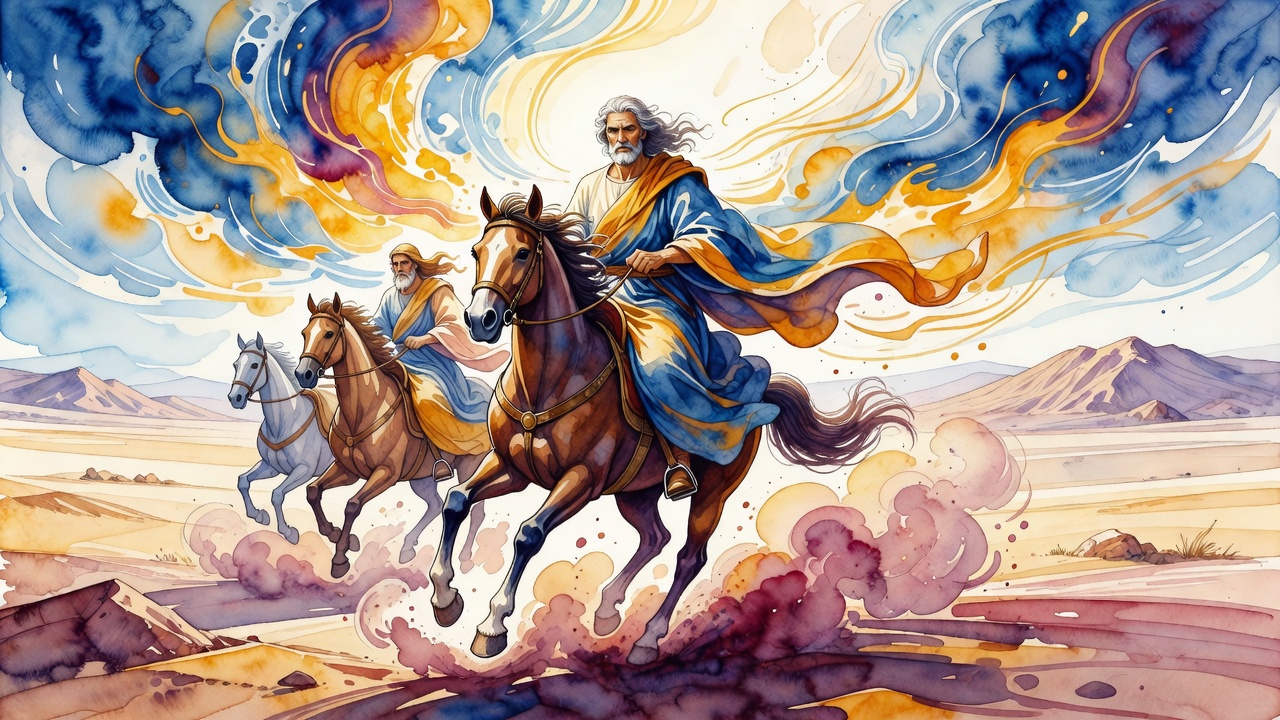
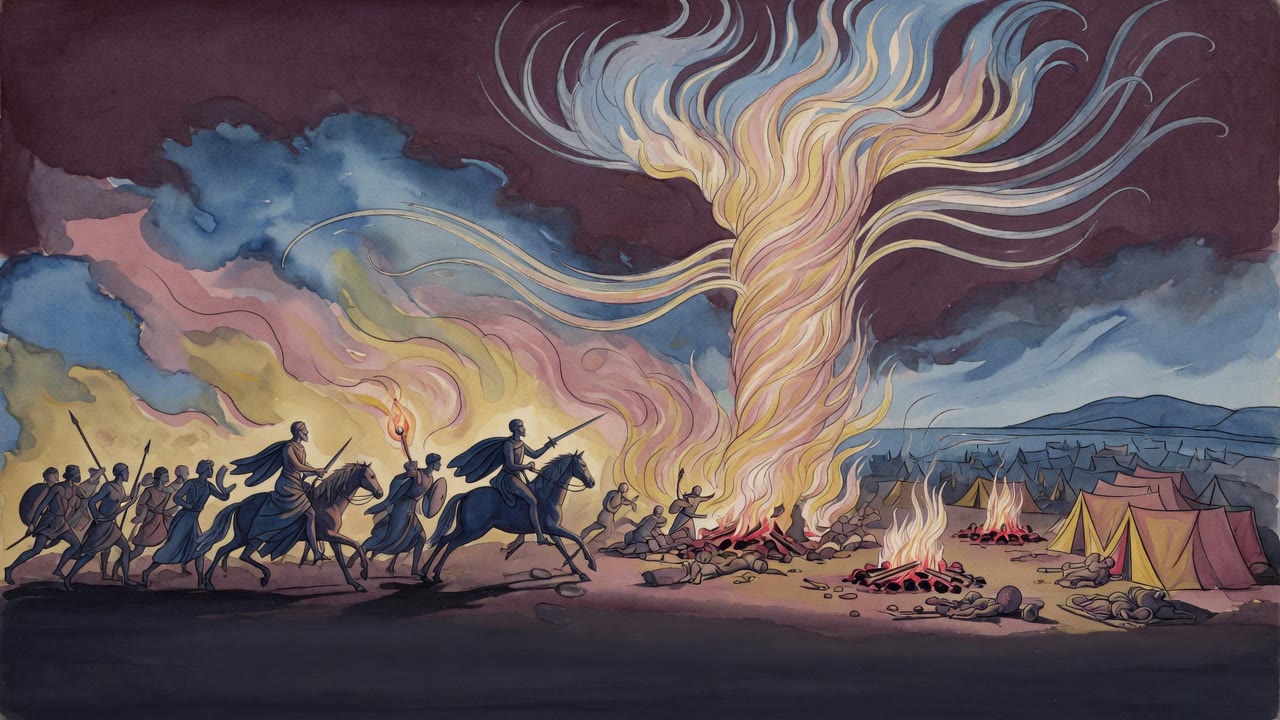
Abraham counted men in the dark and found three hundred eighteen. Lot was gone into the spoil trains of four kings. Smoke from sacked towns still hung over the road. He cut north while the enemy slept on victory wine.
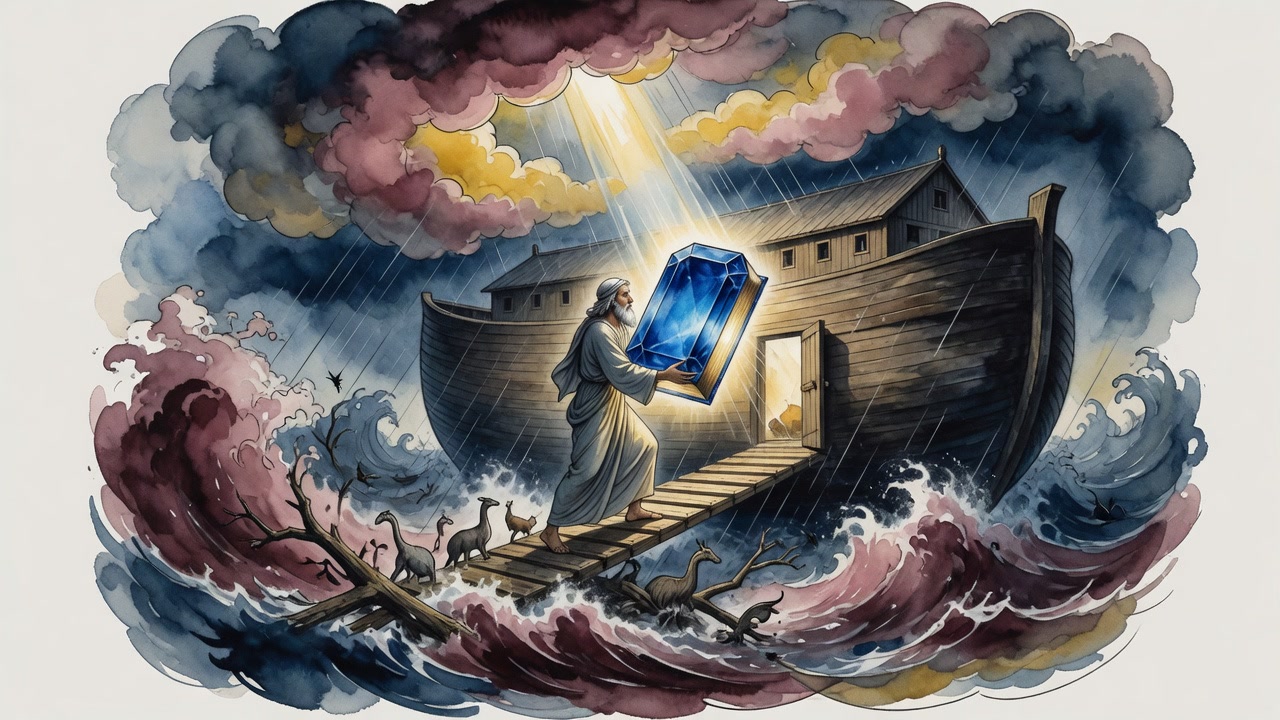
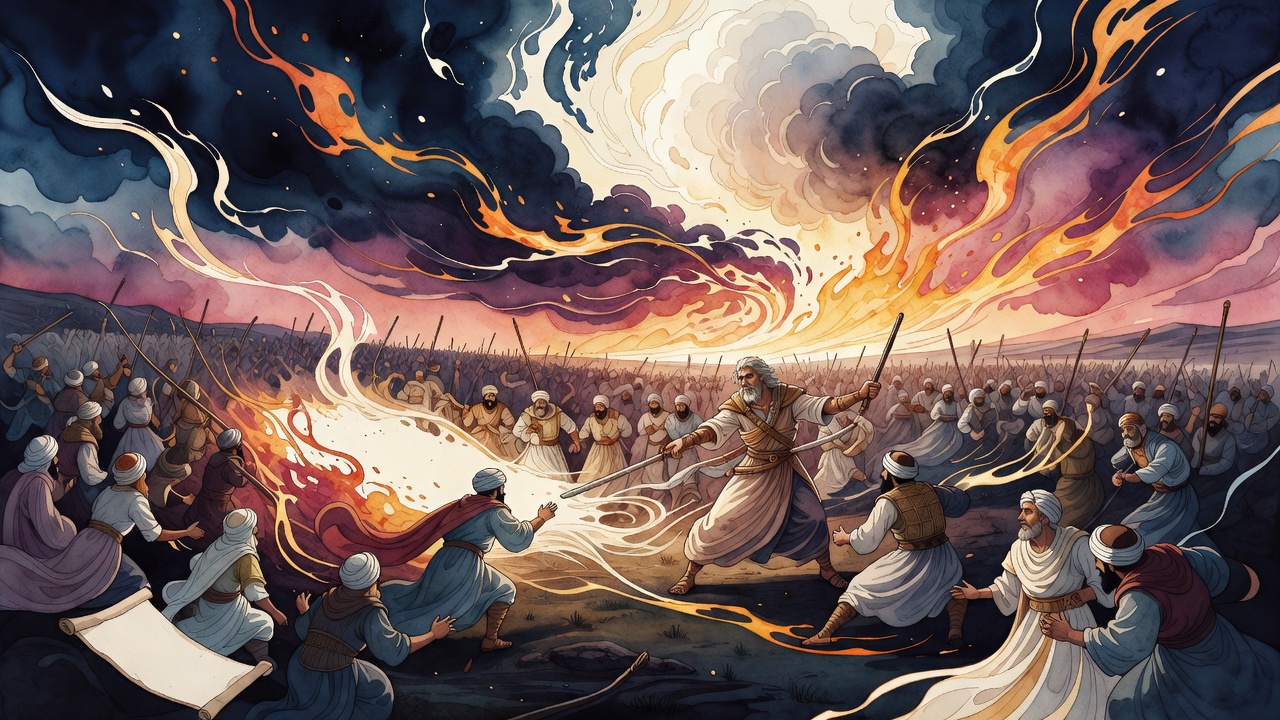
Steel and shouting rose before dawn. The kings broke. Abraham chased them past Damascus lines of night and dust. Lot came out of the wagons unchained. Silver, cloth, and captives followed the rescued nephew like a second army.

Abraham would not wear a crown of other men's gold. The road home filled with the weight of what he had taken and what he refused to keep. Boots stuck in churned earth. Captives wept and laughed in the same breath. The war was short. The moral arithmetic would take longer.

Shem Steps From the Flood's Shadow

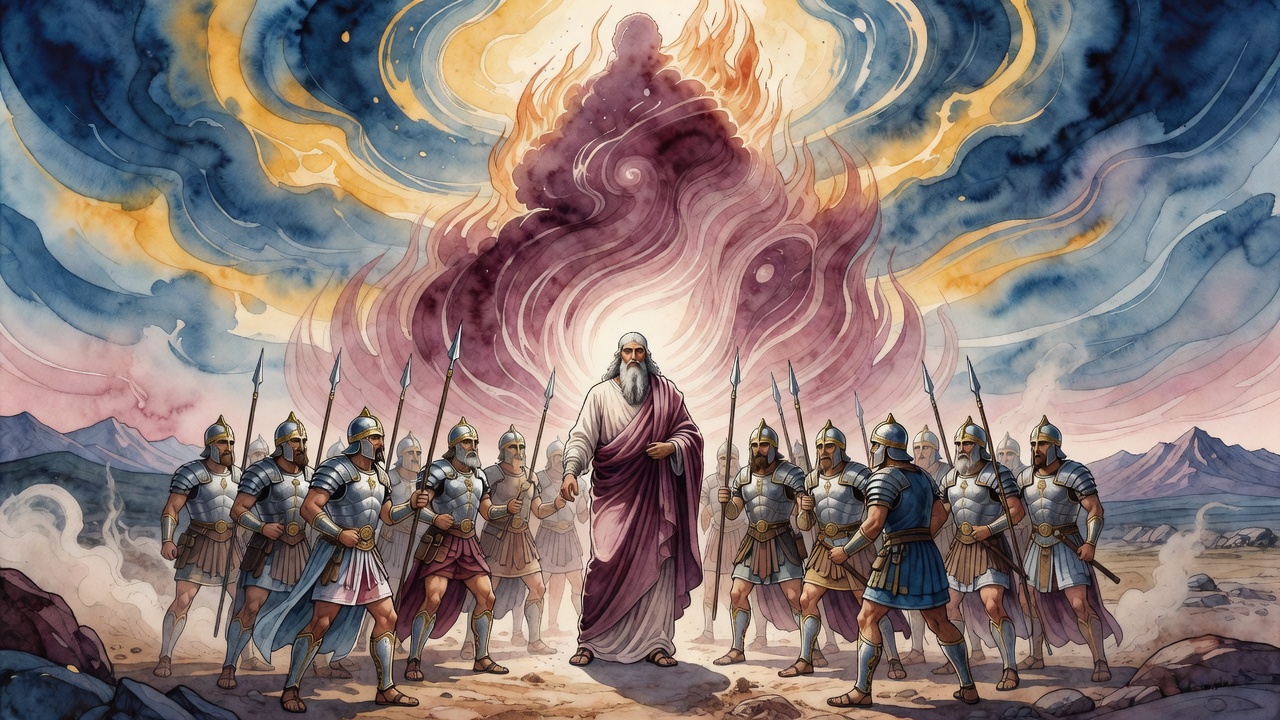
Shem, son of Noah, came out to meet him. Flood memory walked in the old man's gait. He saw the mountains of spoil and did not praise Abraham's arm first. "And blessed be God the Most High, who hath delivered thine enemies into thy hand!"

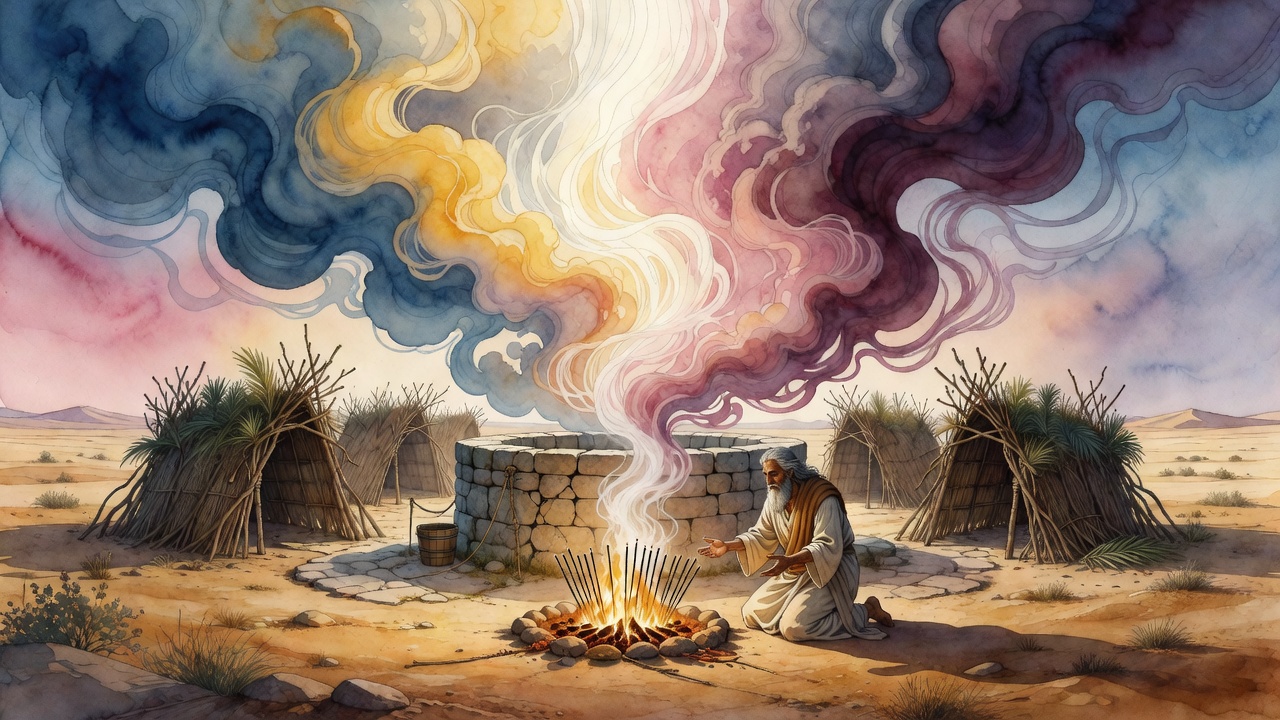
Abraham sorted a tenth from the wealth of the defeated kings and from Lot's recovered goods. He set it in Shem's hands. The first tithe was not a ledger rule. It was a man who had just won a war refusing to call the victory his own.

Shem's blessing and Abraham's gift crossed in the same hour. One voice named the High God. The other handed over a measured share before any king could claim friendship dues. Cloth folded. Coins clicked. A priest of the old world received proof that the new world still knew how to give.

Prayer That Named the Shield

Abraham prayed aloud. "Sovereign of all worlds! Not by the power of my hand, nor by the power of my right hand have I done all these things, but by the power of Thy right hand with which Thou dost shield me in this world and in the world to come."

He quoted the psalm that names the Lord a shield and a lifter of the head. Angels answered with a formula that would outlive the battlefield. "Blessed art Thou, O Lord, the shield of Abraham."

Spoil still glittered in the dust. The prayer made the glitter answer to heaven instead of to a general's pride. Lot stood free. The tenth already belonged to Shem. The rest waited for a king of Sodom who would try to buy the savior with gifts.

Men who had fought in silence now heard a liturgy invent itself in open air. The shield was not bronze. The shield was a Name spoken by a man who could have kept every wagon and instead kept none of the glory.

Terah's Road and the Vanity of Gifts

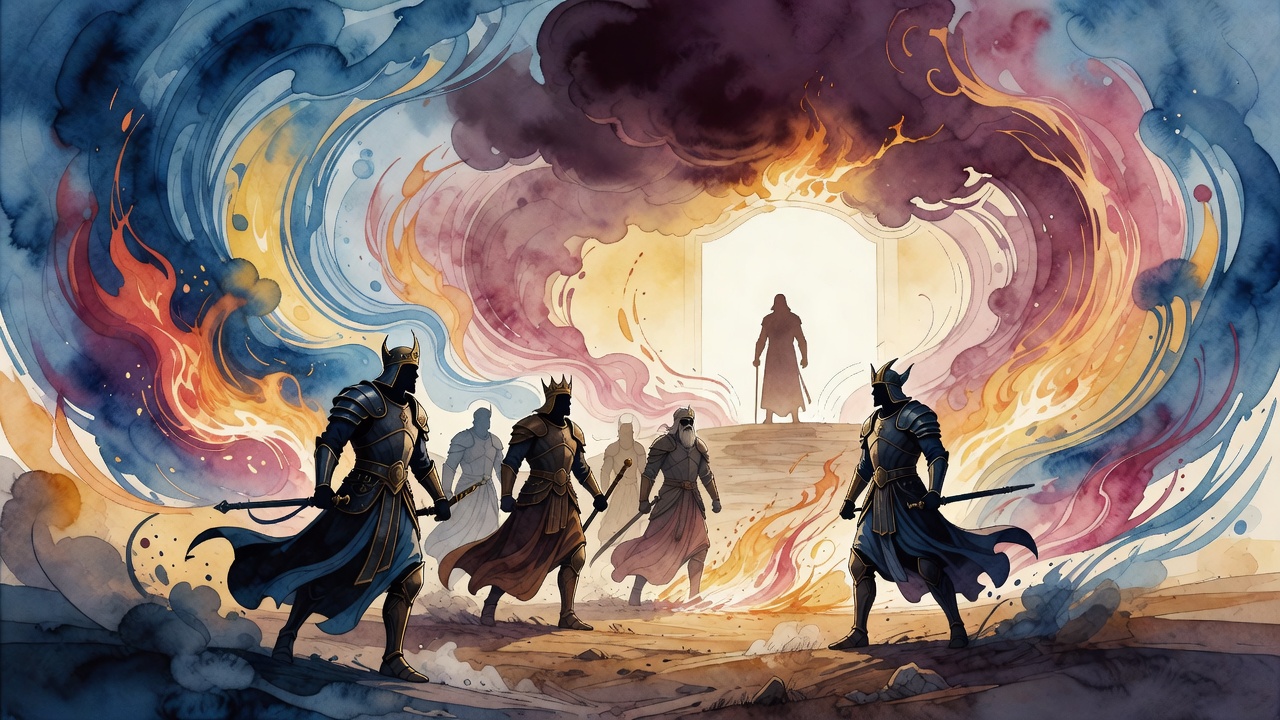
Earlier, on another road, Abraham had pleaded with his father Terah to leave Nimrod's favor. "Nimrod isn't showering you with gifts because he loves you." Earthly vanity, he said, fails when trouble comes. "Let's go to the land of Canaan and serve the God who created you, so that things will be good for you."

Terah left and stalled in Haran. The son who would later give a tenth to Shem had already refused to treat royal presents as salvation. War only made the same choice public and heavy with silver.

Between Haran and the battlefield, Abraham kept one rule. Take no glory that belongs to the Maker. Feed no king with the lie that gifts equal love. Nimrod's smile and Sodom's bargains were cousins. Both wanted a man on a leash made of gold.

What the Tenth Refused to Buy

When the king of Sodom offered Abraham the goods if he would return the people, the refusal was already rehearsed in the tithe. Abraham would not be made rich by Sodom's hand. A man who has given a tenth to Shem cannot sell the rest of his righteousness for a city of ash-to-be.

Lot returned to dangerous streets. Abraham returned to tents and promises. The tenth stayed with the flood-survivor priest of the Most High. Angels had already fixed a name to a shield.

Years later travelers would eat under Abraham's trees and learn to bless God for bread. The habit began here, in spoil and night and a measured pile of wealth set apart while the blood of the raid was still fresh on the sand.

Hands that counted captives also counted a tenth. A name for God rose louder than any victory chant. Lot's freedom did not buy Abraham a throne. Shem's hands closed on silver that would never sit in Nimrod's treasury or Sodom's market.

The three hundred eighteen slept at last. Dust settled on tracks that kings would not follow. Abraham lay down poorer in goods than the war had made him and richer in a formula the angels had sung back to him. Shield of Abraham. The phrase would travel farther than any wagon of spoil.

Terah's half-journey north and the full night of pursuit became one story of leaving false patrons. Nimrod's gifts, Sodom's bargains, and the kings' abandoned camps all failed the same test. Only the High God kept what He took and what He gave.

In the morning light the tenth looked ordinary. Cloth. Metal. A share of flocks. Ordinary things become covenant when a man who could have kept all of them keeps none of the credit. Shem blessed. Abraham prayed. The road toward Canaan stayed open under a name stronger than any local king.

Campfires sank to coals. Lot sat apart, already half turning toward Sodom's lamps on the horizon. Abraham watched him and did not snatch the choice away. Freedom includes the freedom to walk back toward danger. The tithe, at least, had gone the right direction.


← All myths
From the tradition

Sources

2 sources

The texts behind this telling. Some cards carry a translation of the source; others are our own retelling of it, and each card says which. Every card links out to the original.

Pirkei DeRabbi Eliezer 27:7Pirkei DeRabbi Eliezer

Retold in our words. Read the original at the link below.Pirke de Rabbi Eliezer, trans. Rabbi Gerald Friedlander, London (1916) · CC-BY

It is often remembered as a formal obligation, a percentage we owe. But its roots, according to some fascinating ancient texts, are surprisingly personal, filled with gratitude and recognition of a higher power.

Pirkei DeRabbi Eliezer, a remarkable text of Jewish lore, tells us that Abraham himself was the first to tithe. Rabbi Joshua recounts how Abraham, fresh from a victorious battle, didn't just keep all the spoils. He carefully selected a tenth – a tithe – from the wealth of the defeated kings, and also from the possessions of his nephew Lot. And to whom did he give this significant offering? To Shem, the son of Noah. "And he gave him a tenth of all," as it says in (Genesis 14:20).

The scene. Shem, a figure from a previous era, a link to the generation that survived the flood, comes out to meet Abraham. He sees the magnitude of what Abraham has accomplished, the sheer volume of wealth he’s brought back. He’s awestruck. He doesn't simply congratulate Abraham; he bursts into praise, glorifying God, the Most High. He exclaims, "And blessed be God the Most High, who hath delivered thine enemies into thy hand!" (Genesis 14:20).

Abraham, in turn, responds with profound humility. He doesn’t take credit for his victory. Instead, he prays before the Holy One, blessed be He, acknowledging that his triumph wasn't due to his own strength or skill. "Sovereign of all worlds!" he proclaims. "Not by the power of my hand, nor by the power of my right hand have I done all these things, but by the power of Thy right hand with which Thou dost shield me in this world and in the world to come." He recognizes God as his protector, his source of strength in both this life and the next. He quotes (Psalm 3:3), saying "But thou, O Lord, art a shield about me" in this world, and "my glory, and the lifter up of mine head" in the world to come.

It's a powerful moment of recognition. Abraham understands that his success is not solely his own doing. He’s been blessed, guided, and protected. And the angels, hearing this heartfelt prayer, respond in kind. They affirm Abraham's devotion, proclaiming, "Blessed art Thou, O Lord, the shield of Abraham."

So, what does this ancient story tell us about the nature of tithing? It’s more than just a financial transaction. It's an act of gratitude, a recognition of the source of our blessings. It's about acknowledging that we are not alone in our endeavors, that we are supported by a force greater than ourselves. Perhaps the act of giving, then, is less about fulfilling an obligation, and more about expressing a heartfelt "thank you" to the divine. It certainly gives us something to think about.

Full source
Legends of the Jews 5:57Legends of the Jews

Retold in our words. Read the original at the link below.The Legends of the Jews by Louis Ginzberg (1909) · Public Domain

Legends of the Jews turns to Terah's Legacy.

In Legends of the Jews, that incredible collection of lore compiled by Louis Ginzberg, Abraham implores his father to leave the land and journey to Canaan. He says, and I'm paraphrasing, "Dad, Nimrod isn't showering you with gifts because he loves you. It's all about what he gets out of it."

Pretty insightful for a young man. He's seeing through the facade of power and political maneuvering.

Abraham doesn't stop there. He goes on to say, "Even if Nimrod keeps giving you more and more, what does it really amount to? It's all just earthly vanity! Riches and possessions are worthless when things get really tough." A stark warning, hinting at a deeper spiritual truth.

Then comes the core of his plea: "Listen to me, Father. Let's go to the land of Canaan and serve the God who created you, so that things will be good for you."

Wow. A son urging his father to embrace a new path, a new understanding of the world. It's not just about escaping Nimrod's wrath, though that's certainly a factor. It's about finding true meaning and purpose in serving the one God.

Think about the courage it must have taken for Abraham to speak these words. To challenge his father, a man respected and favored by the king. To risk everything for the sake of his beliefs.

Did he sense the truth in his son's words? Did he hesitate, torn between the comfort of his current life and the call of something greater? We know that Terah did eventually leave with Abraham and his family, journeying toward Canaan, though he stopped in Haran. (Genesis 11:31)

Abraham's words, though spoken millennia ago, still resonate today. They remind us to question the values of the world around us, to seek something deeper than material possessions and fleeting honors. They remind us to listen to the quiet voice within, the one that calls us to a higher purpose. Maybe, just maybe, that voice is calling us to leave our own "land" – our own comfort zones – and begin a journey of faith.

Full source