Abraham Calls Lot Brother and Rides to War
After the quarrel over pasture, Abraham still names Lot brother, thins his army to Eliezer alone, and chases kings past Dan into Hobah.
Table of Contents
 Click for full size
Brother After the Quarrel
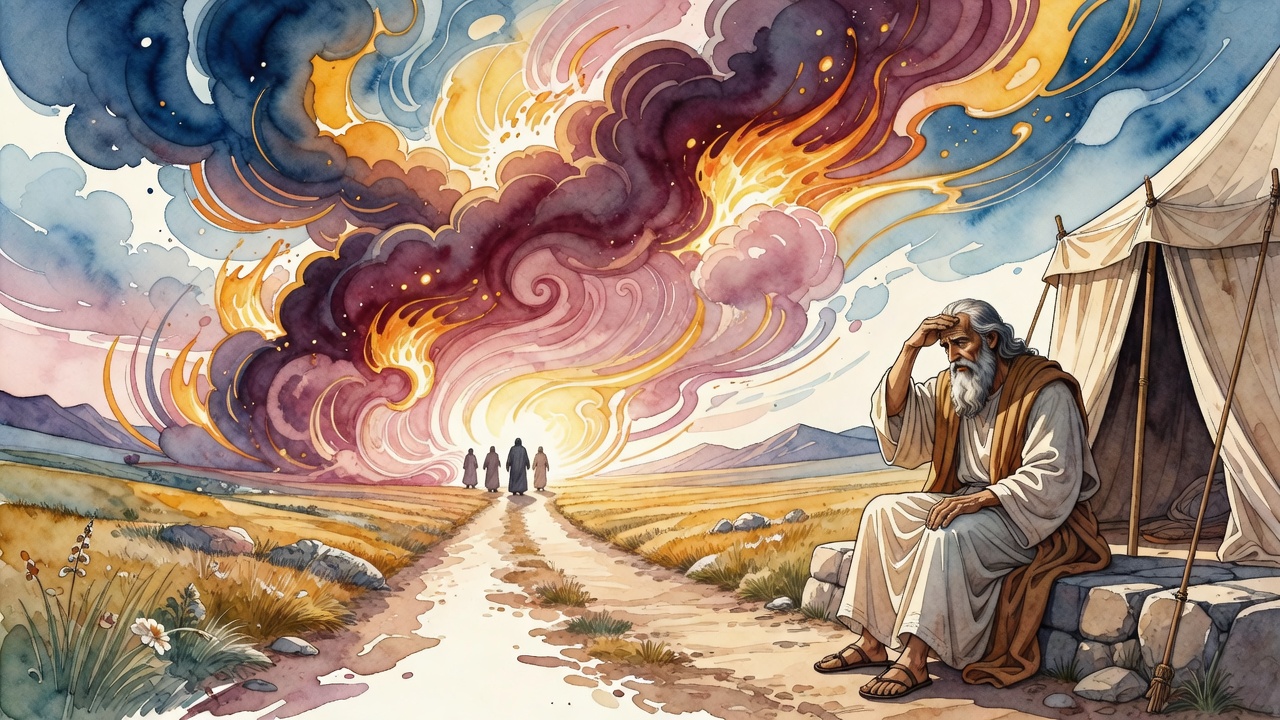
Abraham heard the runner before he saw the dust. Four kings had swept the valley. Lot was taken with the goods of Sodom, a nephew bound by chains that had nothing to do with pasture rights. Abraham did not say nephew. He said brother.
The herdsmen had already argued. Wells and grass had already split the camp. Scripture still lets him speak as if blood had not cooled between them: for we are brethren (Genesis 13:8). Humility is not soft speech in a tent. Humility is the word brother in a mouth that has every legal right to say less.
He rose. The night smelled of sheep and fear. He called his trained men and did not promise them glory. He promised them something harder: leave the enemy's silver alone. The gold would be theirs after, he said, if they lived. First they had to become thin enough to win.
Three Hundred Eighteen Become One
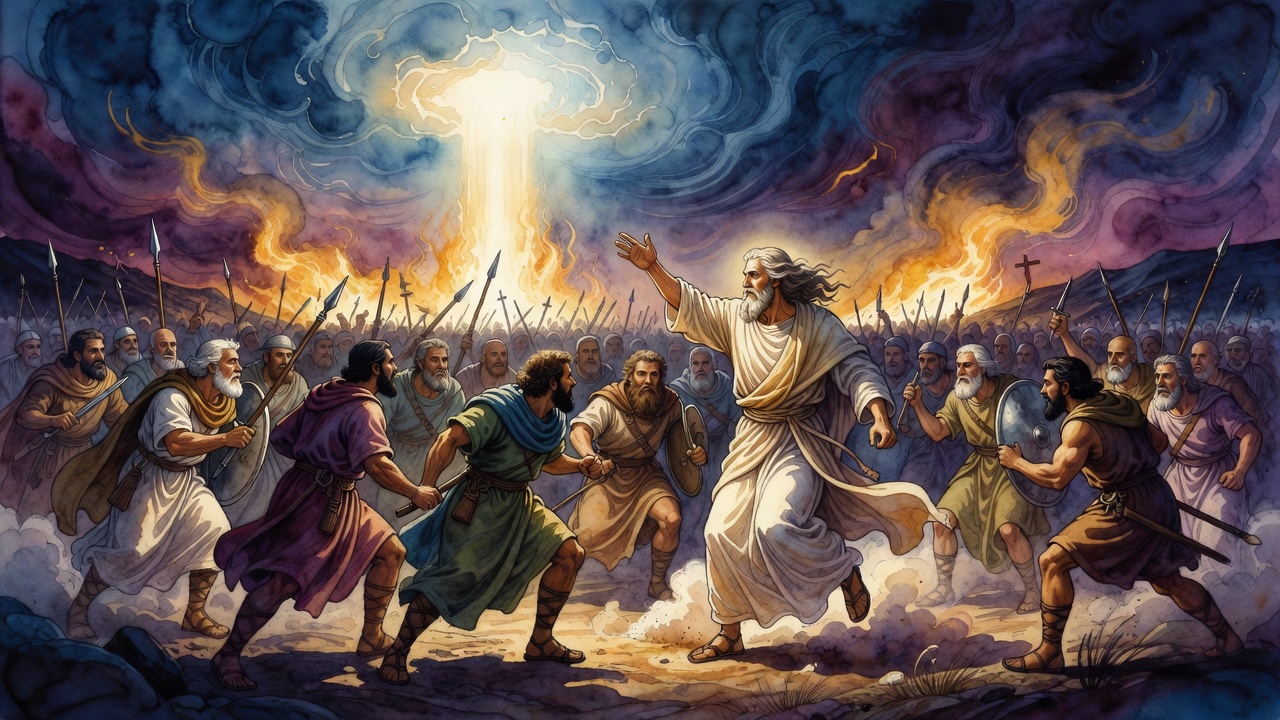
Va-yarek, he led them forth, and the word also means he emptied. He emptied the ranks the way a commander empties a room of cowards. Whoever feared his own sins more than the enemy, go home. Whoever was soft of heart from old deeds, go home. Man after man peeled away until the dust held two figures: Abraham and Eliezer.
Eliezer's name counts to three hundred eighteen. Scripture's number rides inside that single servant like a hidden army. The verb of pursuit is singular. He pursued. Not they. One man of God and one steward whose letters carry a brigade.
Abraham covered the remnant with silver and gold speech, not plunder. Do not covet what the kings wear, he told them while they still stood many. When only Eliezer remained, the order needed no crowd to hold it. The road north opened like a wound.
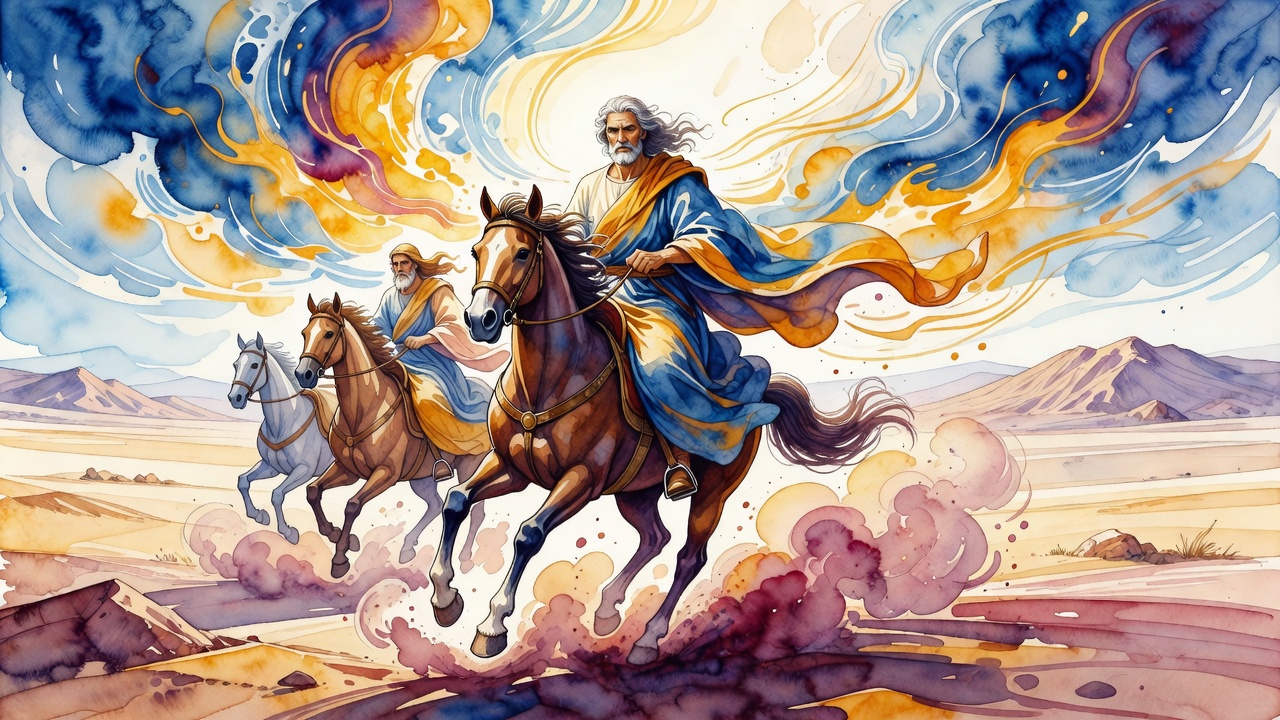
Eliezer did not ask for a speech about numbers. He tightened a strap and matched Abraham's pace until the horses' foam painted the night white. Behind them the emptied campfires of the fearful still smoked. Ahead, the kings of the east counted loot and did not count a shepherd's steward as a problem worth a second scout.
Strength Fails at Dan
At Dan his knees learned a future he had not yet lived. His descendants would set a calf there, a golden insult to the Name. Strength drained as if the idol already cast a shadow backward through time. The place was already called Hobah, guilt, in the ledger of heaven, before any hammer struck metal.
Idolatry harms before and after, the way a seed planted in the wrong year spoils two seasons. Abraham felt the double strike in his bones and still ran. He smote them and pursued them unto Hobah (Genesis 14:15). Night became his ally. The kings who had laughed at a pastoral sheikh learned what a vow can do when it refuses sleep.
Lot came free. The goods came free. Even articles worth a perutah returned to their owners. Abraham would not leave a button of Sodom's wealth unpaid to justice. The valley of Shaveh waited for the next speech, the king's speech.
When Lot's ropes fell, the nephew looked older than the quarrel that once split their herds. He did not apologize for Sodom. Abraham did not demand an apology. Brother had already done the work of argument. They turned the animals homeward under a sky that still held the smell of other men's blood.
Thread and Shoe-Latchet
The king of Sodom came out smiling with empty hands and a full demand. Give me the persons, take the goods. He framed it as gratitude. Abraham had restored his life; therefore Abraham should take the treasure as wages for that life.
Abraham lifted his hand to God. A vow is not a bargain with a city-king. I will not take a thread nor a shoe-latchet nor aught that is thine, lest thou shouldst say, I have made Abraham rich (Genesis 14:22-23). The Holy One had already promised wealth. No king of slime-pits would claim the credit.
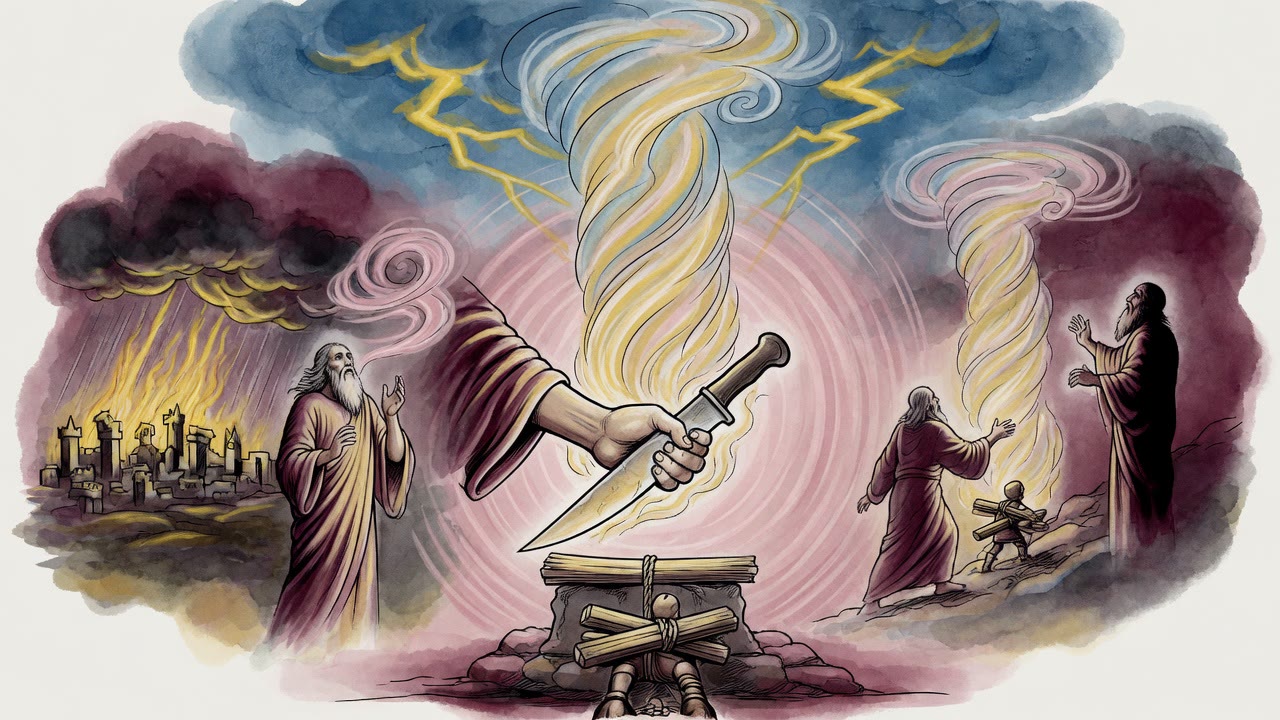
Grace poured on his lips in that refusal. Later song would speak of a mighty one who girds a sword on his thigh, fairer than the sons of Adam. For Abraham the sword that would glorify the world was not steel from Sodom's armory. It was the covenant cut into flesh, circumcision set between thigh and promise, the blade that makes a people rather than a corpse pile.
The Vale Renamed
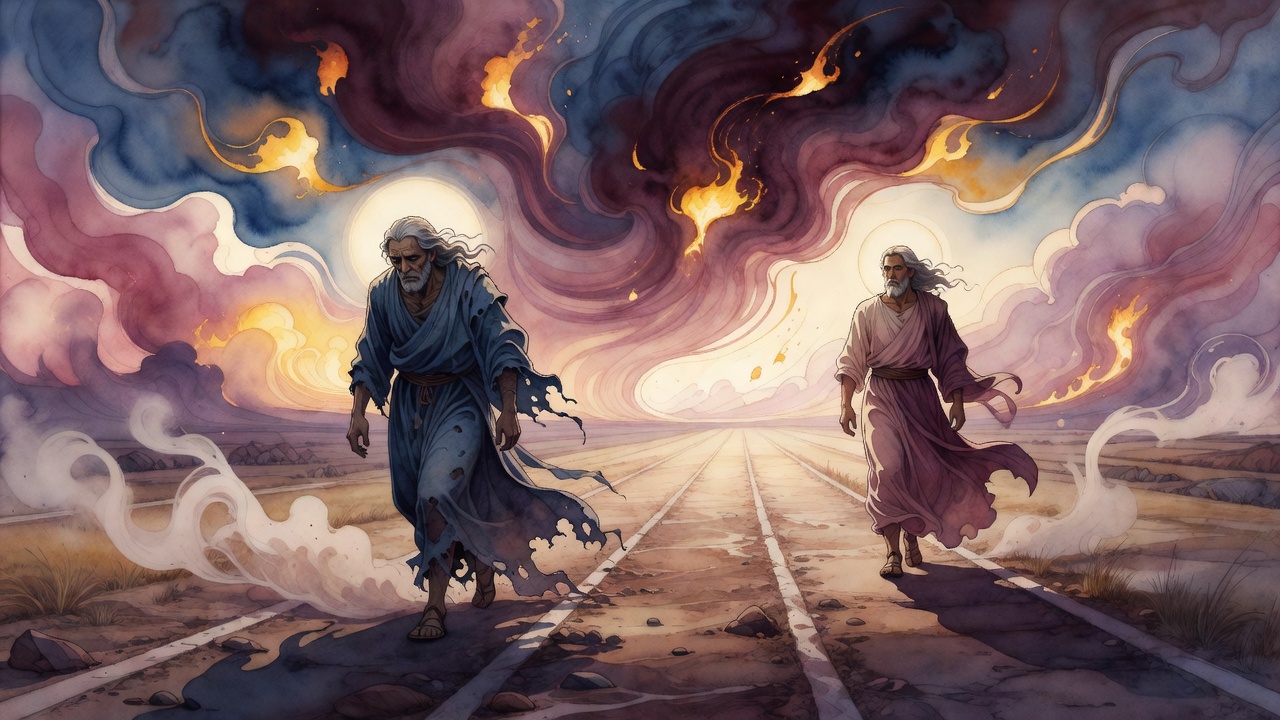
Henceforth the vale would be the King's Vale, and the king meant was Abraham, the one who beat kings and still went home poorer in plunder than when he left. Lot walked free with dust on his clothes. Eliezer walked beside a master who had emptied an army and filled a vow.
Behind them the road to Dan still stank of a future calf. Ahead, the covenant waited like a sword that would not drink enemy blood. Abraham washed the night from his hands and did not count the silver he refused.
Brother had been the first word of the war. Thread and latchet were the last. Between them rode three hundred eighteen letters wearing one servant's name, and a man who would rather be poor than let Sodom write his biography.
At the edge of the King's Vale a child from Sodom pointed at Abraham and asked if that was what a winner looked like, plain clothes and empty hands. The mother hushed the child. Empty hands can be louder than wagons of spoil when the story is about who writes the blessing.
← All myths