Three Angels Split Errands Before Sodom Fell
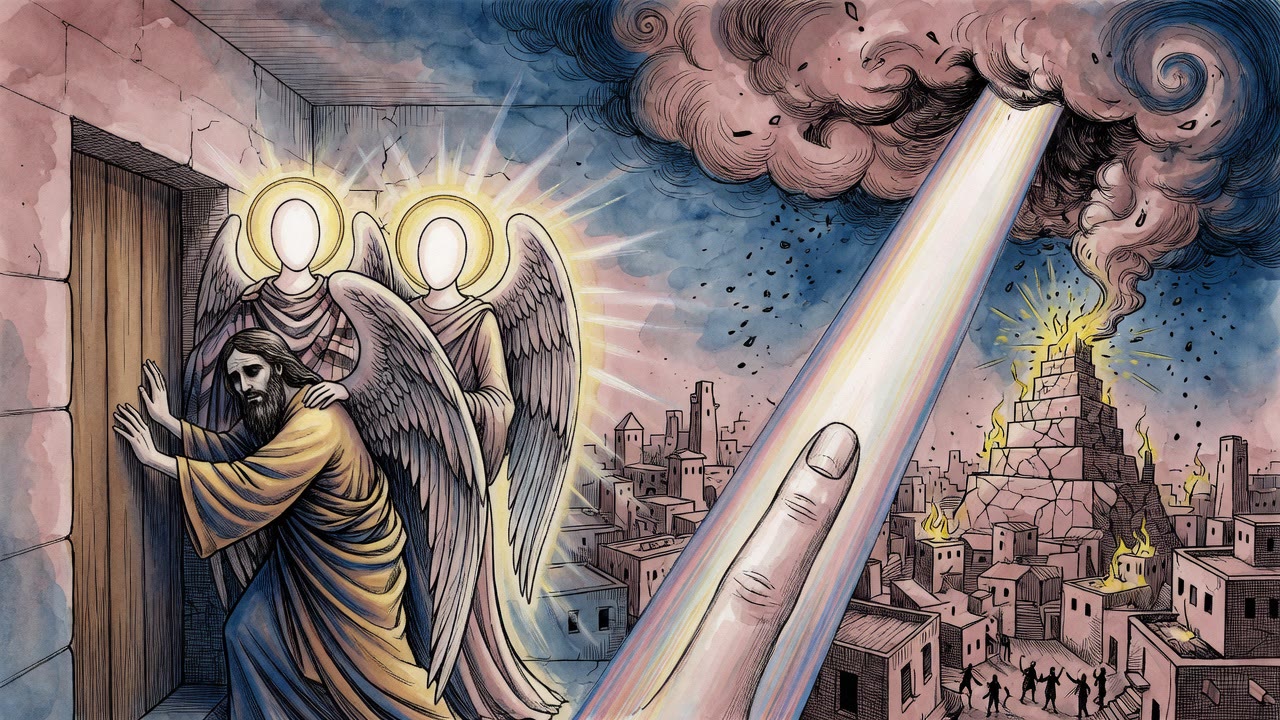
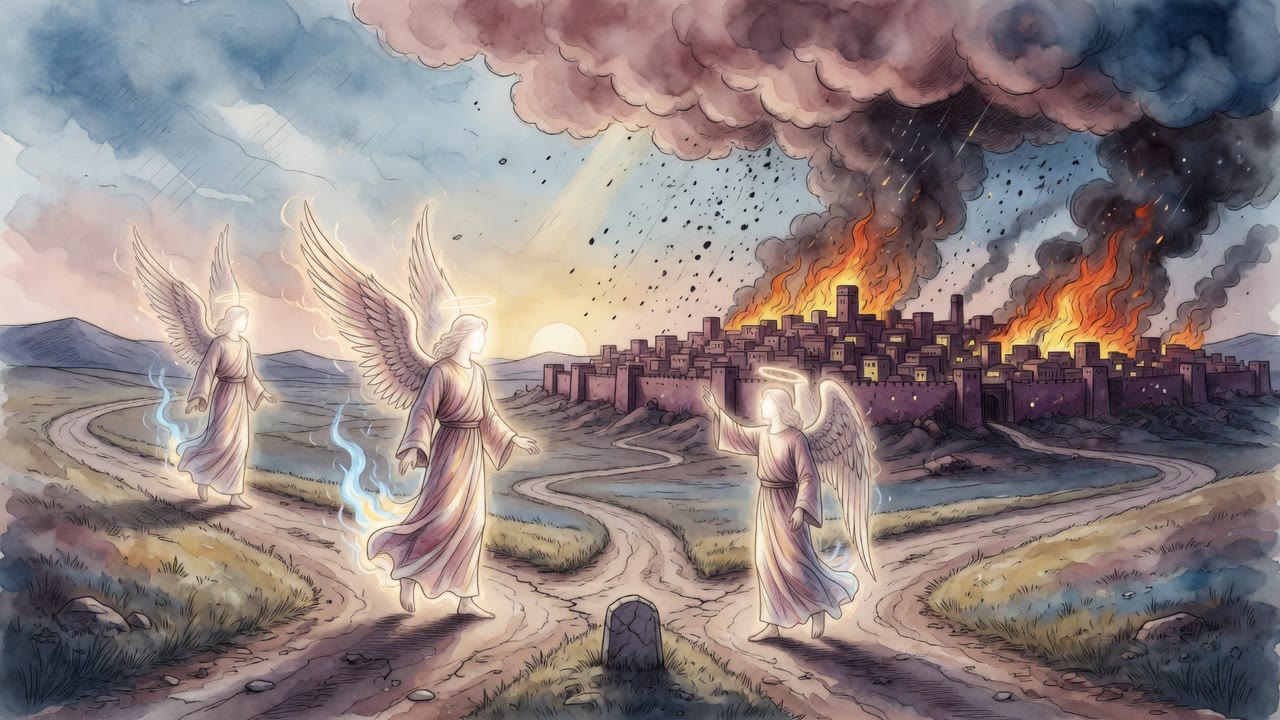
Sarah heard the birth-word from the tent. That messenger left. Two others still had to drag Lot out and turn the plain at evening.
Table of Contents
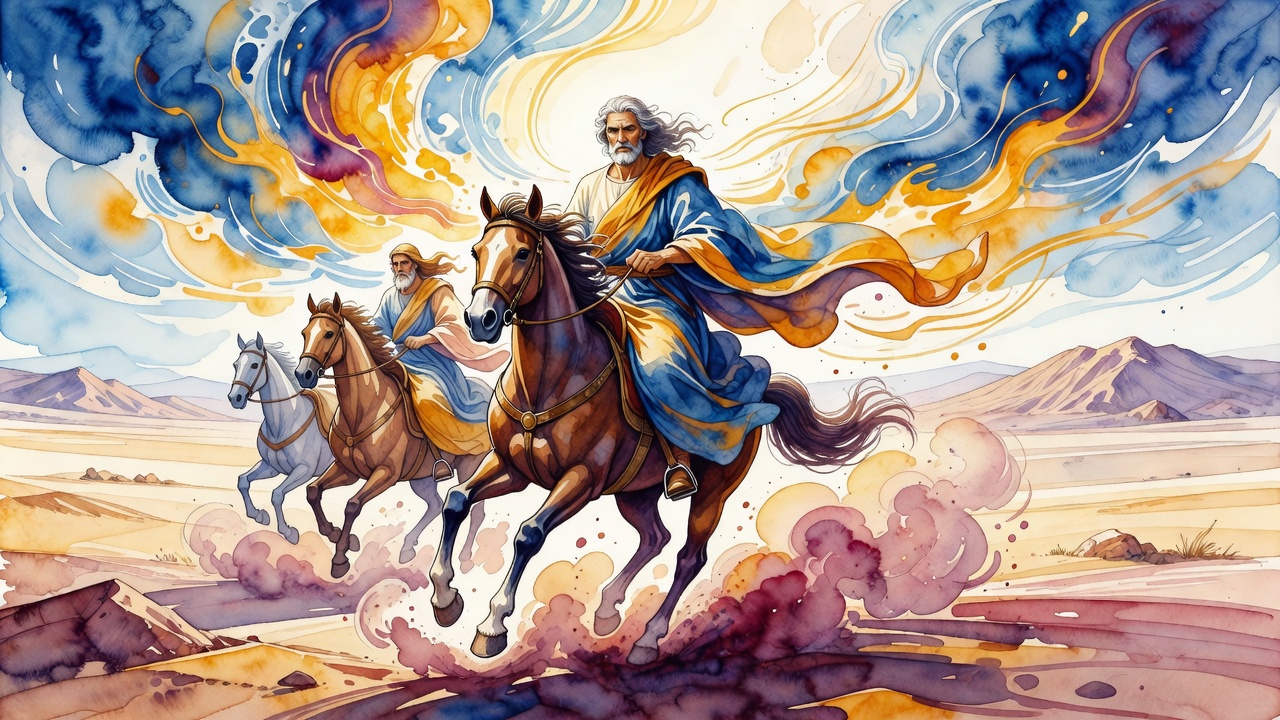
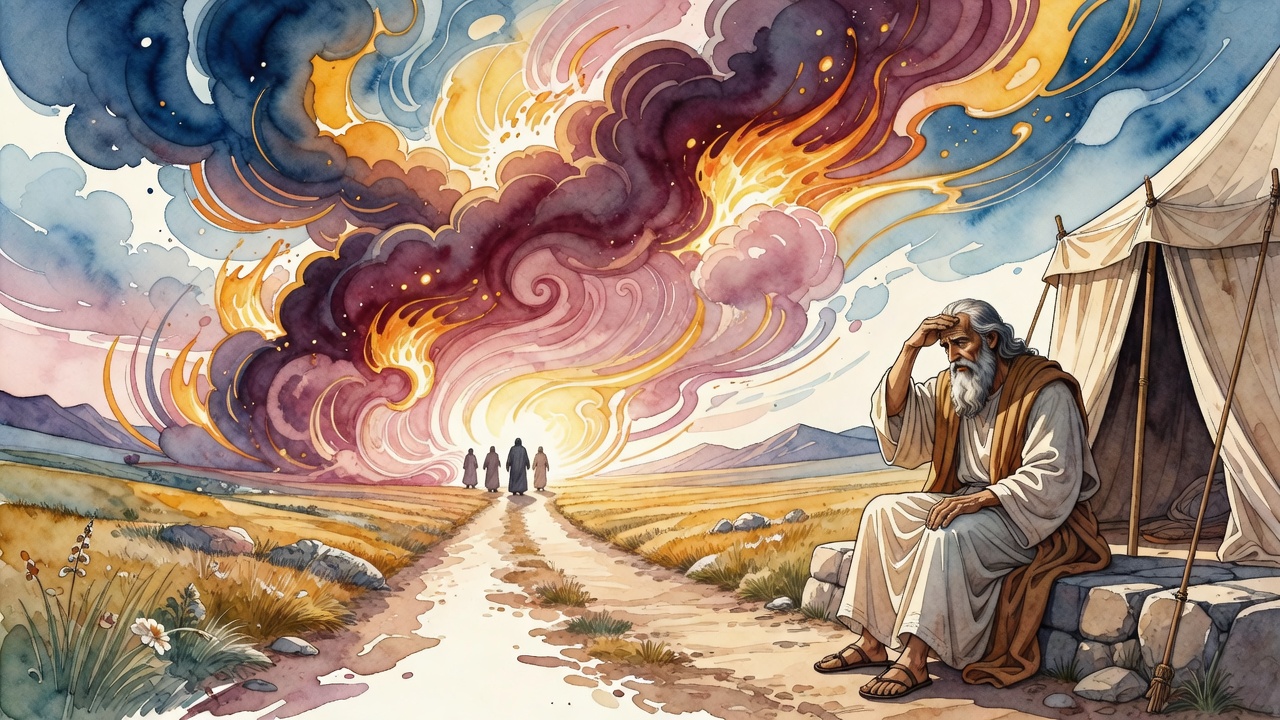
Abraham ran from the tent door under the oaks of Mamre. Three men stood in the heat. He brought water for their feet and bread for their mouths. He did not ask their names (Genesis 18:2).
 Click for full size
Sarah laughed in the tent when one of them spoke of a child. The messenger who carried that word finished it. Then he was gone. "I will return," the verse says, not "we will return." By evening at Sodom's wall, only two still walked.
Three Men Under the Oaks
The Holy One dispatches angels the way a king seals letters. They split the errands. One courier, one task. No angel does two. No two angels share one. One came to tell Sarah of a child. One came to drag Lot from a city already weighed for fire. One came to overturn the plain itself.
When the birth-word was finished, that messenger left. The rescue and the ruin still had road under their feet.
They were called men at Abraham's tent and angels at Lot's door. In Abraham's courtyard, holiness was so ordinary that the guests wore plain faces. Lot, unused to such company, saw them blaze. A house trained by hospitality makes the upper world look like travelers. A house trained by Sodom makes the upper world look like fire wearing wings.
Abraham had fed them. The table still held the heat of the bread. Two of the three rose and turned their faces toward the cities of the plain.
The Court Sat Before the Fire
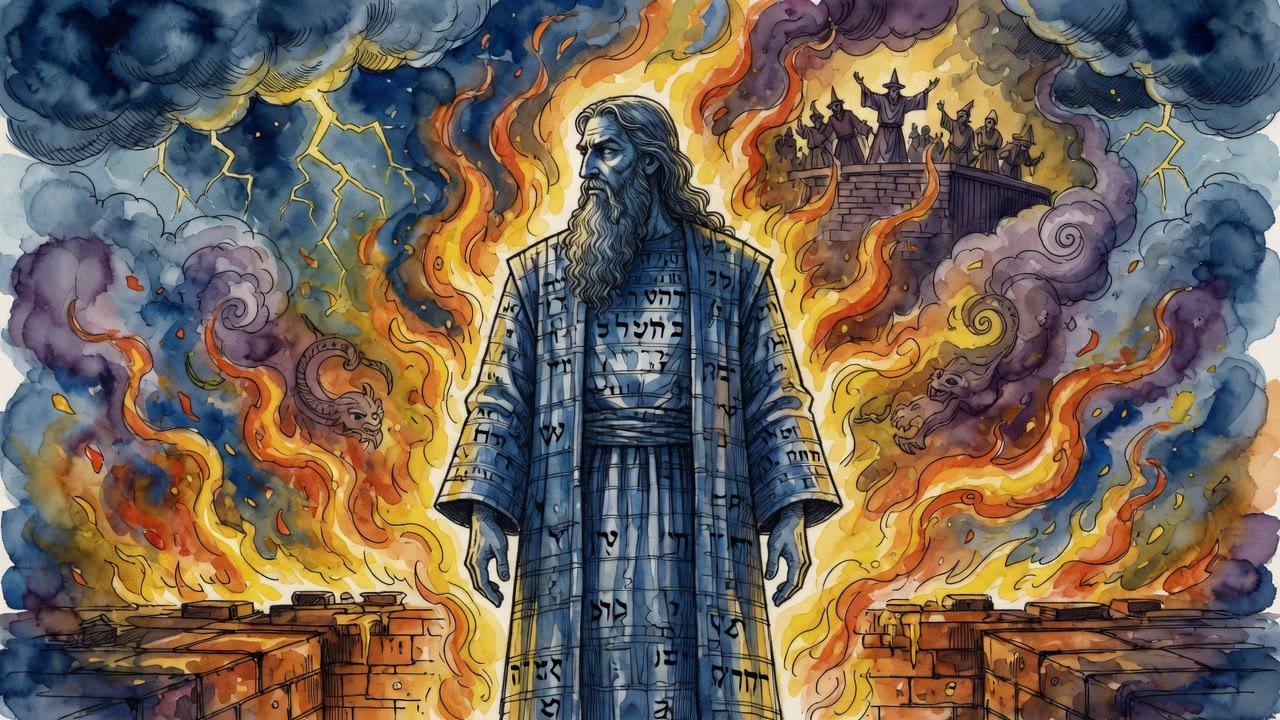
Sodom was not struck in a flash of temper. The case was convened. As a petitioner pleads below, so above. As a Sanhedrin weighs a case below, so above. Some of the host of heaven incline the scales toward merit and some toward guilt. Liability was found. Only then did the two remaining messengers set foot on the road.
"And the two angels came to Sodom" is the sentence after the verdict, not the first act of rage (Genesis 19:1). A city already condemned in a court that keeps records. A nephew still breathing because another man's merit still pulled on the scale.
Daniel said the decree comes by the watchers and the sentence by the holy ones. Oneness does not cancel law. Oneness means God alone knows the true judgment and the inmost mind of His creatures. The one He sends, goes. The one He holds back, stays. The plain burns on schedule, not on impulse.
Lot opened his door. The two came in. The city closed around the house. Rescue still had to fight its way out of a verdict already sealed.
A Living Child on the Table
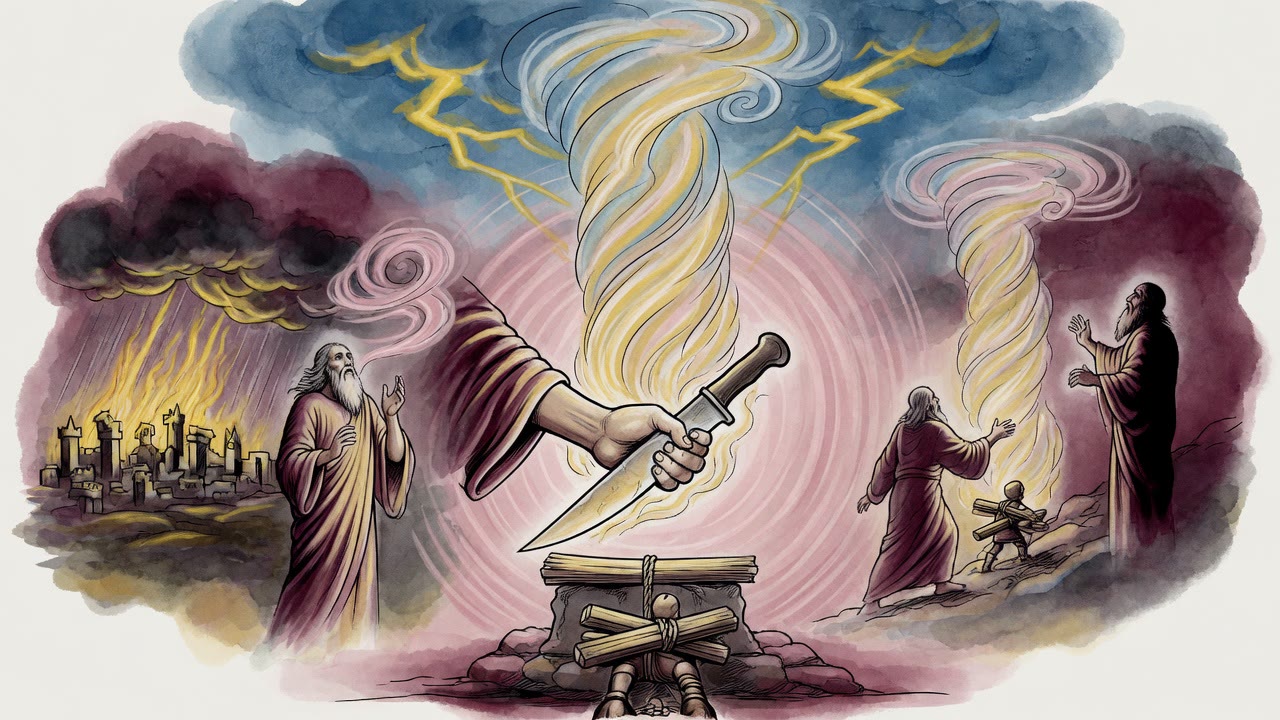
Later, on the mountain, the same covenant logic that saved Lot's life for Abraham's sake saves Isaac from a misread command. God had bound Himself twice: once that in Isaac offspring would be called, and once with the soft "Take, please" of the binding (Genesis 22:2).
A king told a friend he longed to see a small child upon his table. The friend brought his son, set him down, and drew a sword. "What are you doing?" the king cried. "A living child I meant. Did I ever ask for a dead one?"
So with Isaac. "Take, please, your son." Abraham builds and stretches. The angel stops the hand. Abraham protests the first word. God answers the second meaning. Nearness was the test. Slaughter was never the design.
The man who once refused to kill his son for a misread order is the same man whose house made angels look like men. Mercy is not soft here. Mercy is precision. Heaven wants readiness, not blood on the board.
The Strap He Would Not Take
When the king of Sodom offered spoils, Abraham swore he would not take a thread or a sandal strap, lest any man say Sodom had made him rich (Genesis 14:23). From that lifted hand of refusal, a gift traveled down the line. Because he named the lowly strap and scorned it for Heaven's sake, his children would eat the paschal lamb with sandals on their feet, loins girded, staff in hand, ready for the road out of bondage (Exodus 12:11).
Abraham would take no shoe from a wicked city. His children would lace their own shoes for freedom. What the patriarch refused as plunder became, on the feet of a redeemed people, a beauty fit for love poetry. "How beautiful are your steps in sandals" (Song of Songs 7:2).
Three sealed errands. A court before the fire. A binding that never meant a corpse. A sandal strap refused so that later sandals could mean Exodus. Abraham's house trained angels to look ordinary. His prayer lifted Lot's face. His knife stopped short of a slaughter heaven never wrote. His empty hands earned his children shoes for the night of freedom.
The two who walked into Sodom at evening had waited for the court. The one who spoke a child into Sarah's tent had already gone. Lot was dragged into the hills while the plain turned. Sodom fell. Isaac lived. The strap stayed in the dust, unclaimed.
← All myths