6 min read

Abraham Called Himself a Wall Inside Nimrod's Furnace

Terah served idols. His son went into Nimrod's fire before heaven had worked a single wonder for him, and the angels cried out over the flames.

Curated by Arthur · Told by Maggid ·
Table of Contents
  1. I Am a Wall
  2. Evening at Sodom's Gate
  3. Fire for Them, Dew for Israel
  4. What Never Rose Upon the Heart
Abraham Called Himself a Wall Inside Nimrod's Furnace Click for full size

I Am a Wall

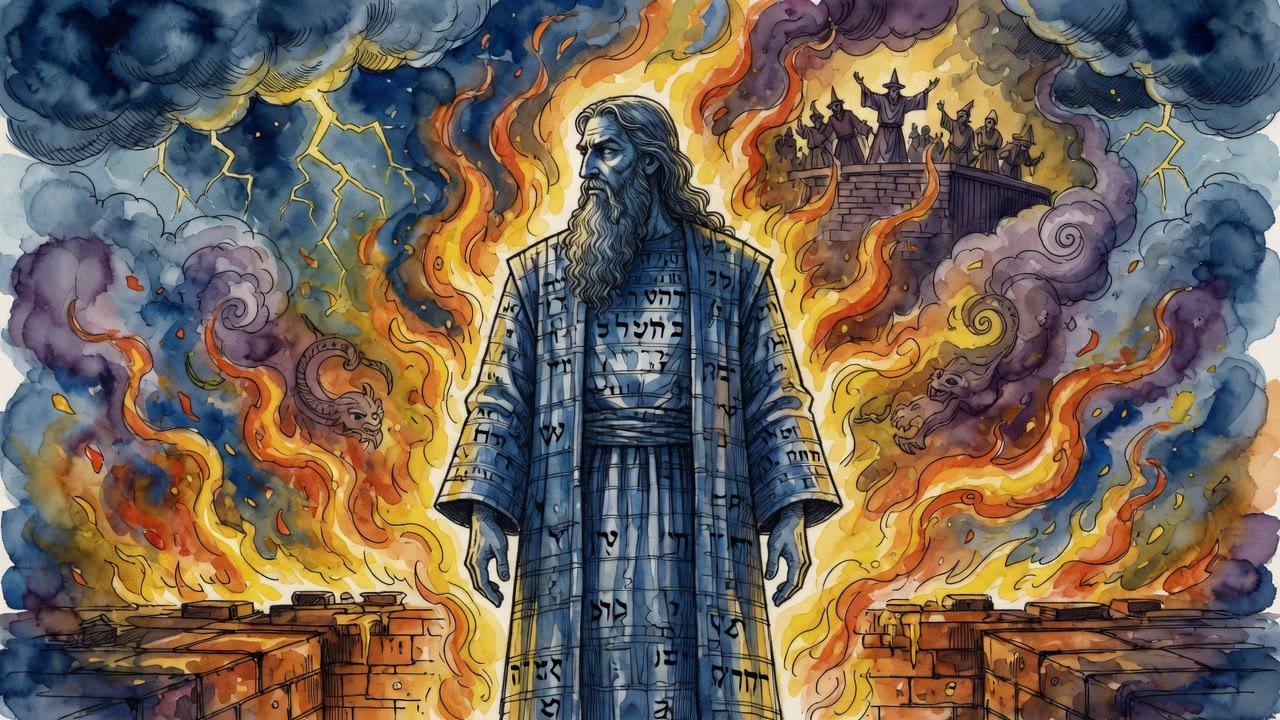
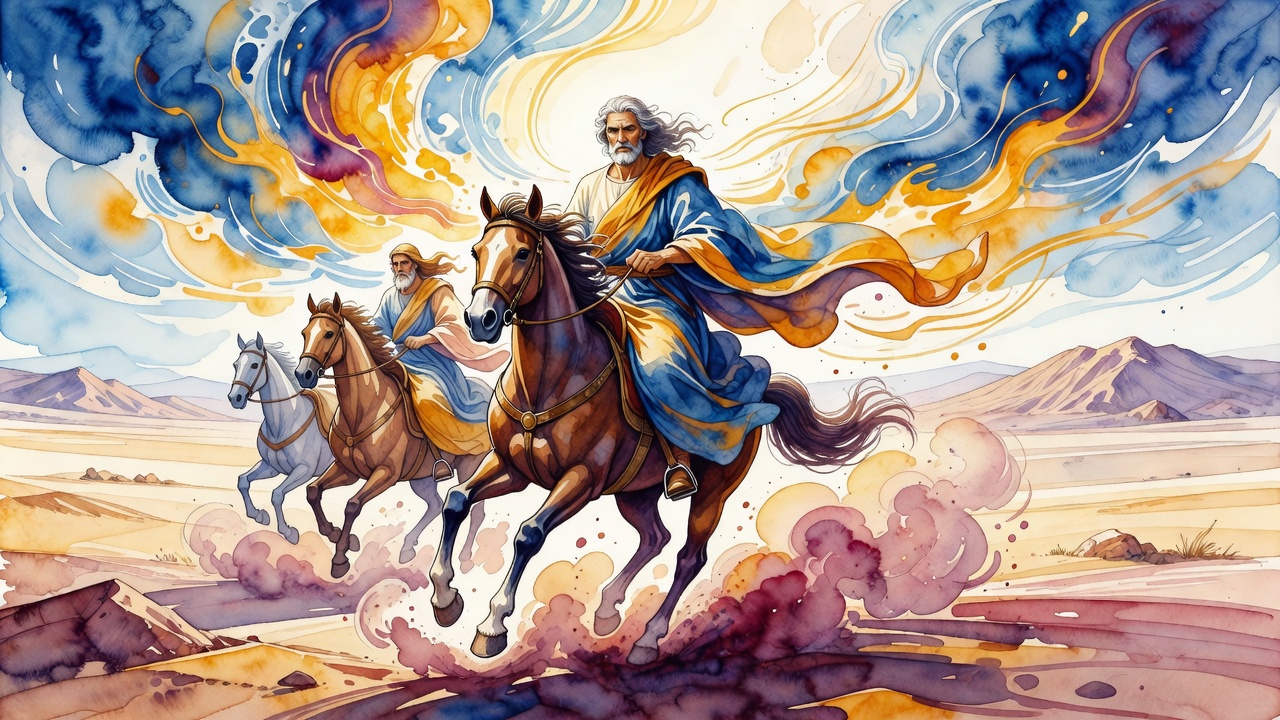
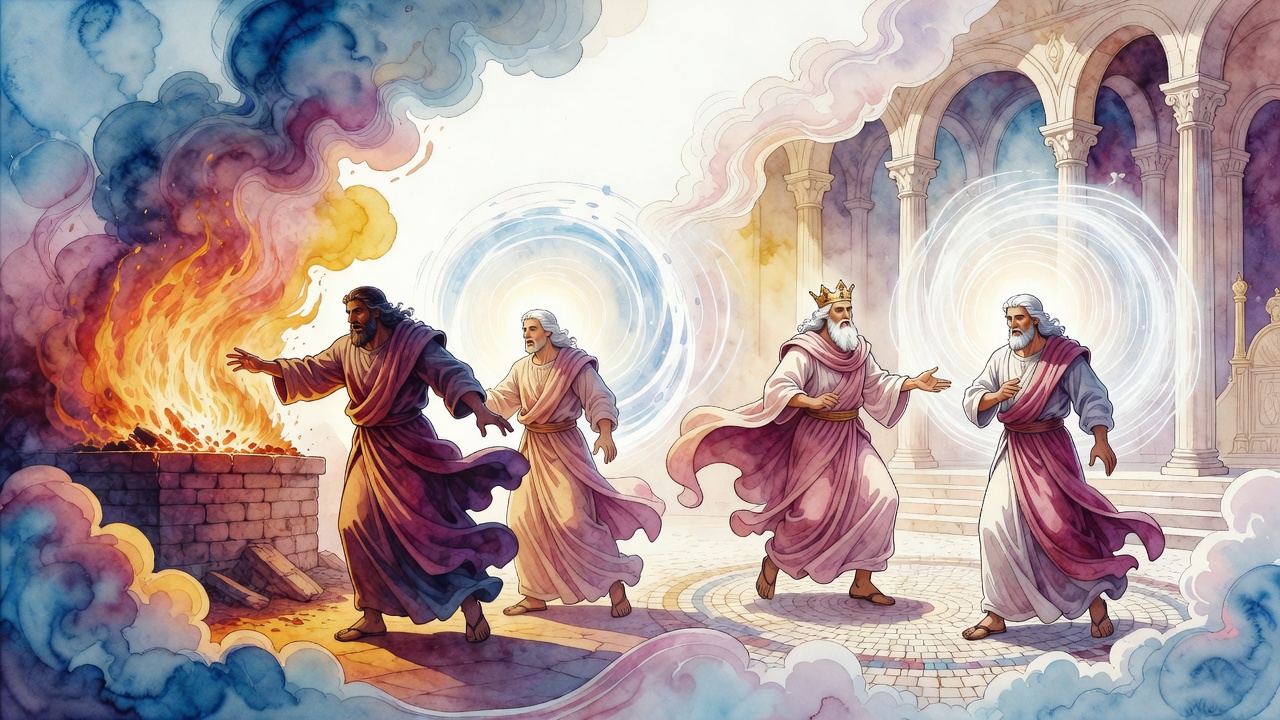
Nimrod cast Abraham into the furnace before heaven had worked a single wonder for him. The ministering angels cried out. Rabbi Berekhyah opened, "We have a little sister," and heard Abraham in the word, small and childless at the fire's mouth. Heaven set a test in the Song's language. If she is a wall, if he surrenders life for the Name, we crown her with a turret of silver. If she is a door, easily wiped like paint from a board, he is lost and unwatched.

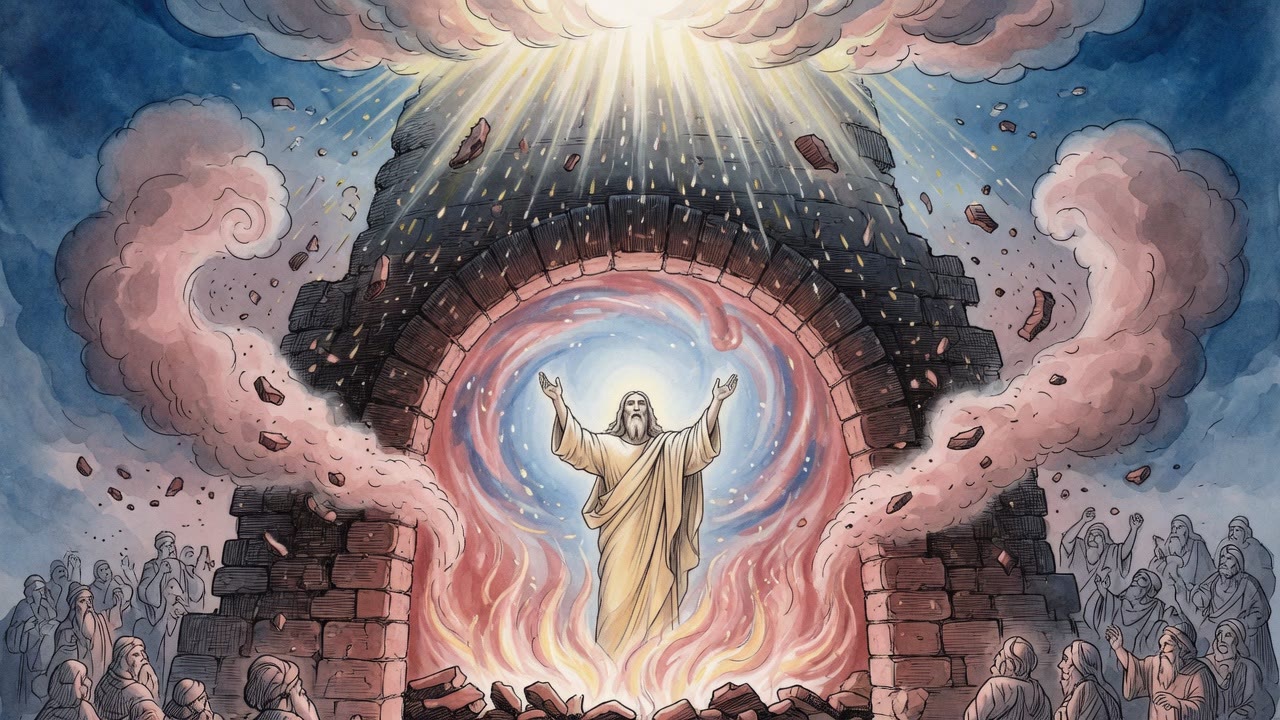
Abraham answered, "I am a wall." He gave his soul for the sanctification of the Name. Then the call. Terah served idols. "Go forth from your land." Lech lecha after the furnace, not before it. The first miracle was not rescue as spectacle. The first miracle was a man choosing to be masonry instead of a swinging door. Angels watched. Flames waited. The answer came from a throat that still expected heat.

Rabbi Eliezer haQappar heard in "sister" one who tears and does not mend, then flipped it. Abraham mended a torn world before its Maker. Childless, tender, he still offered the only life he had. The crown of silver is promised to that kind of wall.

Evening at Sodom's Gate

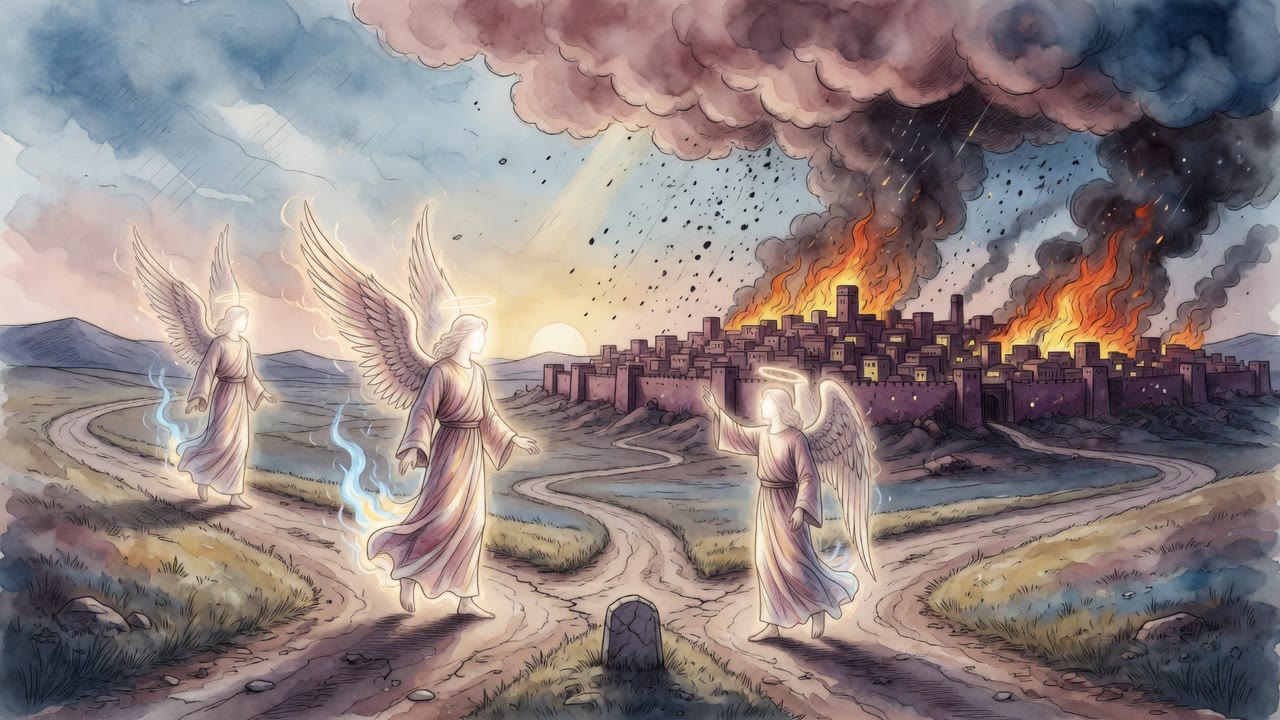
Years later angels came to Sodom "in the evening." The men of Sodom were dark as night, and the evening of the city itself had arrived. Lot sat at the gate welcoming strangers. From whom? From Abraham, who ran from the tent door. "Train up a child," and Lot had grown in that house. He bowed, brought them in, and the mob pounded. One angel rescued Lot. One overturned the city. A single finger of five was enough against flinty rock.

Hospitality learned in a tent became the last light in a city of night. The nephew who had absorbed Abraham's ways stood where the uncle's virtue still operated under a foreign sky. The furnace man had raised a student who could still open a door when a whole culture locked its heart. The angels were astonished that wickedness reached even them. Lot's house became a pocket of Abrahamic weather inside a storm of Sodom.

Do not miss the pedagogy. Abraham did not only smash idols in midrashic youth. He trained a table. Decades later that table, remembered at a gate, saved a remnant while a region fell.

Fire for Them, Dew for Israel

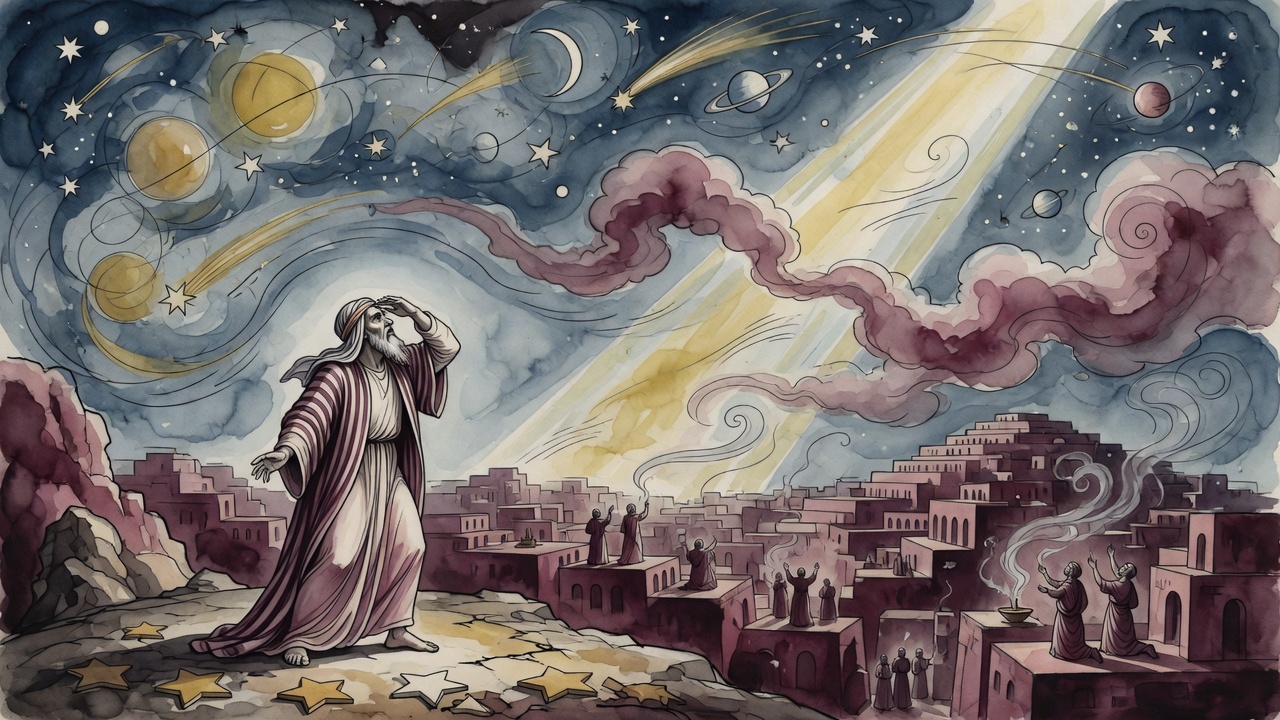
Abraham journeyed toward the Negev because the land behind him burned. Rabbi Samuel bar Nahmani sighed that the wicked force the heavens to deal out punishment. How can fire fall "from the heavens" if praise says the upper realm has no fire or hail? From creation God charged the sky like a gold vessel. Whoever seeks warmth draws warmth. Whoever seeks coals draws fire. "According to what you see the creatures doing, so do to them."

For Sodom and the line of Esau, brimstone. For Israel, dew, "the remnant of Jacob shall be like dew." God looked at the cities and asked what need He had of them, and overturned them. The rock who walked away while they fell was Abraham, hewn from the quarry of faith. The same heavens that answered a wall with silver later answered a city with flame. The vessel of sky pours what the creatures below have ordered by their deeds.

Woe to the wicked, the midrash says, for they compel a punishment the upper world does not naturally stock. They pull fire down by the rope of their own conduct. Abraham walks on. The smoke rises behind him. The covenant continues on road dust, not on the ash of cities that refused guests.

What Never Rose Upon the Heart

Jeremiah heard heaven judge those who burned children. "Which I did not command, and did not speak, and which did not arise upon My heart." Three clauses. "I did not command," this is Jephthah and his daughter. "I did not speak," this is the king of Moab who offered his son on the wall, a man God never addressed. "And it did not arise upon My heart," this is Abraham and the binding of Isaac.

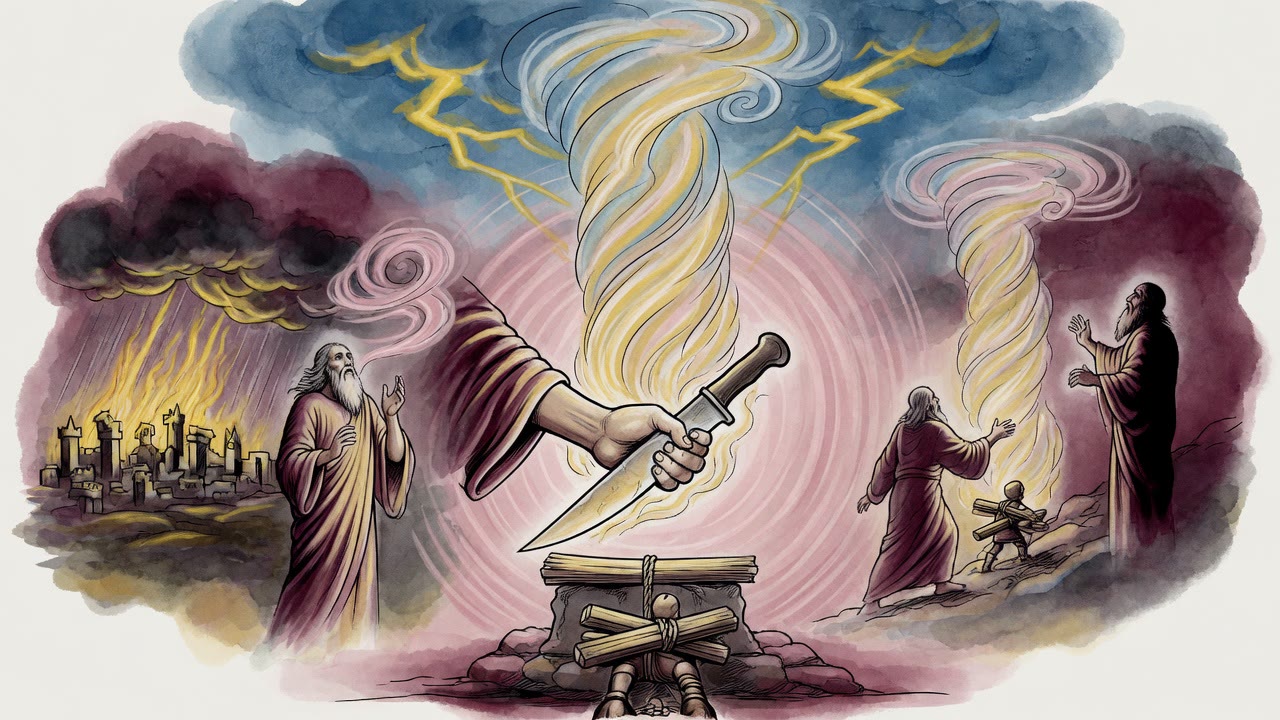
Even when God said, "Take, please, your son," it never arose upon the divine heart that he should actually slaughter him. Lift him up. Do not end him. "I will not profane My covenant." The wall who once offered his own life in Nimrod's fire was tested with his son's life, and the test was ascent, not blood. The knife's nearness was the proof. The slaughter was never the design.

Later readers who turn the Akedah into a celebration of child-killing invert the midrash. Heaven spends three clauses refusing that reading. Jephthah is not a model. Moab is not a model. Abraham is the one of whom it is said the death never entered the divine heart. The readiness was real. The murder was not the point.

Furnace. Gate. Falling cities. A mountain of binding that stops short of death. Abraham's answer keeps rewriting the map. Wall, not door. Teacher of Lot's welcome. Rock walking from fire-rained plains. Father who lifts Isaac because heaven never intended the final cut. The Name is sanctified by readiness, not by the murder of children, and the midrash will not let later cruelties borrow Abraham's story as cover.

The drama is a man who offers himself as stone, trains hospitality into a nephew, walks from burning cities, and is never asked by heaven to finish a slaughter that never entered the divine heart.


← All myths

From the tradition

Sources

4 sources

The texts behind this telling. Some cards carry a translation of the source; others are our own retelling of it, and each card says which. Every card links out to the original.

Midrash Tanchuma Buber, Lech Lecha 2:1Midrash Tanchuma Buber, Lech Lecha

Translation of the source text.Midrash Tanchuma (Buber), Public Domain, on Sefaria · CC-BY-SA

[(Genesis 12:1:) "Now the Lord said to Abram: Go forth."] Rabbi Berekhyah the Priest opened with (Song of Songs 8:8): "We have a little sister." Of whom does the verse speak? Of Abraham. For when Nimrod cast him into the midst of the fiery furnace, up to that point the Holy One, blessed be He, had performed no miracles for him. The ministering angels said before the Holy One, blessed be He: "Master of the World, behold, Nimrod has cast Abraham into the midst of the fiery furnace!"

Rabbi Eliezer haQappar said: "We have a little sister" speaks of one who tears and does not mend; but Abraham mended the world before the Holy One, blessed be He. Since up to then he had no children, therefore he is called "sister."

"What shall we do for our sister [on the day that she is spoken for]?" (Song of Songs 8:8), on the day that Nimrod said to cast him into the midst of the fiery furnace. The Holy One, blessed be He, said to the ministering angels: "If she is a wall, we will build upon her a turret of silver" (ibid. 8:9), [if he gives his life for the sanctification of the Name, we will build upon her a turret of silver]; "and if she is a door, we will enclose her with a board of cedar" (ibid.), and if he is too poor to give his life for the sanctification of My Name, "we will enclose her with a board of cedar": just as this image which is upon the board is easy to blot out, so is he easy to be lost from the world, and I will not watch over him.

Abraham said: "I am a wall" (ibid. 8:10), "I give my life for the sanctification of Your Name." Immediately he gave his life. How? His father Terah was serving idolatry [and worshiping them]. The Holy One, blessed be He, said to him: "These are idolaters, and you dwell among them, Go forth from your land."

Full source
Midrash Tanchuma Buber, Vayera 15:1Midrash Tanchuma Buber, Vayera

Translation of the source text.Midrash Tanchuma (Buber), Public Domain, on Sefaria · CC-BY-SA

(Genesis 19:1:) "IN THE EVENING." What is the meaning of "in the evening"? That the Sodomites were dark like the night.

Another interpretation: "ba-erev" ("in the evening"), for the evening (erev) of Sodom had come (ba). "And Lot was sitting at the gate of Sodom", for he had learned from the deeds of Abraham. What is written here concerning Abraham? "And he saw, and he ran to meet them from the door of the tent" (Genesis 18:2). Solomon said, "Train up a child in the way he should go" (Proverbs 22:6), because Lot had grown up in Abraham's house, he took hold of his ways. "And he bowed down with his face to the ground" (Genesis 19:1), just as Abraham had done, he brought them into his house.

What is written? "Before they lay down, etc." (Genesis 19:4). "And they called unto Lot, etc." (Genesis 19:5). The angels began to be astonished, saying: The matter has reached us, and the affair is great; but, so as not to trouble you, [it is passed over]. In the end, what did they do? One of them rescued Lot, and one of them overturned Sodom. And lest you say He overturned it with one of His hands, no, but with a single finger, which is one of the five on the hand, as it is said, "He puts forth His hand against the flinty rock" (Job 28:9). In the world to come the Holy One, blessed be He, will heal it, and Israel will apportion it, and you [too], as it is said, "I will divide up Shechem, etc." (Psalms 60:8).

Full source
Midrash Tanchuma Buber, Vayera 23:1Midrash Tanchuma Buber, Vayera

Translation of the source text.Midrash Tanchuma (Buber), Public Domain, on Sefaria · CC-BY-SA

(Gen. 20:1:) "Then Abraham journeyed from there to the land of the Negev." This is what Scripture says (Job 14:18): "But a falling mountain crumbles away." This is Sodom and its companion cities, as it is said (Gen. 19:23-24): "The sun had risen upon the earth... and the LORD rained down" .

R. Samuel bar Nahmani said: Woe to the wicked, for they cause a place of mercy to become a place of retribution. For David offers praise (Ps. 148:1): "Hallelujah! Praise the LORD from the heavens", yet there is no fire there, and no hail, and no brimstone.

R. Aristi our colleague said (Ps. 96:6): "Honor and majesty are before Him." Where is the place of retribution? From the earth, as it is said (Ps. 148:7): "Praise the LORD from the earth, you sea monsters and all deeps." Behold, it is from the earth. Then how is it written (Gen. 19:24): "And the LORD rained down" "from the heavens"? Rather, this is to teach you that from the beginning, when they were created, the Holy One, blessed be He, decreed concerning them and said to them: According to what you shall see the creatures doing, so shall it be done to them.

A parable: To what is the matter comparable? To a heater of gold. One who sought hot water would find it within it; one who sought burning coals would take them out of it. So too the Holy One, blessed be He, said to the heavens: According to what you see, do, for the Sodomites and for the children of Esau, brimstone and fire; for Israel, dew, as it is said (Micah 5:6): "And the remnant of Jacob shall be in the midst of many peoples like dew."

The Holy One, blessed be He, said: What need have I of these? Immediately He overturned them, as it is said (Gen. 19:25): "And He overturned those cities." Hence it is said (Job 14:18): "But a falling mountain crumbles away, and the rock is removed from its place." And there is no "rock" but Abraham, as it is said (Isa. 51:1): "Look unto the rock from which you were hewn", who journeyed from his place, as it is said (Gen. 20:1): "Then Abraham journeyed from there."

Full source
Midrash Tanchuma Buber, Vayera 40:2Midrash Tanchuma Buber, Vayera

Translation of the source text.Midrash Tanchuma (Buber), Public Domain, on Sefaria · CC-BY-SA

Thus our Rabbis taught: "which I did not command, and did not speak, and which did not arise upon My heart" (Jeremiah 19:5), I did not command Jephthah to offer up his daughter, and I did not speak to the king of Moab that he should offer up his son, and it did not arise upon My heart to say to Abraham that he should slaughter his son.

Why was "commanding" attached to Jephthah? Rabbi Mayasha said: "which I did not command", to Jephthah; yet I did command him many positive commandments and negative commandments, for he was of Israel; but that he should offer up his daughter I did not command him.

"And I did not speak", to the king of Moab. Our Rabbis said: Why was "speaking" attached to the king of Moab? Rather, the Holy One, blessed be He, said: Did I ever speak with him? Is it not a disgrace? Rather, I never spoke with him in all his days, how much more so that he should offer up his son!

"And it did not arise upon My heart", to say to Abraham that he should slaughter his son. Even though I said to him, "Take, please, your son" (Genesis 22:2), it did not arise upon My heart that he should slaughter his son. Therefore it is said: "I will not profane My covenant" (Psalms 89:35).

Full source