Parshat Lech Lecha5 min read

Abraham Answered from Inside Nimrod's Furnace

Nimrod threw Abraham into fire for refusing idols. From the furnace he named the God of kings and shopkeepers. Outside, he unmade an old woman's stolen god.

Curated by Arthur · Told by Maggid ·
Table of Contents
  1. Heat That Could Not Keep a Corpse
  2. The Old Woman and the Stolen Image
  3. Terah's Shop and the Ladder of Elements
  4. A Son Who Named the Road Out
Abraham Answered from Inside Nimrod's Furnace Click for full size

Heat That Could Not Keep a Corpse

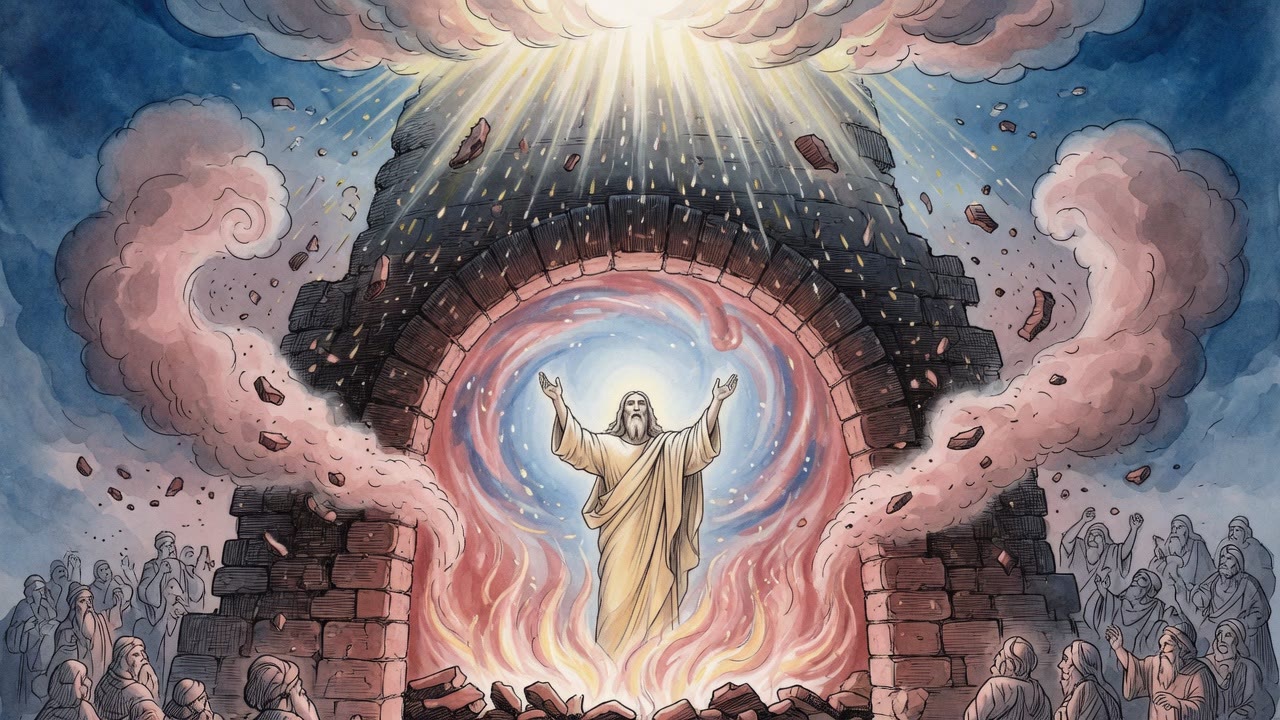
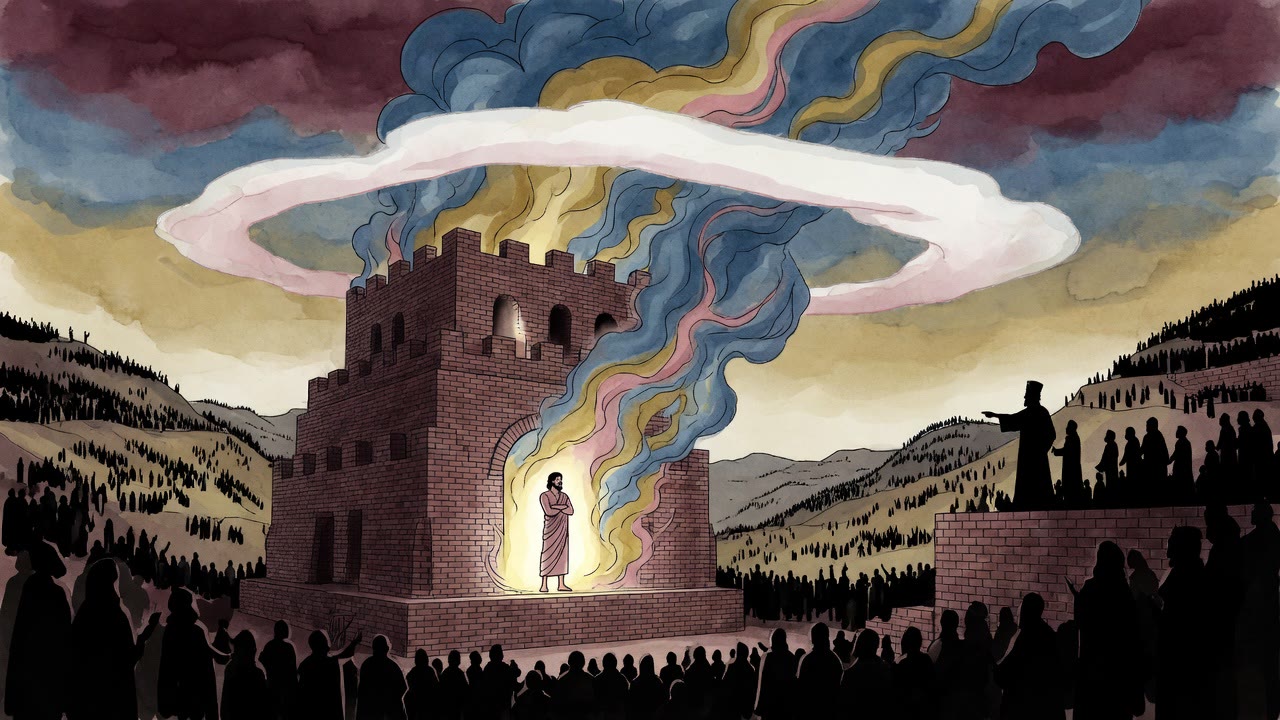
Nimrod threw Abraham into the furnace for refusing to bow to idols. Days stacked. No body to parade. The warden finally shouted into the heat, "Abraham, art thou alive?" The answer came clear. "I am living."

"Who has been bringing thee food and drink all these many days?" The prisoner named a Provider the king could not tax or dethrone. "Food and drink have been bestowed upon me by Him who is over all things, the God of all gods and the Lord of all lords, who alone doeth wonders, He who is the God of Nimrod and the God of Terah and the God of the whole world. He dispenseth food and drink unto all beings. He sees, but He cannot be seen."

The speech was not a private prayer. It was a public map. Even Nimrod's name sat under that God. Even Terah's name. The furnace became a pulpit of smoke and unbroken bones.

The Old Woman and the Stolen Image

Outside the fire, on ordinary streets, Abraham met an old woman hunting a "good and big" idol to worship. He offered no catalog. "I know no profit therein, either in the big ones or in the little ones, either unto themselves or unto others."

He asked about the large image she had bought from his brother Haran. Thieves had taken it while she was at the bath. Abraham pressed the knife of the question home. If thieves can steal a god in the night, how will that god steal a worshiper out of misfortune? How call that shape a god when it cannot save itself?

The marketplace kept selling wood and stone. The woman stood with empty hands and a logic she could not answer. Abraham planted a seed of doubt in soil that had grown only custom. A god that needs a lock is not a god.

Terah's Shop and the Ladder of Elements

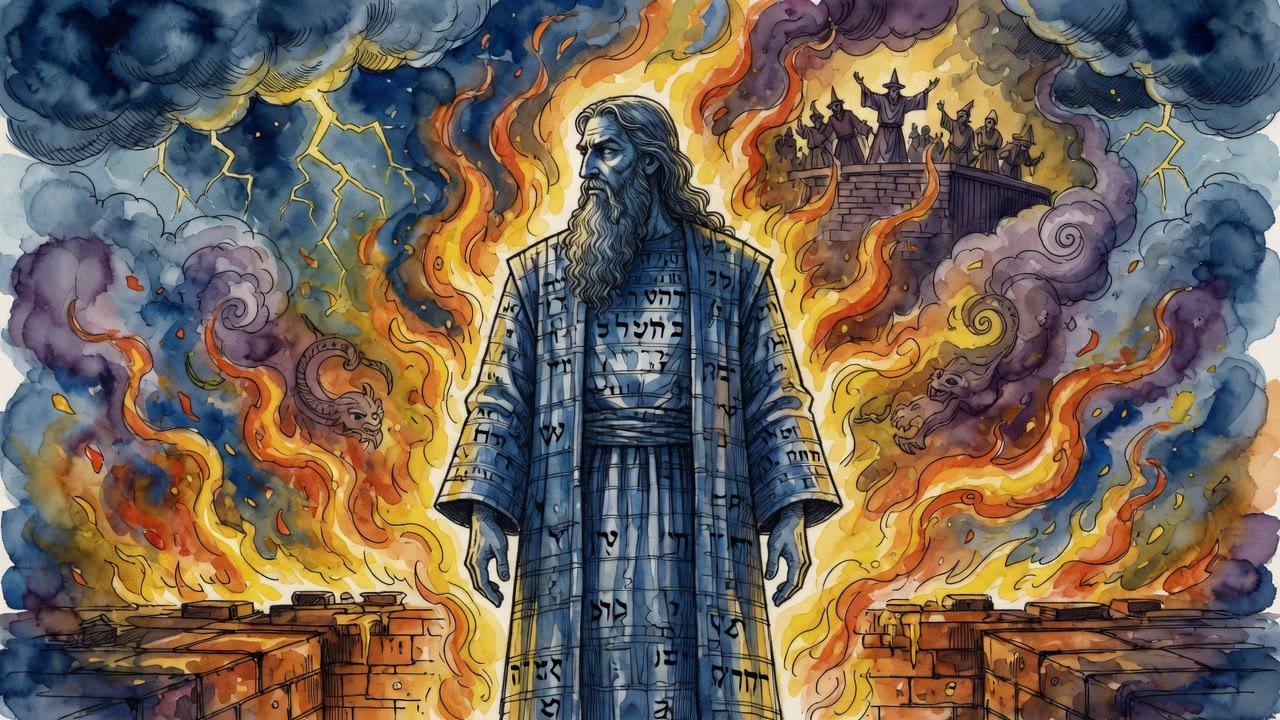
At home the argument turned filial and fierce. Terah blessed idols and sold them. Abraham laughed inwardly and ached. "Father, no matter which of the two idols thou blessest, thy behavior is senseless." Gold Zucheus can be refurbished. Stone Marumath, once broken, is finished. Silver Joauv outranks wooden Barisat, yet Barisat was once a living tree. "Now he is dry, and gone is his sap. From his height he has fallen to the earth, from grandeur he came to pettiness."

He climbed a ladder of power to dismantle it. Fire consumes wood gods, so fire seems greater. Water quenches fire. Earth swallows water. Sun outshines earth, moon and stars their courses. None of them made the chain. "The God who hath created all things, He is the true God," who painted the heavens, gilded the sun, and sought Abraham out in the confusion of his thoughts.

Terah heard a son unmaking the family trade with sentences sharper than any chisel. The shop smelled of paint and old offerings. Abraham smelled fraud.

A Son Who Named the Road Out

Abraham pressed further. Nimrod's gifts to Terah were not love. They were leverage. Earthly vanity collapses when trouble arrives. "Listen to me, Father. Let's go to the land of Canaan and serve the God who created you, so that things will be good for you."

The plea braided escape and service. Leave the king's favor. Serve the Maker. Terah would later move as far as Haran, half a journey, full of the cost of hearing a son tell the truth. The furnace speech and the shop speech and the road speech were one theology in three temperatures: fire, argument, exile.

Abraham walked out of heat into a world still full of thieves who steal idols and kings who burn dissenters. He kept naming the same God in both places. Seen by none. Feeding all. Lord even of Nimrod.

Courtiers would invent other explanations for the surviving prisoner. Markets would restock bigger statues for richer buyers. Terah would pack some of the old trade into the journey north. None of that closed the case Abraham had opened. A god that burns a man and fails, a god that hangs in a shop and fails, a god that travels in a cart and fails: all three lose to the One who fed a prisoner without being seen.

Years would add covenants and altars and a new name. The furnace answer already held the core. Provider. Ruler of rulers. Present in all places. The old woman's stolen image and Terah's dry wooden Barisat were classroom props for that lesson. Abraham did not need a bigger idol. He needed listeners willing to notice what cannot save itself.

Nimrod still ruled Shinar for a season. The unfinished north of creation still waited for pretenders. Abraham's mouth had already finished the local test. Finish your claim in the fire. Or admit the claim is ash.

When he later smashed or mocked the shop goods of his father's house in other tellings, the logic was the same as the bathhouse theft. Powerless objects demand powerful excuses. Abraham refused the excuses. He kept the Provider's name and left the rest to break under their own weight.

The warden who heard "I am living" carried a story no decree could fully bury. The old woman carried a question into her next purchase. Terah carried a son's voice toward Haran. Three witnesses. One flame. One refusal to call wood God.


← All myths

From the tradition

Sources

3 sources

The texts behind this telling. Some cards carry a translation of the source; others are our own retelling of it, and each card says which. Every card links out to the original.

Legends of the Jews 5:43Legends of the Jews

Retold in our words. Read the original at the link below.The Legends of the Jews by Louis Ginzberg (1909) · Public Domain

Days turn into weeks. Hope dwindles. You cry out... and someone actually answers.

That's essentially the scene we find ourselves in with Abraham in this incredible passage from Ginzberg's Legends of the Jews. It's a moment of pure, almost unbelievable survival.

So, what happened? Well, Nimrod, the tyrannical king, had thrown Abraham into a blazing furnace for refusing to worship idols. A pretty harsh punishment, even for those times. But instead of being consumed by the flames, Abraham miraculously survived.

The warden of the prison, utterly astonished, shouts into the inferno, "Abraham, art thou alive?" And the answer comes back, clear as a bell: "I am living." Can you imagine the warden’s shock?

He presses further, "Who has been bringing thee food and drink all these many days?" After all, someone had to be sustaining him. And Abraham's reply? It’s a powerful declaration of faith.

"Food and drink have been bestowed upon me by Him who is over all things, the God of all gods and the Lord of all lords, who alone doeth wonders, He who is the God of Nimrod and the God of Terah and the God of the whole world. He dispenseth food and drink unto all beings. He sees, but He cannot be seen, He is in the heavens above, and He is present in all places, for He Himself superviseth all things and provideth for all."

Wow. Just… wow. This isn’t just a simple statement of gratitude. It’s a bold proclamation of God’s universal power and presence. It's a direct challenge to Nimrod's authority. Abraham isn’t just thanking some local deity. He's declaring that the God who sustains him is the God of everyone – even Nimrod himself!

Think about the implications here. Abraham is saying that God is not limited to a specific place or a specific people. God is everywhere, sees everything, and provides for everyone. He's the ultimate provider, the ultimate protector.

And notice how Abraham emphasizes God's paradoxical nature. "He sees, but He cannot be seen." This reminds us that God is both immanent – present in all places – and transcendent – beyond our comprehension. It's a beautiful and profound theological statement, delivered from the heart of a fiery furnace!

What does this story tell us? Perhaps it’s about the unwavering power of faith in the face of impossible odds. Or maybe it’s about the courage to speak truth to power, even when your life is on the line. Or perhaps, it's a reminder that even in the darkest of times, we are never truly alone. We are sustained by something far greater than ourselves.

What do you think?

Full source
Legends of the Jews 5:34Legends of the Jews

Retold in our words. Read the original at the link below.The Legends of the Jews by Louis Ginzberg (1909) · Public Domain

Legends of the Jews turns to The Old Woman Who Wanted a Strong Idol.

A young Abraham, not yet the patriarch, walking the streets. People are buzzing, intrigued by his words, his ideas that are so… different. He’s challenging the status quo, questioning everything. And then he meets an old woman.

In Ginzberg's retelling in, Legends of the Jews, this old woman approaches Abraham looking for an idol. Not just any idol, but a "good and big" one, ripe for worshipping. The hustle and bustle of the marketplace, the vibrant colors, and this woman, earnestly seeking a new god.

Abraham, ever the iconoclast, doesn't miss a beat. "Old woman, old woman," he begins, his voice likely laced with both concern and gentle amusement. "I know no profit therein, either in the big ones or in the little ones, either unto themselves or unto others." He’s not just dismissing her beliefs; he's trying to reason with her.

He then asks her about an idol she bought from his brother Haran – a detail that adds a wonderfully human touch to the story. "What has become of the big image thou didst buy from my brother Haran, to worship it?"

Her response is classic: "Thieves came in the night and stole it, while I was still at the bath."

Here’s where Abraham really turns up the heat. He doesn't let her off the hook. "If it be thus," he presses, "how canst thou pay homage to an idol that cannot save itself from thieves, let alone save others, like thyself, thou silly old woman, out of misfortune? How is it possible for thee to say that the image thou worshippest is a god? If it be a god, why did it not save itself out of the hands of those thieves? Nay, in the idol there is no profit, either unto itself or unto him that adores it."

Strong words. Maybe even a bit harsh by modern standards. But think about the context. Abraham wasn't just trying to win an argument; he was challenging the very foundation of her worldview, urging her to think critically about what she believed. He was planting a seed.

The story, in its simplicity, holds a powerful message. Are we, in our own way, worshipping idols that can't even protect themselves? Especially in a world filled with so many shiny, tempting distractions.

Full source
Legends of the Jews 5:74Legends of the Jews

Retold in our words. Read the original at the link below.The Legends of the Jews by Louis Ginzberg (1909) · Public Domain

The scene, as described in Legends of the Jews, is charged with tension. Abraham's father, a maker and seller of idols, is steeped in tradition. But Abraham, well, Abraham is having none of it. He's been thinking, questioning, searching for something… more.

That Abraham's father's words made him laugh inwardly, even as his soul ached at Terah's stubbornness. He begins, ever so carefully, to dismantle the logic behind idol worship. "Father," he starts, "no matter which of the two idols thou blessest, thy behavior is senseless…" It’s a bold move. He goes on, comparing idols to each other. He points out that Zucheus, the god of his brother Nahor, is at least made of gold and can be refurbished. But Marumath, Terah’s stone idol? Once it's broken, it's done. As Ginzberg retells it in Legends of the Jews, he uses biting sarcasm to make his point.

Then he escalates, taking on the idols one by one. Joauv, made of silver, is better than Barisat, made of wood. But Barisat, he reminds his father, was once a mighty tree! Now? "Now he is dry, and gone is his sap. From his height he has fallen to the earth, from grandeur he came to pettiness..

Abraham doesn't stop there. He’s on a roll. Fire, he argues, is more worthy of worship than these idols, because it consumes them. But even fire isn't God, because water extinguishes it. Water isn't God, because the earth absorbs it. And so on, up the chain of perceived power: earth, sun, moon, stars. As we find in Midrash Rabbah, this wasn't just a philosophical debate; it was a direct challenge to the prevailing worldview.

But then comes the crux of it all. "But hearken unto this, my father Terah," Abraham declares, "The God who hath created all things, He is the true God…" He speaks of a God who painted the heavens, gilded the sun, and breathed life into everything. This God, he says, "hath He put upon the earth, and me hath He sought out in the confusion of my thoughts."

That last phrase, "the confusion of my thoughts," is so telling. It speaks to Abraham's own internal struggle, his wrestling with the world around him. It's a moment of raw honesty.

So, what do we take away from this? It’s more than just a story of a young man questioning his father. It’s about the courage to seek truth, to challenge the status quo, even when it means standing alone. It's about the deeply personal, sometimes messy, journey of finding our own connection to something greater than ourselves. A willingness to look beyond the familiar and ask: "Is there more?"

Full source