6 min read

Abraham Smashes Idols Then Hides With Noah

Abram carried trays of his mother's cooking to his father's statues and waited. No hand reached. The next day he took a hatchet off the shop floor.

Curated by Arthur · Told by Maggid ·
Table of Contents
  1. Two Days of Meat Nobody Ate
  2. The Lie That Forced the Truth
  3. The King Dreams About an Egg
  4. What Terah Left in Ur

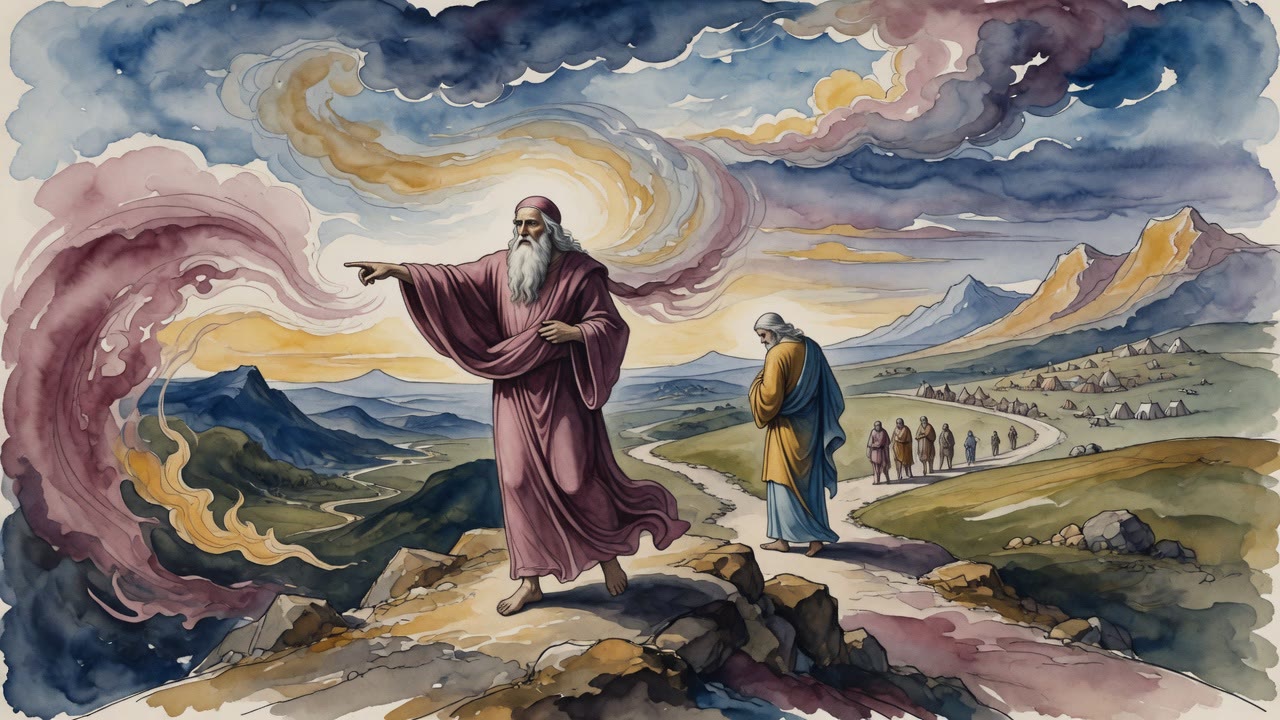
Terah bowed so low in his own workshop that his beard brushed the floor, then straightened up and pointed along the shelves. Twelve large gods stood against the wall, with the small ones stacked behind them like stock waiting to be sold. "These made everything you see," he said. "They made me, and they made you."
Abraham Smashes Idols Then Hides With Noah Click for full size

Abram had asked who made heaven and earth and the children of men, and this was the answer. He did not argue in the hall, because an argument there would only end with his father saying it again, so he went to his mother. "My father has shown me the ones who made heaven and earth," he told her. "Make savory meat from a kid of the flock, so I can carry it in to them. Perhaps they will find me acceptable."

She cooked it, and he carried the trays in himself.

Two Days of Meat Nobody Ate

The meat steamed in front of twelve painted faces until the steam gave out, and not one hand came off a lap. Abram waited long enough to be sure of it, then spoke to them like a merchant working a customer he means to keep. "The meat is not to your taste, perhaps, or there is not enough of it. Tomorrow I will bring better, and more."

Tomorrow he brought better and more of it, and because that went cold in front of them too, the spirit of God came over him and he stopped being a polite son. "Woe to my father and his generation," he cried, "who serve wood and stone that cannot eat or smell or hear or speak. Mouths without speech, eyes without sight, ears without hearing, hands without feeling, and legs without motion."

There was a hatchet on the shop floor, since a man who carves gods needs one. Abram carried it down the row until only the largest god was left standing, with chips of the other eleven skidding across his father's clean tiles. Then he set the hatchet into the big one's carved fingers and walked out.

The Lie That Forced the Truth

Terah heard the crash and caught his son in the doorway with the wreckage behind him. "What is this mischief you have done to my gods?"

"I set savory meat in front of them," Abram said. "They all put their hands out for it at once, before the big one could take his share. He was enraged at them, so he took the hatchet and broke them. The hatchet is still in his hand. You can see it there."

His father's face went dark. "You are lying to me. Is there spirit or soul or power in these to do what you say? They are wood and stone, and I made them myself with these hands. You put the hatchet there."

That sentence was what Abram had gone to all this trouble for. He stepped back into the wreckage, pulled the hatchet out of the big god's grip, broke it with one swing, and asked his father how a man serves what has no power in it, whether these could hear him or deliver him. Then he ran, because a man who has just said the true thing out loud has to put the shame somewhere.

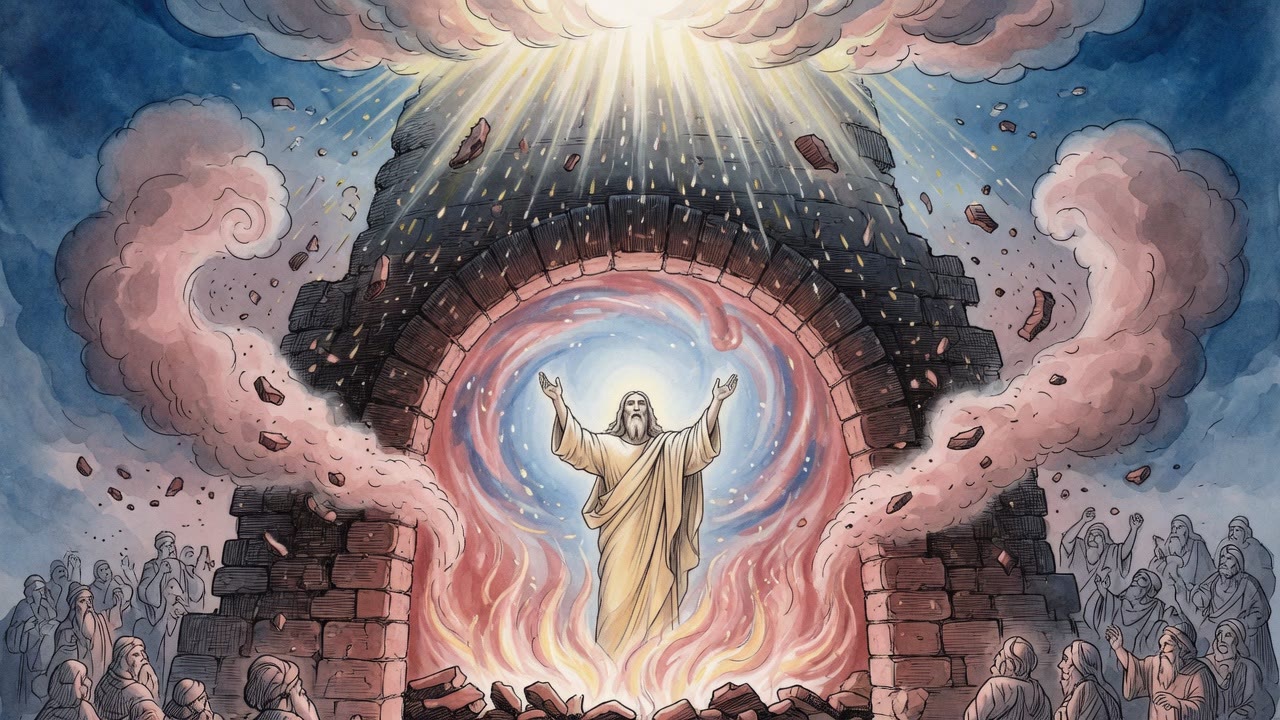
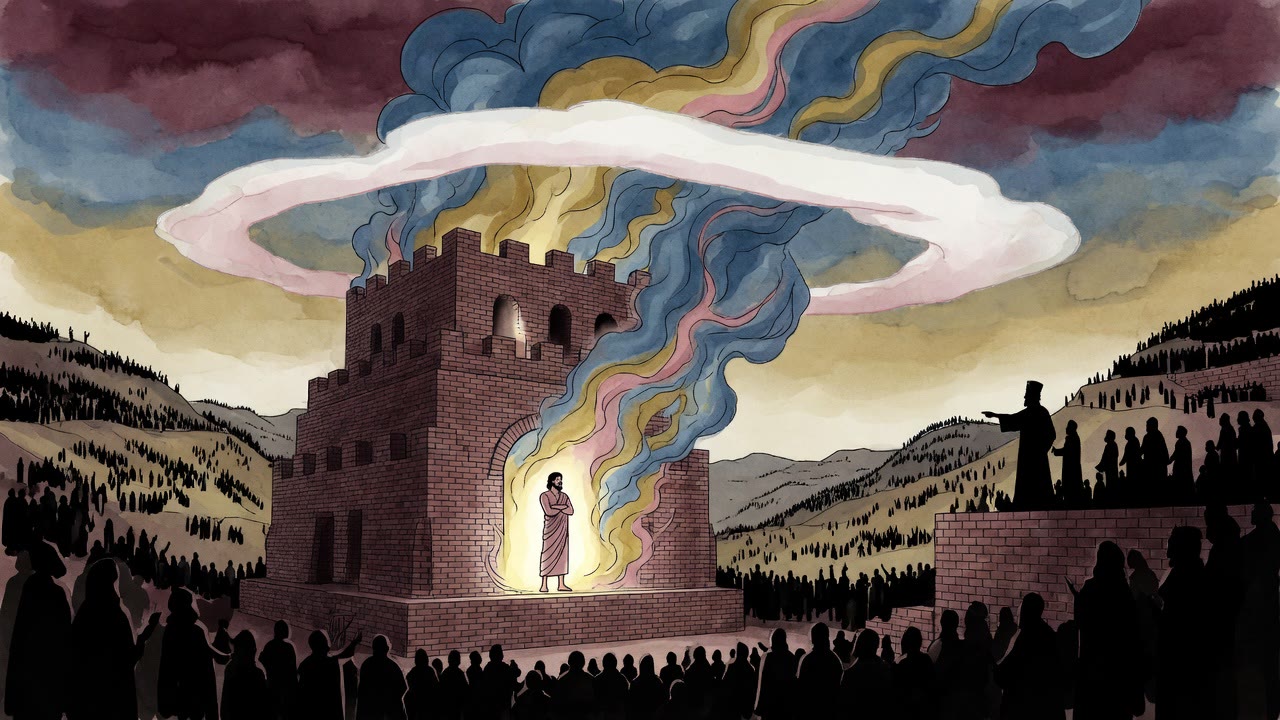
Terah took it to the king. He bowed at Nimrod's feet and asked for judgment on the son born to him fifty years earlier, and because the princes of the realm voted for fire, the furnace at Kasdim was lit and kept burning three days before they walked Abram to it. Nine hundred thousand people came out to watch. The linen cords dropped off him in the flames, and he walked around in there three days, and when the king called him out he came out.

The King Dreams About an Egg

For two years nobody troubled him. Abram spoke to the men, Sarah spoke to the women, and in prophecy she stood above her husband, which is why some called her Iscah, the seer. Then Nimrod dreamed.

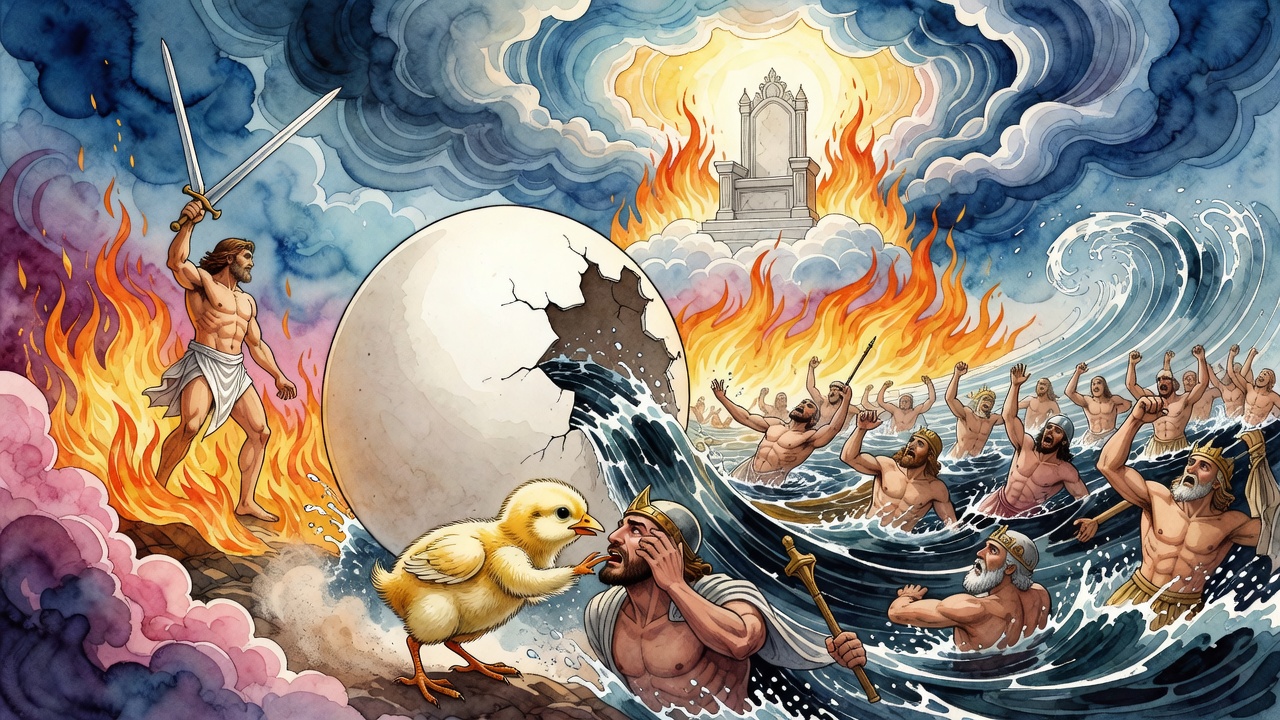
Nimrod stood with his army beside the furnace in the valley, and a man who looked like Abram came out of it with a drawn sword and ran him down. The man threw an egg at his head while running, and a river came out of the egg and drowned the army, leaving three men alive beside the king with his own build and his own face. Then the river went back into the egg, a chick broke out, flew up, settled on the king's head, and put out one of his eyes.

He woke with his heart going like a hammer, so the magicians were in the room by first light, and one of them, Anoko, read it without softening: war, an army annihilated, and the king's death at the hands of somebody out of Abram's line. The stars had said the same fifty-two years earlier, on the night the boy was born. "As long as Abraham liveth upon the ground," Anoko said, "thou shalt not be stablished, nor thy kingdom."

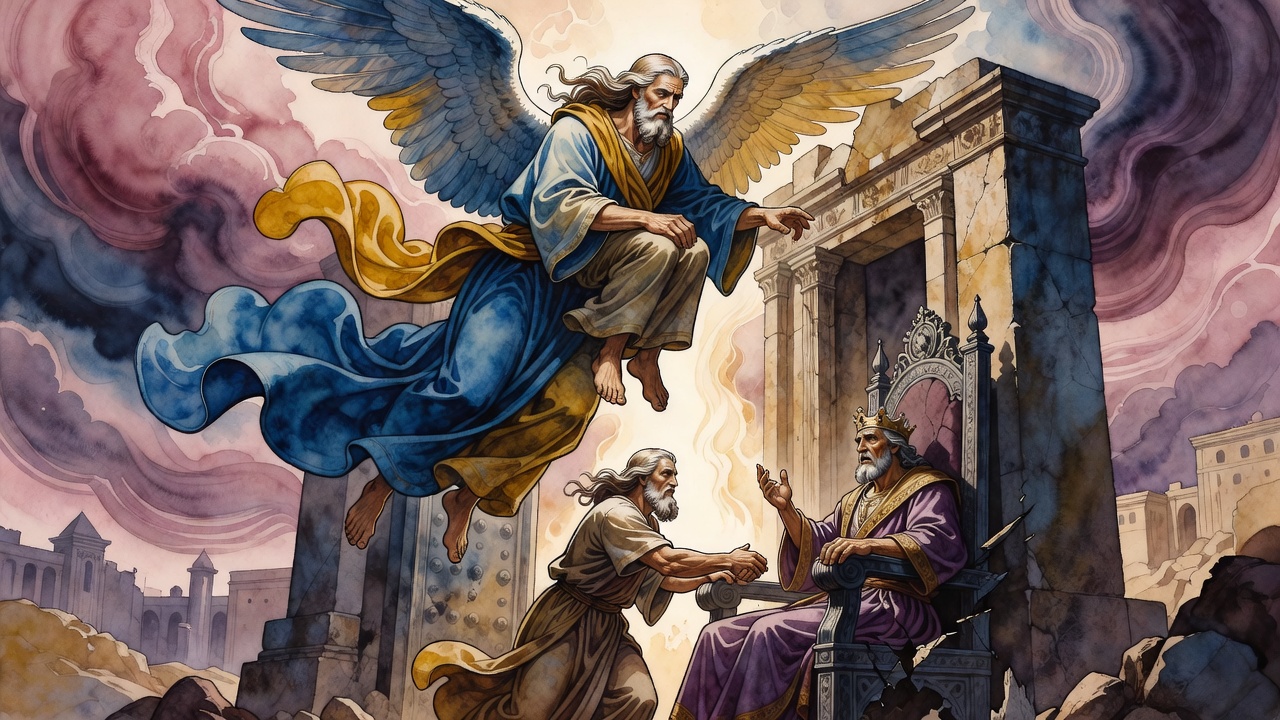
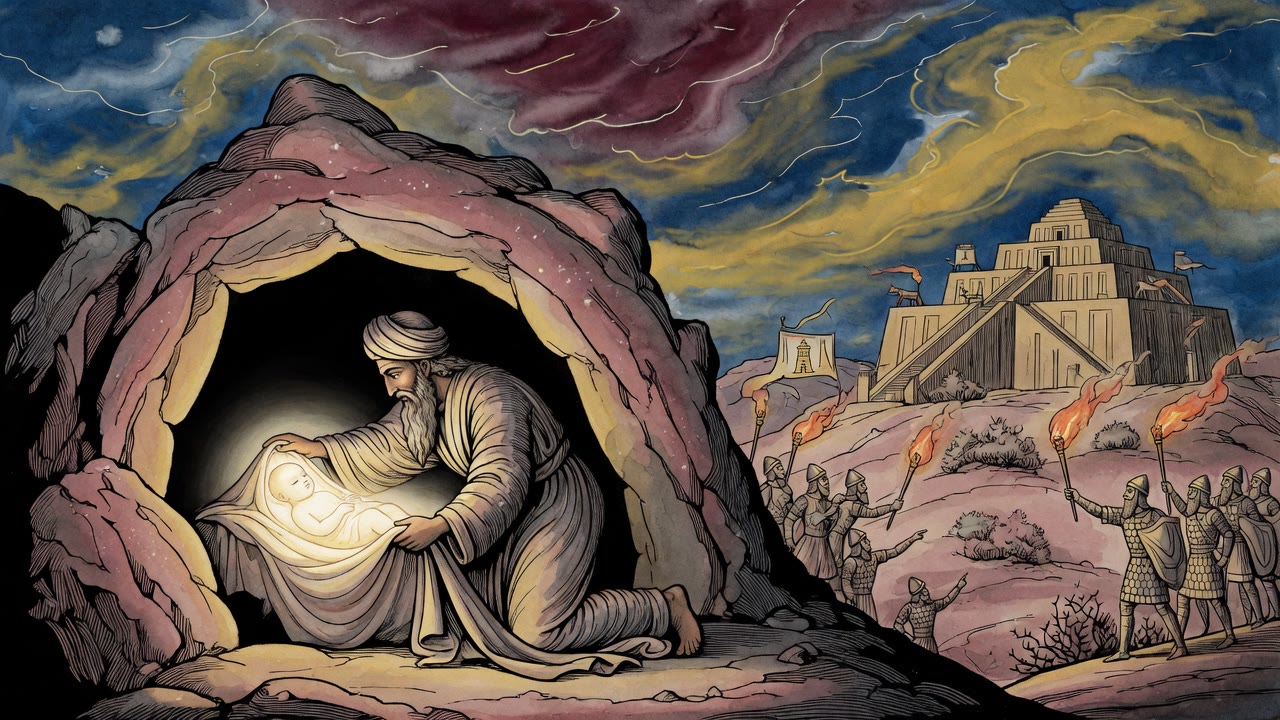
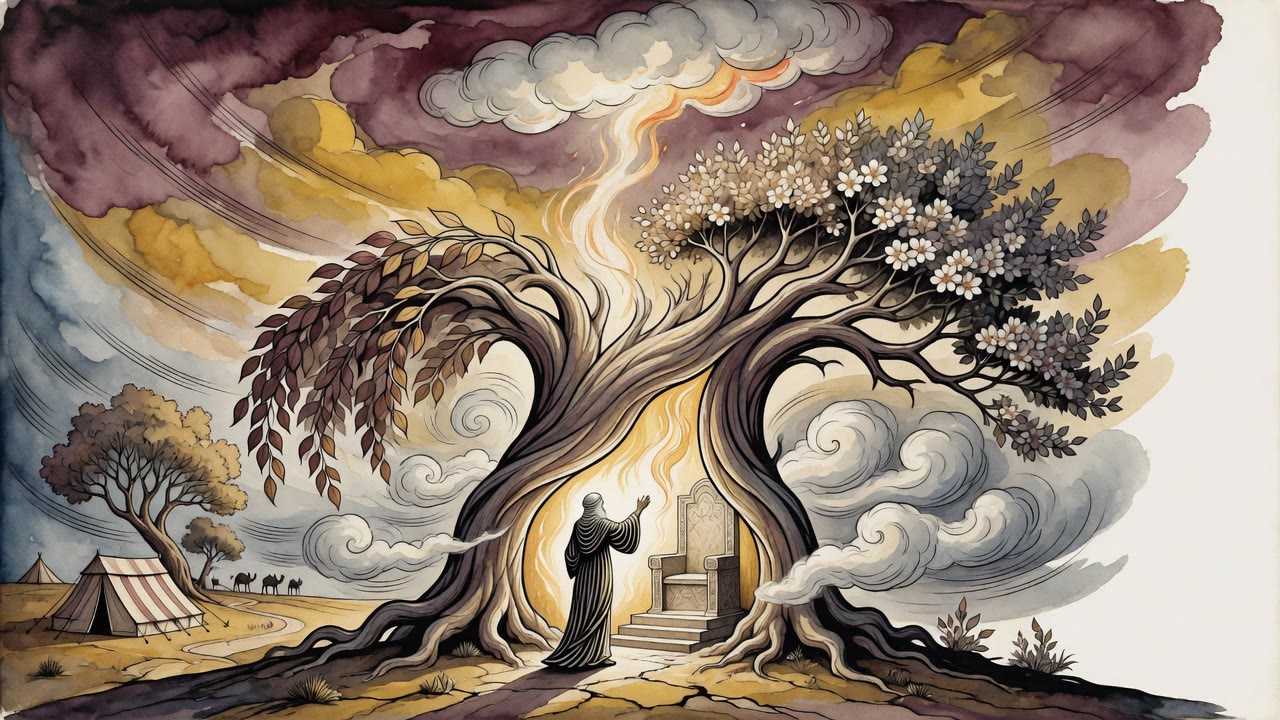
So Nimrod sent men to kill him. Eliezer, the slave the king had once given Abraham as a gift, heard the order in court and ran the whole way with it, so Abraham was gone before the bailiffs came. He hid in the house of Noah and Shem a month, until the officers gave up and the king stopped thinking about him.

What Terah Left in Ur

Terah came to the hiding place, and his son asked him for something harder than silence. "It was not for your sake that Nimrod loaded you with honors," Abraham said. "It was for his own profit, and riches are no profit in a day of wrath. Come with me to Canaan and serve the God who made you."

Noah and Shem said the same thing, and then the room went quiet and stayed quiet. Terah had carved those gods himself and had known the whole time what they were made of, and he had still gone to a king about his own child. Standing in a bolted house with the boy alive in front of him, he said yes.

They went out toward Haran together, Terah and Abraham and Lot, with their households strung behind them. The country was pleasant and the people listened, so that men who had never feared anything invisible began to fear God. Back in Ur the workshop floor was still covered in pieces of the twelve, and the king who had dreamed about an egg still had both eyes.


← All myths
From the tradition

Sources

2 sources

The texts behind this telling. Some cards carry a translation of the source; others are our own retelling of it, and each card says which. Every card links out to the original.

Legends of the Jews, V. Abraham, The IconoclastLegends of the Jews

Retold in our words. Read the original at the link below.Project Gutenberg eBook #1493, The Legends of the Jews, Volume 1 · Public Domain

Legends of the Jews (Ginzberg) turns to The Iconoclast.

The familiar story centers on Abraham, the patriarch, the father of monotheism. But have you ever considered his origins? Before he was Abraham, he was Abram, son of Terah, an idol maker.

Terah, according to Legends of the Jews by Ginzberg, was unshakeable in his beliefs. When Abram questioned the nature of God, asking who created heaven, earth, and humankind, Terah led him to a hall filled with idols. Twelve large ones, countless smaller ones. "These," Terah declared, bowing low, "are they who made all you see. They created me, you, and all men."

He doesn't argue directly with his father. Instead, he goes to his mother. “My father has shown me the gods who made everything,” he says, according to Ginzberg's retelling. “Let’s prepare a delicious meal for them. Perhaps I'll find favor in their eyes."

His mother, bless her heart, obliges. Abram presents the offering, but the idols remain silent and still. No voice, no movement, no outstretched hand. Abram, in a moment of sheer brilliance and perhaps a touch of teenage sarcasm, mocks them: "Perhaps the food isn't to your liking? Or maybe it's just not enough! I'll make an even better offering tomorrow."

But the next day is the same. Silence. Stillness.

Then, the Legends of the Jews tells us, the spirit of God came over Abraham. He cries out, lamenting his father’s generation, “Woe to them who serve idols of wood and stone, which cannot eat, nor smell, nor hear, nor speak! Mouths without speech, eyes without sight, ears without hearing, hands without feeling, legs without motion!”

And here's where the story takes a dramatic turn. Abram doesn't just walk away. He takes a hatchet. He smashes all his father's idols. But the twist? He places the hatchet in the hand of the largest idol before leaving.

Terah, hearing the commotion, rushes in. "What have you done?!" he cries.

Abram, with the audacity of youth, replies: "I offered them food. They all reached for it at once, before the big one could take his share. He got angry and smashed them all himself! See, the hatchet is still in his hand!"

Terah is furious. “You lie! These are just wood and stone! I made them myself!”

And here, Abram delivers the punchline: "If they are powerless, how can you serve them? Can they hear your prayers? Can they deliver you?" Legends of the Jews says that Abram continued to admonish his father, urging him to abandon idolatry. Then, in a final act of defiance, he snatches the hatchet from the large idol, destroys it, and flees.

Terah, humiliated and enraged, runs to Nimrod, the king. He tells the king everything, painting Abram as a dangerous rebel. "Judge him according to the law, and deliver us from his evil!"

When brought before Nimrod, Abram repeats his story about the idols. Nimrod, unimpressed, scoffs, "Idols can't speak, eat, or move!" Abram, in turn, rebukes Nimrod for worshipping powerless gods and urges him to serve the God of the universe.

According to Ginzberg's Legends, Abram warns Nimrod that if he doesn't turn away from his evil ways, he, his people, and all who follow him will die in shame. Bold words!

Nimrod, predictably, is not swayed. He throws Abram into prison. After ten days, he consults his advisors, who decree that Abram must be burned alive.

A massive pyre is built. Nine hundred thousand people gather to watch. As Abram is led to the flames, the astrologers recognize him as the child whose birth foreshadowed great change.

In a desperate attempt to save himself, Terah confesses to deceiving Nimrod, falsely accusing his other son, Haran, of being the mastermind. Nimrod, in his fury, throws both Abram and Haran into the fiery furnace.

Here's where the miraculous happens. Haran, whose faith was wavering, perishes in the flames. But Abram, unwavering in his belief, is protected. The fire consumes the cords that bind him, but leaves him unharmed. According to Legends of the Jews, Abram walks in the midst of the fire for three days and nights.

Nimrod, finally believing the reports, approaches the furnace. He commands Abram to come out. And Abram, untouched by the flames, emerges.

"How is it that you were not burned?" Nimrod asks, awestruck.

Abram replies, "The God of heaven and earth, in whom I trust, delivered me."

What does this story tell us? It's more than just a tale of miracles and divine intervention. It’s a story about the courage to question, the strength to stand up for what you believe, and the unwavering faith that can protect you even in the face of fire. It's about finding your own truth, even if it means challenging the world around you. And maybe, just maybe, setting a few idols ablaze along the way.

Full source
Legends of the Jews, V. Abraham, Abraham Emigrates To HaranLegends of the Jews

Retold in our words. Read the original at the link below.Project Gutenberg eBook #1493, The Legends of the Jews, Volume 1 · Public Domain

It wasn't all smooth sailing. There were threats, escapes, and a family's journey toward a new destiny. to the story of how Abraham, or Avram as he was originally known, found himself on the move.

For two years, Abraham dedicated himself to spreading the word of God. He wasn't alone in this mission. His wife, Sarah, a remarkable woman in her own right, worked alongside him. Abraham preached to the men, while Sarah guided the women. She was more than just a helpmate; some traditions even say she possessed greater prophetic abilities than her husband, even being called Iscah, "the seer," because of it.

This peaceful period was about to be shattered.

King Nimrod, a powerful and, let's say, not-so-benevolent ruler, had a disturbing dream. He dreamt that he and his army were near the fiery furnace where Abraham had been thrown (remember that story?). In the dream, Abraham emerged from the flames and chased after him with a drawn sword. While fleeing, Abraham threw an egg at Nimrod's head. From the egg sprang a massive stream, drowning Nimrod's entire army, save for the king and three others who resembled him in stature and dress. The stream then reverted to an egg, from which a chick emerged, flew to Nimrod, and pecked out his eye!

Terrifying. Understandably, Nimrod was shaken. According to Legends of the Jews by Ginzberg, he immediately summoned his wise men and magicians to interpret the dream. One of them, named Anoko, stepped forward with a grim prediction. Anoko warned Nimrod that the dream foreshadowed the misfortunes Abraham and his descendants would bring upon him. He foretold war, annihilation of Nimrod's army, and even Nimrod's eventual death at the hands of Abraham's lineage. Anoko ominously reminded Nimrod that the stars had foretold this fate 52 years prior, at Abraham's birth. "As long as Abraham liveth upon the ground, thou shalt not be stablished, nor thy kingdom," Anoko declared.

Nimrod, taking this warning to heart, sent his servants to seize and kill Abraham. But Eliezer, a slave Abraham had received as a gift from Nimrod himself, caught wind of the plan. He raced to warn Abraham, urging him to flee. Abraham, wisely, took refuge in the house of Noah and Shem, hiding there for a month. When the king's officers couldn't find him, Nimrod eventually gave up the search.

However, the danger remained palpable. During a visit to his son's hiding place, Abraham proposed a radical solution to his father, Terah: they should leave their land and move to Canaan. He reasoned that Nimrod's honors were superficial and that true value lay in serving God. As we find in Legends of the Jews, Abraham appealed to his father, saying, "Consider that it was not for thy sake that Nimrod overloaded thee with honors, but for his own profit... Hearken unto my voice, O my father, let us depart for the land of Canaan, and serve the God that hath created thee, that it may be well with thee."

Noah and Shem supported Abraham's plea, and Terah finally agreed to leave. So, Terah, Abraham, and Lot, the son of Haran, along with their households, set out for Haran. They settled there, finding the land and its people welcoming. Abraham's piety and humane spirit influenced many, and they began to follow his teachings and fear God.

But here's a beautiful detail: Terah's willingness to leave his homeland for Abraham's sake, even before God directly commanded Abraham to do so, was considered a great merit in God's eyes. According to the legends, Terah was granted the privilege of witnessing Abraham's eventual reign over the entire world. This came to pass when a miracle occurred: the birth of Isaac to the elderly Abraham and Sarah. People from all over came to marvel at this event, and Abraham shared his story with Nimrod and how God had saved him. In admiration, they appointed Abraham as their king! It is even said that coins were minted bearing the images of an elderly couple on one side and a young couple on the other, symbolizing Abraham and Sarah's rejuvenation at Isaac's birth.

Terah lived for many years to see his son's glory, passing away when Isaac was 35 years old. And the reward for his good deed didn't end there. Despite his past sins, Terah's repentance was accepted by God, and he entered Paradise after his death. After all, it was his fault that Abraham came close to losing his life at the hands of Nimrod, but he was able to atone for this.

So, what does this story tell us? It's a reminder that even before the grand covenants and divine pronouncements, faith is a journey marked by choices, risks, and the quiet acts of courage and loyalty that can shape not only our own destinies but also the destinies of those around us. It’s a story about how family, even flawed, can be part of a bigger divine plan. And it shows us that even a simple decision like choosing to support a loved one's spiritual path can have profound and lasting consequences, earning favor in the eyes of God.

Full source