Parshat Vayera5 min read

Abraham's Tree Opened Only for the Righteous

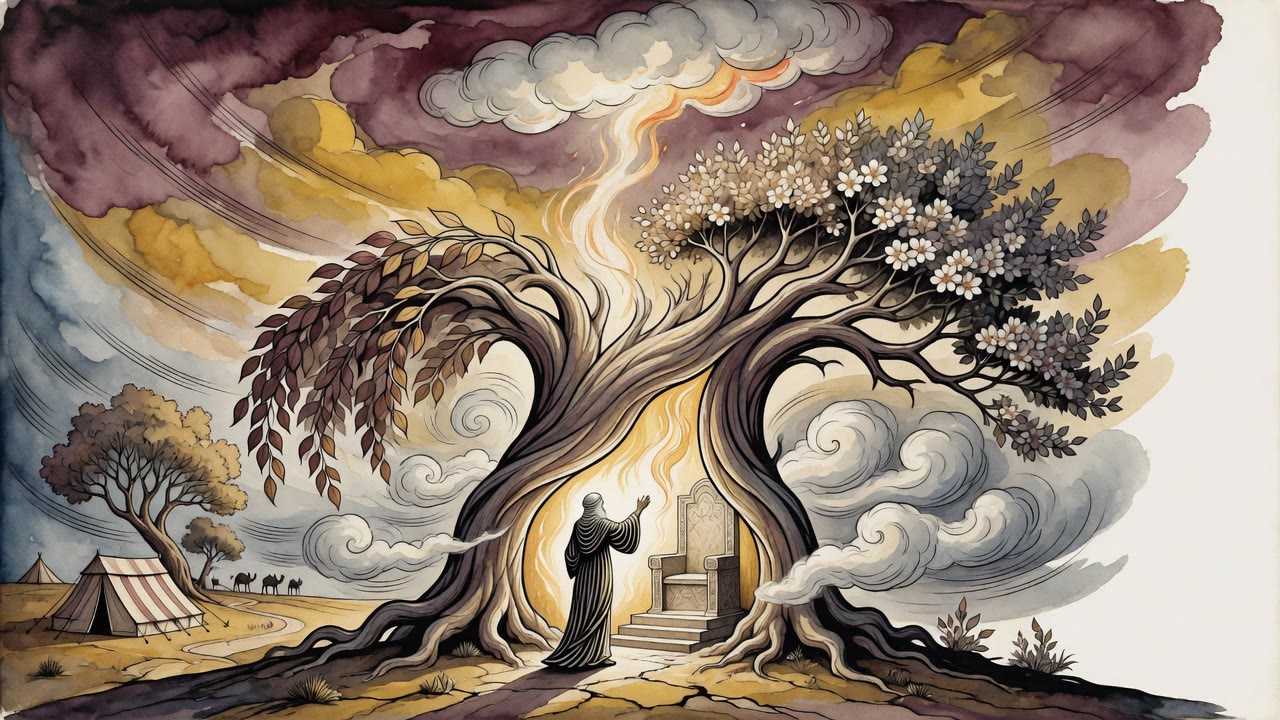
Wherever Abraham pitched his tent he planted one tree, and its branches rose or fell according to the soul that stood in its shade.

Curated by Arthur · Told by Maggid ·
Table of Contents
  1. The Tree He Planted at Every Threshold
  2. Shade for the Devoted, Heat for the Rest
  3. Before the Tree, the Road Out of Haran
  4. The First Blessing Was Departure
Abraham's Tree Opened Only for the Righteous Click for full size

The Tree He Planted at Every Threshold

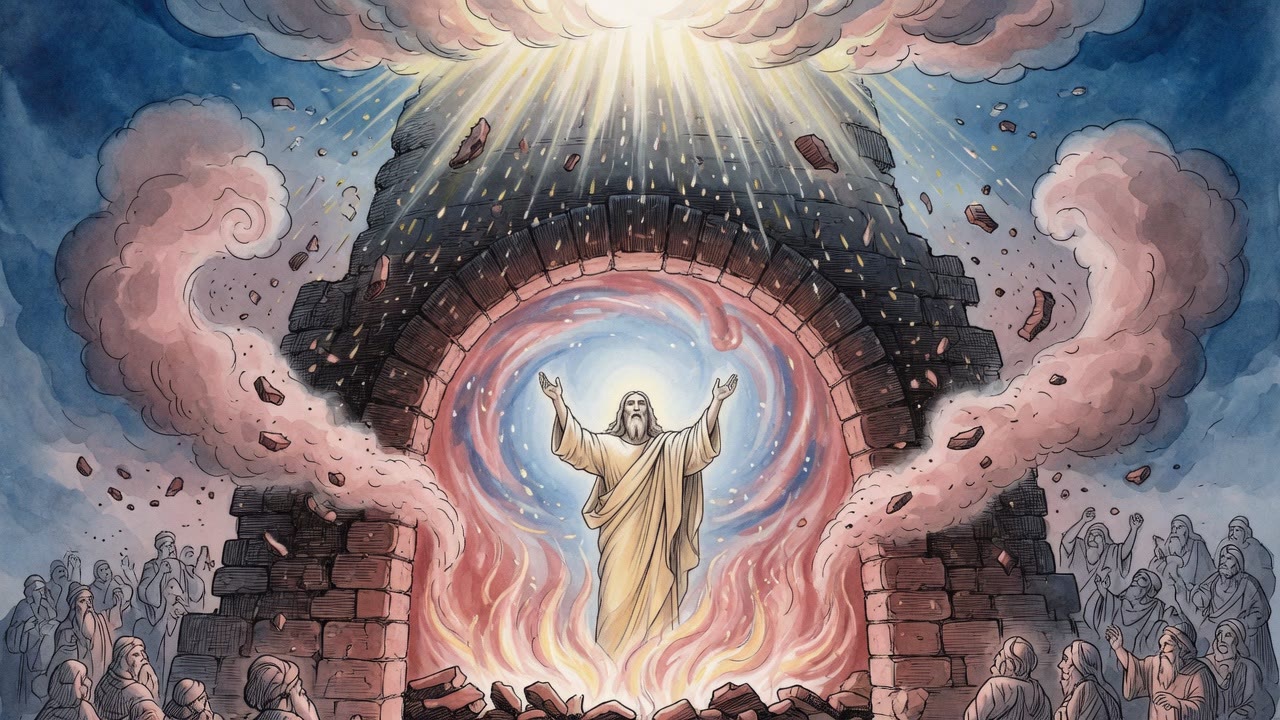
Wherever Abraham made a camp, he put a tree into the ground before he put a stake into the earth. Not a fruit tree for his own table. Not a post for shade he could buy with silver. A living instrument. Its roots drank whatever soil he stood on, and its crown answered the people who came under it.

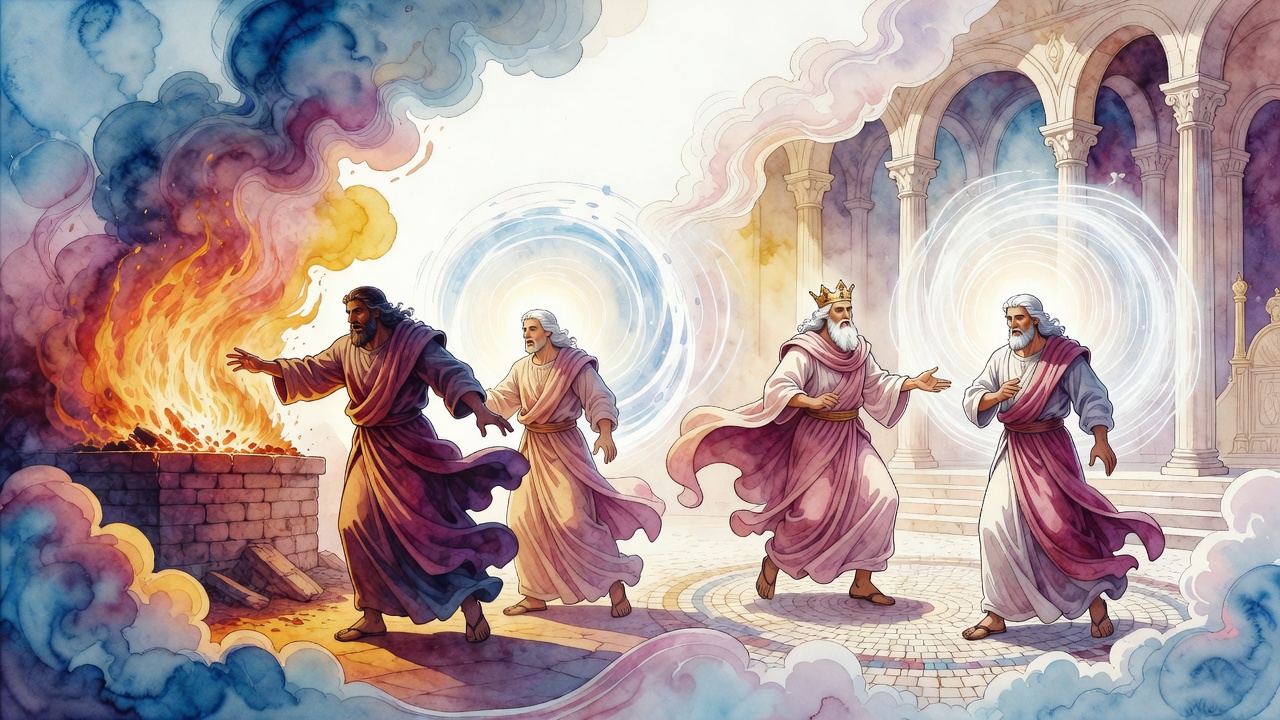
When a traveler who cleaved to God stepped into that circle of leaves, the branches spread wide and cool. Shade fell across the man's face like a welcome older than speech. When an idolater approached, the same tree recoiled. Branches lifted. Leaves closed against their own stems. The sun struck hard and bare, and the guest knew, without a sermon, that he had been measured by something that did not take bribes.

Abraham watched this the way a host watches a door. The tree did the speaking first. He only set the bread down afterward.

Shade for the Devoted, Heat for the Rest

A merchant from the east once arrived dust-coated and smiling, charms hung at his throat like small metal arguments. He asked for water. Abraham pointed him toward the tree. The branches climbed away from him as if a wind had risen from the earth alone. The man stood blinking in the glare, one hand still raised for hospitality that would not land.

"The tree will not cover me," he said.

"Then your gods will not either," Abraham answered. "Sit in the open and drink. We will talk."

They talked until the heat changed color. Abraham did not mock the charms. He asked what they had ever done when the merchant's child was sick, when a caravan was late, when a night road turned wrong. The answers thinned. By nightfall the charms lay in the dust between two bowls. The man returned to the trunk. The branches lowered as if they had been waiting for that exact surrender. Shade found him like a hand finding a shoulder. Abraham did not claim the conversion as his own work. He served bread and let the tree finish what it had begun.

This was the repair he practiced after Eden's ruin. Where Adam had taken from a tree and brought death into the world, Abraham planted one that sorted life from falsehood. Some told it as the Tree of Life itself walking the roads of Canaan in the form of a traveler's orchard, green judgment moving with the tent.

Before the Tree, the Road Out of Haran

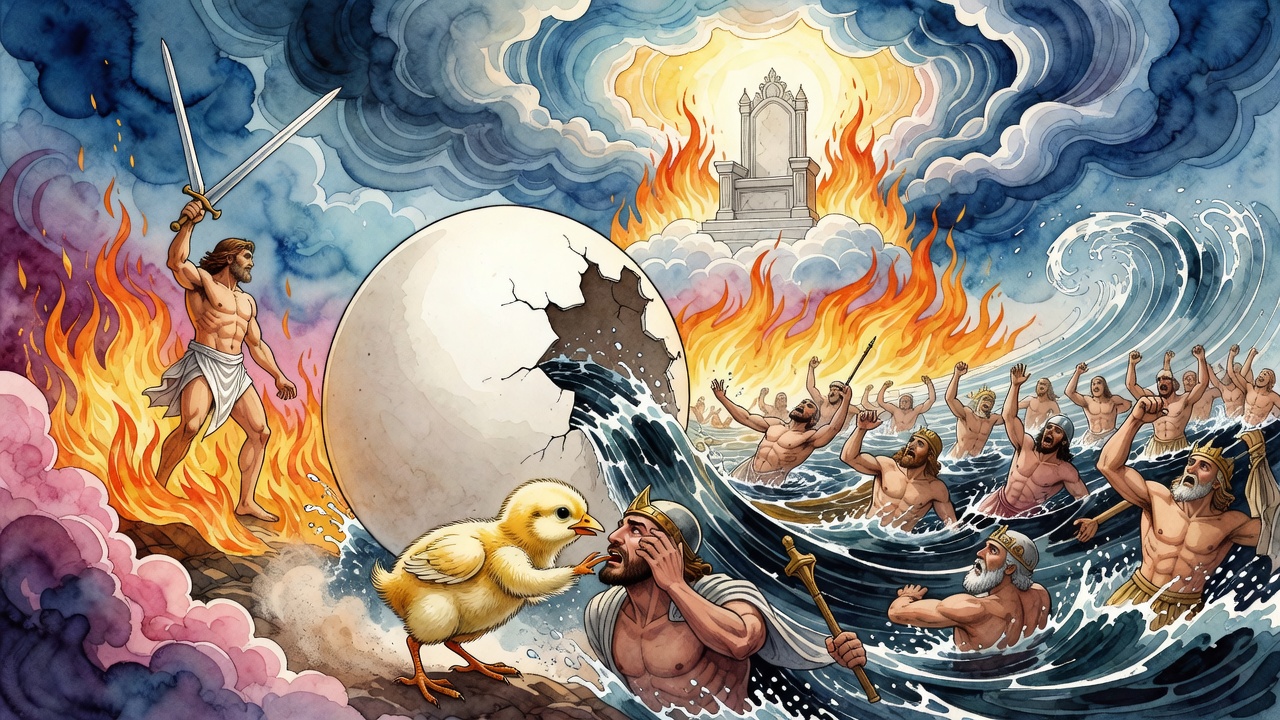
The planting did not begin in ease. In Haran, Abraham had stood two years with Sarah, teaching men while she taught women under a quieter sky. She was called Iscah, the seer, because her sight sometimes outran his, and the camp learned to listen when her voice sharpened. Then Nimrod dreamed of fire and eggs and a chick that pecked out a king's eye, and the peace broke like a pot dropped on stone.

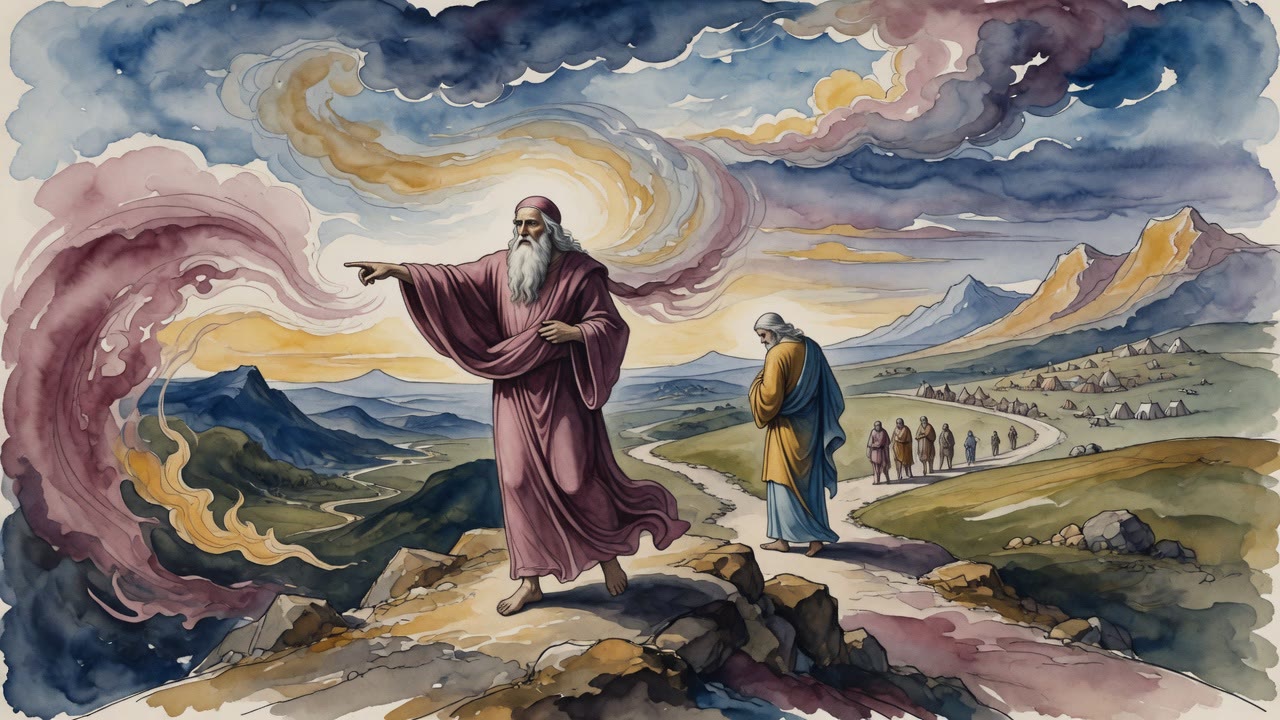
God told Abraham to leave. Abraham worried for his aging father. "They will say I abandoned my own house while I try to bring the nations near the Presence," he said. God told him to dismiss that care. Kin who smiled at his table had already set their hearts against him. So he went, and the three-fold blessing traveled with him like a second cloak: a great nation, a great name, and the charge to be a blessing himself when the road stripped everything else away.

On every new soil the tree went in first. Hospitality became judgment. Judgment became invitation. The tent flaps stayed open, but the leaves decided who found rest under them.

The First Blessing Was Departure

The first of Abraham's ten trials was not the knife or the furnace. It was the road. Leaving home is a wound that does not show blood. He walked with Sarah into a land that did not know his father's gods, and every stranger at the tent flap tested whether the wound had made him hard or open.

The tree answered that question for him. A hard man would have planted a fence and slept behind it. Abraham planted a living gate that could still open for a soul willing to drop its idols in the dust. At dusk the righteous sat under green weight and heard insects and distant flocks. Idolaters stood outside the leaves until they either turned or left into the unsoftened sun. The night wind moved through both kinds of silence, and Abraham slept knowing the threshold still worked while he dreamed.

In the morning he watered the roots before he watered himself. The day began, as all his days in Canaan began, with a green witness already standing guard.


← All myths
From the tradition

Sources

3 sources

The texts behind this telling. Some cards carry a translation of the source; others are our own retelling of it, and each card says which. Every card links out to the original.

Legends of the Jews 1:241-242Legends of the Jews

Retold in our words. Read the original at the link below.The Legends of the Jews by Louis Ginzberg (1909) · Public Domain

Wherever he went, wherever he made his home, he planted a tree. Not just any tree, but a special one. It was a kind of spiritual barometer, a way to gauge a person's connection to the Divine.

How did it work? The magic was in the branches. When someone who cleaved to God, someone truly devoted, stood under Abraham's tree, its branches would spread wide, offering cool, welcoming shade.

Woe to the idolater! If someone who clung to false gods dared to approach, the tree would recoil. The branches would lift, offering no respite from the sun. A clear sign, wouldn't you say? It's a powerful image, this idea of nature responding to our spiritual state.

The Tree of Souls by Howard Schwartz tells us this beautiful story, placing Abraham's tree squarely in the tradition of mystical lore. About how we present ourselves to the world and what kind of energy we put out.

This wasn't just a quirky habit of Abraham's, though. There's a deeper theological idea at play here, a concept of tikkun (spiritual repair) olam (repairing the world). Think back to the Garden of Eden. When Adam ate the fruit of the Tree of the Knowledge of Good and Evil, he brought death and corruption into the world.

According to this tradition, Abraham, with his special tree, was actively working to undo that damage. His tree, in a way, was none other than the Tree of Life itself, a symbol of restoration and spiritual healing. Abraham rectified the world with this tree.

That one person, through a simple act of planting a tree, could begin to heal the wounds of humanity.

What kind of shade do we offer the world? Are we drawing closer to the light, or recoiling from it? These stories, these legends, they aren’t just ancient tales. They’re mirrors, reflecting back at us, challenging us to grow.

Full source
Legends of the Jews, V. Abraham, Abraham In CanaanLegends of the Jews

Retold in our words. Read the original at the link below.Project Gutenberg eBook #1493, The Legends of the Jews, Volume 1 · Public Domain

The story of Abraham, or Avraham in Hebrew, is a powerful exploration of just that. The ancient texts tell us that Abraham faced ten trials, each designed to test the depths of his faith. And the very first of these? Leaving everything he knew.

As we find in Ginzberg's Legends of the Jews, this wasn't just a simple relocation. It was a wrenching departure from his homeland, fraught with hardship and internal conflict. Abraham worried about leaving his aging father in Haran. "Wouldn't people criticize me?" he asked God, fearing they'd say, "He wants to bring the nations closer to the Divine Presence, the Shekinah (the Divine Presence), yet he abandons his own family!"

God reassured him. "Dismiss all care concerning thy father," He said, revealing that Abraham's own kin harbored ill intentions. So, with a heavy heart but unwavering faith, Abraham left Haran and journeyed toward the unknown land of Canaan.

This journey was accompanied by a threefold blessing, designed to counteract the challenges of emigration. God promised, "I will make of thee a great nation, and I will bless thee, and make thy name great." According to Ginzberg, these blessings were meant to address the common fears associated with travel: that it disrupts family growth, diminishes wealth, and reduces one's standing in the community. But the greatest blessing of all? "And be thou a blessing." The Zohar tells us that this meant everyone who encountered Abraham would be blessed. Even sailors at sea would benefit from his presence!

And it wasn't just a temporal blessing. God promised that Abraham's name would be mentioned in the Benedictions, that God would be praised as the Shield of Abraham. A distinction shared by no other mortal, save David. It's said that the full realization of "And be thou a blessing" will only be revealed in the world to come, when Abraham's descendants are recognized as "the seed which the Lord hath blessed." The promise wasn't just about Abraham himself, but about the ripple effect of his faith throughout history.

When God first called Abraham to leave, He didn't immediately reveal the destination. This, the texts suggest, only amplified Abraham's reward. He simply trusted. "I am ready to go whithersoever Thou sendest me," he declared. Only later did God direct him to Canaan, the land where He would reveal Himself.

Upon arriving in Canaan, Abraham didn't initially know it was his promised inheritance. Yet, as Ginzberg tells it, he rejoiced nonetheless. Having witnessed the decadence of Mesopotamia and Aramnaharaim, he longed for a land where people were dedicated to cultivating the earth. Seeing this in Canaan, he exclaimed, "O that my portion may be in this land!" God then confirmed his hopes: "Unto thy seed will I give this land."

Overjoyed, Abraham built an altar to express his gratitude. He traveled southward, toward the future site of the Temple in Jerusalem, establishing his presence and claiming the land. In Hebron, he built another altar. As we find in Legends of the Jews, he even raised an altar in Ai, foreseeing a future misfortune that would befall his descendants during Joshua's conquest. He hoped the altar would mitigate the negative consequences.

Each altar served as a center for Abraham's missionary work. He'd first erect tents for Sarah and himself, then immediately begin making converts, bringing them under the wings of the Shekinah. His purpose was to inspire all people to proclaim the Name of God.

However, Abraham was still a stranger in this promised land. According to the ancient texts, after the division of the earth among Noah's sons, Canaan, the son of Ham, saw the beauty of the land stretching from Lebanon to the River of Egypt and refused his assigned territory. He settled there, prompting warnings from his father and brothers: "Thou livest in a land that is not thine!" They prophesied that his actions would lead to curses and destruction for his descendants. But Canaan ignored them.

Despite the Canaanites' questionable claim to the land, Abraham respected their rights. He even muzzled his camels to prevent them from grazing on others' property! This demonstrates a profound respect for the existing inhabitants, even as he believed in his divine right to the land.

Abraham's journey to Canaan is more than just a geographical relocation. It's evidence of unwavering faith, a willingness to embrace the unknown, and a commitment to spreading goodness in the world. It's a story that continues to resonate today, reminding us that true blessing comes from trusting in something greater than ourselves. What "Canaan" are you being called to journey toward today?

Full source
Legends of the Jews, V. Abraham, Abraham Emigrates To HaranLegends of the Jews

Retold in our words. Read the original at the link below.Project Gutenberg eBook #1493, The Legends of the Jews, Volume 1 · Public Domain

It wasn't all smooth sailing. There were threats, escapes, and a family's journey toward a new destiny. to the story of how Abraham, or Avram as he was originally known, found himself on the move.

For two years, Abraham dedicated himself to spreading the word of God. He wasn't alone in this mission. His wife, Sarah, a remarkable woman in her own right, worked alongside him. Abraham preached to the men, while Sarah guided the women. She was more than just a helpmate; some traditions even say she possessed greater prophetic abilities than her husband, even being called Iscah, "the seer," because of it.

This peaceful period was about to be shattered.

King Nimrod, a powerful and, let's say, not-so-benevolent ruler, had a disturbing dream. He dreamt that he and his army were near the fiery furnace where Abraham had been thrown (remember that story?). In the dream, Abraham emerged from the flames and chased after him with a drawn sword. While fleeing, Abraham threw an egg at Nimrod's head. From the egg sprang a massive stream, drowning Nimrod's entire army, save for the king and three others who resembled him in stature and dress. The stream then reverted to an egg, from which a chick emerged, flew to Nimrod, and pecked out his eye!

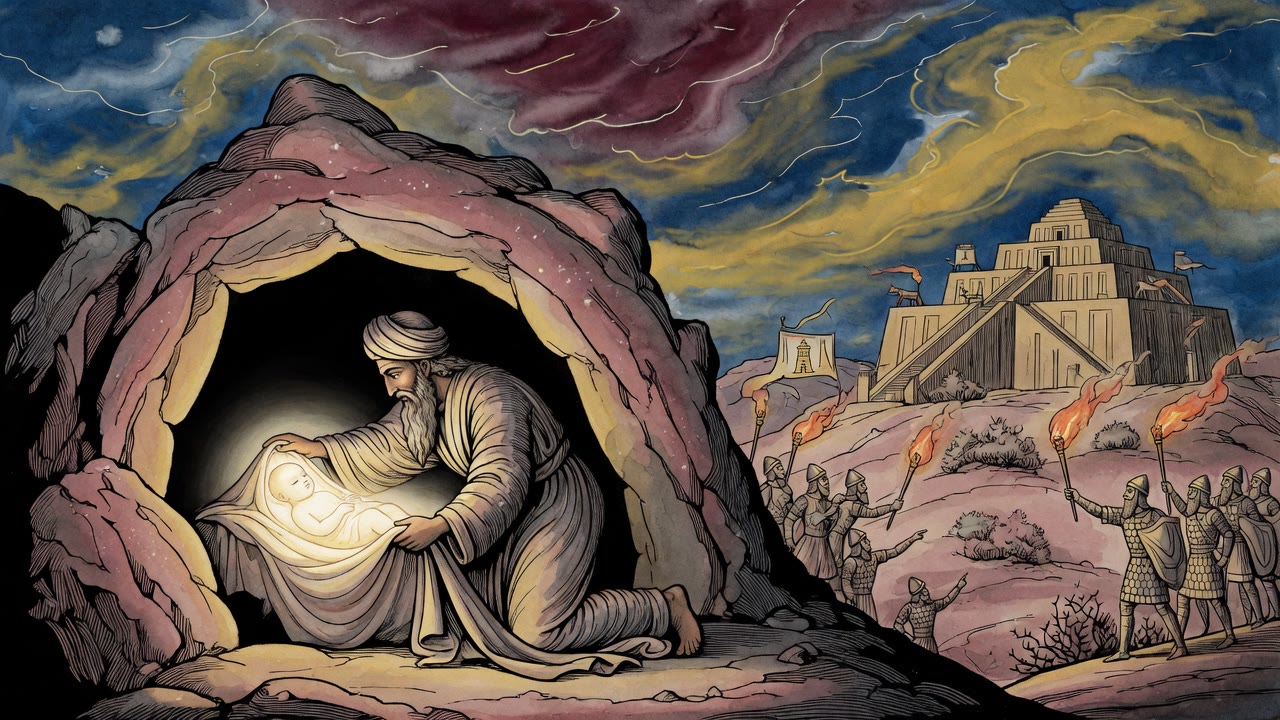
Terrifying. Understandably, Nimrod was shaken. According to Legends of the Jews by Ginzberg, he immediately summoned his wise men and magicians to interpret the dream. One of them, named Anoko, stepped forward with a grim prediction. Anoko warned Nimrod that the dream foreshadowed the misfortunes Abraham and his descendants would bring upon him. He foretold war, annihilation of Nimrod's army, and even Nimrod's eventual death at the hands of Abraham's lineage. Anoko ominously reminded Nimrod that the stars had foretold this fate 52 years prior, at Abraham's birth. "As long as Abraham liveth upon the ground, thou shalt not be stablished, nor thy kingdom," Anoko declared.

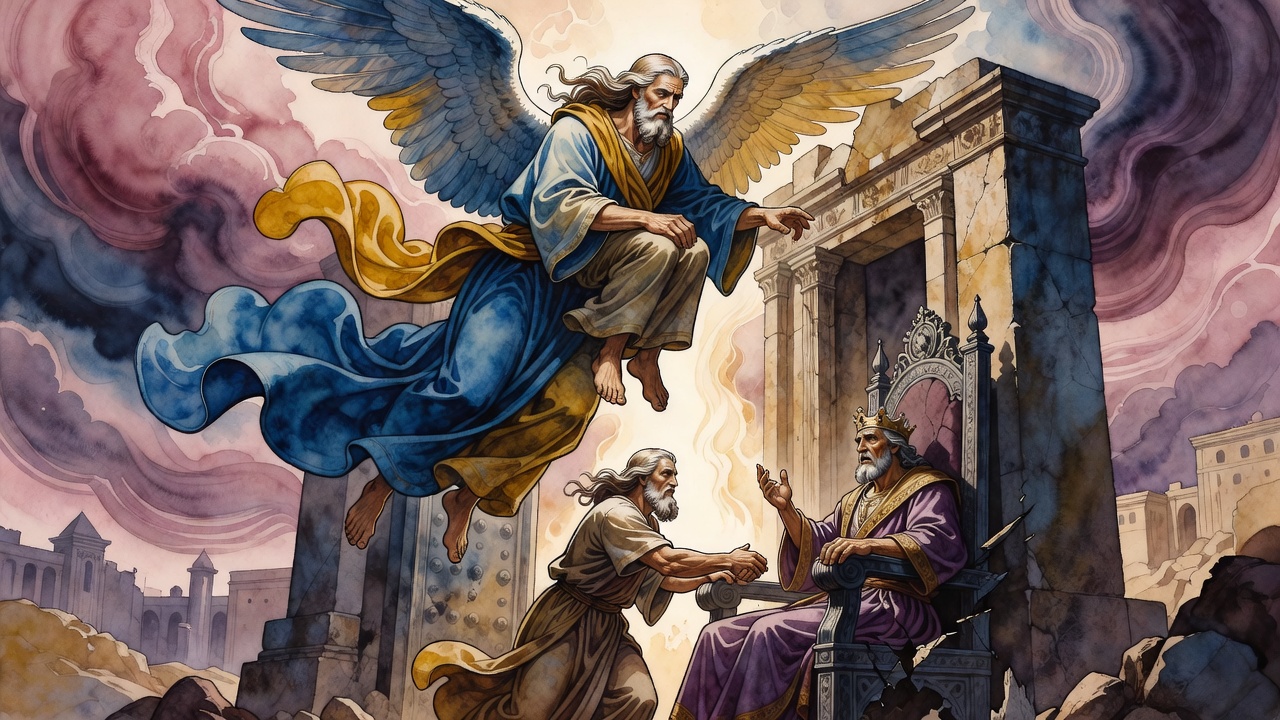
Nimrod, taking this warning to heart, sent his servants to seize and kill Abraham. But Eliezer, a slave Abraham had received as a gift from Nimrod himself, caught wind of the plan. He raced to warn Abraham, urging him to flee. Abraham, wisely, took refuge in the house of Noah and Shem, hiding there for a month. When the king's officers couldn't find him, Nimrod eventually gave up the search.

However, the danger remained palpable. During a visit to his son's hiding place, Abraham proposed a radical solution to his father, Terah: they should leave their land and move to Canaan. He reasoned that Nimrod's honors were superficial and that true value lay in serving God. As we find in Legends of the Jews, Abraham appealed to his father, saying, "Consider that it was not for thy sake that Nimrod overloaded thee with honors, but for his own profit... Hearken unto my voice, O my father, let us depart for the land of Canaan, and serve the God that hath created thee, that it may be well with thee."

Noah and Shem supported Abraham's plea, and Terah finally agreed to leave. So, Terah, Abraham, and Lot, the son of Haran, along with their households, set out for Haran. They settled there, finding the land and its people welcoming. Abraham's piety and humane spirit influenced many, and they began to follow his teachings and fear God.

But here's a beautiful detail: Terah's willingness to leave his homeland for Abraham's sake, even before God directly commanded Abraham to do so, was considered a great merit in God's eyes. According to the legends, Terah was granted the privilege of witnessing Abraham's eventual reign over the entire world. This came to pass when a miracle occurred: the birth of Isaac to the elderly Abraham and Sarah. People from all over came to marvel at this event, and Abraham shared his story with Nimrod and how God had saved him. In admiration, they appointed Abraham as their king! It is even said that coins were minted bearing the images of an elderly couple on one side and a young couple on the other, symbolizing Abraham and Sarah's rejuvenation at Isaac's birth.

Terah lived for many years to see his son's glory, passing away when Isaac was 35 years old. And the reward for his good deed didn't end there. Despite his past sins, Terah's repentance was accepted by God, and he entered Paradise after his death. After all, it was his fault that Abraham came close to losing his life at the hands of Nimrod, but he was able to atone for this.

So, what does this story tell us? It's a reminder that even before the grand covenants and divine pronouncements, faith is a journey marked by choices, risks, and the quiet acts of courage and loyalty that can shape not only our own destinies but also the destinies of those around us. It’s a story about how family, even flawed, can be part of a bigger divine plan. And it shows us that even a simple decision like choosing to support a loved one's spiritual path can have profound and lasting consequences, earning favor in the eyes of God.

Full source