Parshat Lech Lecha5 min read

Nimrod Dreamed an Egg That Flooded His Army

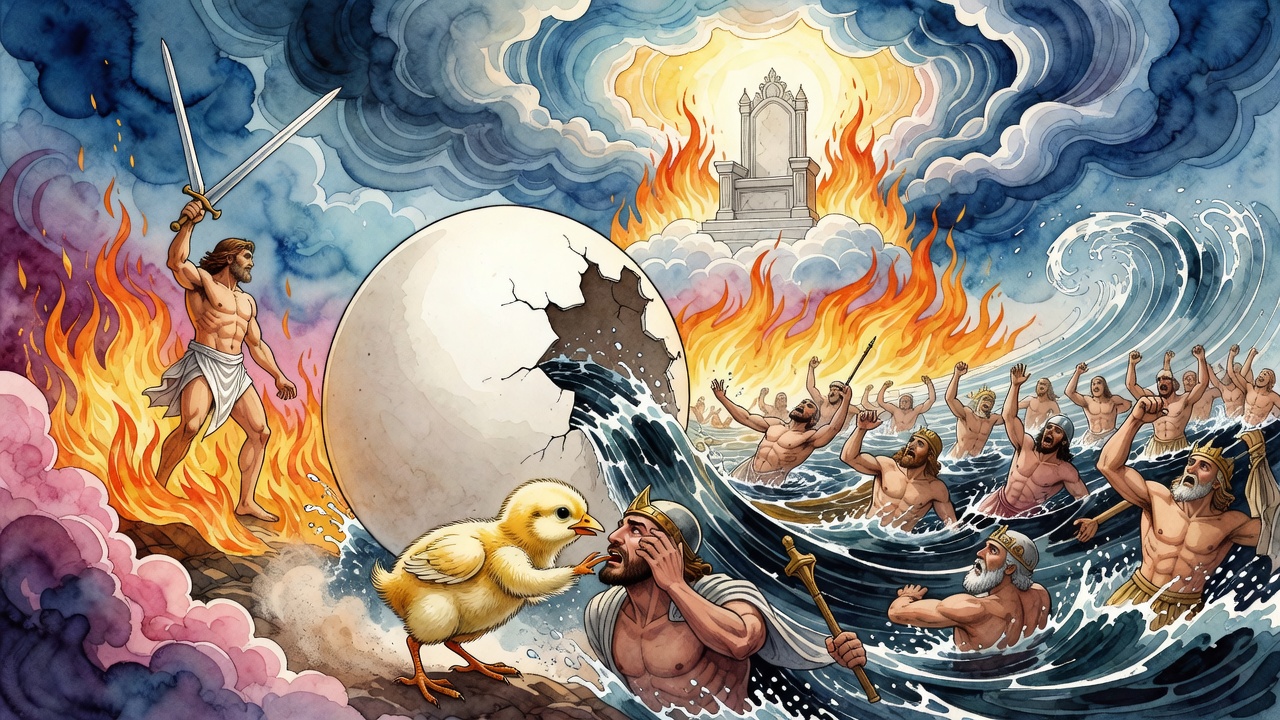
Two years after the furnace, Nimrod dreamed Abraham rising from fire with a sword and an egg that drowned kings. A chick pecked out the tyrant's eye.

Curated by Arthur · Told by Maggid ·
Table of Contents
  1. Hidden Under the Breastbone
  2. Out of the Cave into Twelve Idols
  3. The Old Woman and the Stone
  4. Egg, Flood, and a Pecked Eye
  5. After the Furnace, Before the Dream
Nimrod Dreamed an Egg That Flooded His Army Click for full size

Hidden Under the Breastbone

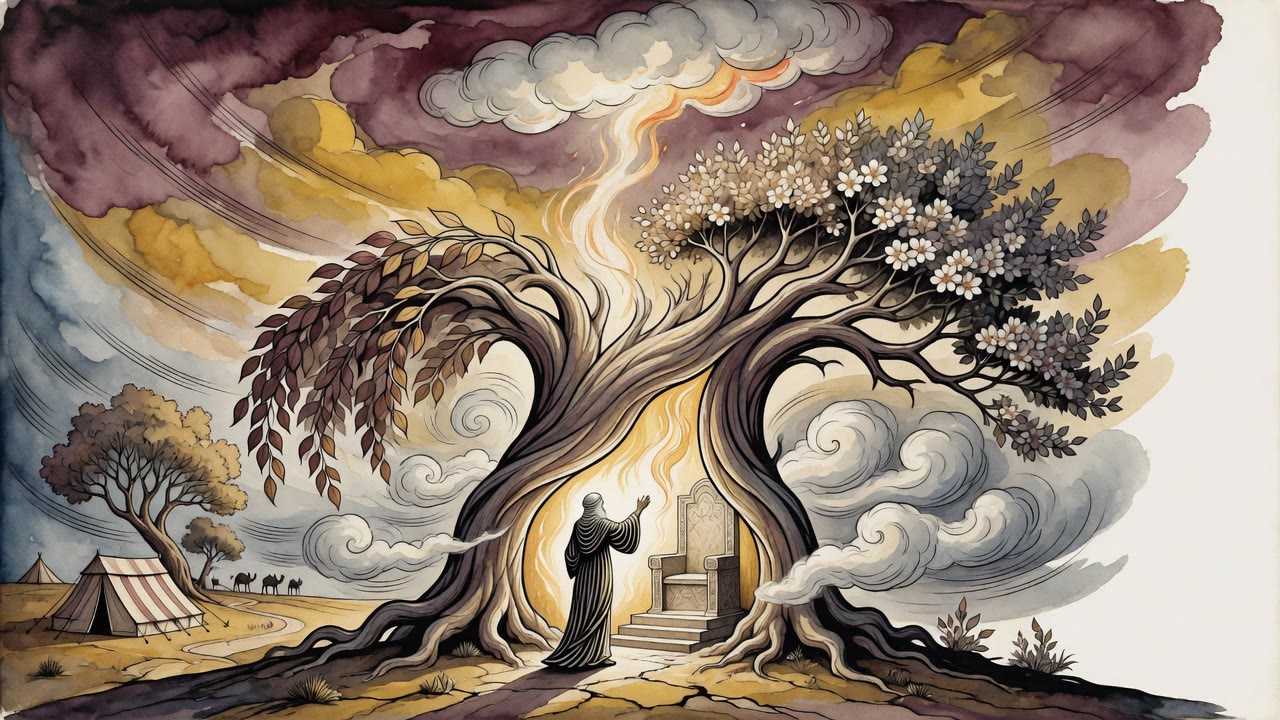
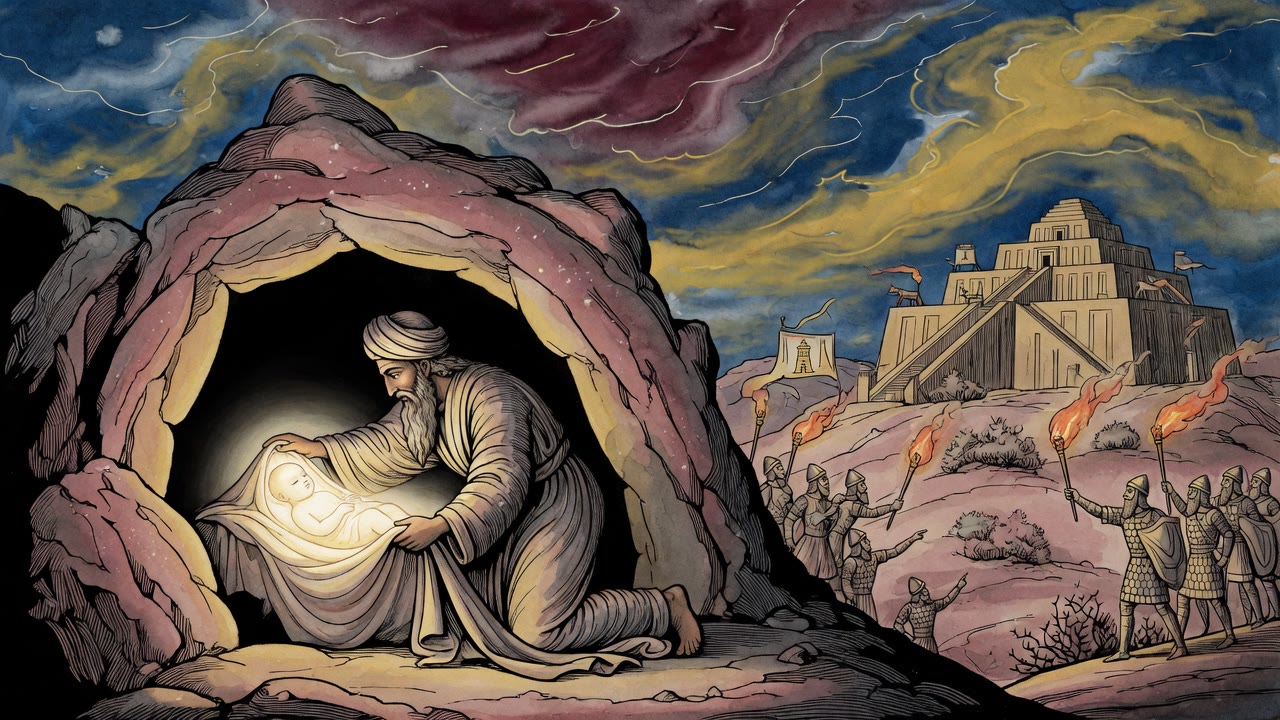
Terah married, and within three months his wife looked ready to deliver. Her face went pale. Her body swelled. "What ails thee, my wife?" he asked. She answered that every year she suffered this malady. He did not believe her. He pressed to examine her, fearing the decree of Nimrod, who hunted newborn threats after a prophecy that a child would challenge his rule.
When Terah reached toward her, the child rose inside the womb and settled beneath her breasts. Terah felt nothing. He accepted the lie the miracle forced him to accept. Visibility returned only on the day of birth. Abraham entered the world already practiced at concealment, a secret against a king who called himself a god.

Out of the Cave into Twelve Idols

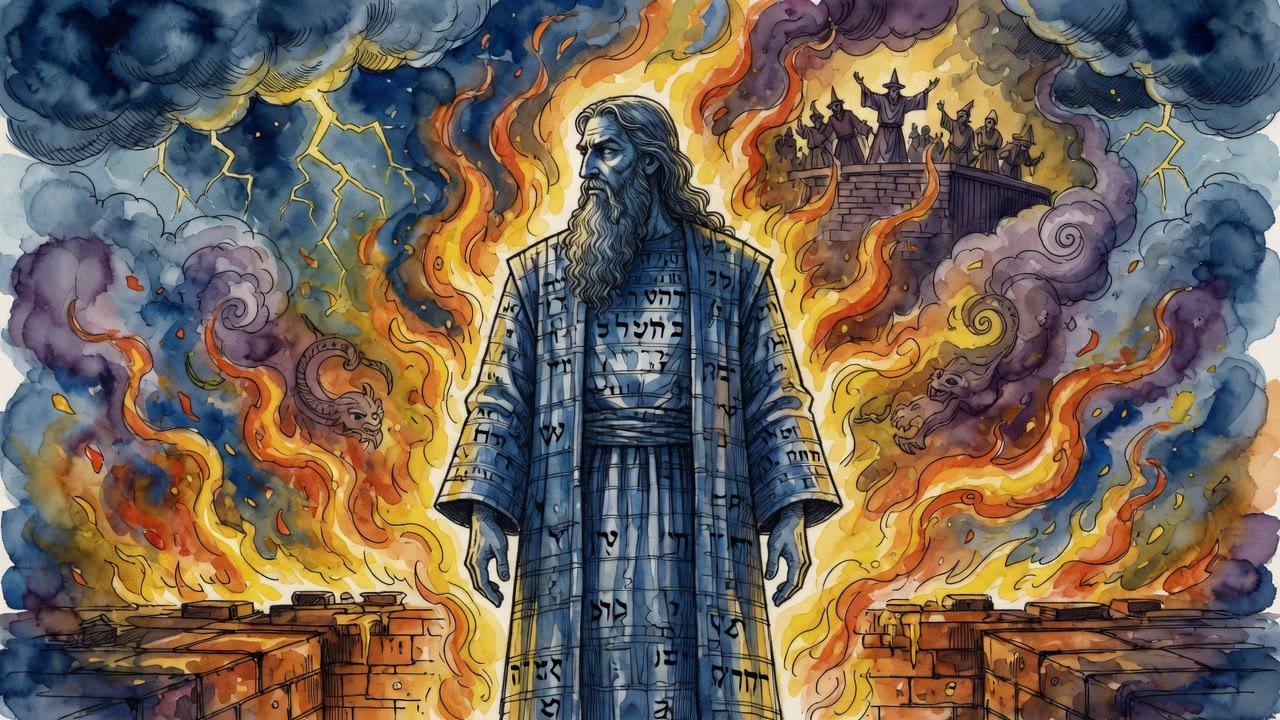
Mother, nurse, and child hid in a cave until Nimrod's court forgot the baby it had feared. They stepped into a world where almost everyone except Noah's remnant had turned to wood and stone. Terah himself carved twelve massive idols for the twelve months and bowed to a different one each turn of the calendar. Powerless gods filled houses that could not speak, hear, or save.

Abraham grew among that industry of false worship and learned its hollowness from the inside. Later he would smash more than furniture. First he had to walk streets where the king's servants, the craftsmen, and his own father measured holiness by the month's statue. The cave had kept him alive. The open air taught him what needed to die.

The Old Woman and the Stone

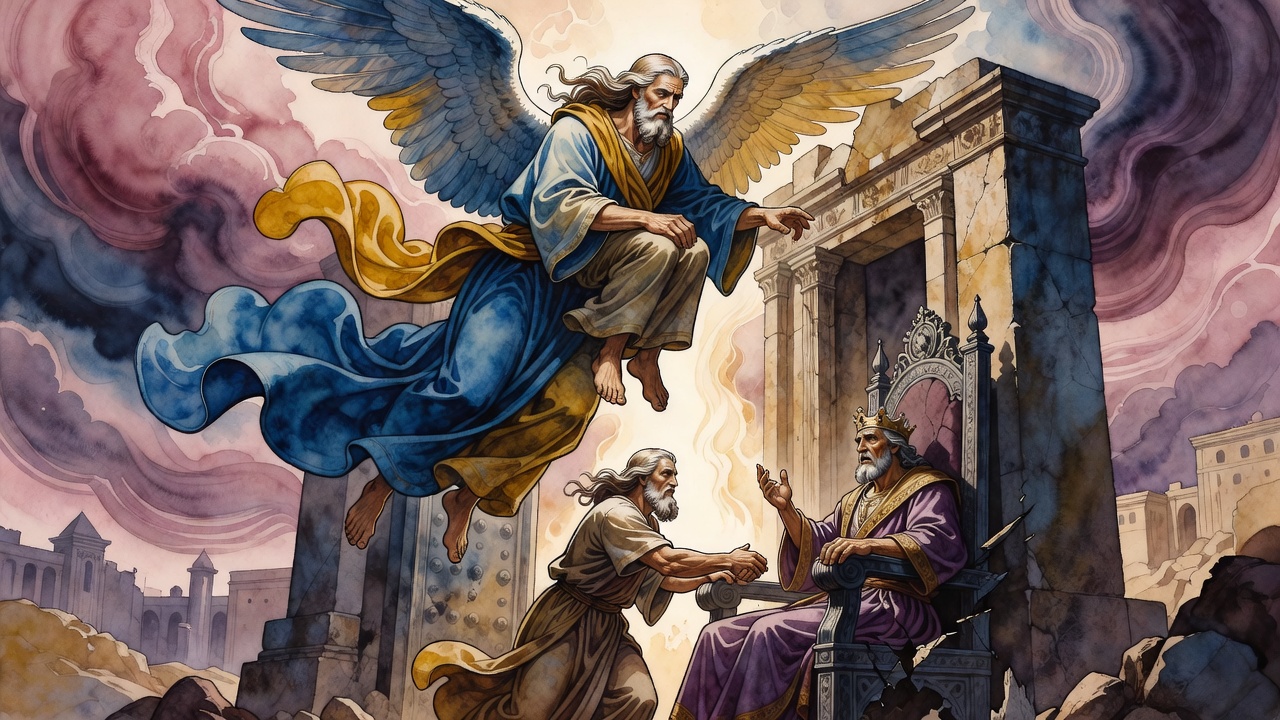
One day Abraham met an old woman devoted to her idol. He challenged her until she asked, "If what thou sayest be true, whom shall I serve?" He answered with a map larger than Nimrod's palace. "Serve the God of all gods, the Lord of lords, who hath created heaven and earth, the sea and all therein, the God of Nimrod and the God of Terah, the God of the east, the west, the south, and the north. Who is Nimrod, the dog, who calleth himself a god, that worship be offered unto him?"

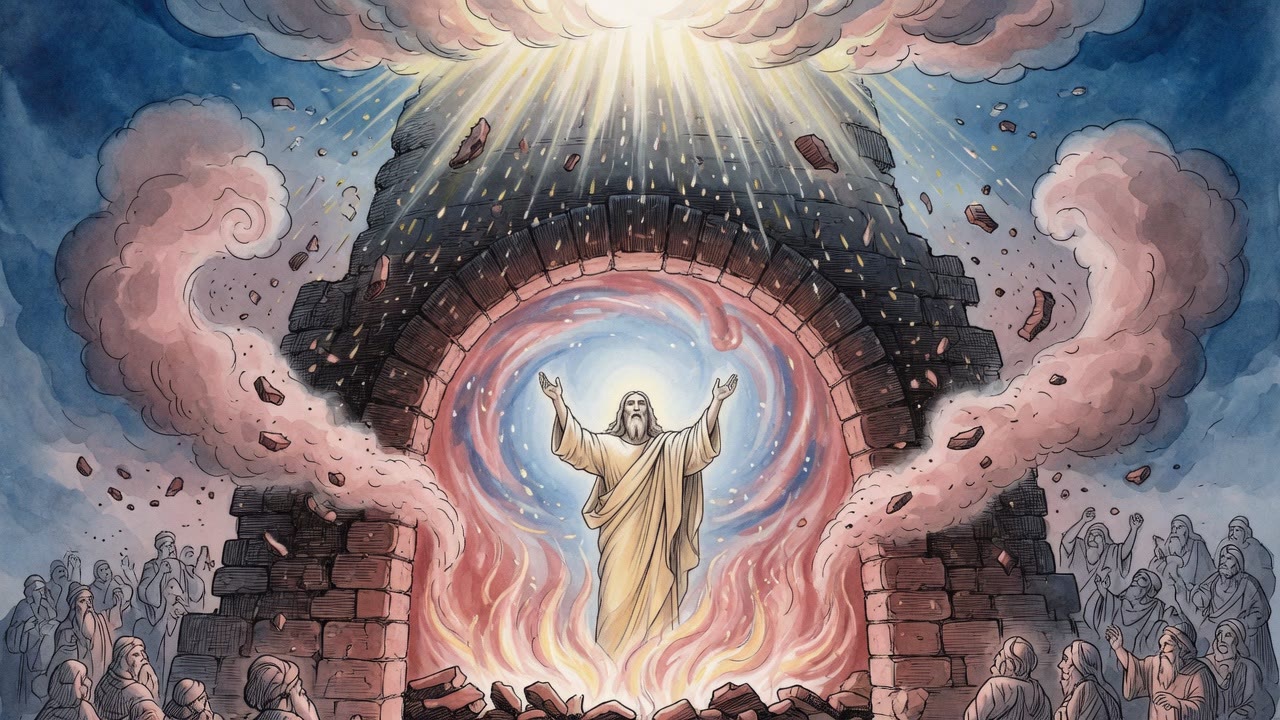
Her eyes opened. When thieves returned a stolen idol, she took a stone and shattered it in the street. She walked crying, "Who would save his soul from destruction, and be prosperous in all his doings, let him serve the God of Abraham." Men and women turned after her. A king who claimed divinity now had a missionary converted by a man he had once tried to burn.

Egg, Flood, and a Pecked Eye

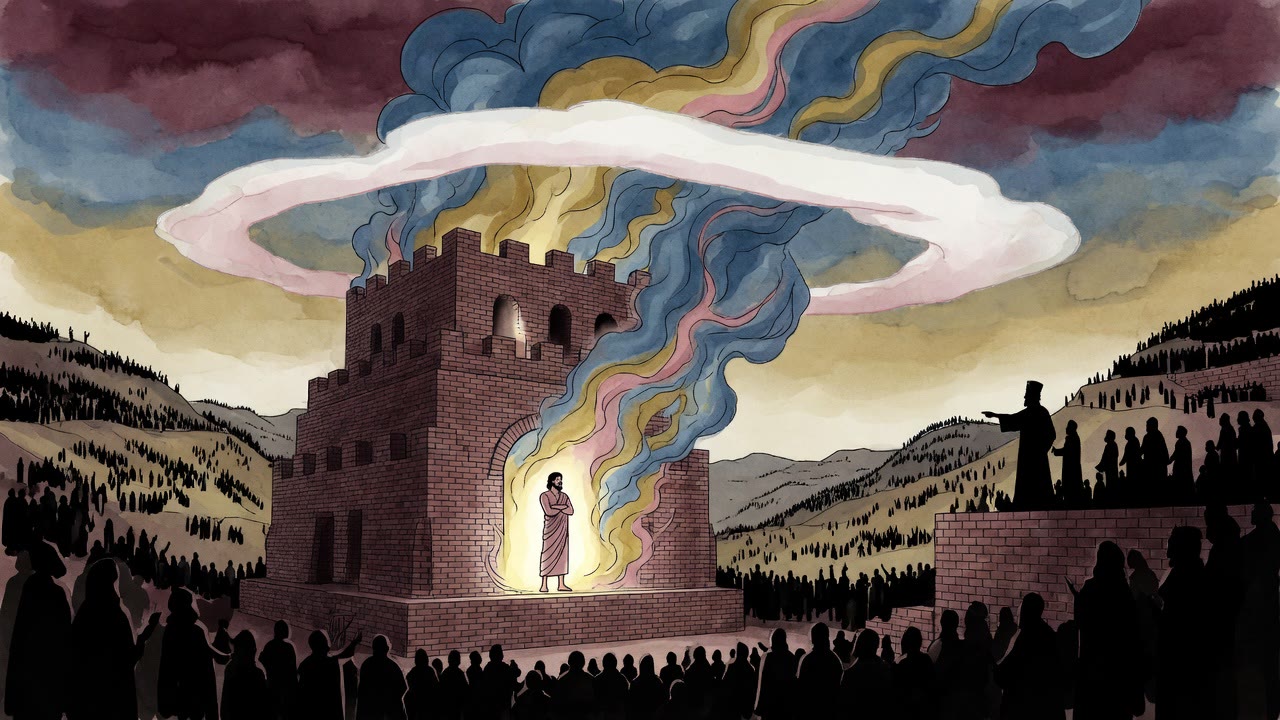
Two years after Abraham rose from the fiery furnace, Nimrod dreamed near that same fire. A figure like Abraham stepped from the flames with a drawn sword and chased the king. Nimrod fled. Abraham hurled an egg. From the shattered shell a mighty stream burst and drowned the army. The king survived with three companions dressed in royal garments, each resembling him in form and stature, a hall of mirrors made of survivors.

The stream receded into the egg again. A tiny chick hatched, flew to Nimrod's head, and pecked out one of his eyes. Sleep ended. Rule continued, but the dream had already unmade the certainty of armies. Fire had failed to kill Abraham. Water from an egg had killed what fire could not protect. The child once hidden under a mother's breastbone had become, in a tyrant's night, a sword, a flood, and a bird that steals sight.

After the Furnace, Before the Dream

The furnace had already failed once in public. Abraham walked out while the king's certainty burned hotter than the coals. Courtiers who had cheered the sentence now measured their silence. Nimrod kept his throne and lost his sleep in installments. Two years is long enough for a tyrant to rebuild pride and short enough for a survivor of fire to become a rumor that will not die. Missionaries of the God of Abraham walked streets still lined with monthly idols. Every shattered statue was a small flood before the egg's flood arrived in the night.

Terah continued his calendar of twelve gods as if wood could outvote a son who had spoken with the Maker of months. The cave that once hid a pregnant mother was empty. The prophecy Nimrod had tried to drown in infant blood now sat at tables and broke idols with borrowed stones. When the dream finally came, it did not invent Abraham's power. It confessed it in symbols a king could not execute for treason. An egg is a small thing. A stream from an egg that drowns an army is the mind admitting what the mouth still denies. One eye gone in sleep is a preview of a rule that will never see the whole field again.


← All myths

From the tradition

Sources

4 sources

The texts behind this telling. Some cards carry a translation of the source; others are our own retelling of it, and each card says which. Every card links out to the original.

Legends of the Jews 5:7Legends of the Jews

Retold in our words. Read the original at the link below.The Legends of the Jews by Louis Ginzberg (1909) · Public Domain

It all starts with Terah, Abraham's father. He marries Abraham's mother, and soon enough, she’s pregnant. But something’s… off. After just three months, she looks like she's about to give birth! Her face is pale, her body swollen. Terah is understandably concerned. "What ails thee, my wife?" he asks, noticing her changed appearance.

She tries to brush it off, according to Legends of the Jews, saying, "Every year I suffer with this malady." But Terah isn't buying it. He presses her, demanding to see her body. He suspects she’s pregnant, and if that's the case, he fears the wrath of their god, Nimrod. Nimrod had issued a decree against new births, fearing a prophecy about a child who would challenge his rule.

When Terah reaches out to examine her, a miracle occurs! The child – Abraham – seemingly rises up inside her, positioning himself beneath her breasts. Terah can feel nothing! He’s convinced she was telling the truth and believes her sudden change was not due to pregnancy. Nothing becomes visible again until the actual day of Abraham’s birth. A hidden pregnancy. A miraculous concealment. What does it all mean?

This little episode, tucked away in Ginzberg's retelling of the tale, speaks volumes. Perhaps it's a way of showing that Abraham was special from the very beginning, divinely protected even in the womb. Maybe it's a commentary on the power of faith and the lengths to which people will go to protect what they believe in.

It also highlights the precariousness of Abraham's early life, foreshadowing the many trials and tribulations he would face. From the very start, his existence was a secret, a challenge to the established order. A threat to Nimrod's power.

What do you make of this story? Is it a simple miracle, or a deeper metaphor for the hidden potential within each of us, waiting to be revealed at the right moment?

Full source
Legends of the Jews 5:68Legends of the Jews

Retold in our words. Read the original at the link below.The Legends of the Jews by Louis Ginzberg (1909) · Public Domain

He, his mom, and his nurse finally venture out of the cave where they'd been hiding. Why? Because, thankfully, the king and his cronies had completely forgotten about the whole "baby who was prophesied to challenge idol worship" situation. Phew!

This isn't exactly a "happily ever after" moment. According to Ginzberg's retelling in Legends of the Jews, this was a dark time. Practically everyone on earth, except for Noah and his family, had turned away from God.

They were all busy creating their own gods, idols made of wood and stone. These gods, of course, were completely powerless, unable to speak, listen, or offer any real help in times of trouble. The king, his servants, and even Terah, Abraham's own father, were leading the charge into idol worship.

And Terah? He wasn't just dabbling in idolatry. He was all in. He crafted twelve massive gods, each made of wood or stone, to represent the twelve months of the year. Every month, he'd pay homage to a different one. It's a pretty vivid picture of just how far people had strayed.

What kind of impact must this have had on young Abraham? Growing up in that environment, surrounded by such blatant idolatry, knowing in his heart that it was all wrong? It makes his eventual rebellion against idol worship, his unwavering faith in one God, even more remarkable. It shows us the immense power of a single person's conviction, even when faced with overwhelming opposition.

Full source
Legends of the Jews 5:55Legends of the Jews

Retold in our words. Read the original at the link below.The Legends of the Jews by Louis Ginzberg (1909) · Public Domain

Let me tell you, it wasn't pretty.

After two years had passed – two years since Abraham defied him and was thrown into that fiery furnace – Nimrod was haunted by a vision. He saw himself, leading his vast army, near that very same furnace.

Then, something impossible happened. A figure, unmistakably resembling Abraham, emerged from the flames. But this wasn’t a defeated man. Oh no. This Abraham wielded a drawn sword and pursued the king with terrifying determination. The all-powerful Nimrod, the man who thought he could defy God, running for his life?

In his dream, as recounted in Legends of the Jews, Nimrod fled in utter terror. And then, the truly bizarre part: while running, Abraham hurled an egg at Nimrod's head. An egg! (Ginzberg). What followed was not a yolk-y mess, but a catastrophic flood. A mighty stream erupted from the shattered egg, drowning Nimrod's entire army. Gone. Just like that.

The king, however, survived. He found himself alive, but only with three companions. When he looked at them closely, an unsettling detail emerged: they were dressed in royal garments, and they resembled him in every way – in form, in stature.

But the dream wasn't finished with him yet. The stream miraculously receded, transforming back into the egg from whence it came. And from that egg, a tiny chick hatched. This wasn't some cute, chirping bird, though. It flew directly at Nimrod, landed on his head, and – get this – pecked out one of his eyes!

Talk about symbolic.

What does it all mean? Well, dreams, as we know, are rarely literal. Was it a warning of the power of faith against tyranny? A premonition of Nimrod's eventual downfall? Perhaps it symbolized the birth of a new era, one where the divine would triumph over earthly power. Was it the chick's symbolism tied to the future generations of Abraham, who would be a "thorn in the side" of Nimrod's legacy? We can only speculate, but one thing's for sure: that dream must have shaken Nimrod to his core.

It's a chilling reminder that even the mightiest among us are not immune to the whispers of fate, the symbols of prophecy, and, yes, even the wrath of a well-aimed, divinely-charged egg. What nightmares might we be overlooking?

Full source
Legends of the Jews 5:36Legends of the Jews

Retold in our words. Read the original at the link below.The Legends of the Jews by Louis Ginzberg (1909) · Public Domain

One day, as Ginzberg tells us in Legends of the Jews, Abraham encountered an old woman. She was devoted to her idols, completely convinced they held power. Abraham, ever the truth-seeker, challenged her beliefs. "If what thou sayest be true," the old woman asked, "whom shall I serve?"

Think about that question for a moment. It's not just about changing religions, is it? It's about finding something worthy of your devotion, something bigger than yourself.

Abraham's answer was powerful. He didn't just dismiss her beliefs; he offered an alternative. "Serve the God of all gods," he urged, "the Lord of lords, who hath created heaven and earth, the sea and all therein--the God of Nimrod and the God of Terah, the God of the east, the west, the south, and the north. Who is Nimrod, the dog, who calleth himself a god, that worship be offered unto him?"

See, he wasn't just preaching about a new deity. He was highlighting the absurdity of worshiping something as limited and flawed as Nimrod, the king who dared to call himself a god. He was inviting her to connect with the ultimate source of everything.

And the amazing thing is, it worked! Abraham succeeded in opening the old woman's eyes. She became a zealous missionary for the true God. The story doesn't end there. When she found the thieves who had stolen her idol and they returned it, she took matters into her own hands. With a stone, she shattered the idol into pieces.

This woman, who had spent her life in devotion to this statue, publicly destroying it. As she walked through the streets, she cried aloud, "Who would save his soul from destruction, and be prosperous in all his doings, let him serve the God of Abraham." And as a result, she converted many men and women to the true belief.

What false gods are we allowing to dictate our choices and limit our potential? Maybe, just maybe, it's time to pick up a stone and shatter those illusions, and like this old woman, to seek something truly worthy of our devotion.

Full source