Parshat Lech Lecha6 min read

Gabriel Carried Abraham Straight to Nimrod

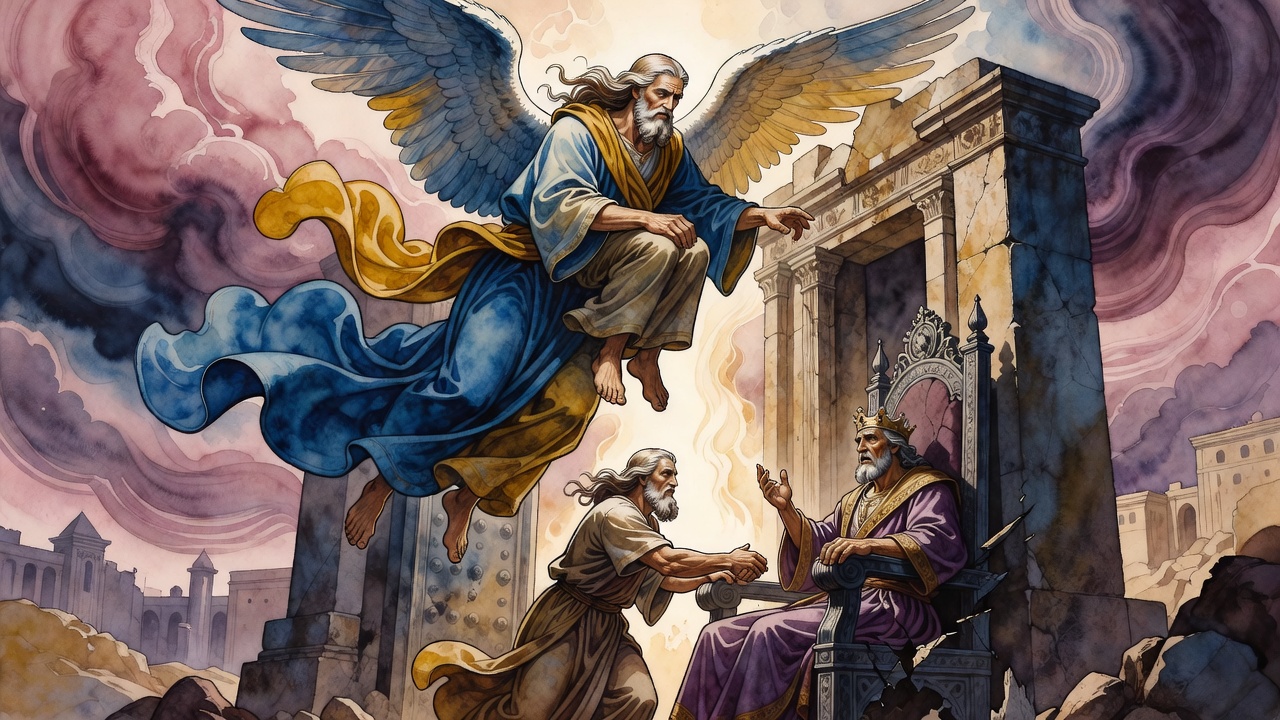
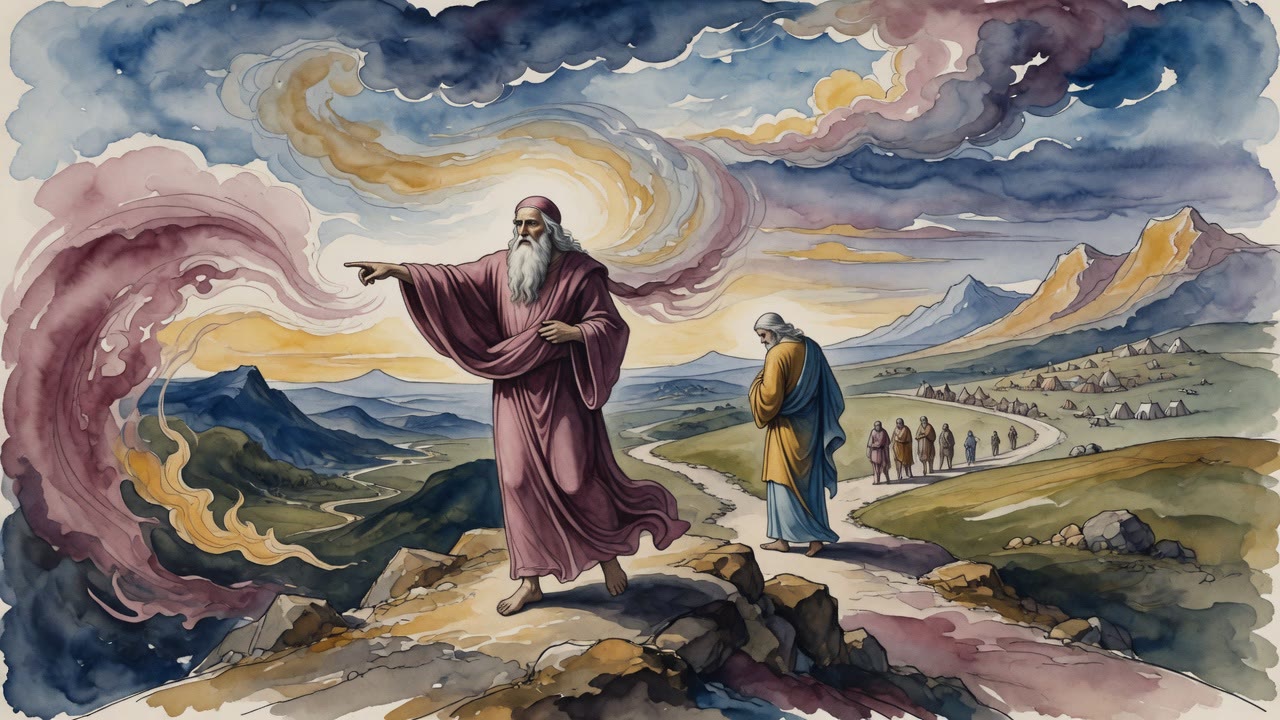
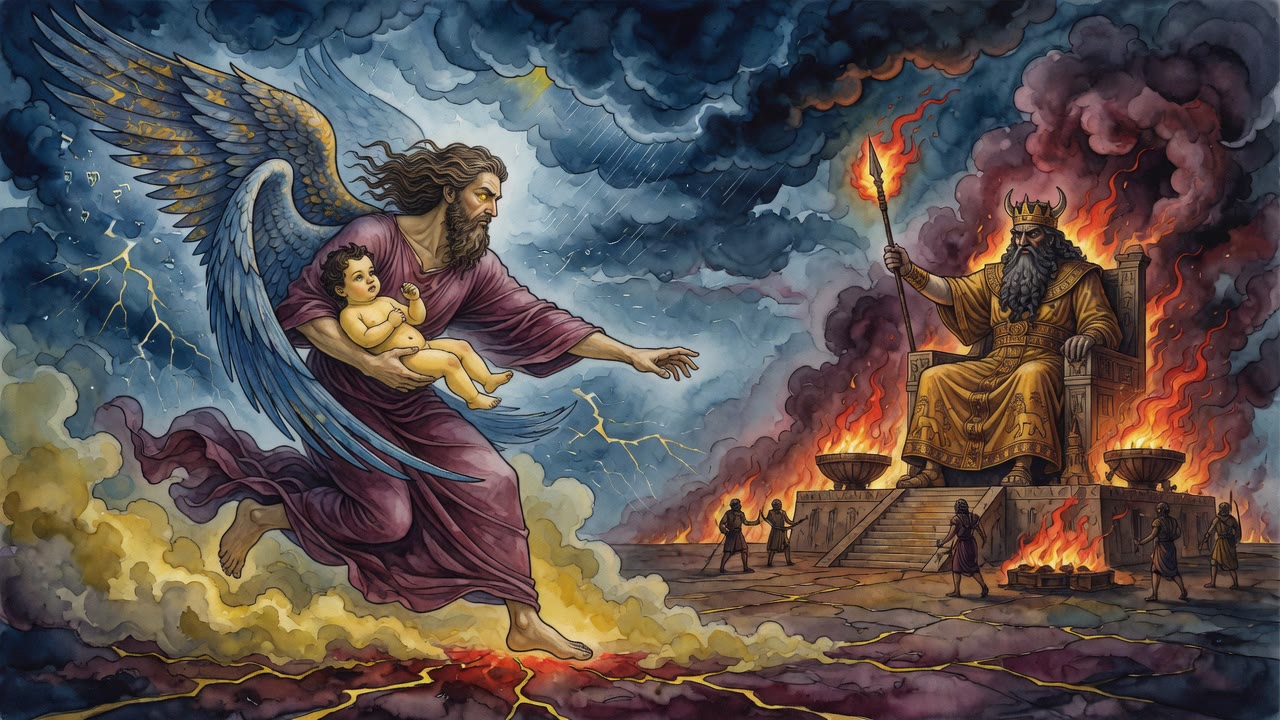
Abraham protested he had no army. The angel Gabriel set him on a shoulder, set him at Babylon's gate, and watched him shake a king's throne barehanded.

Curated by Arthur · Told by Maggid ·
Table of Contents
  1. No Horse and No Warriors
  2. The Shop of Broken Gods
  3. The Throne That Shook
  4. An Old Woman With a Stone
Gabriel Carried Abraham Straight to Nimrod Click for full size

No Horse and No Warriors

The command came through the angel Gabriel, not through a dream soft enough to ignore. Go to Babylon. Confront Nimrod. Abraham answered like a man who had already counted his empty hands. He had no provision, no horse, no warriors. How does a shepherd's son wage war on a king who called himself a god and filled a capital with images of his own face?

Gabriel did not equip him with weapons. Gabriel dismissed the need. Thou needest no provision, the angel said, no horse, no warriors. Then the angel did something stranger still. He set Abraham on his shoulder and carried him as a parent carries a child across a river. The journey that should have taken forty days folded into a single day of wind and distance. When Abraham's feet touched ground again, the gates of Babylon stood in front of him. The city that worshiped Nimrod's image did not yet know its argument had arrived on an angel's back, dust still settling around a man who had protested that he was unprepared for war.

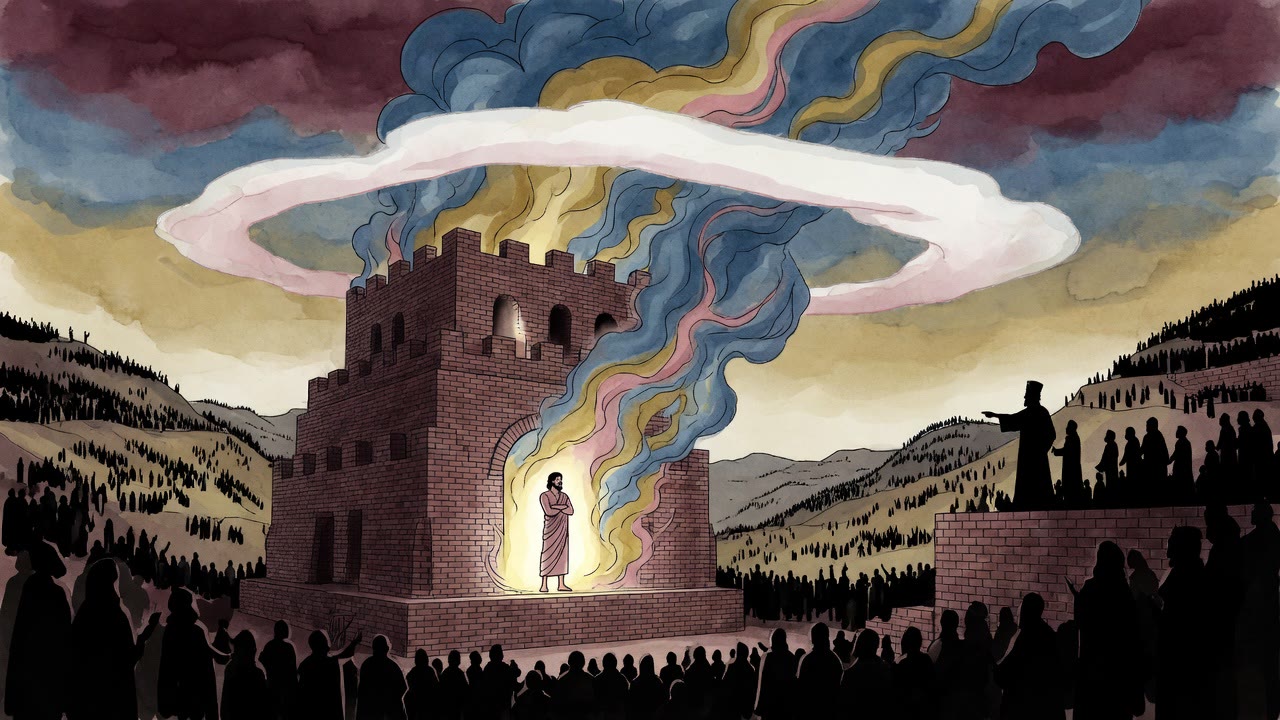
Abraham entered at Gabriel's instruction and raised his voice in the streets. The Eternal, He is the One Only God, and there is none beside. He named himself Abraham, servant of that God, and declared the Holy One to be God even of Nimrod. The proclamation was not whispered in a study. It was shouted where merchants and soldiers could hear.

The Shop of Broken Gods

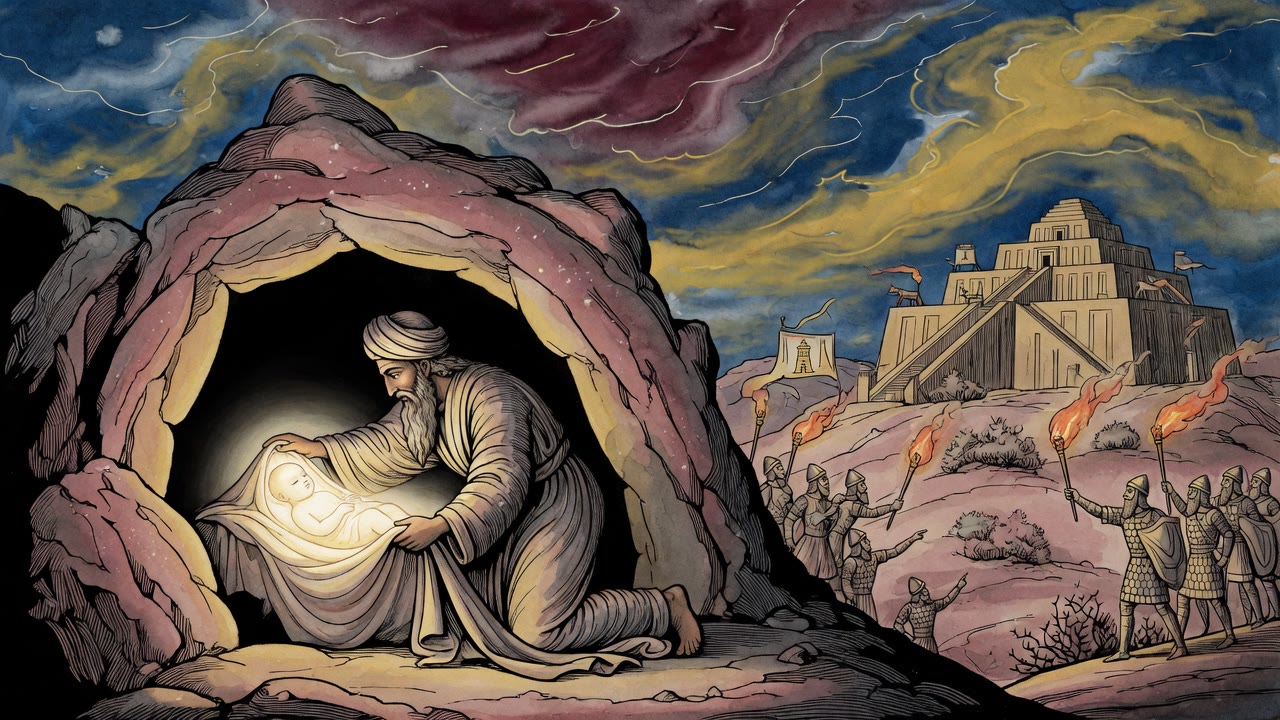
Before thrones, there had been a shop. Terah made idols for sale, and young Abraham had already tested them with a hatchet on an ordinary afternoon. He smashed the smaller figures, set the axe in the largest idol's hand, and waited for his father to return to the wreckage. When Terah raged at the ruin of his inventory, Abraham said the great one had grown jealous and destroyed its rivals. Terah answered that wood and stone have no spirit, no power, no breath. Abraham turned the confession into a blade. "How, then," he asked, "can you serve what you admit cannot hear prayer or save a life?"

He shattered the last idol and fled the logic of the shop. That earlier rebellion was private, a son's quarrel with a father's trade. Babylon would not be private. Gabriel stood with him when he found his parents in the city and pressed him to speak the same truth at home. Abraham told them they served a man of their own kind, an image with a mouth that did not speak and an eye that did not see. Terah, unsettled by the miracle of the compressed journey and the hard clarity of the argument, brought his son into the house to hear everything twice. Then he did what fearful fathers sometimes do when a child becomes dangerous to a regime. He reported the reappearance to Nimrod.

The Throne That Shook

Nimrod summoned him. Abraham walked past the dignitaries as if court rank were dust on the floor. He did not wait for a herald to finish titles. He seized the throne itself and shook it until the wood complained. O Nimrod, thou contemptible wretch that deniest the essence of faith, he cried. He demanded the king confess that the Eternal is God, the Only One, incorporeal, living, ever-existing, who slumbers not and sleeps not, who created the world that people might believe in Him. He demanded the king admit that Abraham was steward of the Holy One's house.

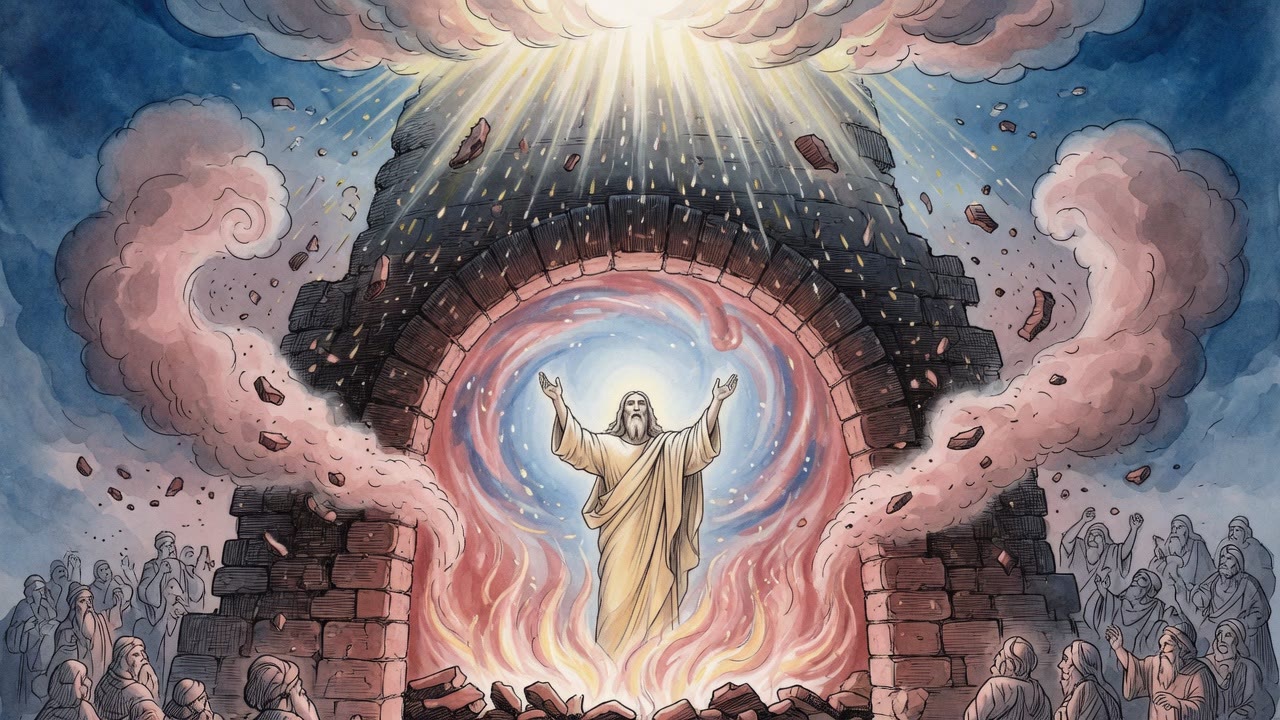
The idols in the chamber fell on their faces as if the floor had become their only honest posture. Nimrod himself collapsed and lay as one dead for two and a half hours while the court held its breath. When breath returned to the king, he asked whether the voice he had heard was Abraham's or the voice of Abraham's God. Abraham answered that this voice was the voice of the least of all creatures called into existence by God. Even that humility was enough to finish the argument. Nimrod conceded that the God of Abraham was great and powerful, King of all kings, and ordered Terah to take his son and leave Babylon for their own city before the palace learned how to be brave again.

An Old Woman With a Stone

Outside the palace the work continued in smaller rooms and open streets. Abraham met an old woman still devoted to her idols and asked her whom she would serve if the statues proved false. She asked, if what he said was true, whom should she serve. Serve the God of all gods, he said, the Lord of lords who made heaven and earth, the sea and all therein, the God of Nimrod and of Terah, of east and west and south and north. Who is Nimrod the dog, that worship should be offered him?

When thieves returned her idol after a theft, she did not resume her old bows. She shattered the image herself with a stone and walked the streets crying that anyone who would save his soul from destruction and prosper in his doings should serve the God of Abraham. Men and women followed her voice the way dust follows wind. Abraham had entered Babylon without an army. He left it with a king who had tasted collapse, parents who could no longer pretend the images spoke, and streets where at least one former idolater smashed what she had once kissed. The war Gabriel promised needed no horse. It needed a shoulder, a shaken throne, and a man willing to call a king a dog to his face while the idols learned how to fall.


← All myths
From the tradition

Sources

3 sources

The texts behind this telling. Some cards carry a translation of the source; others are our own retelling of it, and each card says which. Every card links out to the original.

Legends of the Jews, V. Abraham, Abraham's First Appearance In PublicLegends of the Jews

Retold in our words. Read the original at the link below.Project Gutenberg eBook #1493, The Legends of the Jews, Volume 1 · Public Domain

Abraham didn't just decide one day to challenge the status quo. No, he was commanded by God, through the angel Gabriel, to confront Nimrod in Babylon. The angel tells Abraham to go, but Abraham protests! He feels utterly unprepared to wage war against a king.

Gabriel, ever the reassuring messenger, calms him. "Thou needest no provision," he says, "no horse, no warriors." Instead, Gabriel offers Abraham the ultimate ride-sharing experience: a trip to Babylon on his shoulder! But it emphasizes the sheer power backing Abraham.

Just like that – blink, and you'd miss it – Abraham is standing before the gates of Babylon. At Gabriel's instruction, he enters the city and proclaims in a booming voice: "The Eternal, He is the One Only God, and there is none beside!" He declares God as the God of everything, even Nimrod, and announces himself as Abraham, God’s trusted servant.

The scene as Abraham then encounters his own parents. He finds Gabriel there too, who encourages him to share his newfound faith with his mother and father. So, Abraham challenges his parents' worship of Nimrod's image: "Ye serve a man of your own kind. It has a mouth, but it speaks not; an eye, but it sees not." He's pointing out the obvious absurdity of idol worship.

His father, Terah, is understandably taken aback. He brings Abraham home, where Abraham recounts his miraculous journey. Terah, now thoroughly bewildered, goes straight to Nimrod, reporting that his son has mysteriously appeared in Babylon.

Nimrod, intrigued and perhaps a little threatened, summons Abraham. This is where it gets really interesting.

Abraham strides past the dignitaries, right up to Nimrod's throne, grabs it, shakes it, and cries out! He accuses Nimrod of denying the essence of faith, of denying the living God. Abraham then demands that Nimrod acknowledge God and repeat after him: "The Eternal is God, the Only One, and there is none beside!"

And as Abraham makes this proclamation, the idols in the room fall to their faces, and even Nimrod himself collapses! For two and a half hours, the king lies lifeless. When he finally revives, he asks, "Is it thy voice, O Abraham, or the voice of thy God?"

Abraham's reply is humble yet powerful: "This voice is the voice of the least of all creatures called into existence by God."

Nimrod, shaken to his core, concedes, "Verily, the God of Abraham is a great and powerful God, the King of all kings." He then orders Terah to take Abraham and leave Babylon, returning to their own city. Terah and Abraham, obediently, do as they are told.

So, what do we make of this incredible tale? It's more than just a story; it's a glimpse into the very beginnings of monotheism. Abraham's unwavering conviction, even in the face of a powerful king, is evidence of the strength of faith. And it all began with a ride on an angel's shoulder and a bold proclamation in the heart of Babylon.

Full source
Legends of the Jews 5:30Legends of the Jews

Retold in our words. Read the original at the link below.The Legends of the Jews by Louis Ginzberg (1909) · Public Domain

It wasn't exactly smooth sailing, especially when it came to his own family.

In Ginzberg's retelling in, Legends of the Jews, Abraham actually encountered his parents in Babylon. And not just them, but also the angel Gabriel! Now, Gabriel didn't just pop in for tea. He instructed Abraham to share the truth – the idea of one God – with his own mother and father. Can you

So, Abraham, filled with divine purpose, speaks to his parents. "You're serving a man, worshipping an image of Nimrod," he tells them, quite directly. He points out the obvious flaws of idol worship. "It has a mouth, but it speaks not; an eye, but it sees not." It's a powerful, almost painfully logical argument against their current beliefs. He's essentially saying, "Doesn't this seem a little… pointless?"

Terah, Abraham's father, has an interesting reaction. He doesn't immediately embrace monotheism. Instead, he's intrigued enough to bring Abraham into the house to recount his experiences, including this miraculous forty-day journey compressed into a single day.

But here's where things get really interesting. Terah then goes straight to Nimrod, the king, and reports that Abraham has suddenly reappeared in Babylon. It's like, "Hey, remember my son? The one you thought was gone? Well, he's back… and he's saying some pretty wild things."

Nimrod, predictably, summons Abraham.

Abraham arrives with his father and confidently strides past all the court officials, right up to the royal throne itself. And then, in a moment of incredible audacity, he seizes hold of the throne, shaking it! The sheer shock and awe?

And then he proclaims, with a booming voice, "O Nimrod, thou contemptible wretch, that deniest the essence of faith!" He accuses Nimrod of denying the living God. He demands that Nimrod acknowledge God, repeating after him: "The Eternal is God, the Only One, and there is none beside; He is incorporeal, living, ever-existing; He slumbers not and sleeps not, who hath created the world that men might believe in Him." And not only that but to confess that Abraham is the steward of His house!

Wow. Talk about a bold entrance.

It's a powerful scene, isn't it? Abraham, standing before the most powerful ruler of his time, not just questioning his authority, but demanding he acknowledge a higher power. It really makes you wonder about the courage it took for Abraham to stand up for what he believed, even in the face of such opposition. And it all started with a conversation with his parents, sparked by an angel's instruction. It's a potent reminder that even the smallest act of faith can have monumental consequences.

Full source
Legends of the Jews 5:79Legends of the Jews

Retold in our words. Read the original at the link below.The Legends of the Jews by Louis Ginzberg (1909) · Public Domain

Him is often remembered as this revered figure, almost from birth. But what about his younger days? Did he always believe? to a fascinating, and somewhat irreverent, story about his youth, courtesy of Ginzberg's Legends of the Jews.

A young Abraham, filled with righteous indignation, confronting his own father, Terah, about the absurdity of idol worship. Terah, was an idol maker. The irony. The story goes that Abraham, in a moment of divine inspiration (or perhaps teenage rebellion!), takes a hatchet and smashes all the idols in his father's shop, except for the largest one. He then places the hatchet in the big idol's hand.

When Terah returns, he's understandably furious. "What happened here?!" he demands.

This is where it gets really good. Abraham, with a perfectly straight face, replies, "The big one did it! He got jealous and smashed all the others!"

Terah, naturally, isn't buying it. "Thou speakest lies unto me!" he shouts. "Is there spirit, soul, or power in these gods? Are they not wood and stone? and have I not myself made them?"

And that's Abraham's opening. "How, then," he retorts, "canst thou serve these idols in whom there is no power to do anything? Can these idols in which thou trustest deliver thee? Can they hear thy prayers when thou callest upon them?"

It's a powerful moment, a turning point. According to Ginzberg, after delivering this impassioned speech, Abraham took the hatchet once more, shattered the remaining idol, and made his escape.

Now, what does this story tell us? It's not just a funny anecdote about a son playing a trick on his father. It’s a powerful illustration of Abraham's early rejection of idolatry and his burgeoning belief in one God.

This narrative, found within the tradition of Jewish legend, highlights the importance of questioning, of challenging the status quo, and of seeking truth, even when it means going against your own family. So, maybe Abraham’s journey wasn’t so different from our own, a journey of questioning, seeking, and ultimately, finding our own truth.

Full source