He Smashed His Wine While the Tither Sold Water
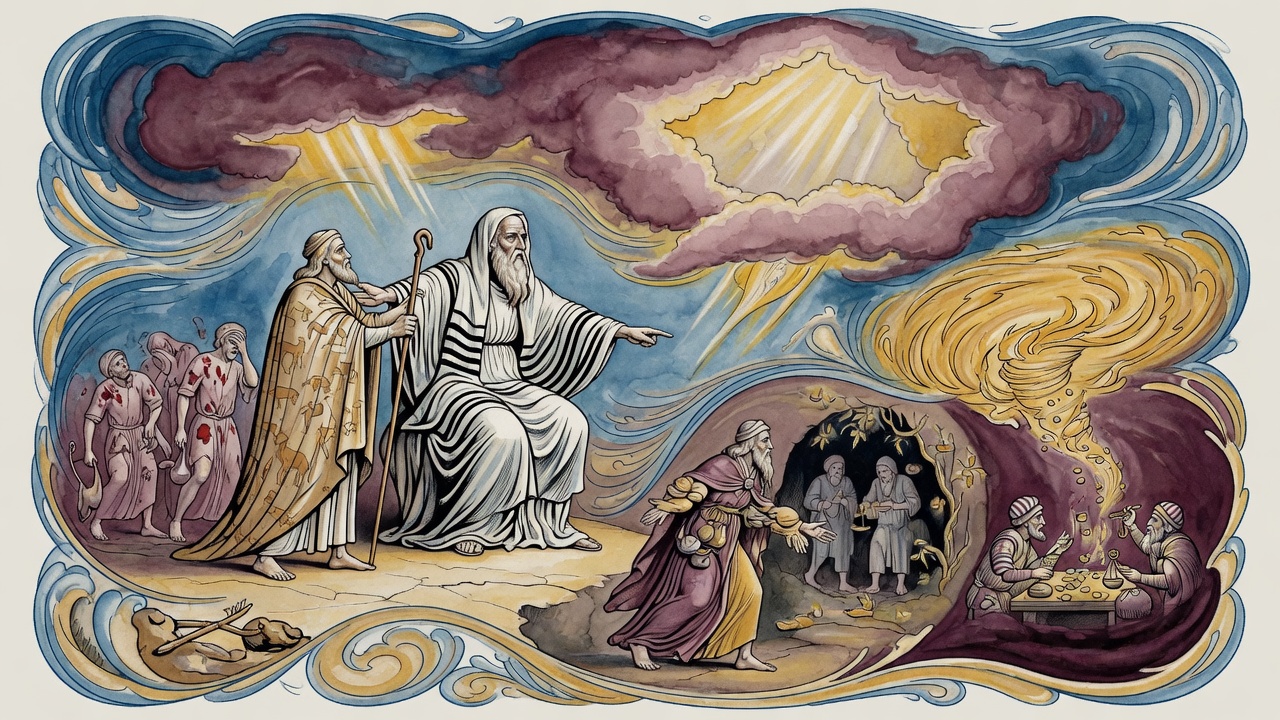
He walked the cellar with a lamp and counted casks he would not tithe. Across the valley a neighbor sold half a field for a hole in stone.
Table of Contents
The cellar stank of crushed grapes and locked doors. Casks stood in rows. The owner walked between them with a lamp and counted what he would not give.
 Click for full size
One tenth of every press belonged to the Levite, the poor, and the service of the Holy One. The law did not ask for a speech. It asked for a measure poured out before a man tasted his own year. He looked at the dark wine and decided the measure was his alone. His hands had pruned the vines. His back had carried the baskets through heat that blistered the neck. Why should a stranger drink from work he could still feel in his shoulders?
Neighbors still set their portions aside in lean seasons, measuring with cracked clay cups and dry mouths. He laughed at them from his doorway. Rain or dust, he locked the cellar and slept like a man who had outwitted heaven with a bolt.
The Madness Between the Casks
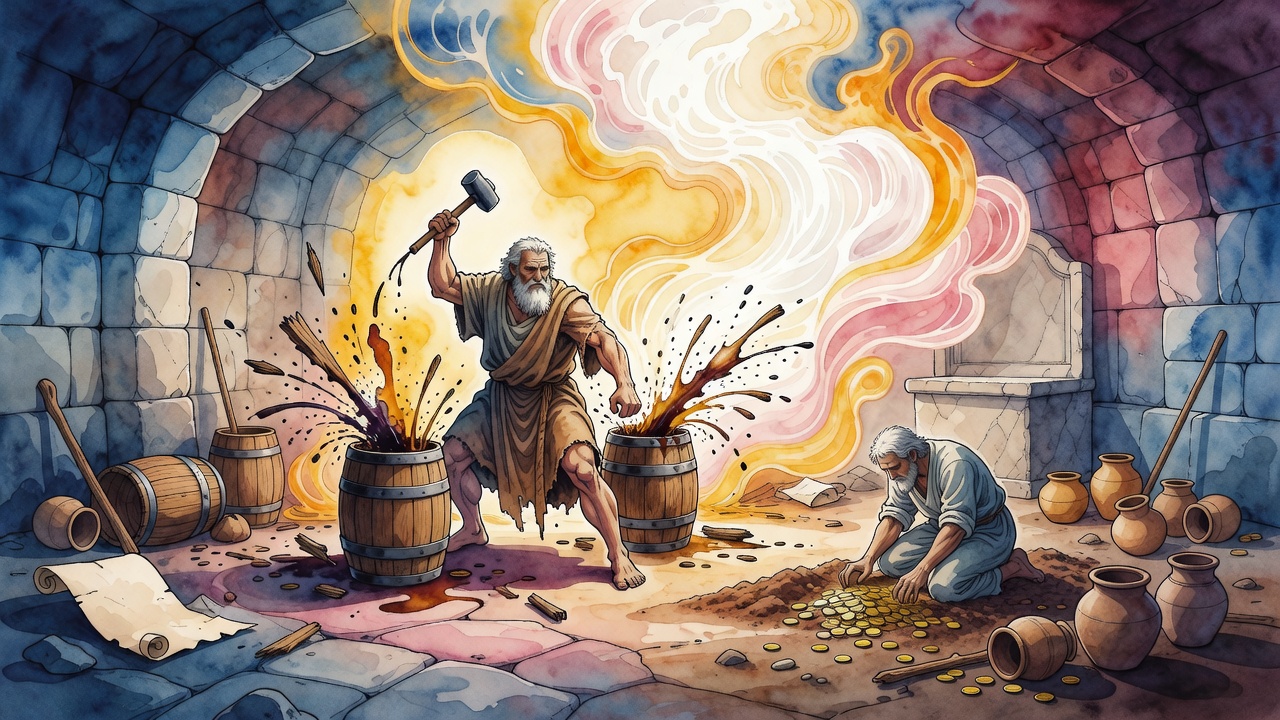
Then something broke inside his skull without a fever and without a knife. He staggered down the stone steps with bare hands and began to smash.
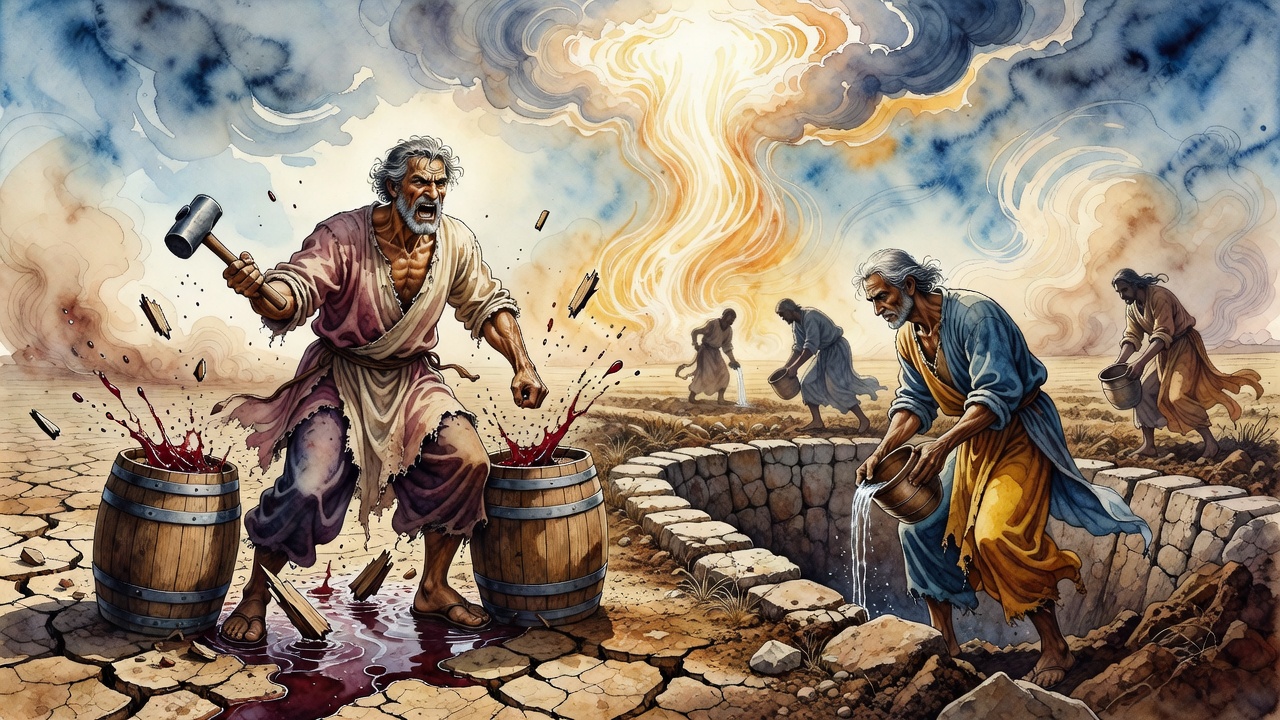
Wood split under his fists. Oil sprayed the walls and turned the lamp light greasy. Wine ran across the floor in thick rivers and climbed the stones. He tore bung after bung until the air was sweet and ruinous and his arms shook with a strength that did not feel like his own. When the frenzy left him, he stood ankle-deep in the work of years and could not say what had seized him.
The neighbors gathered at the doorway and did not need a sermon. Heaven had not sent a plague on the vineyard. Heaven had withdrawn the fence from his mind, and he had finished the destruction himself. He reached for a cask that no longer stood and closed his empty hand on air. Someone whispered that a man who will not give a tenth may lose the whole without an enemy at the gate. The whisper stuck to the wet floor.
Half a Field for Stone
Across the valley another man measured his harvest differently. Every year, rain or drought, abundance or thin sheaves, he set aside the tenth before he tasted a grain. The ma'aser (מעשר), the tithe, left his floor first. His neighbors called him a fool when the sky turned hard and the market prices climbed.
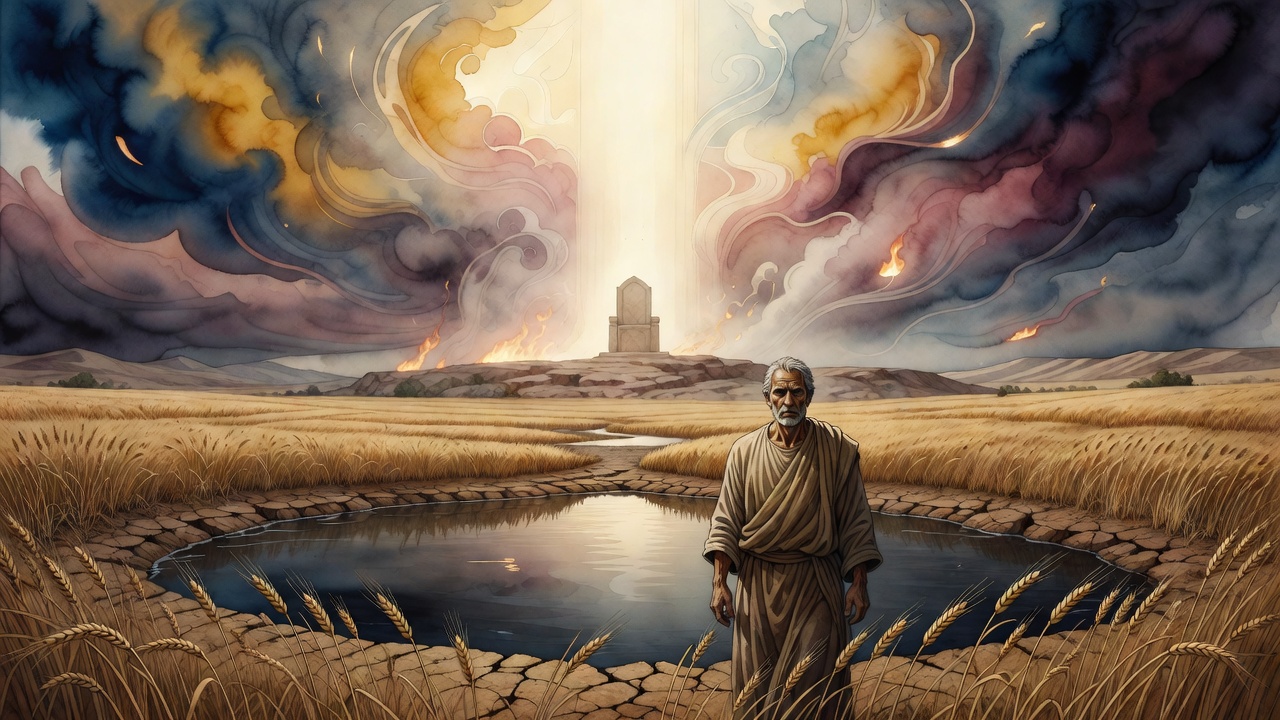
One season he did something stranger still. He took half his field, the half that fed his house, and dug an enormous cistern. He lined it with stone. He watched the brief rains and the run of the ditches the way other men watch a ledger. The mockers said he would starve on a hole in the ground while their granaries still looked full.
He kept digging. He had seen how water remembers low places. He had seen how a man who gives first sleeps differently from a man who hides first. He packed the last stones with his own hands and waited.
The Drought Arrives With Empty Cups
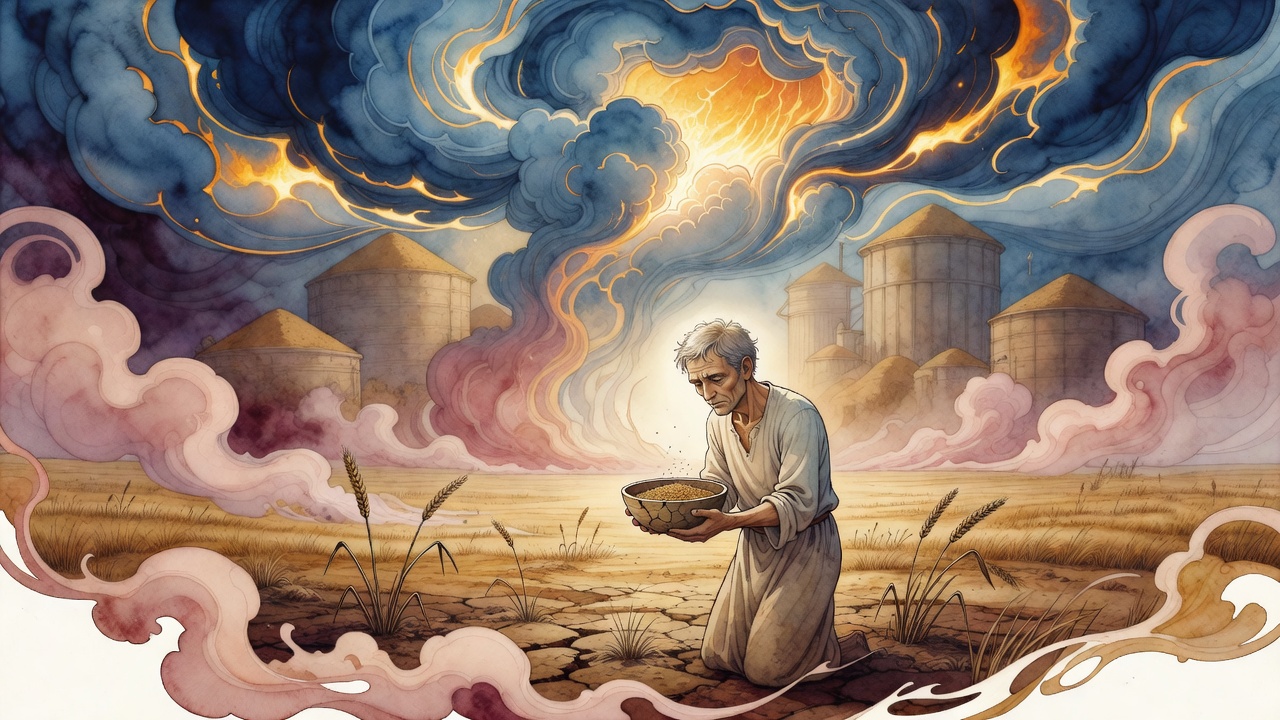
The drought came the way droughts always come, first as a joke about late clouds, then as a threat, then as a law written on cracked earth. Wells went dry. Livestock fell where they stood. Families walked with split lips and counted the last jars as if counting could stretch them.
The man who would not tithe had already spent his wealth on the floor of his cellar. He stood in the wreckage with a dry mouth and no coin that water would take. The man who dug found his cistern full from the brief rains he had refused to waste. People came from miles with coins, with tools, with deeds to land they no longer could farm without water. He sold water. He traded water for beasts and seed. By the time the rains returned, the fool of the district owned what the mockers had lost.
No angel announced the reversal from a cloud. The market did. Thirst is a clean accountant. It does not care who laughed last year. A woman filled two jars, paid, and did not look back at the ruined cellar on the other slope.
Two Houses After the Rain
When the sky finally broke, the valley smelled of wet dust and spilled wine that had long since gone sour. The smashed casks still lay where they had fallen. The stone ring of the cistern held a dark circle of water that had outlasted the joke.
One house had refused the tenth and torn itself open from within. The other house had paid the tenth and cut open its own field, and the cut had become a well. In both places a man had decided what belonged to him. In both places the decision had answered back with force that did not need a prophet's voice to be understood.
Years later children still pointed at the ruined cellar and at the stone ring. They did not need the names. One set of hands had hoarded and then smashed. The other set had given first and then sold what the sky had stored. The measure had been taken either way.
← All myths