5 min read

His Field Shrank Every Year He Cut the Tithe

His father sent a hundred measures to the Levites and the poor every autumn. The son looked at the pile and saw only grain walking away.

Curated by Arthur · Told by Maggid ·
Table of Contents
  1. The Year He Sent Eighty
  2. The Field Kept Its Own Ledger
  3. What Followed the Grain Indoors
  4. The Fallow He Never Chose
  5. They Came Dressed in White

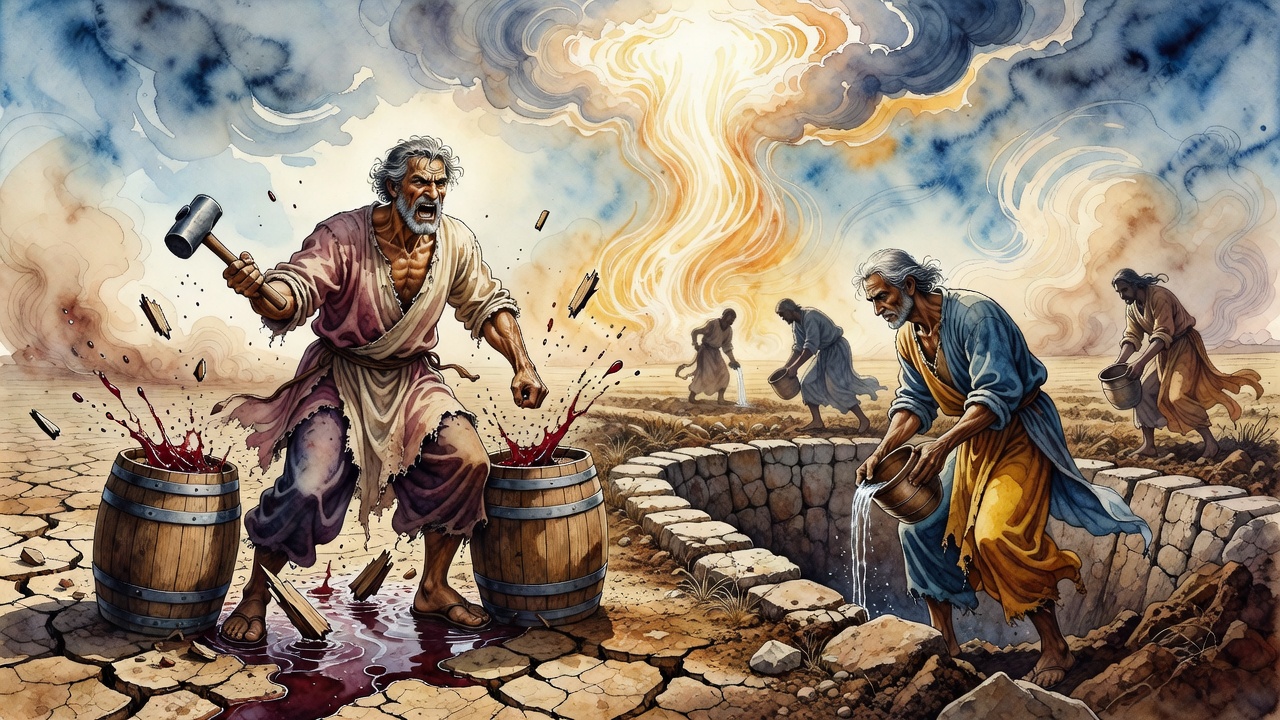
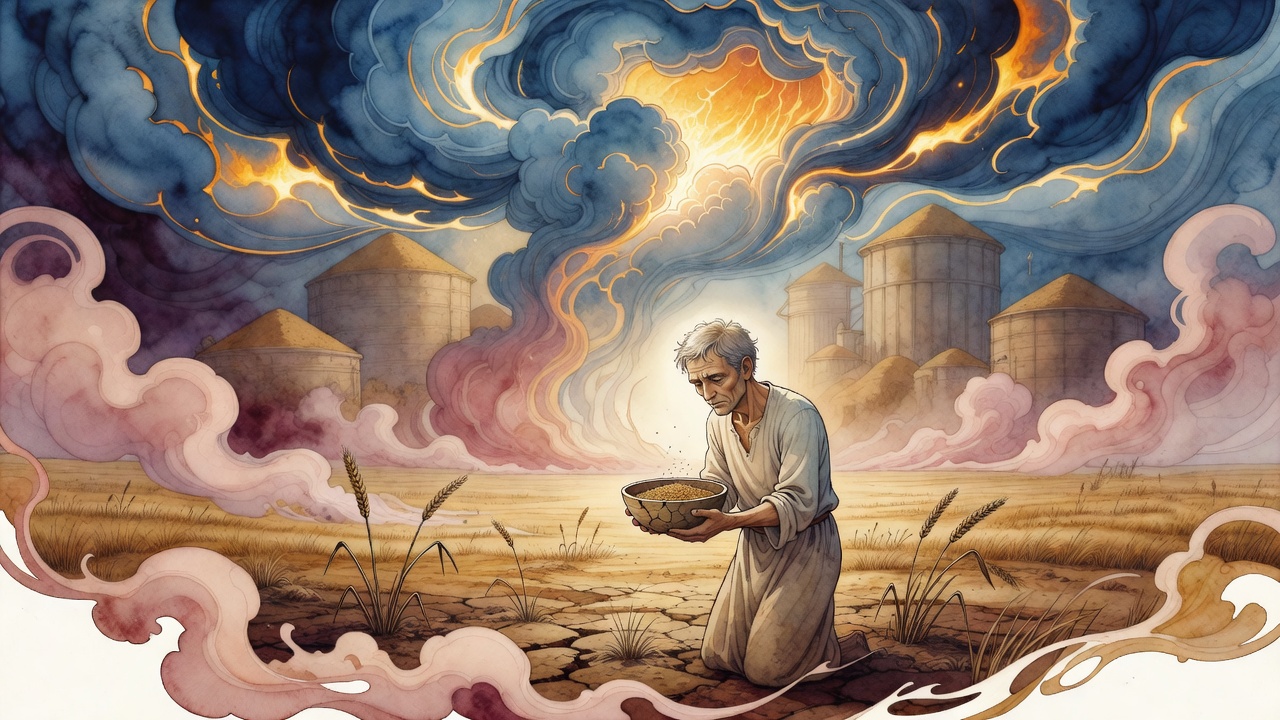
The wagons went out loaded in the first autumn after the funeral. A hundred measures counted off a thousand, one part in ten, rolling toward the Levites and toward the doorways where the poor waited with empty sacks. The heir stood at his gate until the dust settled, then walked back to bins that were still nearly full.
His Field Shrank Every Year He Cut the Tithe Click for full size

The next harvest came in at a thousand again, exactly as his father had promised it would.

The Year He Sent Eighty

In the second autumn he stood over the tithe pile and did the arithmetic a different way. A hundred measures was a wagon and a half. A hundred measures was a wall he could have built, a dowry, a whole year of not lying awake. He had watched that grain leave every autumn of his childhood. He had never once watched it come back.

He sent eighty.

The Levite who came for it counted the sacks twice, looked at the bins behind the heir, and said nothing at all. That silence cost the young man his appetite for two days, and then it stopped costing him anything.

The Field Kept Its Own Ledger

Eight hundred measures came off that ground the following summer.

He blamed the rain. Rain had not been told about his arithmetic. He trimmed the tithe again and the field answered again, and the numbers went down the way a fever climbs, steadily, without argument, without any interest in his explanations. Six hundred. Then four. Neighbors stopped asking how the season had gone. They could see it in the size of the carts.

Every year he cut what left, and every year less returned. He never caught the ground in the act. He only ever met the result, standing in a doorway in the eighth month with a tally board in his hand.

What Followed the Grain Indoors

So he began locking things away. Sealed jars. A back room with a heavy door and a bar across it. Grain behind a door, he told himself, was grain that could not shrink.

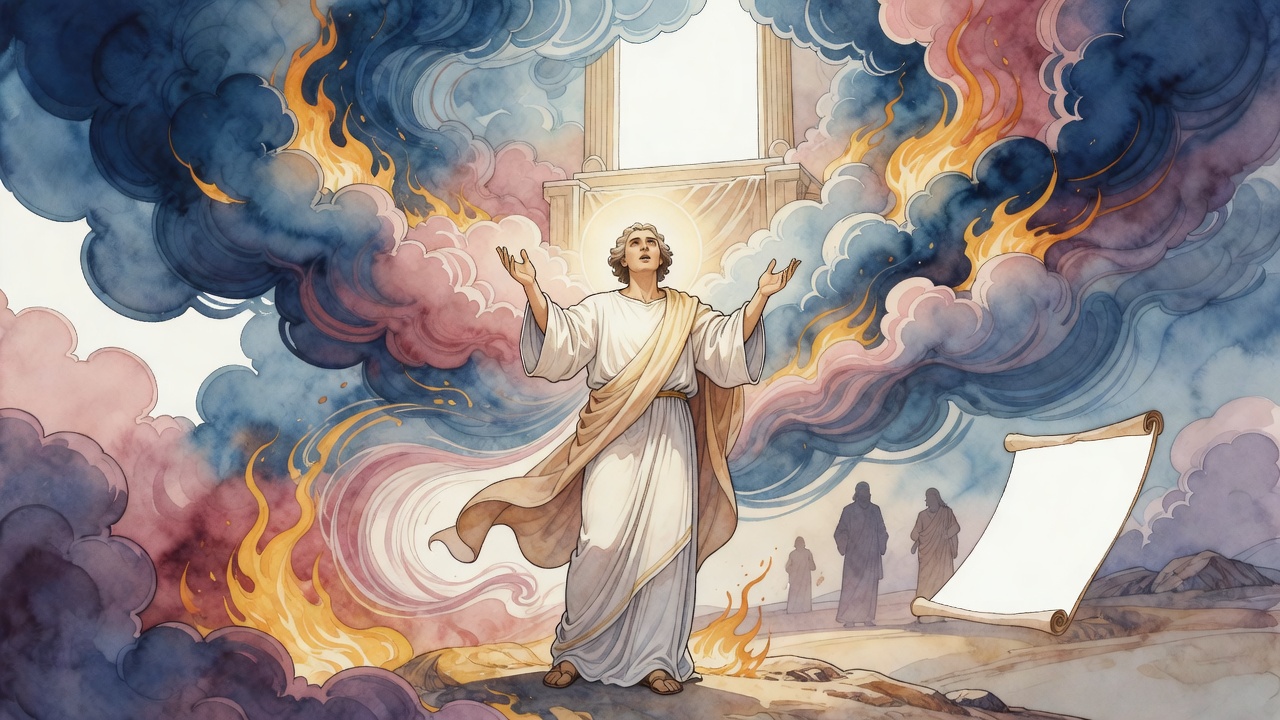
The rot came in after it. Fruit softened in the baskets before he could carry it to market. Wine soured in jars he had waxed shut with his own hands. Oil turned foul. Honey fermented and pushed the lids up off the pots in the dark. He ate at his own table until the plates were bare and stood up hungry anyway, and the sickness that started in his gut that winter had no name a physician could charge him for. Nothing was safe in the city, in the basket, in the kneading bowl, in the going out or the coming home.

He kept expecting the trouble to stay politely in the furrows, where trouble belonged.

The Fallow He Never Chose

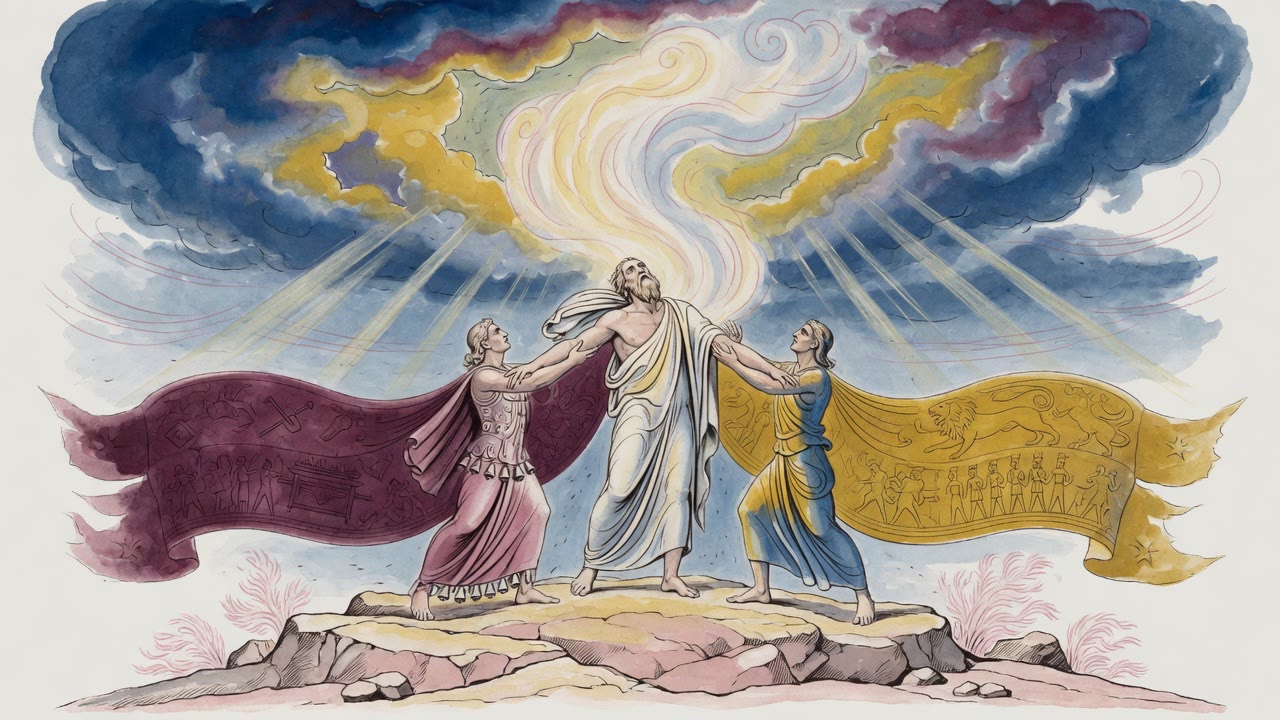
There is an older rhythm underneath the tenth measure. Six years of sowing, and in the seventh the land lies still. Keep that year and one rest in seven is enough. The ground takes what it is owed and hands back the rest.

Refuse it, and the land collects on different terms. It goes idle every other season on its own authority, sown and then silent, sown and then silent, until four fallow years have been taken out of the same seven and no one alive chose a single one of them.

He had not refused the seventh year by name. He had refused the tenth measure, which is the same release in a smaller size. A hand that will not open for a Levite does not suddenly open for a whole year of empty rows.

They Came Dressed in White

The last harvest of that long count came to a hundred measures. Not ninety. Not a hundred and ten. A hundred, the number his father used to send off the property every autumn while the bins behind him overflowed.

His family came to the house. His neighbors came. Every one of them wore white.

He met them at the door with his eyes swollen and his voice already breaking. "Console me," he said. "Sit down with me. You should be mourning."

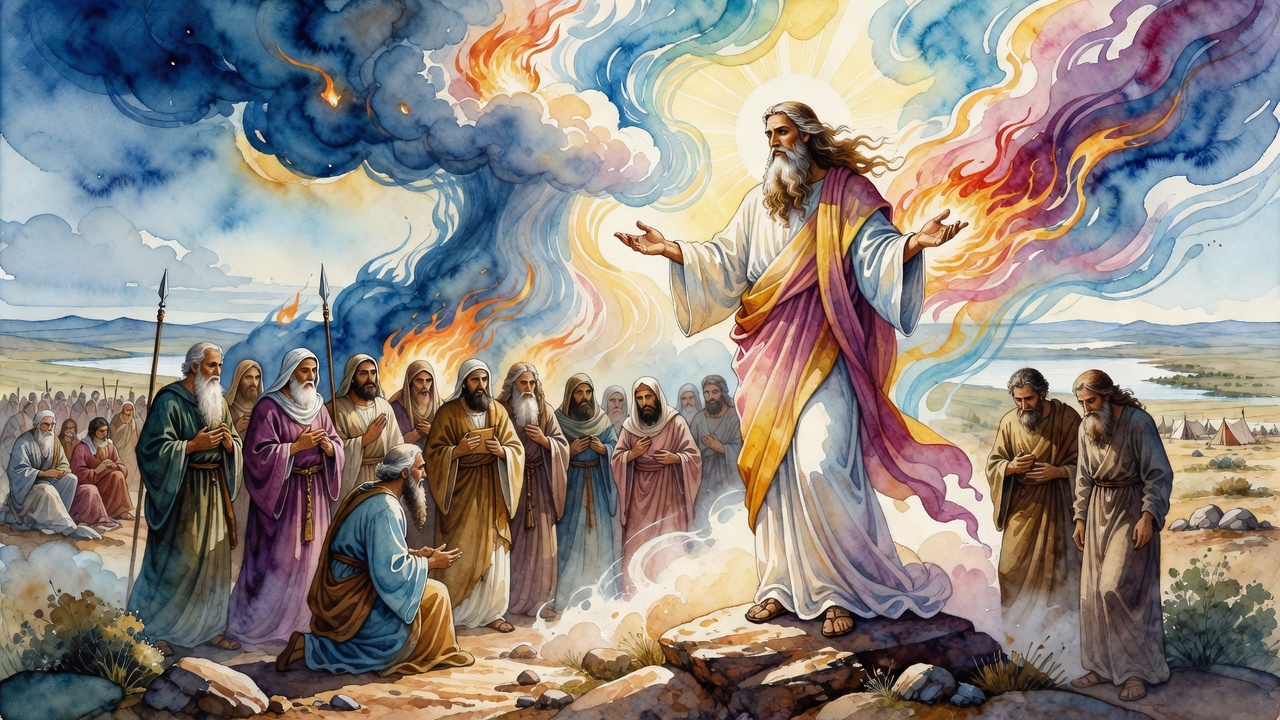
"We are not mourning," they told him. "We came to celebrate. Until now you were the owner of this field and God was the collector of the tenth. Now God owns the field, and you are the one who collects."

Nobody laughed. They said it the way people say a thing that has been true for several years and has only just finished arriving. Then they walked back down the road in their white clothes and left him in the doorway with a hundred measures stacked behind him, which was, to the grain, exactly what his father had given away without ever once writing it down as a loss.


← All myths
From the tradition

Sources

3 sources

The texts behind this telling. Some cards carry a translation of the source; others are our own retelling of it, and each card says which. Every card links out to the original.

Exempla of the Rabbis, No. 104Exempla of the Rabbis (Gaster, 1924)

Retold in our words. Read the original at the link below.The Exempla of the Rabbis, Moses Gaster (1924) · Public Domain

The rabbis taught a stark warning: reduce your tithes, and God will reduce your harvests. The Talmud and Midrash (rabbinic interpretive commentary) preserve the story of a family that learned this lesson through bitter experience.

A man owned a field that produced a thousand measures of grain each year. He faithfully set aside a tenth, one hundred measures, as the tithe, giving it to the Levites and the poor as the Torah requires. His field continued to produce abundantly, year after year. The tithe was not a loss but an investment in divine blessing.

When the man died, his son inherited the field. The first year, the son gave the full tithe. But the second year, looking at the hundred measures sitting in the tithe pile, he thought: "That is a great deal of grain going to others. What if I kept more for myself?" He reduced the tithe to eighty measures.

The next harvest produced only eight hundred measures. He reduced the tithe again. The following year, the harvest shrank further. Year by year, as the son tightened his grip on what he thought was his, the field responded by producing less and less.

Eventually, the field that had once yielded a thousand measures produced only one hundred, exactly the amount the father used to give as tithe. The son's family and neighbors came to console him, dressed in white. "Console me?" the son cried. "You should be mourning!" They replied: "We are celebrating. Before, you were the owner and God was the collector of the tithe. Now God is the owner and you are the collector."

The lesson was unforgettable: you can give willingly and prosper, or you can withhold and watch God take what was always His.

Full source
Mekhilta Tractate Kaspa 3:20Mekhilta DeRabbi Yishmael

Retold in our words. Read the original at the link below.Mechilta, translated by Rabbi Shraga Silverstein · CC-BY

(Exodus 23:10) commands: "Six years shall you sow your land." Rabbi Eliezer taught that this verse reveals two different agricultural realities, depending on Israel's spiritual state.

When Israel does God's will, they observe one shemitah, one fallow year, in every seven-year cycle. They sow for six years and rest for one, exactly as the Torah prescribes. The land produces abundantly, and the single year of rest is sufficient for its renewal.

When Israel does not do God's will, they end up observing four shemitah years in every seven-year cycle. How? The land becomes so unproductive due to divine disfavor that they must leave it fallow every other year. They sow one year, then the land must rest. Sow again, rest again. The result: in a seven-year period, they plant only three times and rest four times.

Rabbi Eliezer's teaching transforms the agricultural cycle from a fixed legal schedule into a barometer of Israel's relationship with God. The shemitah is not just a commandment, it is a reflection of national spiritual health. When Israel is righteous, one year of rest suffices because the land cooperates. When Israel strays, the land itself rebels, demanding rest far more frequently than the Torah prescribes.

The same six-year planting cycle appears in both scenarios, but its meaning changes entirely based on whether Israel is living in divine favor or divine displeasure.

Full source
Sifrei Devarim 40:11Sifrei Devarim

Retold in our words. Read the original at the link below.Sifrei by Rabbi Shraga Silverstein · CC-BY

A reader can chalk it up to bad luck, but Jewish tradition suggests there might be something more at play.

The Sifrei Devarim, a collection of legal interpretations on the Book of Deuteronomy, explores this very idea. It explores the possibility of divine disfavor manifesting in the most frustratingly mundane ways.

You work hard, bring in a good harvest, but then. nothing goes right. Maybe you think, "Well, at least the blight only affects the fields. My house is safe." But the Sifrei Devarim challenges that assumption. It counters, "But perhaps this is so only because the L-rd's measure of good [is] greater than His measure of ill, it is not in My domain to send blight upon them in the house, as it is in the field?"

The text then cites the prophet Haggai (1:9): "You brought it home, and I blew upon it!" And Deuteronomy (28:20): "And the L-rd will send in you the blight and the mehumah" (confusion/panic). So, it is within divine power to affect things indoors, just as easily as outdoors.

It paints a vivid picture: rot in the fruit, sourness in the wine, foulness in the oil, fermentation in the honey. It's a complete breakdown of the bounty, a frustration of all your efforts. And it doesn't stop there.

The text meticulously extends this concept to every aspect of life. Where does it end? Well, it doesn’t. “And whence is it derived even in the storehouses? From (Devarim 28:16) "Cursed shall you be in the city." And whence do I derive even in the flour? From (Ibid. 17) "Cursed will be your basket and your (kneading) bowl." And whence do I derive even in entering and in leaving? From (Ibid. 19) "Cursed will you be in your coming and cursed will you be in your going out." And whence do I derive even in eating? From (Vayikra 26:26) "and you will eat and not be sated."

It goes even deeper, to the very core of our being. The Sifrei Devarim asks, "And whence do I derive even when they descend into one's intestines?" And answers with a quote from the prophet Micah (6:14): "And you will stoop over because of (sickness in) your innards."

This isn't just about spoiled food or a bad day.

So, what are we to make of all this? Is the universe just waiting to punish us for every misstep? Perhaps not. Maybe it's a reminder to be mindful, to appreciate the good, and to strive for righteousness in all that we do. Maybe it's a call to consider that even the smallest, seemingly insignificant aspects of our lives are connected to something larger. And maybe, just maybe, a little bit of gratitude can keep the rot at bay.

Full source