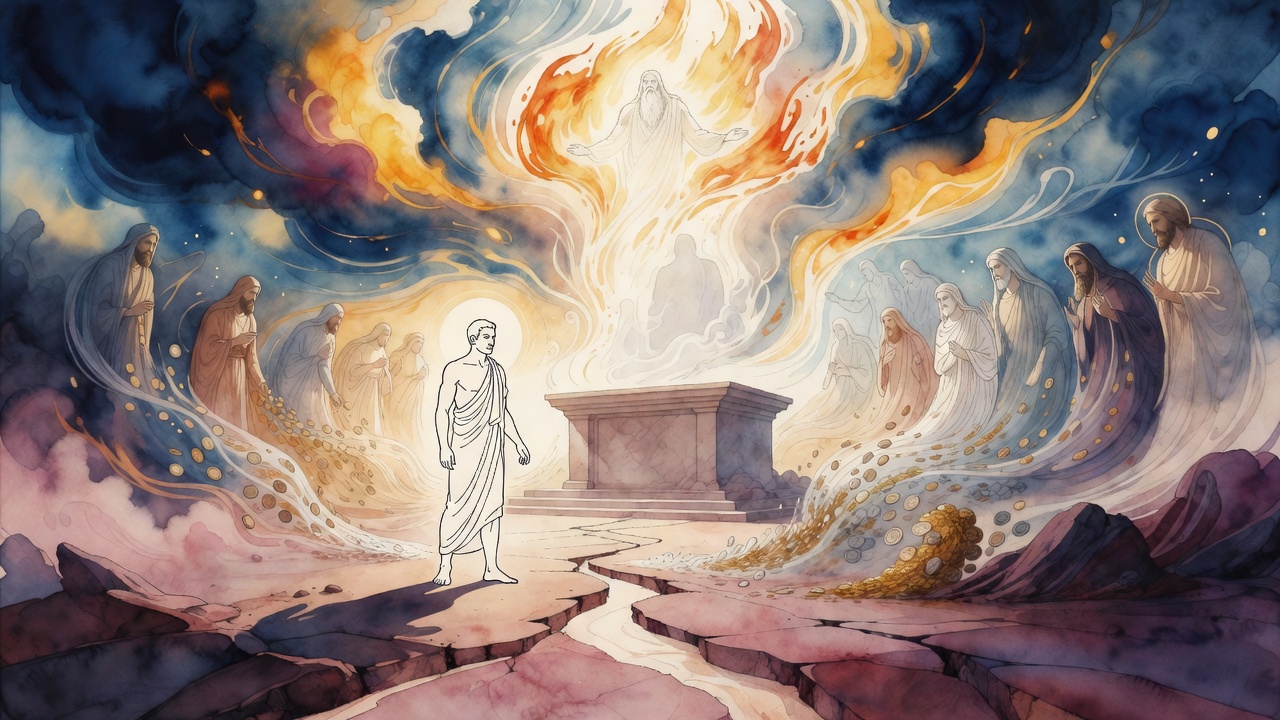
Moses Blessed Eleven Tribes and Said Nothing About Shimon
Pinchas stood over Zimri with a spear still wet. Moses kept going down the list of tribes and never reached the name that had paid nothing.
Table of Contents
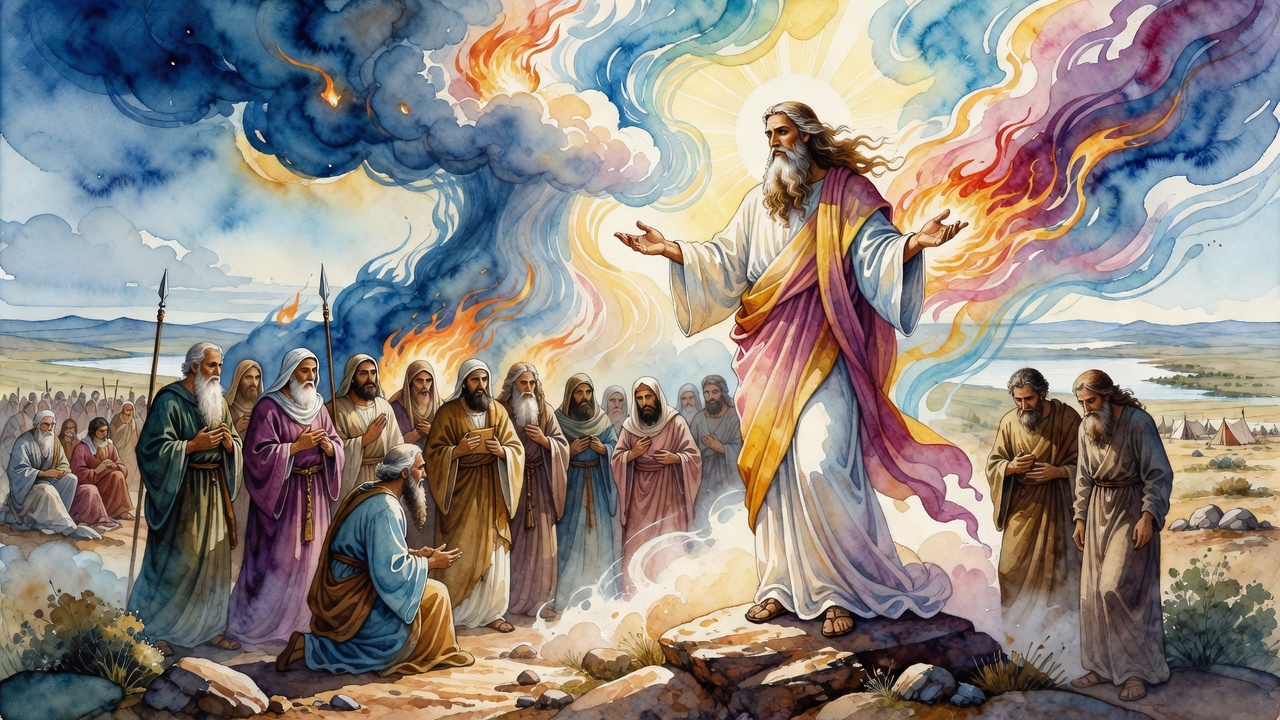
Moses stood on the plains of Moab with the last of his voice. Behind him a giant king named Sihon already lay dead, taller than any tower, after God had bound the angel of that land and thrown him from his place. Moses had seen a debt collected in full. He turned to the tribes and looked for a word that would fit each one.
 Click for full size
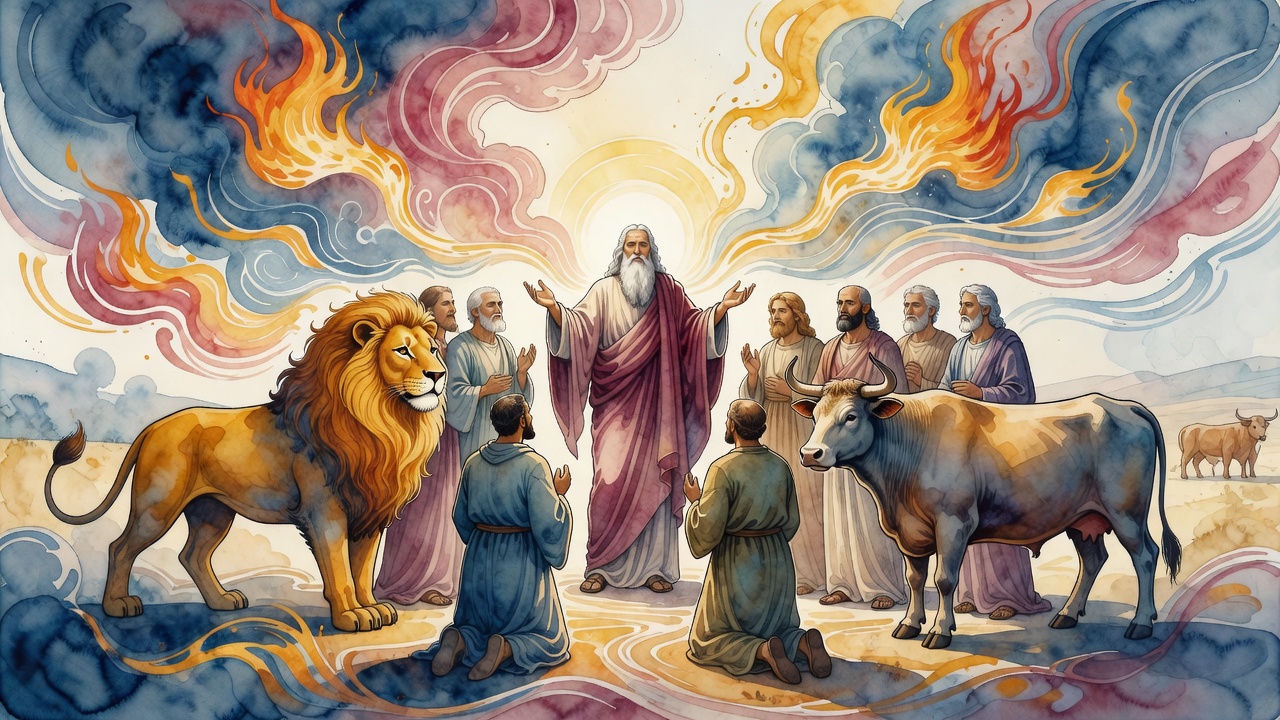
He blessed Reuben. He blessed Judah. He blessed Levi. Benjamin. Joseph. Zebulun. Issachar. Gad. Dan. Naphtali. Asher. He stopped. The camp waited. One name never left his mouth.
Two Brothers, One Sword
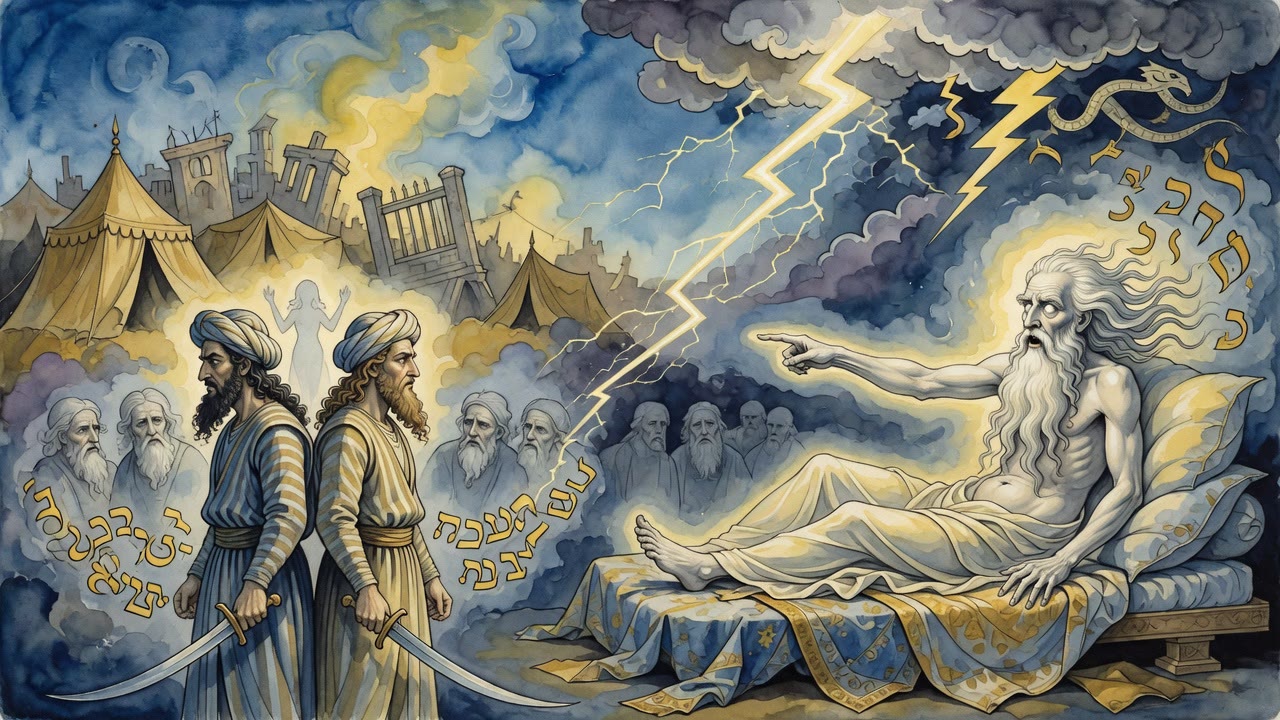
Years before, two sons of Jacob had shared a single kind of heat. Dinah had been taken in Shechem. Shimon and Levi did not wait for a court or a bargain. Each man took his sword, walked into a city whose men were still sore from circumcision, and killed every male (Genesis 34:25).
Blood ran in the gates. They came out with their sister and with a city emptied of its men. Jacob rebuked them on his deathbed. Weapons of violence, he said, were their kinship. He would not be gathered in their council. Both tribes walked into the wilderness carrying that first mark. Both owed the same debt.
Whoever Is for the Lord
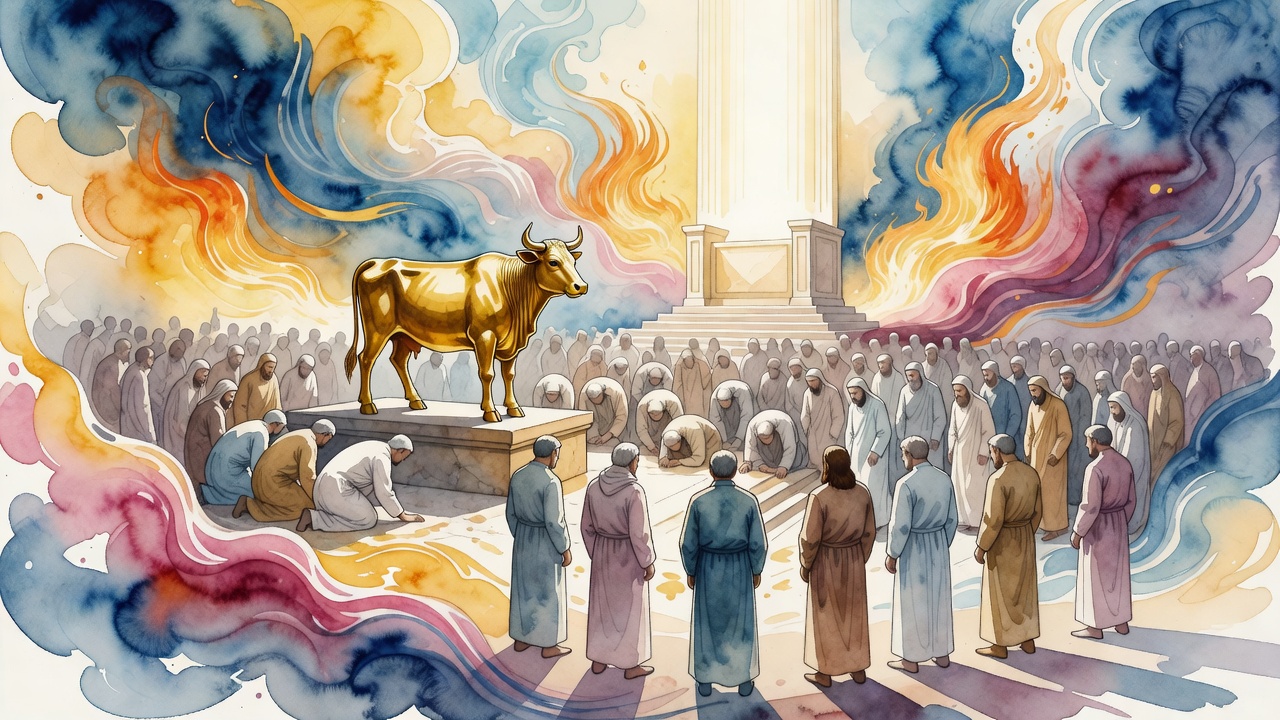
At Sinai the calf shone in the camp. Moses came down with the tablets already broken. He stood in the gate and shouted, "Whoever is for the Lord, come to me" (Exodus 32:26).
The sons of Levi crossed toward him. They took swords again. The blades moved through their own who would not leave the idol. Gold still warm from the fire stuck to fingers. Levi paid. The force that had ruined Shechem now stood up for the covenant.
Later, at Shittim, Pinchas son of Elazar son of Aaron rose from the weeping at the Tent. He drove a spear through a man and a Midianite woman in one thrust (Numbers 25:7-8). God said the rage had been turned away. Levi had paid, then spent zeal again. Heaven still dealt with that tribe as with a man who returns and borrows in the open.
The Prince at the Tent
Shimon did not cross toward Moses at the calf. At Shittim a man walked a Midianite woman into the camp, in full view of Moses and the congregation crying at the door of the Tent. He was Zimri son of Salu, chief of a father's house in Shimon (Numbers 25:14).
He did not hide. He made a show of it. The first debt from Shechem still sat unpaid, and he laid a second on top of it. Pinchas's spear found him. The tribe's name was on the corpse. Cozbi died with him. The weeping at the Tent did not stop at once.
Moses had seen the walk. He had not moved. The spear had moved. The name Shimon had been spoken over a dead prince, not over a blessing.
Two Notes in a King's Hand
A king holds notes on two men. One pays, then borrows again. The king still speaks to him. The other never pays, then borrows again. The king holds two dead claims and no relationship left to honor.
Moses had that ledger in his mouth on the plains. Sihon's angel had already been bound and thrown down. A giant taller than towers had fallen because God collected. Moses knew what a closed account looked like. He could bless Levi, who had answered at the calf and whose grandson still knew how to pick up a spear for heaven. He could not speak Shimon's name in the register of blessing.
The Blessing Closed
The last tribe stood in the sun and heard every other name. Reuben's camp shifted. Judah's banners hung still. Shimon's people waited for a sentence that would put them back inside the family of the blessed.
Moses's mouth opened after Asher. The name rose. He swallowed it. The silence was not a forgotten line. It was the account. Shimon had borrowed at Shechem, failed to repay at the calf, and borrowed again in Zimri's walk. Levi had borrowed, paid, and borrowed again. Only one of those paths still had a name Moses would say while he was dying.
He finished. The blessing was over. One tribe walked away from the plains without a word to carry into the land.
← All myths