21 myths
Each story names the sources it was written from.
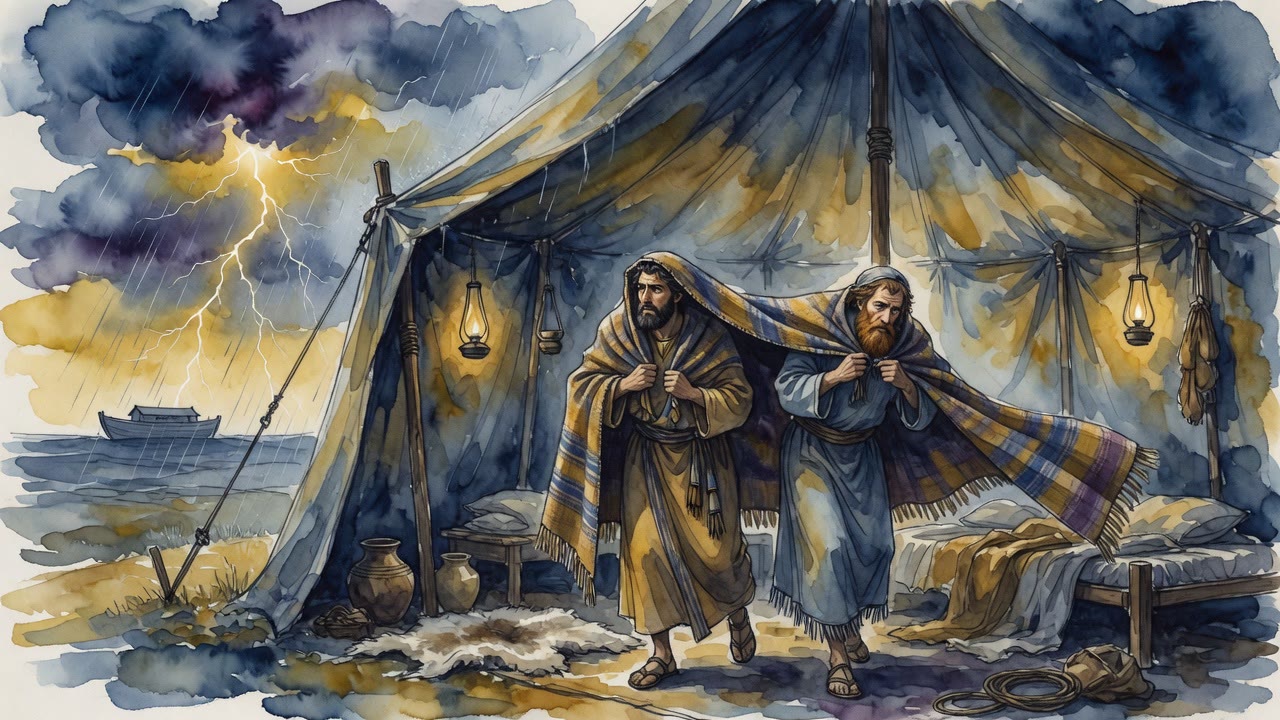
Noah lay uncovered in his tent. Ham laughed and called his brothers. Shem lifted a cloak and walked in backward, his face turned away.
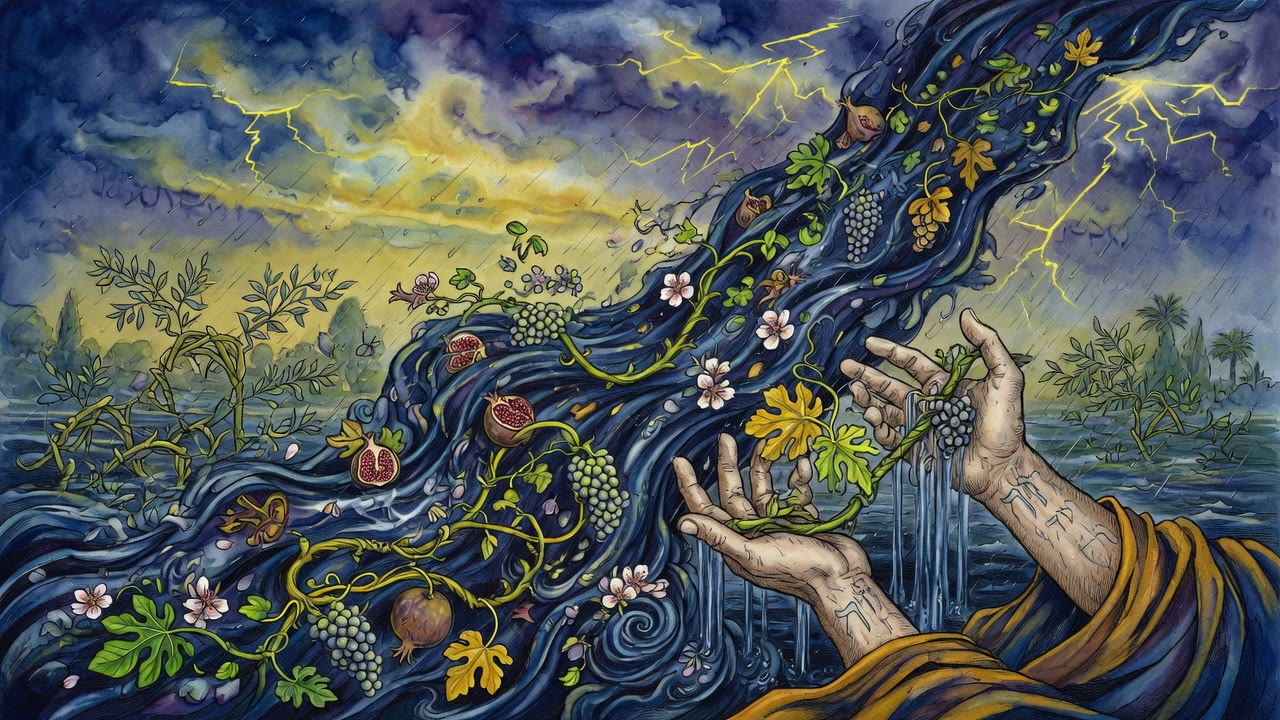
The flood that drowned the world tore a vine loose from the garden of Eden and carried it downstream, straight into Noah's waiting hands.
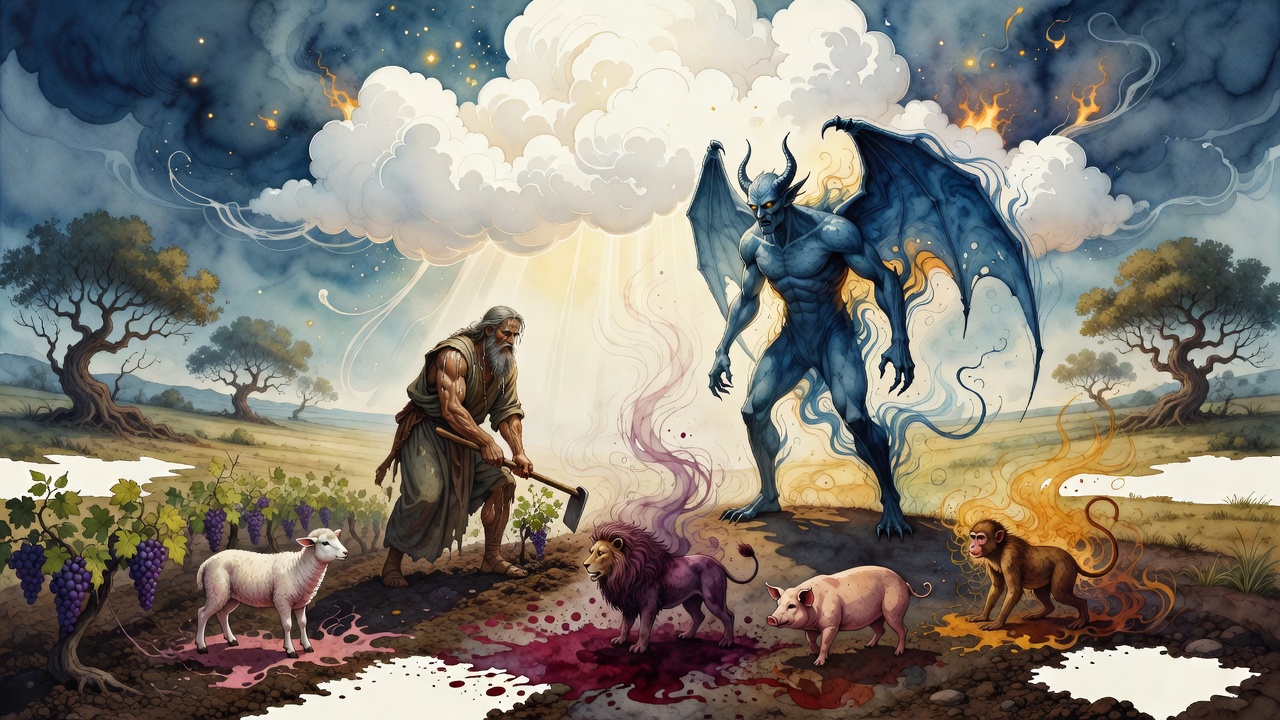
The soil was still wet from the flood. Noah set a vine in it. A partner arrived with a lamb, a lion, a pig, and a monkey.
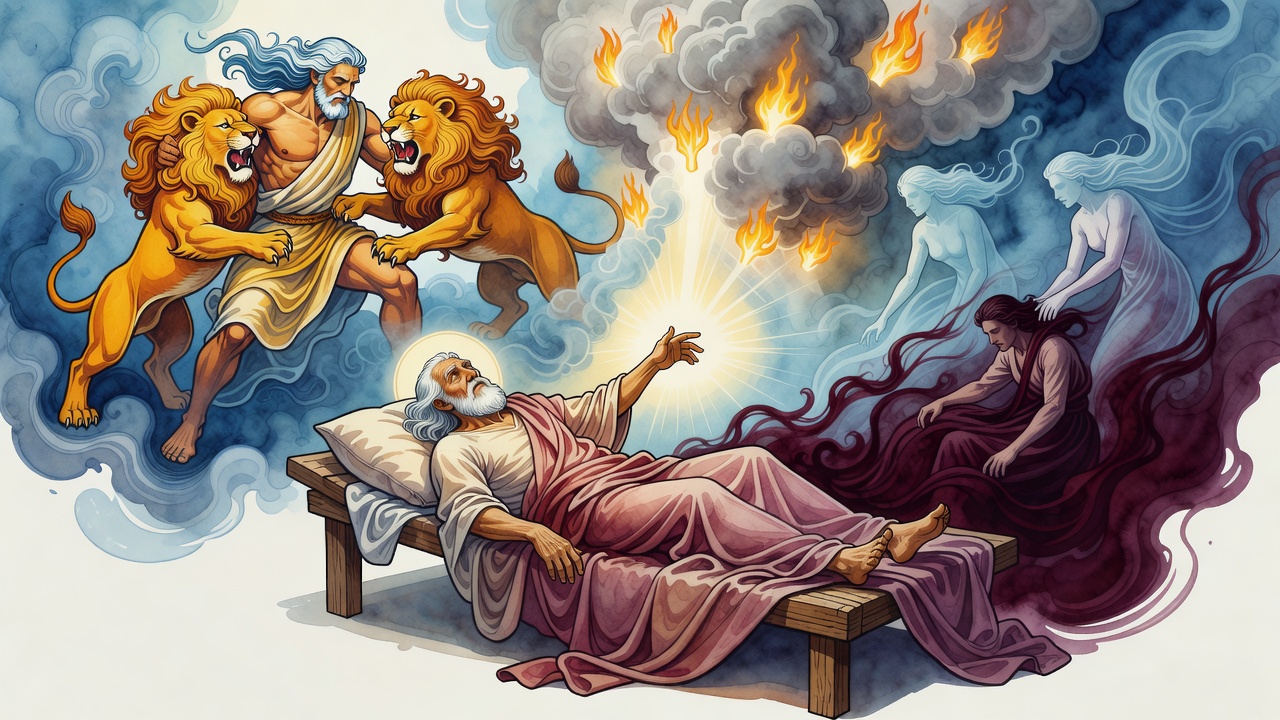
Judah killed lions bare-handed. Wine and beauty brought him low twice. On his deathbed he named both failures so his children could see the terrain.
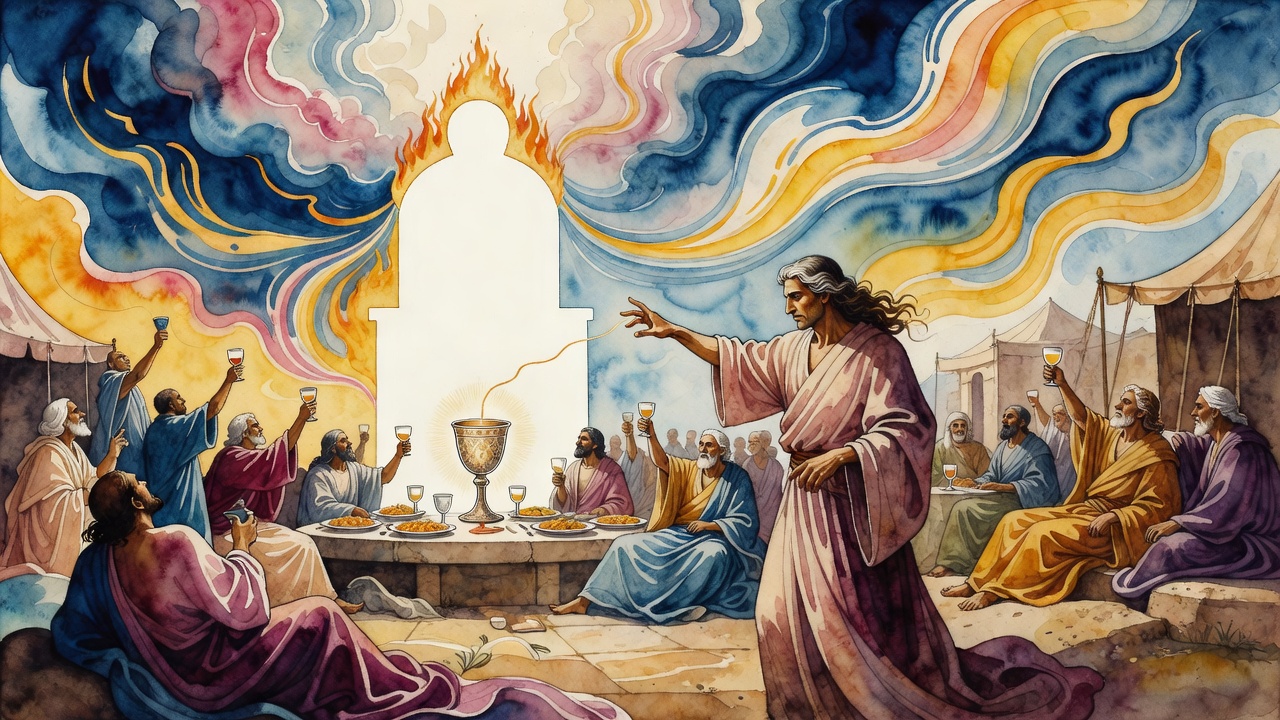
Cups went round at a Midianite table before anyone named an idol. The men drank. By morning the tents were already dying.
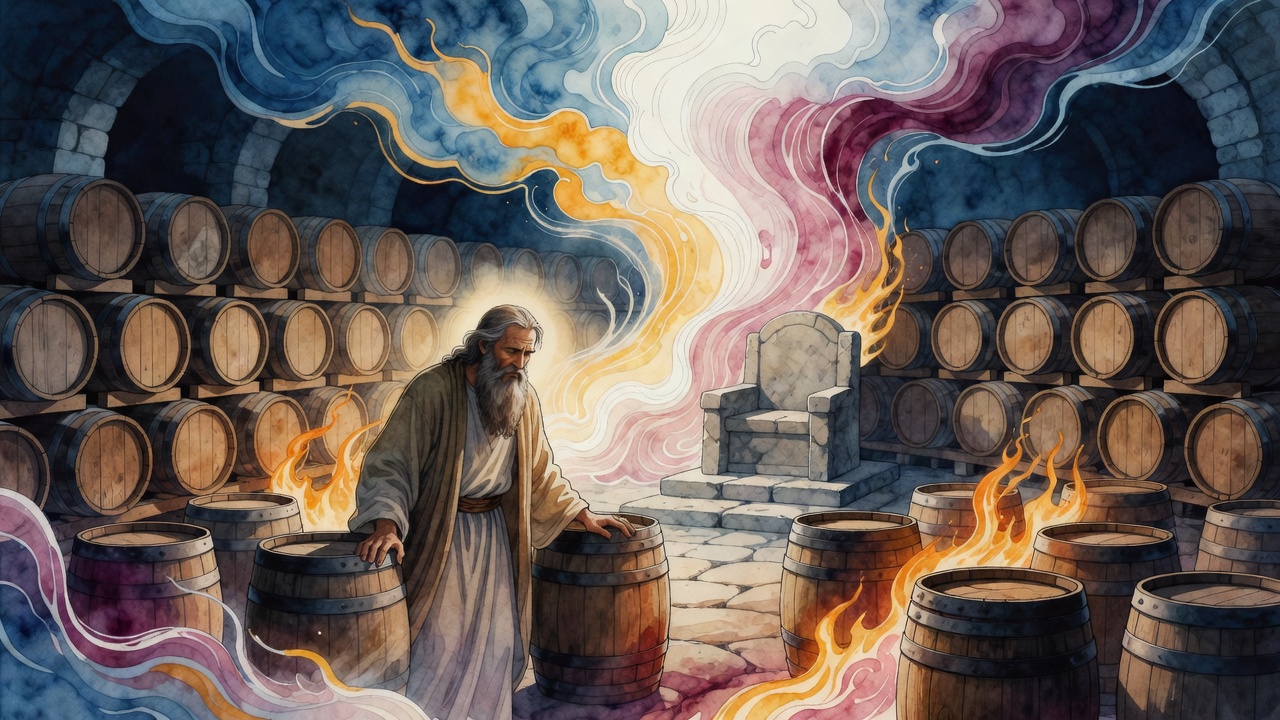
Four hundred casks of Rav Huna's wine soured without explanation, and the sages told him to look inside himself before looking inside the cellar.
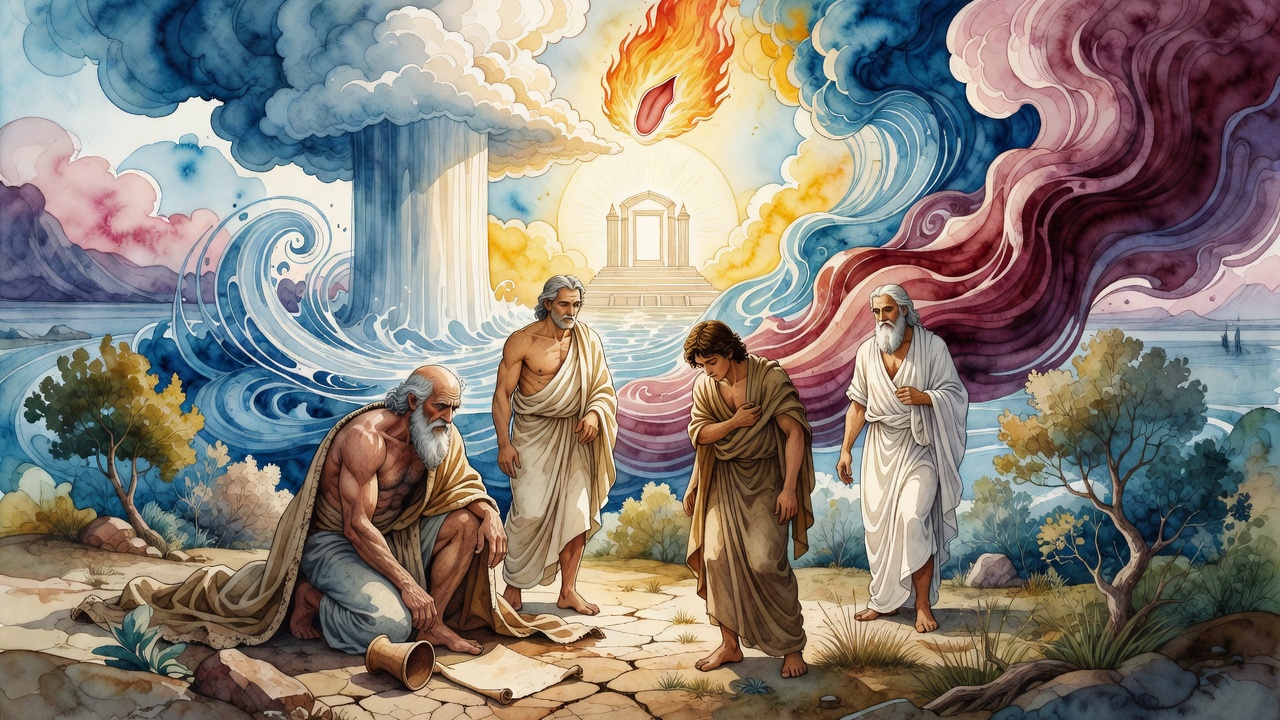
One cup uncovered Noah. Ham looked and told. The curse skipped a blessed son and lodged in Canaan, while wine kept toppling generations after the flood.
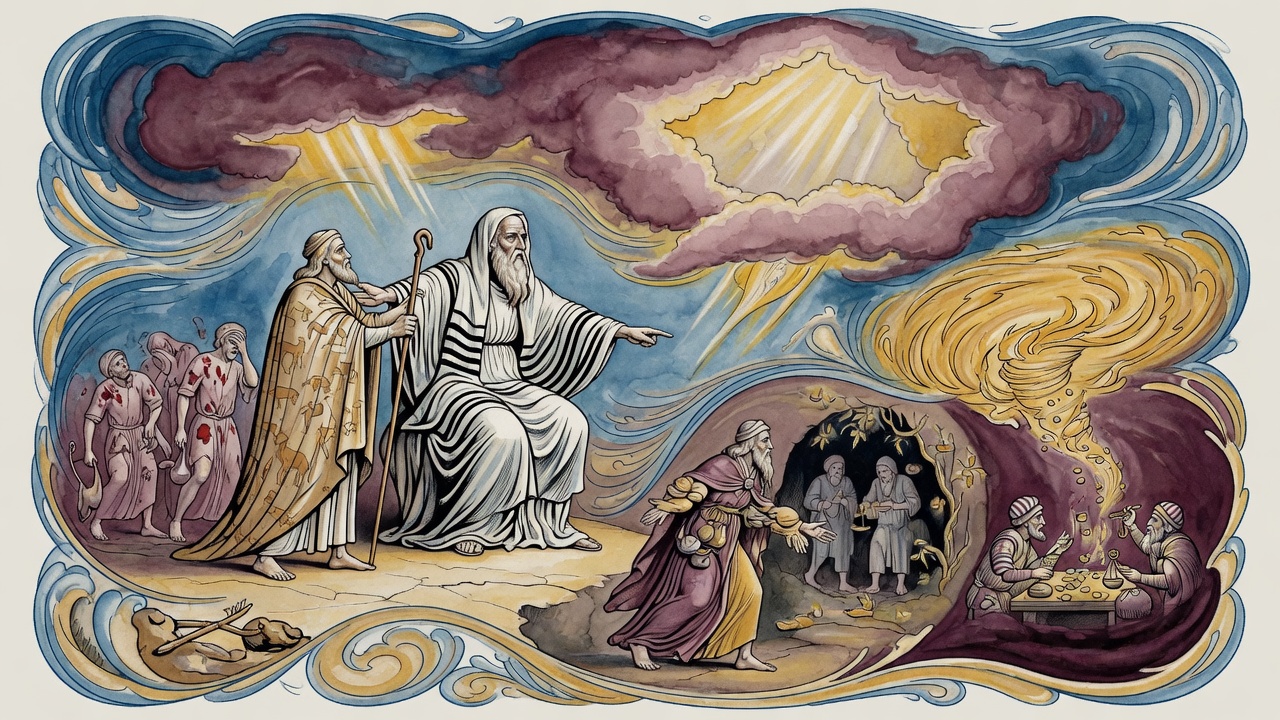
A Rechabite set his waterskin on the Temple stone. From the Holy of Holies a voice named the desert while Judah still fasted.
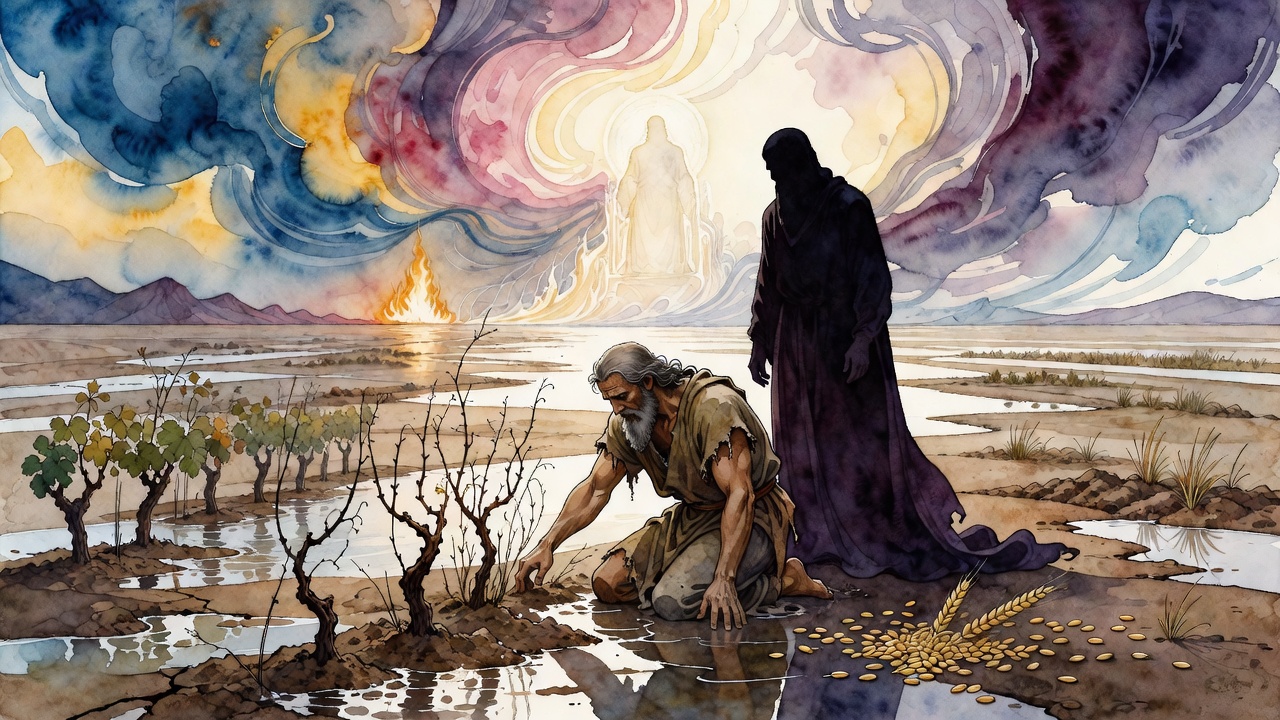
On mud still smelling of flood, Noah set vines before grain, partnered with a dark teacher of wine, and woke to shame under a single day's harvest.
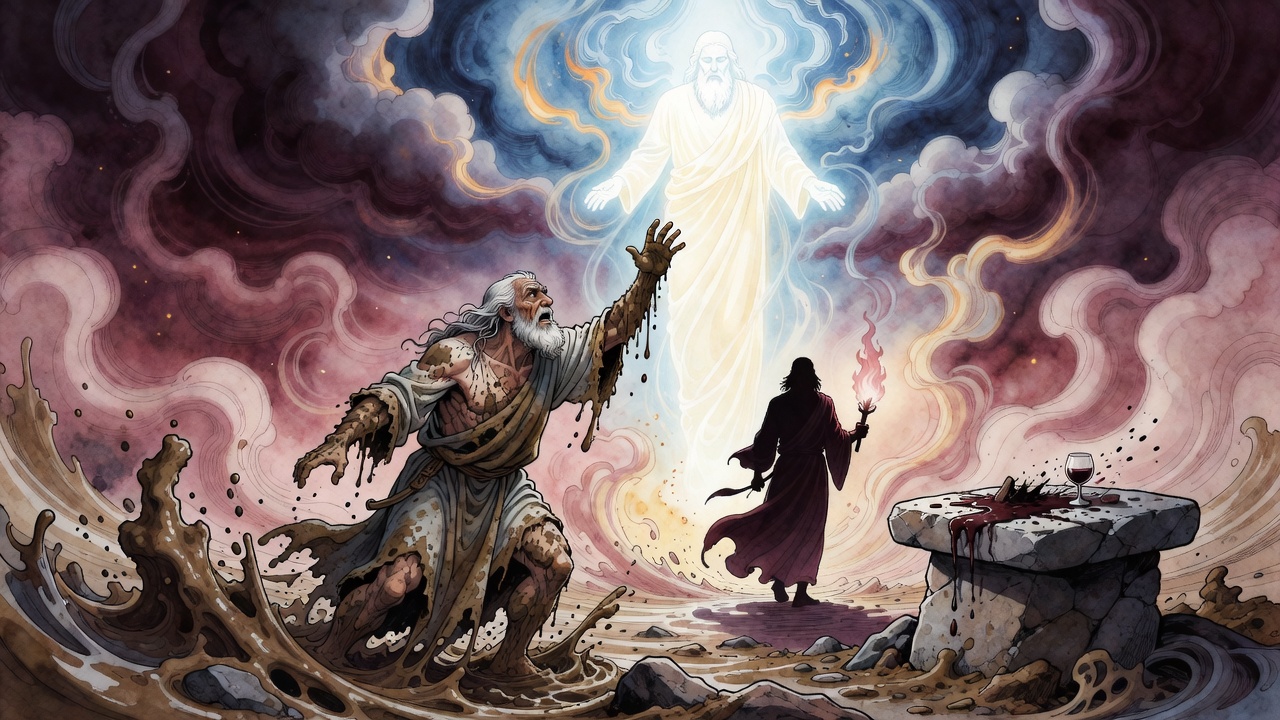
A king tells his little child, hold my hand. He tells his grown son, lead the way. Abraham led. Noah was the child, pulled out of the mud.
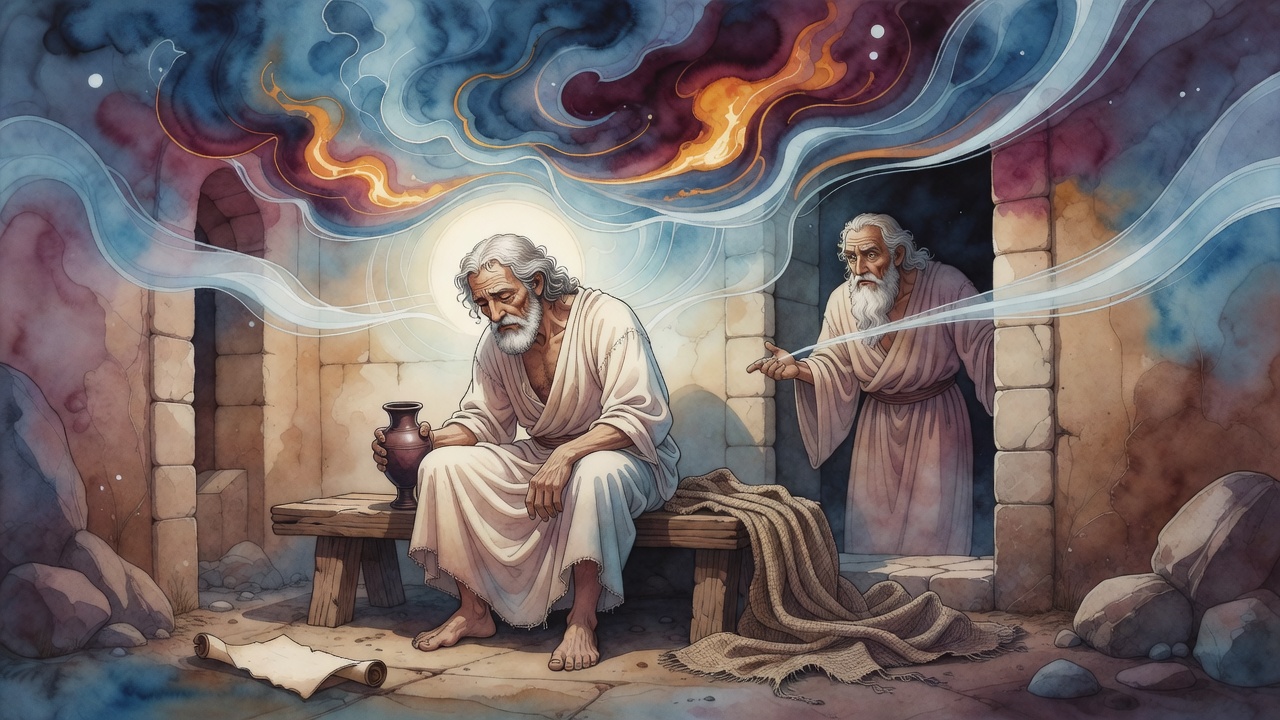
Noah went down on the tent floor with his clothes off him. The walls hid the body. They could not hide what Ham carried out the door.
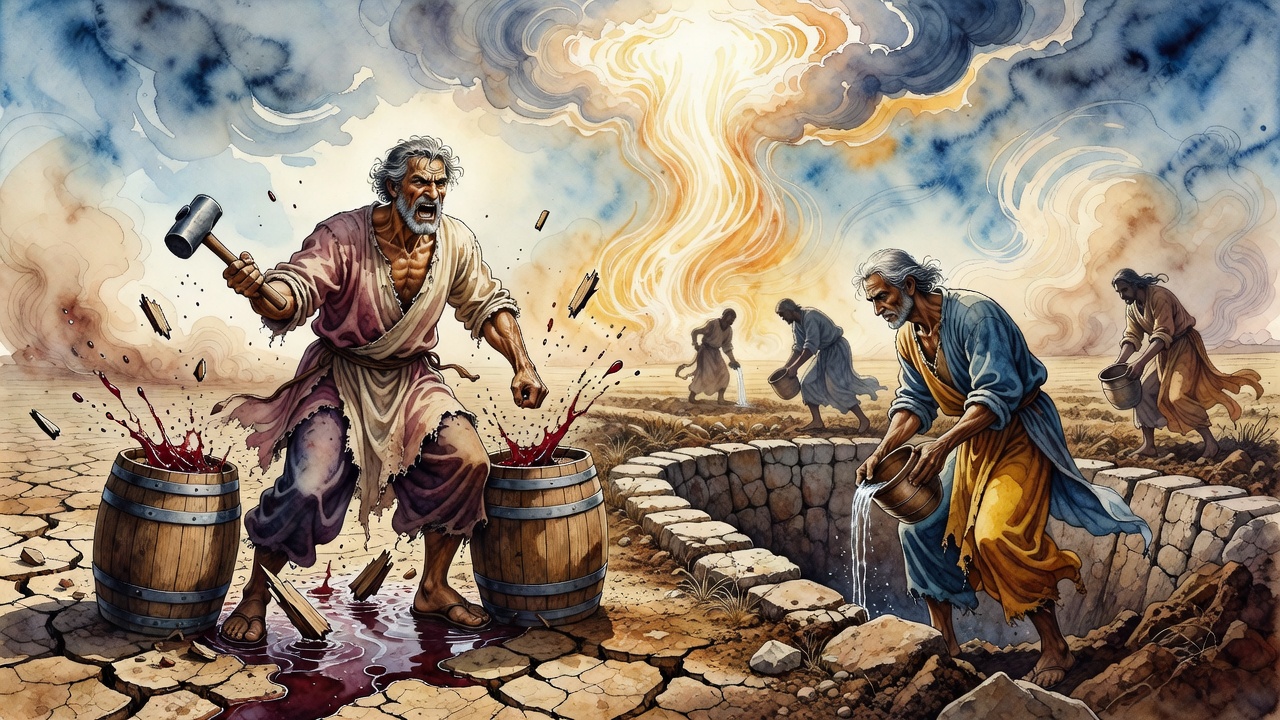
He walked the cellar with a lamp and counted casks he would not tithe. Across the valley a neighbor sold half a field for a hole in stone.
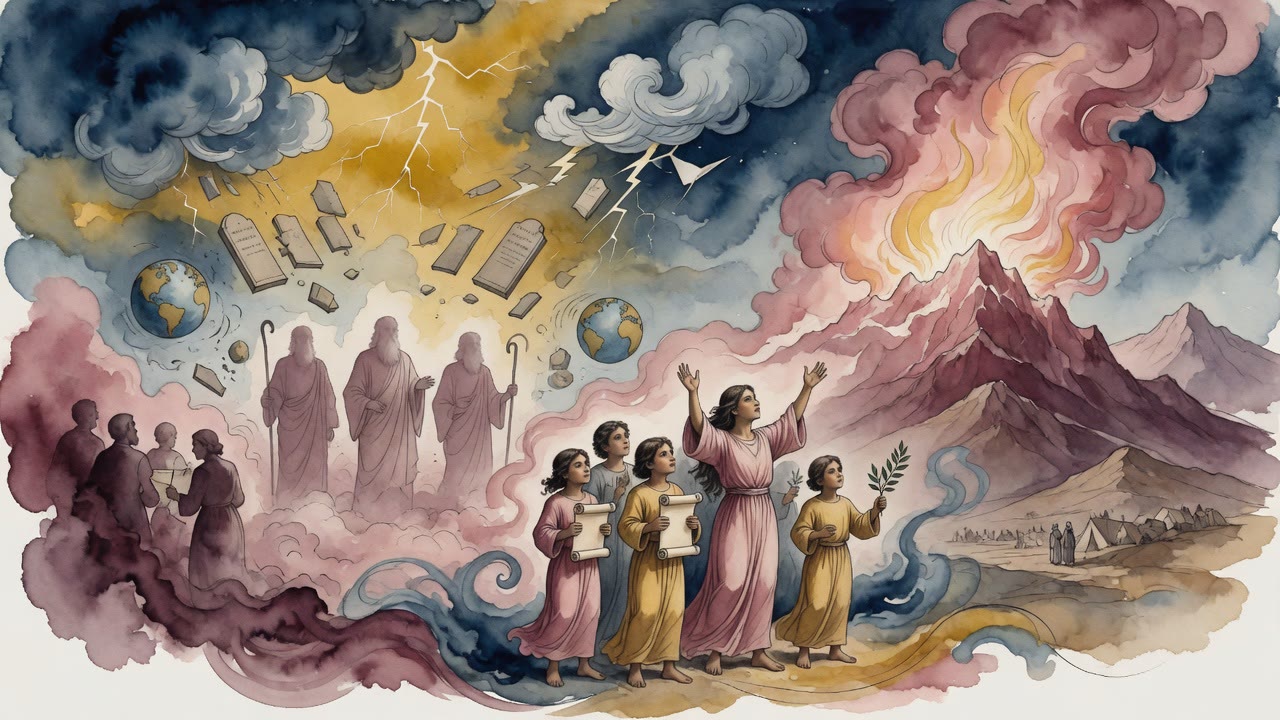
Yehudah HaNasi filled their cups so the silent boys would speak. They told him the Messiah waits until his own chair falls. He winced.
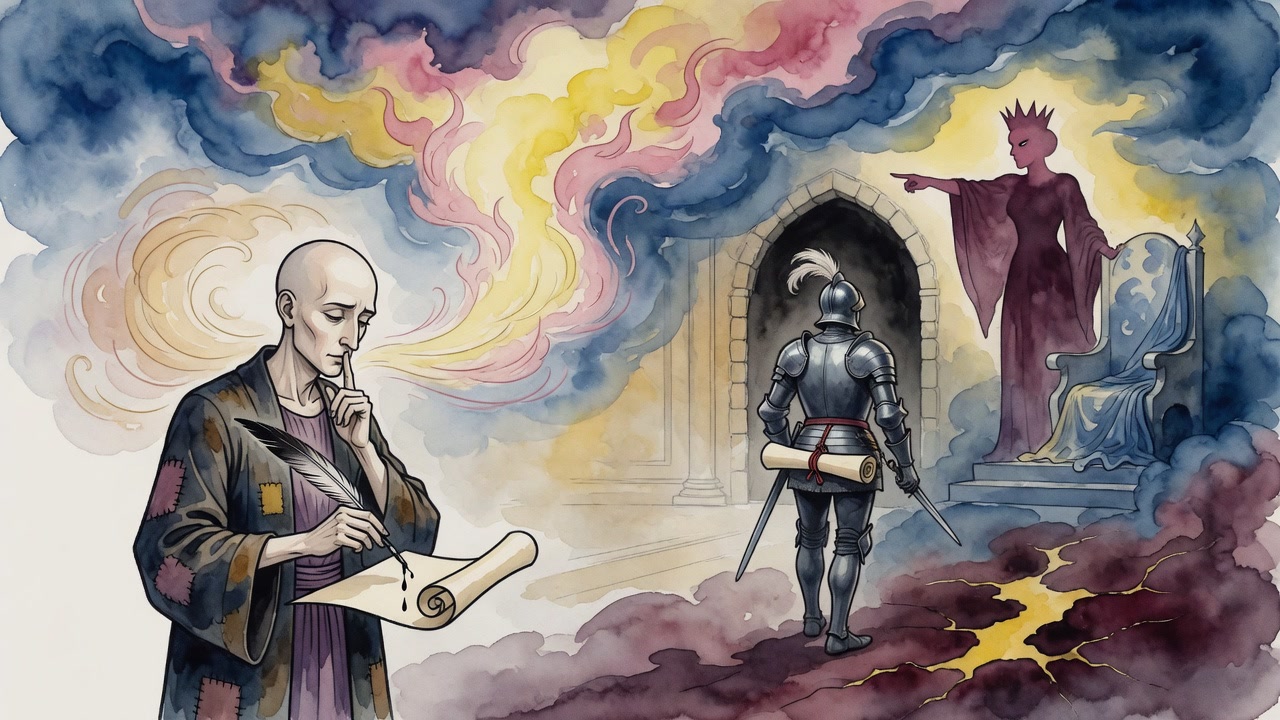
Desperate children carried their father to a cemetery to dry him out, but wine-thieves had stashed jars in a tomb and he drank deeper than before.
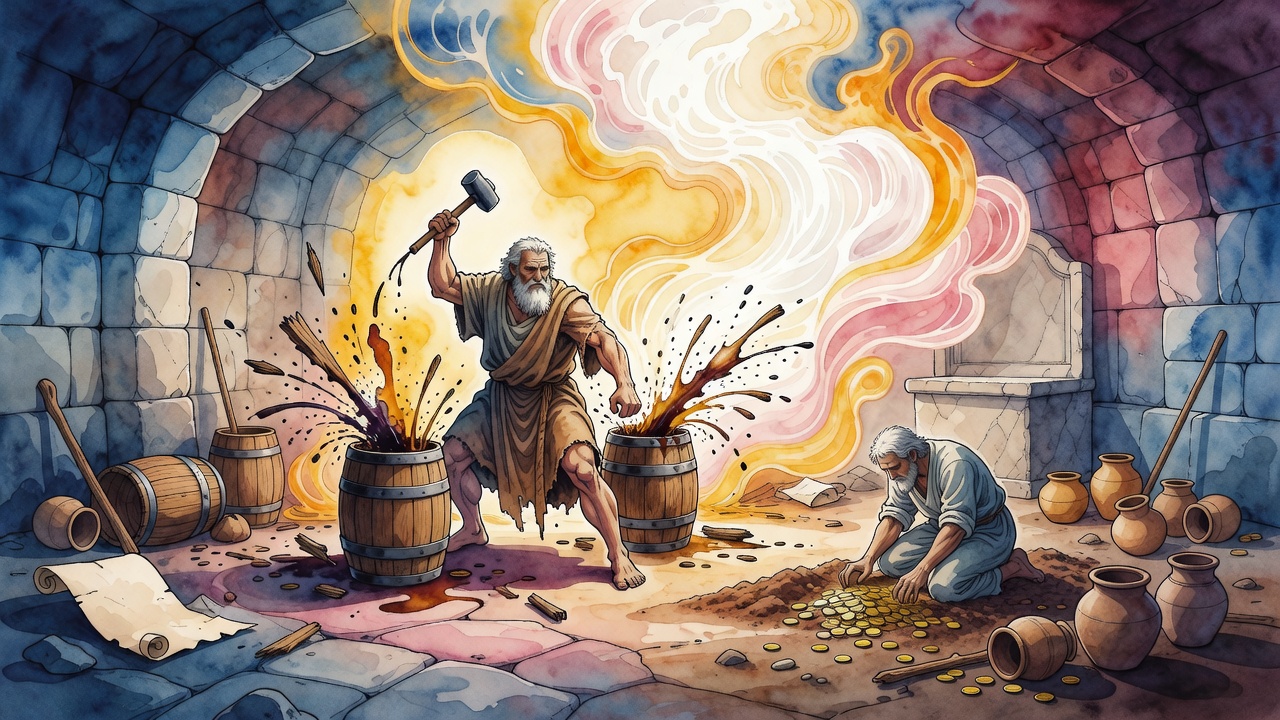
A harvest lord smashed his own casks rather than give the tithe, while another man buried gold in clay and returned to empty jars.
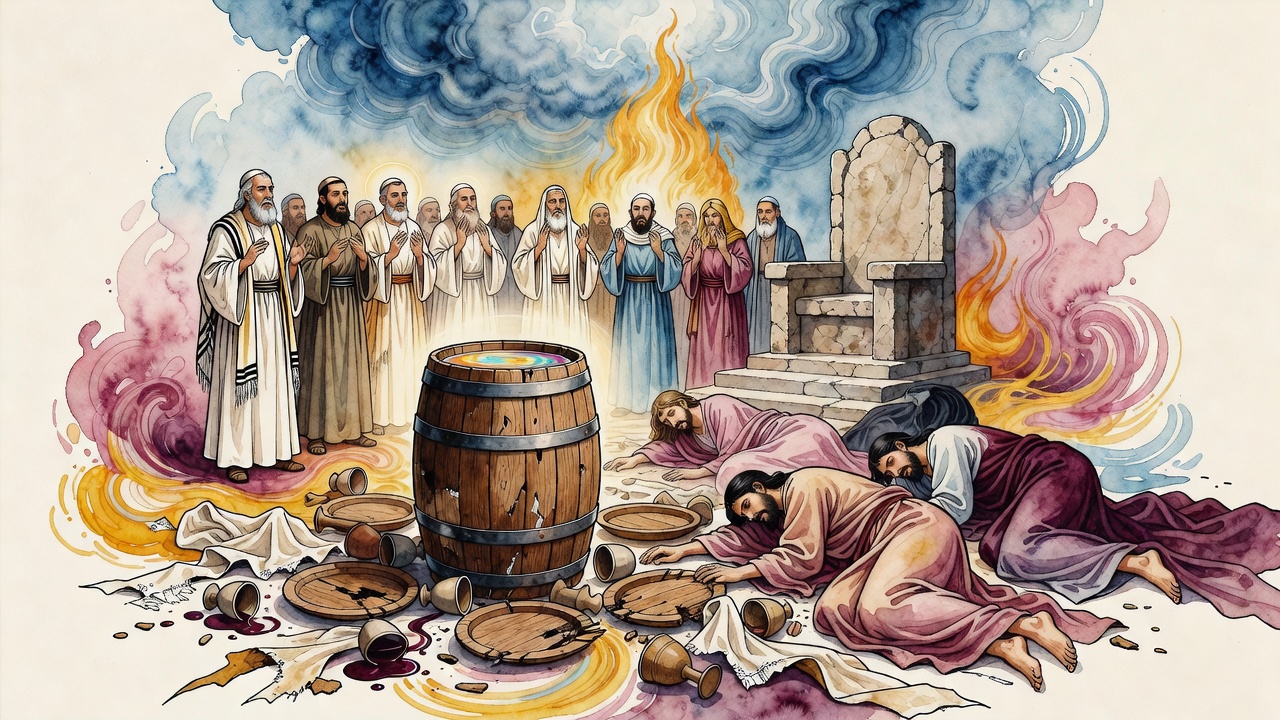
The guests sat for a feast built around oil. The cork came free and wine poured out. He had nothing left that was fit to serve.
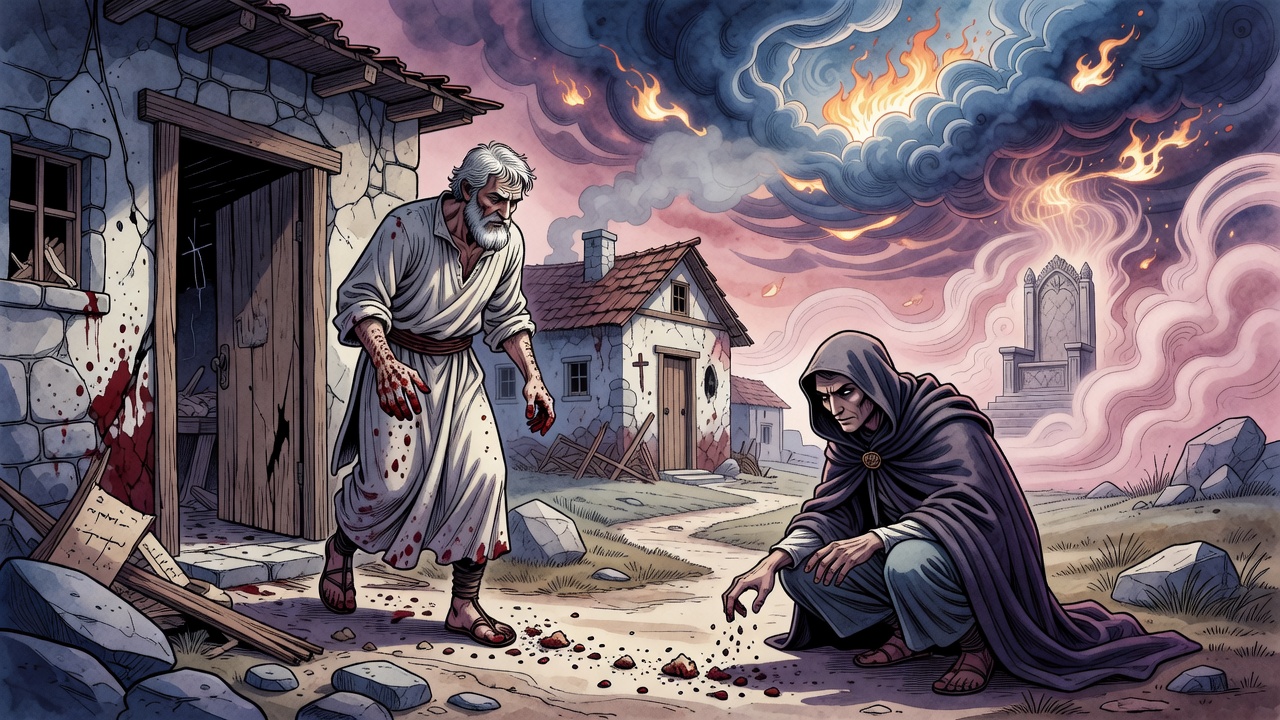
He left a tavern with lunch still on his hands. A stranger read the crumbs, fooled his wife, and the house ended in blood.
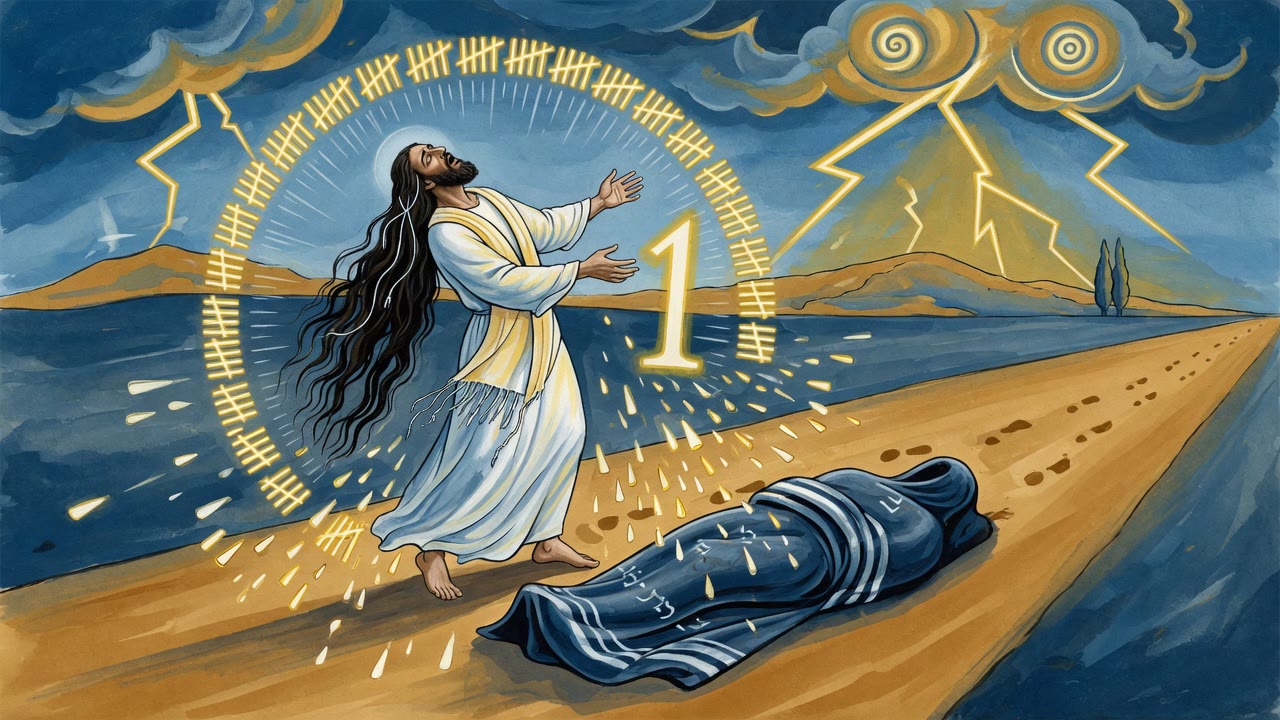
A nazirite counted ninety-nine clean days without wine or razor until a corpse in the road voided the count and sent him back to day one.
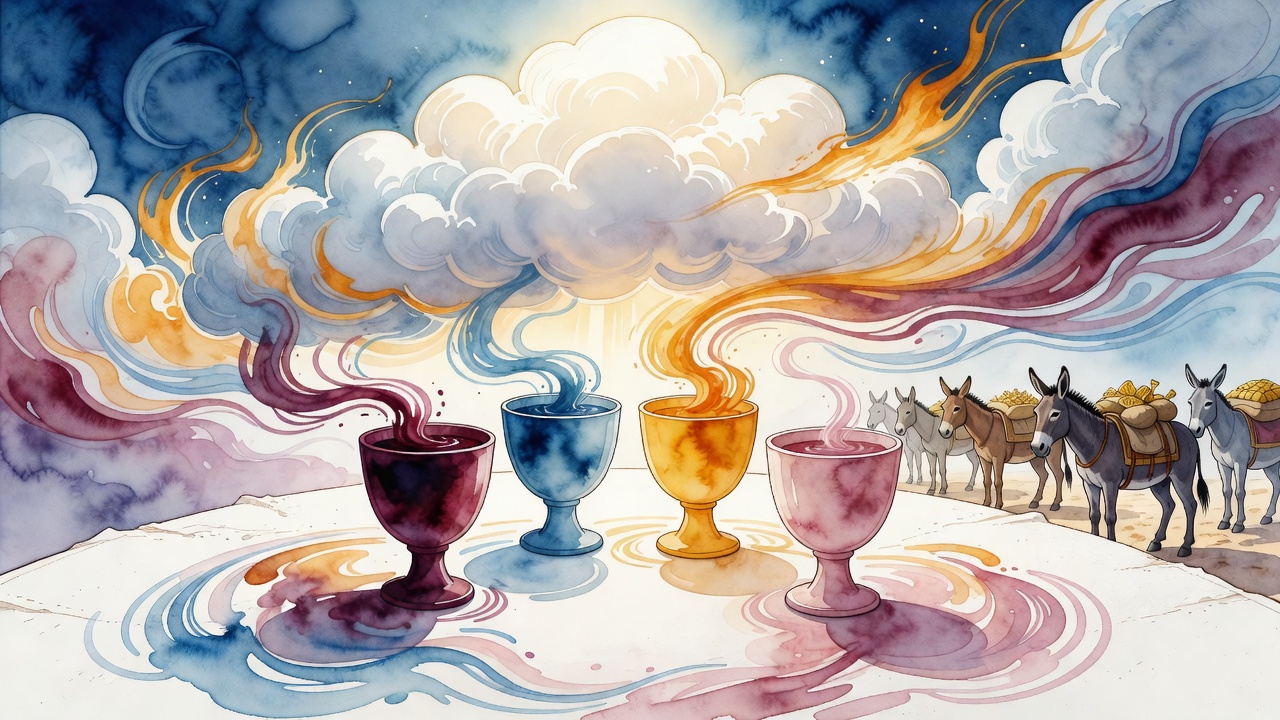
Brick still sat on their necks when four verbs arrived. Bring out. Deliver. Save. Judge. Free hands would pour them later.
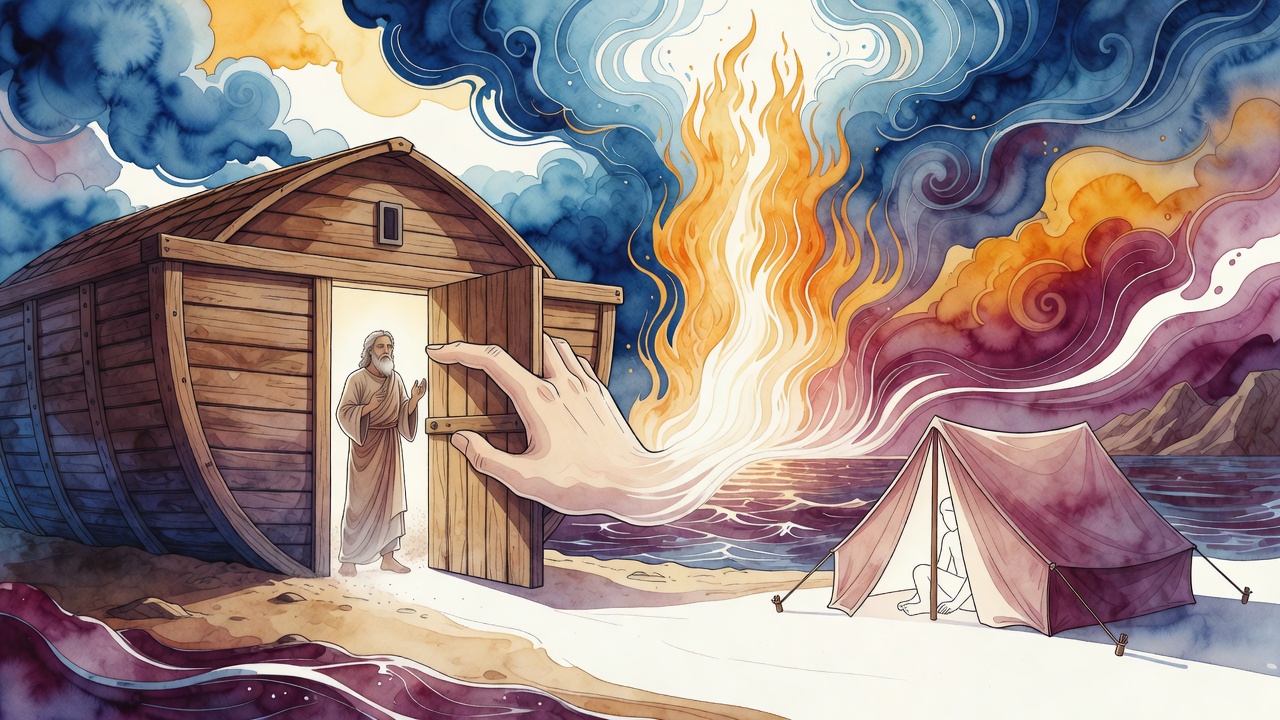
Noah had pitched every seam. Rain found the hull anyway. The last join closed from the outside, and he had no latch to test it.
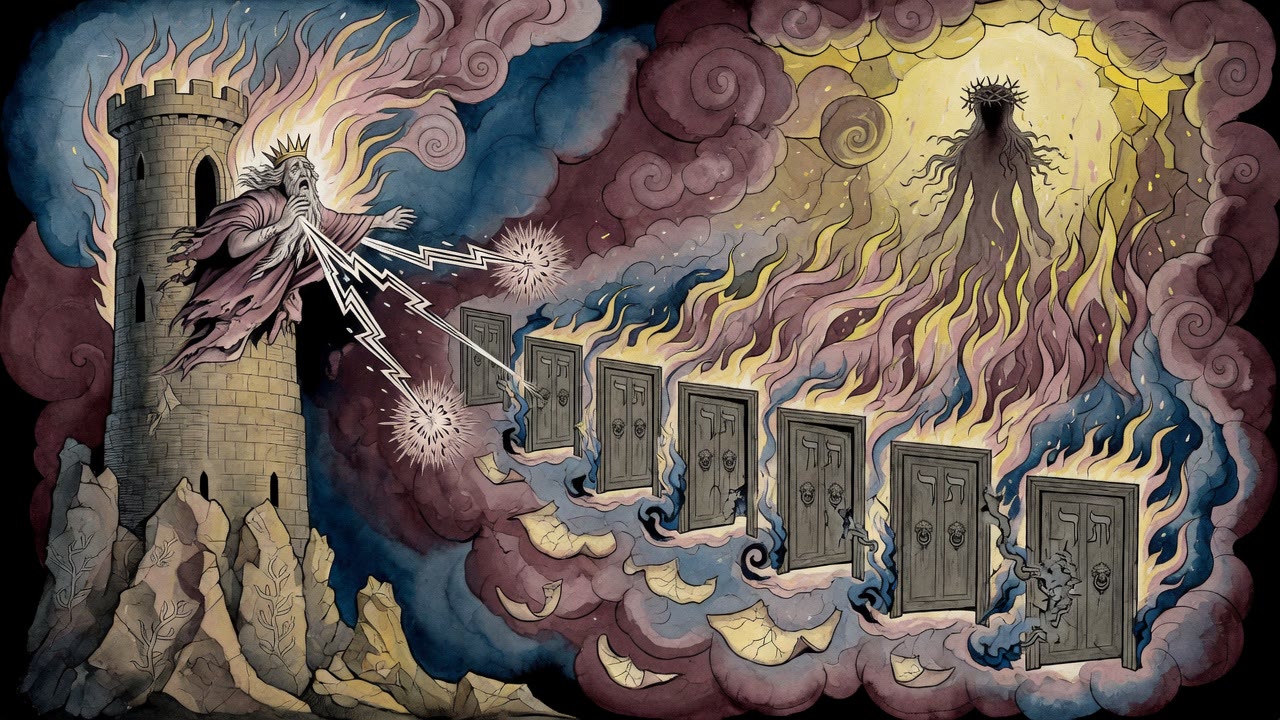
Jonadab ben Rechab bound his whole line with one oath against wine, and their dry tents outshone Israel while the cup bit like a serpent.
