Noah Planted a Vineyard After a Demon's Bargain
The soil was still wet from the flood. Noah set a vine in it. A partner arrived with a lamb, a lion, a pig, and a monkey.
Table of Contents
 Click for full size
The First Thing He Put in the Ground
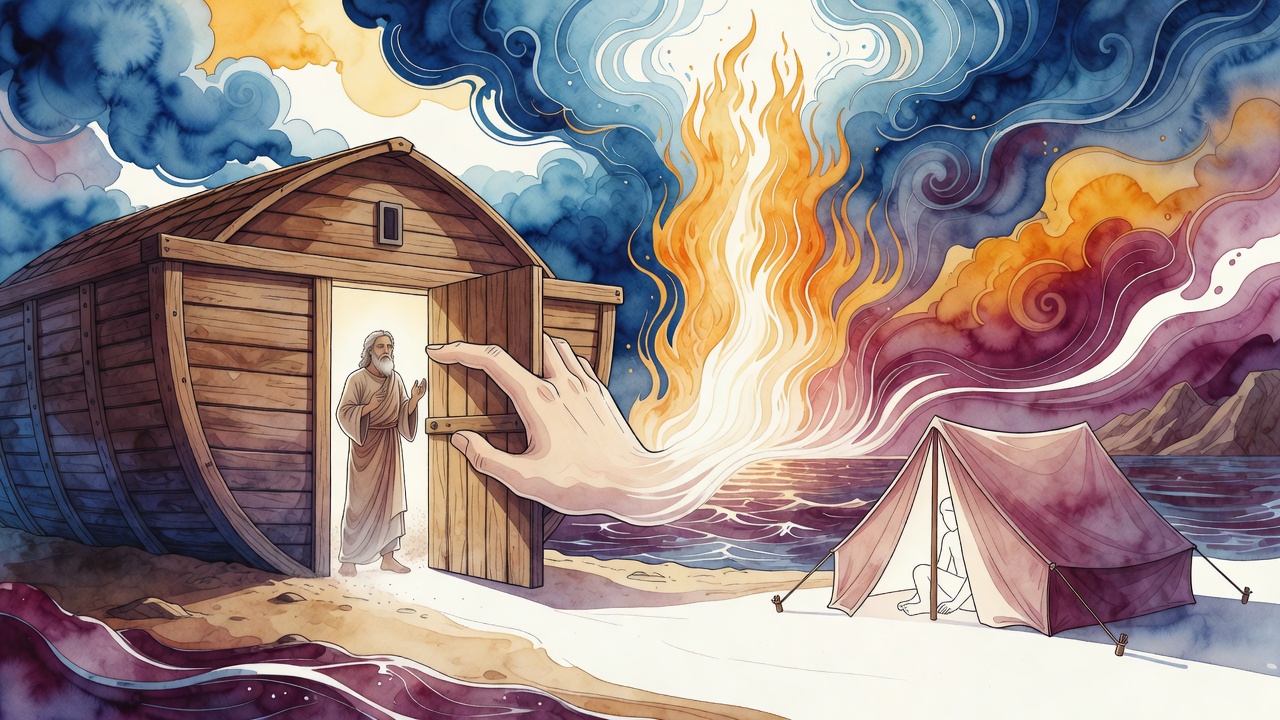
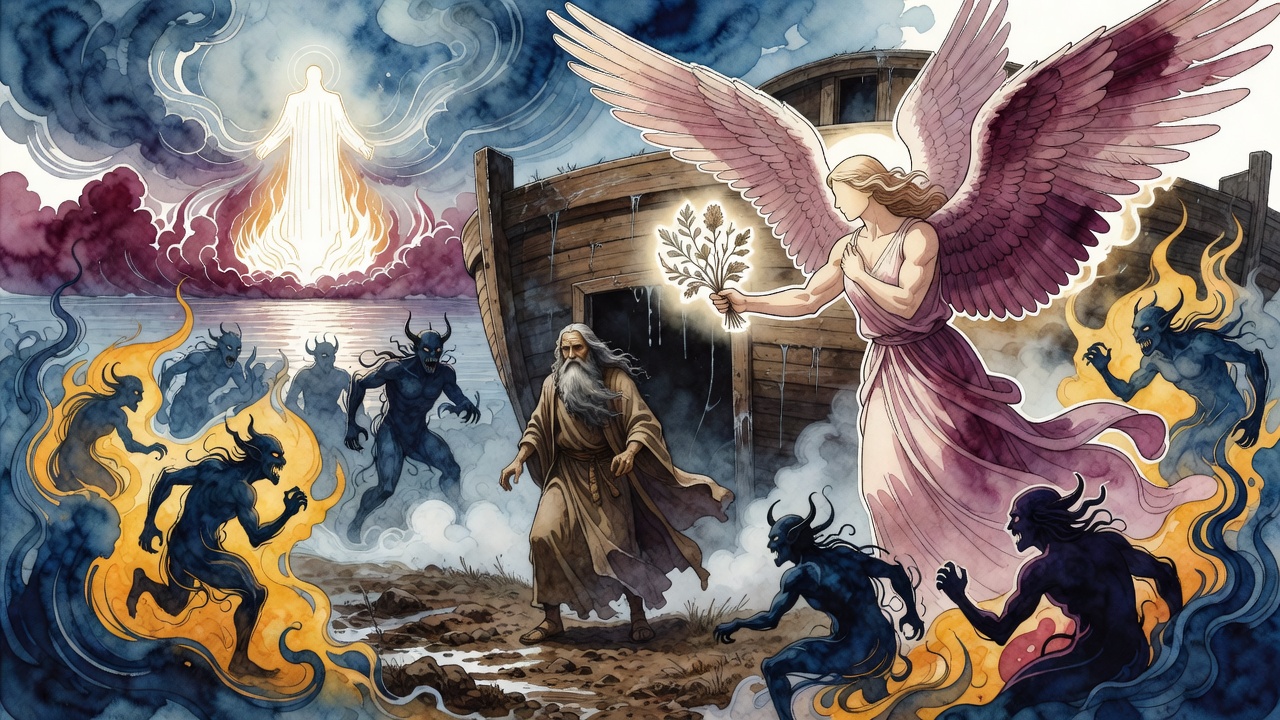
The ramp was still wet when Noah walked off it with a vine shoot in his fist. Mud sucked at his heels. The hills had no fences. The fields had no names. He could have set a fig. He could have set an olive. Both were on the ark, bound in the same bundles as the vine, packed because a man gathers only what he means to need (Genesis 6:21). He had spent the months on the water thinking about juice.
His sons were still lowering cages. His wife was still counting who had lived. Noah knelt and drove the shoot into the new dirt. The first crop of a washed world would be wine.
A Partner at the Furrow
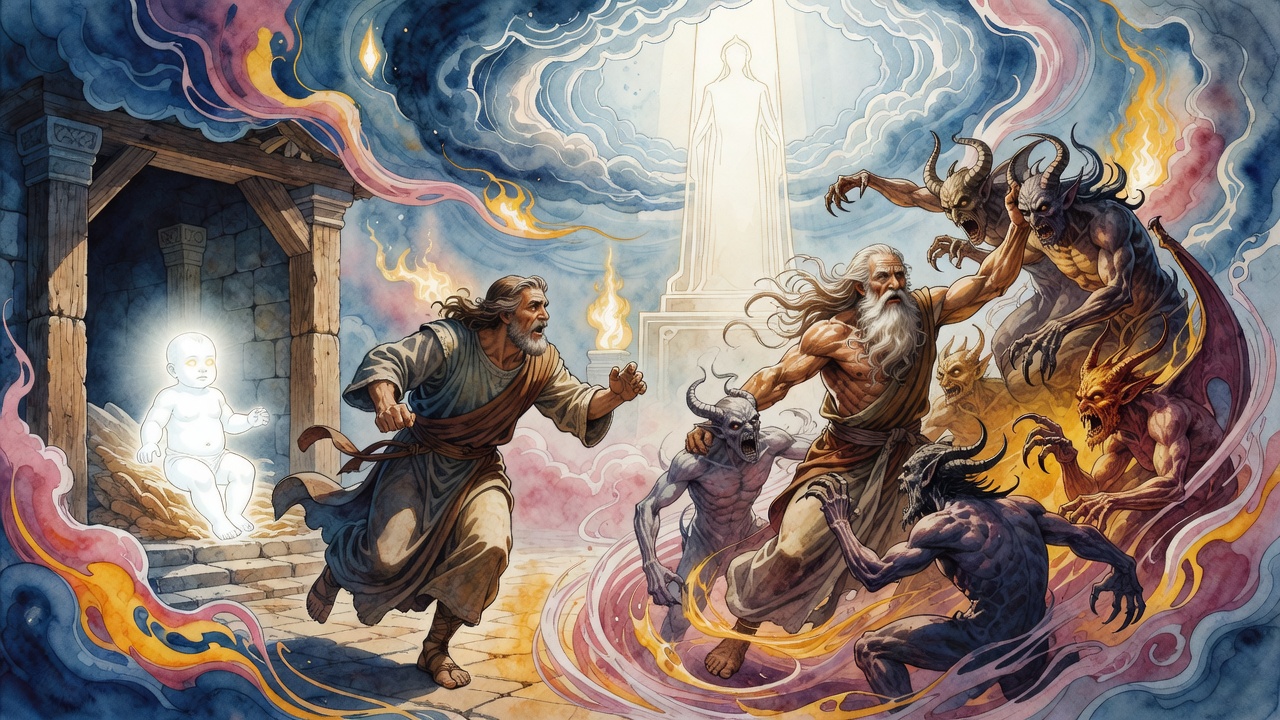
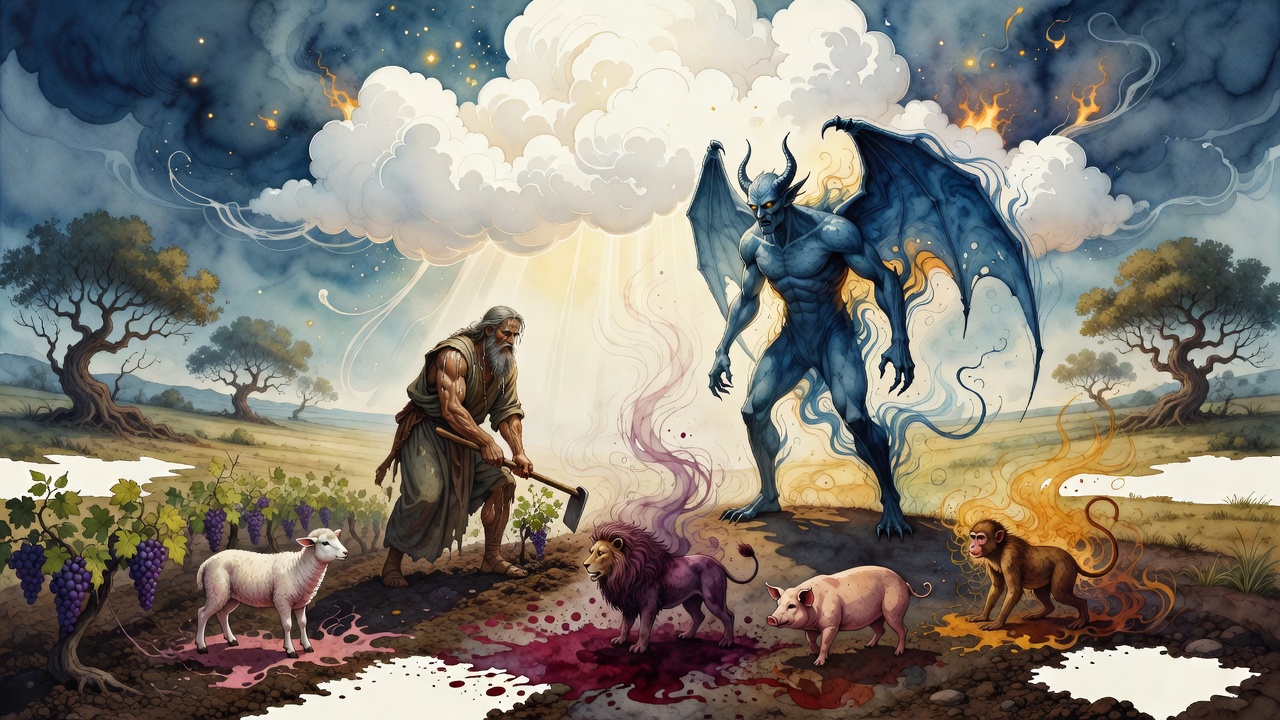
Ha-Satan (הַשָּׂטָן), the Accuser who tests a life from inside heaven's leave, came walking through the empty fields while Noah broke the ground. He stopped at the furrow and asked what was being planted.
"Vines," Noah said. "For the fruit. For the wine."
"Let me help you."
That was the bargain. No tablet. No price. The Accuser offered his hand, and the man who had just kept every living kind alive took it. A demon's help at the first planting, and Noah did not send him off.
Four Beasts at the Roots
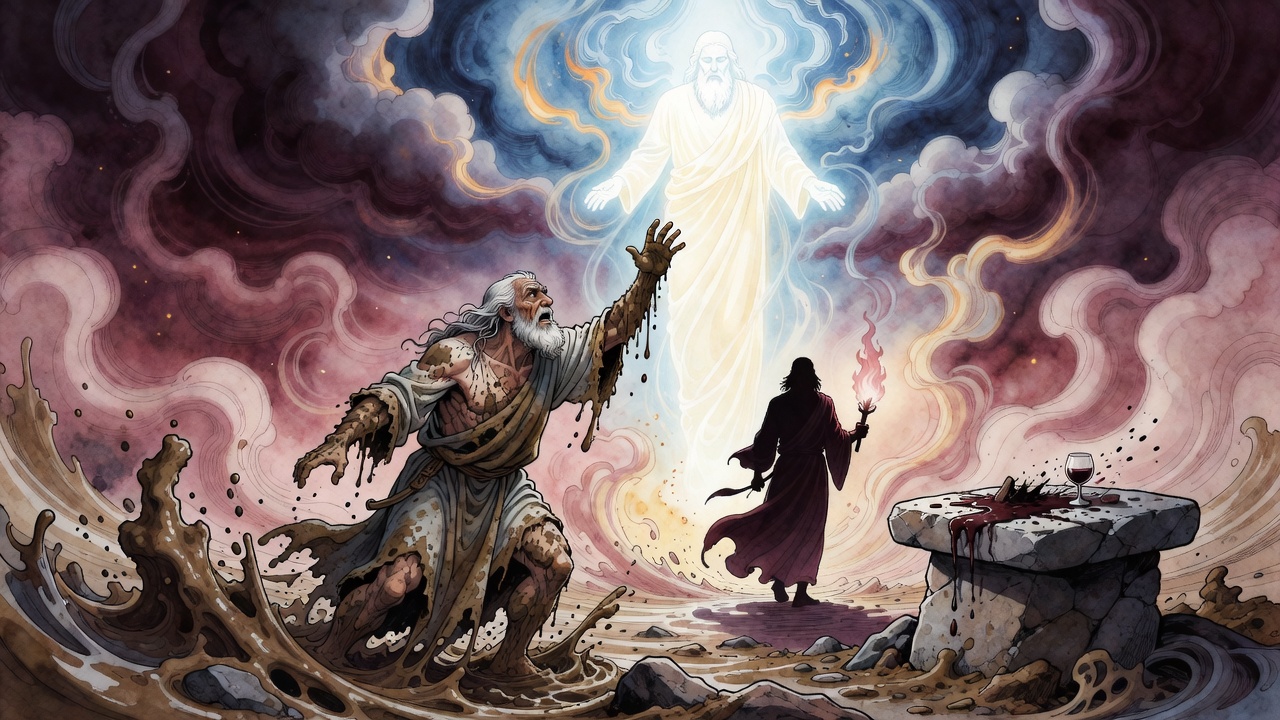
Ha-Satan went and came back with four animals. A lamb. A lion. A pig. A monkey. He slaughtered the lamb at the young roots and poured the blood into the soil. He slaughtered the lion. He slaughtered the pig. He slaughtered the monkey. The dirt went dark around the stems.
Then he named what he had sold. "Of those who drink the juice of these grapes," he said, "some will turn meek and gentle as the lamb. Some will grow bold and fearless as the lion. Some will become foul as the pig. And some will leap and shriek like the monkey, past shame, past sense, past the man who sat down to drink."
Noah kept working the ground. The Accuser did not poison the vine. He only told the truth of it, and he left the blood in the roots as his share.
He Drank and Lay Uncovered
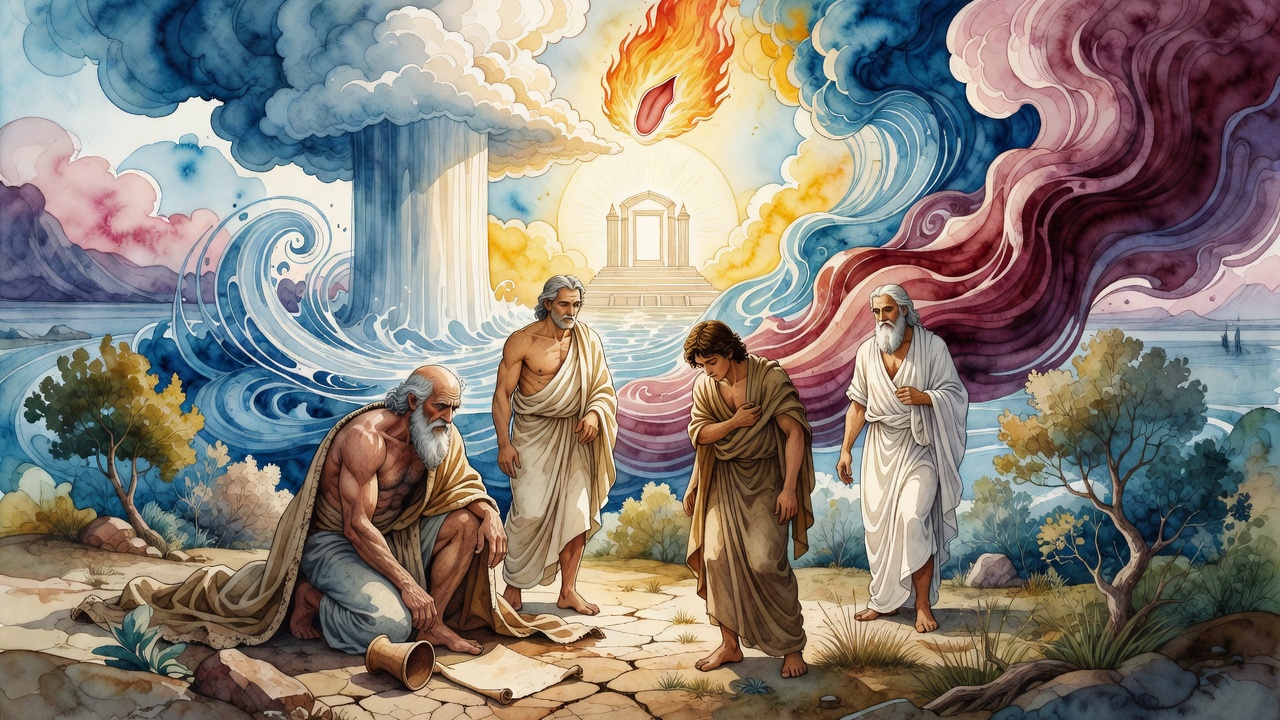
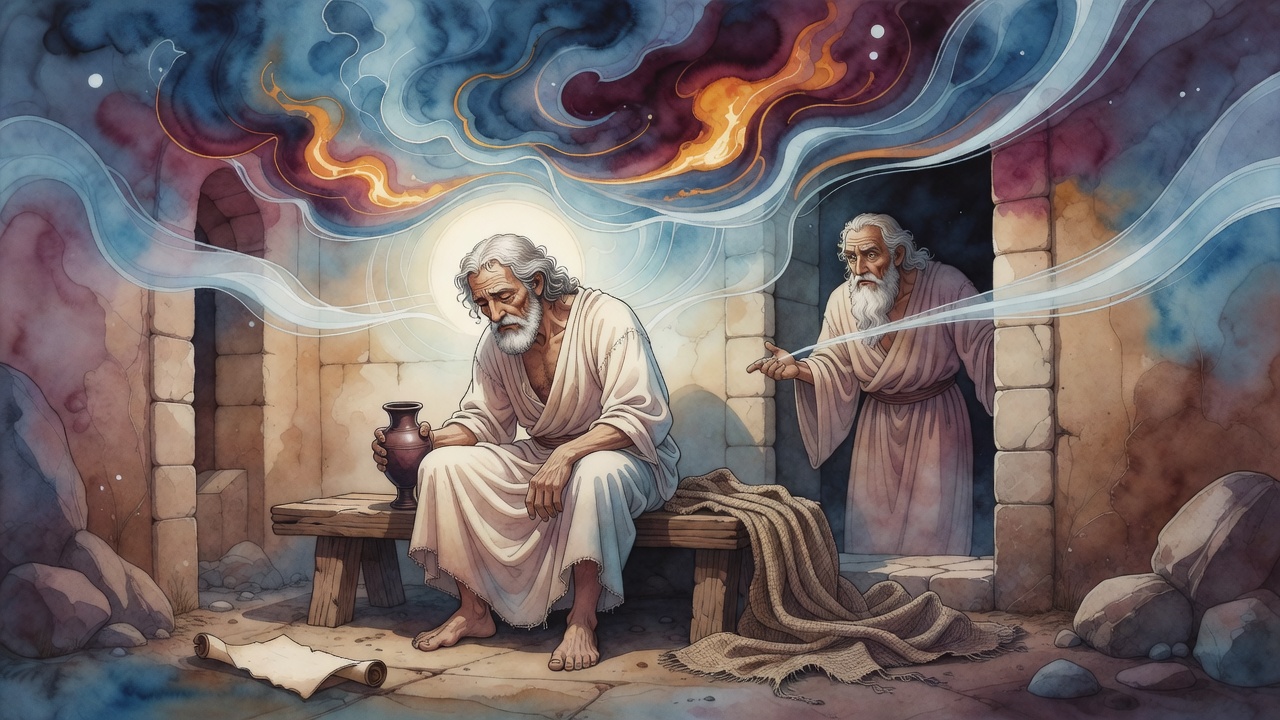
The cutting had a history. After the dove, Noah found a vine that had come out of Eden, ate of its fruit, and rejoiced, as if joy could be planted on purpose. He drank of the wine and was drunken, and he lay uncovered in his tent (Genesis 9:21).
Canaan found him there and bound him. Ham saw and ran to tell. Shem and Japheth took a garment, walked backward, and covered their father's skin without looking at it. Noah woke diminished. The man who had been called righteous in his generation woke as a man of the soil, common, the first planter of a world that would learn wine the hard way.
He had packed the vine before the rain. He had planned the drinking while the ark still pitched. The Accuser had only met him at the work he had already chosen.
The Generation That Had No Labor
The people the water took had not been hungry. A woman of that generation gave birth as easily as a hen lays an egg. Labor without labor. Children in plenty. Fields fat. Bodies strong. Nothing in their lives was hard, and they used the ease to fill the earth with violence (Genesis 6:11).
Noah had watched that world drown. He had heard the fists on the planks and the beasts that kept the door. He stepped off into silence and planted a vineyard anyway. The generation of ease died for contempt born of plenty. The man who survived it struck a bargain for a cup.
The vines took. The world filled again. In every cluster the four stages waited, lamb to lion to pig to monkey, for whoever would sit down and not stand up in time.
← All myths