Rav Huna's Four Hundred Casks All Turned to Vinegar Overnight
Four hundred casks of Rav Huna's wine soured without explanation, and the sages told him to look inside himself before looking inside the cellar.
Table of Contents
 Click for full size
The Discovery in the Cellar
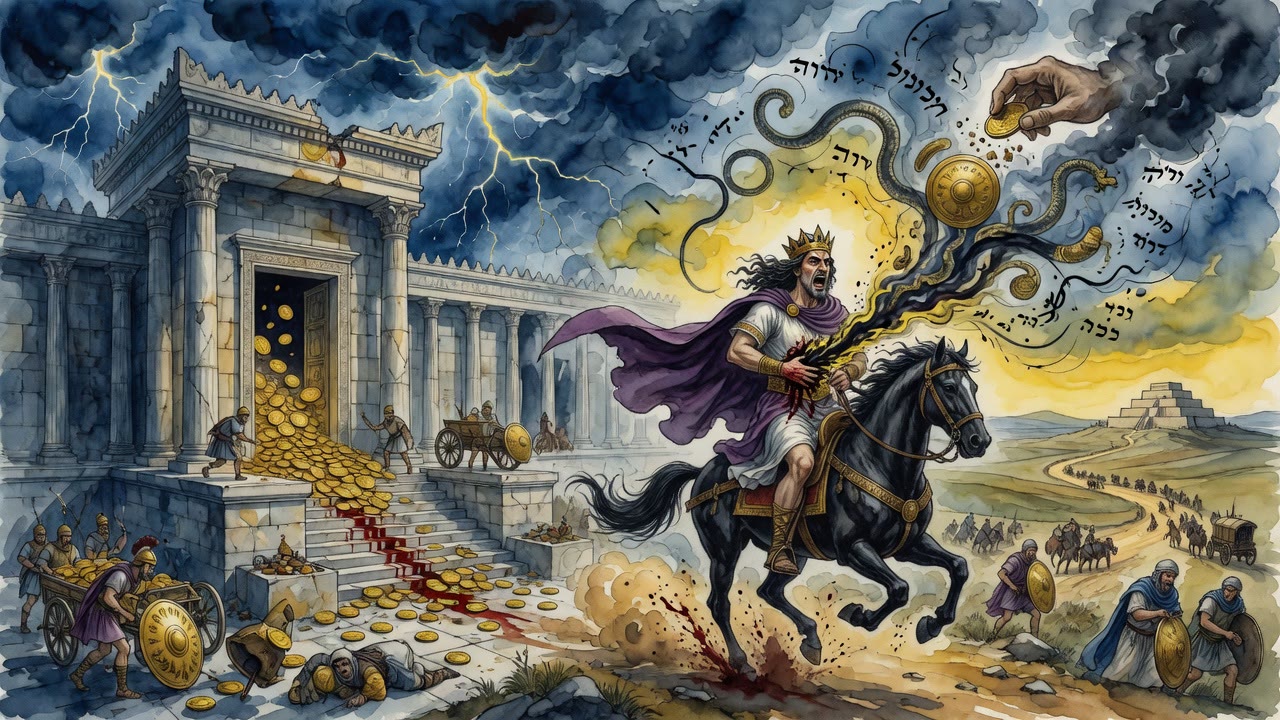
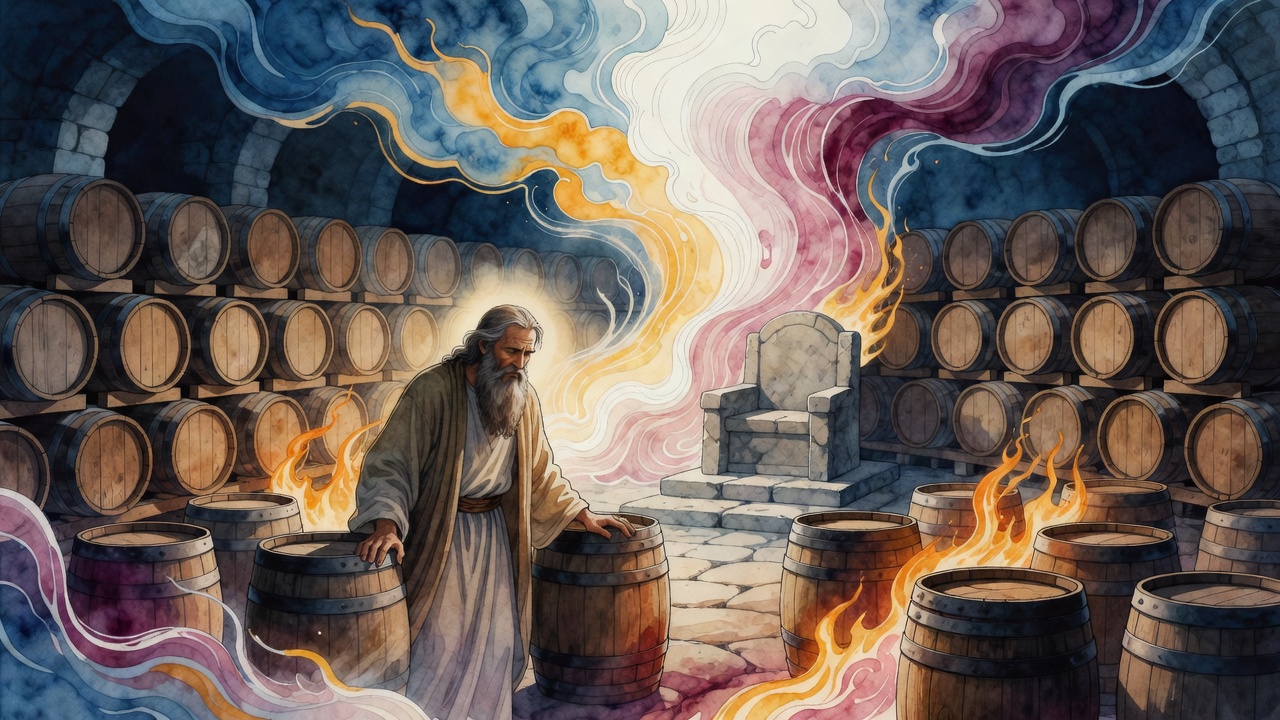
Rav Huna woke one morning and walked down to his cellar and found that four hundred of his casks of wine had turned sour overnight. This was not a setback. This was ruin. His entire stock, his entire year of production, a fortune built on Babylonian vineyards, had become vinegar between sunset and dawn with no explanation that his cellar-master could provide.
Word spread among the sages. Rav Yehudah, the brother of Rav Salla the Holy, arrived with other rabbis to visit. Their opening was direct: "Let the master examine himself carefully." Rav Huna bristled. He asked what they thought he had done. "Shall we instead," they answered, "suspect the Holy One of executing judgment without justice?" The logic was pitiless. The loss was not random and it was not bad luck. When a man of Rav Huna's standing suffers a calamity of this magnitude, the tradition assumes the calamity is a response to something. The question is only what.
The Vineyard and the Workers
Rav Huna knew exactly what. He had owned the vineyard for years and hired laborers to work it. Every harvest, the grapes were pressed and the wine flowed, and Rav Huna refused to give the workers who had made it possible even a single cup. The wages had been agreed in advance; legally, he owed them nothing extra. But a custom had grown up among Jewish vineyard owners to share a cup with the men who worked the harvest. It was not law. It was decency. Rav Huna had withheld it, consistently, every year.
There is a version of the story that adds a different element: Rav Huna had a sharecropper with whom he shared the labor of the vineyard. The agreement was that each would take a portion of the crop. Rav Huna had been deducting the cost of the vine-shoots that the worker used each year, subtracting them from the worker's portion. The worker had no recourse; the vineyard owner controlled the accounting. The worker had been underpaid systematically across multiple harvests.
The Reckoning the Sages Proposed
Rav Huna admitted the withholding. The sages offered him a way forward. If you restore what you owe them, the casks will recover. Rav Huna accepted. He made arrangements to compensate the workers. The tradition records that some versions say the vinegar turned back into wine and some say it was sold as vinegar but at a price high enough to cover the total loss, which amounted to the same recovery in the end. What the story insists on is the precision of the mechanism: the loss was exactly the size of the debt, and the return was triggered by the repayment.
Afflictions of Love and Afflictions of Judgment
The sages who came to Rav Huna's cellar carried a larger argument about suffering with them. Not all suffering is punishment, they held. Some suffering is yissurin shel ahavah, afflictions of love, tests or refinements that God sends to people God loves, not as punishment but as purification. The vinegar was not of that kind. It had a cause and a remedy, and both were accessible to Rav Huna the moment the sages asked him to look inward.
The contrast with other suffering was pointed. A sage who suffers and can identify no specific cause may be undergoing afflictions of love. A sage who suffers and can identify exactly what he failed to do is in a different situation. Rav Huna's vinegar was not mysterious. He knew what it was about before the sages arrived. His hesitation was not ignorance but defensiveness, the natural resistance of a wealthy and respected man to being told by his colleagues that four hundred casks of wine constituted a divine invoice for what he owed the workers who had made them.
← All myths