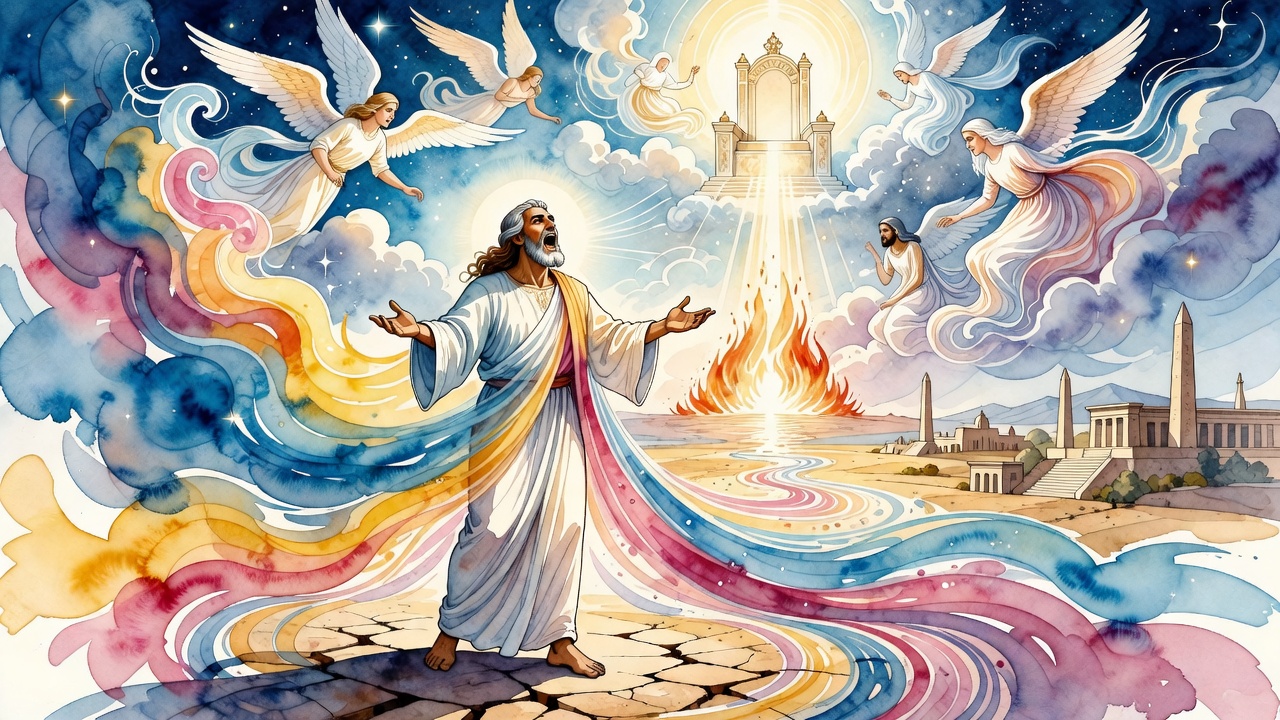
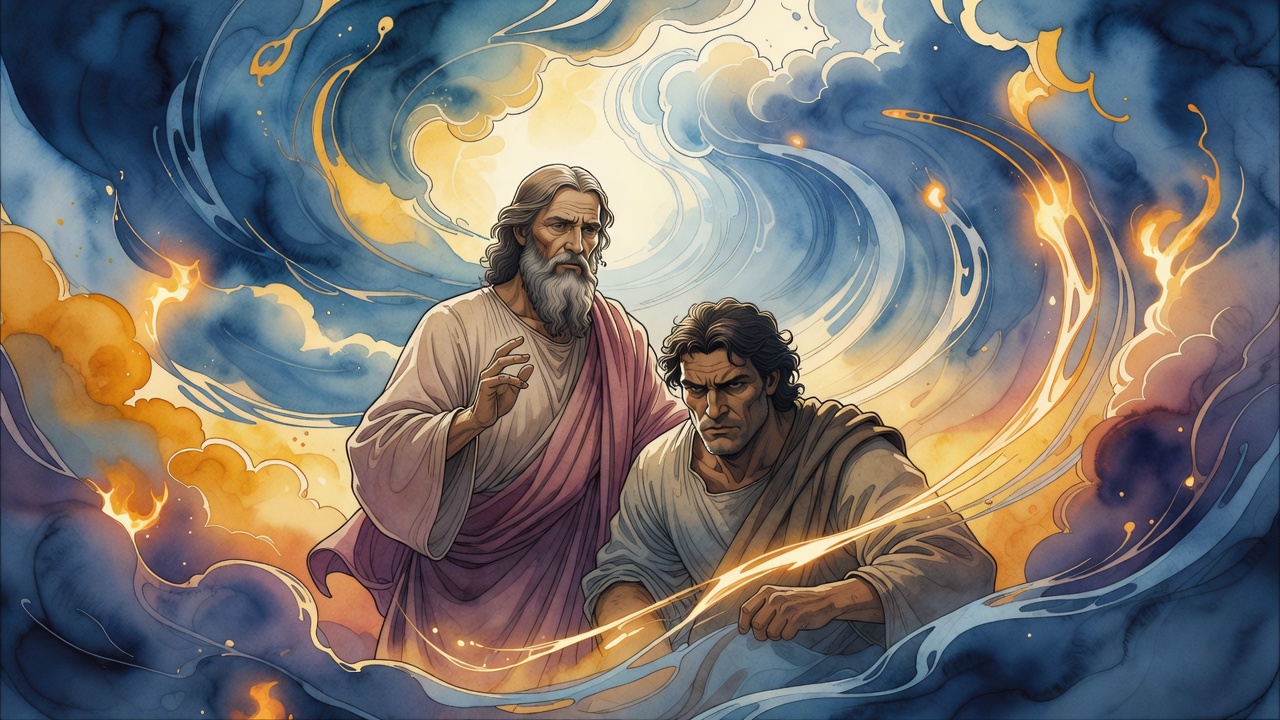
Judah's Warning About the Two Things That Ruined His Life
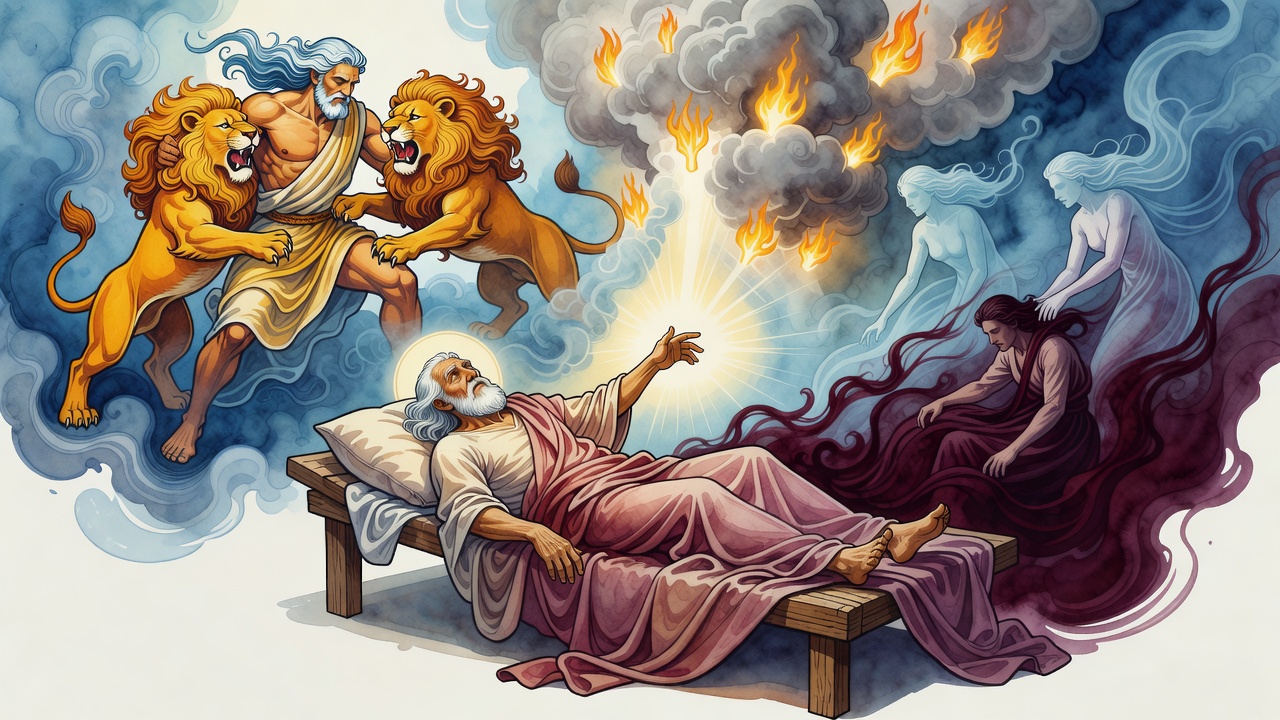
Judah killed lions bare-handed. Wine and beauty brought him low twice. On his deathbed he named both failures so his children could see the terrain.
Table of Contents
 Click for full size
The Catalogue of Strength
Judah gathered his sons and began, not with what he had done wrong, but with what he had been capable of. He had outrun a hind in full flight and caught it. He had seized a deer in sprint. He had killed a lion bare-handed and taken a kid from its grip before the animal could pull away. He had caught a bear by the paw and flung it over a cliff. A leopard that sprang at his dog he held by the tail and swung against rocks. A wild boar he outpaced in an open field. A man who came at him with a sword he knocked dead with his fist.
He listed these things deliberately. They were the measure of what he was about to describe. The losses he had suffered were losses from a man of that capacity, and unless his sons understood the capacity, they would not understand the losses. Strong men are not brought down by weak forces. The things that brought Judah down were strong enough to bring down a man who killed lions without weapons.
Wine, Beauty, and the Surrendered Staff
The first failure was wine. He had been at a banquet in Canaan, a feast in the house of his sheep-shearer, the cups passing in the heat and the smoke and the noise of strangers, and the wine had done what wine does to men who are not watching for it. It had bent his judgment away from truth. It had loosened his tongue past the point where his guard still held. It had removed the shame he should have felt at revealing the mysteries of his father's house to people who had no right to hear them. He had spoken things that should have been kept private. The words had left his mouth before he understood what he was losing, and once they were in the room he could not take them back.
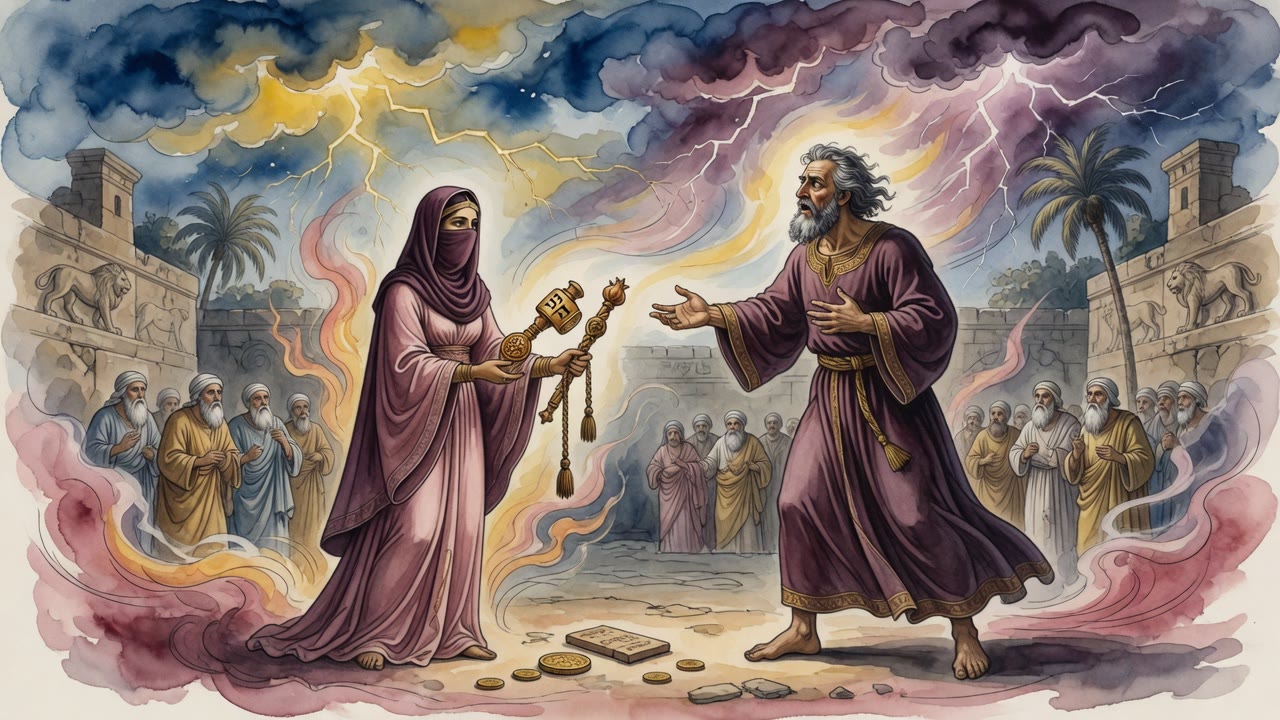
The second failure was beauty. He had been on the road to Timnah, near the gate of Enaim, the dust of the road on him and the wine of the feast still in his blood, when he saw a woman seated by the road with her face covered. He turned aside to her. It was full daylight. The town could see him. He did not care, or the wine had left enough residue in his judgment that the caring did not reach the surface in time. He handed the woman his staff, which was the stay of his tribe. He handed her his girdle-cord, which was his power. He handed her his signet-diadem, which was the sign of his kingship. He gave her everything a man carries as proof of who he is, and he gave it to someone he believed was a roadside harlot in return for an hour's pleasure.
The Tokens Came Back
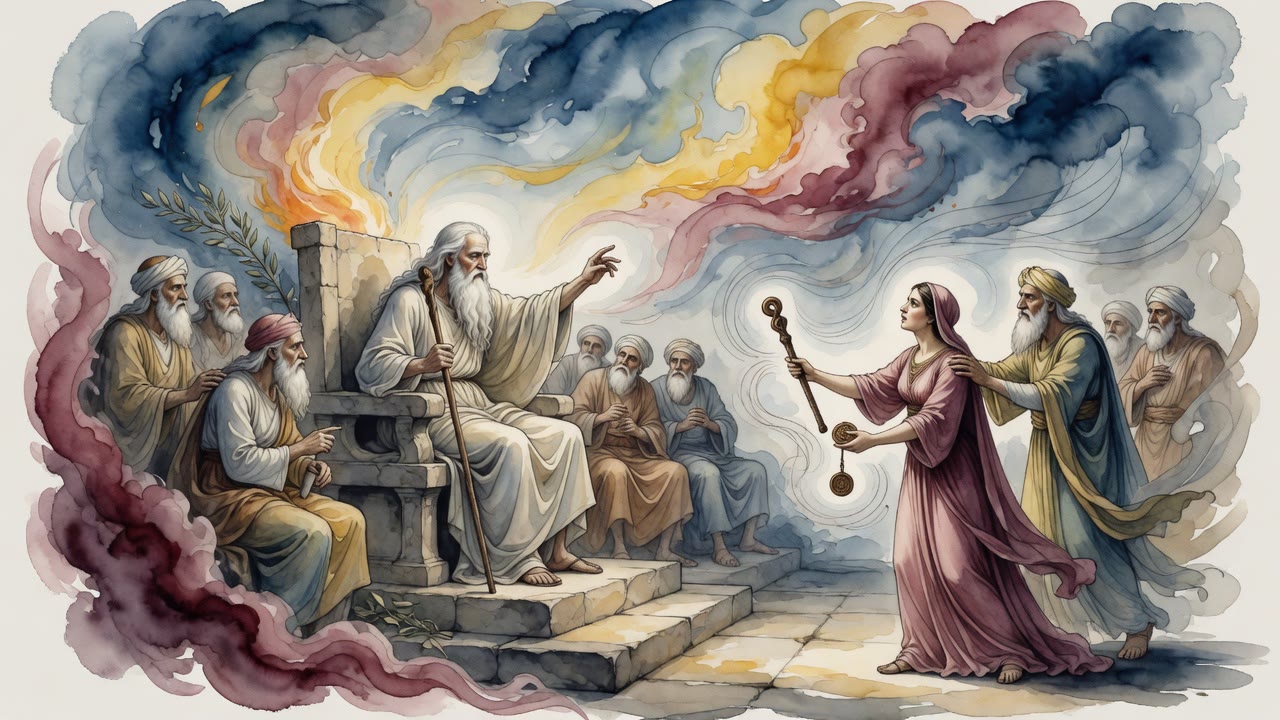
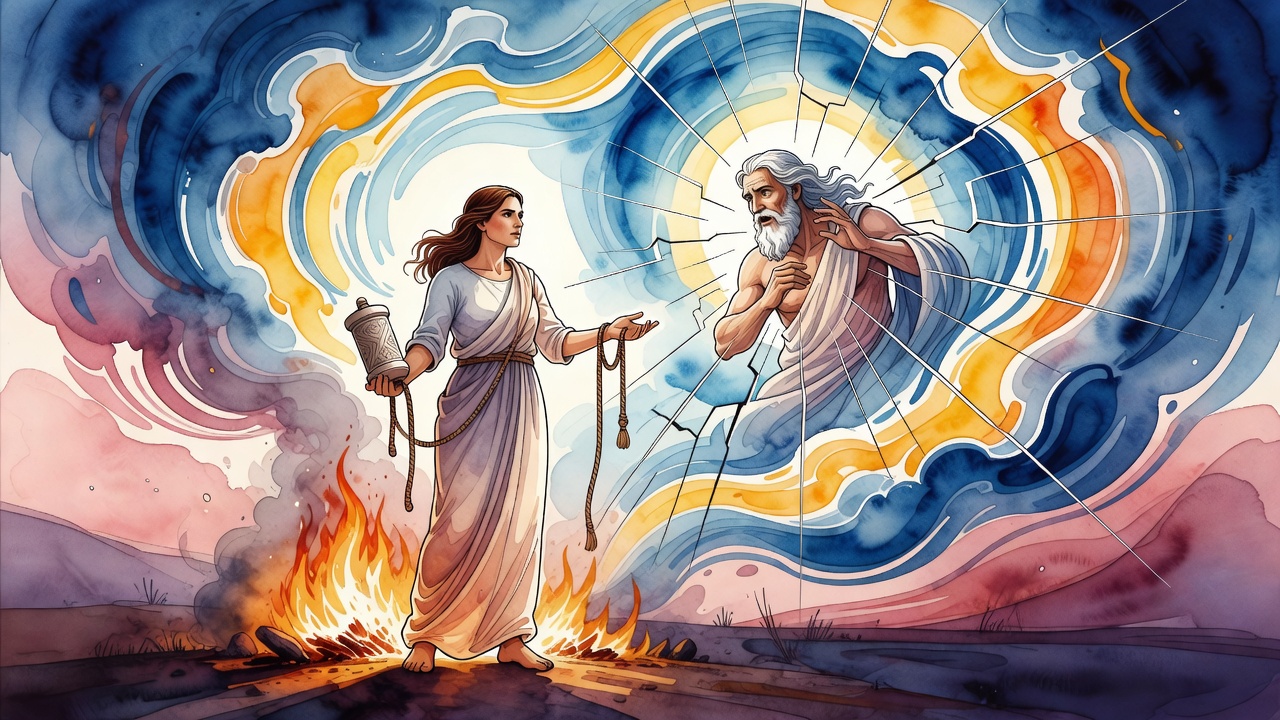
The woman was Tamar, his widowed daughter-in-law, who had waited in legal limbo at his house for years while Judah kept her from his third son out of fear. She had devised the encounter at the crossroads because the ordinary channels of justice had closed to her, and she was right in her assessment of where she stood. When the pregnancy showed and Judah ordered her burned, she sent back his three tokens. He held the staff and the cord and the seal in his own hands and recognized them as his own, and the daylight he had ignored at the gate now fell on everything he had handed away. He did the thing the tradition has never stopped talking about: he said that she was more righteous than he was.
The Scepter That Could Not Be Taken
What Judah wanted his sons to understand was that wine and beauty operated as a pair. Wine bent the judgment far enough that beauty could reach the deeper places where the will lived. A sober man might have recognized Tamar at the gate of Enaim. A sober man would certainly not have handed over the instruments of his own authority to a stranger at a crossroads. The two failures were not separate incidents that happened to share a timeline. They were the same vulnerability operating in different settings.
His power had not been permanently destroyed. The royal blessing still belonged to his line. The scepter would not depart from Judah, and the ruler's staff from between his feet, until the one to whom it belongs comes. He knew this. He was not confessing from a place of total ruin. He was confessing from a place of survival, which is a different kind of position. He had done these things. He had been these things. His line would still carry the kingship. And therefore his children needed to know exactly what the kingship's ancestor had been capable of, in both directions.
← All myths