The Cellar That Broke What He Refused to Tithe
A harvest lord smashed his own casks rather than give the tithe, while another man buried gold in clay and returned to empty jars.
Table of Contents
 Click for full size
Oil on the Floor
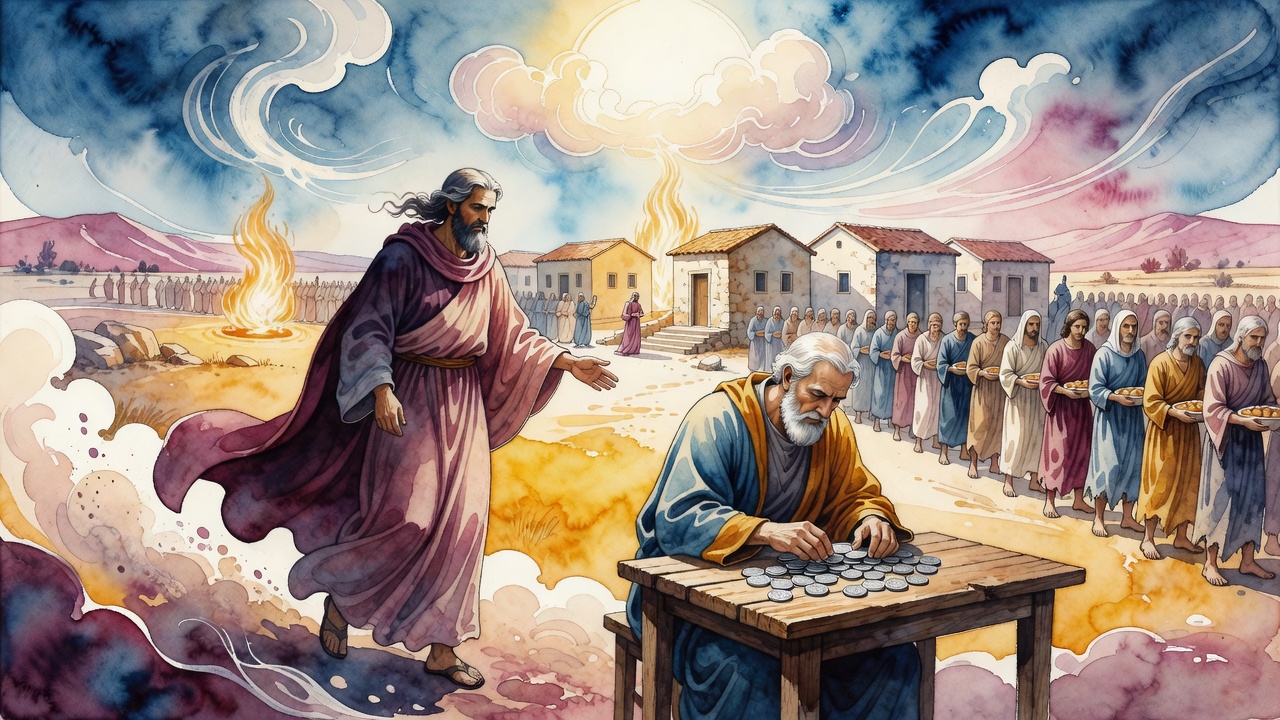
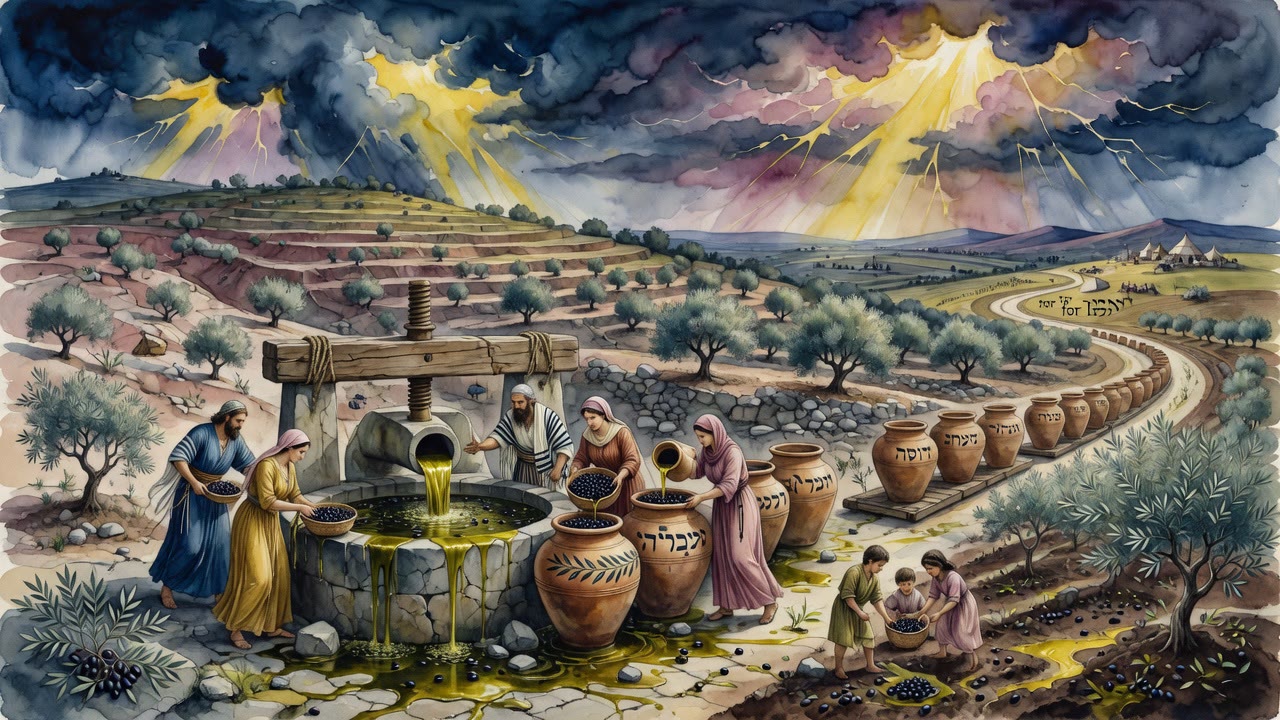
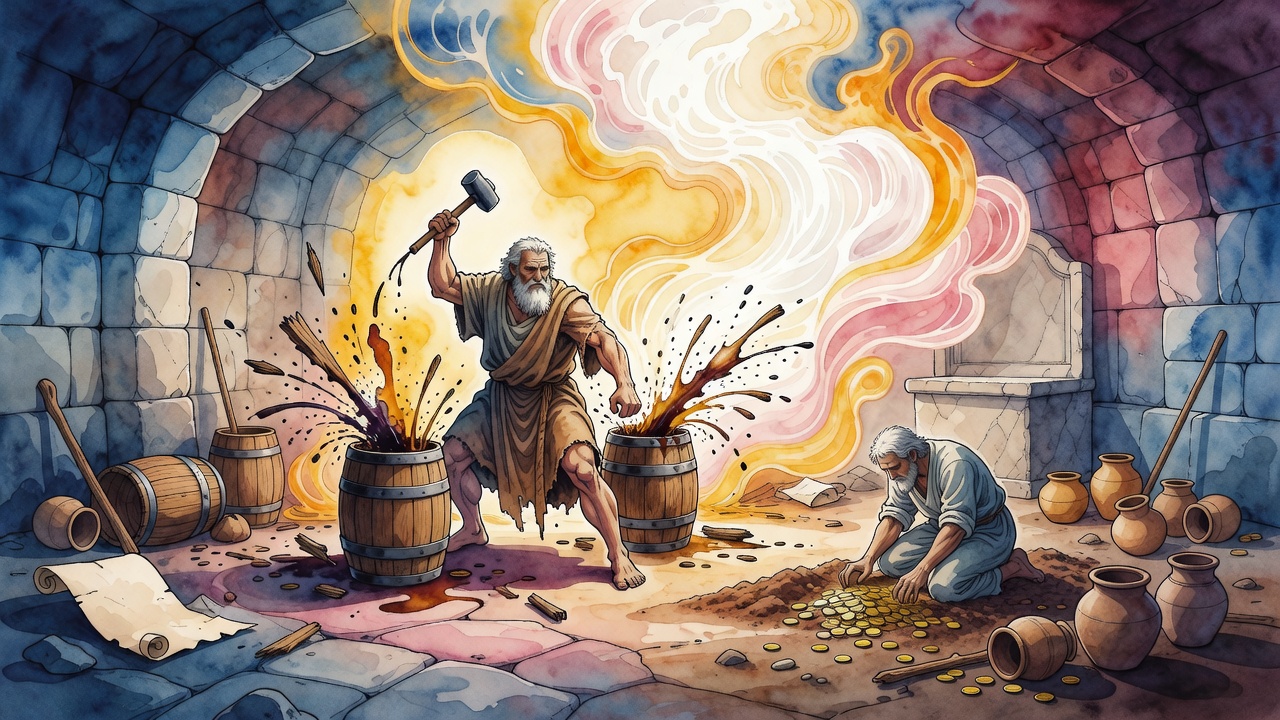
The harvest had been good. In the cellar, casks of oil and wine stood like a private army of plenty. The maaser owed on that produce was not private. As soon as the olives were pressed and the grapes had become wine, a portion already belonged to priest, Levite, and poor. The man delayed. He did not shout a refusal. He simply did not give.
One day a frenzy took him in the cellar. Whether illness, madness, or a blow from Heaven, the story does not pause to diagnose. He began to break his own vessels. Oil ran. Wine ran. The good liquid of a year poured into packed earth. When the fit left him, the tithe he would not hand over was already wasted at his feet. Nothing was saved. Everyone lost.
Gold in Clay
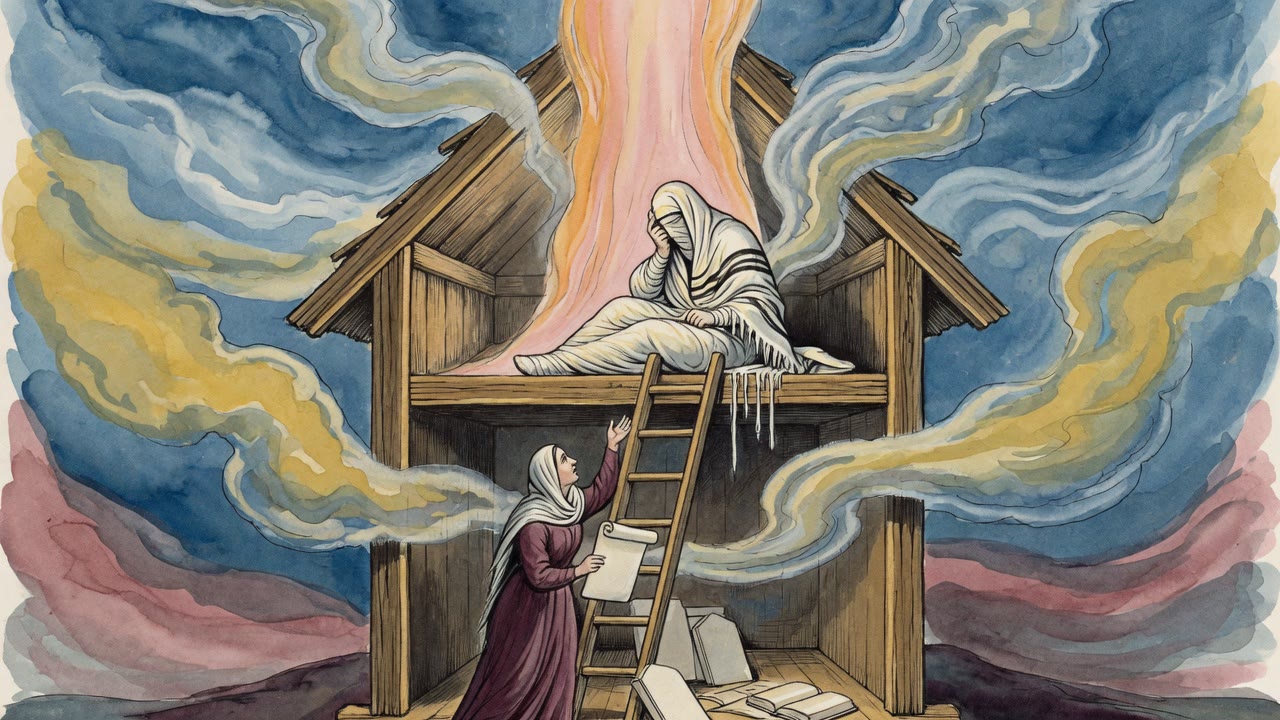
Another man trusted clay jars the way some men trust walls. He sealed gold inside them, buried the jars, and told no one. Safe, he thought. Then circumstances drove him from home. In his absence the jars were found. When he returned, the gold was gone. A lifetime of savings had trusted an earthly container with what only Heaven can truly keep.
The sages drew the blunt lesson first: gold in jars is gold that can be stolen. Then the sharper lesson: Torah and charity cannot be lifted by a thief's hand. Study stored in the mind does not empty when a door is forced. Coin given to the poor is deposited where no robber breaks in. The man who lost his jars learned late what the open-handed already know.
The Thief Heaven Does Not Despise
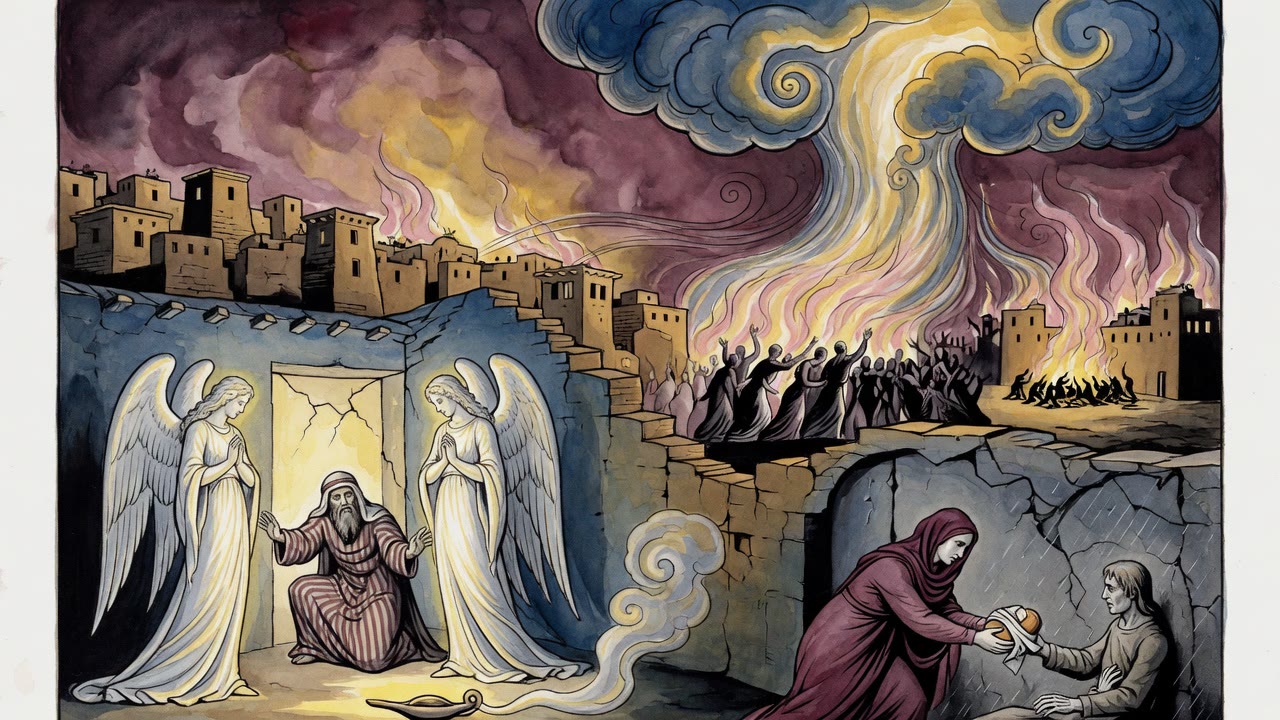
Men do not despise a thief if he steals to fill his soul when he is hungry, says Proverbs, and the midrash hears a tender case. Imagine an unlearned person driving himself toward exhaustion to seize words of Torah. Do not sneer, yesterday you knew nothing and today you speak. There is a hunger here that is not for bread, as Amos said, but to hear the words of the LORD. A person starving for learning who reaches for it should be honored.
The same mercy covers the actual thief who has turned from his wickedness. Do not despise the one climbing back. But the next verse turns hard. If he is found he shall repay sevenfold: the one who learned and then slid back into corruption, or the judge who will not rule truthfully, meets a ruin that spreads through household and wealth. The door back is open. Throwing away what was regained is its own collapse.
Two Ways Wealth Leaves
The cellar and the buried jars tell the same physics with different costumes. What a man withholds does not remain. What he hides does not stay hidden. The only question is whether wealth leaves as a blessing he chose or as a breakage he watches. Tithe given with a full heart becomes someone else's life. Tithe refused becomes a dark stain on your own floorboards.
There is a holy theft and a cursed thrift. The hunger for Torah steals time from sleep and is praised. The clutch that starves the Levite steals from Heaven and is answered in the cellar. Between them stands a simple ledger the exempla never tire of posting: spend into study, spend into the portion owed, and stop calling fear wisdom.
The Harvest That Could Have Been Shared
Picture the unbroken casks. Picture the unopened jars left in the ground while their owner fed scholars and paid the poor their due. The stories refuse that gentler ending because they are warnings, not lullabies. Still the alternative hangs in the air. A man can walk out of his cellar lighter and freer. A man can return from a journey with less gold and more Torah. A late learner can seize learning without shame.
The frenzy in the dark storage room is only one possible weather. The other weather is ordinary and harder: open the spigot on purpose. Measure the portion. Hand it over before the floor takes it. The sages keep telling the short tale because the long life still needs it.
The exempla are short because their audience already knew the longer law. Maaser is not a tip for excellent service from Heaven. It is a scheduled release of ownership. The cellar frenzy is only the grotesque form of a quieter truth: refuse the schedule and the schedule will still collect, sometimes as breakage, sometimes as empty jars, sometimes as a reputation that sourly outlives the wine. Better to measure the portion while the hands are steady.
Do not despise the hungry learner, and do not romanticize the hoarder. Those two sentences keep the moral field from collapsing into either cheap mercy or cheap scorn. One man breaks casks. One man loses jars. One man steals hours for Torah and is honored. The map is simple enough to hang in a doorway.
← All myths