The Year Asher's Oil Fed All Israel Through the Fallow Land
The fields lay fallow and the storehouses thinned, but in Asher's hills the oil still ran in streams, and a nation came to eat.
Table of Contents
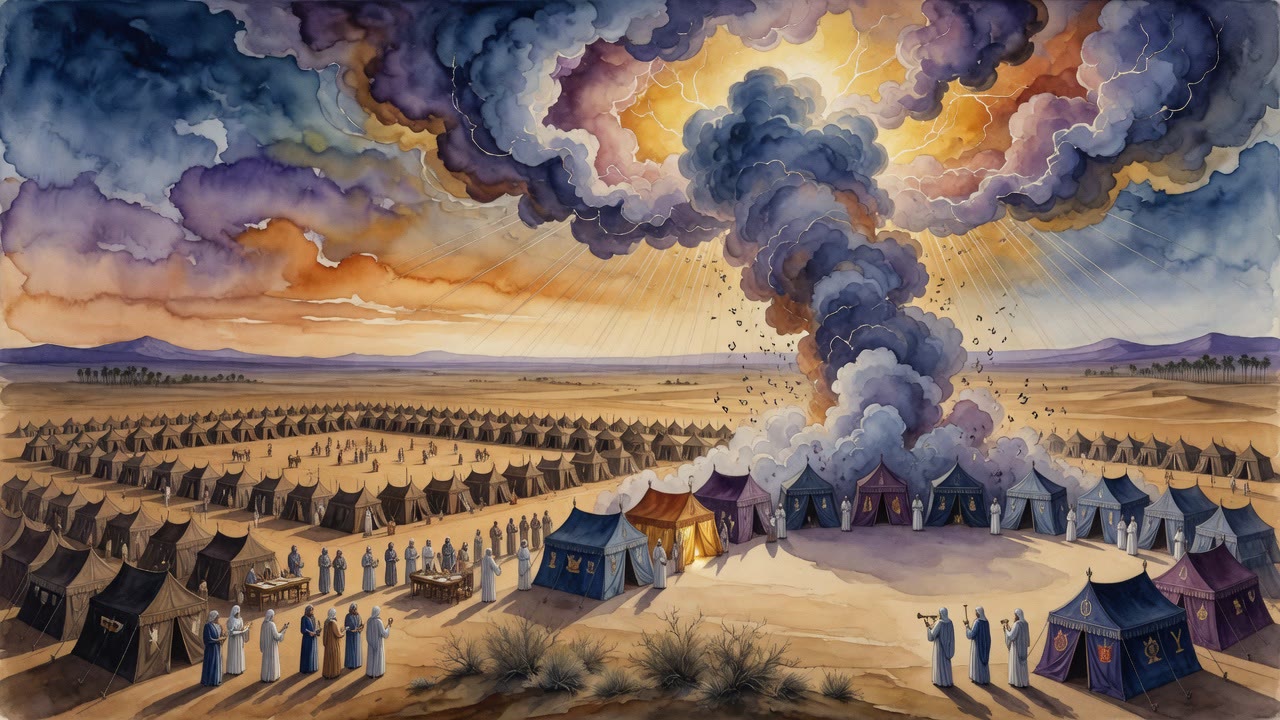
The plow stood in the shed with the dirt dried hard on its blade, and no one touched it. All across the hill country the fields lay open and untended, the soil cracking under a sun that no farmer was permitted to coax. A man could walk the length of his own land and lay not one finger to it. The seventh year had come, the year the ground itself was commanded to rest, and the grain bins that had carried the people through six harvests were beginning to show their wooden bottoms.
 Click for full size
The Seventh Year Empties the Bins
It was the law older than any of them, given when the people still smelled of the desert. Six years you sow your field and gather in its yield, and in the seventh the land keeps a sabbath, a shemitah (a release, a letting-go). No sowing, no pruning, no reaping of what you planted. Whatever the ground threw up on its own belonged to everyone and to no one, to the household and the stranger and the beast in the field alike (Leviticus 25:1-7).
A child could understand the trouble in it. A year without sowing is a year without a harvest you can count on, and a year without harvest is a year a nation can starve. The mothers measured the flour with their eyes now, not their hands. The old men remembered other seventh years and said little. Everyone asked the same question under their breath, the question any hungry person asks: where will the bread come from when the bins are empty and the law forbids the plow?
The Hills Where the Oil Ran
The answer lay to the north and west, in a stretch of high country where the olive trees stood in rows older than memory. This was the portion of Asher, eighth of the sons born to Jacob, and the land there did not behave like other land. Where a man elsewhere had to break his back to wring a living from the soil, here the ground seemed to give without being asked. The trees that no one had pruned still hung heavy. The slopes that no one had worked still poured out their fruit.
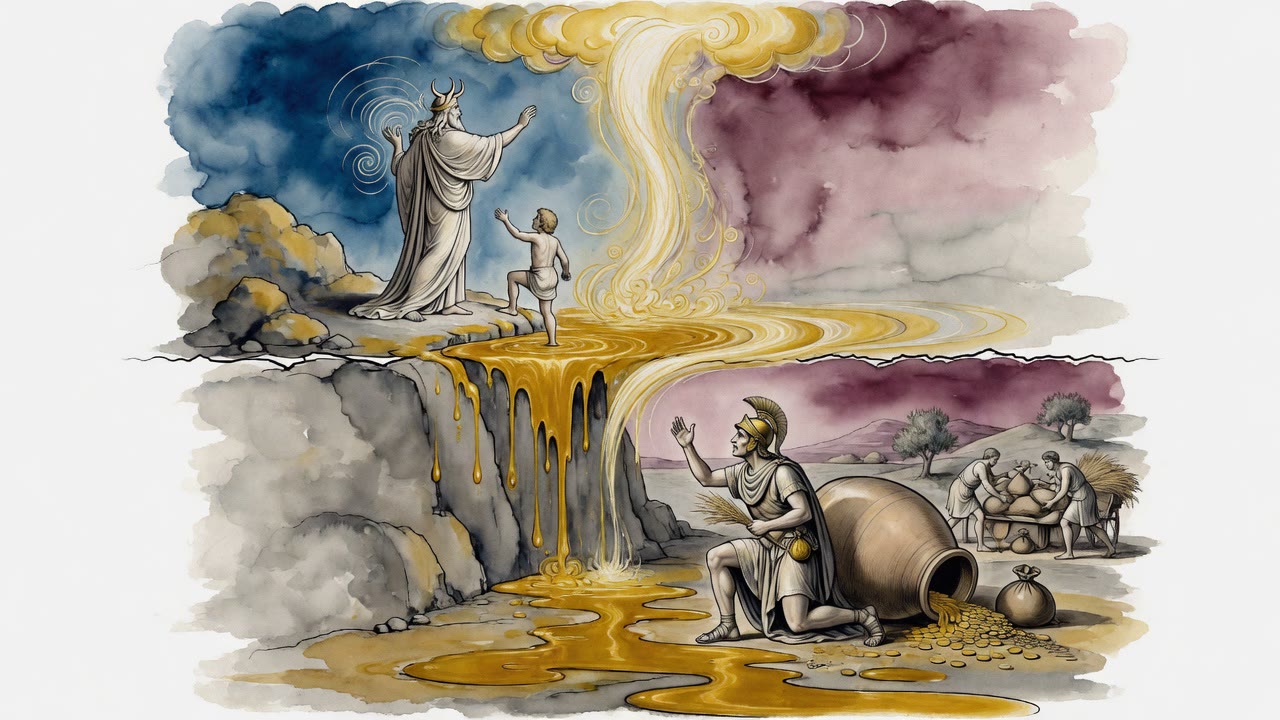
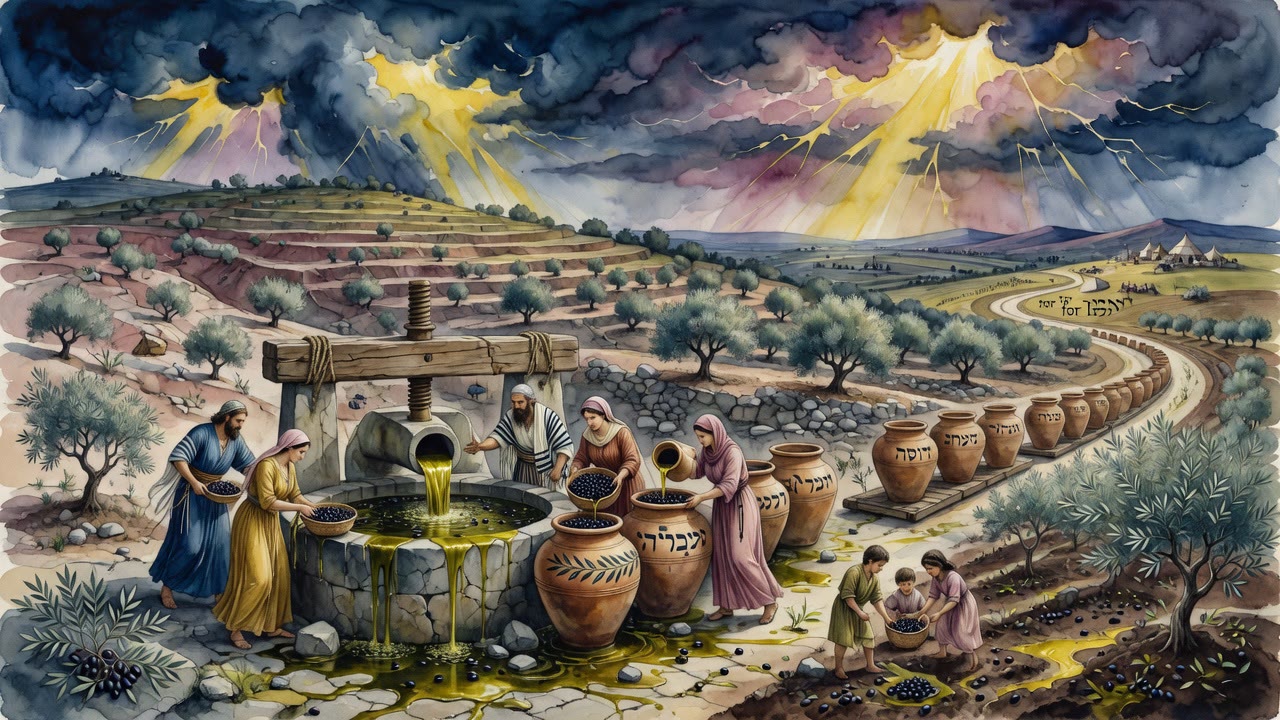
And the oil. The oil was the thing the travelers spoke of when they came down from those hills. The olives grew so thick and pressed so rich that the oil ran off the slopes the way water runs after rain, in bright streams a foot could dip into. A man could stand among the trees of Asher and watch it pool gold in the hollows of the stone. The land was, by every account, dripping with it.
A Nation Comes North to Eat
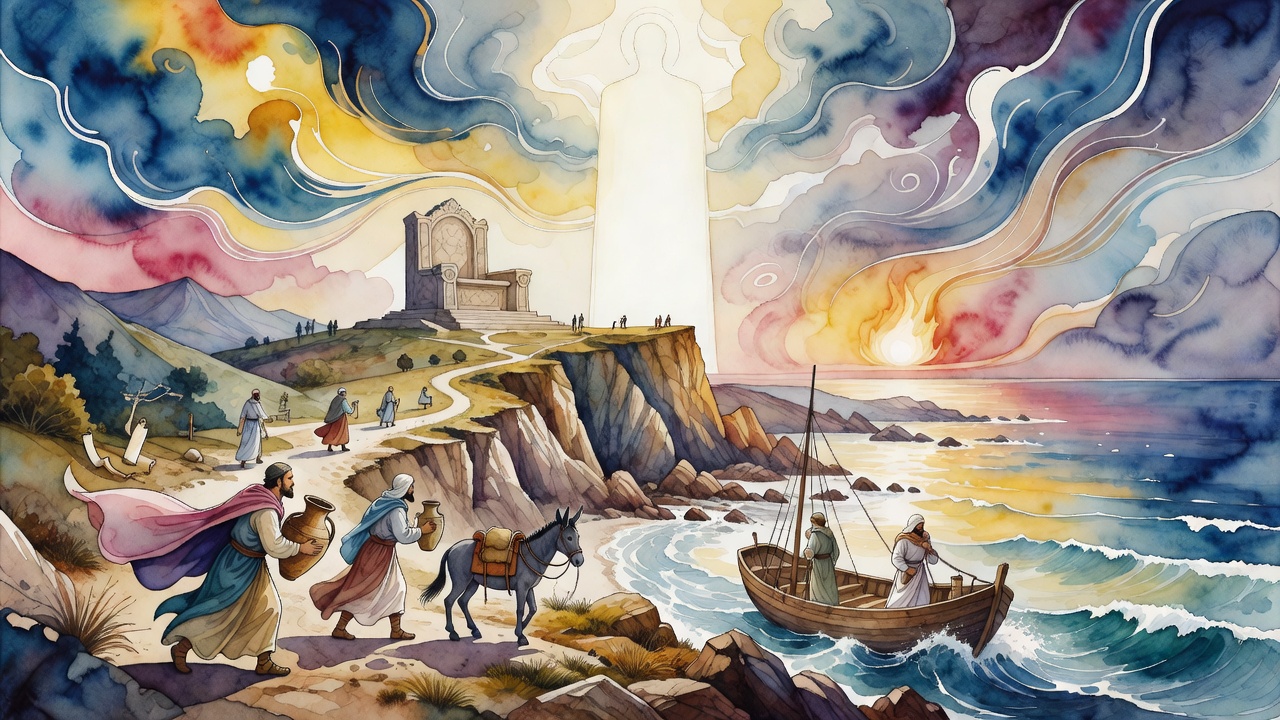
So in the seventh year, when the rest of the country went quiet and the fields lay fallow, the roads filled. They came north from the bare hills of the south and east, from tribes whose own ground was resting and giving nothing a man could be sure of. They came to Asher because Asher's ground had not stopped. What sprang up there of its own accord, untouched by any plow, was enough to carry not one household but a whole people across the year of the empty bins.
The olives fed them, and the oil fed more than them. It went out in jars on the backs of donkeys, down to the coast and to the foreigners who had no such trees. And the foreigners did not give it away for nothing. They paid, and they paid in metal. Silver came back up the roads into Asher, and gold with it, traded against the oil that the foreign cooking-pots and foreign lamps could not do without. The treasures of the surrounding lands turned and flowed toward this one stretch of hill country, drawn by what its soil could not stop making.
The Blessing Moses Spoke Over Asher
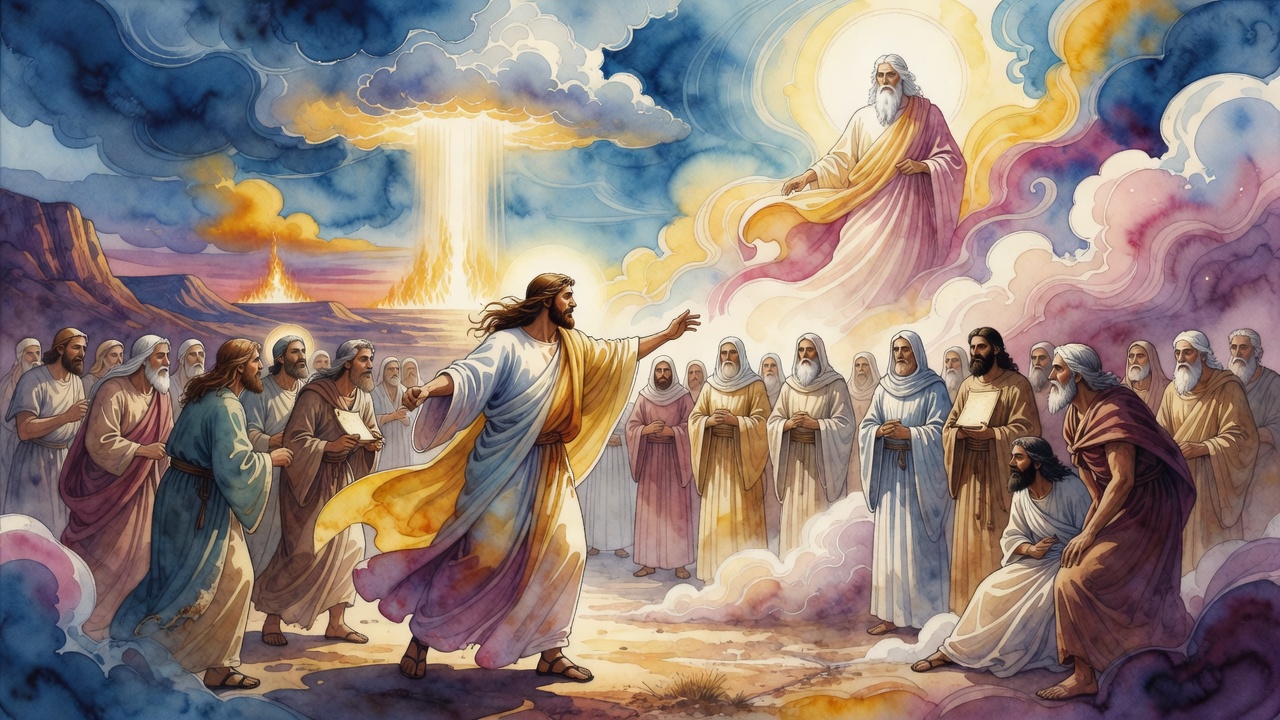
None of this was an accident of weather, the people said, and it was not because the men of Asher were cleverer farmers than their brothers. It was older than their farming. Before they ever crossed into the land, before a single olive tree had been theirs, Moses had stood before the assembled tribes to bless them one by one, and when he came to Asher he set the future of those hills into words.
He called Asher the favorite of his brethren, the one who would dip his foot in oil (Deuteronomy 33:24). He spoke of treasures flowing in from every side, of the nations laying down their gold and their silver in exchange for the oil that this tribe alone could pour out. The blessing was never meant for one tribe's full belly only. It was aimed wider than that. The richness packed into Asher's soil was a richness the whole people would lean on, the storehouse that did not close in the year when every other storehouse did.
What the Fallow Year Revealed
That was the shape of it, repeated every seventh year for as long as the tribes held the land. The plows rested in the sheds. The fields went still and the bins ran low. And up in the high northern country the trees that no hand had pruned went on bearing, and the oil went on running in its streams down the stone, and the people who would otherwise have gone hungry walked the roads north and ate. One portion of the land had been made to overflow so that the rest could afford to rest, and the favorite of his brethren spent his blessing feeding all of them.
← All myths