Rabbi Pinchas Ben Yair's Donkey Refused to Eat Untithed Grain
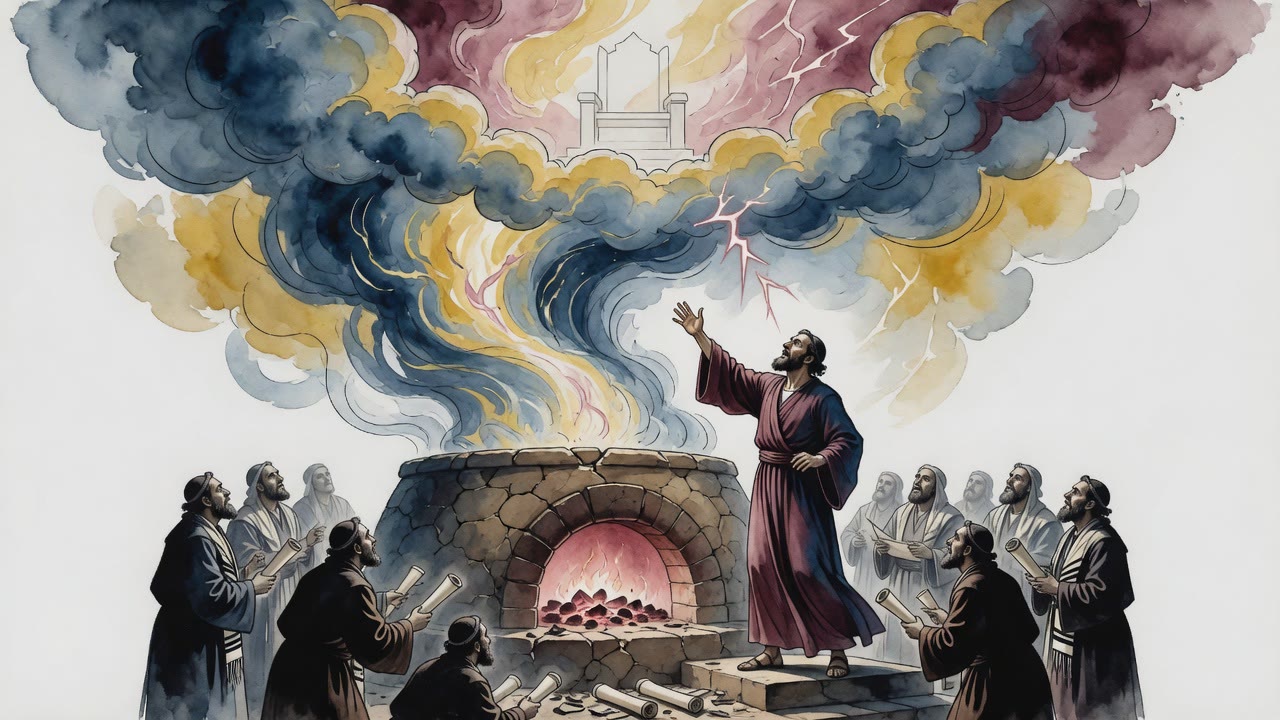
When thieves stole Rabbi Pinchas ben Yair's donkey, it refused to eat for three days rather than touch untithed grain.
Table of Contents
 Click for full size
Three Days Without Food
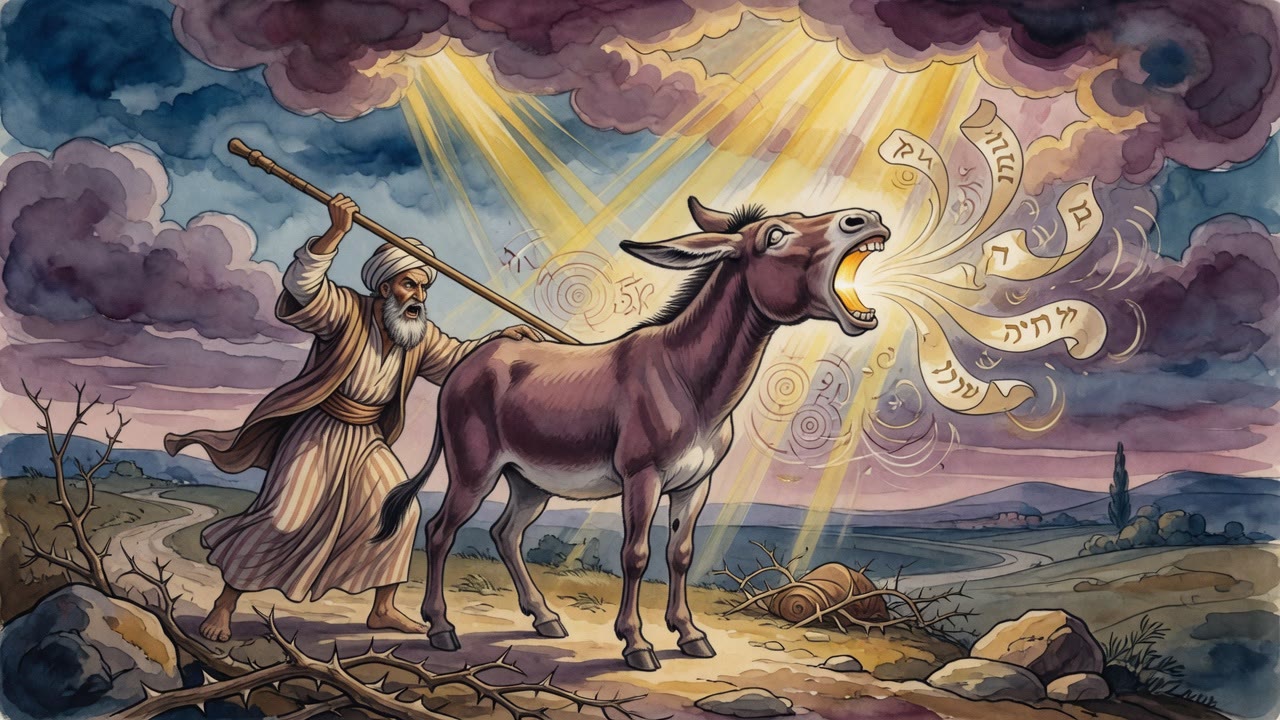
The thieves thought they had taken an ordinary donkey. They brought it to their cave, set barley before it, and waited. The animal looked at the grain, turned its head, and walked away from the trough. They tried again the next morning. The donkey refused. A third day passed without the animal touching a kernel. The thieves began to worry. A donkey that starves itself in front of full provender is either sick or knows something the thieves do not. If it died in their cave, the smell would expose them. They released it before dawn.
The donkey walked straight back to the gate of Rabbi Pinchas ben Yair and brayed. Rabbi Pinchas heard it and told the household: "Open the gate for this creature. It has not eaten in three days." They brought feed. The donkey still would not eat. Rabbi Pinchas understood. He asked whether the grain had been properly tithed. It had not. He took out the tithe, set the remainder before the donkey, and the animal ate immediately.
A River That Parted for a Mitzvah
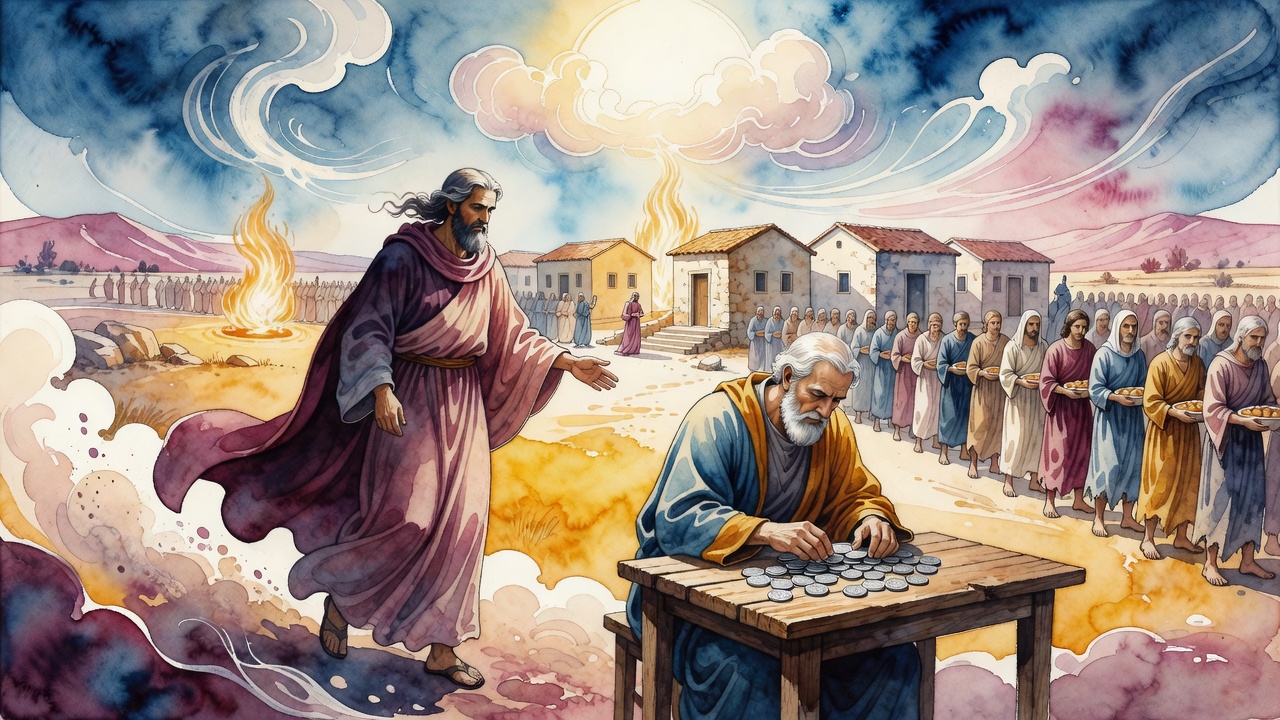
This was not the only time Rabbi Pinchas ben Yair's path bent the world around his purpose. He was traveling once to ransom Jewish captives, a mission about which the law permitted almost nothing to be delayed. He came to the river Ginai, and the current was running high. He addressed the water directly. "Divide for me, so that I may cross and redeem these prisoners. Otherwise I will pray that you are never filled again."
The river divided. He crossed on dry ground. Others in his company crossed with him. On the return trip, the river divided again without being asked.
The pattern in these stories is consistent. Rabbi Pinchas ben Yair was known in the Talmud as one of the strictest ascetics among all the sages. He would not eat another man's bread. He would not allow even his own animal to consume grain that had not been properly prepared. His piety was not private; it extended to everything in his household, everything under his care. When the world around him needed to accommodate that piety, according to these traditions, the world moved.
The Four Miracles in One Life
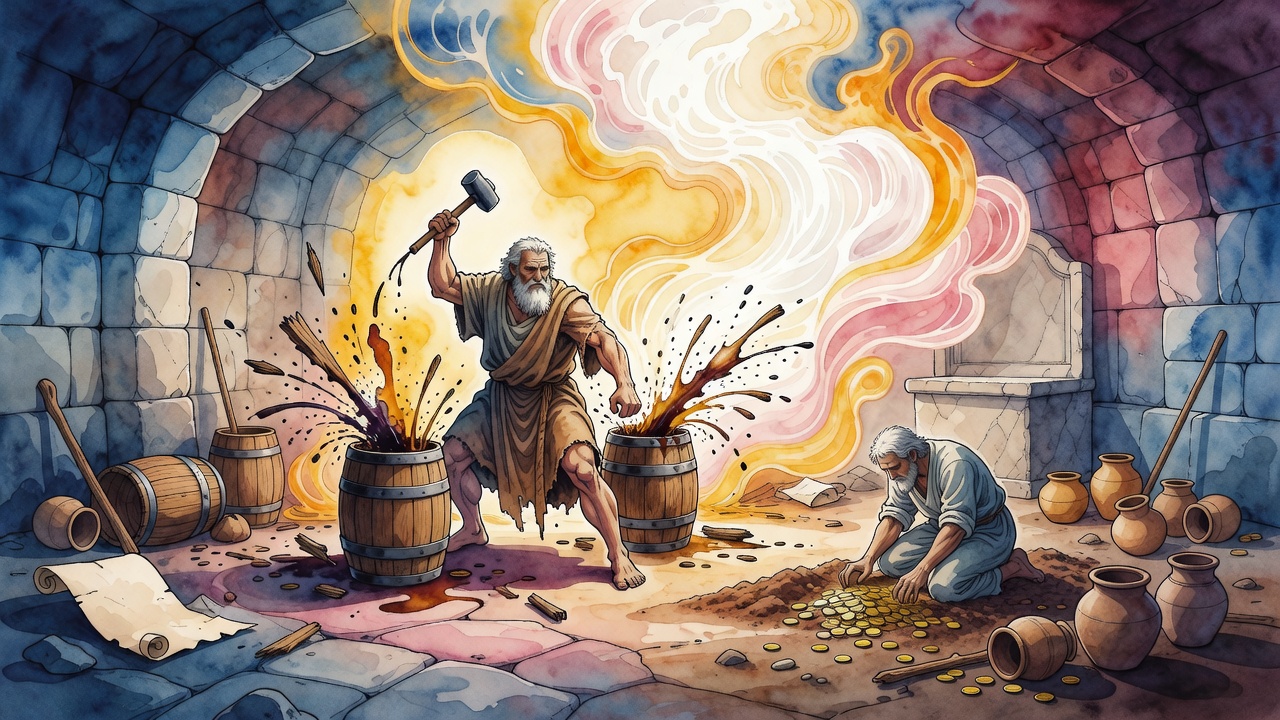
A cluster of four stories about Pinchas ben Yair was preserved together in later collections. In the first, a traveler's measure of grain was accidentally left behind in his territory. No one came back for it. Year after year, Pinchas planted the grain and harvested it, never using a kernel, until after seven years the original traveler appeared and Pinchas returned the full accumulated yield. He had managed another man's property across seven harvests with perfect fidelity and no advantage to himself.
In another story, two men deposited a sum of money with him for safekeeping and then died before they could reclaim it. Their orphaned children knew nothing about the deposit. Pinchas ben Yair held the money across years until the children were old enough to be told about it, then returned every coin. He had held the trust of dead men for their children's sake, refusing to treat the unclaimed deposit as his own.
The Sage Whose Son-in-Law Was Rabbi Shimon Bar Yohai
Rabbi Pinchas ben Yair was the son-in-law of Rabbi Shimon bar Yohai, whose years hidden in a cave from Roman persecution are among the most famous stories in the Talmud. The family connection is worth noting because the traditions about both men share a quality: an intensity of religious practice so complete that ordinary reality seems to reorganize itself around it. Rabbi Shimon's cave produced a spring and a carob tree by miracle. Rabbi Pinchas's donkey observed the laws of tithing without being taught them. The stories belong to the same imagination of what perfect piety looks like when it has run all the way through a person and out into the world around them.
The Talmud itself, in tractate Sotah 49a, preserves a famous passage listing Rabbi Pinchas ben Yair at the summit of a hierarchy of spiritual achievement, the man who, in his own generation, had come closest to the resurrection of the dead. His asceticism was not a performance. According to the tradition, it was a fact of his existence, and the animals and rivers he encountered simply acknowledged that fact.
← All myths