5 min read

David Forgot the Law and Uzzah Fell Beside the Ark

David said Torah was as easy as song. Then he set the Ark on a wagon. When the oxen stumbled, Uzzah reached out, and the law David forgot struck home.

Curated by Arthur · Told by Maggid ·
Table of Contents
  1. The Wagon That Should Not Have Been
  2. A Hand That Knew Too Little
  3. A House That Never Broke a Command
  4. The Ark Waiting Off the Road

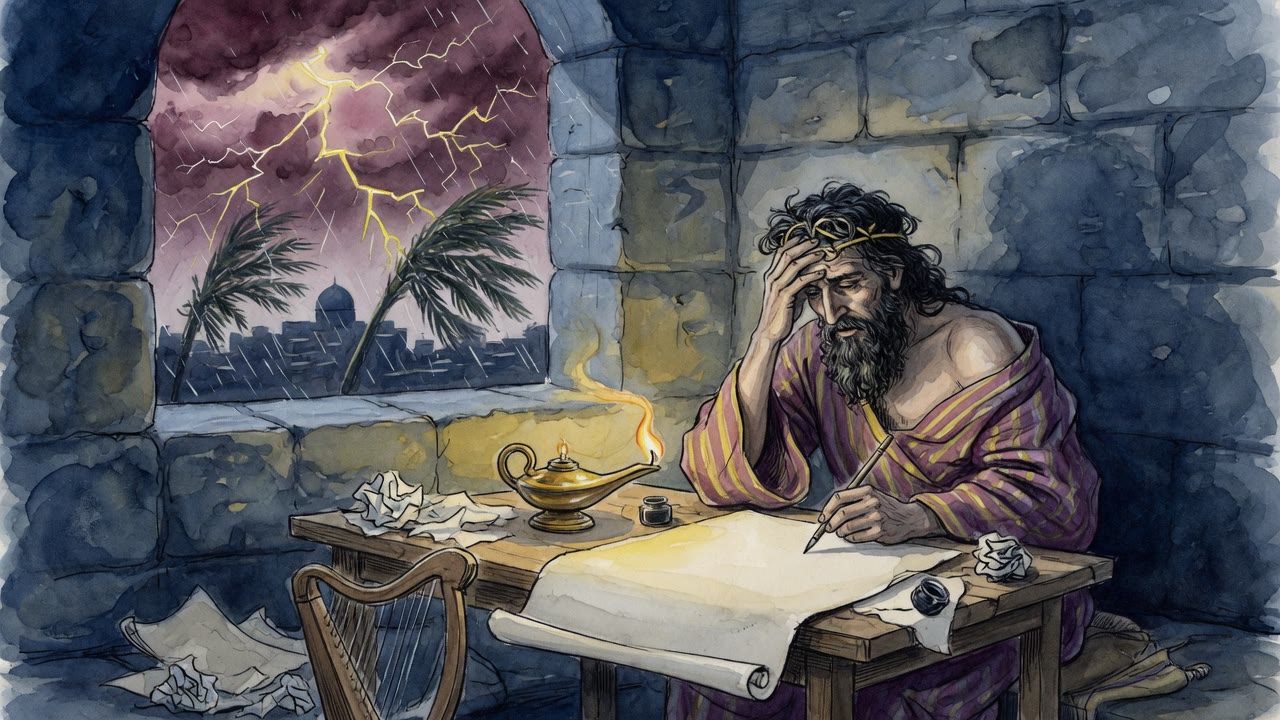
King David stood in the flush of mastery and said aloud what pride always wants said. The statutes of God were his songs. He grasped Torah as easily as a singer grasps a tune, quick on the tongue, sure in the chest. The boast left his mouth in the hearing of heaven and waited for a day when a schoolchild's verse would answer it.

David Forgot the Law and Uzzah Fell Beside the Ark Click for full size

That day came when he decided to bring the Holy Ark from Gibeah up to Zion. He wanted processions, music, and the weight of the chest that held the tablets of the covenant. He wanted the Name to ride into his city like a king returning home under banners and shouting.

The Wagon That Should Not Have Been

The law was plain. The sons of Kohath were to bear the sanctuary furniture on their shoulders. No cart. No oxen. Numbers had already said it: unto the sons of Kohath he gave none of the wagons, because the service of the sanctuary belonged to them; they bore it upon their shoulders (Numbers 7:9).

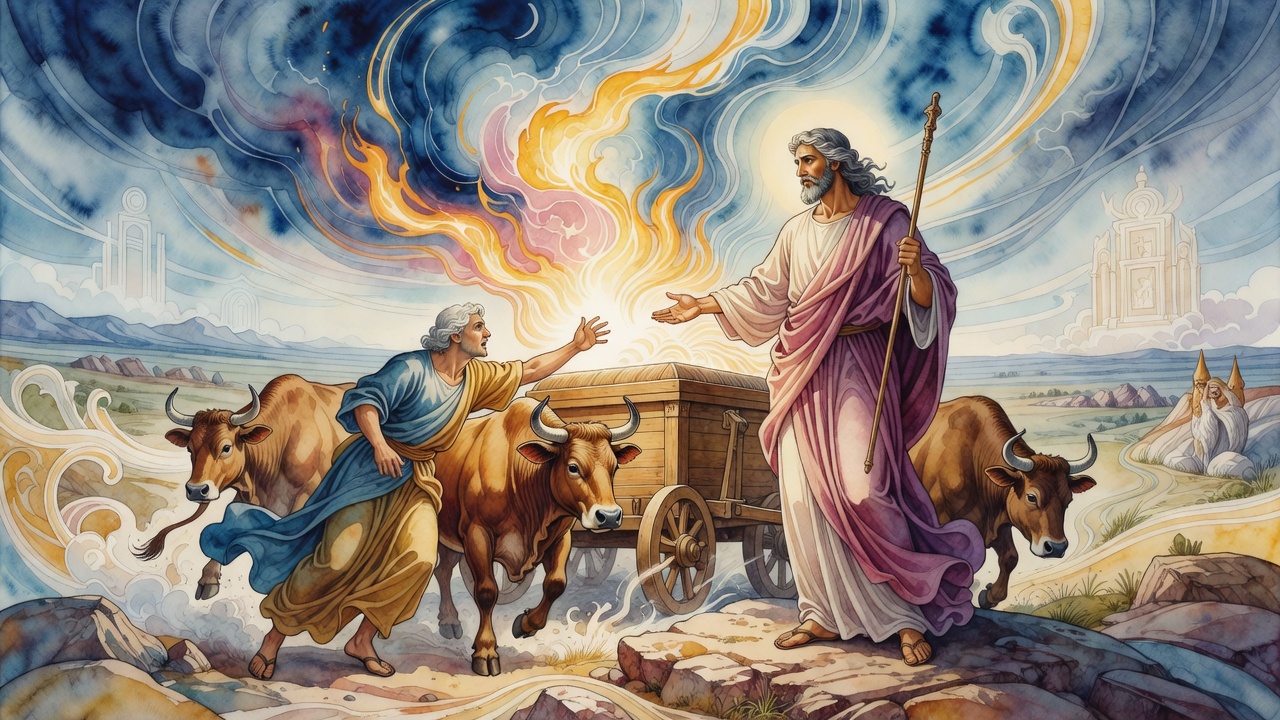
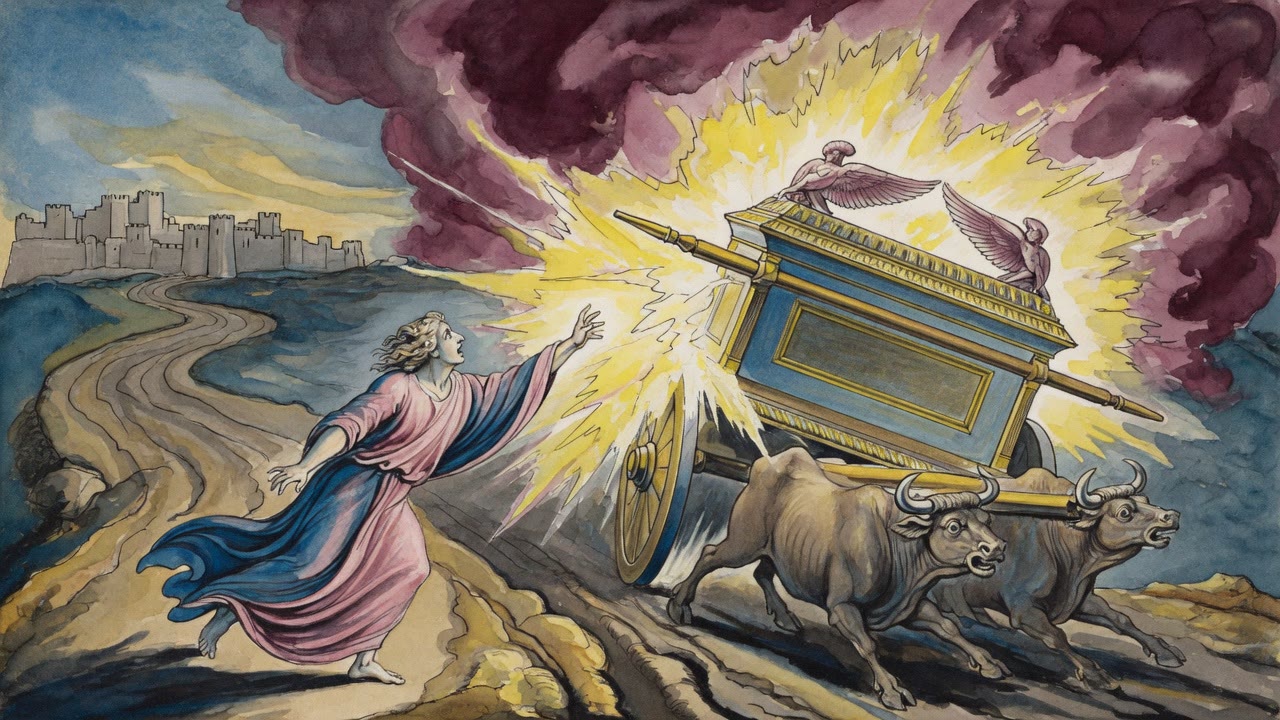
David forgot. In the rush of drums and the heat of triumph, he set the Ark on a wagon and ordered the oxen forward. The procession moved. Wheels turned where human bone and muscle were supposed to take the weight. Dust rose. Harps kept time. Then the oxen stumbled on the road, and the Ark leaped as if it refused the ride and the hands that had chosen wheels over shoulders.

Uzzah, charged with the transport, saw the chest lurch toward the dirt and put out his hand to steady it. He meant to save the holy thing from the road. His palm met the Ark. He fell dead beside the wagon before the music could stop and before anyone could pull him back.

A Hand That Knew Too Little

The camp froze. The man who had touched the Ark lay still in the dust. Instruments hung half-raised. The tradition does not soften the blow by inventing malice in Uzzah. Ignorance of the law, in the legend, stood as close to a deliberate breach as any willful sin. He should have known. The one who guards the Ark is responsible for knowing how it must travel.

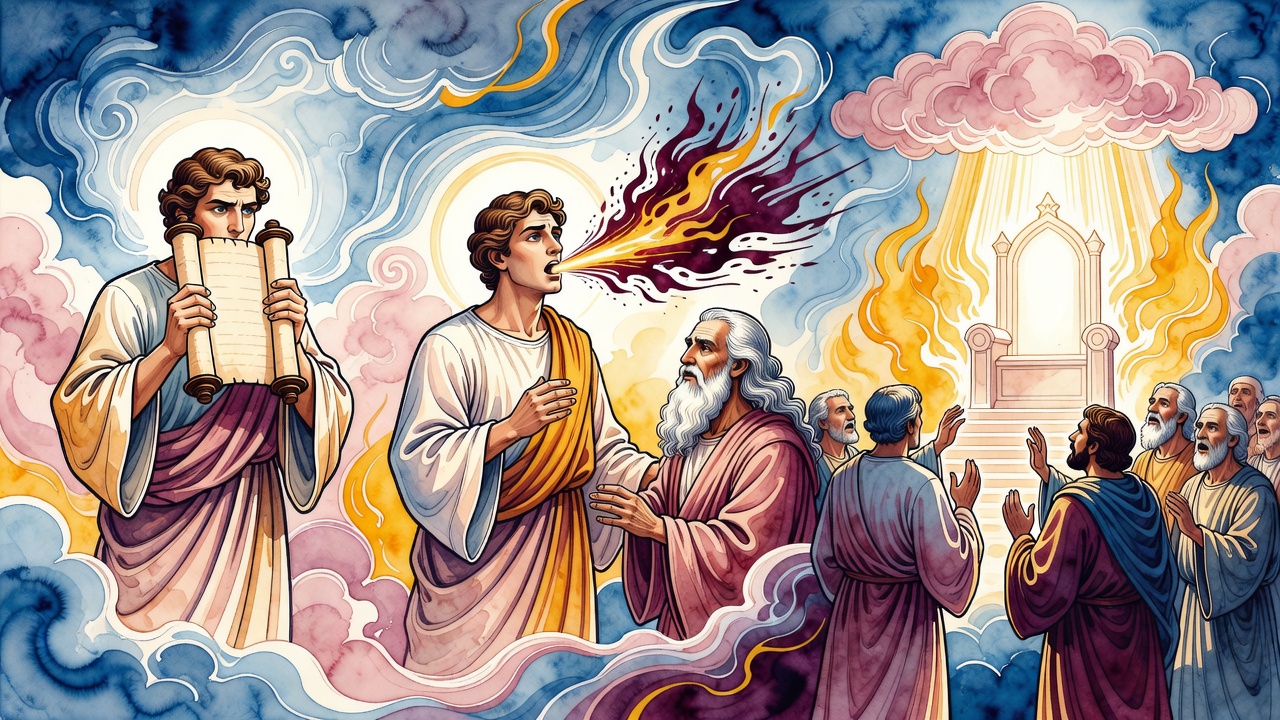
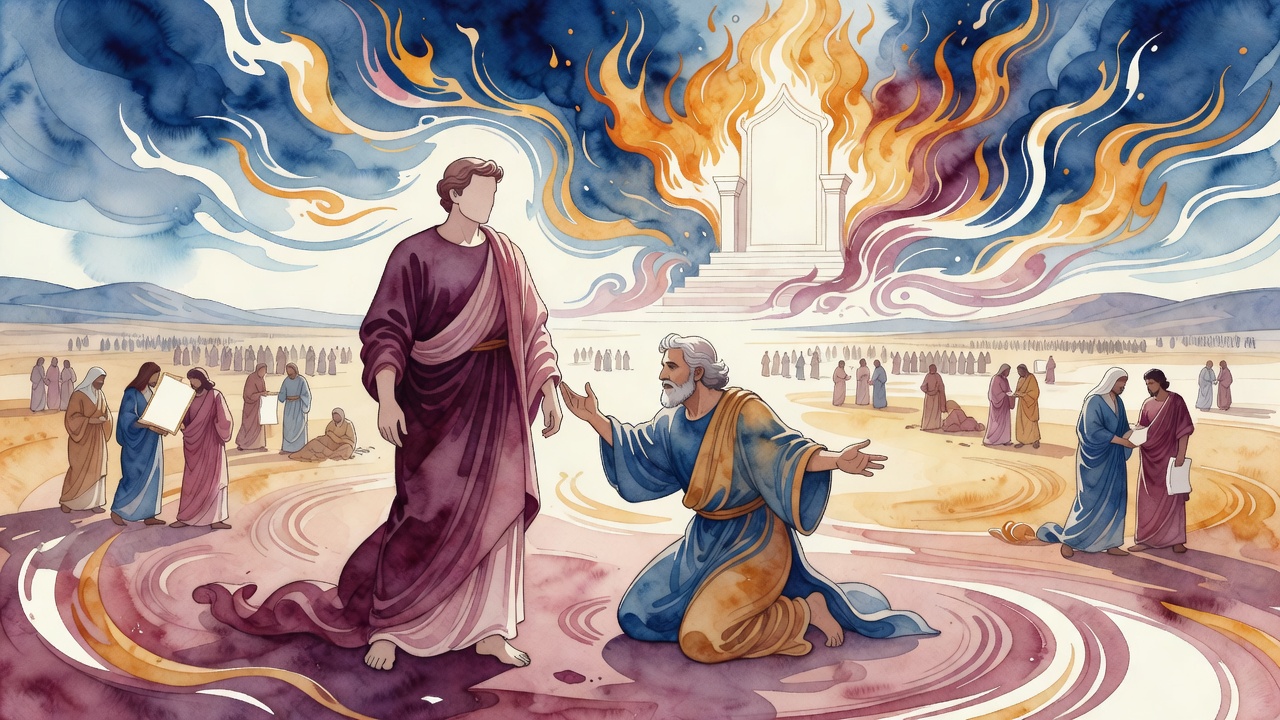
God turned on David with the boast still hanging in the air. Had he not said that the statutes were his songs? And he had not mastered the words of the Bible about the sons of Kohath. The song failed at the first hard note. The king who claimed quick mastery had loaded the Name onto wheels and watched a man die for the mistake.

David tasted the punishment he had called down with his mouth. A child in a study house could have recited the Kohathite rule. The procession that was meant to crown Zion turned into a funeral for a forgotten verse. Fear ran through the ranks. The Ark would not go farther that day as planned.

A House That Never Broke a Command

In another household, far from Zion's parade, a different kind of remembering had already taken root. Jonadab son of Rechab, a righteous man the legends treat as a prophet in his own right, foresaw the destruction of the Temple in Jerusalem. He did not answer with wagons and trumpets. He answered with a command to his children that would outlast his own breath.

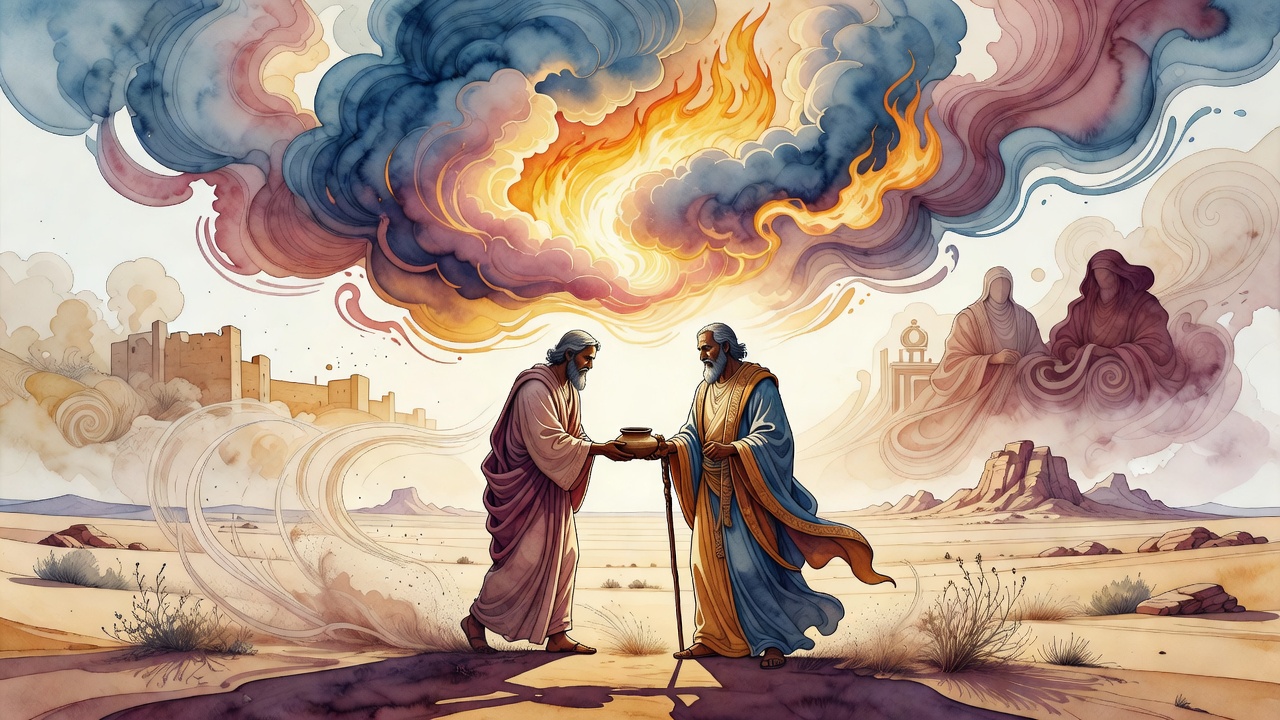
Drink no wine. Use no oil for anointing. Do not cut your hair. Do not live in houses. Live as mourners and wanderers while the world builds soft rooms and pours cups for comfort. The Rechabites, descendants of Jethro through a Midianite line rather than born Israelites in the ordinary sense, obeyed generation after generation. They pitched tents when cities offered doors. They kept the austere vow when ease would have been easy.

God made a covenant with them: their descendants would sit among the Sanhedrin (Israel's supreme court of sages) and teach Israel. Some accounts press the claim further. That covenant, they say, stood stronger than the one with David's line, because this house did not forget what its father ordered. No boast about songs. Only a hard rule kept until the rule became blood memory.

The Ark Waiting Off the Road

David's procession ended in fear. The Ark did not ride into Zion that day under the plan he had drawn. Uzzah's body marked the place where a forgotten verse became a corpse. The king who sang statutes as if they were melodies learned that melody is not memory, and memory is not the same as a mouth full of praise.

The Rechabites kept walking outside walls, hair uncut, cups empty of wine, while the Davidic house carried the knowledge that one boast and one wagon had cost a life. Two pressures sat side by side in the old accounts: a king who claimed Torah was easy, and a non-Israelite clan that treated a father's hard command as harder than comfort or rank.

When the Ark finally moved again, it would move on shoulders. Levites would take the poles. The law David had called a song would return as weight on bone, the way Kohath was always meant to carry it, step by step toward the city that had waited while a dead man taught the court what a verse is for.


← All myths
From the tradition

Sources

2 sources

The texts behind this telling. Some cards carry a translation of the source; others are our own retelling of it, and each card says which. Every card links out to the original.

Legends of the Jews 6:81Legends of the Jews

Retold in our words. Read the original at the link below.The Legends of the Jews by Louis Ginzberg (1909) · Public Domain

King David knew Torah, but one boast about his knowledge brought punishment faster than he expected.

The story goes that David, feeling pretty good about his grasp of Jewish law, reportedly boasted that he understood the Torah as easily and quickly as songs. But, according to the tale, God wasn't exactly thrilled with this declaration.

The consequence? God declared that David would forget a Biblical law that even schoolchildren knew! Ouch.

That's precisely what happened when David decided to move the Holy Ark, the sacred chest containing the Ten Commandments, from Gibeah to Zion. David, in his moment of lapse, forgot a crucial detail: the Ark was to be carried only upon the shoulders of specially designated Levites, the Kohathites. Instead, he had it placed on a wagon.

What happened next? Well, let's just say it wasn't a smooth ride. The Ark miraculously leaped into the air, and the oxen pulling the wagon collapsed. Uzzah, who had been entrusted with the Ark's transportation, reached out to steady it, preventing it from falling. And tragically, he immediately fell dead.

Talk about a dramatic moment! Why such a harsh punishment? The story, found in Legends of the Jews, citing sources like the Talmud (b. Sotah 35a), explains that even though Uzzah might not have intentionally violated the law, his ignorance of it was considered akin to a deliberate act. He should have known better; he was responsible for knowing the law.

The tale goes on to say that God then rebuked David, reminding him of his earlier boast: "Didst thou not say, 'Thy statutes have been my songs?' and thou hast not even mastered the words of the Bible, 'Unto the sons of Kohath he gave none: because the service of the sanctuary belonged unto them; they bare it upon their shoulders.'" (Numbers 7:9).

So what’s the takeaway here? Is it simply "don't get too cocky?" Perhaps. But I think it goes deeper. This story, like so many in Jewish tradition, serves as a potent reminder that knowledge, especially of sacred texts, is a lifelong journey. It's not about achieving a static state of "knowing it all," but rather about constant learning, humility, and a deep respect for the traditions we inherit. And maybe, just maybe, a little bit of fear of forgetting the basics. Because sometimes, as the story of David and Uzzah so vividly illustrates, the consequences can be… well, let's just say unforgettable.

Full source
Legends of the Jews 2:14Legends of the Jews

Retold in our words. Read the original at the link below.The Legends of the Jews by Louis Ginzberg (1909) · Public Domain

The Rechabites were not born Israelite, but the sages imagined them earning seats in the Sanhedrin.

These weren't Israelites, not in the traditional sense. They were descendants of Jethro, Moses’ father-in-law, a Midianite priest. But their story, preserved in the Talmud and elaborated on in works like Ginzberg's Legends of the Jews, offers a powerful lesson about devotion and reward.

It all starts with Jonadab, son of Rechab. Now, Jonadab wasn't just any guy. He was a deeply righteous man, a prophet in his own right. He foresaw the destruction of the Temple in Jerusalem, a cataclysmic event in Jewish history.

So, what did he do? According to the legend, he commanded his children to abstain from certain pleasures as a sign of mourning and a way to draw closer to God. These weren't small asks, either. He told them to drink no wine, use no oil for anointing – which was a common practice for comfort and celebration – not to cut their hair, and not to live in houses. Basically, a complete rejection of worldly comforts.

Talk about commitment!

And the Rechabites? They actually listened! They obeyed their father's commands, generation after generation. They lived a nomadic, austere life, dedicated to the principles Jonadab had laid out.

So, what was their reward? This is where the story takes an incredible turn. God, witnessing their unwavering devotion, made a covenant with them. Now, covenants are a BIG deal in Judaism. They are sacred agreements between God and humanity. And what God promised the Rechabites was astounding: that their descendants would always be members of the Sanhedrin, the supreme Jewish court, and teachers of Israel. A non-Israelite family promised a permanent place in the leadership of the Jewish people!

The legend goes even further. According to some accounts, like the one in Legends of the Jews, the covenant with the Rechabites was even stronger than the one with David, the king of Israel! God promised to maintain the Davidic line only if his descendants were pious, but the covenant with the Rechabites was unconditional.

Wow.

The Talmud in Sanhedrin 104a even elaborates on the Rechabites' praise, stating that God swears by their name in (Ezekiel 20:17-19): "Then the word of the Lord came to Jeremiah: ‘Go to the house of the Rechabites and speak to them; bring them to one of the side rooms of the temple of the Lord and give them wine to drink.’ … ‘We will not drink wine, because our forefather Jonadab son of Rechab gave us this command: “Neither you nor your descendants must ever drink wine."

Why? Why would God reward them so lavishly, especially when they weren't even part of the Jewish nation? The answer, as the legend suggests, is simple: because of their unwavering devotion to God’s will, as they understood it. The reward was evidence of the power of commitment, discipline, and obedience.

As the ancient texts tell us, if this was the reward for righteous gentiles, imagine how great the reward would have been if they had been Israelites!

The story of the Rechabites serves as a powerful reminder: that righteous actions, regardless of background or origin, are seen and valued by God. It challenges us to consider what we are willing to commit to, and what rewards, both seen and unseen, might await us when we choose the path of devotion and righteousness. It invites us to reflect on the profound impact of our choices, not just on ourselves, but on generations to come.

Full source