5 min read

Antiochus Emptied His Treasury to Crush Judea

Out of silver for his wars, Antiochus turned on the Temple while Judas fought through famine and a sabbatical year that left Judea without stores.

Curated by Arthur · Told by Maggid ·
Table of Contents
  1. A King Counting Empty Chests
  2. Judas Returns to Zion With Blood Still Wet
  3. Lysias and the Pressure on the Sanctuary
  4. A Sabbatical Year Without Stores
  5. What Empty Treasuries Teach
  6. War on a Holy Calendar
Antiochus Emptied His Treasury to Crush Judea Click for full size

A King Counting Empty Chests

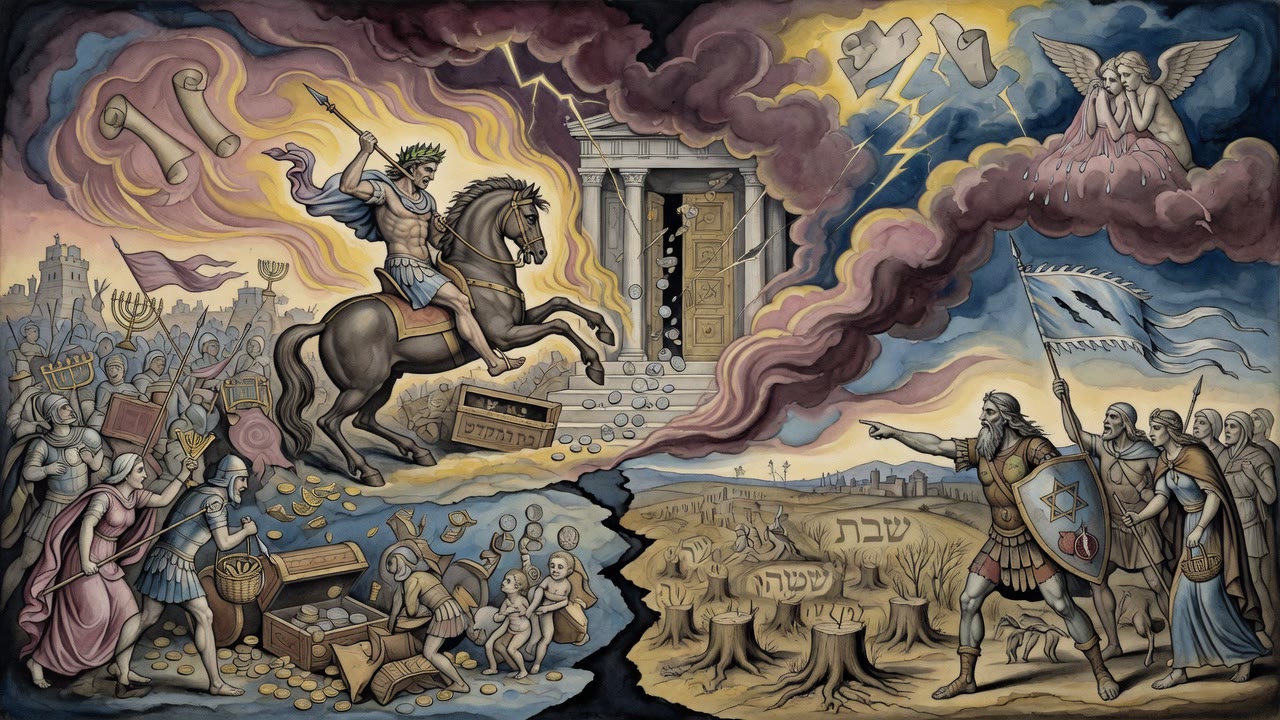
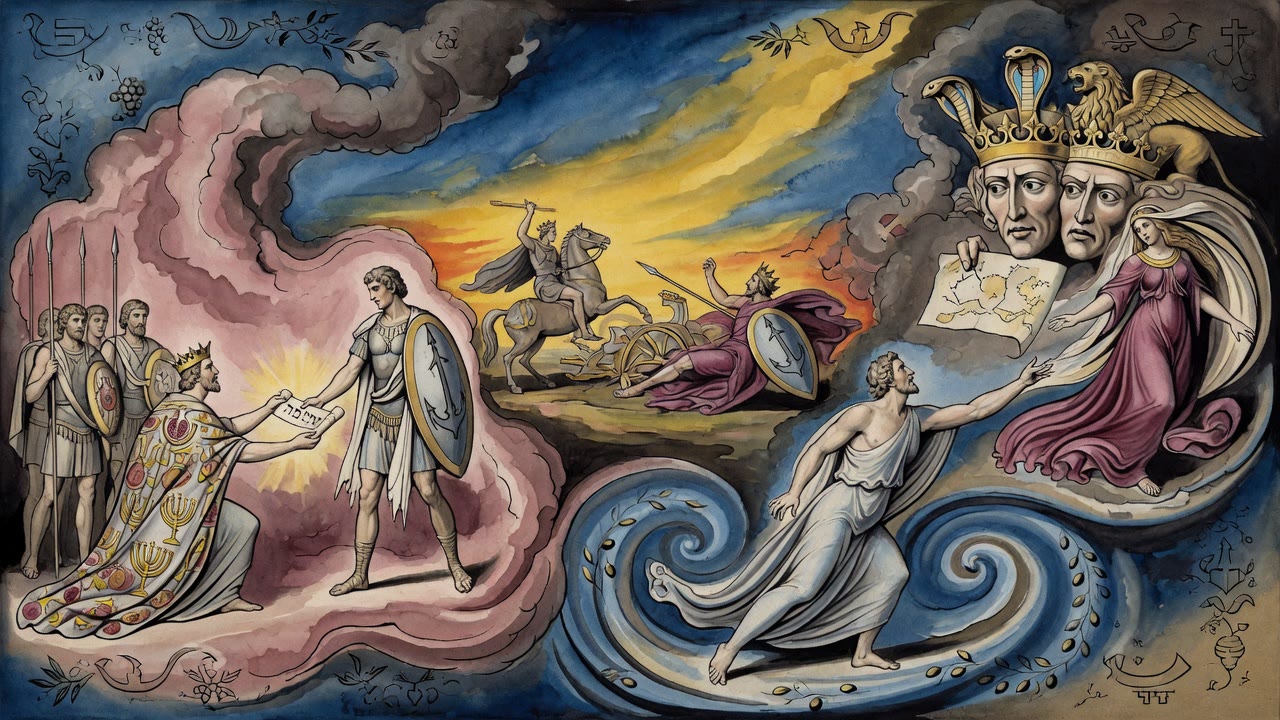
Antiochus ran out of money. Wars in the east and the west had eaten the treasury. A king who cannot pay soldiers looks for a house that still holds silver. Judea's Temple still held silver. The first book of Maccabees sets the crisis there, not in ideology alone but in arithmetic. When the coins ran low, the hand reached for Jerusalem.

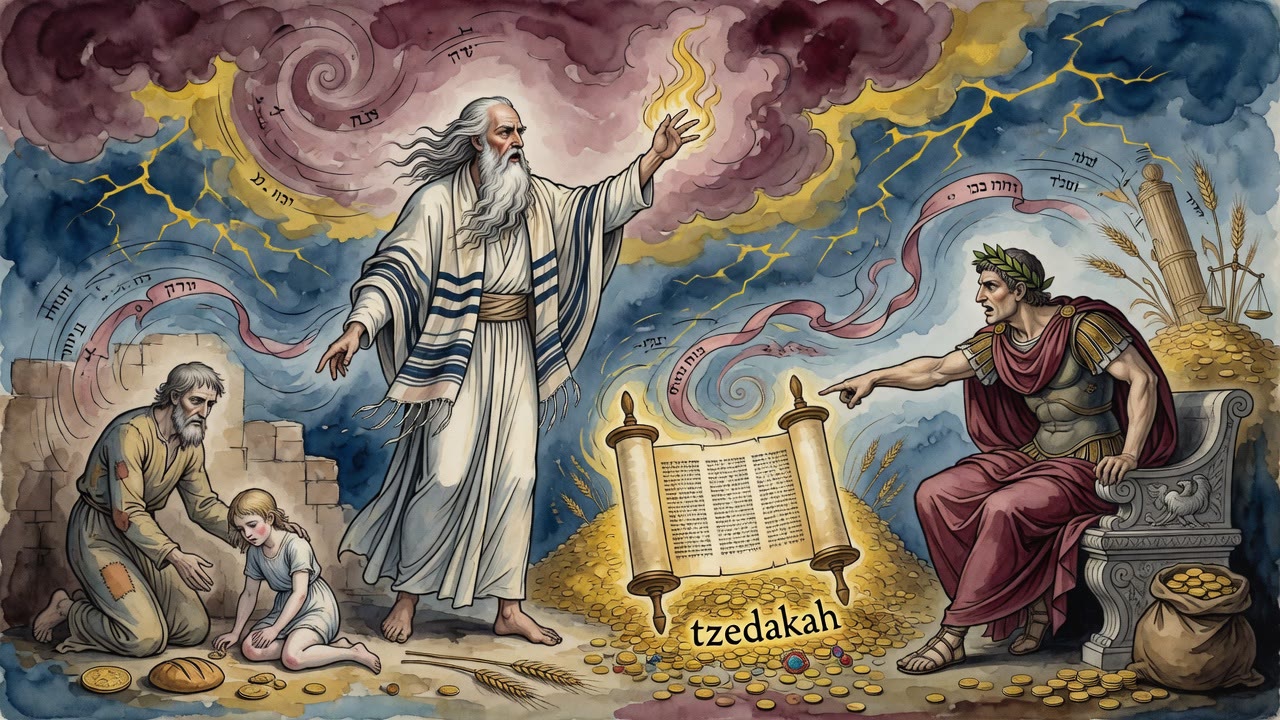
Empire always has a theology ready for theft. The real engine was shortfall. The holy vessels became a solution to payroll.

Judas Returns to Zion With Blood Still Wet

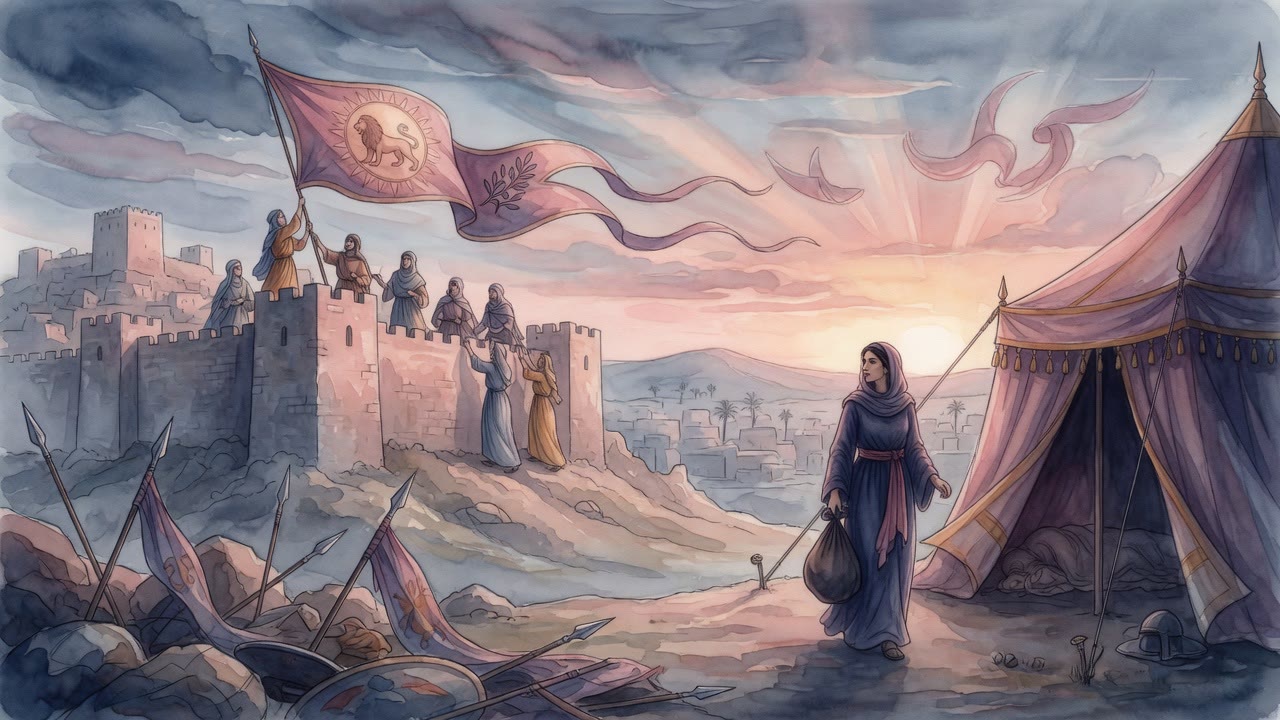
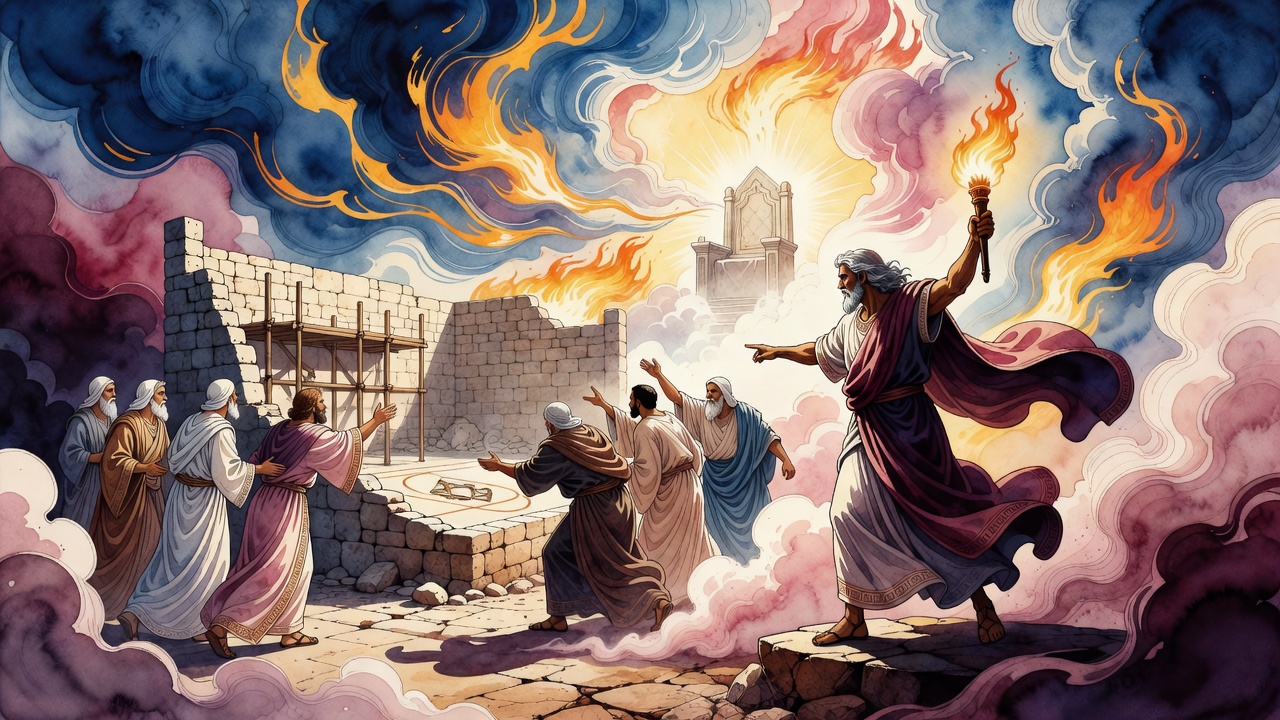
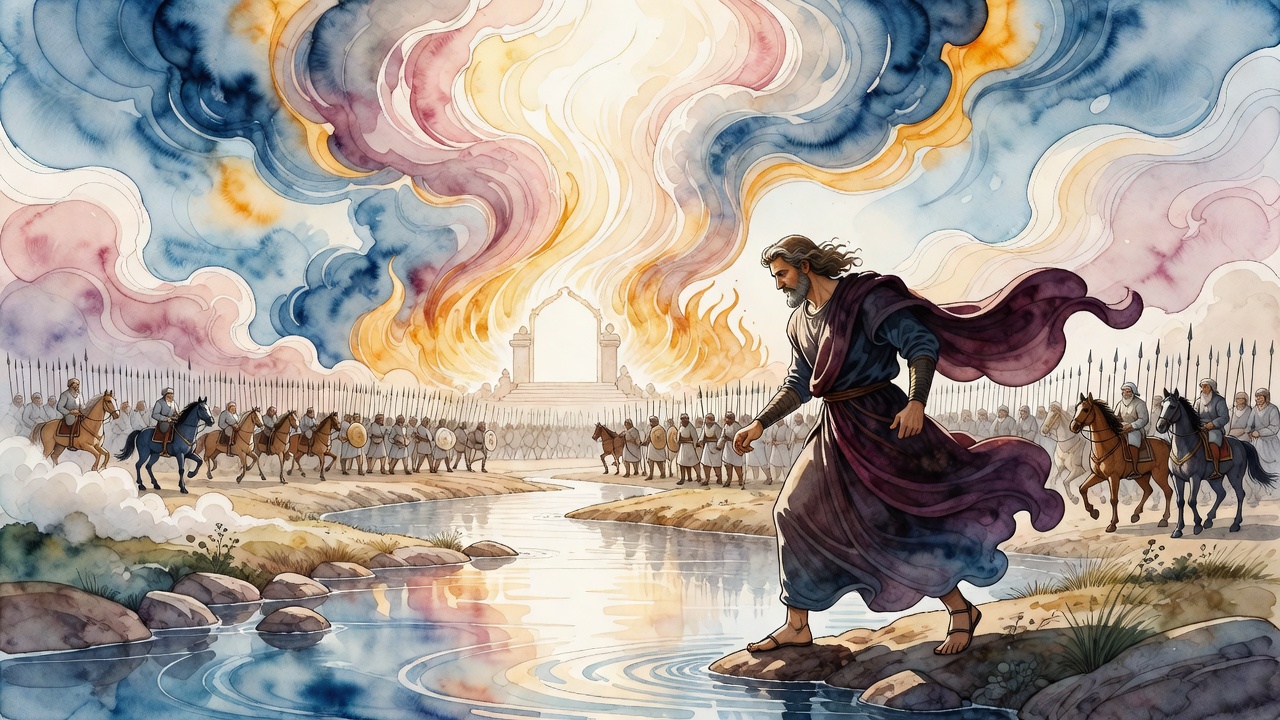
Judas Maccabeus fought in that shortage's shadow. After battles that thinned his brothers-in-arms, he brought the survivors up to Zion. The book marks the ascent. Men who had slept in armor stood again near the sanctuary they were trying to keep from becoming a bank for a foreign crown. Joy and grief mixed. Every victory cost names. Every return to the mountain asked whether the altar still waited clean.

Judas did not inherit a quiet province. He inherited a war that began because a king needed funds and decided holiness was liquid.

Lysias and the Pressure on the Sanctuary

Lysias, left to manage the west for the Seleucid house, moved against the holy place with the weight of royal order. The sanctuary was not an afterthought in the campaign. It was a prize and a symbol. If the mountain fell, the revolt's heart would be cut out. If it held, every village would know the empire could bleed.

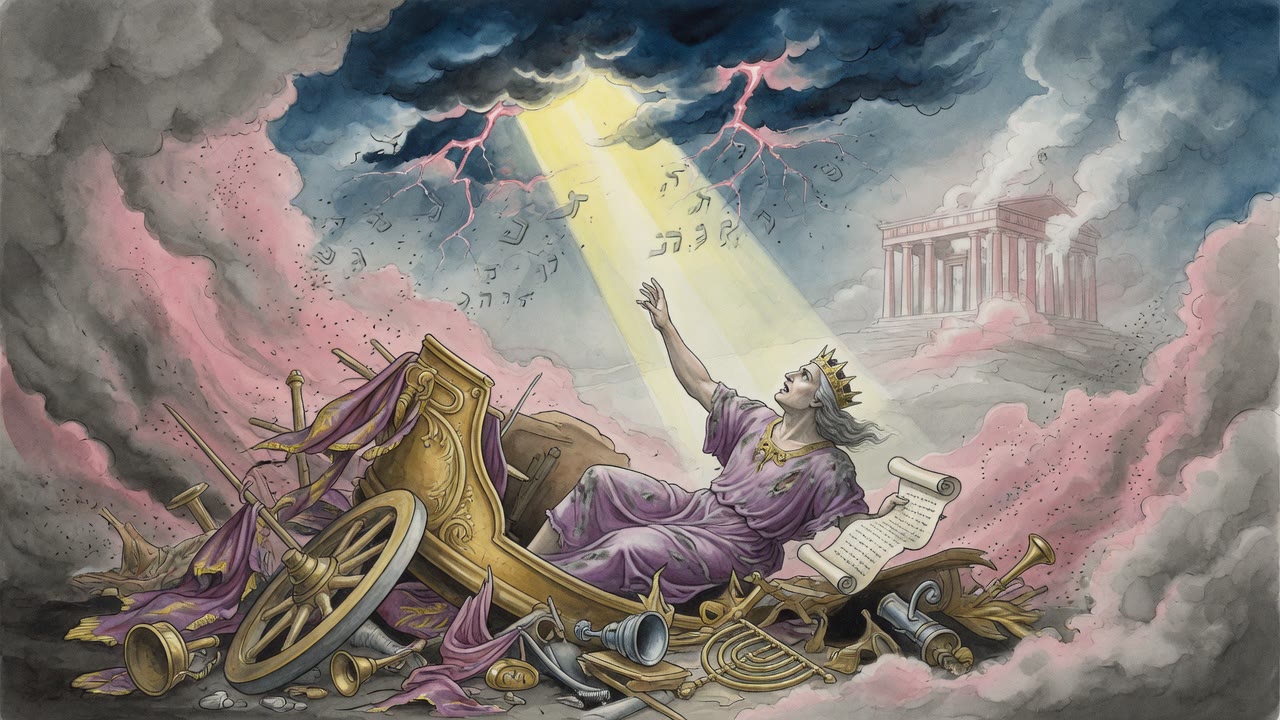
Reports of defeat reached the king and turned his illness into rage. The book lets the political and the bodily collapse run together. A ruler who had treated Judea as a coin purse discovered that some purses bite back.

A Sabbatical Year Without Stores

War found Judea in a sabbatical year. Fields that should have rested had no surplus stacked against siege. The people who kept the seventh-year release discovered its cost under blockade. Hunger became a weapon as sharp as spears. The text does not romanticize the lack. It records it. A holy calendar met a hungry army and the calendar did not bend.

Lysias's counsels and the soldiers' empty stomachs tangled. Men asked how long they could press a land that had, by law, refused to stockpile. The revolt's righteousness did not cancel the body's need for bread.

What Empty Treasuries Teach

Antiochus teaches that desecration often arrives wearing the face of budget. Judas teaches that a people can climb to Zion with losses still counting on their lips. Lysias teaches that a sanctuary under pressure becomes the map of the whole war. The sabbatical year teaches that fidelity has a price measured in empty barns.

The myth of the Maccabees is not only oil that lasts. It is a king out of silver, a general out of patience, a mountain out of options, and a year of release that refused to turn into a year of stores. Against that, men still fought for the right to keep a Temple that was not a treasury for someone else's empire.

War on a Holy Calendar

1 Maccabees keeps returning to material facts other tellings sand away. Soldiers need pay. Fields need years. A sanctuary holds wealth that tempts a bankrupt crown. Judas needs men who can still walk after victory. Lysias needs a result he can send east to a sick king. None of that cancels the holiness of the fight. It situates the holiness inside hunger and ledgers, where most wars actually live.

When Judas goes up to Zion after combat, the ascent is liturgy and logistics at once. The living are brought to the mountain so they remember why the dead fell. What can be cleaned is cleaned. What can be sung is sung. Who is missing is counted. The book will not let triumph float free of bodies.

The sabbatical year sharpens the moral edge. Israel is not only attacked for keeping Torah. Israel is attacked while keeping a commandment that leaves the land vulnerable by design. Release the fields. Trust the sixth-year plenty. Then watch an empire arrive in the seventh. The text records the empty stores without sneering at the law. Faithfulness remains faithfulness even when it coincides with famine. The cost is simply named.

Antiochus's empty treasury is the dark twin of those empty stores. One emptiness comes from overreach and endless campaign. The other comes from obedience. The question is which emptiness deserves respect. The king's shortfall births sacrilege. The people's shortfall births a harder kind of courage. Between them Lysias maneuvers, Judas climbs, and the sanctuary remains the object every side understands without a translator. Whoever holds the mountain holds the story. Whoever treats the mountain as a bank loses more than silver when the revolt answers.


← All myths

From the tradition

Sources

4 sources

The texts behind this telling. Some cards carry a translation of the source; others are our own retelling of it, and each card says which. Every card links out to the original.

The Book of Maccabees I 3:30The Book of Maccabees I

Retold in our words. Read the original at the link below.Sefaria Community Translation · CC-BY

Specifically, the story turns to the first book, 1 Maccabees 3. While not included in the Tanakh, this book is preserved in the Septuagint and is a crucial historical source for understanding the Maccabean revolt.

So, what's happening with Antiochus? He’s in a bind. He's spent all the treasury's money. And why is the treasury empty? Because of the "dissension and plague" he brought upon the land.

Ouch. According to 1 Maccabees 3, Antiochus’s problems stem directly from his attempt to eradicate the ancient Jewish laws – to Hellenize Judea. Remember, he wanted to force everyone to adopt Greek customs and religious practices. It didn't work. Instead, it fomented rebellion and unrest.

Rebellion is expensive. Tributes are down. In other words, the taxes coming in from the people are a pittance. People aren't exactly eager to pay taxes to a ruler who's oppressing them. Who can blame them?

The king is realizing he can’t keep up his lavish spending. He can’t afford to be as generous as he once was. 1 Maccabees says he “abounded above the kings that were before him.” He was living large, maybe too large.

What's a king to do when his coffers are empty and his people are revolting? Panic, probably. But Antiochus? He comes up with a plan.

He decides to head to Persia – modern day Iran – to collect tributes from those lands. He hopes to refill his treasury with Persian gold. It's a desperate gamble. A high-stakes road trip to solve a problem of his own making.

Think about the implications. Antiochus, in his desperation, is leaving Judea. He's admitting, in a way, that he can’t control the situation there. This creates an opening for someone. someone like Judah Maccabee, to rise up and challenge his authority.

Antiochus's financial woes, caused by his religious persecution, set the stage for the Maccabean revolt. It's a reminder that actions have consequences, and that even the most powerful rulers can be brought down by their own hubris. What do you think? Did Antiochus deserve what was coming to him?

Full source
The Book of Maccabees I 5:54The Book of Maccabees I

Retold in our words. Read the original at the link below.Sefaria Community Translation · CC-BY

It's a raw, unflinching glimpse into the aftermath of conflict.

The victorious forces "slew all the males with the edge of the sword, and raised the city, and took the spoils thereof, and passed through the city over them that were slain." Can you imagine? The starkness of that image – "passed through the city over them that were slain" – it's a brutal reminder of the cost of war.

Then, a journey. A crossing.

"After this went they over Jordan into the great plain before Bethsan. And Judas gathered together those that came behind, and exhorted the people all the way through, till they came into the land of Judea."

Judas, Judas Maccabeus, the leader, the warrior. he knew the importance of morale. We can almost hear his voice, urging his people onward, reminding them of their purpose, of their homeland, even as they trudged through the aftermath of such violence. It speaks to the toll that leadership takes, and the responsibility one feels for their people.

Finally, the return. The arrival at a sacred place.

"So they went up to mount Sion with joy and gladness, where they offered burnt offerings, because not one of them were slain until they had returned in peace."

Mount Zion, Har Tzion in Hebrew. More than just a geographical location, it's a symbol, a beacon of hope and faith. The offering of burnt offerings, Olot (עֹלוֹת) are a way to express gratitude. In this moment, it's a collective sigh of relief, an acknowledgment of the miraculous. "Not one of them were slain until they had returned in peace." Not one. In the face of such carnage, amidst such peril, they returned whole. It's easy to imagine the surge of emotion, the overwhelming sense of deliverance. It emphasizes both the fragility of life and the enduring power of hope and faith.

The story in 1 Maccabees 5, so brief and yet so vivid, offers a potent reminder of the complexities of the human experience – the horrors of war, the resilience of the human spirit, and the enduring power of faith to guide us through even the darkest of times. And it leaves us wondering: what mountains are we climbing today, and what sacrifices will we make to reach the summit?

Full source
The Book of Maccabees I 6:8The Book of Maccabees I

Retold in our words. Read the original at the link below.Sefaria Community Translation · CC-BY

A time when a small group of people stared down an empire and refused to back down.

This isn't part of the Hebrew Bible as we know it, but it's a crucial historical account that fills in the gaps surrounding the story of Hanukkah. It gives us a ground-level view of the struggles, the victories, and the sheer grit of the Maccabees.

So, what's happening in chapter 6? King Antiochus, the one who sparked the whole Maccabean revolt with his decrees against Jewish practice, is starting to get some unsettling news. from his perspective. Lysias, one of his top generals, went out with a massive army. And… he got pushed back. Driven away, the text says. By the Jews!

It gets worse. Not only did Lysias fail, but the Maccabees were getting stronger! How? By using the very weapons they captured from the defeated Seleucid armies. Can you imagine the humiliation? They were using his resources against him.

And then comes the real gut punch. News reaches the king that the abomination he erected on the altar in Jerusalem – likely a statue of a Greek god – had been torn down. The Temple, the very heart of Jewish worship, had been reclaimed and rededicated. They "compassed about the sanctuary with high walls, as before, and his city Bethsura." They rebuilt, they fortified, they reclaimed their sacred space. Bethsura, by the way, was a strategically important city that the Maccabees fortified to control access to Jerusalem.

The king's reaction? He's "astonished and sore moved." To put it plainly, he was devastated. "He laid him down upon his bed, and fell sick for grief, because it had not befallen him as he looked for."

Imagine the king, lying there, sick with the realization that his grand plan to Hellenize Judea, to erase Jewish identity, was crumbling before his eyes.

It's a powerful reminder that even the mightiest empires can be brought to their knees by the unwavering spirit of a people determined to preserve their faith and their way of life. And it’s evidence of the Maccabees, who against all odds, refused to let their light be extinguished. What battles are we fighting today, and what can we learn from their unwavering courage?

Full source
The Book of Maccabees I 6:55The Book of Maccabees I

Retold in our words. Read the original at the link below.Sefaria Community Translation · CC-BY

The Book of Maccabees I turns to Sabbatical Year Leaves Judea Without Food Stores.

After a victory, King Antiochus, not one to admit defeat, refocuses his energy. He's got his sights set on the stronghold of Bethsura. So, what does he do? He plants a garrison there – a military force – to keep it under his thumb. (1 Maccabees 6:1)

That's just the appetizer. The real target? The Mikdash, the Sanctuary in Jerusalem. The Temple itself. Can you imagine the weight of that?

Antiochus lays siege. Not just any siege,. We're talking full-on ancient warfare: artillery, engines hurling fire and stones, machines spitting out darts and slings. A complete and utter onslaught. (1 Maccabees 6:2)

And the Maccabees? They're not exactly sitting ducks. They build their own engines to counter Antiochus’s, a desperate attempt to fight fire with fire. They engage in battle for a "long season," a drawn-out, grueling conflict. (1 Maccabees 6:3)

But here's where the situation turns dire. Now, imagine your supplies are dwindling. That’s what happens to the Maccabees. Their "vessels being without victuals," as the text puts it so starkly. (1 Maccabees 6:4)

Why? Because it was the Shmita year, the seventh year of the agricultural cycle, a sabbatical year. The Torah commands that the land lie fallow. And those Jews "that were delivered from the Gentiles" had already consumed "the residue of the store." In other words, they had eaten everything they had. (1 Maccabees 6:4) They were fighting for their religious freedom, against a vastly superior force, during a time when they were already vulnerable due to the requirements of their faith. A Shmita year. Talk about being between a rock and a hard place.

It's a story of resilience, of faith against all odds. The Maccabees were facing down not just military might, but also the constraints of their own religious observance and the reality of a land depleted by war.

What would you do in their situation? Or would you hold fast, even when the odds seem impossible? It’s a question the story of the Maccabees throws at us across the centuries. It's a challenge to find the Maccabee within ourselves.

Full source