Alcimus Swore Peace While Judas Held the Field
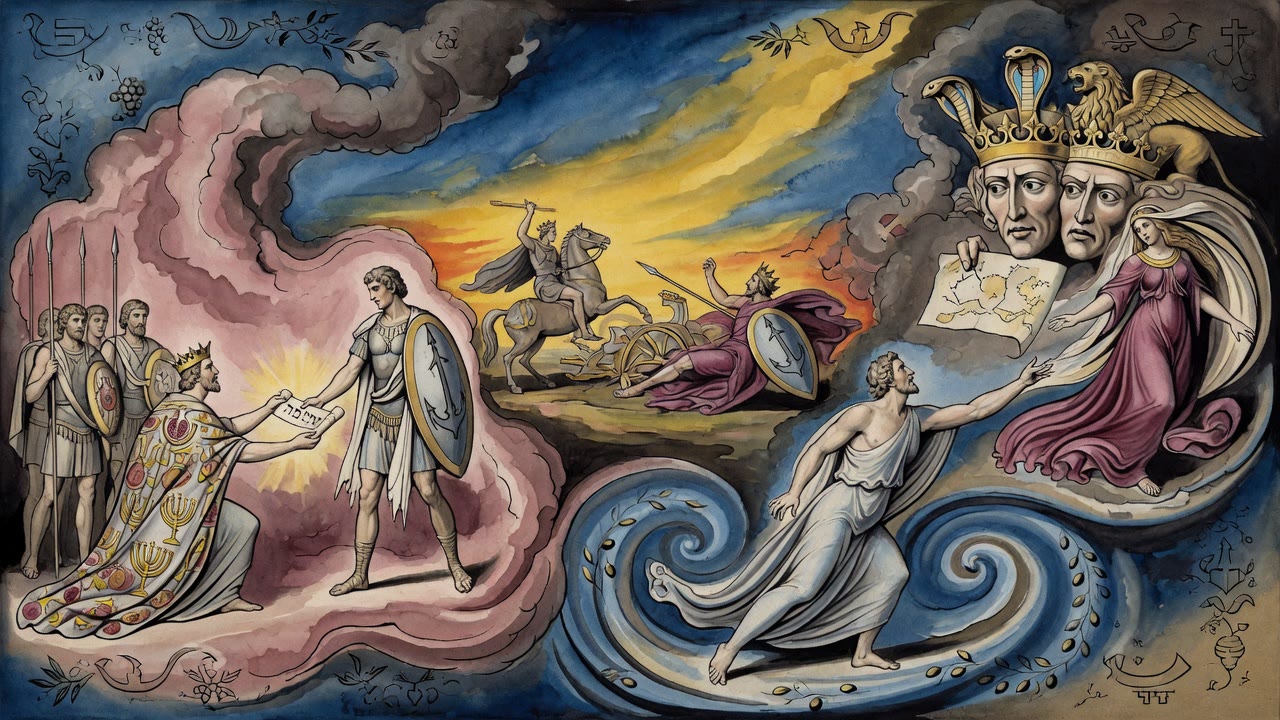
The Assideans saw a priest of Aaron's house and relaxed. He swore they would not be harmed. The army behind him kept its spears.
Table of Contents
Demetrius entered the palace of his ancestors and would not look at the men his army already held. "Let me not see their faces," he said. The host slew Antiochus and Lysias out of his sight. Blood dried on the palace floor while a new list of enemies climbed the same steps.
 Click for full size
When the seat was secure, every wicked and ungodly man of Israel who hated the Hasmonean fight came forward. Their captain was Alcimus, hungry for the high priesthood. The charge they laid was simple and useful. Judas and his brothers had slain the king's friends and driven the speakers out of their land.
A Priest of Aaron Came With Spears
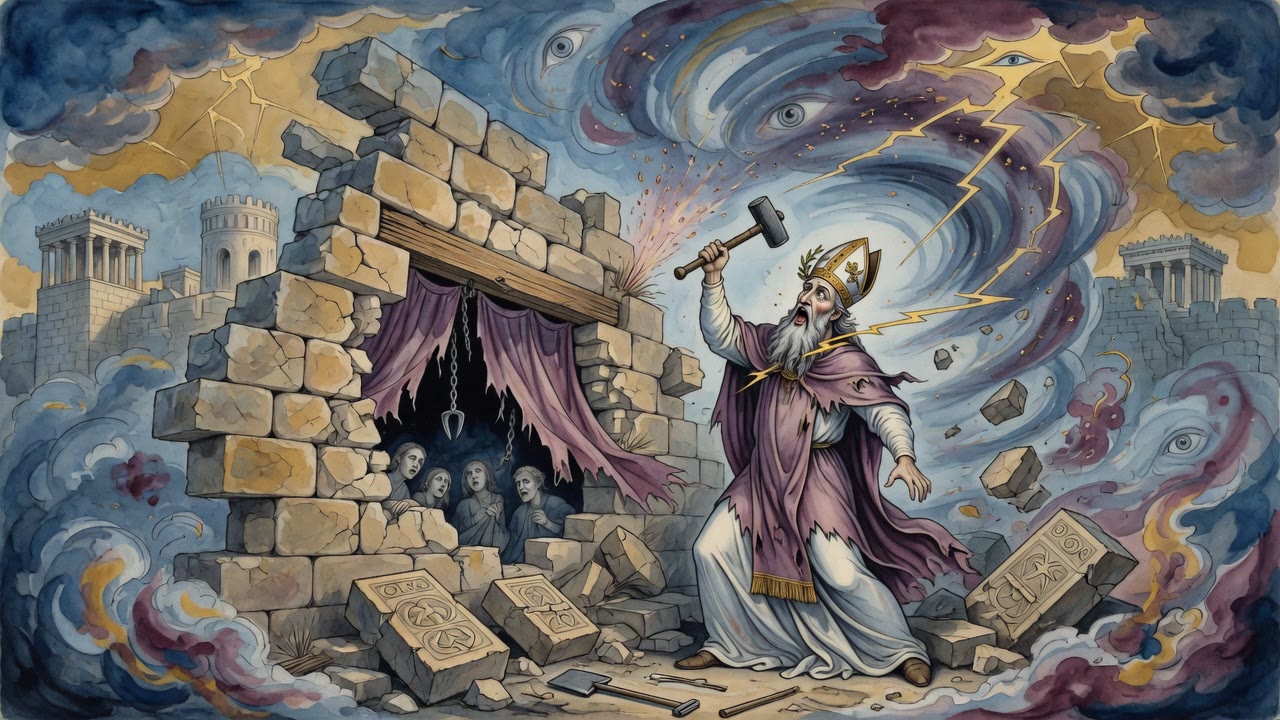
Alcimus arrived with Bacchides and a great power. Scribes assembled to require justice. The Assideans, first among those who sought peace, looked at the pedigree and relaxed.
"One that is a priest of the seed of Aaron is come with this army," they said, "and he will do us no wrong."
Alcimus spoke peaceably and swore. No harm, he said, would touch them or their friends. They gave no heed to the size of the force. Great power looked like security if the mouth above it spoke shalom. They trusted a family tree more than the spears behind it.
The oath was a door. Through it walked the old machinery of empire dressed as lineage. Men who had survived idol decrees now fell for a name. Peace sworn under spears is a countdown. When the hour came, the priest who had promised safety took the men who had believed him.
Nicanor Saluted and Meant Murder
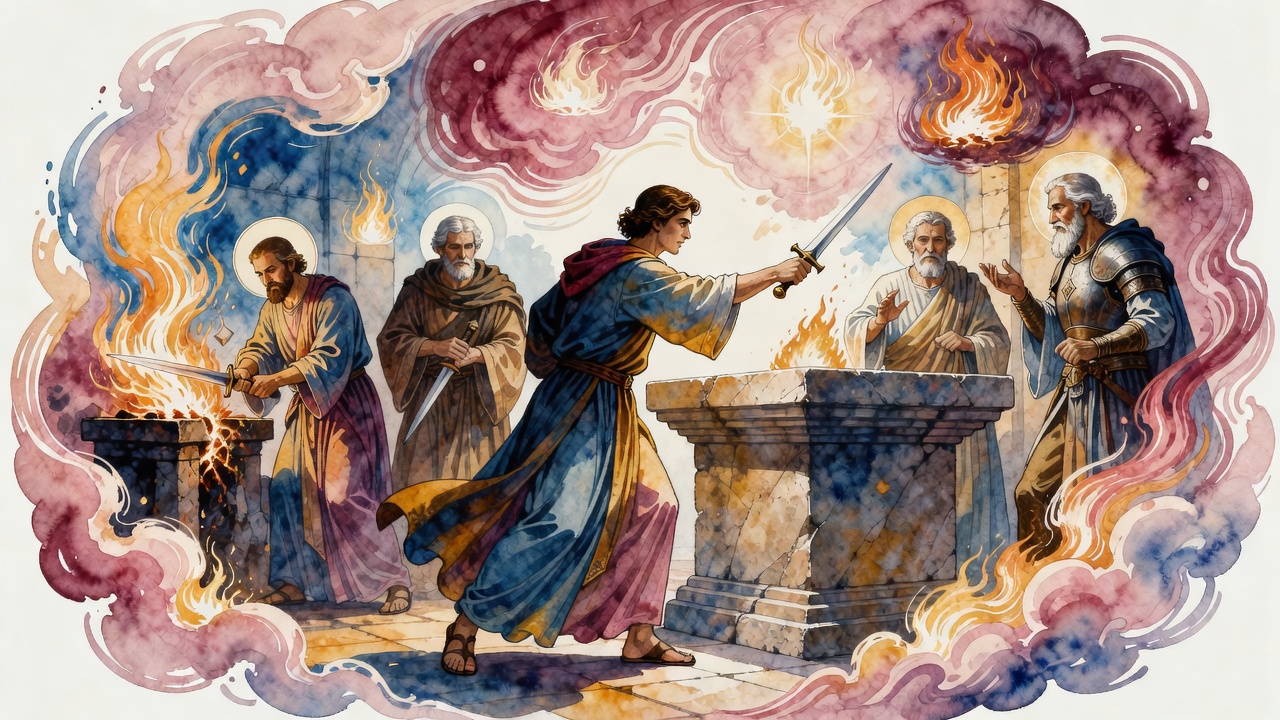
Another face of the same war wore a smile for Judas. Nicanor came, and they saluted one another peaceably. The enemies meant to take Judas by violence under the cover of greeting.
When Judas learned the deceit, fear cut clean. He would see that face no more. Nicanor, counsel ruined, went out to fight beside Capharsalama. About five thousand of his side fell. The rest fled into the city of David.
Nicanor then climbed Mount Zion. Priests and elders came from the sanctuary to salute him and to show the burnt sacrifice offered for the king. Sacred smoke and foreign threat shared one hill. Elders showed sacrifice for a king whose officer had just tried murder by handshake. Judas refused further meetings. The field would speak where the greeting had lied.
Sleep Left a King Who Emptied the House
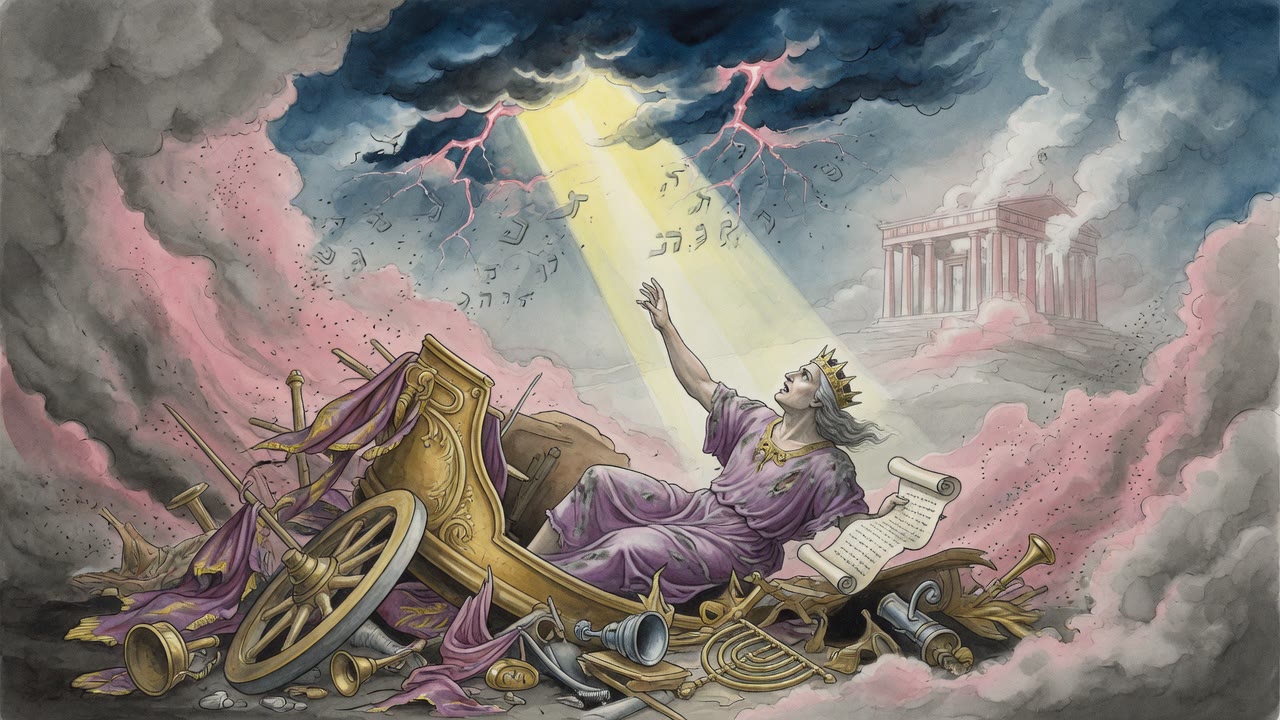
Elsewhere the line of oppressors met a quieter end. Antiochus, days thick with grief, called his friends and named a misery that would not let him sleep.
"The sleep is gone from mine eyes," he said, "and my heart faileth for very care."
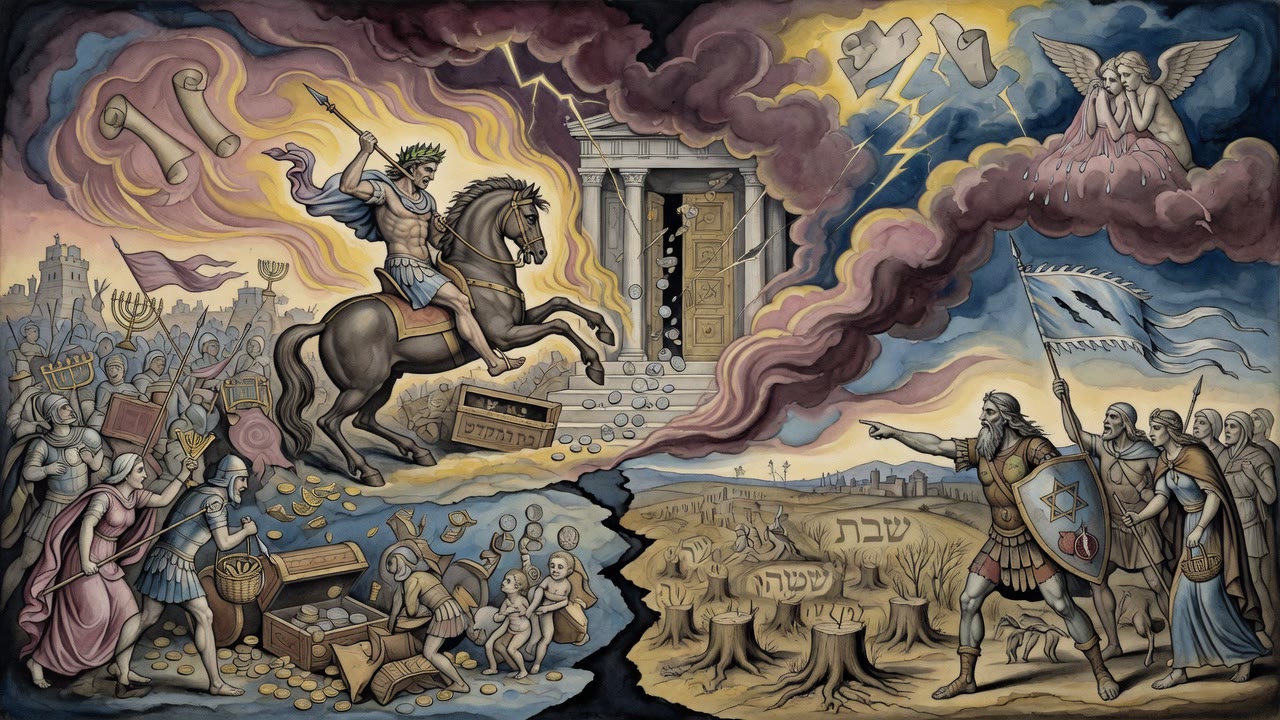
He remembered the evils done at Jerusalem, the vessels of gold and silver taken, the order to destroy the inhabitants of Judea without a cause. Conquest that had looked like policy from a saddle looked like flood from a sickbed. The king who had emptied the Temple now emptied his own rest. Memory became the last plague he could not decree away. The gold of Jerusalem sat in his account as guilt rather than glory.
Three Companies Behind Timotheus
Judas did not answer empire only with defense. He went forth behind the enemy in three companies, trumpets sounding, prayer cried aloud. The host of Timotheus knew the name Maccabeus and fled. About eight thousand fell that day.
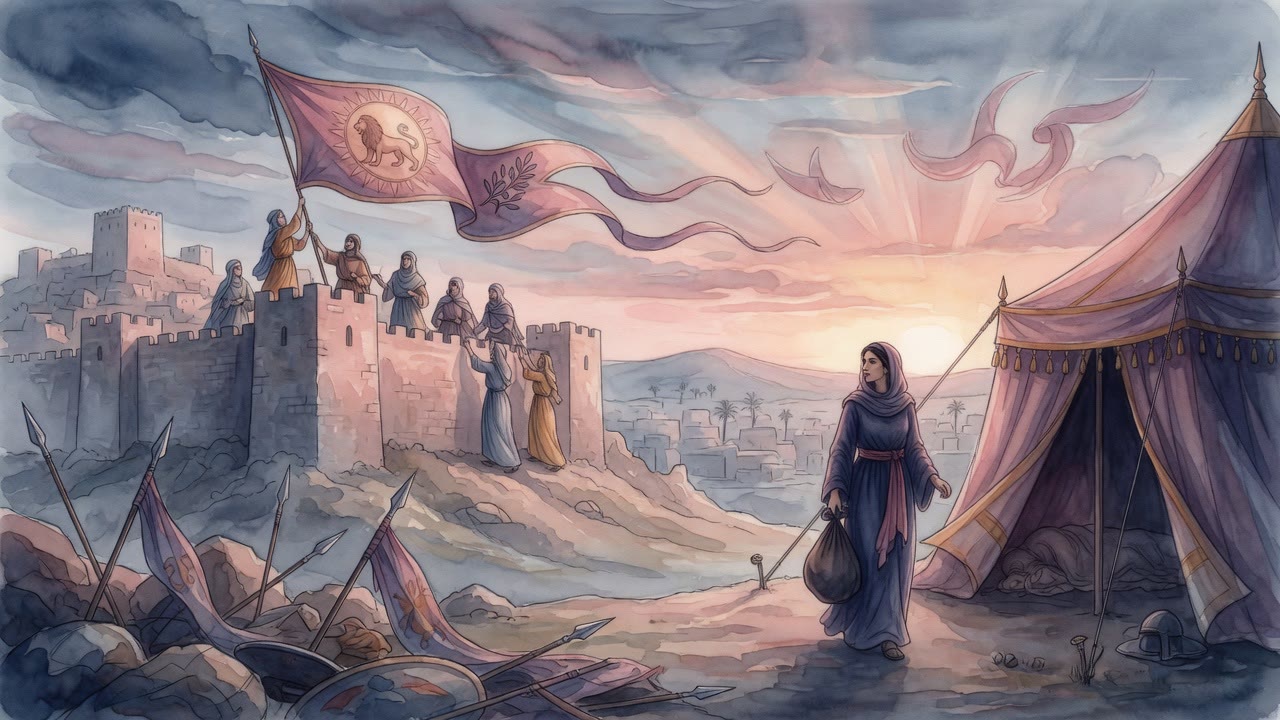
Judas turned aside to Maspha, took it, slew the males, took spoils, and burned the place. From there he took Casphon, Maged, Bosor, and the other cities of the country of Galaad. The map of Gilead learned a new border drawn by a family that refused to trade the altar for a seat granted by Demetrius.
Between Alcimus's Aaronic claim and Nicanor's false peace stood one stubborn fact. Priesthood without fidelity is only costume. A handshake without truth is only a count of steps to an ambush. Judas held the field because the other offers kept dissolving into blood the moment they were trusted.
Demetrius could refuse to see a rival's face. Israel could not refuse to see who arrived with spears behind a blessing. Trumpets and prayer, three companies, burned cities, and a high priest's empty oath all belong to one war over whether Judea would be ruled by a foreign warrant or by men who had already paid for the altar in battle.
← All myths