5 min read

Alcimus Tore the Inner Wall and Lost His Speech

The high priest who served Greek power locked hostages in the birah, smashed the sanctuary's inner wall, and fell paralyzed before he could finish the crime.

Curated by Arthur · Told by Maggid ·
Table of Contents
  1. Hostages in the Tower
  2. Mouth Stopped, Hands Useless
  3. Jonathan at Joppa While Kings Trade Thrones
  4. Alexander's Honor and Demetrius on the Horizon

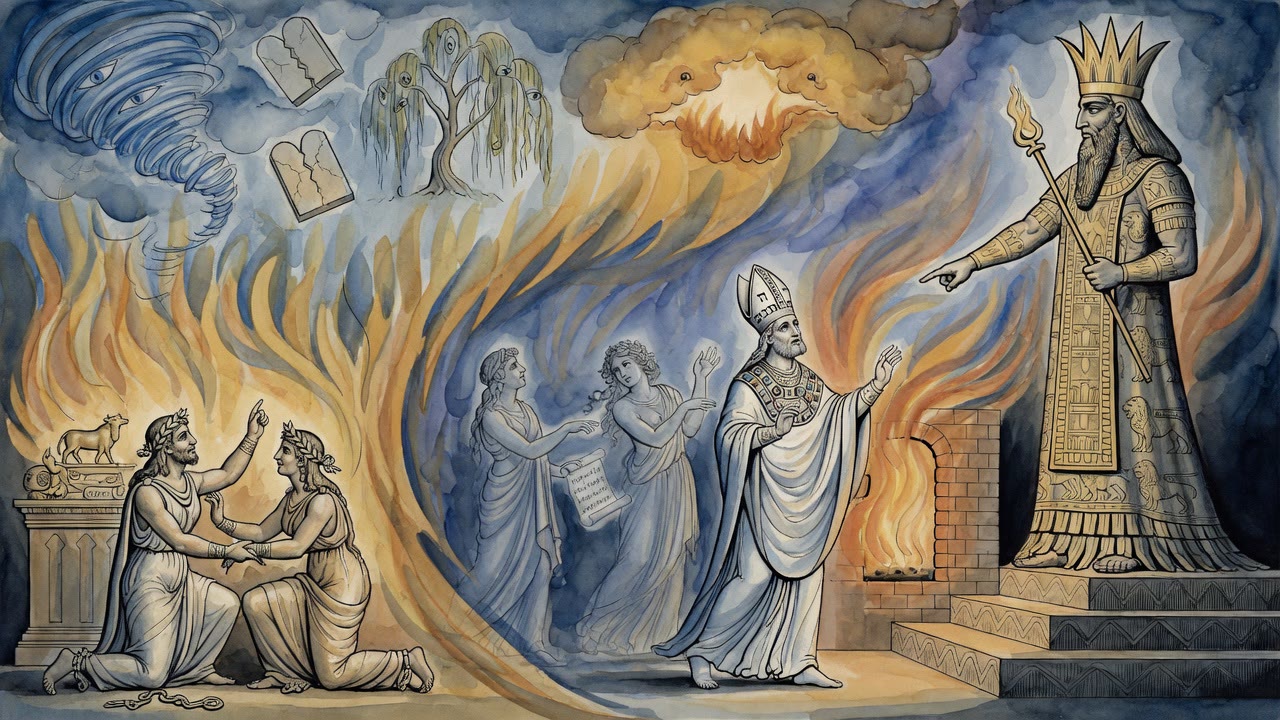
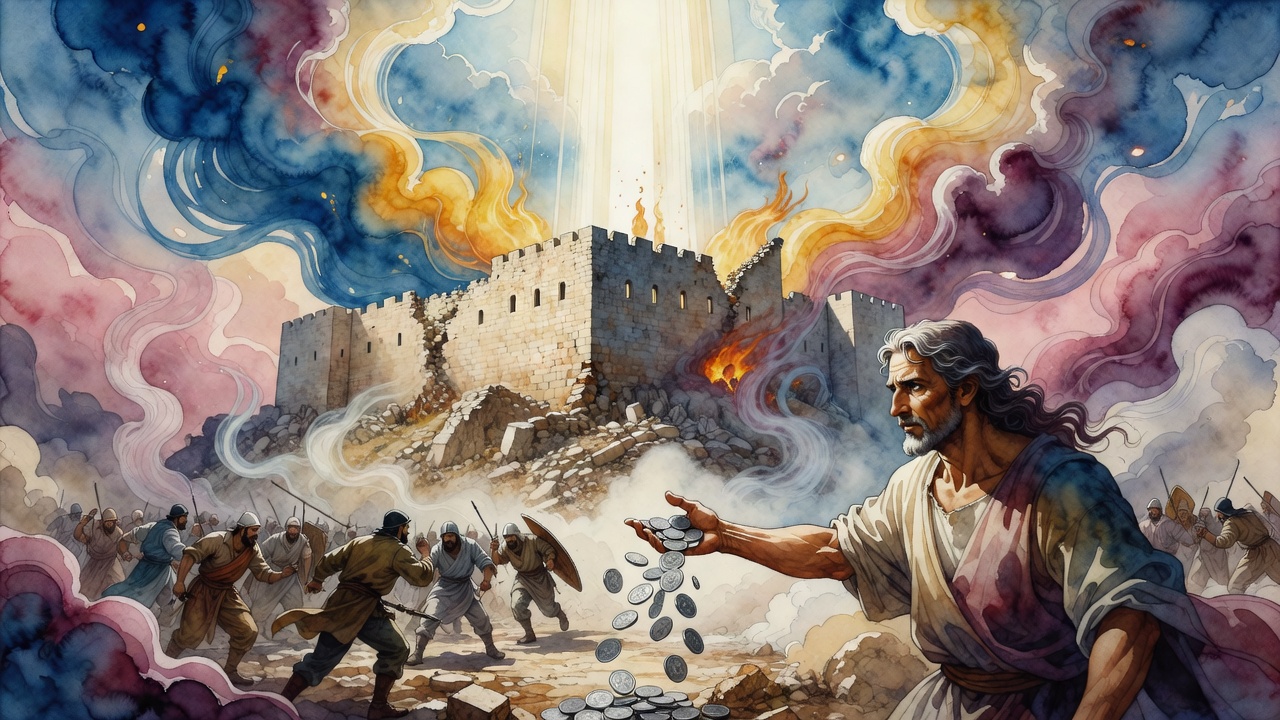
Alcimus wore the high priesthood like a borrowed coat that never fit the shoulders of the Temple. He needed Greek favor more than he needed the fear of heaven. Sons of the chief men of the country went into the birah, the tower in Jerusalem, as hostages for his power. The sanctuary's outer politics turned into a prison roster.

Alcimus Tore the Inner Wall and Lost His Speech Click for full size

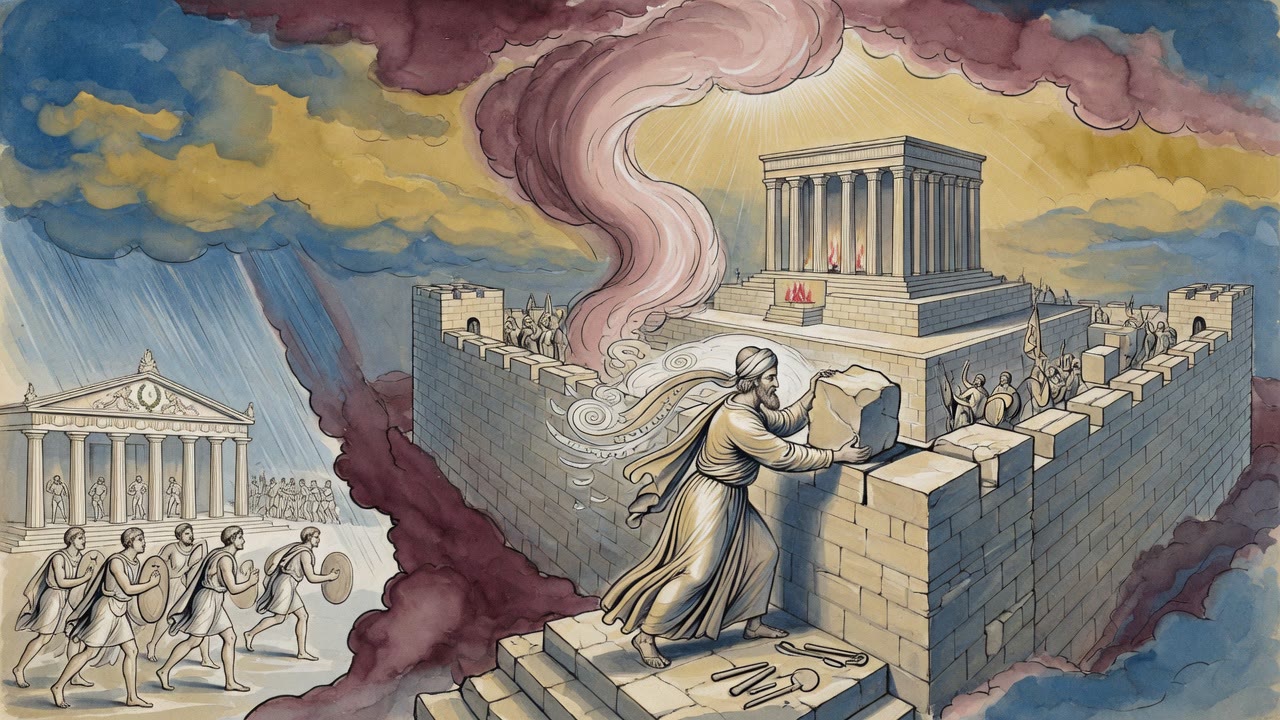
In the hundred and fifty-third year by the Seleucid count, in the second month, he ordered the wall of the inner court demolished. He tore what the book calls the works of the prophets. Stone that had held a boundary between common and holy met tools in a priest's service. The crime was not only architectural. It was a hand on the throat of memory.

Hostages in the Tower

Before the wall fell, the tower filled. Alcimus locked living leverage where Jerusalem could see it. Compliance through fear is an old empire method. He used it with a Hebrew title still attached to his name. The birah became a file cabinet of sons. Fathers outside calculated silence against the sound of chisels inside the court.

Judas was already gone from the field. The generation of open revolt was thinning into the generation of bargains. Alcimus bargained with sacred masonry. He may have thought a rearranged Temple would please the Seleucids. He may have wanted symbols of resistance erased. Either motive ends in the same dust.

1 Maccabees does not decorate the scene with sermons. It sets the act down cold. Demolition. Then plague.

Mouth Stopped, Hands Useless

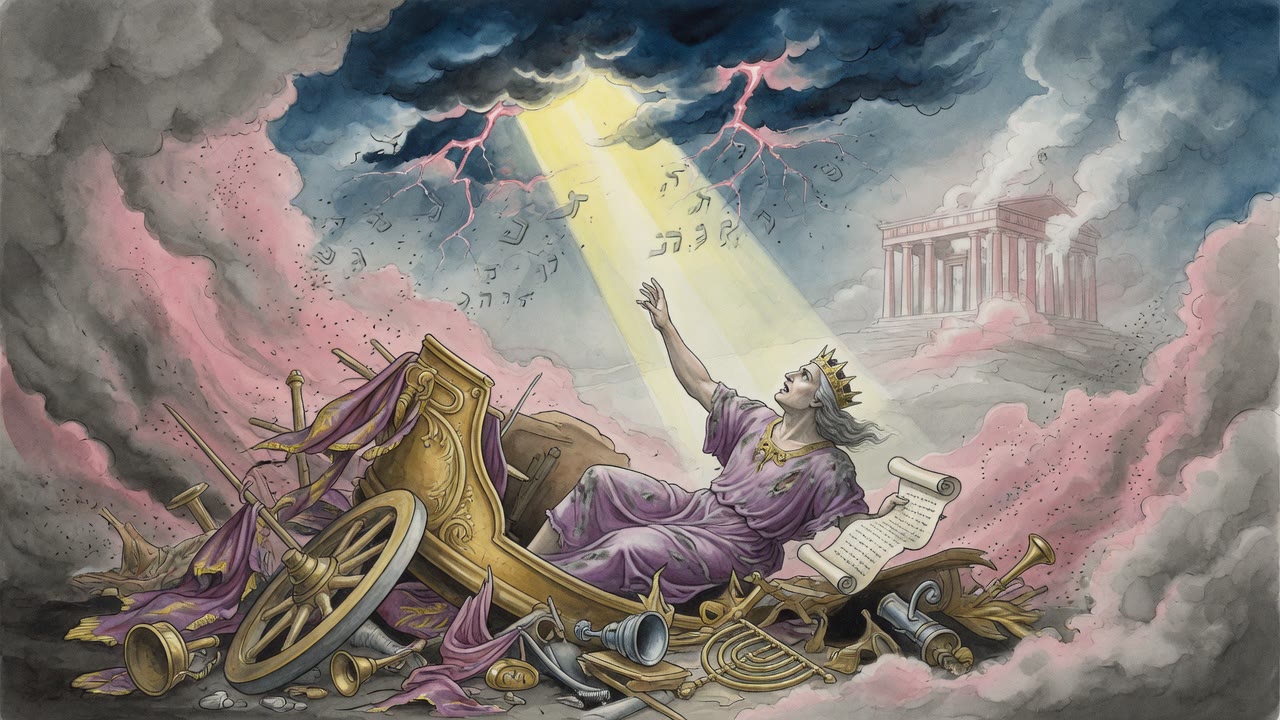
As he began the destructive work, he was plagued. His mouth was stopped. Palsy took him so he could no more speak any thing, nor give order concerning his house. The man of commands lost the instrument of command. Speech, the priest's tool and the politician's weapon, died first.

He died in great torment. The book does not inventory the pain. It does not need to. A high priest who tore the inner wall left the world unable to finish a sentence about his own estate. Hubris wrote a short last chapter. The wall he wanted open closed on him instead.

Power that feeds on hostages and holy stone discovers that heaven can hostage a tongue.

Jonathan at Joppa While Kings Trade Thrones

After brothers fell, Jonathan held the Maccabean line. Court whispers reached a king about all Jonathan had done, hoping to fix blame. The king held his peace. Silence at a throne is never empty. It is a scale being watched.

Then Jonathan met the king with great pomp at Joppa. They saluted. They lodged. The dance of honor and threat shared a roof. Jonathan went with the king as far as the river Eleutherus and returned to Jerusalem. Borders and friendships shifted like sand under the same sandals.

He played both sides of the Seleucid struggle because one side alone would have eaten Judea whole. Pomp at Joppa was not vanity. It was oxygen for a people who had already paid in sons and walls.

Alexander's Honor and Demetrius on the Horizon

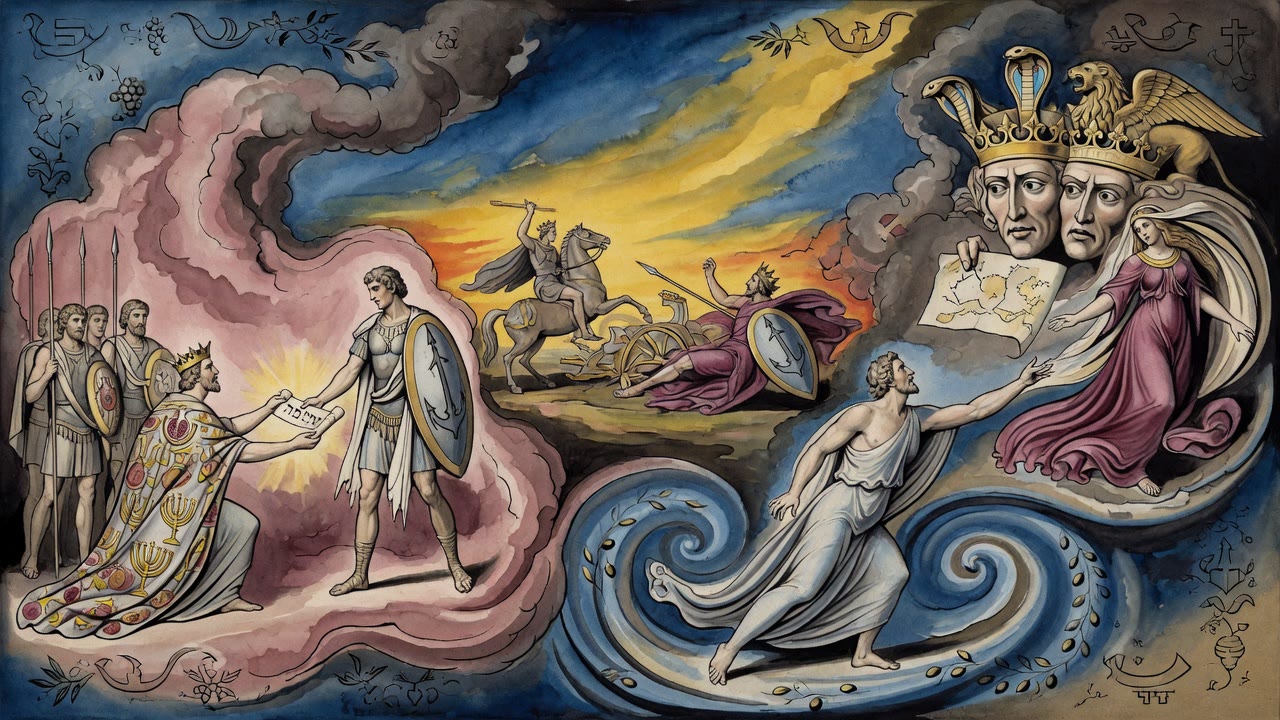
Jonathan returned to Jerusalem with peace and gladness. King Alexander had honored him as a chief friend. The city breathed. Then, in the hundred sixty-fifth year, Demetrius son of Demetrius arrived from Crete to claim ancestral lands. Alexander was "right sorry" and pulled back toward Antioch. Apollonius raised a host in Celosyria and camped at Jamnia by the sea.

Triumph lasted the length of a season. New armies grew in coastal camps. Yesterday's friend counted spears. Jonathan's gladness had to harden again into vigilance. The same book that shows Alcimus silenced for tearing the inner court shows Jonathan surviving by reading kings faster than kings read him.

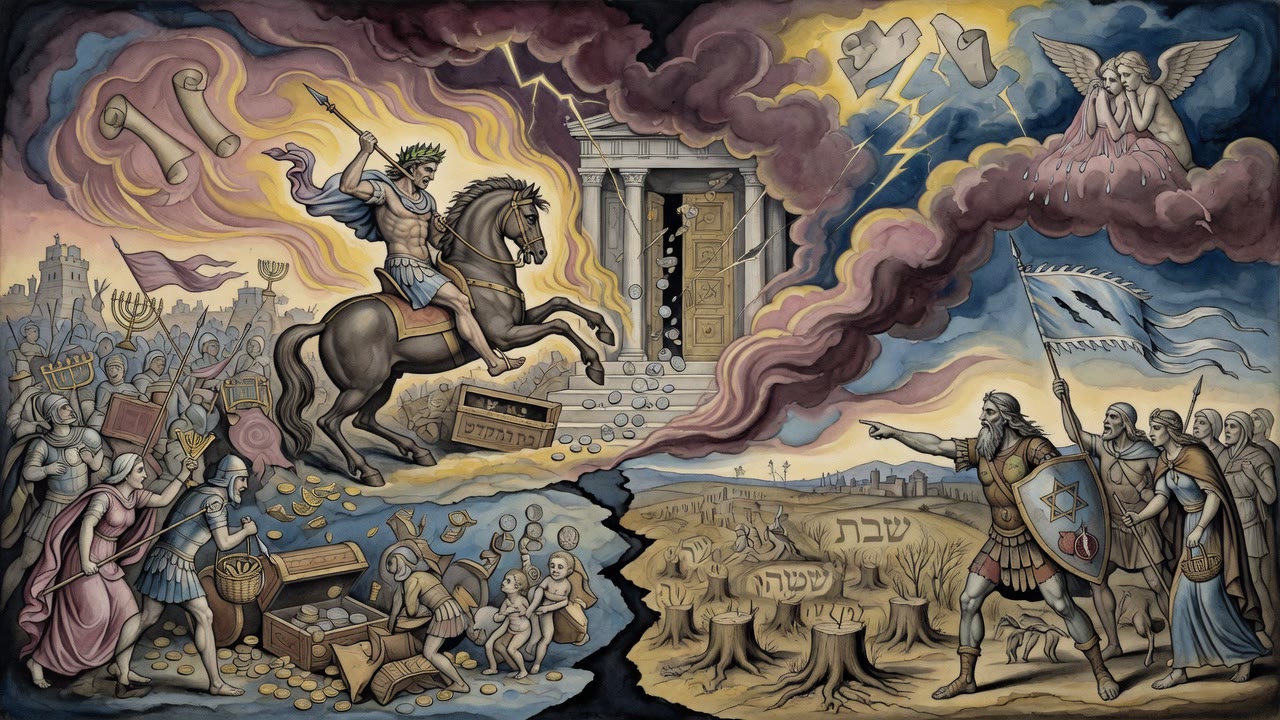
Two kinds of power share these chapters. One smashes the sanctuary and loses speech. One walks river roads with foreign crowns and keeps enough voice to lead Jerusalem another year. The Temple remembers both. Only one still had a mouth when the year turned.

The hostages in the birah were not abstract politics. They were sons with names, held so their fathers would swallow protest while chisels bit the inner court. Alcimus counted on quiet. Heaven counted his words and then took them away.

Jonathan's pomp at Joppa and Alcimus's silence in the sanctuary belong to one era of hard choices. Some men tear holy walls to keep a title. Some men later walk rivers with kings to keep a people breathing. The book sets both on the page without a sermon between them. A reader can smell the dust of the torn court and the salt of the coastal road in the same generation.

When Alcimus could no longer order his house, the house of Israel still needed ordering. Priests who serve empire leave a vacuum that fighters and diplomats must fill. Jonathan stepped into that vacuum with a sword on one hip and a treaty on the other. The Temple, wounded in its inner wall, waited for hands that would not treat prophetic works as debris.

Seleucid years numbered the calendar. Judean blood numbered the cost. Between those counts, a priest lost speech for sacrilege and a commander gained enough honor to enter Jerusalem with gladness that would not last. History rarely offers longer peace than a harvest. The Maccabees spent that harvest carefully.


← All myths

From the tradition

Sources

3 sources

The texts behind this telling. Some cards carry a translation of the source; others are our own retelling of it, and each card says which. Every card links out to the original.

The Book of Maccabees I 9:57The Book of Maccabees I

Retold in our words. Read the original at the link below.Sefaria Community Translation · CC-BY

The Book of Maccabees I turns to Alcimus Faces Judgment.

Alcimus wasn't exactly a beacon of piety. He was appointed High Priest, but his loyalties were… complicated, let's say. He was more interested in currying favor with the ruling powers than in serving God.

To solidify his power, 1 Maccabees 9 tells us he took the sons of the chief men of the country as hostages, imprisoning them in the birah (בירה), the tower at Jerusalem. A cruel move, designed to ensure compliance through fear.

It doesn't stop there. In the hundred and fifty-third year (according to the Seleucid calendar, of course), in the second month, Alcimus ordered the demolition of the wall of the inner court of the sanctuary – the very heart of the Temple! He even tore down what the text calls "the works of the prophets." Now, what exactly were the "works of the prophets"? Some suggest these were structures built or decorated according to prophetic visions, perhaps even memorials to prophets of old. Whatever they were, they were sacred, and Alcimus, in his arrogance, destroyed them.

Why would he do such a thing? Maybe he thought altering the Temple would appease the Seleucids, or perhaps he wanted to erase any symbols of Jewish resistance. Whatever his motivation, it was a brazen act of sacrilege.

But here’s the thing about hubris: often, it’s followed by a fall.

As Alcimus began his destructive work, something terrible happened. The text says he was "plagued." His "mouth was stopped, and he was taken with a palsy, so that he could no more speak any thing, nor give order concerning his house." In other words, he was struck speechless and paralyzed. The man who issued commands, who desecrated the Temple, was suddenly silenced, rendered powerless.

And the story doesn't end there. Alcimus died in great torment. The text doesn't elaborate on the nature of his suffering, but the implication is clear: his actions had consequences.

1 Maccabees doesn’t offer a theological explanation. It simply presents the events: the desecration, the sudden illness, the agonizing death. But it’s hard not to see it as a cautionary tale. What happens when we prioritize power over principle? What happens when we defile what is sacred? Alcimus's story is a stark reminder that actions, especially those driven by ego and disregard for the divine, have repercussions.

Full source
The Book of Maccabees I 11:11The Book of Maccabees I

Retold in our words. Read the original at the link below.Sefaria Community Translation · CC-BY

He was always navigating treacherous political waters, trying to secure the best future for his people.

Our story today focuses on just that precarious balancing act. Remember, Jonathan has taken over the leadership of the Maccabees after his brothers' deaths, and he's trying to solidify Jewish autonomy amidst the swirling power struggles of the Seleucid Empire.

We pick up the story with some unnamed folks whispering in the ear of the king – never a good sign. "They told the king whatsoever Jonathan had done… to the intent he might blame him: but the king held his peace." (1 Maccabees 11). It's a classic case of court intrigue. Someone's trying to undermine Jonathan, to paint him in a bad light to the king. But for now, the king remains silent. He's playing his own game.

Then, in a dramatic shift, Jonathan meets the king himself! "Then Jonathan met the king with great pomp at Joppa, where they saluted one another, and lodged." (1 Maccabees 11). The leaders meet with a great display of honor and respect. It sounds like a carefully choreographed dance. They greet each other, and they stay together.

After this encounter, "Jonathan, when he had gone with the king to the river called Eleutherus, returned again to Jerusalem." (1 Maccabees 11). The details are sparse, but it suggests a journey, a shared experience, perhaps even negotiations, before Jonathan heads back to Jerusalem. He is in Seleucid territory, seemingly secure.

But the peace is an illusion.

Because right after that, we get a glimpse of the realpolitik happening behind the scenes. "King Ptolemee therefore, having gotten the dominion of the cities by the sea unto Seleucia upon the sea coast, imagined wicked counsels against Alexander." (1 Maccabees 11). King Ptolemy, another player in this game of thrones, is plotting against King Alexander. He’s taken control of coastal cities and is now brewing something evil.

And who does Ptolemy reach out to? "Whereupon he sent ambassadors unto king Demetrius, saying..." (1 Maccabees 11). He sends envoys to King Demetrius, a rival of Alexander. The alliances are shifting. Someone is playing both sides.

What does this all mean for Jonathan? He's caught in the middle of these power struggles. He must stay alert, because any misstep could have dire consequences for his people. Even when he appears to be in favor with one king, danger lurks around the corner in the form of another.

It's often about shrewd negotiation, careful observation, and an ability to anticipate the next move in a complex political game. And, perhaps most importantly, about understanding that even the most powerful allies can turn into enemies in the blink of an eye.

Full source
The Book of Maccabees I 10:75The Book of Maccabees I

Retold in our words. Read the original at the link below.Sefaria Community Translation · CC-BY

The Book of Maccabees I turns to King Alexander Honors Jonathan as a Chief Friend.

Can you picture Jonathan's return to Jerusalem? After years of struggle and warfare, he comes back "with peace and gladness." A hero's welcome, no doubt. The people must have been overjoyed.

Hold on. This is history, and history rarely stays still for long.

Just when things seem settled, the winds of change start to blow again. The very next verse tells us that "in the hundred threescore and fifth year," which would be 147 BCE, a new player emerges: Demetrius, son of Demetrius, arrives from Crete, staking his claim to his ancestral lands. It's a challenge to King Alexander's rule, a direct threat.

How did Alexander react? He "was right sorry," the text says, using a wonderfully understated phrase that surely masks a great deal of anxiety. He hightailed it back to Antioch, his capital, to shore up his defenses.

And then, another twist! Demetrius appoints Apollonius as the governor of Celosyria, tasking him with raising a massive army. Apollonius sets up camp in Jamnia, a coastal city, poised to strike.

What does it all mean? Well, it's a reminder that even in moments of triumph, vigilance is key. The world keeps spinning, new threats arise, and yesterday's allies can quickly become tomorrow's rivals. Jonathan's moment of glory is significant, but it's also a brief pause in a much larger, more complicated struggle. And that, perhaps, is one of the most enduring lessons we can take from the Book of Maccabees, a lesson as relevant today as it was over two thousand years ago.

Full source