5 min read

Simon Refused a Thousand Talents and Sent His Sons

Antiochus billed Judea a thousand talents, five hundred for the cities and five hundred for harm done. Athenobius found a cupboard of gold and silver plate.

Curated by Arthur · Told by Maggid ·
Table of Contents
  1. Gold Plate Under a Foreign Eye
  2. We Did Not Take a Foreign Land
  3. An Old Father Chooses Warriors
  4. Hope Written to Egypt
  5. The Invoice That Failed
Simon Refused a Thousand Talents and Sent His Sons Click for full size

Gold Plate Under a Foreign Eye

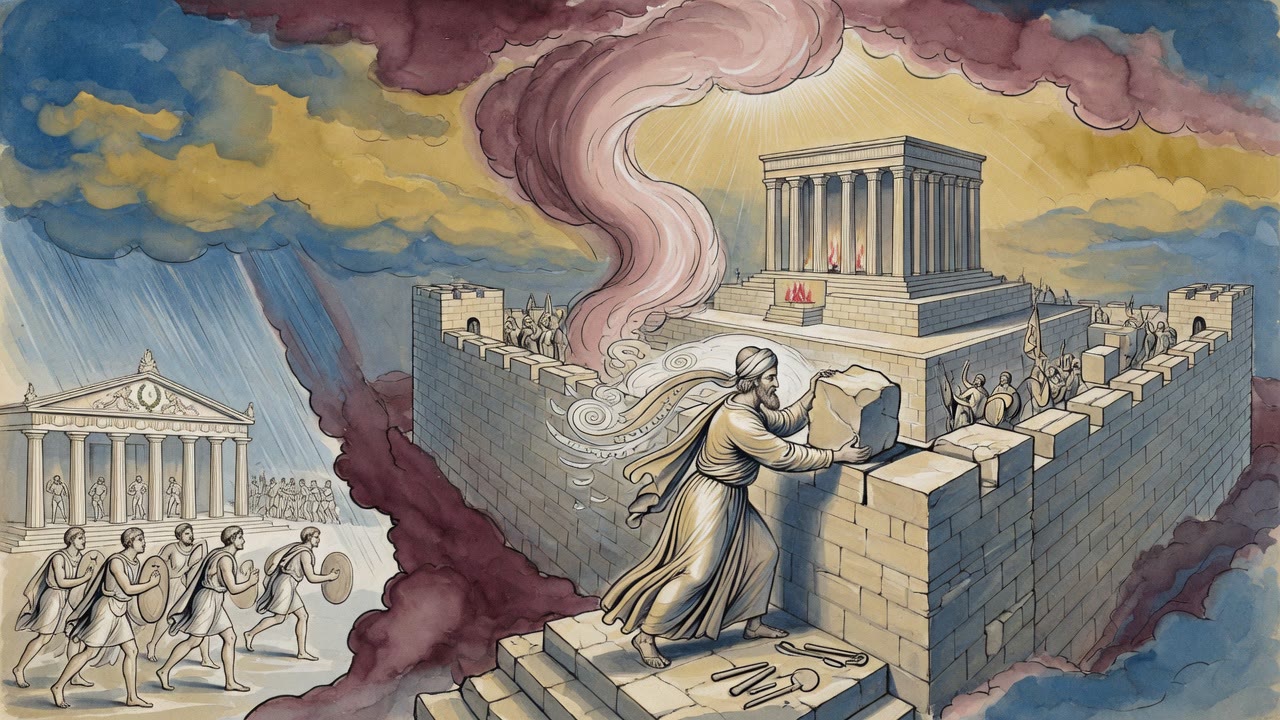
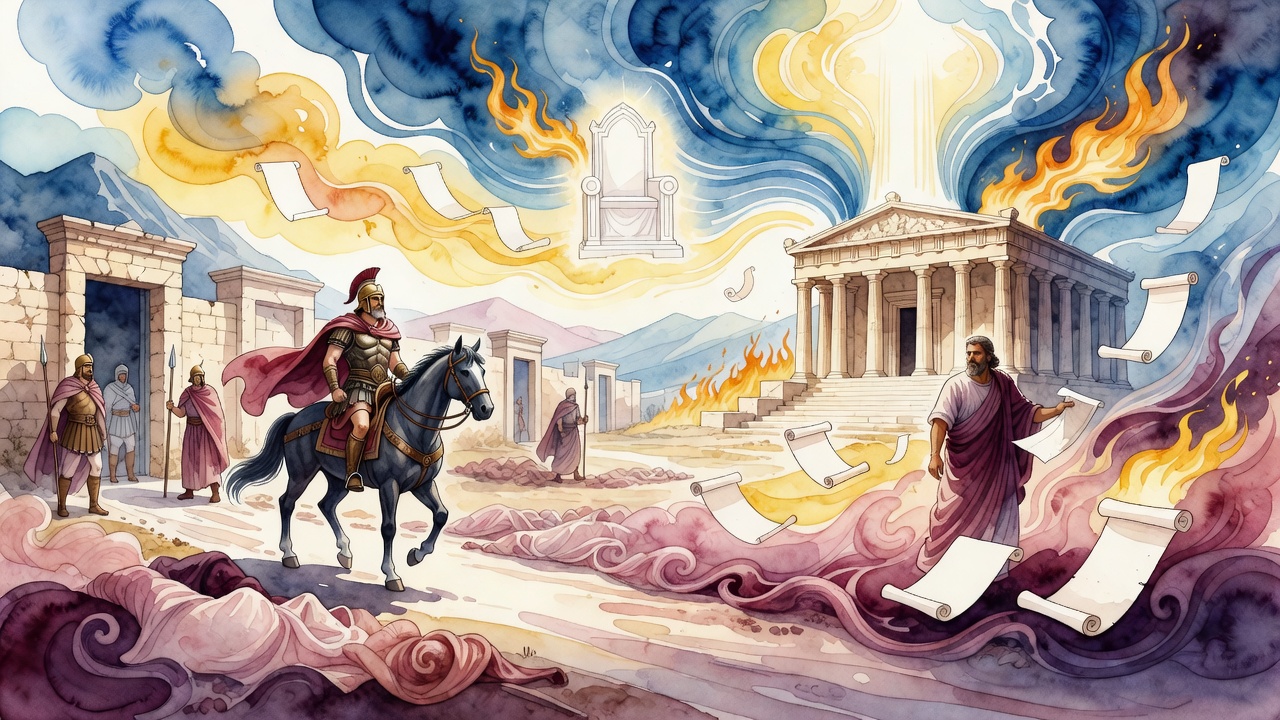
Simon Maccabeus ruled when the Seleucid court still believed Judea could be billed like a rebellious estate. Antiochus VII Sidetes sent his "friend" Athenobius to Jerusalem with a blunt account. Return the cities taken outside Judea. Surrender the tribute collected there. Or pay: five hundred talents for the cities, five hundred more for "the harm that ye have done." A thousand talents of silver as the price of breathing free.

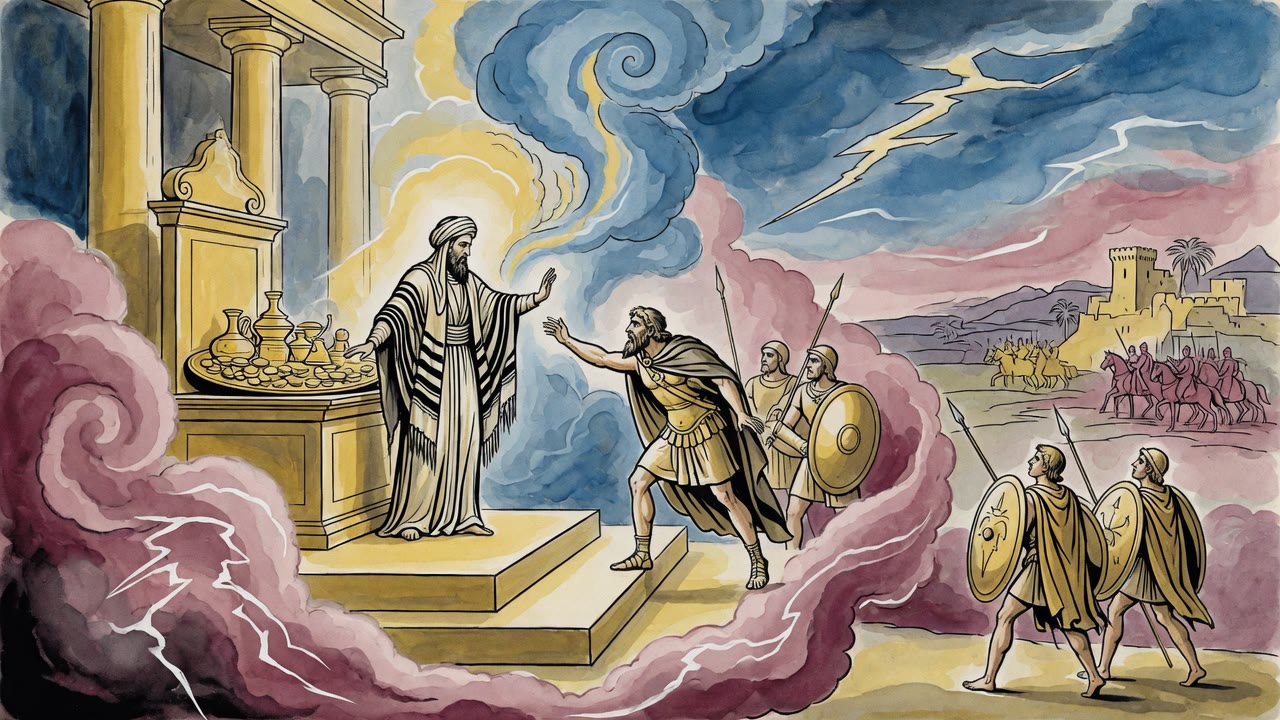
Athenobius arrived ready to scold a bandit. He found a ruler. Simon's glory filled the room: a cupboard of gold and silver plate, a great attendance of servants, the bearing of a man who had already become high priest and head of a people. The envoy's swagger thinned. He delivered the message anyway. Empires prefer invoices to funerals when the invoice might work.

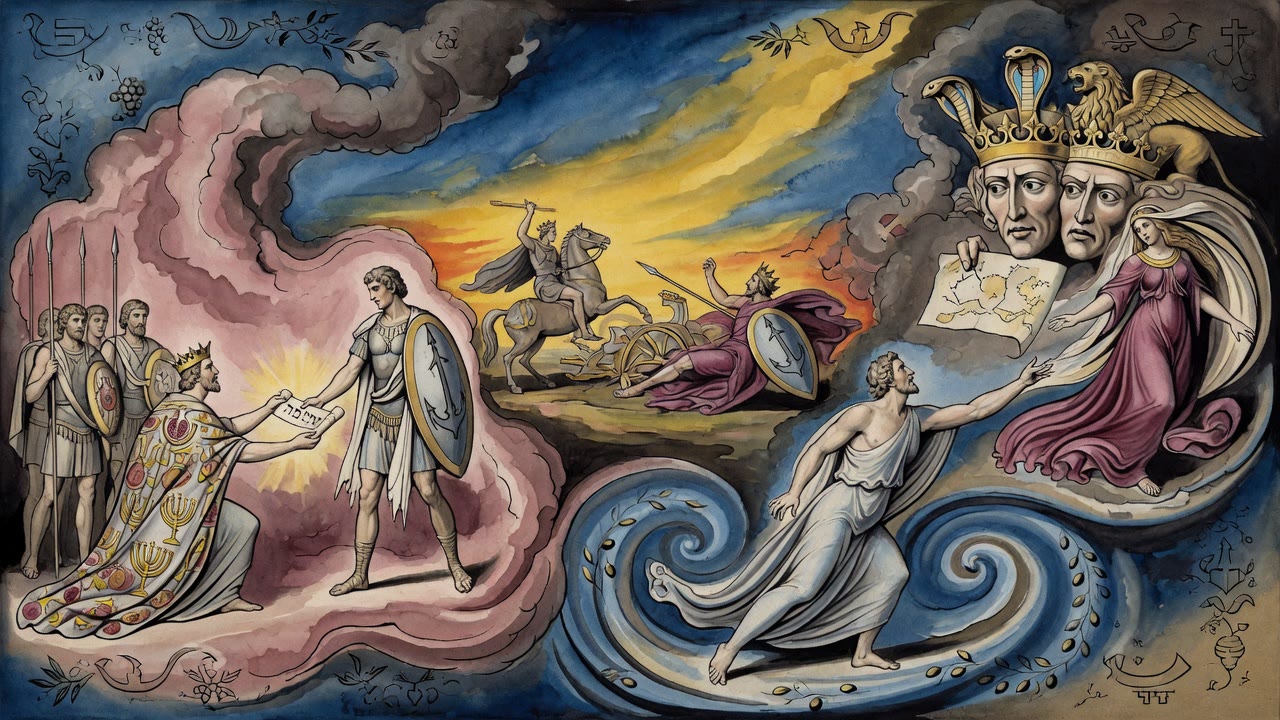
Simon had beautified the sanctuary and multiplied the Temple's vessels. He had renewed leagues written on brass with Rome and Sparta after Jonathan's death. The man who faced Athenobius was not improvising nationhood. He was defending a house already furnished with diplomacy and gold.

We Did Not Take a Foreign Land

Simon's answer did not crawl. The land was the inheritance of the fathers, seized by enemies for a time, reclaimed by God's help. He would not treat Judea's cities as stolen goods on a Greek ledger. The thousand talents were a tax on memory, an attempt to make liberation look like theft. Simon refused the frame before he refused the coins.

Athenobius had seen the plate and the attendance. He carried home a report harder than silver: the Jews had a prince who looked like a prince, and that prince did not haggle his country into a receipt. The Seleucid demand assumed shame. Simon answered with title deeds older than the empire that sent the bill.

Between the envoy's astonishment and the king's rage stretched a simple fact. A people that had purified a Temple would not rent its freedom back to the men who had once defiled it.

An Old Father Chooses Warriors

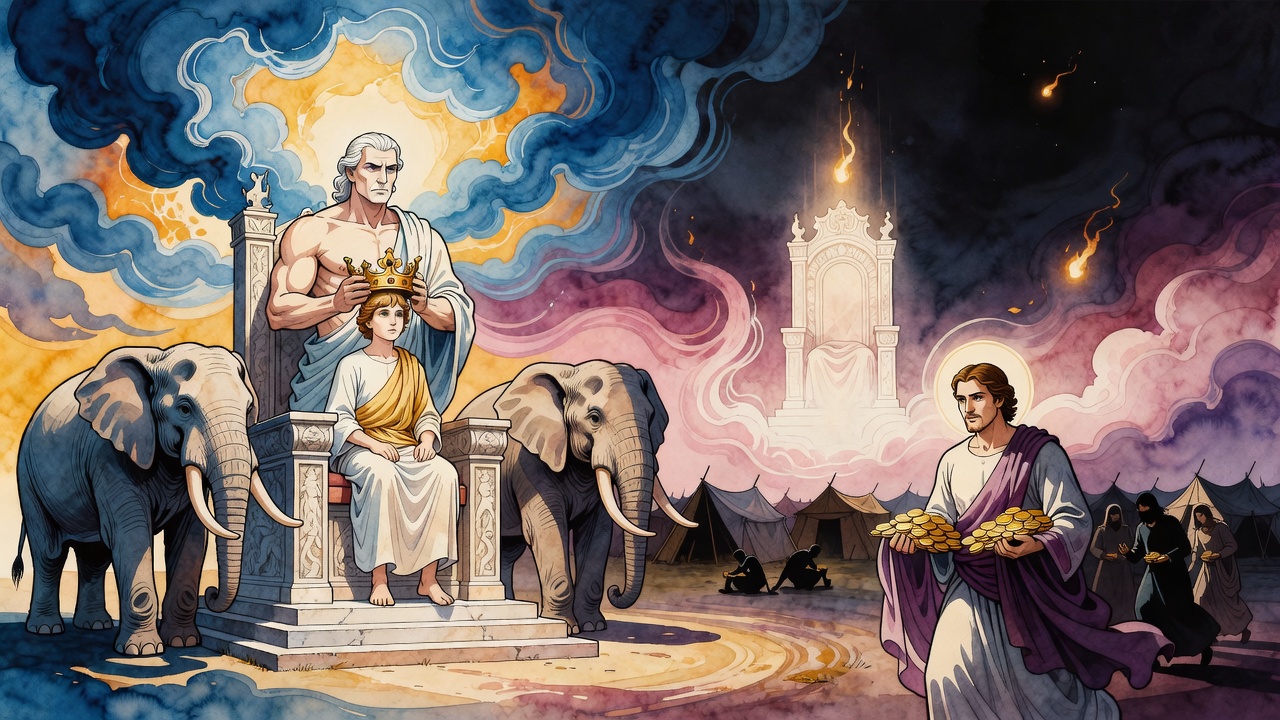
Age found Simon with unfinished enemies. He called his eldest sons, Judas and John, and set the family's ledger of blood before them. "I, and my brethren, and my father's house, have ever from my youth unto this day fought against the enemies of Israel; and things have prospered so well in our hands, that we have delivered Israel oftentimes." The sentence was not nostalgia. It was a transfer of arms.

"But now I am old, and ye, by God's mercy, are of a sufficient age: be ye instead of me and my brother, and go and fight for our nation, and the help from heaven be with you." He chose twenty thousand men of war with horsemen. They went out against Cendebeus and rested that night at Modin, the old ground where the revolt had once found its first fire. The father who refused a thousand talents sent his sons with something costlier: his office, his wars, and a blessing that named heaven as ally.

Plate and attendance had impressed an envoy. Sons in armor would answer the army that followed the invoice.

Hope Written to Egypt

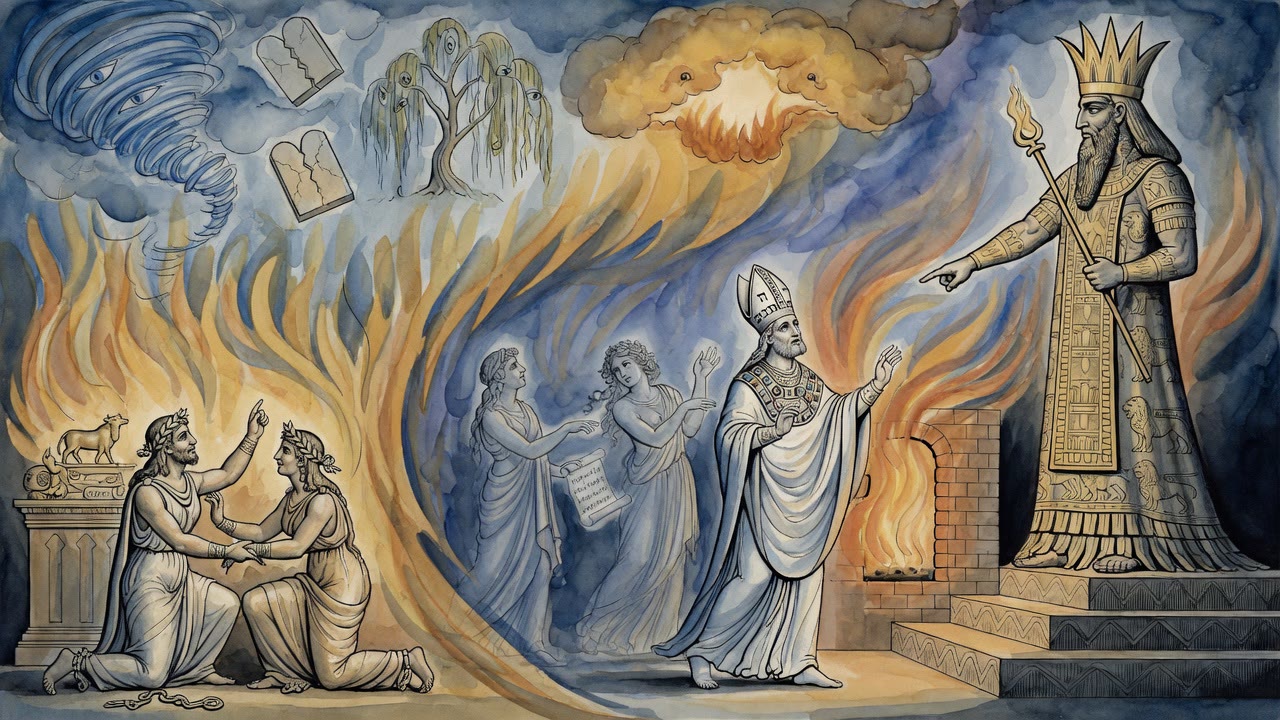
Another Jewish hand, writing of Judah Maccabeus and his brothers, spoke the hope that framed Simon's generation: that the Lord would redeem the nation, return the portion, the kingdom, and the service of the priests promised in the Torah. The purification of the Temple was already a beginning. Dispersed ones watched for gathering. Wars against Antiochus and his line were not only politics. They were the defense of a soul that refused Greek altars in the Holy Place.

Simon stood in that hope when he polished vessels and when he said no to Athenobius. Beautifying the sanctuary and refusing tribute were one policy: the House of God would not look poor while its people looked free, and freedom would not be sold to make a Seleucid ledger balance.

The Invoice That Failed

A thousand talents can buy many things. They could not buy Simon's nod. The envoy who came to humble a rebel left having seen a court. The sons who rode from Modin carried a father's unfinished war. Between gold plate and night camp runs the Maccabean claim that inheritance is not tribute, and that old men may still appoint the next sword.

Judea's independence never looked inevitable to the empires around it. It looked, for a moment in Athenobius's eyes, like a cupboard of plate and a man too calm to panic. That calm was bought with brothers dead and a Temple cleaned. Simon priced it above a thousand talents and then paid again with the youth of Judas and John. The help from heaven he named was the same hope the letters to Egypt already treated as begun.


← All myths

From the tradition

Sources

4 sources

The texts behind this telling. Some cards carry a translation of the source; others are our own retelling of it, and each card says which. Every card links out to the original.

The Book of Maccabees I 15:33The Book of Maccabees I

Retold in our words. Read the original at the link below.Sefaria Community Translation · CC-BY

Forget Twitter and press conferences. Lots of it.

That's the scene in 1 Maccabees 15.

Simon Maccabeus is now the leader, and things are… complicated.

The Seleucid king, Antiochus VII Sidetes, isn't exactly thrilled with the Jews' newfound independence. He sends his "friend" Athenobius to Jerusalem with a rather blunt message: "Hand back the cities you've conquered outside of Judea, and give up the tribute you've been collecting."

Or, if Simon prefers, he can pay up. How much? Five hundred talents of silver for the cities, and another five hundred talents for "the harm that ye have done." A talent, by the way, was a unit of weight – and a hefty sum of money. We're talking serious coinage here.

Athenobius, the king's envoy, arrives in Jerusalem. He sees Simon, not as a rebel leader, but as something else entirely. The text says he saw Simon's "glory" – the regal splendor surrounding him. He's not just impressed by Simon himself; he's blown away by the "cupboard of gold and silver plate," a dazzling display of wealth. And then there's Simon's "great attendance" – the sheer number of people surrounding and serving him.

Athenobius is astonished. Absolutely astonished. He came expecting to deal with a rogue insurgent, but he found something else entirely: a king in his own right.

He delivers the king's message, probably with a bit less swagger than he intended. The message itself is simple: return what you've taken, or pay the price.

But the real story isn't just in the words, is it? It's in the power dynamics, the display of wealth, and the sheer audacity of the Maccabees. They weren't just fighting for religious freedom; they were building a nation.

Will he cave to the king's demands? Or will he stand his ground and risk war? That, my friends, is a story for another time. But this brief glimpse into the world of 1 Maccabees reminds us that even in the midst of conflict, appearances matter, and the power of a strong leader can be truly astonishing.

Full source
The Book of Maccabees I 16:5The Book of Maccabees I

Retold in our words. Read the original at the link below.Sefaria Community Translation · CC-BY

The Book of Maccabees I turns to Simon Maccabeus's Offering.

In the First Book of Maccabees, chapter 16, we find Simon Maccabeus at a pivotal moment. He’s getting older. He’s led his people through incredible struggles, against seemingly impossible odds. He knows his time is drawing to a close.

So, what does he do? He calls his two eldest sons, Judas and John, to him. scene for a moment. A father, a warrior, looking into the eyes of his sons, the next generation.

He speaks to them, and his words are simple, powerful. He says, "I, and my brethren, and my father’s house, have ever from my youth unto this day fought against the enemies of Israel; and things have prospered so well in our hands, that we have delivered Israel oftentimes." (1 Maccabees 16).

The deep connection to his family's legacy, their unwavering commitment to protecting their people? He’s not just talking about battles won; he's talking about a sacred duty, a covenant passed down through generations.

But then comes the poignant part. "But now I am old, and ye, by God’s mercy, are of a sufficient age: be ye instead of me and my brother, and go and fight for our nation, and the help from heaven be with you." (1 Maccabees 16).

He acknowledges his own mortality. He recognizes the strength and readiness in his sons. He bestows upon them the mantle of leadership, the responsibility to defend their nation. And he offers them something even more precious: his blessing, and the hope of divine assistance.

"The help from heaven be with you." What a powerful statement. It's not just about military strategy or political maneuvering. It’s about faith, about believing that they are part of something bigger, that they are acting in accordance with God's will.

And then, the practical preparations begin. "So he chose out of the country twenty thousand men of war with horsemen, who went out against Cendebeus, and rested that night at Modin." (1 Maccabees 16). An army is assembled, ready to face the enemy. The torch is passed.

What legacy are we leaving? What values are we passing on to the next generation? Are we preparing them to face the challenges of the future with courage, with faith, and with the unwavering belief that they, too, can make a difference?

The story of Simon Maccabeus and his sons is more than just a historical account. It’s a timeless reminder of the importance of family, of faith, and of the enduring power of hope. And it all began in Modin.

Full source
The Book of Maccabees I 14:19The Book of Maccabees I

Retold in our words. Read the original at the link below.Sefaria Community Translation · CC-BY

It wasn't all that different from today, really, a mix of strategic interests, personal relationships, and, of course, good old-fashioned diplomacy. The source turns to The Book of Maccabees I 14 and see how the Hasmonean dynasty navigated the complex world of international relations.

First off, we have a brief but important mention: "He beautified the sanctuary, and multiplied vessels of the temple." This "he" refers to Simon Maccabaeus, who took over leadership after his brother Jonathan’s death. What does this seemingly simple statement tell us? It speaks volumes about Simon's priorities. He wasn't just a military leader; he understood the importance of the Temple in Jerusalem as the heart of Jewish life. By beautifying it and increasing the number of its vessels, he was solidifying his legitimacy and connecting with the people on a spiritual level. A bit like a politician today investing in public works. Now, the news of Jonathan's death reached far and wide. "When it was heard at Rome, and as far as Sparta, that Jonathan was dead, they were very sorry." Rome, the burgeoning superpower, and Sparta, the legendary city-state, both mourned the loss of this Jewish leader. It shows the kind of respect and recognition Jonathan had earned on the world stage. But the world keeps turning, and political realities don't pause for grief.

"As soon as they heard that his brother Simon was made high priest in his stead, and ruled the country, and the cities therein: They wrote unto him in tables of brass, to renew the friendship and league which they had made with Judas and Jonathan his brethren." The Romans and the Spartans acted swiftly. Tables of brass? That’s not your average email. These were official, permanent records, meant to last. They were essentially saying, "Okay, Jonathan is gone, but we still value our relationship with you and your people." It's evidence of the shrewd diplomacy of the Maccabee brothers that these powerful entities were so eager to maintain the alliance.

What's truly fascinating is the public nature of this renewal. "Which writings were read before the congregation at Jerusalem." This wasn't a backroom deal. Simon wanted everyone to know that he had the support of major powers. It boosted morale, strengthened his position, and sent a clear message to any potential enemies: Don't mess with us. We’ve got friends in high places.

And that's where our passage ends, with the promise of the letter from the Lacedemonians (Spartans). We're left wondering exactly what the Spartans had to say, what kind of promises they made, and what the future held for this small nation working through the treacherous waters of ancient politics.

Full source
The Book of Maccabees II 2:20The Book of Maccabees II

Retold in our words. Read the original at the link below.Sefaria-hosted English translation · CC-BY

It’s a longing, a hope so fervent it practically vibrates off the page.

This ancient text, not included in the Tanakh but preserved in the Septuagint, gives us a glimpse into the heart of a people yearning for deliverance.

The author, writing to the Jewish community in Egypt, speaks of a profound hope. A hope “of The Lord our God that he will redeem his nation, and return to us our portion, the kingdom, and the service of the priests that was promised in His holy Torah.” It's not just about physical freedom, though that's certainly part of it. It’s about restoring the very essence of their relationship with God, re-establishing the sacred rituals, and reclaiming their rightful place.

It's not just a passive hope. It’s an active expectation. A belief that God is already at work.

"So he should be merciful upon us and gather our dispersed from under the heavens, to bring them to our holy land, just like he has begun to remove us from our distant places, and he purified his temple."

Notice the phrase, "just like he has begun." It’s a powerful statement of faith. They see the beginnings of redemption already unfolding. The purification of the Temple, a monumental event in itself, is viewed as a sign, a promise of greater things to come. It's as if they're saying, "We see what you're doing, God. Keep going!"

The book then pivots to Judah Maccabeus and his brothers.

“And the deeds of Judah Maccabeus, his brothers, the purification of the temple from its impurity, the dedication ceremony of the temple, and the wars against Antiochus the great and his son Aopater.”

These are the heroes of the hour. The ones who took up arms against seemingly insurmountable odds to defend their faith and their land. The purification of the Temple – the very act we celebrate during Chanukah (the Festival of Lights) – is central. And the battles against Antiochus, the Seleucid king who defiled the Temple, and his son, are not just political or military conflicts. They are battles for the very soul of the Jewish people.

What's so striking about this passage is its unwavering optimism in the face of adversity. It’s a call to remember the promises of old and to believe that redemption, even when it seems distant, is always possible.

And perhaps, that's a message that resonates just as powerfully today. Don't you think?

Full source