Simon Maccabeus Fortified the Temple Mount and Stayed
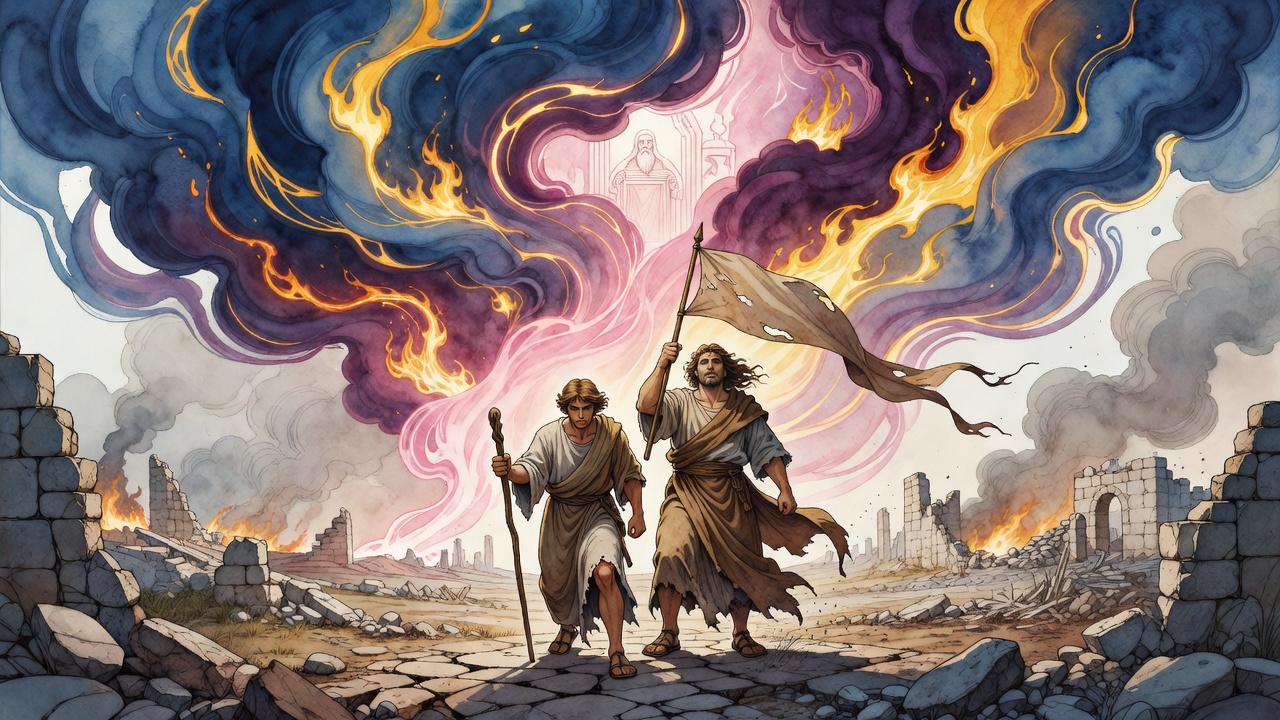
While some Jews volunteered for Greek laws and a gymnasium, Simon strengthened the Temple hill, lived there with his men, and made the day a memorial.
Table of Contents
 Click for full size
Volunteers for Another Law
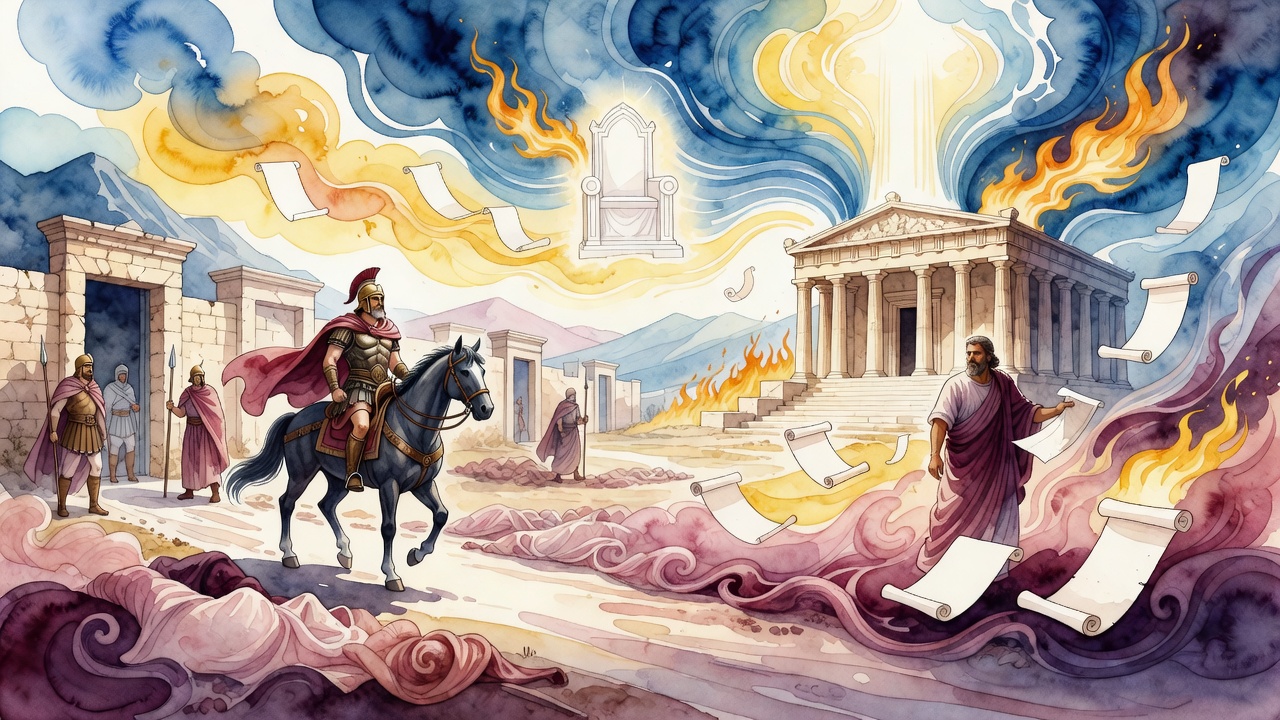
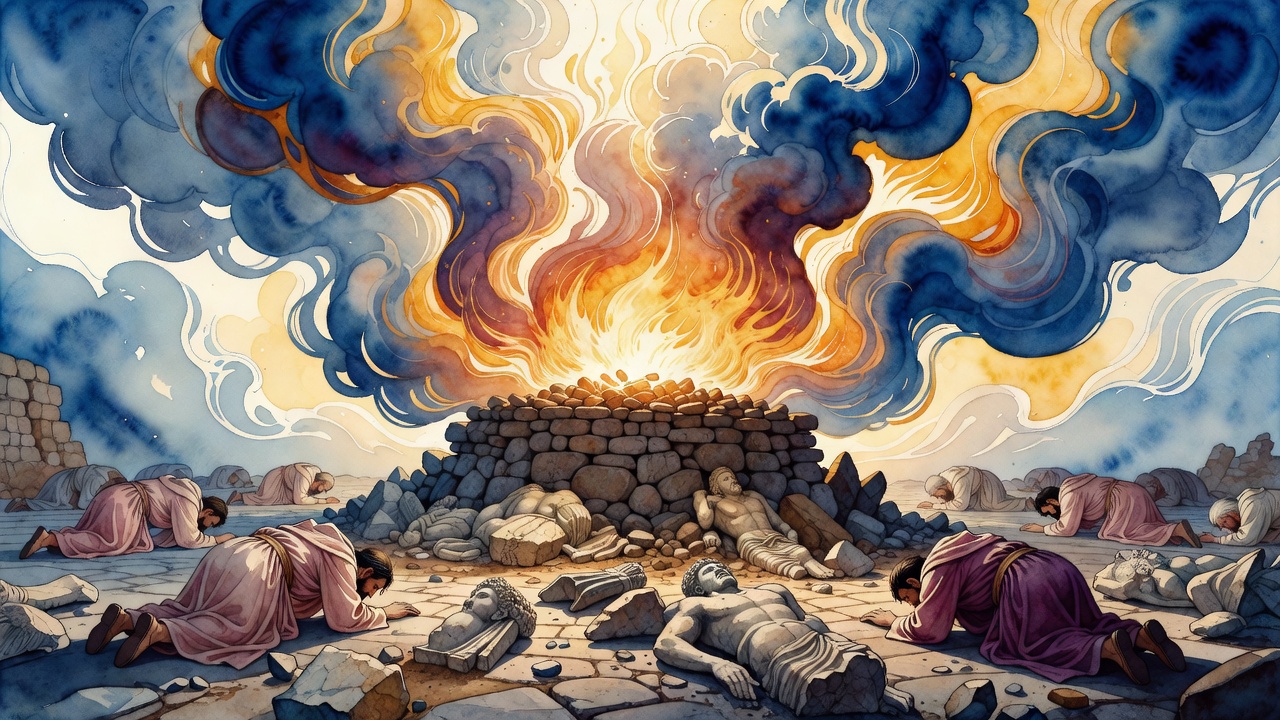
Before any fort could hold, a softer war opened inside Jerusalem. "And people from the people volunteered and went to the king, and the king ordered them to do according to the laws of the Gentiles." They volunteered. Not only under whip. Under hunger for belonging in a Greek world. They built a gymnasium in Jerusalem according to those laws, a house of bodies and customs that pulled the center of gravity away from the Temple.
Assimilation here is not a mood. It is architecture. A gymnasium in the holy city is a statement about which training shapes a man.
Some ran to the king with eagerness that still stings on the page. They wanted permission to stop being distinct. The king, pleased, ordered them the freedom to erase themselves. That is a strange freedom, and the book refuses to romanticize it.
After Brothers Fall, Simon Holds the Hill
Simon Maccabeus rose when the revolt needed more than a famous name. His brother Judah had lit the war. Simon secured a stretch of independence you could live inside. The people recognized his courage and wisdom and set a day of gladness to remember the recognition, a calendar mark against forgetting.
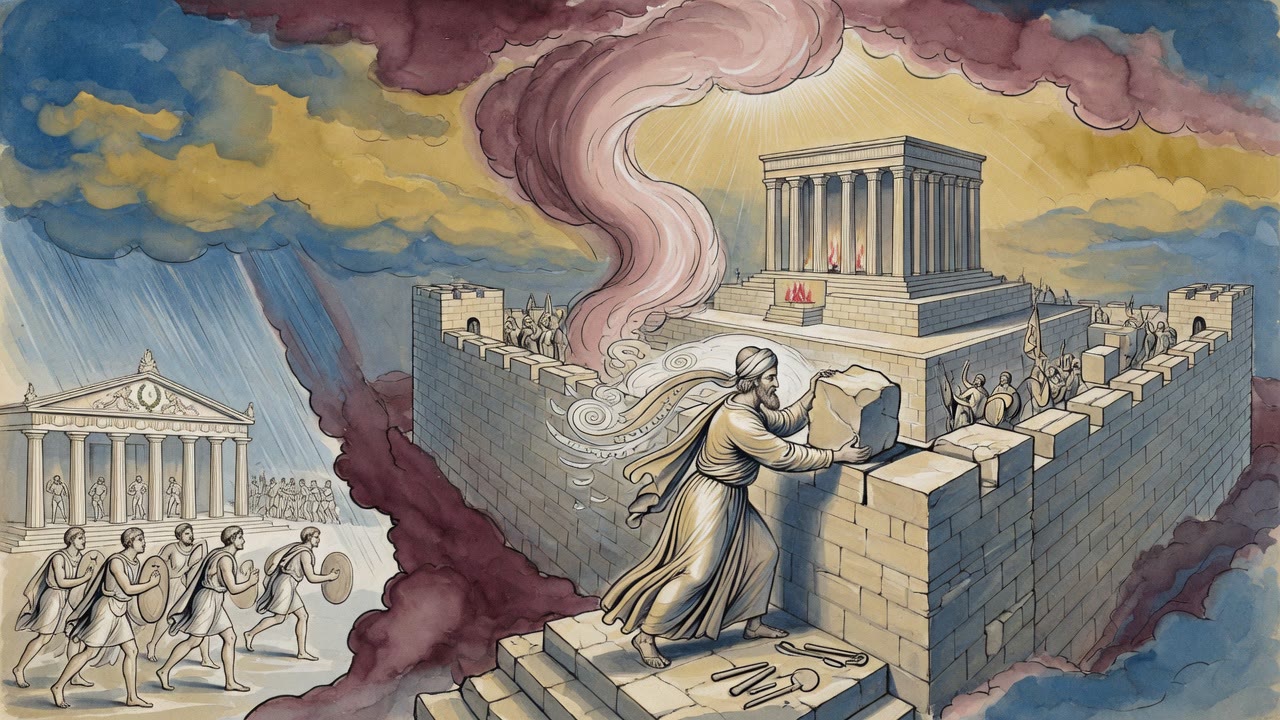
He did not only win fields. "The hill of the temple that was by the tower he made stronger than it was, and there he dwelt himself with his company." The leader slept beside the Sanctuary he meant to keep. Walls and presence. Stone and schedule.
Other commanders visit holy ground for ceremonies. Simon moved his household of fighters onto the hill. If the Temple fell again, it would fall with him in earshot.
A Son at Gazera, Empires Still Moving
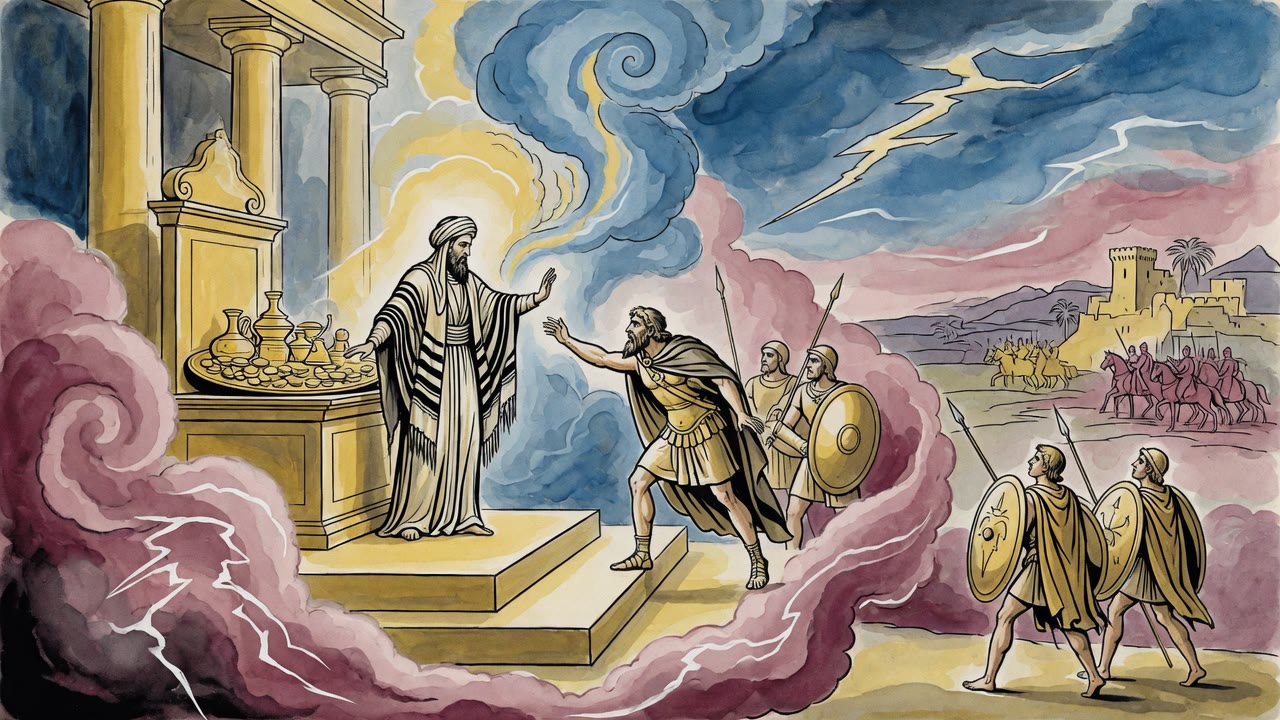
Simon saw that John his son was valiant and made him captain of all the hosts. Continuity without apology. The young man dwelt in Gazera while the father held the Temple hill. Around them the Seleucid board still shifted: in the hundred seventy-second year king Demetrius gathered forces and went into Media for help against Tryphon. Judea's peace sat in a crack between larger wars.
Independence, in this book, is never a finished monument. It is a night watch that has to be reappointed every season.
John at Gazera. Simon on the mount. Demetrius chasing help in Media. Three maps, one nervous peace. The day of gladness had to be celebrated with one eye on the roads.
A Feast Set in Proper Order
Another Maccabean voice, abridging the long work of Jason of Cyrene, admits the sweat of retelling. The accounts were mixed, the words a burden. He ordered events so a reader could run through them, understand, and remember, like a host who takes on the labor of a feast so guests can eat. History itself becomes hospitality when the story is cleared of muddle.
Simon's day of gladness fits that hunger for order. A people that nearly dissolved into gymnasium law needs dates that say: this is when we chose the Temple hill again.
Jason wrote at length. The abridger sweated at night to make the length run. Memory needs a path a tired person can finish. The revolt deserves that kindness.
Two Buildings, One City
Set the gymnasium beside the fortified Temple mount and the choice sharpens. One building trains Jews to look like the nations. One building houses the worship the nations tried to erase, now walled and inhabited by a commander who will not commute from safety.
Volunteers walked to a foreign king for permission to stop being distinct. Simon walked the ramparts so distinction could breathe. John took the armies. Demetrius chased his own civil war. Between those motions a small nation learned that freedom is not only the absence of a Greek decree. It is where the leader sleeps and which house he strengthens.
The day of gladness returns each year in the book's intention, a drumbeat against the voluntary forgetfulness that first opened the gymnasium doors. Remember the hill. Remember who stayed on it. Remember that some wars begin when people ask an empire for new laws, and some peaces begin when a man refuses to leave the Sanctuary unguarded.
Night on the reinforced mount: torches, stone, the smell of oil, a city below that still remembers Greek games. Simon does not need a speech about identity. His address is a bedroll on holy ground. The volunteers had an address too: the king's court, then the gymnasium floor. History keeps both addresses so later Jews can see which door leads where when the next invitation to "volunteer" arrives dressed as progress.
Judah's name still burns in memory. Simon's work is less glamorous and more durable: thicker walls, a son in the field, a feast day that orders the chaos into something a tired people can keep. The abridger of 2 Maccabees would understand. He also chose labor over muddle so the story could be eaten whole. Simon chose a hill over a gymnasium so the people could remain a people.
← All myths