Antiochus Came for the Temple's Gold and Fled to Babylon Without It
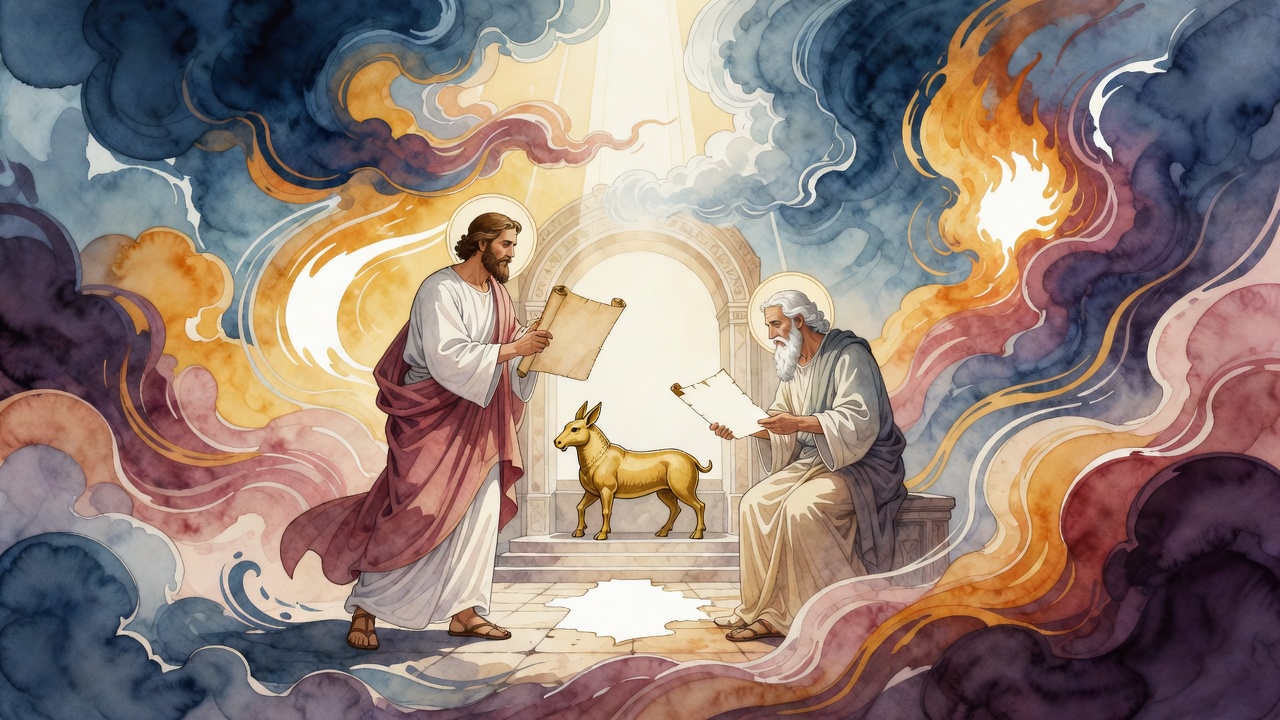
Rumor said the Temple held Alexander's gold shields. Antiochus came to strip it, met battle, and left for Babylon with heaviness in his gut.
Table of Contents
 Click for full size
A Report of Alexander's Shields
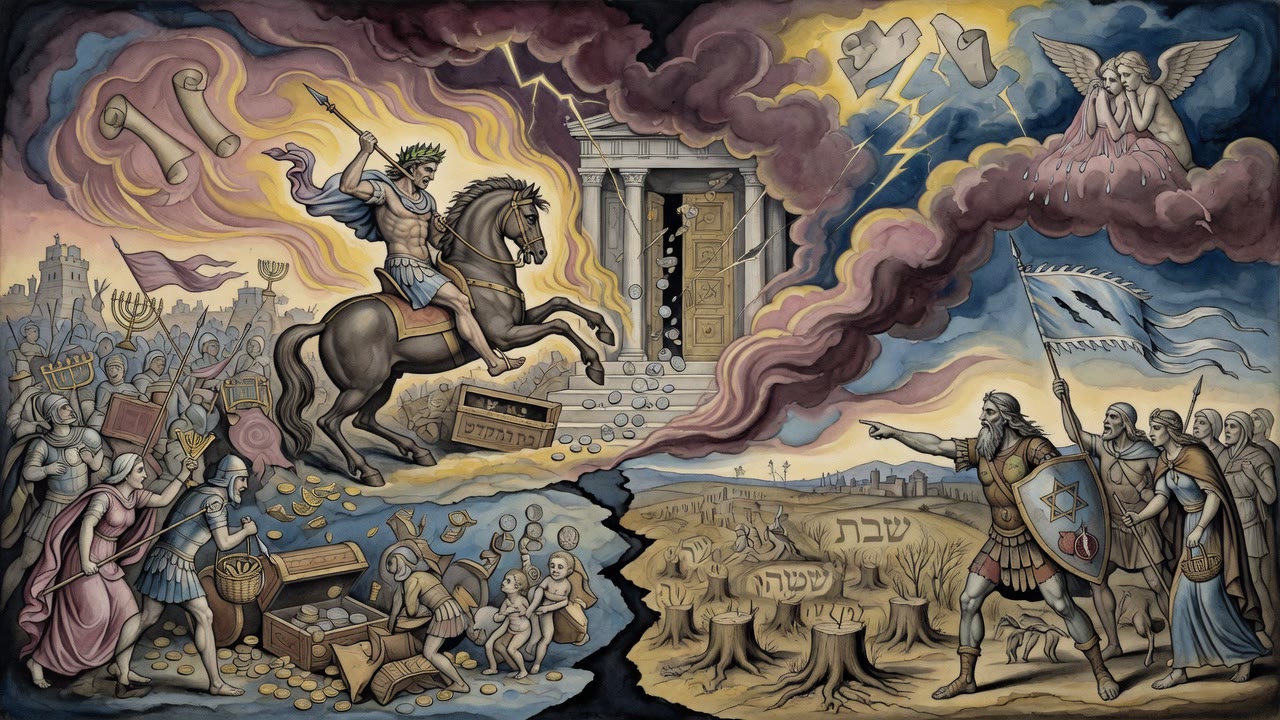
The report reached the king the way reports about money always reach kings, at second hand and slightly improved on the way. There was a very rich temple in Jerusalem, the man said, and in it were coverings of gold, and breastplates, and shields, and the shields had been left there by Alexander son of Philip, the Macedonian who reigned first among the Greeks.
The last part is what moved him. A rich building is only a rich building, but metal left behind by the first Greek king sounds to a later Greek king like family property currently in somebody else's cupboard. So Antiochus did not send anyone ahead to ask whether the coverings were votive, or how much of the story had grown in the telling, or whether the man reporting it had ever stood inside the courtyard. He came to take the city and to spoil it.
Two Unarmed Men at the Gate
He could have found out what that hill cost from two Greek visitors who went up in a quieter year. They were unarmed, there were two of them, and they carried an order from the chief officer instructing the guards to admit them so they could watch the sacrifices. The guards were reluctant anyway. They talked it over, and the visitors stood there while they did it.
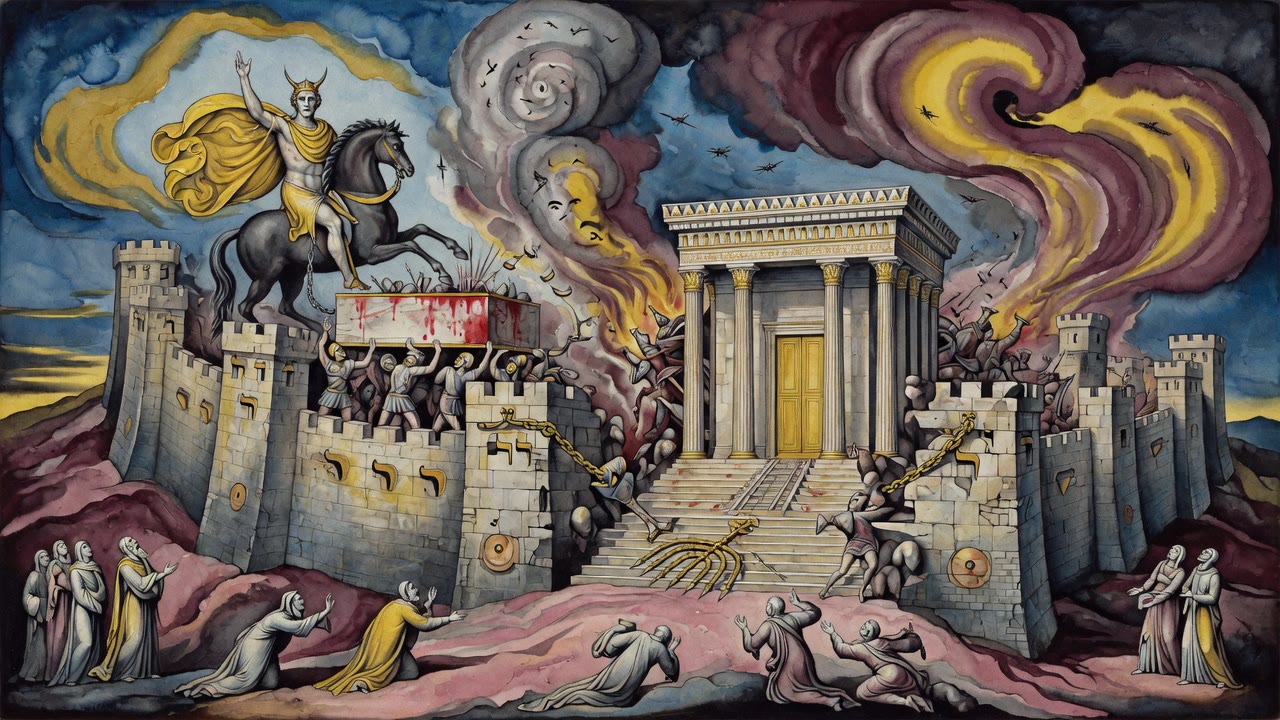
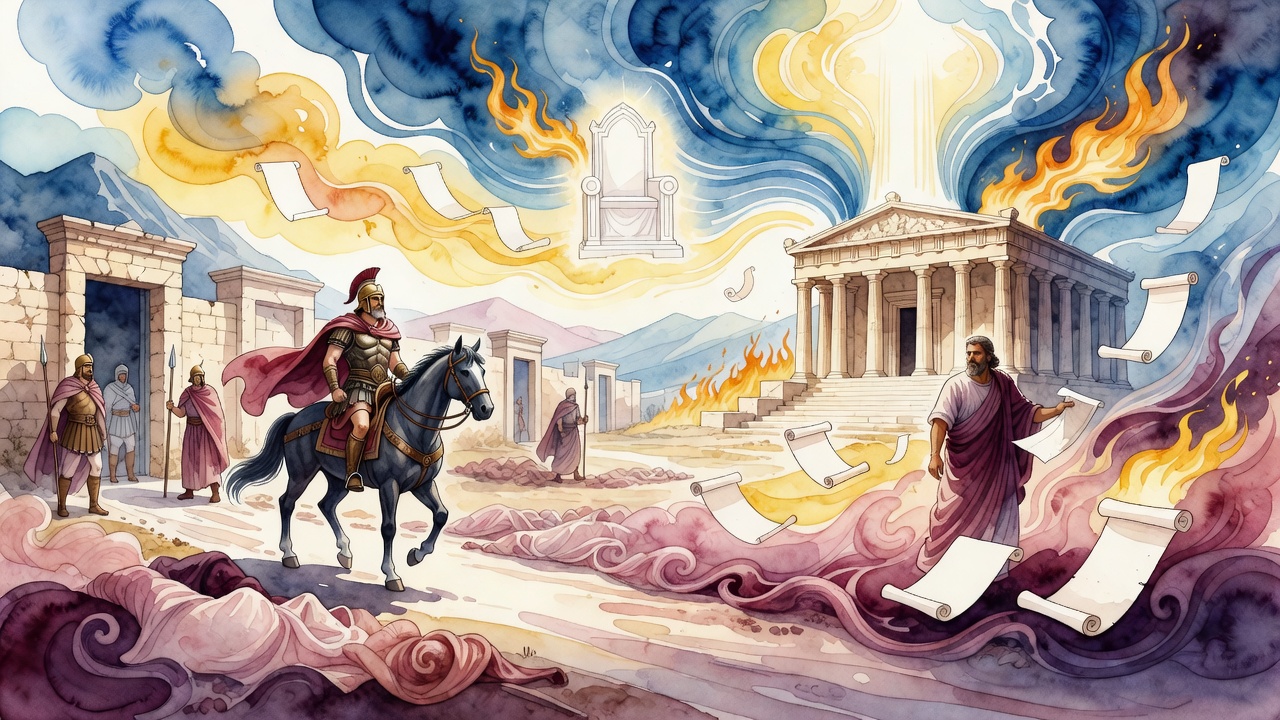
The towers rose out of the citadel above them, built of immense stones, higher than the ring of the wall, with engines of war standing ready on the tops. The men who held those posts had given the utmost proof of their loyalty to their country and were not permitted to leave. They came out on feast days and even then only in detachments, so the towers were never empty at any hour of any week, and no stranger got in without a decision being made about him first.
From up there the whole sacred circle lay open to the eye. If two men with a written order had to wait at the bottom, an army arriving without one was going to have to buy every stone.
He Went to Babylon Heavy
Jerusalem had warning, because word of a king moving with intent travels faster than the king does. So the men of the city did not wait behind the wall to be assessed; they came out and rose up against him in battle, and he was not able to take the city or to spoil it.
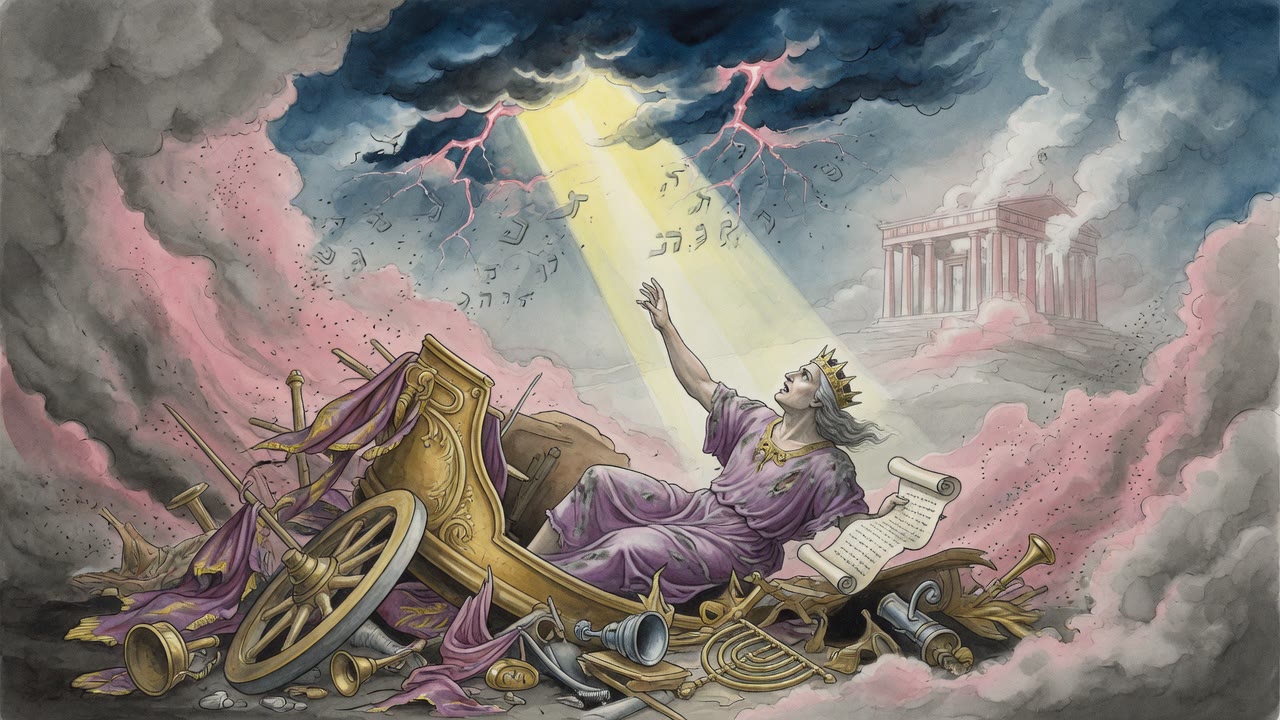
He fled, and he departed from there with great heaviness, and he turned back toward Babylon. The gold had never been in his hands, and losing it emptied them anyway. Then, while he was still in Persia, a second messenger found him with the rest of it: the armies he had sent into Judea had been broken and put to flight. He had come for shields left by Alexander and he had lost an army on the way to not getting them.
Bacchides Came Speaking Peace
The next general the empire sent did not go anywhere near those towers. Bacchides came to the same city and spoke peace, and it sounded like peace, and it went on sounding like peace for as long as it needed to.
Sixty men decided to believe him. They weighed the face of a Seleucid general who was talking instead of besieging, and every one of them made the same reasonable calculation, which was that a man who wants an arrangement is not a man planning a massacre, and that the last king who came at the walls had gone home with nothing. So they believed him, and they came in. He took the sixty and killed them in a single day.
The bodies were left where they fell, and the old psalm about the flesh of the righteous cast out and their blood shed round about Jerusalem, with none to bury them, stopped being a lament and became a description of the street. Fear and dread fell on all the people, and what they said about the killers was that there was neither truth nor righteousness in them, since they had broken the covenant and the oath they had made.
Bacchides moved his camp on to Bezeth. He hunted down the men who had left him, and some of the people besides, and killed them, and threw them into a great pit.
Up on the citadel the rotations held. The trusty men counted the feast days and went out in their detachments and came back, and the engines sat on the immense stones exactly where they had sat when a king was underneath them wanting gold. A day's march off, at Bezeth, the pit was still being filled.
← All myths