5 min read

Hellenizers Sold Jerusalem Before Judas Struck

Men from Israel sought a covenant with the nations, built a gymnasium, and hid the covenant mark. Judas answered with fire, siege, and a hard order.

Curated by Arthur · Told by Maggid ·
Table of Contents
  1. Judas Turned by Night Toward the Fortresses
  2. The Tower That Spat Hurt at the Sanctuary
  3. Not Every Valiant Act Was from the Seed of Deliverance
  4. From Sold Covenant to Held Sanctuary

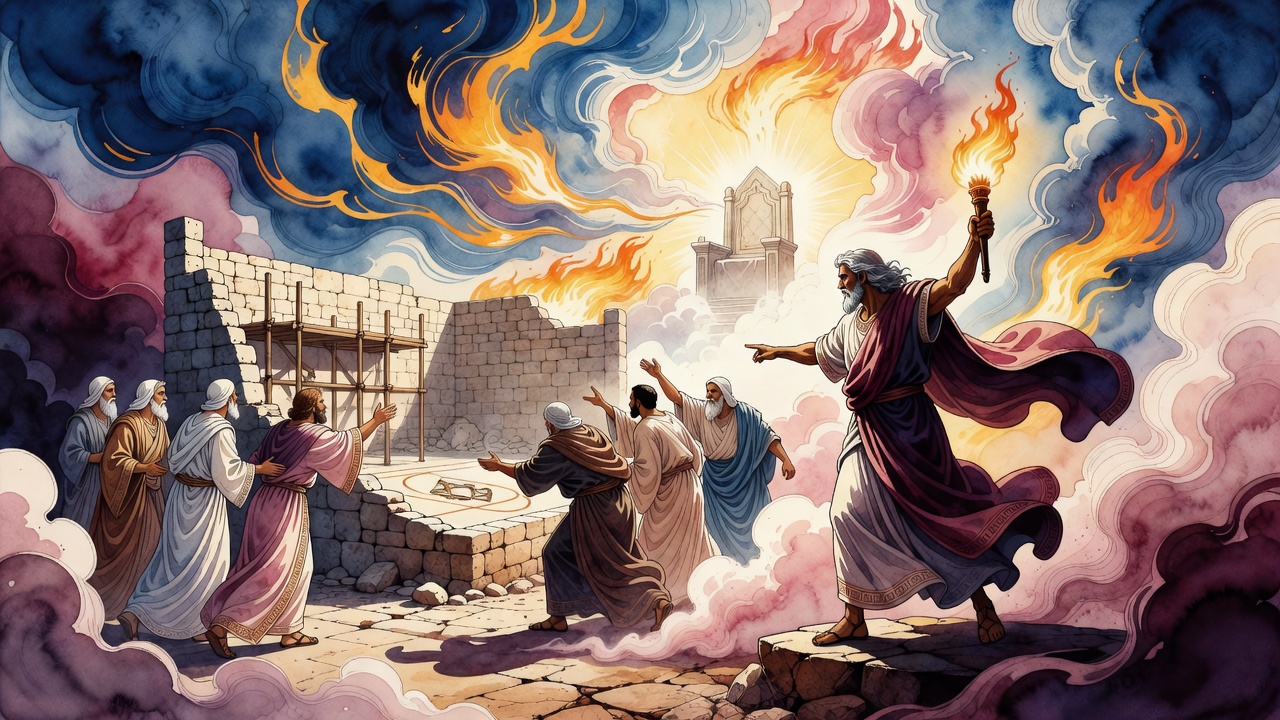
In the year 137 of the Greek kingdom, the wound opened from inside. "In those days went there out of Israel wicked men, who persuaded many." They did not arrive as foreign captains first. They rose as neighbors with a smooth plan. "Let us go and make a covenant with the heathen that are round about us, for since we departed from them we have had much sorrow." The device pleased them well.

Hellenizers Sold Jerusalem Before Judas Struck Click for full size

They sought license from the king to live by the ordinances of the nations. They built a place of exercise in Jerusalem. They made themselves uncircumcised. They forsook the holy covenant and joined themselves to the heathen and were sold to do mischief. The gymnasium rose in the city's heart. The mark of the covenant was hidden by knife and shame. What armies might have failed to buy, appetite for ease began to sell.

Judas Turned by Night Toward the Fortresses

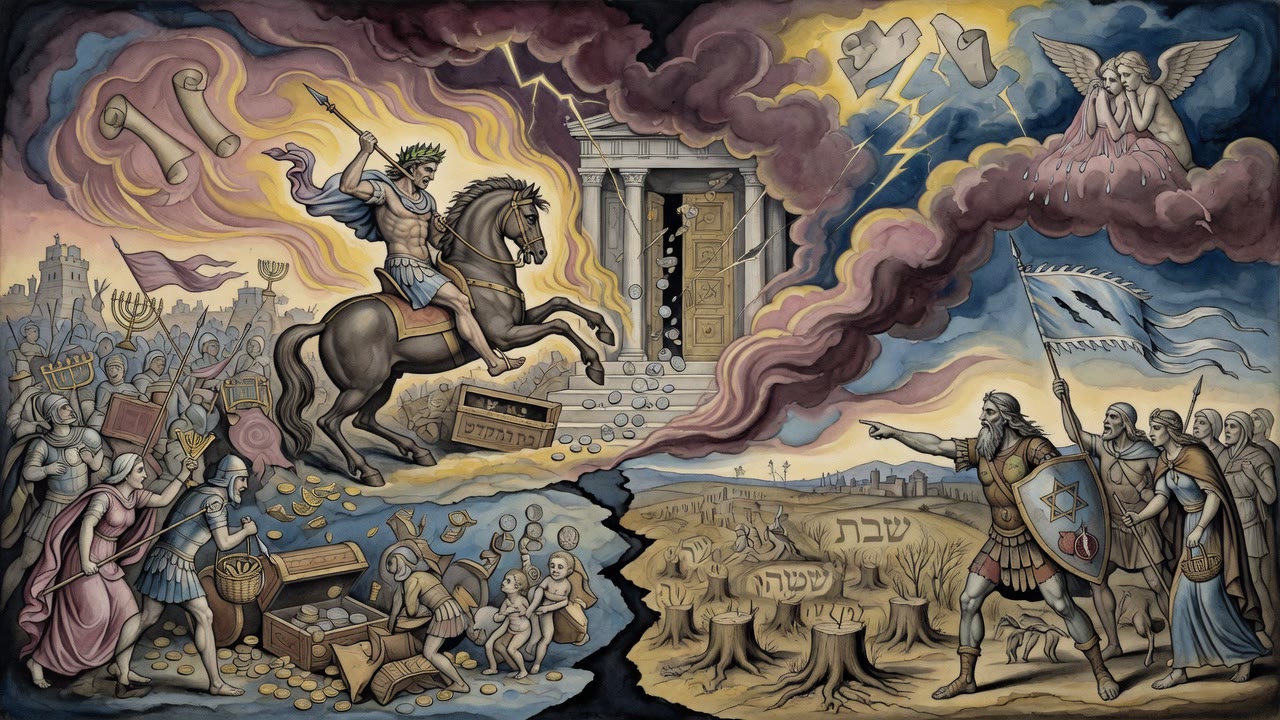
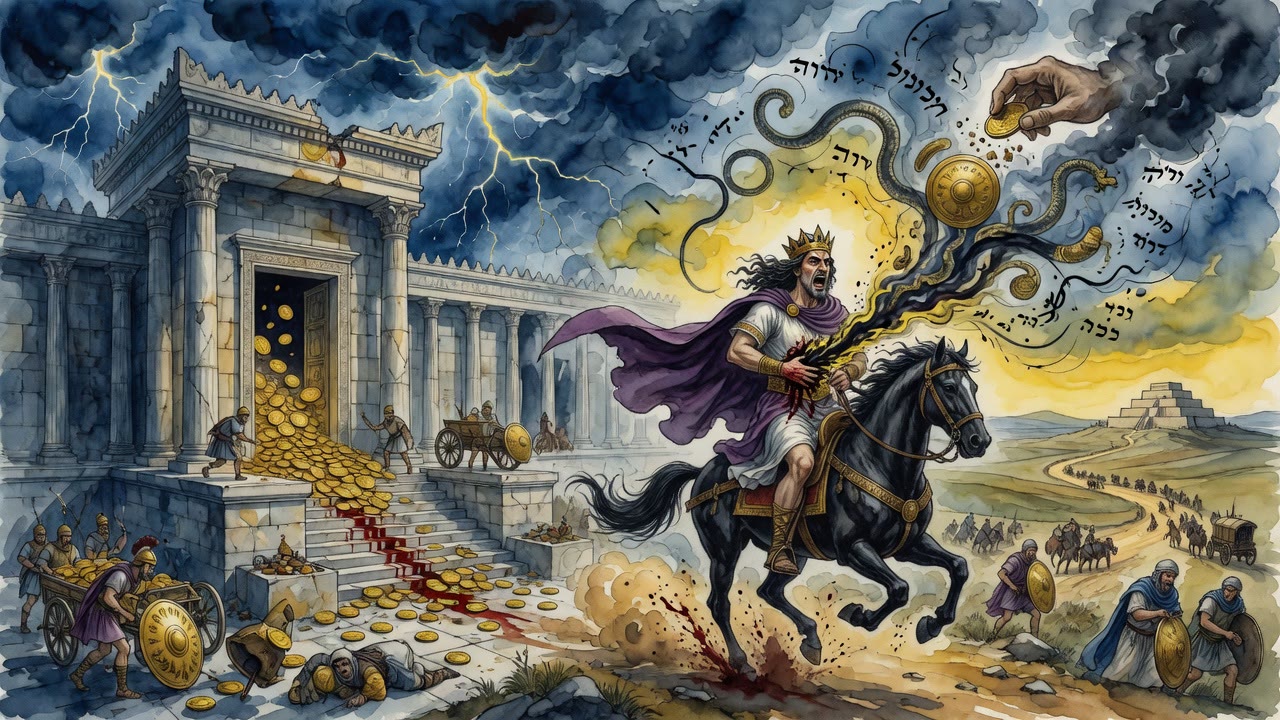
Judas Maccabeus did not answer with a pamphlet. He turned by the wilderness unto Bosora, slew the males by the sword, took spoils, and burned the city. By night he moved again toward a fortress. At dawn an innumerable people appeared with ladders and engines to take the stronghold. The cry of the city went up with trumpets. Judas spoke no long oration. "Fight this day for your brethren." The order was a blade's width wide and deep enough to stand on.

War in those pages is not polished. Fire, night marches, and overwhelming odds sit without soft light. The hammer of God, as later ages called him, measured loyalty in who would still lift a sword when the ladders showed against the sky.

The Tower That Spat Hurt at the Sanctuary

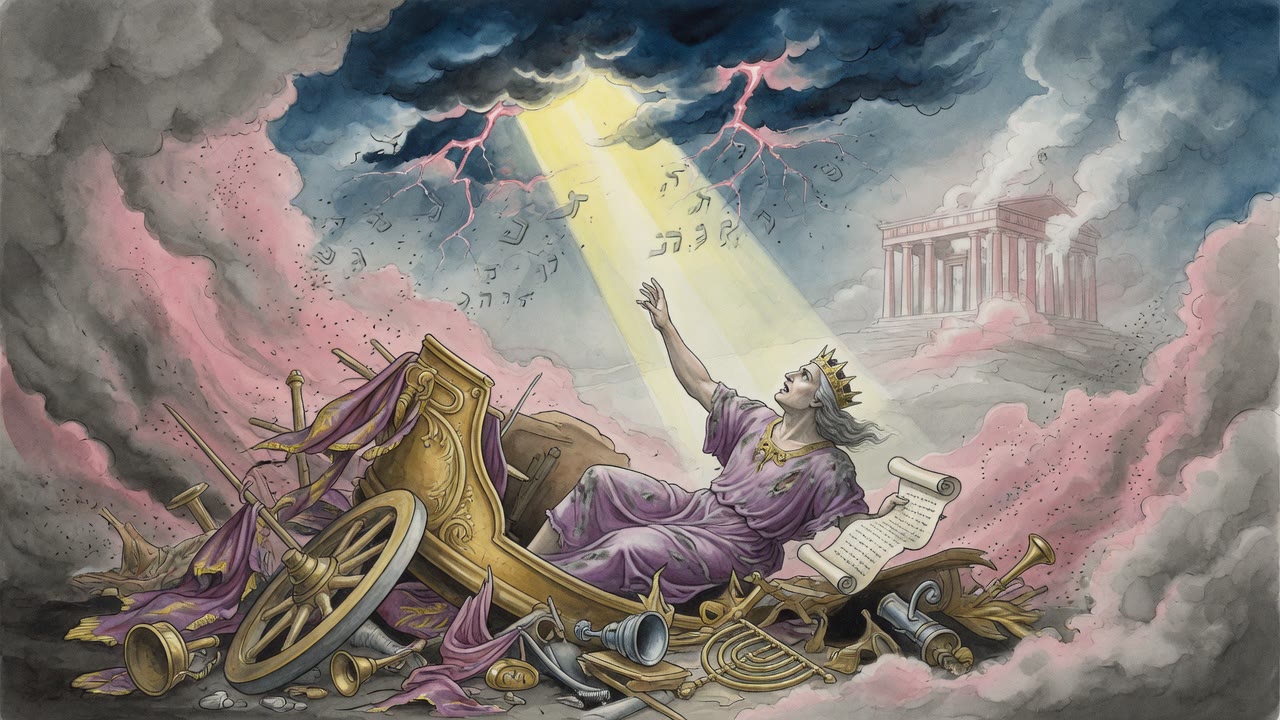
A tower near the sanctuary held men who sought the hurt of Israel and the strengthening of the heathen. To threaten the house was to strike the people's spine. Judas purposed to destroy them and called the people to siege in the hundred and fiftieth year. Mounds and engines rose. Some broke out and ran to the king, and ungodly men of Israel ran with them. Betrayal kept its own supply line.

Internal division did not surprise the book. It named it. The war was never only Seleucid against Judean. It was also neighbor against neighbor, covenant-keepers against those who had already sold the covenant for a smoother street.

Not Every Valiant Act Was from the Seed of Deliverance

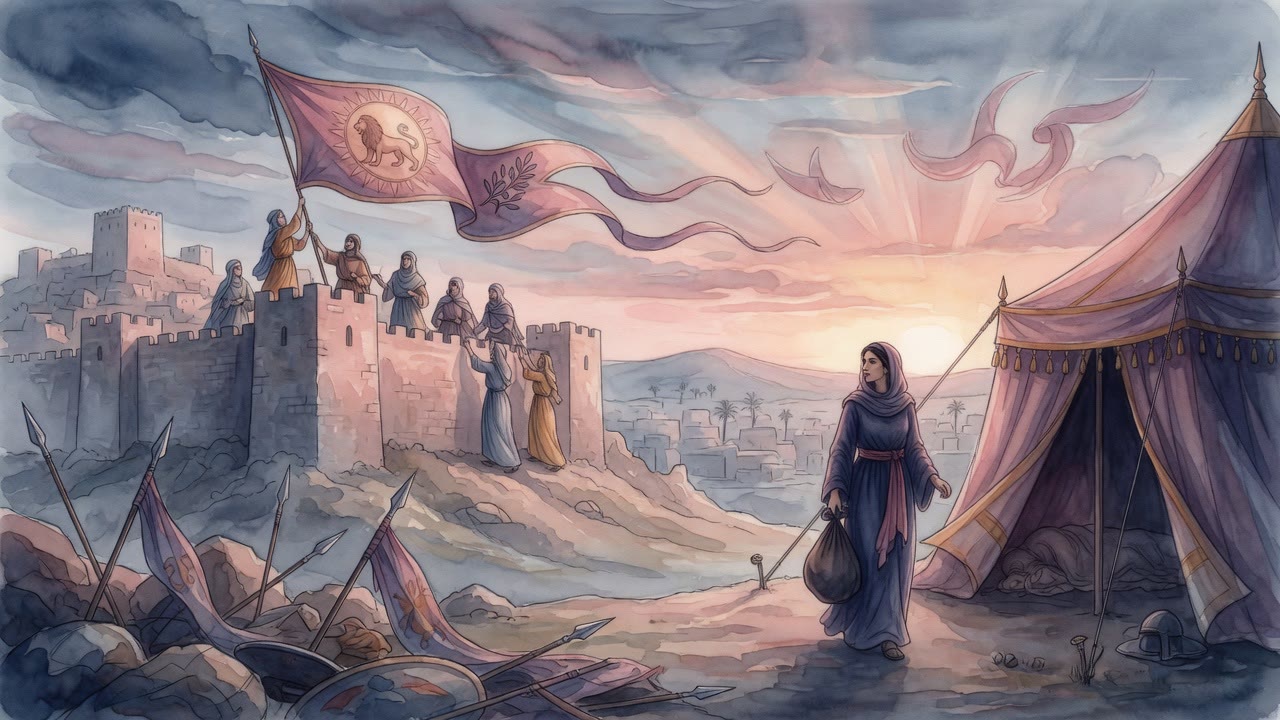
After victories, a different failure came. Some in Israel would not obey Judas and his brothers and thought to do a valiant act on their own. "There was a great overthrow among the children of Israel" because those men "came not of the seed of those, by whose hand deliverance was given unto Israel." Heroic impulse without the appointed hand became a trap. Ambition wore the mask of zeal and led men into a beating.

Still the man Judas and his brethren were greatly renowned in the sight of all Israel and of the nations wherever their name was heard. People assembled to them with joyful acclamations. Reputation and rebellion grew in the same season. Deliverance had a face, and not every sword that wanted glory shared that face.

From Sold Covenant to Held Sanctuary

The hellenizers began with a sentence about sorrow and a covenant with the nations. Judas answered with cities burned, brethren defended, towers besieged, and a refusal to let freelance valor rewrite command. Between the gymnasium and the siege mounds lay a people deciding whether ease or the house of God would set the city's calendar.

Children of later winters would light lamps and tell of oil. The book also tells of men who cut away their own covenant sign and of a commander who said only, "Fight this day for your brethren." Both belong to the truth of those years. The sale came first from inside. The answer came with iron and with a name that nations learned to fear and Israel learned to gather around.

When the ungodly of Israel stood with the men of the tower before a foreign king, the first persuasion of year 137 reached its full shape. Judas's fame was the counter-shape. One sold the city by fashion. One held it by obedience and fire.

The gymnasium was not neutral sport. In that place the body became an argument against the covenant body. Young men who hid their circumcision were editing their flesh to match a fashion that promised less sorrow. The Book of Maccabees refuses to call that choice sophisticated. It calls the persuaders wicked and the buyers of the license sold to mischief.

Judas's brevity at the fortress, "Fight this day for your brethren," cuts against every long speech that had sold assimilation. One sentence named the stake. Brothers, not trends. The innumerable engines on the horizon did not get a committee. They got a command. That style of leadership later made freelance zeal look small when it ignored his line and earned a great overthrow.

The tower by the sanctuary and the gymnasium in the city were two architectures of the same war. One projected heathen strength onto the holy place. One trained Israel to look like the nations. Judas's mounds and fires answered both. He could not rebuild a people only by lighting a menorah (the lampstand) in story. He had to clear the stones that threatened the house and the habits that had invited the threat in.


← All myths

From the tradition

Sources

4 sources

The texts behind this telling. Some cards carry a translation of the source; others are our own retelling of it, and each card says which. Every card links out to the original.

The Book of Maccabees I 1:17The Book of Maccabees I

Retold in our words. Read the original at the link below.Sefaria Community Translation · CC-BY

Our tale begins in the year 137 of the Greek kingdom. Now, this wasn't just any kingdom; it was the sprawling empire that Alexander the Great had forged, now fractured and ruled by his successors. This particular slice of history focuses on the Seleucid Empire, which held sway over Judea (modern-day Israel/Palestine).

It wasn't just external forces at play. Internal divisions were brewing within the Jewish community itself. "In those days went there out of Israel wicked men, who persuaded many," the Book of Maccabees I tells us. Who were these "wicked men?" They were Jewish individuals, influenced by Hellenistic culture, who saw assimilation as the path to prosperity.

Their argument? "Let us go and make a covenant with the heathen that are round about us: for since we departed from them we have had much sorrow. A promise of ease, of fitting in, of avoiding conflict. A dangerous bargain, perhaps?

Sadly, it resonated with some. "So this device pleased them well." The lure of Hellenism – its philosophy, its art, its way of life – proved too strong for certain segments of the population. They actively sought permission from the king – Antiochus IV Epiphanes (more on him later, he's a real piece of work) – to adopt pagan practices.

What did this look like in practice? The Book of Maccabees I paints a pretty clear picture: "Then certain of the people were so forward herein, that they went to the king, who gave them a license to do after the ordinances of the heathen, whereupon they built a place of exercise at Jerusalem according to the customs of the heathen and made themselves uncircumcised, and forsook the holy covenant, and joined themselves to the heathen, and were sold to do mischief.”

A gymnasium, a place for athletic training and, often, naked exercise, erected in the heart of Jerusalem. Jews undergoing surgery to reverse their circumcisions (a painful and dangerous procedure called epispasm) in order to appear more Greek. And most tragically, the abandonment of the brit kodesh, the sacred covenant with God. They turned their backs on everything that made them Jewish.

It's a stark reminder that the greatest threats to a community often come from within. The allure of acceptance, the promise of ease, can be powerful forces, especially when faced with external pressure. It begs the question: what aspects of our own traditions are we willing to compromise in the face of modern-day pressures? And what are the consequences of those choices? This is just the beginning of the Maccabean story, but it sets the stage for a powerful tale of resistance, faith, and ultimately, redemption. We'll see how this plays out next time.

Full source
The Book of Maccabees I 5:30The Book of Maccabees I

Retold in our words. Read the original at the link below.Sefaria Community Translation · CC-BY

The story plunges us right into the thick of it. Judas Maccabeus, the hammer of God, and his army are on the move. They’ve just made a sharp turn "by the way of the wilderness unto Bosora." No time for sightseeing, though.

Bosora falls quickly. The text is stark: "He slew all the males with the edge of the sword, and took all their spoils, and burned the city with fire. War was like that then. No romanticizing it.

Judas doesn't linger. "From whence he removed by night, and went till he came to the fortress." They move under the cover of darkness. Why? Because the fight's far from over.

Waking up with Judas and his men the next morning. The sun rises, and as they look up, what do they see? "Behold, there was an innumerable people bearing ladders and other engines of war, to take the fortress: for they assaulted them." An innumerable people. Overwhelming odds. Think about the courage it took to face that.

The attack is immediate, intense. "The cry of the city went up to heaven, with trumpets, and a great sound." The chaos, the fear, the adrenaline must have been overwhelming.

And in this moment, facing impossible odds, Judas Maccabeus speaks. What grand strategy does he unveil? What brilliant tactic does he reveal? He simply says, "Fight this day for your brethren."

That's it.

But maybe that's the point. True heroism isn't always about elaborate plans or earth-shattering pronouncements. Sometimes, it's about the simple, unwavering commitment to stand up for what you believe in, for the people you love, even when the odds are stacked against you.

"Fight this day for your brethren." It's a call to action that resonates across the centuries. And maybe, just maybe, that's enough to change the world.

Full source
The Book of Maccabees I 6:23The Book of Maccabees I

Retold in our words. Read the original at the link below.Sefaria Community Translation · CC-BY

The Book of Maccabees I turns to Judas Maccabeus at the Temple.

The story picks up with a group holed up in the tower – a strategic stronghold that allowed them to harass and threaten the Israelites around the sanctuary, constantly "seeking their hurt, and the strengthening of the heathen." The sanctuary, of course, was the heart of Jewish life, the Beit Hamikdash (the Temple) in Jerusalem. To control it, or even threaten it, was to strike at the very soul of the Jewish people.

Enter Judas Maccabeus. Bold, decisive, and driven by fierce loyalty to his people and his faith, Judas isn't one to back down from a fight. Seeing the plight of his people, he resolves to destroy those in the tower. So, he rallies the people.

"Wherefore Judas, purposing to destroy them, called all the people together to besiege them."

Talk about a call to action! They gather, they lay siege. The Book of Maccabees I tells us this happened in the "hundred and fiftieth year" – likely referring to the Seleucid era calendar. Judas, ever the strategist, orders the construction of siege mounds and other war machines, ready to bring the fight to the enemy.

But the defenders aren't passive victims. A group manages to break out of the siege. Desperate, they seek help from the king, and they aren't alone. They are joined by some "ungodly men of Israel" – Jews who had turned away from their faith and sided with the oppressors. This detail is particularly poignant. There's almost always internal division, betrayal from within. It adds a layer of complexity to the Maccabean narrative, a reminder that loyalty and faith are not always guaranteed.

And what did they say to the king? Well, that's where the story really starts to heat up. We'll have to see what happens next as this story unfolds. Will Judas and his men prevail?

Full source
The Book of Maccabees I 5:62The Book of Maccabees I

Retold in our words. Read the original at the link below.Sefaria Community Translation · CC-BY

The familiar telling remembers the heroic moment, the pivotal battle, the seemingly impossible triumph. But what about the days, weeks, and months that follow? What about the messy reality of rebuilding, of re-establishing order, and, perhaps most importantly, of dealing with the internal conflicts that inevitably arise?

The First Book of Maccabees offers us a glimpse into precisely that. It’s not all triumphant parades and joyous celebrations. Chapter 5, in particular, reminds us that even in the wake of Judas Maccabeus' incredible victories, challenges persisted.

One stark passage tells us, "Thus was there a great overthrow among the children of Israel, because they were not obedient unto Judas and his brethren, but thought to do some valiant act. These men came not of the seed of those, by whose hand deliverance was given unto Israel." Ouch. It speaks of insubordination, of rogue actions taken by those who, perhaps fueled by their own egos or misguided sense of righteousness, acted against the established leadership. And it highlights a painful truth: not everyone is cut out to be a leader, even if they think they are. Not everyone who wants to be a hero is a hero. They "came not of the seed of those, by whose hand deliverance was given unto Israel." They weren’t the right people for the job.

The scene. Judas Maccabeus and his brothers, having led the successful revolt against the Seleucid Empire, are trying to consolidate their power and rebuild Jewish society. But pockets of resistance remain, not just from external enemies, but also from within their own community. Individuals, or perhaps small factions, decide to take matters into their own hands, driven by their own ambitions or disagreements with Judas’ strategy. The result? A "great overthrow," a setback, a reminder that internal unity is just as crucial as external strength.

But the narrative doesn't dwell solely on the negative. The text quickly pivots, acknowledging the immense respect and admiration that Judas and his brothers commanded. "Howbeit the man Judas and his brethren were greatly renowned in the sight of all Israel, and of all the heathen, wheresoever their name was heard of; Insomuch as the people assembled unto them with joyful acclamations." Their reputation preceded them. People flocked to them, celebrating their achievements and seeking their leadership. It paints a picture of genuine admiration, evidence of their courage and effectiveness.

And what did Judas do next? He didn’t rest on his laurels. He didn’t bask in the adoration. He continued to fight. "Afterward went Judas forth with his brethren, and fought against the children of Esau in the land toward the south, where he smote Hebron, and the towns thereof, and pulled down the fortress of it, and burned the towers thereof round about." This passage describes a campaign against the descendants of Esau, a group often associated with conflict and opposition to Israel. Hebron, a city with deep historical and religious significance, became a focal point of this campaign. The destruction of the fortresses and towers symbolizes a decisive victory, a further assertion of Jewish control over the land.

So, what do we take away from this brief glimpse into the aftermath of a great victory? Perhaps it’s a reminder that leadership is never easy. That even the most celebrated heroes face internal challenges and external threats. That true strength lies not only in military might, but also in the ability to maintain unity and inspire loyalty. And that the work of rebuilding and securing peace is often just as challenging, if not more so, than the initial fight for freedom. It's a potent reminder that the story never truly ends with the "happily ever after." It just keeps unfolding.

Full source