They Tore Down Idols and Built the Altar Again
After idols leave the squares, a new altar rises from gathered stones. Priests fall on their faces until the sacrifice is consumed in smoke.
Table of Contents
 Click for full size
Squares Full of Wrong Smoke
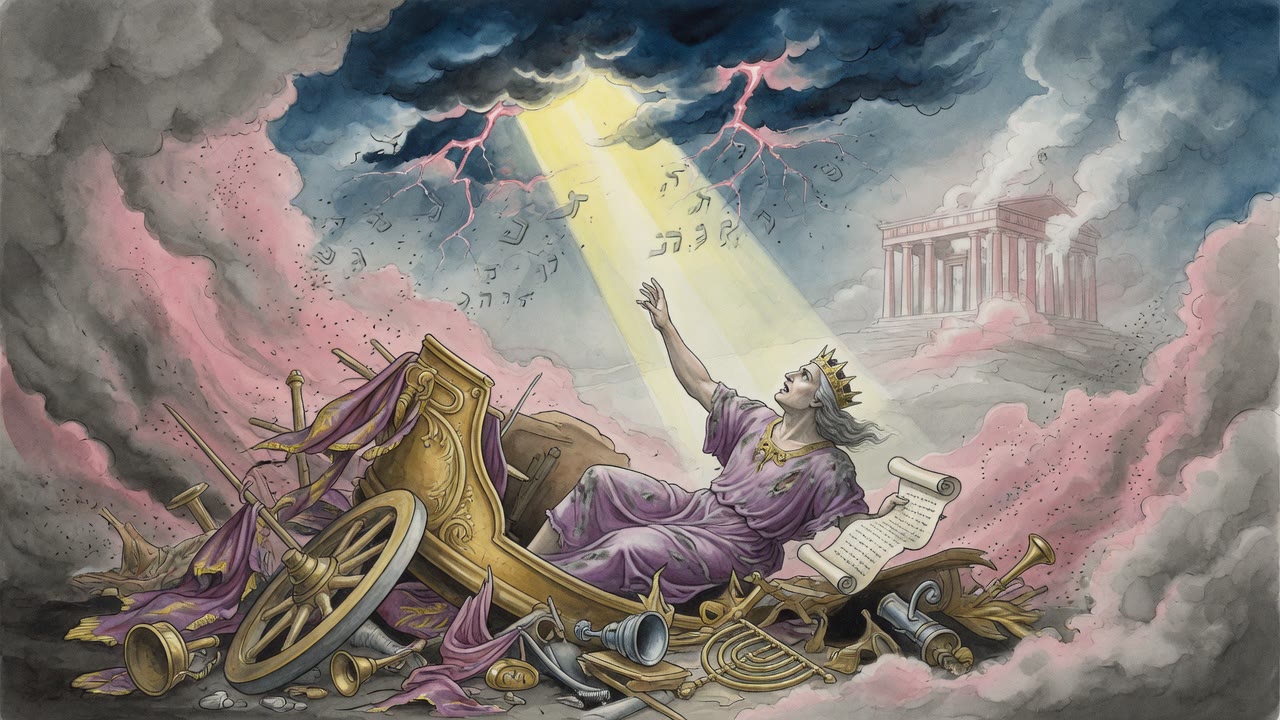
Jerusalem's open places stank of foreign altars. Houses of idolatry stood where market noise should have been ordinary. The Temple itself had been made to host what the Shekhinah (God's indwelling presence) would not share.
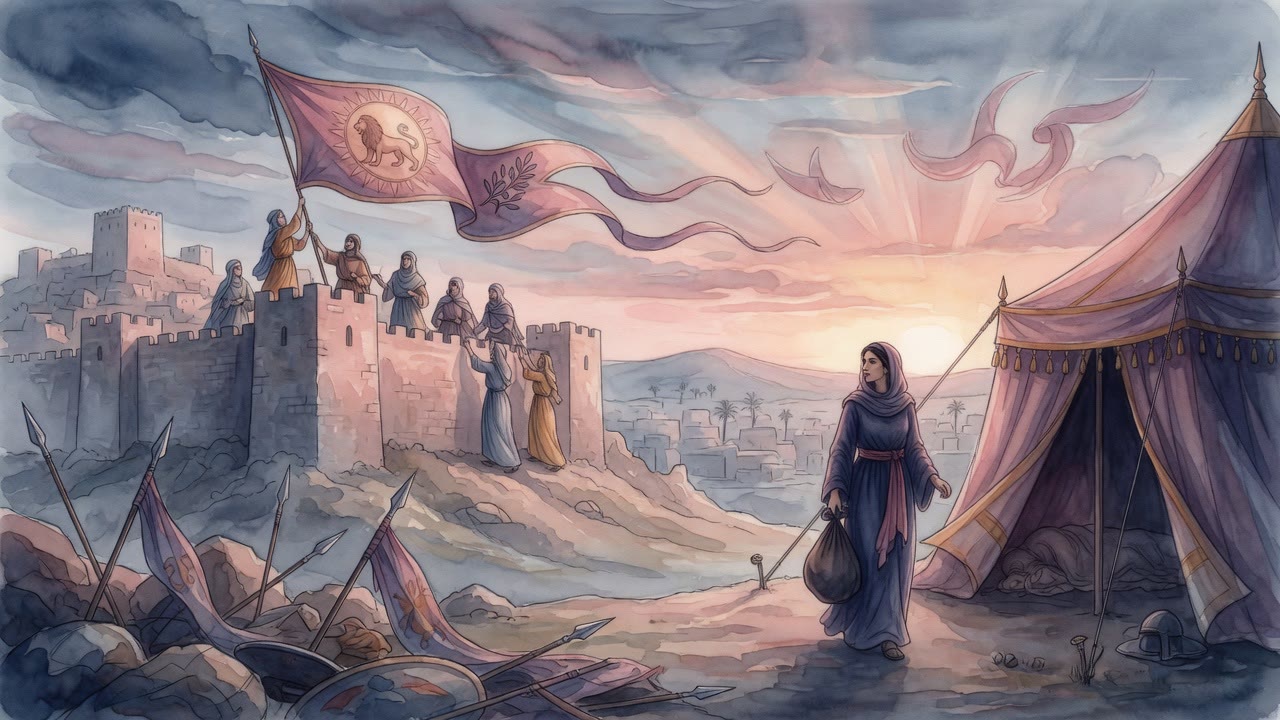
The fighters who took the city did not begin with a hymn. They began with demolition. "They destroyed the altars and the houses of idolatry that the nations had built in the city squares." Timber split. Images fell. The air changed by subtraction before it could change by praise.
Destruction is only the first tool. A void left overnight becomes a place for the next idol. They had to rebuild, or the clean sweep would be a pause, not a return.
Soldiers kick ash that once fed gods with names Israel was taught not to copy. A child watches an image lose its head and does not know whether to cheer or fear the quiet that follows. Liberation sounds like timber cracking. It also sounds like a city learning it can breathe without incense that was never theirs.
The fighters keep a list in their minds. Temple next. Courtyards. Inner rooms. Every stone that held alien service must be taught a new job or removed.
Stones That Still Remembered Fire
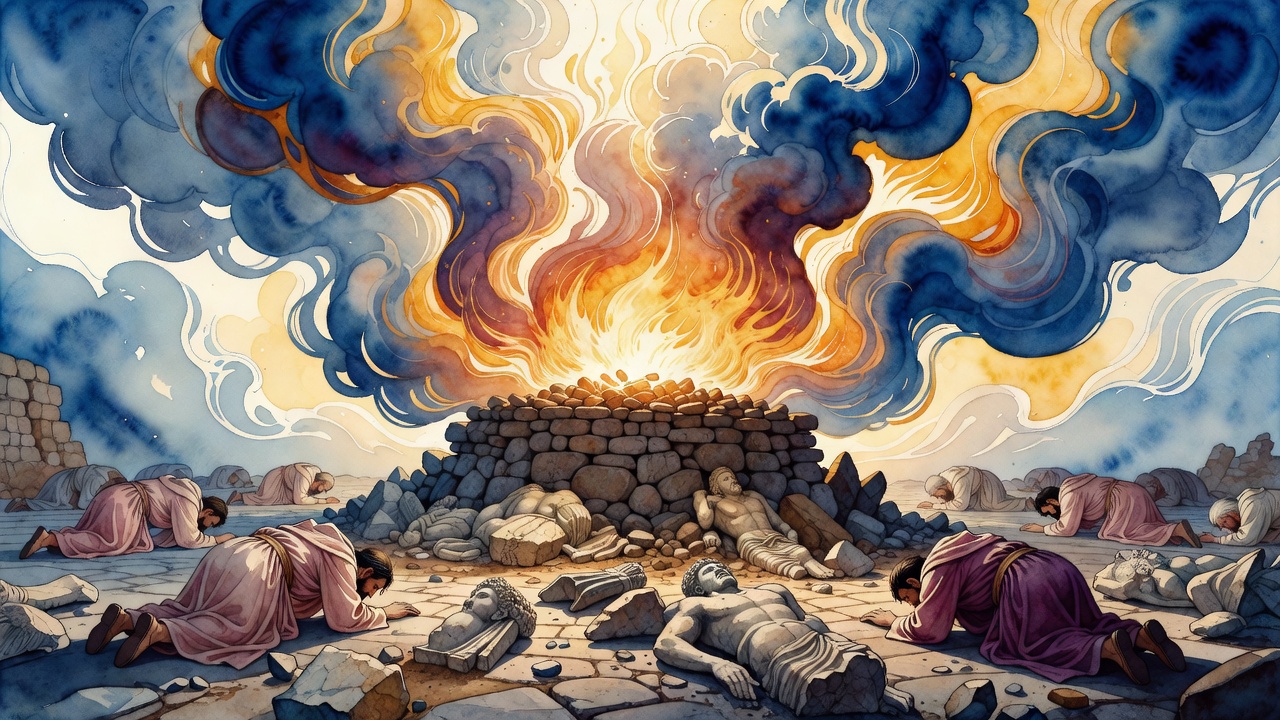
They purified the Temple with the slow care of people who have seen holy things used as props. A new altar rose. From stones they gathered they removed fire, as if a spark of the old service still slept in mineral that had once known legitimate flame.
Two years of labor. Then sacrifice again. Incense. Lamps of the menorah (the lampstand) lit. The lehem hapanim, the showbread, set on the table of the Lord. Order walked back into rooms that had learned chaos by force.
No one mistook carpentry for the whole victory. The altar was a claim: this address belongs to the God of Israel again, and the claim had to be fed with animals and oil and the nerve to stand in a still-dangerous city.
They choose stones as if choosing witnesses. Some rock may have felt legitimate heat before the defilement. They draw fire from what they gather, a careful theft back from desecration toward continuity. The menorah's lamps will need pure oil. The table will need bread set in rows. Holiness is logistics after it is courage.
Two years is long enough for hope to thin and then thicken again. When the first rightful smoke climbs, old men cry without shame.
Faces on the Floor
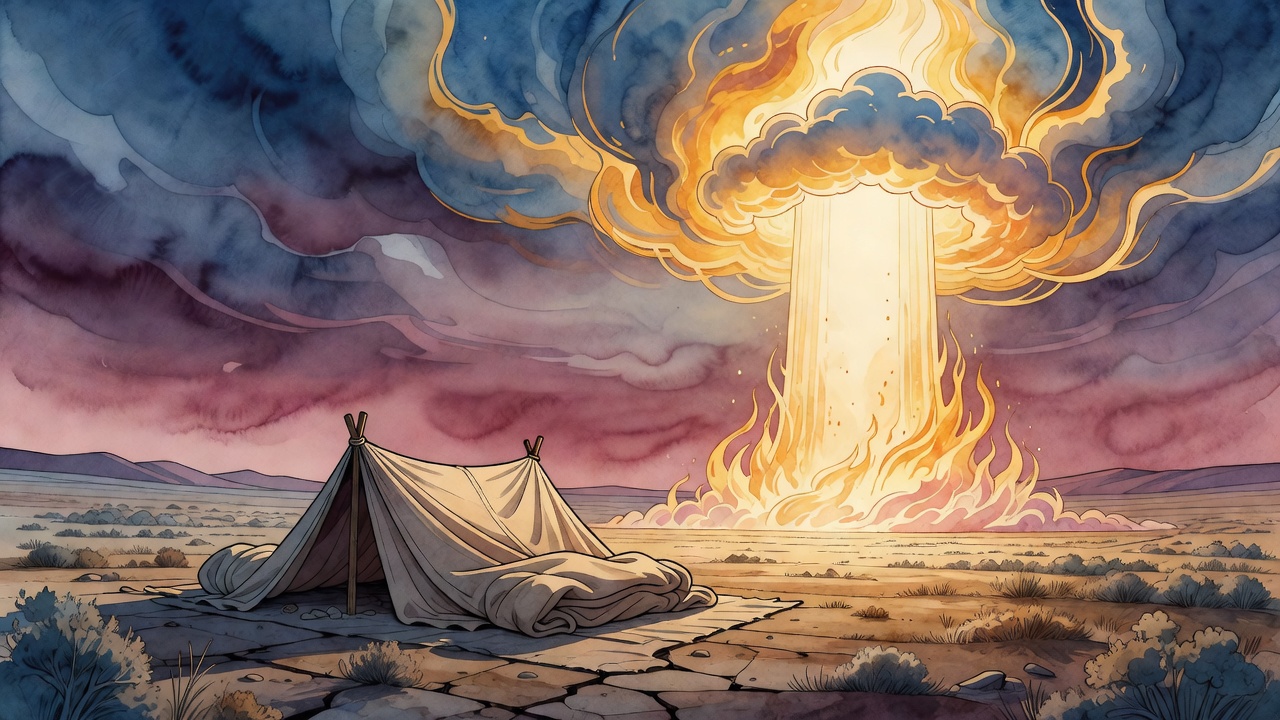
When the sacrifice burned, priests and people fell and prostrated until it was consumed. Not a polite bow. Full length on stone that had been scrubbed of alien blood.
Jonathan led the prayer. Nehemiah's memory joined the people's voices in the old pattern of call and answer. "The Lord our God, molder and creator of all, Powerful and Awesome, Righteous and Merciful, You alone are our King and our Savior."
Power first, then mercy. Creator of all life, opener of a wide hand, redeemer of Israel from troubles, chooser of the forefathers for service. The prayer stacked titles the way the new altar stacked stones: each course bearing weight so the top could hold fire.
Dust sticks to lips that still taste wartime rations. The prayer does not skip history. Forefathers chosen. Israel redeemed from troubles. A wide hand open for all life. They are not inventing a new God for a new crisis. They are naming the old One in a cleaned room until the name and the room agree.
Jonathan's voice carries. The people answer. The sacrifice keeps burning while bodies stay low, as if rising too soon might break the spell of return.
A Plea After the Win
They did not pray as if the war were a closed book. "Please, God, protect us forever from this trouble that has come to us." Victory had a short memory if heaven did not guard it. The same mouths that had ordered walls torn down now asked for a wall of protection no army could quarry.
Hanukkah's light will later retell these days as eight nights of oil. Under the festival sits this harder picture: years of labor, faces in dust, a people who know that cleansed courts can be defiled again if the plea fails.
The Shekhinah (the Divine Presence) does not need their drama. They need the drama of return, enacted with hammers and then with throats against the floor.
Empires do not vanish because an altar is rededicated. The plea for lasting protection is the sober core of the festival that will grow from these days. Light is easier to remember than prostration. Both belong. Without the plea, the lamps are only interior design for a truce.
They ask to be kept from "this trouble" as a category, not only from one king's face. Trouble has cousins. The prayer tries to name the whole family and shut the door.
What the Altar Demands Next
Showbread grows stale if the city forgets. Lamps need oil that must be pressed again. The demolished squares will sprout new sellers and new temptations. The Book of Maccabees leaves them in the posture that matches both grief and gratitude: down, then rising only when the smoke of a rightful offering has finished its climb.
Somewhere outside the walls, empires still redraw maps. Inside, a table holds bread for a Presence that once left and has been invited back with clean stone and a long, low prayer.
Tomorrow there will be ordinary offerings, ordinary arguments, ordinary market noise in squares that no longer hold idols. The work of keeping the clean thing clean begins when the speeches end. Second Maccabees leaves the smell of incense and the ache of knees as the true end of the battle chapter.
Somewhere a mother tells a child why the stones look new. The child will grow up inside a calendar that lights flames for eight nights and still will not know every name of every man who swung a hammer in those two years. The altar knows. The smoke knows. That is enough for the record God keeps.
← All myths