5 min read

Matityahu Named His Sons After Ancient Zeal

El'azar, his father told him, you are like Pinhas. Yonathan, you are like the son of Shaul who killed Philistines. Five went out and not all came home.

Curated by Arthur · Told by Maggid ·
Table of Contents
  1. A Father Assigns the Old Names
  2. The Cost Written in Sons
  3. Fire Around the Altar
  4. Nets of Prayer and Steel
  5. What the Names Still Demand
Matityahu Named His Sons After Ancient Zeal Click for full size

A Father Assigns the Old Names

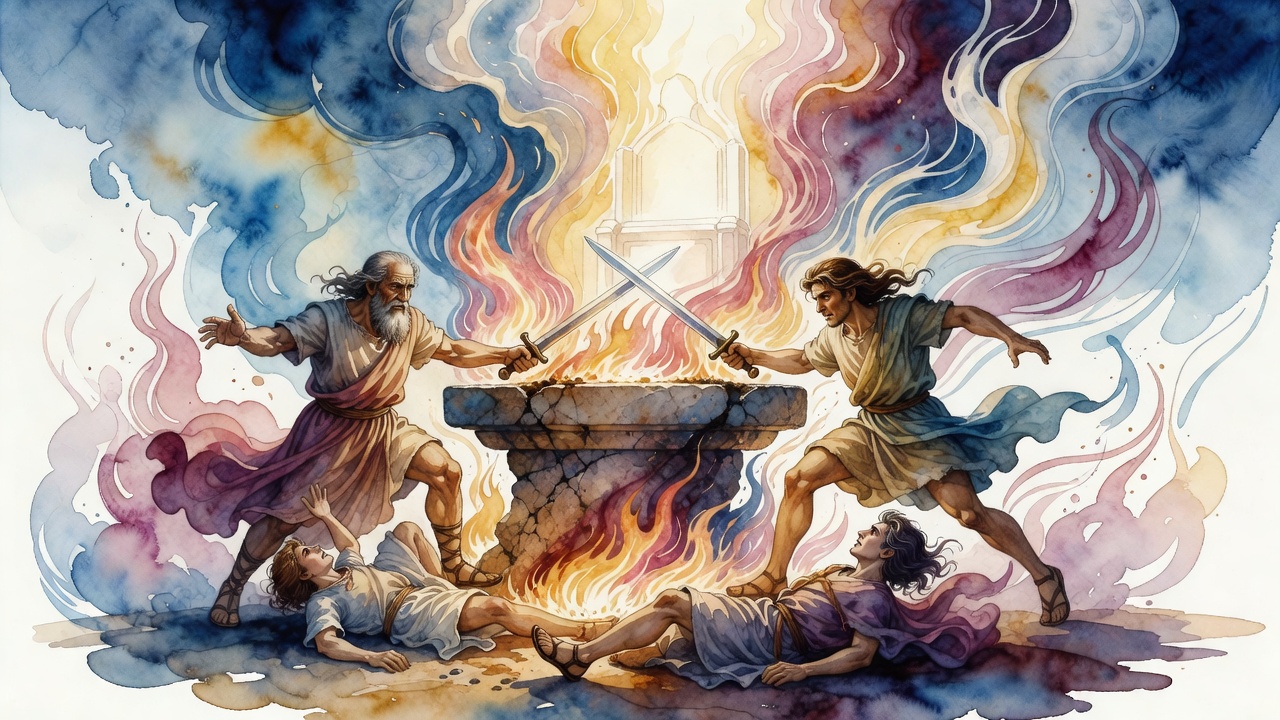
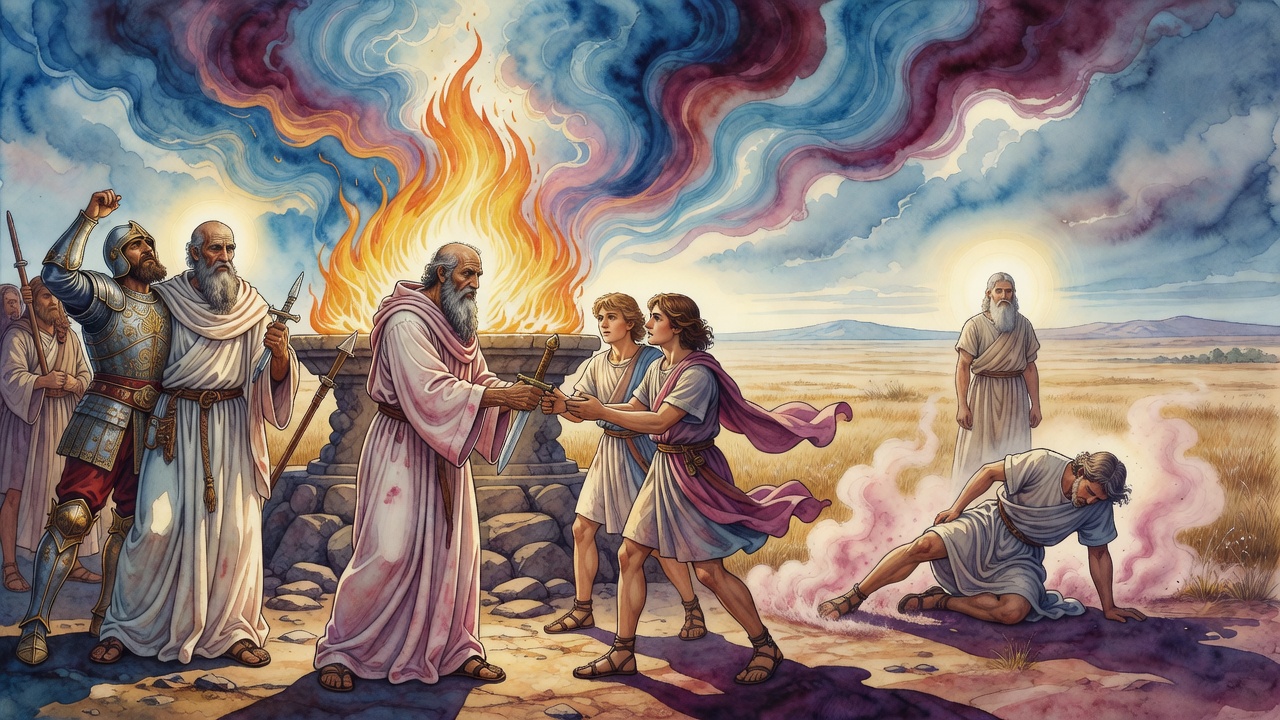
Matityahu did not send his sons out with vague courage. In Megillat Antiochus he fitted them to older patterns. "Yonathan, my son, you are like Yonathan the son of Shaul, who slew the Plishtim." To El'azar he said, "You are like Pinhas the son of El'azar who was jealous for his God's sake, and thus delivered the children of Israel."

The room must have felt smaller after those sentences. A man told his children they were not merely rebels against a decree. They were continuations of zeal that once stopped a plague and broke a Philistine line. Inheritance here was not land. It was a role that could kill them.

The Cost Written in Sons

The five went out. Battles answered the naming. Yehudah became the hammer the nations learned to fear. Others fell in the work. Heroism in this scroll is not a parade. It is a family ledger with empty chairs. Matityahu's comparisons were compliments that doubled as drafts into danger.

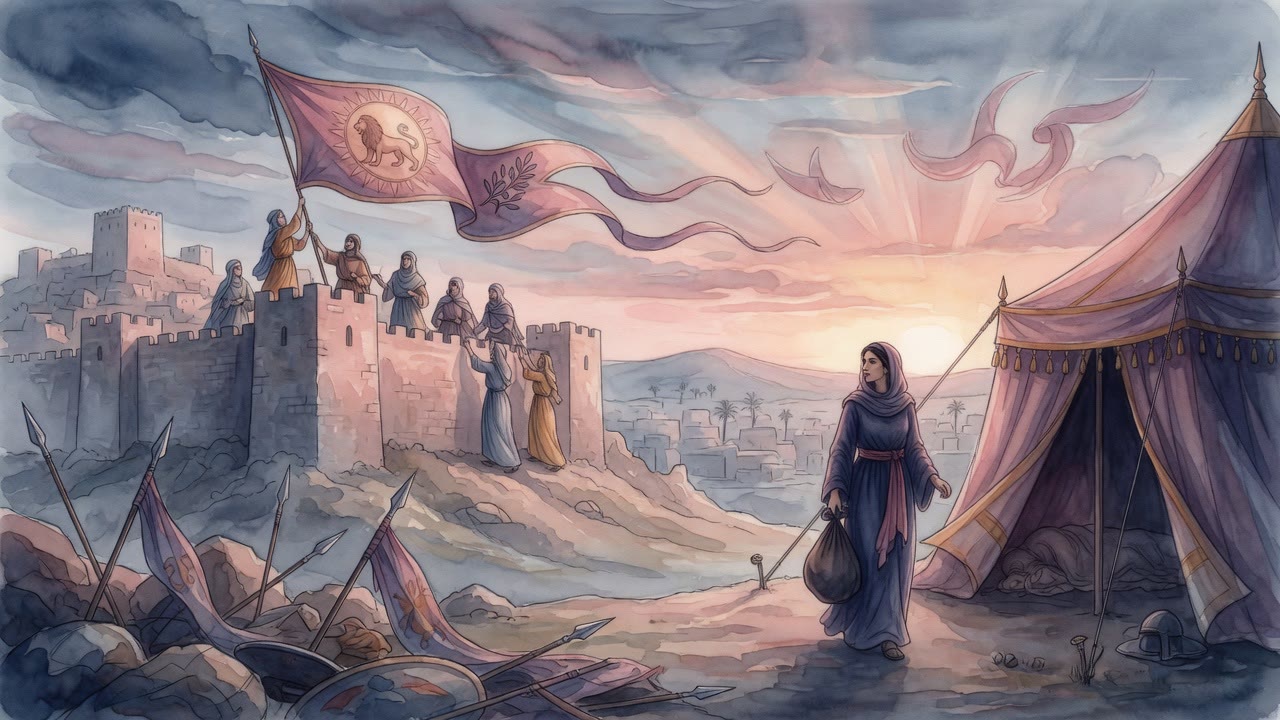
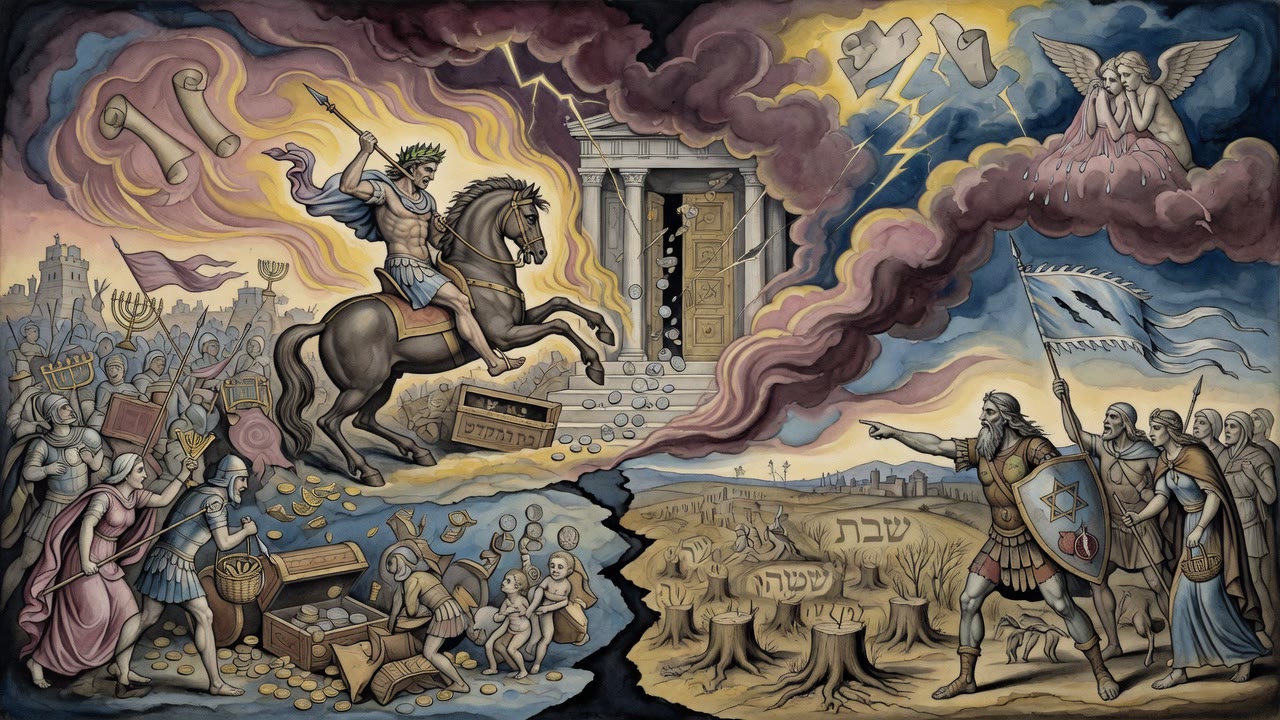
Empire had demanded offerings to foreign gods and the erasure of covenant marks. The father's speech turned private grief into public war. Once the sons accepted the old names, compromise became betrayal of more than politics. It became betrayal of Pinhas and Jonathan.

Fire Around the Altar

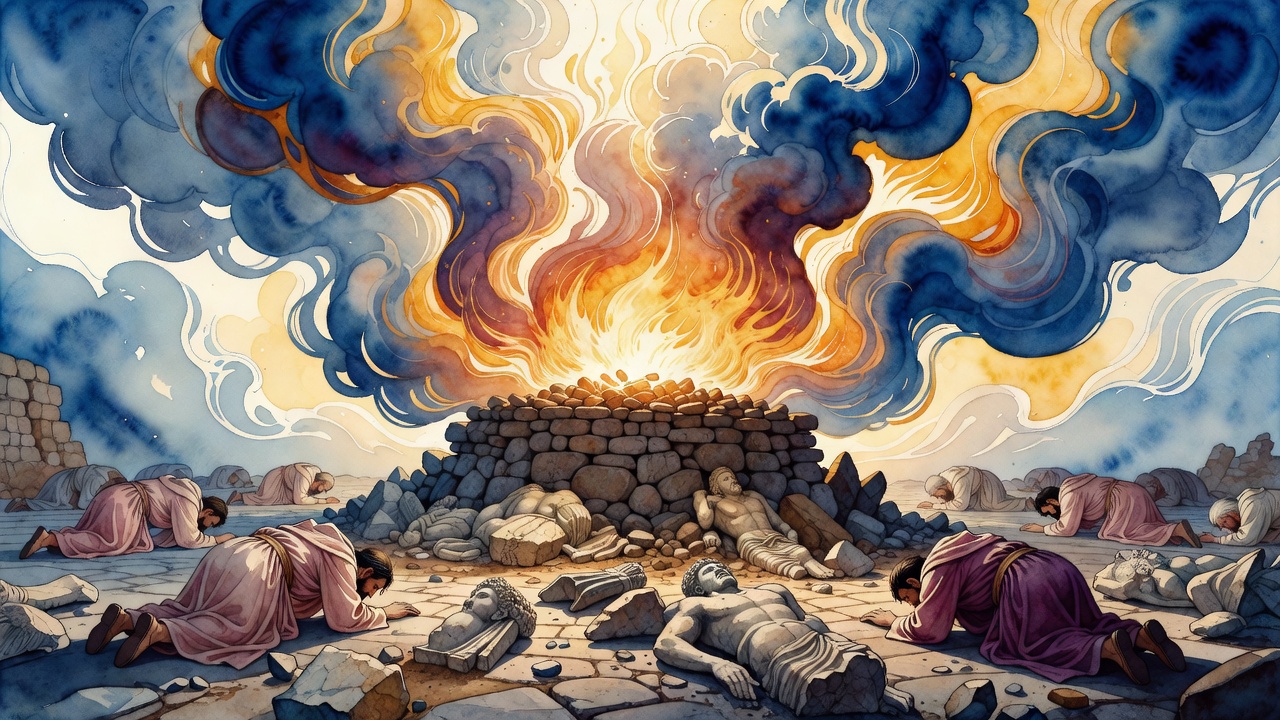
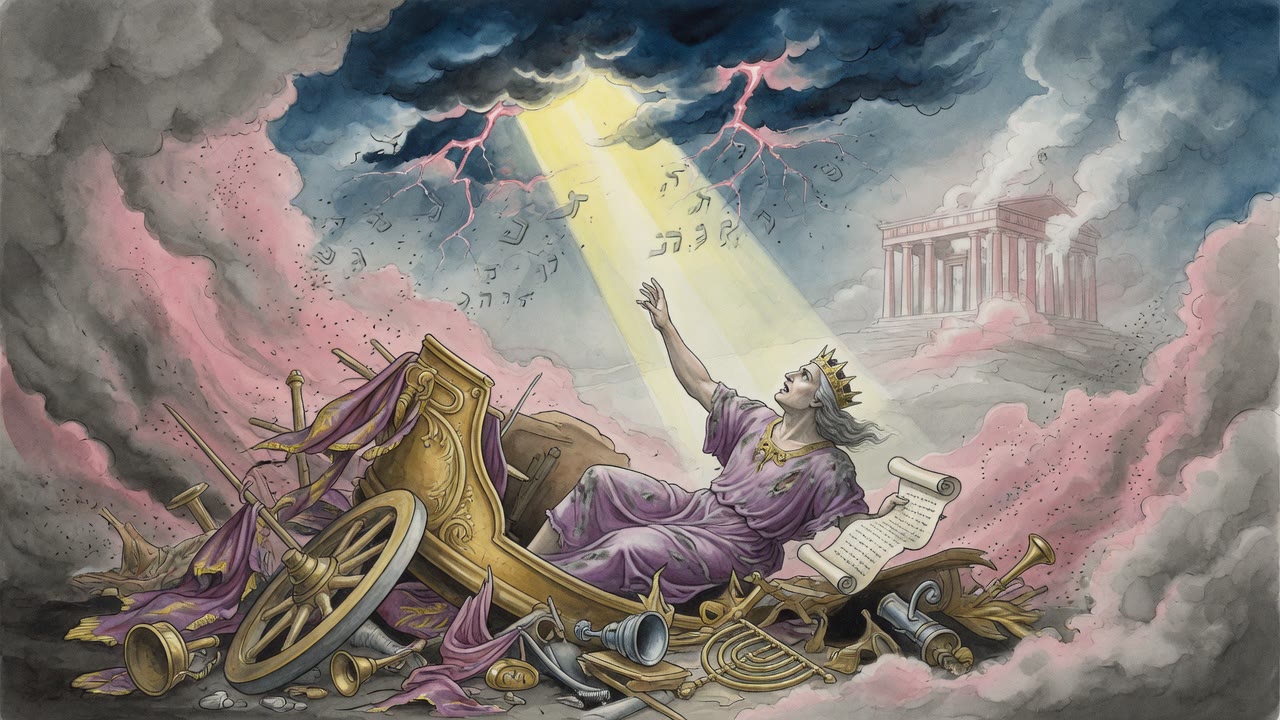
Second Maccabees keeps another heat near the sanctuary. Priests and fighters move through pollution toward a cleansed altar. The feast later called Hanukkah is not invented as winter decoration. It is the calendar scar left when pure fire returns to a place that had been used for insult.

Faith under fire, in these chapters, means bodies that refuse the king's menu and the king's gods. Mothers, elders, and soldiers appear as one argument: better death in covenant than life as a polite subject of blasphemy. The altar is the center because worship is the empire's real target.

Nets of Prayer and Steel

The books braid prayer with tactics. Men fast and arm. They recite and ambush. Heaven is not a substitute for courage, and courage is not a substitute for heaven. When the fighters win a ridge or lose a brother, the narrative still points at the Temple's claim on the land.

Matityahu's opening charge remains the key. Without Pinhas in the mouth of the father, the war could be misread as only tribal pride. With that name spoken, the violence is framed as jealousy for the God of Israel against a cult of force.

What the Names Still Demand

Later generations light oil and sing. The source texts light names and graves. Jonathan's daring, Pinhas's spear, Judah's campaigns, and the altar's rededication are one chain. Drop any link and Hanukkah becomes a children's riddle about wax.

Matityahu's genius was pedagogical and terrible. He taught his sons who they were by telling them who they must resemble under pressure. Some resemblances end in victory songs. Some end in mourning. The tradition keeps both so that ease cannot rewrite the price.

Empire still prefers Jews who will bow a little for comfort. The scroll of Antiochus and the Maccabean books answer with a father who will not bow and sons who accept ancient scripts. The altar, once cleaned, stands as proof that zeal can rebuild what decree tried to own.

Read the naming scene slowly. A dying age of priests becomes a forge of fighters. The words "you are like" do more than flatter. They conscript. Every later candle is a quiet echo of that conscription, a small fire insisting the larger fire was not in vain.

Israel did not win a theory. It won the right to approach its own altar without foreign images grinning from the courts. Matityahu's sons paid in blood for that simple door. The books refuse to forget the bill.

The empire's program was not only taxes. It was a rewrite of what a Jewish body and calendar could mean. Forbid the marks of covenant, force offerings to other powers, and the people become subjects without a distinct worship. Matityahu's answer begins in speech because speech assigns identity faster than swords.

Calling a son Pinhas is a theological act. Pinhas did not form a committee when the camp mixed with Midianite cult. He acted. Matityahu wanted that speed of conscience in a generation tempted to wait for better politics. Calling a son Jonathan ties the revolt to older wars against Philistines, so the fight is not framed as a new religion but as continuity.

Second Maccabees adds martyrs who refuse pork and parents who refuse to watch their children apostatize without protest. The altar's cleaning after battle is the positive twin of those refusals. No to the king's food. Yes to pure fire. Hanukkah holds both gestures: resistance and restoration.

When later nights fill with candles, the sources still insist on names, wounds, and an altar scrubbed back to service. Matityahu's household speech remains the ignition point: ancient zeal assigned to living sons who could still refuse the assignment and did not.


← All myths

From the tradition

Sources

3 sources

The texts behind this telling. Some cards carry a translation of the source; others are our own retelling of it, and each card says which. Every card links out to the original.

Megillat Antiochus 1:59Megillat Antiochus

Retold in our words. Read the original at the link below.Sefaria-hosted English translation · CC-BY

Megillat Antiochus turns to Matityahu in the Holy Land.

This isn't the familiar tale of the Temple rededication we hear every year. Megillat Antiochus, the Scroll of Antiochus, offers a more intimate, almost familial look at the Maccabees, the heroes of the Hanukkah story. It's a reminder that history isn't just about grand battles, but about the individuals who rise to meet extraordinary challenges.

In this particular passage, we find Matityahu, the patriarch of the Maccabean family, addressing his sons. He's not just offering words of encouragement; he's casting them in the mold of biblical heroes. "Yonathan, my son," he declares, "you are like Yonathan the son of Shaul, who slew the Plishtim", the Philistines. It's a powerful comparison, linking Yonathan to a figure of courage and decisive action. He is not just a man fighting for his people; he is an echo of a legendary hero.

Then he turns to another son, El’azar. “And you El’azar, my son, you are like Pinḥas the son of El’azar who was jealous for his God’s sake, and thus delivered the children of Israel.” This is a reference to the story in Numbers 25, where Pinḥas takes decisive action to stop a plague, motivated by his zeal for God. Matityahu is essentially saying: you, too, have that same fire, that same unwavering commitment.

Can you imagine the weight of those words? To be told you are the reincarnation of a hero, that the fate of your people rests, in some way, on your shoulders? It’s both inspiring and terrifying. It’s a call to action that resonates through the ages.

What follows is a brutal reminder that heroism comes at a cost. The five sons of Matityahu go forth and fight valiantly, but Yehudah, often known as Judah Maccabee, the leader of the revolt, is slain in battle. The text doesn't shy away from the pain and loss. It's raw, immediate.

The remaining brothers return to their father, and his first question is a simple, heart-wrenching, “Why have you returned?” Their reply is equally devastating: “Because our brother who was the equal of all the rest of us, is slain.”

This isn’t just about the loss of a brother. It's the loss of a leader, a warrior, a vital part of their fighting force. It’s a moment of profound grief and uncertainty. The text emphasizes the incredible bond between these brothers. "The equal of all the rest of us." This isn't just saying he was a good fighter; it's a statement about his character, his importance to the family, and to the rebellion itself. He was essential.

The Megillat Antiochus, in moments like these, reveals the human cost of resistance. It is evidence of the enduring power of faith, family, and the courage to stand up for what you believe in, even when the odds seem insurmountable. And it's a reminder that even in our darkest hours, the echoes of past heroes can guide us forward.

Full source
The Book of Maccabees IIThe Book of Maccabees II

Retold in our words. Read the original at the link below.Sefaria-hosted English translation · CC-BY

The Book of Maccabees II gives us a glimpse into that moment. After years of fighting against oppression, against those who sought to defile their most sacred space, they finally prevailed. What did they do? They didn't just breathe a sigh of relief and move on. They celebrated.

"They took willows of the brook and branches of palm trees, and they sang a song of praise and thanksgiving to the Lord, who gave them courage and salvation to purify the Temple of His holiness." imagery: willows and palm branches, symbols of renewal and victory, filling the air as voices rose in song. It wasn’t just a cleansing of the Temple; it was a cleansing of the spirit, a reaffirmation of faith, a collective exhale after holding their breath for far too long.

It wasn't just a private celebration either. The Book of Maccabees II continues: "And they sent a voice in all the cities of Judah to celebrate this festival every year."

This wasn't just about one moment in time. This was about creating a lasting memory, an annual reminder of resilience, faith, and the power of community. They wanted everyone, in every city of Judah, to remember what they had accomplished and what it meant to be Jewish. This victory wasn't just for them; it was for future generations.

And that, my friends, is how Hanukkah, the Festival of Lights, came to be. A holiday rooted in courage, perseverance, and the unwavering belief that even in the darkest of times, hope can be rekindled. So, as we light the candles each year, remember those first Maccabees, their willows, their palm branches, and their song of praise. Remember their story, and let it be a reminder of the light we each carry within us, the light that can never truly be extinguished.

Full source
The Book of Maccabees II 2:33The Book of Maccabees II

Retold in our words. Read the original at the link below.Sefaria-hosted English translation · CC-BY

It’s not exactly scripture in the way, say, the Torah is. But it's a crucial historical text, giving us a glimpse into the turbulent times of the Maccabean revolt. And right there, in the opening of the second chapter, the author, whose name we don't even know, makes a very humble confession.

He says, "Therefore I was not afraid to burden my shoulders with the work, [because it would] benefit all who would desire it." for a second. He’s basically saying, "Yeah, this was a lot of work, but I did it for you." It's a sentiment that resonates. We all do things, big and small, hoping to make a difference, even if it's just a tiny one.

Here’s the interesting part. He admits he didn’t create the whole thing from scratch. "I left some of the stories in the format of the original author," he tells us, "my work was only to abridge his words."

Abridge. To shorten. To condense. He took someone else’s sprawling narrative and made it more manageable. He didn't rewrite it entirely. He trimmed it, shaped it, made it accessible.

And then he gives us this wonderful analogy: "This is just like the work of a carpenter, when he builds a house he worries and thinks about the foundation and structure of the house, and he leaves the decoration and beautification[of the house] to another person. This is what I did."

Isn’t that a brilliant image? He laid the groundwork, the essential structure. He focused on the core story, the historical facts. The flourishes, the embellishments, the fancy details? That was for someone else, another artisan, to add later. He understood his role and embraced it. He didn't need to do it all.

The historian, he continues, has a specific task. "For the way of all historians is to search and investigate every incident and event, to collect everything in order and to organize [the events] according to his desire."

It's a process of meticulous research, careful arrangement, and a little bit of...interpretation. "According to his desire." That last phrase is key. History isn't just a dry recitation of facts. It's a story, shaped by the historian's perspective, their understanding, their desire to make sense of the past.

And that's something to remember whenever we read historical texts, whether it's the Second Book of Maccabees or any other account. There's always a human hand, a human perspective, shaping the narrative. We're not just reading facts; we're reading a story, a carefully constructed account of events, filtered through the lens of the author.

So, the next time you're reading a historical text, or even just a news article, ask yourself: Who built the foundation? Who did the decorating? And what was their desire in telling this story? It might just change the way you see the world.

Full source