6 min read

From the Altar at Modin to the Field Where Judas Fell

An old priest strikes the king's officer at Modin and hands his sons a war no army can win, and one son frees Judea only to fall on a deserted field.

Curated by Arthur · Told by Maggid ·
Table of Contents
  1. The Officer Fell Beside the Village Altar
  2. A Thousand Chose the Caves Over the Sword
  3. The Hammer Broke General After General
  4. The Sanctuary Rose From Weeds and Ash
  5. The Whisper of the Collaborators
  6. The Field Where the Eight Hundred Stood

The king's officers rode into the village of Modin with a portable altar and a simple demand. Every man would come forward and sacrifice to the idols of Antiochus, and the most honored man would go first, because a village follows its elders. They set their eyes on an old priest named Mattathias, a father of five sons, and told him to burn the offering where everyone could watch.
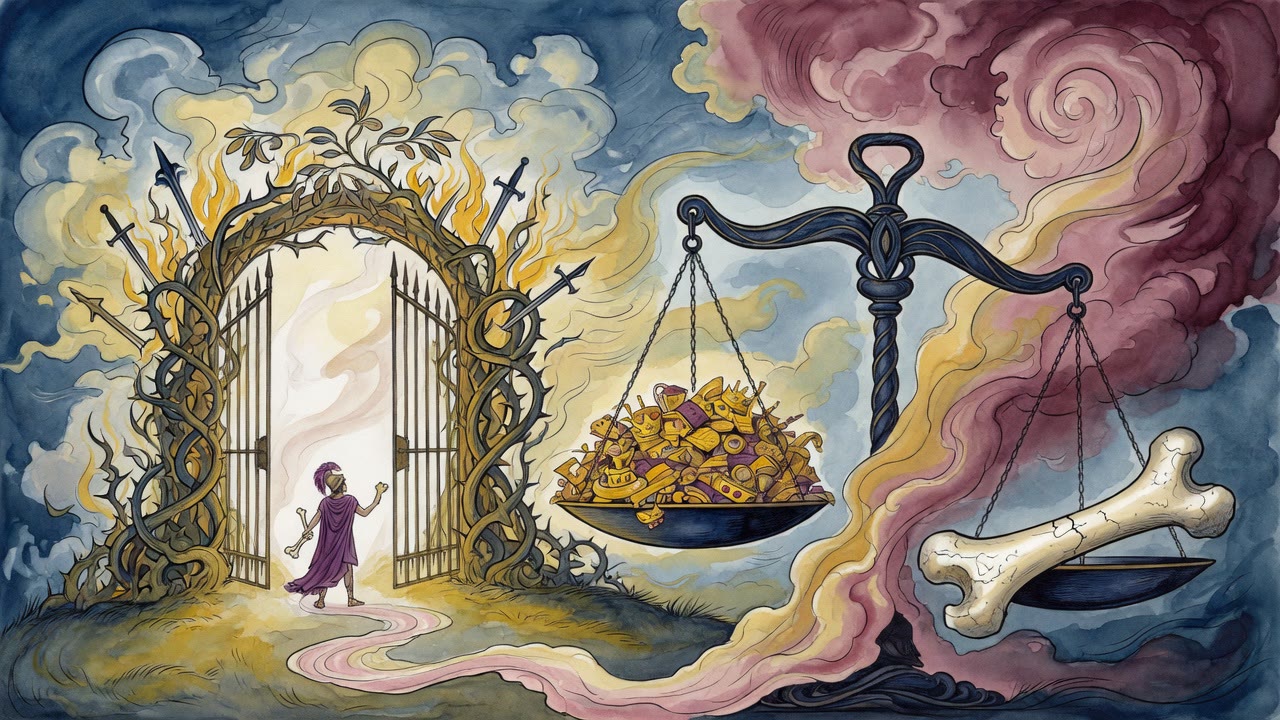
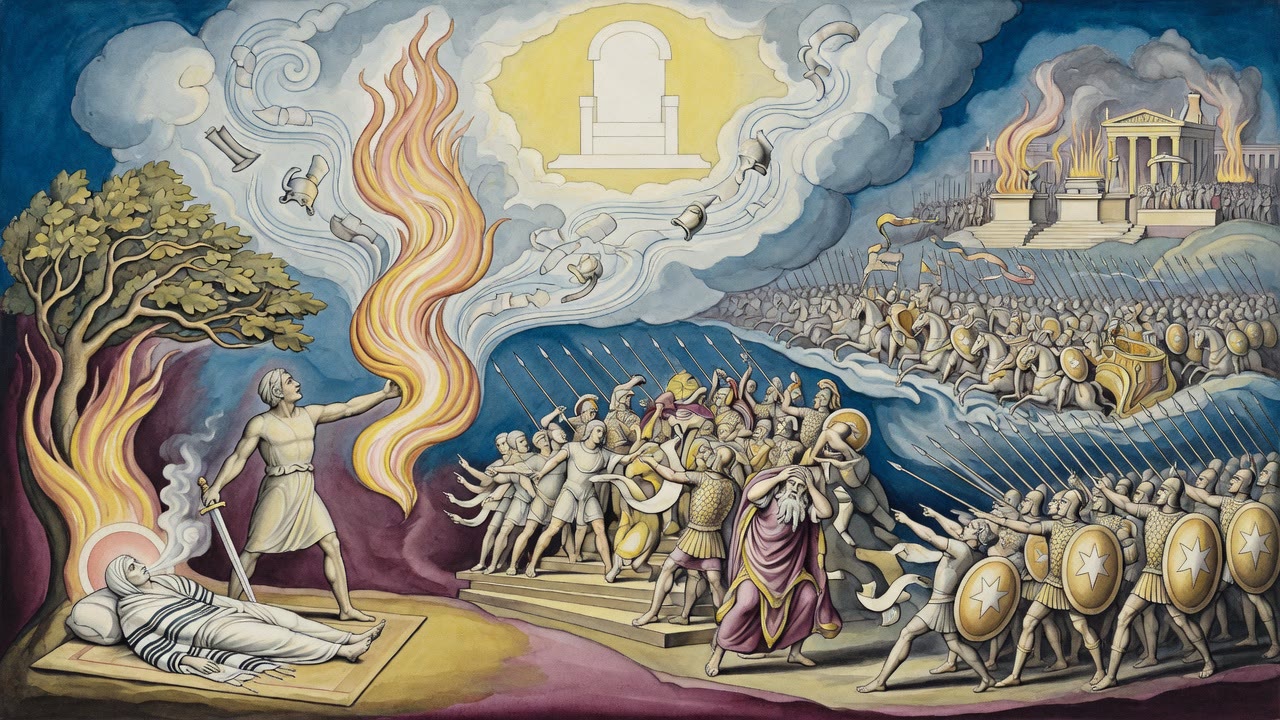
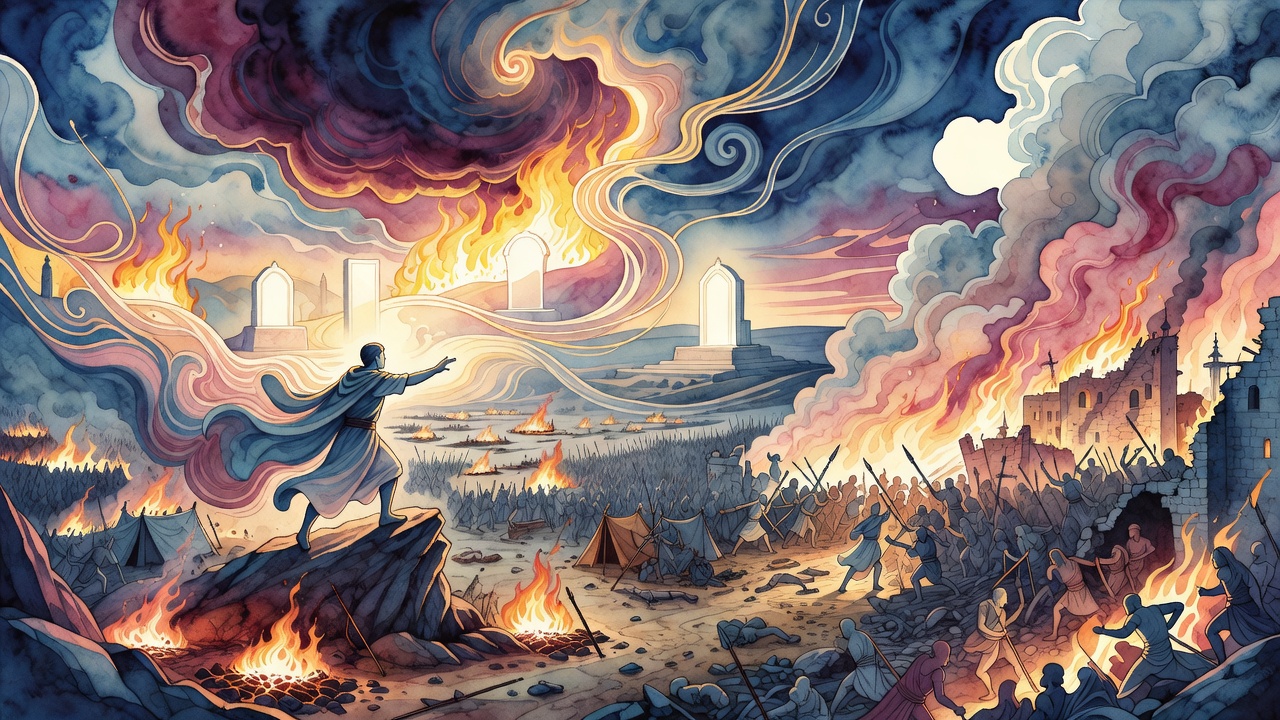
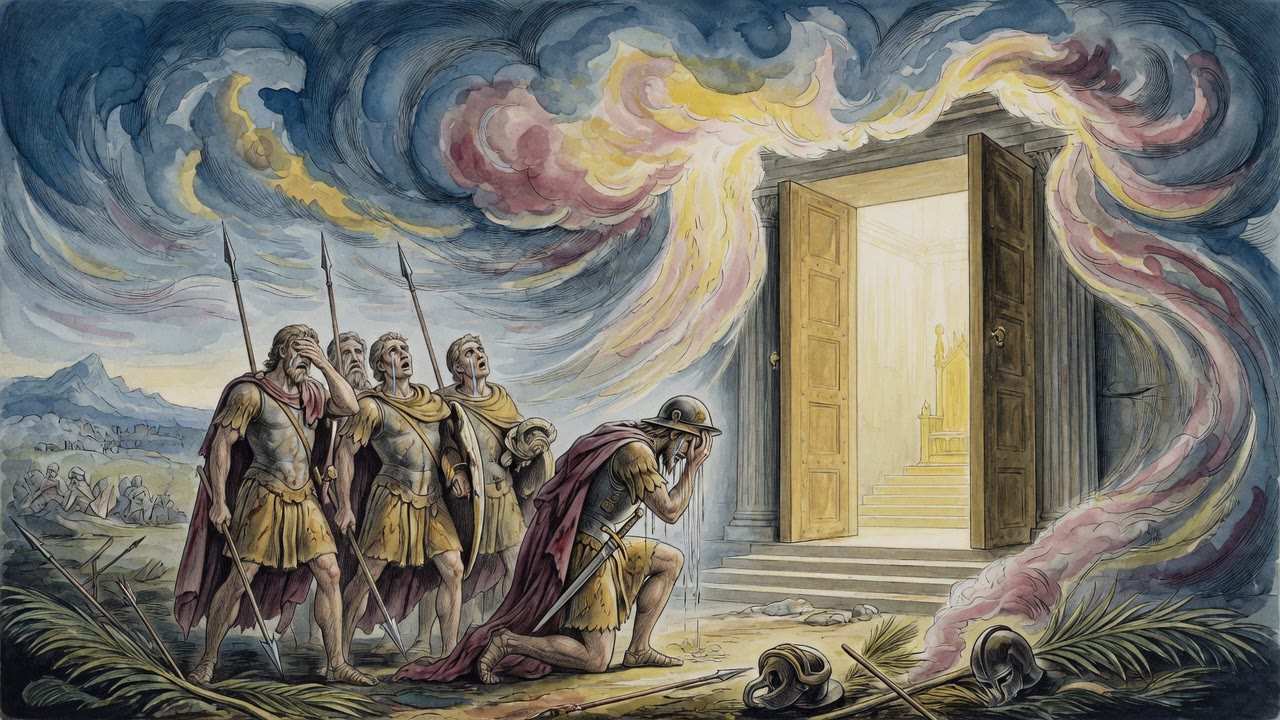
From the Altar at Modin to the Field Where Judas Fell Click for full size

The Officer Fell Beside the Village Altar

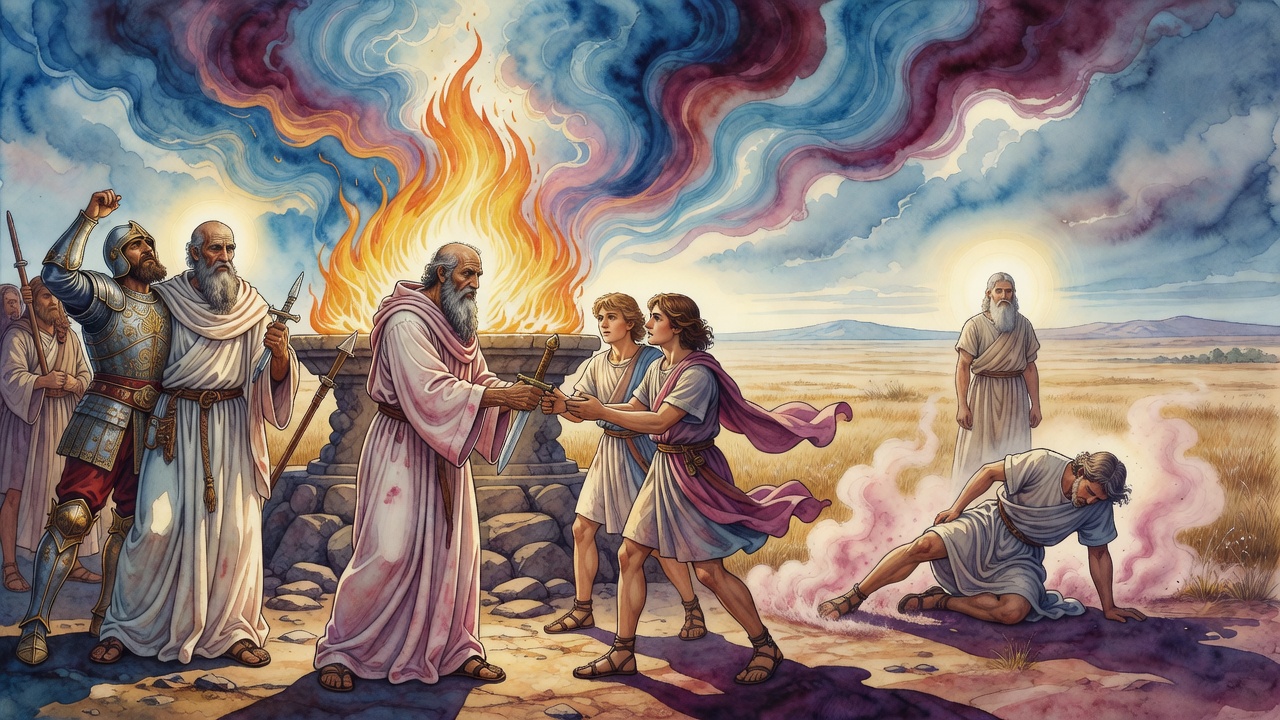
Mattathias would not touch it. He had already gathered his sons and told them the plain thing, that it was better to die for the laws of their fathers than to live in shame. So he stood still. But another Jew, eager to please the crown, stepped up to the altar and reached for the knife himself.

Something in the old priest broke loose. He killed the man where he stood at the altar. He killed the king's general Apelles beside him. Then he tore the altar apart with his hands and shouted across the village, "Whoever is zealous for the laws of his fathers and the worship of God, let him follow me." He fled into the wilderness that night, his five sons around him, and thousands of Jews walked out of their homes behind him.

A Thousand Chose the Caves Over the Sword

The Seleucid generals found the rebels' one weakness fast. They waited for Shabbat, the seventh day, when a faithful Jew would not lift a weapon, and then they struck. Roughly a thousand men, women, and children hid in the caves and let themselves be slaughtered rather than break the day of rest. They suffocated in the dark and never raised a hand.

Mattathias buried them and made a ruling that outlived him. When a life hangs in the balance, he said, you fight on Shabbat. That law still stands. The old priest lasted only a year in the hills. When he felt death coming he handed the war to his sons and named the one who would lead the armies, his son Judas, the one they called the Hammer.

The Hammer Broke General After General

Judas turned out to be something the empire had not planned for. The general Apollonius marched against him with Samaritan levies and royal troops, and Judas scattered them and killed Apollonius with his own hands. He stripped the dead general's sword off the field and carried it into every battle for the rest of his life. Then came Seron. Then Lysias with sixty thousand foot soldiers and five thousand horse. Judas was outnumbered in every fight, and he won every fight, and the roads of Judea filled with the wreckage of armies sent to erase him.

The Sanctuary Rose From Weeds and Ash

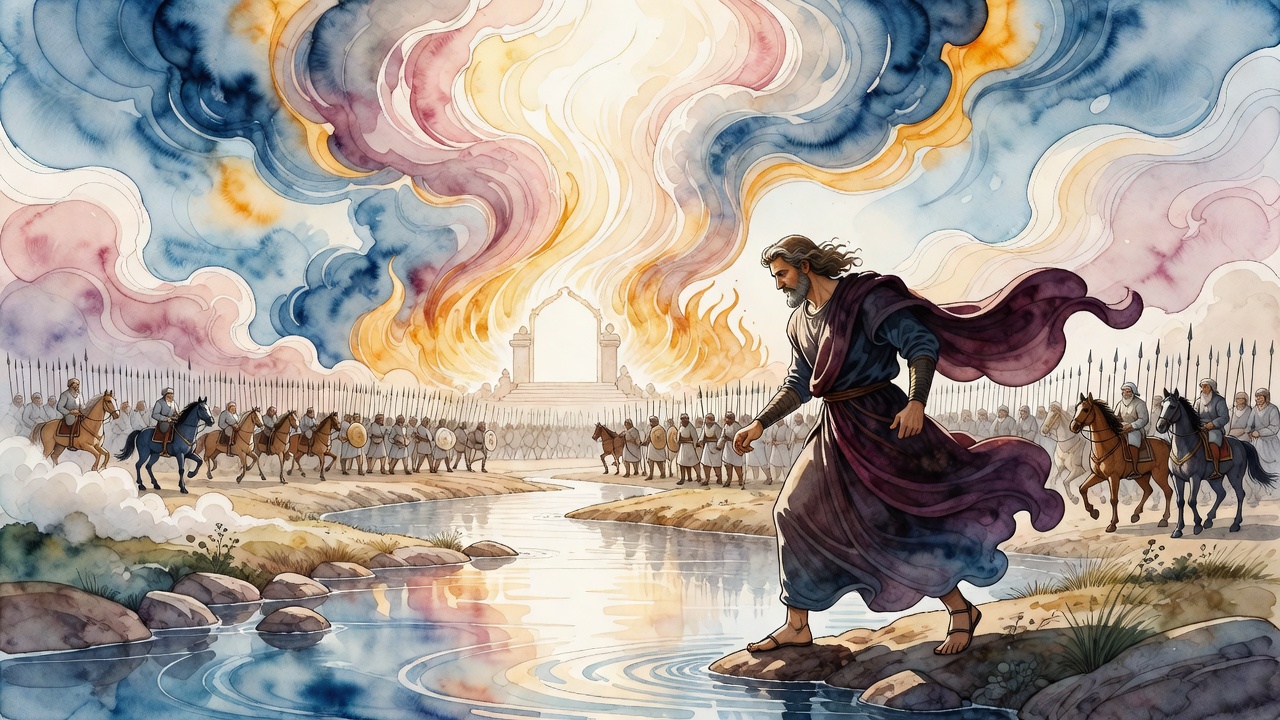
Three years after Antiochus had defiled the Temple, Judas marched his men into Jerusalem and walked into the sanctuary. The gates were burned. Weeds grew in the courts where priests once ran. The lamps sat cold. His men cleared the ruin, built a new altar from unworked stone, and hammered out fresh sacred vessels to replace the ones the empire had carried off. On the twenty-fifth of Kislev they lit the rededicated Temple and feasted for eight days. The people called the festival Lights, because a freedom no one had dared hope for had come to them out of the dark. Later generations kept the eight days and called them Hanukkah.

The Whisper of the Collaborators

The war did not end. A prince named Demetrius escaped his hostage years in Rome, seized the Syrian throne, and turned at once toward Judea. Jews who wanted the old order back went to him. Their spokesman was Alcimus, a High Priest of their own blood, and he swore that Judas and his brothers were murdering everyone loyal to the crown. Demetrius sent his general Bacchides with a great army.

Bacchides tried a lie first. He offered peace to draw Judas into the open, and Judas refused it. Some Jews trusted the offer because Alcimus was one of their own, and they crossed over, and Bacchides cut sixty of them down at once. No one crossed over after that. When Alcimus could not beat Judas in the field he begged the king again, and Demetrius sent Nicanor, one of his best. Nicanor arranged his own friendly meeting that was a trap. Judas saw the ambush and slipped it, and in the battle that followed Nicanor died. They hung his head and his right hand in Jerusalem, and the day of his fall became a feast of its own.

The Field Where the Eight Hundred Stood

Then Demetrius sent Bacchides back, this time with twenty thousand foot and two thousand horse. Judas's army looked at the size of it and melted away. From thousands he was left with eight hundred men. They begged him to slip off and raise a new force another day. He would not. "If our hour has come," he told them, "let us die like men for our people, and leave no stain on our name." The fight ran from morning to sundown. Judas saw that Bacchides held the strongest wing himself and drove straight at it, breaking it and chasing it back. But the enemy's other wing swung around behind him and closed the ring. Surrounded, with no lane left, Judas fought until they cut him down. His brothers Simon and Jonathan won his body back under a truce and carried it home to Modin, and laid the Hammer in the ground beside his father, on the same soil where an old priest had once refused to bow.


← All myths
From the tradition

Sources

2 sources

The texts behind this telling. Some cards carry a translation of the source; others are our own retelling of it, and each card says which. Every card links out to the original.

Antiquities XII.6-7Antiquities of the Jews (Josephus)

Retold in our words. Read the original at the link below.Antiquities of the Jews, trans. William Whiston · Public Domain

In the village of Modin, a priest named Mattathias gathered his five sons and told them it was better to die for the laws of their country than to live in disgrace. When the king's officers arrived to force the village to sacrifice to idols, they asked Mattathias to go first, knowing that if the most respected man complied, everyone else would follow. He refused. But another Jew stepped forward and sacrificed willingly. Mattathias erupted. He killed the man on the spot, killed the king's general Apelles, and smashed the idol altar to pieces. "If any one be zealous for the laws of his country and for the worship of God," he shouted, "let him follow me."

He fled into the desert with his sons. Thousands followed. The Seleucid generals pursued them and attacked on Shabbat (the Sabbath), knowing the Jews would not fight. About a thousand men, women, and children suffocated in the caves rather than break the Sabbath. Mattathias then made a ruling that changed Jewish law forever: when life is at stake, you fight on Shabbat. That rule still stands today.

Mattathias died after one year, but his son Judas, called Maccabeus (המכבי, "the Hammer"), proved to be a military genius. Josephus records that the Seleucid general Apollonius marched against Judas with a combined army of Samaritans and royal troops. Judas routed them and killed Apollonius personally, taking his sword and using it for the rest of his career. General after general came, Seron, then Lysias with sixty thousand infantry and five thousand cavalry. Judas defeated them all, despite being outnumbered in every engagement.

Three years after Antiochus had desecrated the Temple, Judas and his men marched into Jerusalem. They found the sanctuary desolate, gates burned, weeds growing in the courts. They rebuilt the altar, crafted new sacred vessels, and on the twenty-fifth of Kislev (כסלו) rededicated the Temple with eight days of feasting and sacrifice. Josephus writes: "From that time to this we celebrate this festival, and call it Lights." He believed the name came from the fact that "this liberty beyond our hopes appeared to us." That festival is Hanukkah (חנוכה).

Full source
Antiquities XII.10-11Antiquities of the Jews (Josephus)

Retold in our words. Read the original at the link below.Antiquities of the Jews, trans. William Whiston · Public Domain

Demetrius I, a Seleucid prince who had escaped captivity in Rome, seized the Syrian throne and immediately turned his attention to Judea. Jewish collaborators, led by the corrupt High Priest Alcimus, accused Judas Maccabeus and his brothers of killing loyalists and expelling anyone friendly to the Seleucid crown. Demetrius dispatched his general Bacchides with a massive army.

Josephus records that Bacchides tried deception first, offering peace terms to lure Judas into a trap. Judas refused. But some Jews, trusting Alcimus because he was one of their own countrymen, accepted the offer and crossed over. Bacchides promptly massacred sixty of them. After that, no one else defected.

With Bacchides gone, Alcimus consolidated power through flattery and violence, surrounding himself with an army of turncoats and criminals. Judas countered by hunting down Alcimus's supporters across the countryside. When Alcimus realized he could not match Judas in open combat, he begged Demetrius for help. The king sent Nicanor, one of his most distinguished commanders, with a large force.

Nicanor first attempted diplomacy. He arranged a meeting with Judas, but it was a trap. Judas discovered the plot and escaped. In the battle that followed, Nicanor fell. His severed head and right hand were displayed in Jerusalem, a grim trophy that Judas dedicated before God. The day of Nicanor's defeat became an annual celebration.

But the victories could not last forever. Demetrius sent Bacchides back to Judea, this time with 20,000 infantry and 2,000 cavalry. When Judas's army saw the overwhelming force, most of them deserted. From thousands, Judas was left with just 800 men. His soldiers begged him to retreat and fight another day. Judas refused. "If our time has come, let us die bravely for our countrymen," he said, "and not leave behind a stain upon our glory."

The battle raged from morning until sunset. Judas saw that Bacchides commanded the strongest wing and charged directly at it, driving the enemy before him. But the Seleucid left wing encircled him from behind. Surrounded, with no way out, Judas Maccabeus fought until he was cut down. His brothers Simon and Jonathan recovered his body under truce and buried him at Modin, beside their father Mattathias. He had led the revolt for three years and died exactly as he had lived: facing the enemy head-on.

Full source