5 min read

Judas Crossed the Brook First Against Lysias

Lysias brought sixty thousand foot and five thousand horse. Judas prayed David's underdog victories, then stepped into the brook first.

Curated by Arthur · Told by Maggid ·
Table of Contents
  1. Sixty Thousand Against a Small Hope
  2. The Brook That Decided Courage
  3. Zeal Without Counsel Dies Early
  4. What the First Step Bought
Judas Crossed the Brook First Against Lysias Click for full size

Sixty Thousand Against a Small Hope

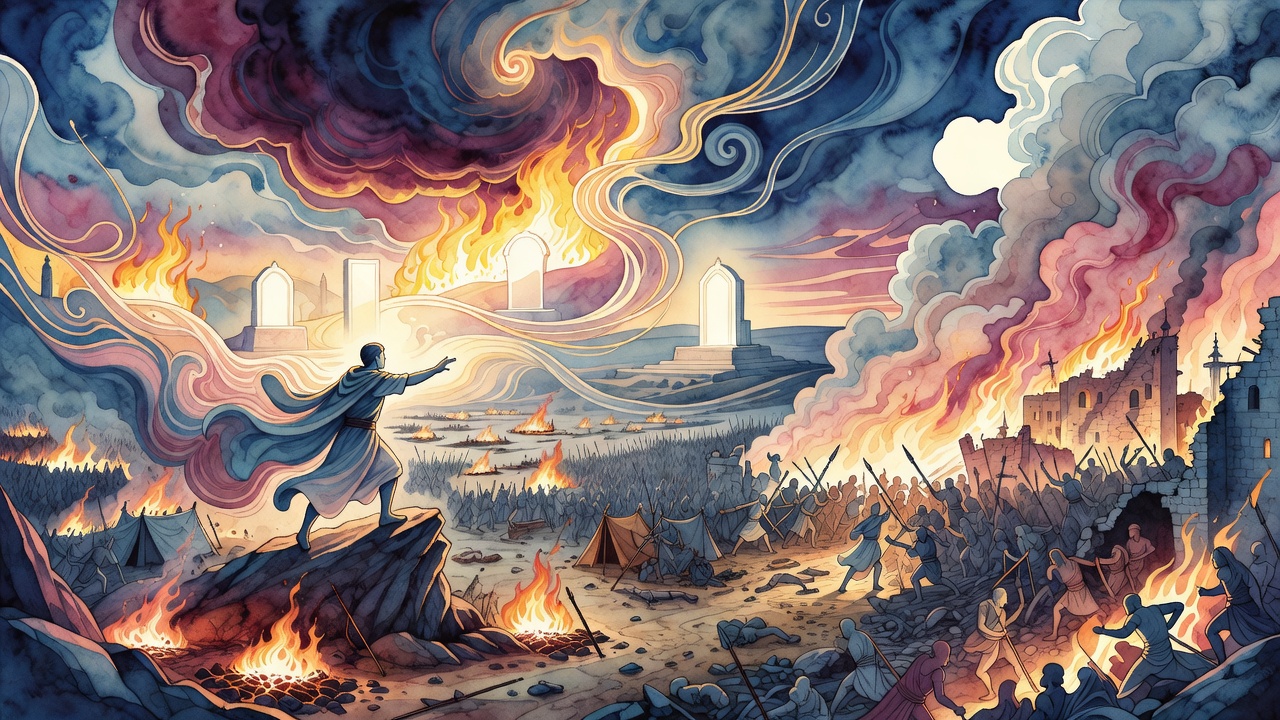
The news left the commander confounded and discouraged. Plans against Israel had failed. The king's commands sat unfinished like unpaid debts. The next year Lysias answered failure with scale. Sixty thousand infantry. Five thousand cavalry. They marched into Idumea and camped at Bethsura until the valley looked like a city of canvas. Tents filled the eye. Hooves taught the ground a new rhythm of dread. Spears caught light and threw it back as threat.

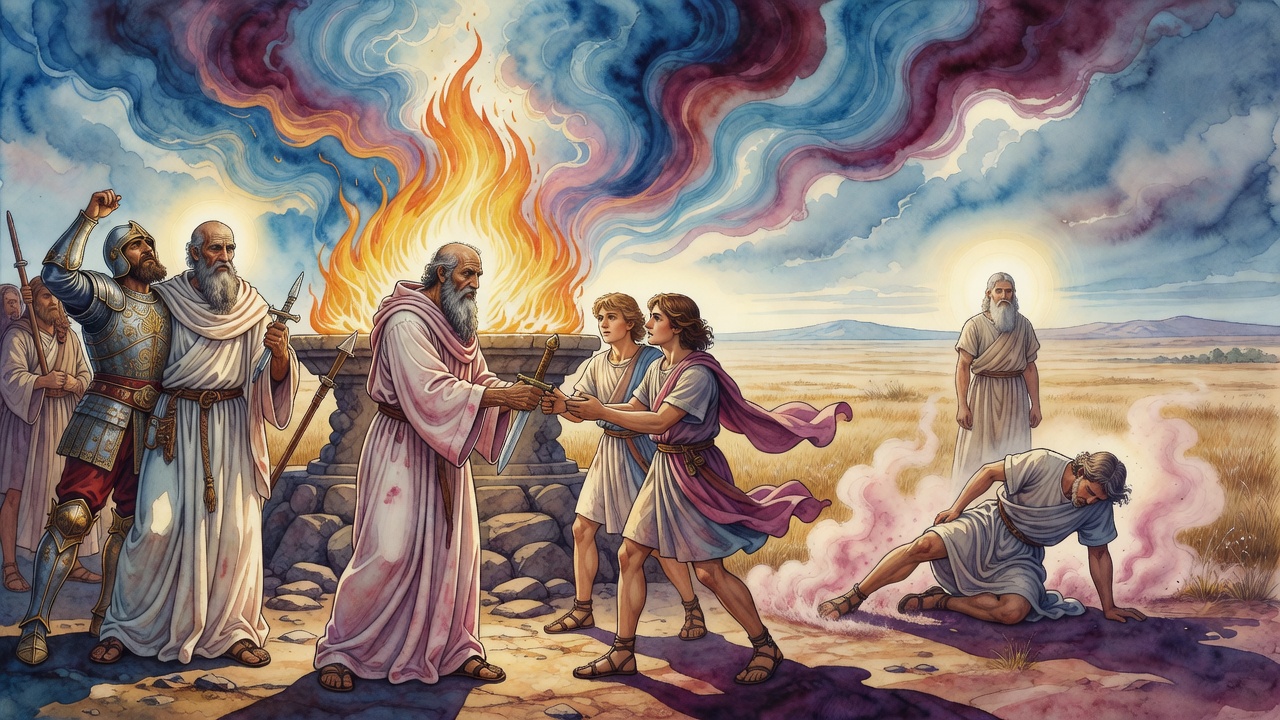
Judas did not match numbers with numbers. He prayed. "Blessed art thou, O Saviour of Israel, who didst quell the violence of the mighty man by the hand of thy servant David." He named Jonathan son of Saul and the armor-bearer who toppled a garrison when the odds were a joke told against them. The prayer was a library of underdogs opened in the face of an empire's math, a reminder that heaven has archived unequal fights before.

The Brook That Decided Courage

Elsewhere the enemy assessed the same war with cold clarity. If Judas crossed first, they said, they would not withstand him, for he would mightily prevail. If he feared and camped beyond the river, they would cross and crush him at leisure. The water was not only geography. It was a test of who would own the first step and who would inherit the story told afterward about fear.

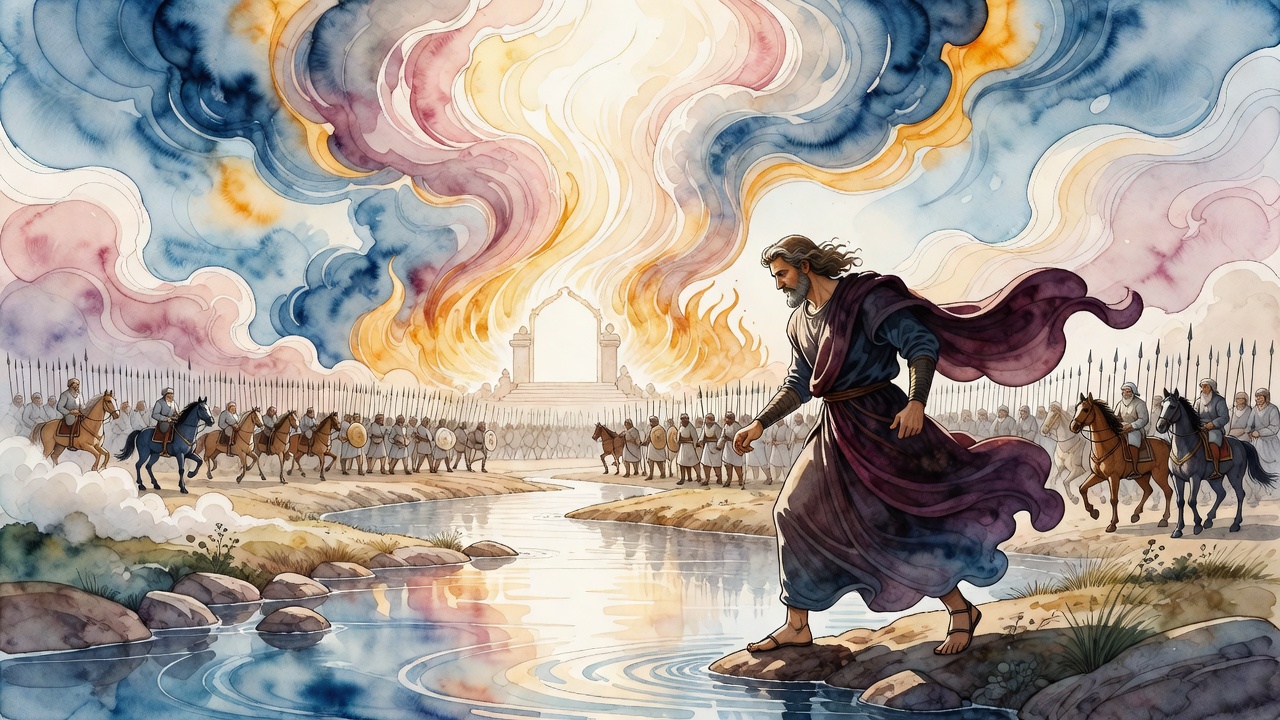
Judas came to the brook and ordered the scribes of the people to remain there with a hard command. Suffer no man to stay in the camp. Let all come to the battle. Then he went first over unto them, and all the people after him. The man who prayed David's name walked like David toward a giant made of cavalry counts, and the scribes watched an army empty itself of hesitation.

Zeal Without Counsel Dies Early

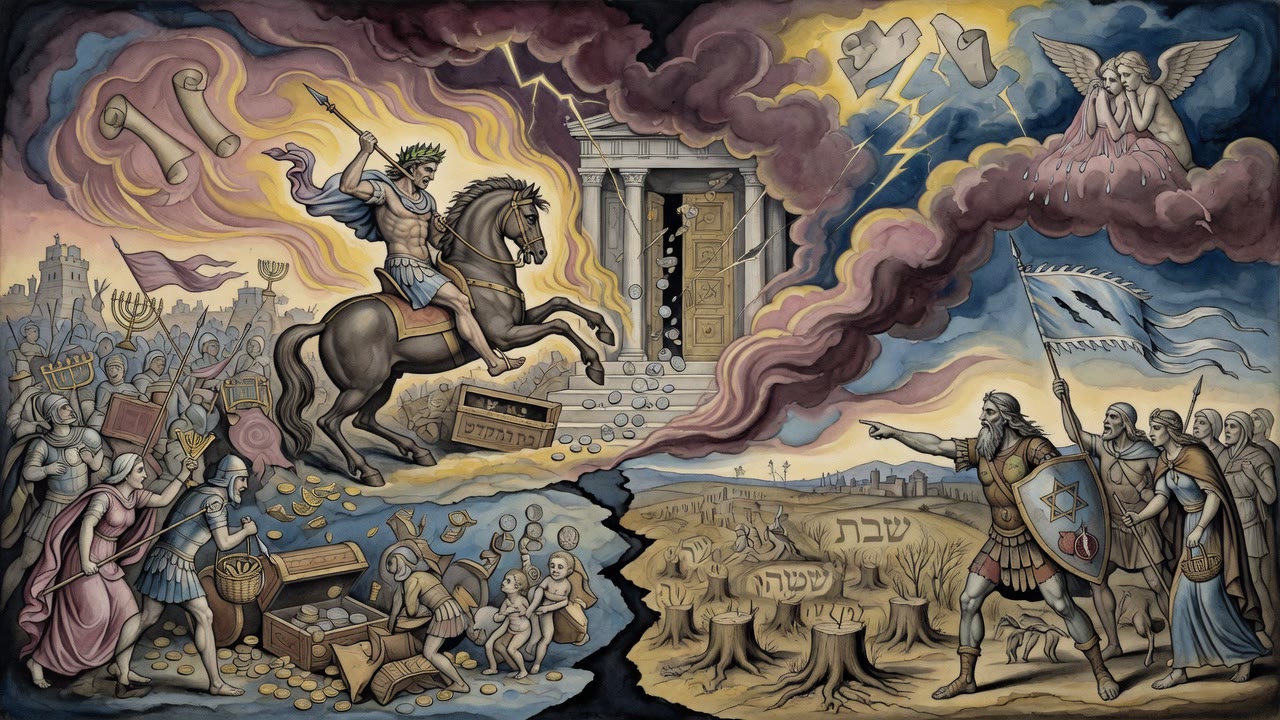
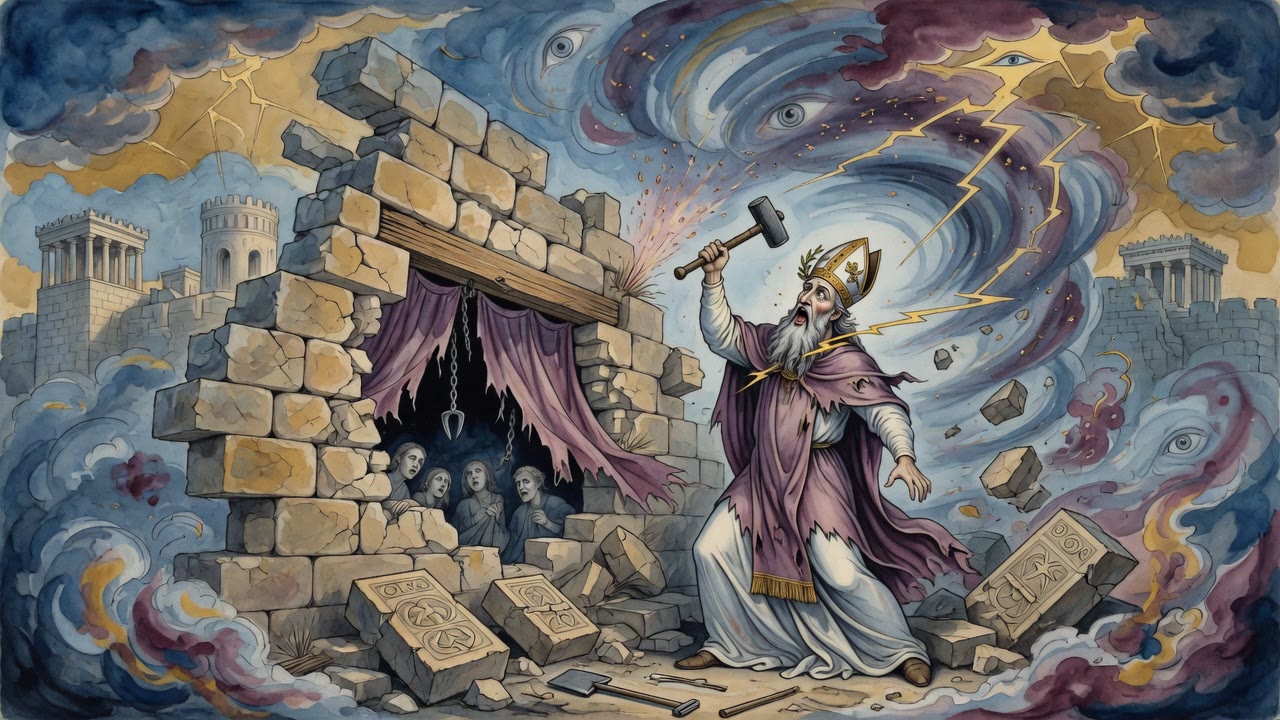
Victory never arrived as a clean road without graves. On a march through Philistine land and Samaria, certain priests eager to show valor went out unadvisedly and were slain. The book refuses to romanticize every death under a holy banner. Courage without counsel is still a body on the field, and zeal that skips the leader's order can serve the enemy as efficiently as cowardice. Judas turned toward Azotus, pulled down altars, burned carved images, spoiled cities, and returned to Judea with the harsh clarity of a war that mixes purity and ruin in the same week's work.

While he fought, other kings moved in high countries, and the board of empires kept shifting under the Temple's shadow. The Maccabean story is never only one battle. It is a sequence of brooks, bad decisions by the fervent, and necessary fires against images that would have replaced the Name with stone the hand can control.

What the First Step Bought

Lysias had numbers that could darken a valley. Judas had memory and a body willing to get wet first. The men who might have lingered found the camp emptied of permission to linger. Scribes watched the brook like judges of a vow. Fighters filled the far bank because their commander already stood there dripping. The prayer that named David and Jonathan became feet in water and steel in daylight, and the enemy's own assessment proved true against them when the crossing was not deferred.

Empires count tens of thousands. The book of the Maccabees counts the moment a leader refuses to let fear choose the crossing. After that moment, altars fall and priests sometimes fall too, and the work of guarding Judea continues without the luxury of a final page that ends all marching. The sixty thousand still mattered. The first foot in the brook mattered more for the men who had to decide, in one wet second, whether to follow or invent a reason to stay dry.

Bethsura's camp of sixty thousand was meant to end the stubbornness of a small people who refused to let foreign altars stand in their sanctuary. Lysias brought enough horse to make the ground itself seem to choose empire. Judas answered with a prayer that treated history as arsenal. David's sling and Jonathan's climb were not bedtime stories. They were precedents filed under divine rescue, ready to be cited when math failed.

The enemy understood psychology as well as he did. They named the brook as the hinge. Cross first and live. Hesitate and die. Judas took their analysis seriously enough to steal it. He emptied the camp of half-measures, left scribes as witnesses, and put his own body into the water while men still calculating odds were forced to choose between shame and following. Later, when priests died for unadvised valor and Azotus's images burned, the war showed its full face. Not every death is holy. Not every fire is excess. The first wet step remained the clearest sentence Judas wrote with his life that year.


← All myths
From the tradition

Sources

3 sources

The texts behind this telling. Some cards carry a translation of the source; others are our own retelling of it, and each card says which. Every card links out to the original.

The Book of Maccabees I 4:29The Book of Maccabees I

Retold in our words. Read the original at the link below.Sefaria Community Translation · CC-BY

Our scene opens with a figure named, well, he’s not named in the text. But he's in a tight spot. He's just heard some pretty bad news. He’s "confounded and discouraged," as the verse says, because things aren't unfolding as he planned. The Book of Maccabees tells us that he'd hoped to inflict certain measures on Israel, but they hadn't come to pass. And worse? He also hasn't been able to fulfill the king’s commands.

What happens next? The stakes get even higher. "The next year therefore following," the narrative continues, Lysias gathers a massive force. That’s 60,000 infantry and 5,000 cavalry, all with one goal: to subdue the Israelites.

This army marches into Idumea (that's modern-day southern Israel and Jordan), and they set up camp at Bethsura. Imagine the sight: tents as far as the eye can see, the ground trembling under the hooves of thousands of horses. It must have been terrifying.

Here, in the face of this seemingly unstoppable force, our unnamed leader does something remarkable. He prays.

It's a powerful moment, this prayer. In it, he calls out, "Blessed art thou, O Saviour of Israel." He remembers the past, recalling how God "didst quell the violence of the mighty man by the hand of thy servant David." That's a clear reference to the story of David and Goliath. He also remembers how God "gavest the host of strangers into the hands of Jonathan the son of Saul, and his armour bearer." Another underdog story, another moment of divine intervention. He is reminding himself, and perhaps trying to remind God, of past victories, of moments when the impossible became possible.

What does this ancient prayer teach us? Perhaps it's about finding strength in the face of overwhelming odds. Maybe it's about remembering that even when we feel like we're stuck between a rock and a hard place, we're not alone. Or maybe it's just a reminder that sometimes, all we can do is pray.

Full source
The Book of Maccabees I 5:43The Book of Maccabees I

Retold in our words. Read the original at the link below.Sefaria Community Translation · CC-BY

The Book of Maccabees I turns to If He Crosses First We Cannot Withstand Him.

The scene: Judas and his men are facing a formidable enemy. Their situation is precarious, to say the least. They know that their fate hangs in the balance, hinging on a single, crucial decision. The text from the Book of Maccabees I, chapter 5, lays it out with stark clarity. The enemy believes that, "if he pass over first unto us, we shall not be able to withstand him; for he will mightily prevail against us."

Their opponents recognize their own strength and believe that a preemptive strike will crush the Maccabees’ resistance. But then comes the alternative, a sliver of hope. "But if he be afraid, and camp beyond the river, we shall go over unto him, and prevail against him."

The Maccabees realize that the key is to exploit any sign of weakness, any hesitation from the enemy. It's a gamble, a daring move that could spell either utter destruction or miraculous triumph.

Now, picture Judas Maccabeus approaching the brook, a natural barrier separating the two forces. He makes a strategic decision. "He caused the scribes of the people to remain by the brook: unto whom he gave commandment, saying, Suffer no man to remain in the camp, but let all come to the battle."

Judas leaves the scribes behind, ordering that every single fighting man should join the coming battle. This isn't a time for half-measures. This is a moment that calls for absolute commitment, a unified front against overwhelming odds. Every warrior is needed.

And then, the boldest move of all: "So he went first over unto them, and all the people after him." Judas doesn't wait. He doesn't hesitate. He leads the charge, crossing the brook and heading straight for the enemy. It's a display of incredible courage, evidence of his faith and determination.

What happens next? "Then all the heathen, being discomfited before him, cast away their weapons, and fled unto the temple that was at Carnaim." The enemy, expecting a defensive stance, is taken completely by surprise by this act of bravery. They are disoriented, and their resolve crumbles. They throw down their weapons and flee to the temple at Carnaim, seeking refuge.

The Maccabees, against all odds, have won the day. This passage isn't just about a military victory; it's about the power of courage, leadership, and unwavering commitment. Judas Maccabeus's actions remind us that even when faced with seemingly insurmountable obstacles, a bold and decisive move can change the course of history.

What brook are you facing today? What impossible challenge looms before you? Perhaps the story of Judas Maccabeus can inspire you to cross that brook with courage and conviction.

Full source
The Book of Maccabees I 6:1The Book of Maccabees I

Retold in our words. Read the original at the link below.Sefaria Community Translation · CC-BY

The Book of Maccabees I turns to Judas Marches Through Philistine Territory.

Let's turn the page to 1 Maccabees 6. The narrative pulls us away from Jerusalem, away from the Temple Mount. It's a time of continued skirmishes, of solidifying gains, but also of tragic missteps.

The army "removed to go into the land of the Philistines, and passed through Samaria." It's a reminder that the world of the Maccabees wasn't neatly divided. These weren't just religious wars; they were geopolitical struggles. Samaria, a region with a complex relationship to Judea, becomes a place to pass through. A reminder that the lines of conflict, identity, and allegiance were often blurred.

Then comes a sobering moment. "At that time certain priests, desirous to shew their valour, were slain in battle, for that they went out to fight unadvisedly." Ouch. It's a stark reminder that zeal without wisdom can be disastrous. these were priests, men dedicated to serving God, eager to prove their courage. But their impetuousness led to their demise. One that resonates through the ages.

So, Judas, the leader of the Maccabees, pivots. The narrative shifts to Azotus, a Philistine city. "Judas turned to Azotus in the land of the Philistines, and when he had pulled down their altars, and burned their carved images with fire, and spoiled their cities, he returned into the land of Judea." This is decisive action. This is a clear statement: pagan symbols will not stand. But it's also a cycle of destruction, a harsh reality of warfare. Altars torn down, images burned, cities spoiled. It's a messy, brutal business, this fight for religious freedom.

And while Judas Maccabeus is busy in Judea, what about his adversary, King Antiochus? The story whisks us away to the "high countries."

"About that time king Antiochus travelling through the high countries heard say, that Elymais in the country of Persia was a city greatly renowned for riches, silver, and gold."

Suddenly, we are presented with a new plotline! Antiochus, driven by greed, hears tales of immense wealth in Elymais. This sets the stage for a new conflict, a new chapter in the saga. It wasn't all about piety and religious devotion; there were also earthly desires at play: wealth, power, control.

So, where does this leave us? The Maccabean revolt wasn't a simple, clean-cut story. It was a messy, complicated struggle, filled with victories and defeats, piety and greed, courage and recklessness. And as we see with Antiochus heading towards Elymais, the story is far from over. The fight continues, the stakes remain high, and the future is uncertain. What would you have done in their place? How would you have balanced zeal with wisdom, faith with pragmatism, in the face of such immense challenges?

Full source