4 min read

Alexander Balas Offered Judea True Peace and Ptolemy Took His Crown

He was the first Greek king to offer Judea true peace, and they took it. Within a season his own father-in-law walked into his capital wearing two crowns.

Curated by Arthur · Told by Maggid ·
Table of Contents
  1. The Word Was Not Truce
  2. Until the Sun Went Down
  3. Ambassadors Went Down to Egypt
  4. I Repent That I Gave My Daughter
  5. Two Crowns in Antioch
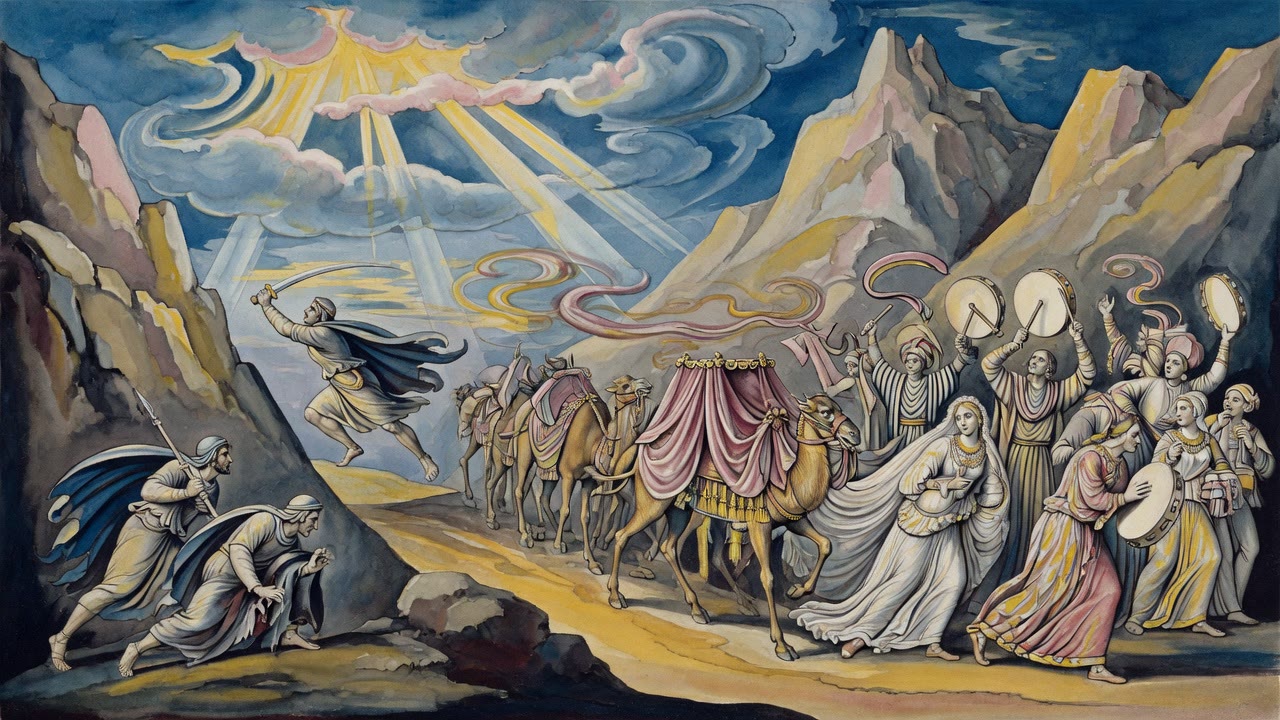
Alexander Balas Offered Judea True Peace and Ptolemy Took His Crown Click for full size

The Word Was Not Truce

Every king who had ever wanted something out of Judea sent the same letter with a different seal on it. Amnesty. Terms. A pause until the next campaign season.

Alexander sent something else. He was the first of them to ask for true peace, and Jonathan and the men around him read the phrase twice before they believed it. Then they took it. They were well pleased with him, and they stayed confederate with him from that day on, which is a long way for a family that had started out hiding in caves from his predecessors.

Until the Sun Went Down

There was another king in the field, and his name was Demetrius.

Alexander gathered great forces and camped over against him, and the two of them joined battle. Demetrius's host broke first. It went the way an army goes when the center gives, not a retreat but a footrace, men dropping shields so their arms would swing free.

Alexander did not let them run. He followed after them and prevailed against them, and he kept it going, very sore, until the sun went down. Demetrius was dead before dark.

Ambassadors Went Down to Egypt

Alexander did not go home to celebrate. He sent ambassadors down to Ptolemy, king of Egypt, and out of that embassy came a wedding.

Ptolemy gave him his daughter. Egypt and Syria in one household, sealed while the dead were still being cleared off the border.

For a while it did what such marriages are built to do. Judea, bound by treaty to a man now bound by blood to Egypt, had two great houses standing between it and the next war, and the fields around Jerusalem went a season without soldiers walking through them.

I Repent That I Gave My Daughter

Then Ptolemy came north himself, and he came carrying a message that was not for Alexander.

It went to the young Demetrius, the dead king's son, who had taken up his father's claim. "Come, let us make a league between us, and I will give you my daughter, the one Alexander has, and you shall reign in your father's kingdom."

He had his reason ready before anyone asked for it. "I repent that I gave my daughter to him, for he sought to slay me."

The charge was a lie and it did its work. He slandered Alexander because he was desirous of his kingdom.

Then he took his daughter back out of Alexander's house and put her into the hands of Demetrius, and he forsook Alexander, and the hatred between the two of them stopped being a rumor in the corridors and was said out loud in both courts. The girl went north with a second husband, and the border went with her.

Two Crowns in Antioch

Ptolemy entered Antioch, and Antioch was Alexander's own capital.

He made no speech at the gate. He set two crowns on his head, the crown of Asia and the crown of Egypt, and rode in wearing both of them at once where the whole city could count them.

Nothing changed in the fields of Judea that week. The grain came up the same. But the man who had been the first to write the words true peace had lost his wife and his capital to the same hand inside a single season, and every Jewish soldier who had marched under that confederacy could count crowns as well as anyone in Antioch.


← All myths
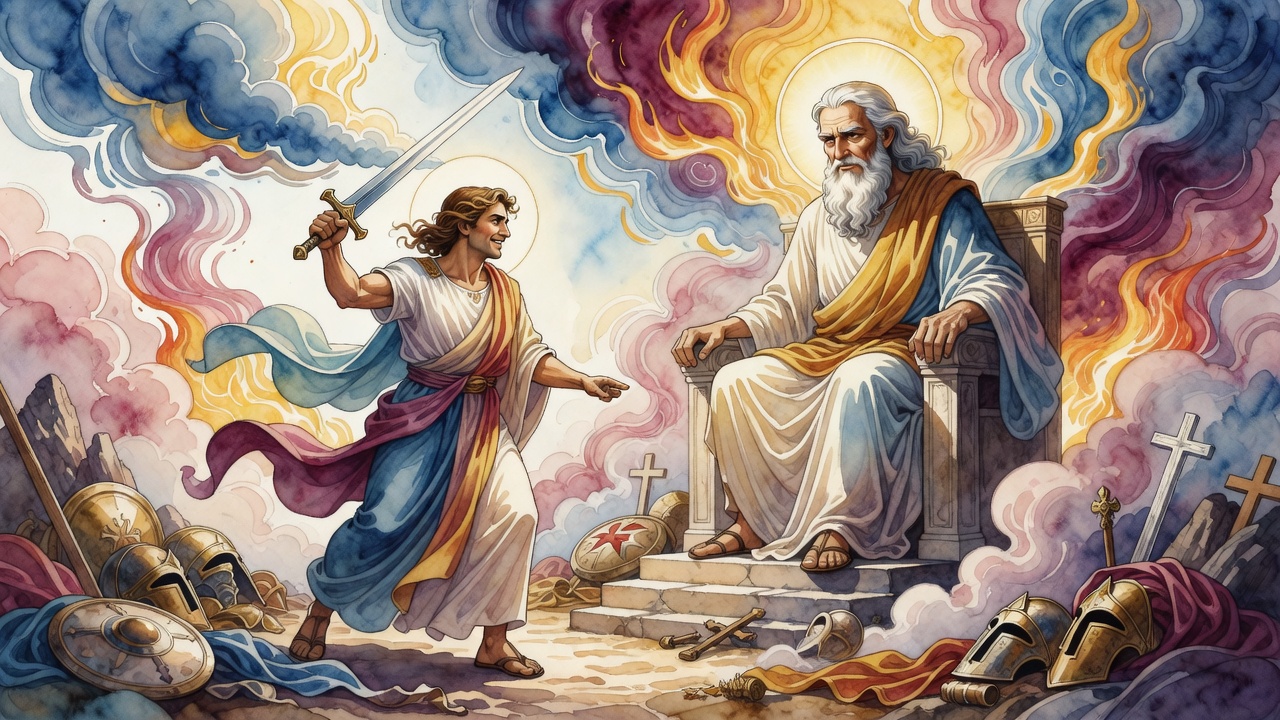
From the tradition

Sources

2 sources

The texts behind this telling. Some cards carry a translation of the source; others are our own retelling of it, and each card says which. Every card links out to the original.

The Book of Maccabees I 10:53The Book of Maccabees I

Retold in our words. Read the original at the link below.Sefaria Community Translation · CC-BY

The story of the Maccabees gives us a glimpse into exactly that world.

We've talked about the Maccabees before, of course. Their fight for religious freedom against the Seleucid Empire is the heart of the Hanukkah story. But their story is so much bigger than just one holiday. It's a political drama full of intrigue, battles, and larger-than-life characters. And one particular moment in that drama, as recorded in the Book of Maccabees I, chapter 10.

After years of conflict, the Jewish people, led by the Maccabees, found themselves in a delicate position. They needed allies. And Alexander, yes, that's Alexander Balas, not to be confused with Alexander the Great, was the first to offer them "true peace." "True peace." After all the turmoil, the promise of stability must have been incredibly appealing. And so, they entered into a confederacy, a formal alliance, with him.

Peace in the ancient world was rarely simple, was it?

Enter Demetrius. He was another king vying for power, and naturally, he clashed with Alexander. The stage was set for a showdown. The Book of Maccabees I tells us that Alexander gathered "great forces" and camped opposite Demetrius. This wasn't a minor skirmish; this was a major power struggle.

And then, the battle.

Demetrius's army was routed. They fled. Alexander pressed his advantage, pursuing them relentlessly. The fighting was "very sore," the text says, lasting until sunset. Imagine the scene: the clash of swords, the cries of soldiers, the dust and heat of battle all culminating as the sun dipped below the horizon.

The day ended with a decisive victory for Alexander, and with the death of Demetrius. A major player was eliminated from the game.

But what happens after such a victory? What do you do when you've just defeated a major rival?

Well, Alexander sent ambassadors to Ptolemy, the king of Egypt, with a message. This wasn't just a courtesy call. It was a strategic move, a way to consolidate power and secure his position. The ancient world was all about alliances, treaties, and maneuvering for advantage.

What was in that message? What did Alexander want from Ptolemy? That, my friends, is a story for another time. But it's a reminder that history is never truly over. Each victory, each defeat, simply sets the stage for the next act in the drama. And the story of the Maccabees is filled with those twists and turns, those moments of both triumph and tribulation. It’s a reminder that even in the midst of conflict, the pursuit of peace, even a fragile peace, is always worth striving for.

Full source
The Book of Maccabees I 11:16The Book of Maccabees I

Retold in our words. Read the original at the link below.Sefaria Community Translation · CC-BY

The Book of Maccabees I turns to Alexander in Joseph's Time.

Someone – the text doesn't immediately tell us who, but context clues point to Ptolemy VI Philometor – is basically saying, "Hey, let's make a pact! I'll even give you my daughter, the one Alexander has, and you can rule your father's kingdom." Now, that's a tempting offer. A marriage alliance, a kingdom, the whole shebang.

Why the sudden generosity? What's the catch?

Well, our unnamed speaker spills the beans: "For I repent that I gave my daughter unto him, for he sought to slay me." Ouch. It seems Alexander, the original groom, wasn't exactly playing nice with his wife’s family. This is some serious political maneuvering, masked as a familial spat.

And the text doesn’t hold back: "Thus did he slander him, because he was desirous of his kingdom." It's a raw, honest admission of the power plays at work. Forget love and commitment; this is all about land and influence.

So, what does Ptolemy do? He doesn't just write a strongly worded letter. No, he takes his daughter back from Alexander and gives her to Demetrius instead! The awkward conversations? "And [Demetrius] forsook Alexander, so that their hatred was openly known." It’s like a royal reality TV show, only with higher stakes.

The saga climaxes with Ptolemy's grand entrance into Antioch. He doesn't just waltz in; he makes a statement. A very shiny statement: "Then Ptolemee entered into Antioch, where he set two crowns upon his head, the crown of Asia, and of Egypt." Double the crowns, double the power. This isn't just about a broken engagement; it's about claiming dominance over entire regions. He's not just breaking up a marriage; he's redrawing the map.

What can we learn from this whirlwind of ancient drama? Maybe it's that politics can make even the most personal relationships into mere pawns. Or maybe it's a reminder that behind every grand historical event, there are human beings making choices, driven by ambition, fear, and the ever-present desire for power.

How much of what we see in the world around us is driven by similar forces, hidden beneath the surface of everyday life? And how much does that really change over thousands of years?

Full source