5 min read

Jonathan Ambushed the Wedding Train of Jambri

Jonathan and Simon hid under the mountain, remembered their murdered brother, and broke a Canaanite wedding with drums still in the air.

Curated by Arthur · Told by Maggid ·
Table of Contents
  1. A Wedding That Paid an Old Debt
  2. Eight Thousand and a Golden Buckle
  3. The Tower in Jerusalem
  4. Three Thousand in Antioch

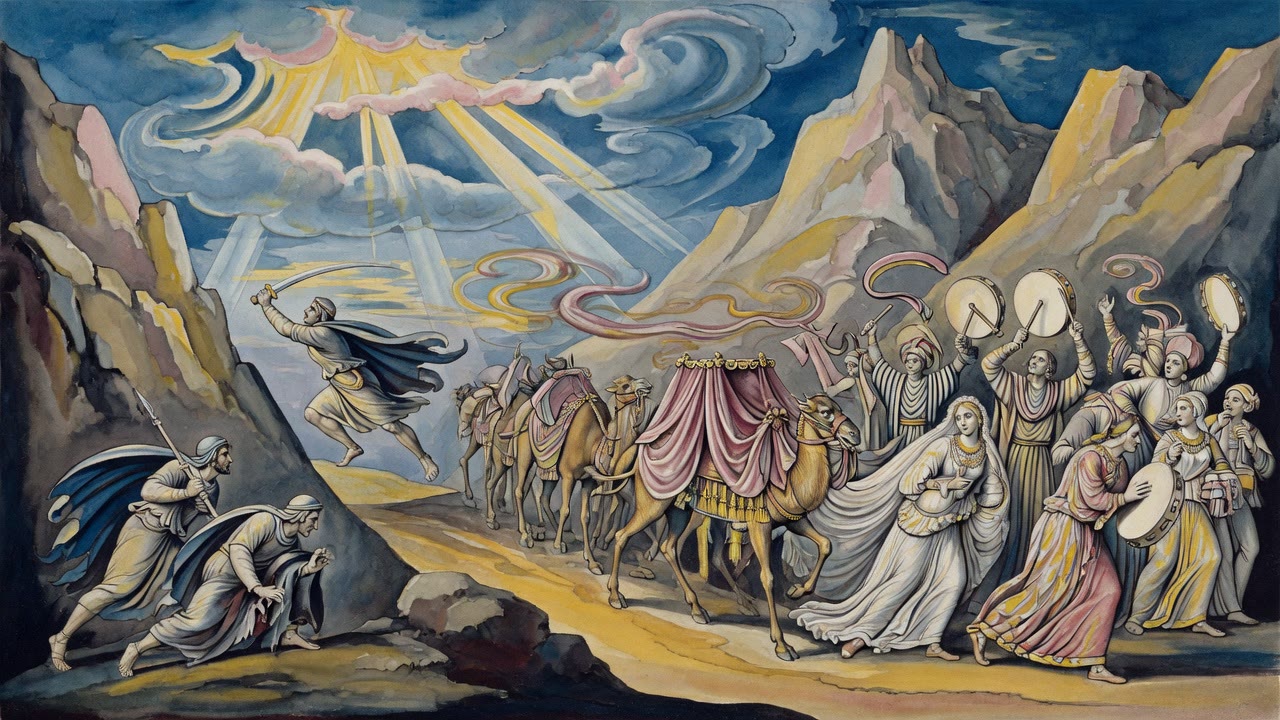
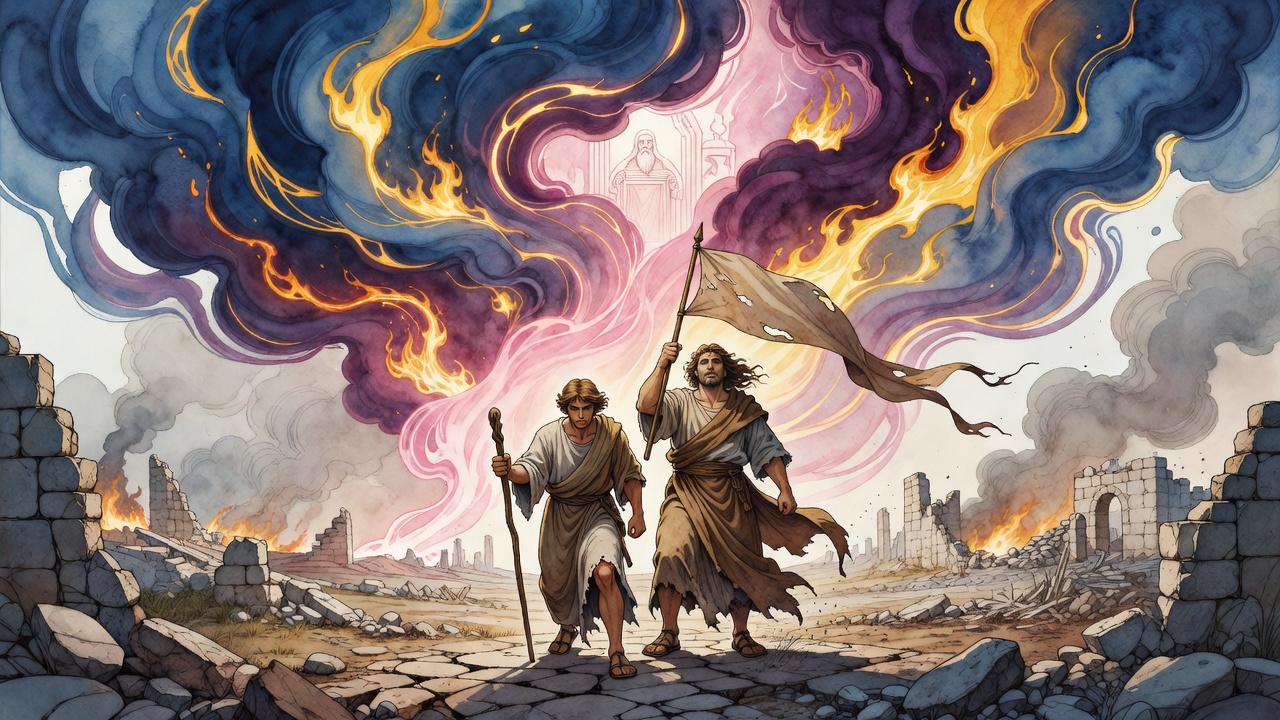
Word reached Jonathan and Simon that the children of Jambri were making a great marriage. The bride came from Nadabatha with a long train, daughter of a prince of Canaan, drums and instruments and weapons mixed in the joy. The brothers remembered John, their own blood taken by that clan, and climbed to hide under the covert of the mountain.

Jonathan Ambushed the Wedding Train of Jambri Click for full size

They lifted their eyes. The bridegroom came forth with friends and brethren, music loud enough to cover the sound of men who had not come to dance.

A Wedding That Paid an Old Debt

Revenge wore the mask of a festival day. The ambush did not wait for a battlefield with flags. It chose the hour when a family felt safest, when hands held flutes instead of spears. The Book of Maccabees does not soften the choice. Grief for John turned a mountain path into a gate of iron.

When the strike was done, the wedding train was no longer a procession. It was a warning written on the road between Nadabatha and the men who still answered to Mattathias's line. Drums lay in the dust. The mountain kept its silence as if it had only ever been stone.

Jonathan did not invent cruelty that day. He inherited a ledger of murdered kin and a country that had learned to hit back. The bride's music became the soundtrack of a debt collected in full view of heaven and of neighboring clans who understood messages.

Simon stood with him in the covert. Two brothers made the math of vengeance together. Below them the train glittered with gifts meant for a life that would not arrive. When they rose from cover, the mountain gave them the advantage of height and of surprise, and the wedding learned what John's absence had cost.

Eight Thousand and a Golden Buckle

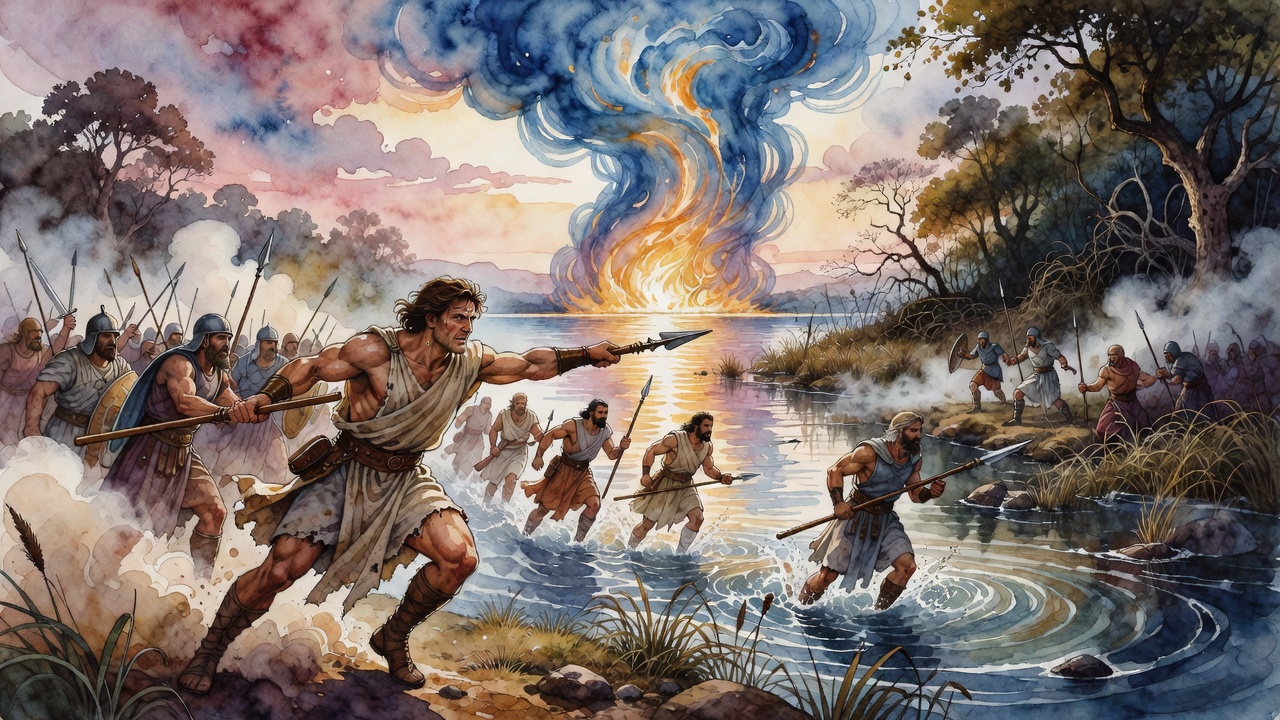
War did not stay on one mountain. Jonathan removed his host and burned and slew until nearly eight thousand men fell by fire and sword. He camped against Ascalon. The city came out with pomp to meet him, the kind of welcome a survivor offers a storm. He returned to Jerusalem with spoils.

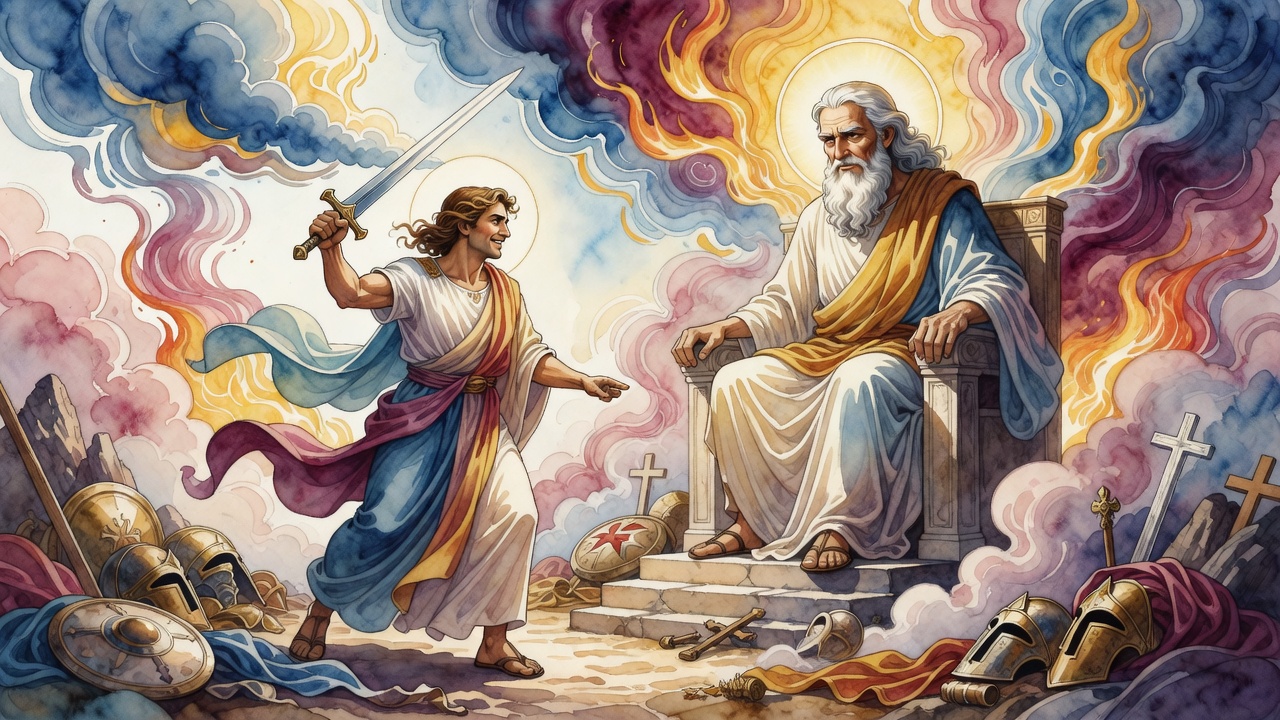
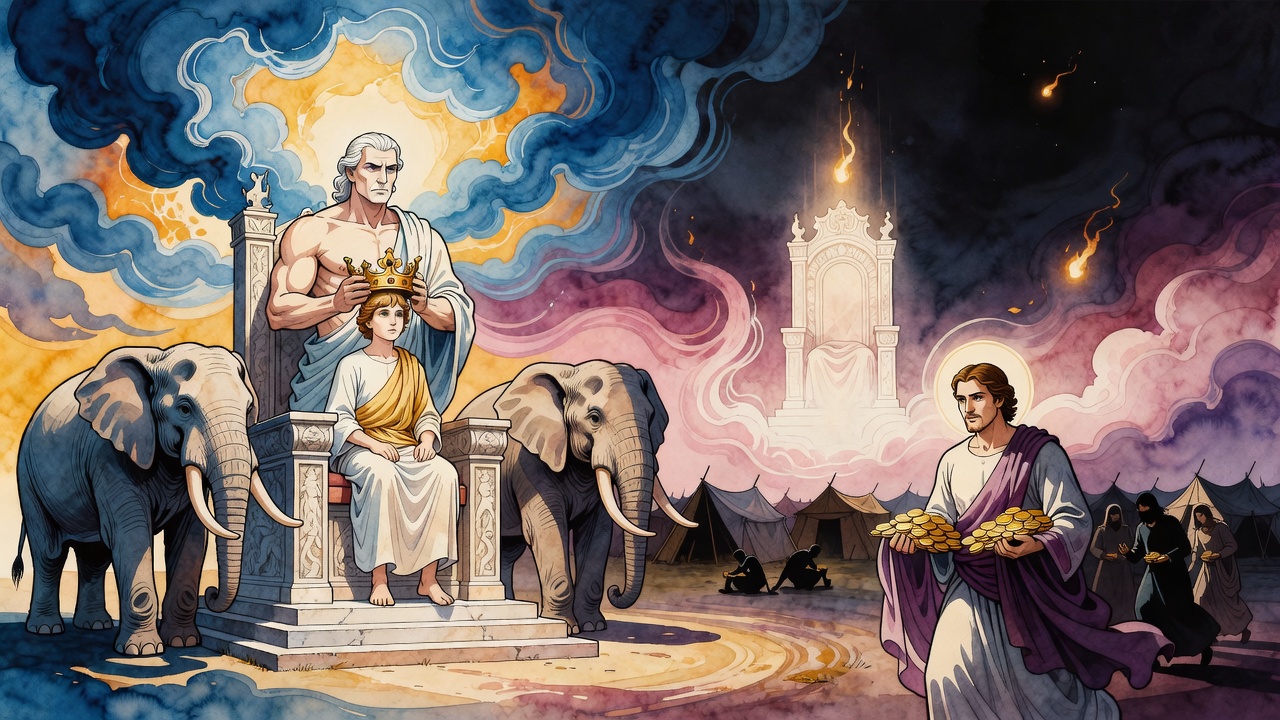
King Alexander heard and honored him further, sending a buckle of gold, the gift given to those counted of the king's blood, and granting Accaron with its borders. A guerrilla who began under a mountain now wore metal that said he belonged near thrones.

The buckle did not erase the smell of the wedding road. It only proved that power notices success. Jonathan pinned foreign gold to a body that still remembered a brother's missing place at the family table.

The Tower in Jerusalem

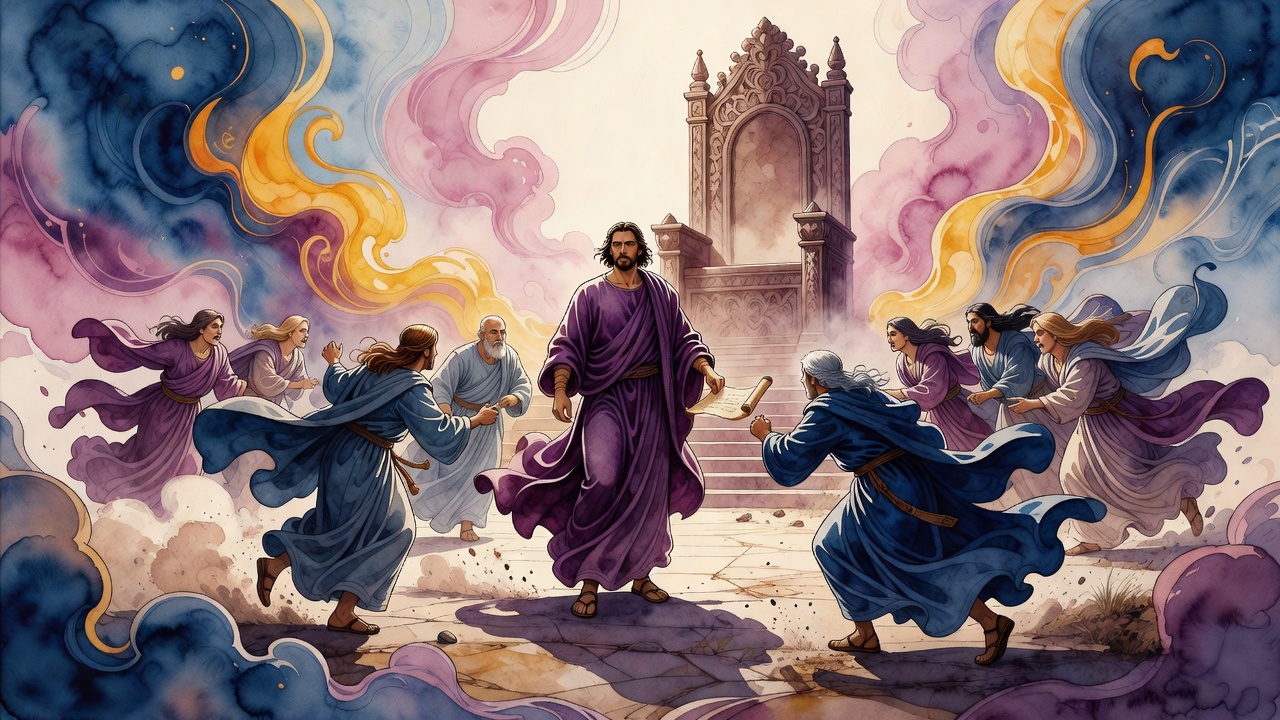
When Demetrius reigned in the hundred sixty-seventh year, Jonathan gathered Judea to take the tower that still spat at Jerusalem from inside the city's throat. He built engines against it. Ungodly persons who hated their own people ran to the king and reported the siege. Demetrius came angry to Ptolemais and wrote Jonathan to stop and appear at once.

The tower was more than stone. It was the argument that foreign power still owned a piece of the holy skyline. Jonathan's engines answered that argument in timber and tension. Citizens who walked beneath the fortress felt watched. Jonathan meant to end the watching.

Traitors found the king's ear faster than loyalists found rest. That is the tax of civil war inside a holy city. Every engine raised against the tower also raised a letter against Jonathan.

Three Thousand in Antioch

Later the same king needed Jewish strength. He promised to cast the tower's men out of Jerusalem and the fortresses that fought Israel, and to honor Jonathan's nation if opportunity served. He asked for soldiers. Jonathan sent three thousand strong men to Antioch. The king rejoiced. Then a hundred and twenty thousand of the city gathered to kill their own ruler, and the Judean contingent stood in another man's capital as the hinge of a night that could swallow crowns.

From wedding ambush to golden buckle to engines on the tower to street-war in Antioch, Jonathan's story is the Hasmonean century in hard sequence. Drums at a marriage. Fire on a field. Gold on a cloak. A tower that would not yet fall. A foreign city screaming for blood while three thousand from Judea held a king's luck in their hands.

The boy who hid under a mountain to settle John's blood grew into a captain kings bargain with. The bargains never smelled clean. They smelled like smoke, perfume from a ruined wedding, and the iron of engines aimed at home.

Years on, when golden buckles and foreign letters arrived, the mountain ambush still sat under Jonathan's victories like a first stone. He had learned early that enemies hold weddings, that music can cover an approach, and that a people fighting for its life rarely waits for a clean battlefield drawn by someone else.


← All myths
From the tradition

Sources

4 sources

The texts behind this telling. Some cards carry a translation of the source; others are our own retelling of it, and each card says which. Every card links out to the original.

The Book of Maccabees I 9:39The Book of Maccabees I

Retold in our words. Read the original at the link below.Sefaria Community Translation · CC-BY

Let me tell you about Jonathan and Simon, two brothers from the Maccabee family, and a wedding that went horribly, horribly wrong.

The familiar version gives us weddings are supposed to be joyous occasions. A celebration of love, family, and the future. But sometimes, even the most festive gatherings can become the stage for something far darker. This story, found in the Book of Maccabees I, chapter 9, is a prime example.

The word reached Jonathan and Simon that the children of Jambri were throwing a huge wedding. Not just any wedding,. She was the daughter of some big shot prince from Chanaan, making this a wedding of serious political importance.

Here's where things get interesting. Jonathan and Simon weren't exactly sending their RSVP. the Jambri family had history with the Maccabees. A bad history. They had murdered their brother John.

So, what did they do? Did they send a strongly worded letter? File a complaint? Nope. They decided on a more… direct approach. "Therefore they remembered John their brother, and went up, and hid themselves under the covert of the mountain."

Talk about a wedding crasher! They found a strategic spot, a hidden vantage point overlooking the road. From their concealed position, they watched as the wedding procession snaked its way through the landscape.

And what a sight it must have been! The verse reads, "there was much ado and great carriage." Imagine the vibrant colors, the festive decorations, the sheer spectacle of it all. And then, the bridegroom emerged, surrounded by his friends and family, ready to welcome his bride. They were playing drums, instruments of music filling the air with joyous melodies, and – oh yes – brandishing "many weapons." Because apparently, even at a wedding, you had to be prepared for anything back then.

So, there they were: a wedding party in full swing. The instruments play, the families celebrate, and, lurking in the shadows, two brothers fueled by vengeance, ready to rewrite the script of this joyous day. What happens next? Well, you'll have to read on to find out. but trust me, it's a story you won't soon forget.

Full source
The Book of Maccabees I 10:96The Book of Maccabees I

Retold in our words. Read the original at the link below.Sefaria Community Translation · CC-BY

The aftermath of battle... it's never pretty. The Book of Maccabees I tells us, starkly, that "there were burned and slain with the sword well nigh eight thousand men." Eight thousand. It’s a sobering reminder of the cost of conflict, the human toll behind the grand narratives of history.

Then, there's Jonathan. A leader, a warrior, a figure central to the Maccabean story. We see him leading his army onward. "From thence Jonathan removed his host, and camped against Ascalon." Ascalon, a Philistine city. But instead of fierce resistance, something unexpected happens: "…where the men of the city came forth, and met him with great pomp." Great pomp! A welcoming party, almost. What does this tell us about the shifting allegiances, the complex political landscape of the time? Maybe they feared Jonathan's power, or perhaps saw an advantage in aligning with him.

The campaign wraps up, and "…Jonathan and his host returned unto Jerusalem, having any spoils." Spoils of war – a tangible symbol of victory, a way to reward his soldiers, and perhaps a means to sustain the newly liberated nation. But it’s not just about material gain, is it? It’s about the return home, the feeling of accomplishment, the sense of having fought for something meaningful.

Enter King Alexander. He hears of Jonathan's victories, of his growing influence, and what does he do? He honors Jonathan, and not just with words. "…[he] sent him a buckle of gold, as the use is to be given to such as are of the king’s blood." A buckle of gold – a significant symbol of royal favor, a public acknowledgment of Jonathan's status. It's a shrewd political move, solidifying an alliance, bringing a powerful figure into the fold. And he doesn't stop there! King Alexander "…gave him also Accaron with the borders thereof in possession." Accaron, also known as Ekron, another Philistine city, now under Jonathan's control. This is more than just a trinket; it's land, power, influence.

What does all of this tell us? It's a glimpse into a world of battles and political maneuvering, of shifting alliances and the constant struggle for power. But it’s also a story about leadership, about courage, and about the enduring human desire for freedom and self-determination. The Book of Maccabees isn't just ancient history; it's a mirror reflecting timeless themes that resonate even today.

Full source
The Book of Maccabees I 11:26The Book of Maccabees I

Retold in our words. Read the original at the link below.Sefaria Community Translation · CC-BY

That’s kind of what’s happening here in the First Book of Maccabees, Chapter 11.

"By this means Demetrius reigned in the hundred threescore and seventh year." Okay, so what does that mean? Simply put, Demetrius has solidified his power around 157 BCE (Before the Common Era). And what's Jonathan, of Maccabean fame, up to at the same time?

Well, Jonathan's been busy. He’s gathering forces in Judea with a very specific goal: taking the Acra, the tower or citadel in Jerusalem. This wasn't just any old building; it was a heavily fortified stronghold occupied by Seleucid sympathizers and a constant thorn in the side of the Jewish population. So, Jonathan brings out the big guns – or rather, the ancient equivalent: "he made many engines of war against it." He's ready to dislodge them once and for all.

Sounds like a victory in the making. Enter the "ungodly persons." Who are these guys? Maccabees refers to Hellenized Jews who embraced Greek culture and often opposed the Maccabean revolt. They are described as those "who hated their own people". They run to King Demetrius and snitch. "Jonathan's besieging the tower!" they whine.

Demetrius, already dealing with his own power struggles, isn't thrilled to hear this. He gets angry, packs his bags, and heads to Ptolemais (modern-day Acre in Israel). From there, he fires off a letter to Jonathan. The message? "Don't lay siege to the tower. Come and talk to me, and do it quickly."

He's on the verge of liberating Jerusalem from a source of constant oppression, and now he's being summoned by the king himself. What's he going to do? Does he risk everything by ignoring the king's command, or does he put his trust in diplomacy?

This little snippet from Maccabees is a reminder that progress is rarely a straight line. There are always obstacles, always naysayers, always power dynamics at play. And sometimes, even when you're fighting for what you believe in, you have to navigate tricky political waters. What would you do in Jonathan's place? It's a tough call.

Full source
The Book of Maccabees I 11:52The Book of Maccabees I

Retold in our words. Read the original at the link below.Sefaria Community Translation · CC-BY

Remember the Acra, that fortified tower in Jerusalem? It was a constant thorn in the side of the Jewish people, a symbol of oppression. Jonathan, ever the shrewd leader, saw an opportunity. He asked Demetrius to get rid of those troublemakers holed up in the tower, "that he would cast those of the tower out of Jerusalem, and those also in the fortresses: for they fought against Israel." A simple request. Demetrius, desperate for allies, agrees. He sweetens the deal, promising even greater honor to Jonathan and the Jewish nation, "I will not only do this for thee and thy people, but I will greatly honour thee and thy nation, if opportunity serve.

Here's the catch. Demetrius needs help. Like, serious help. "Now therefore thou shalt do well, if thou send me men to help me; for all my forces are gone from me." His own kingdom is crumbling around him, and he's turning to Jonathan for military support.

Jonathan, ever the pragmatist, doesn't hesitate. He sends three thousand of his finest warriors to Antioch. Three thousand Jewish soldiers marching into a foreign city, ready to fight for a king who, just a short time ago, was their enemy? It's evidence of Jonathan's leadership and the dire circumstances Demetrius found himself in. "Upon this Jonathan sent him three thousand strong men unto Antioch: and when they came to the king, the king was very glad of their coming."

It seems like they were needed. Things were about to explode.

But wait, there's more! Just when you think Demetrius is in the clear, the situation takes another turn. The people of Antioch, his own capital, turn against him! "Howbeit they that were of the city gathered themselves together into the midst of the city, to the number of an hundred and twenty thousand men, and would have slain the king." One hundred and twenty thousand people rose up against him! Talk about a crisis. How will Demetrius survive this? And what role will Jonathan's men play in the coming conflict? We'll have to keep reading to find out, but it's clear that alliances, power, and survival are all complex dances in this historical moment.

How often do we find ourselves relying on others, making promises we might not be able to keep? And how do we navigate those moments when the very people we're trying to help turn against us? It's a timeless story of political intrigue, loyalty, and the ever-present struggle for survival, echoing even today.

Full source