5 min read

Jonathan Struck at Bacchides and Swam the Jordan to Escape

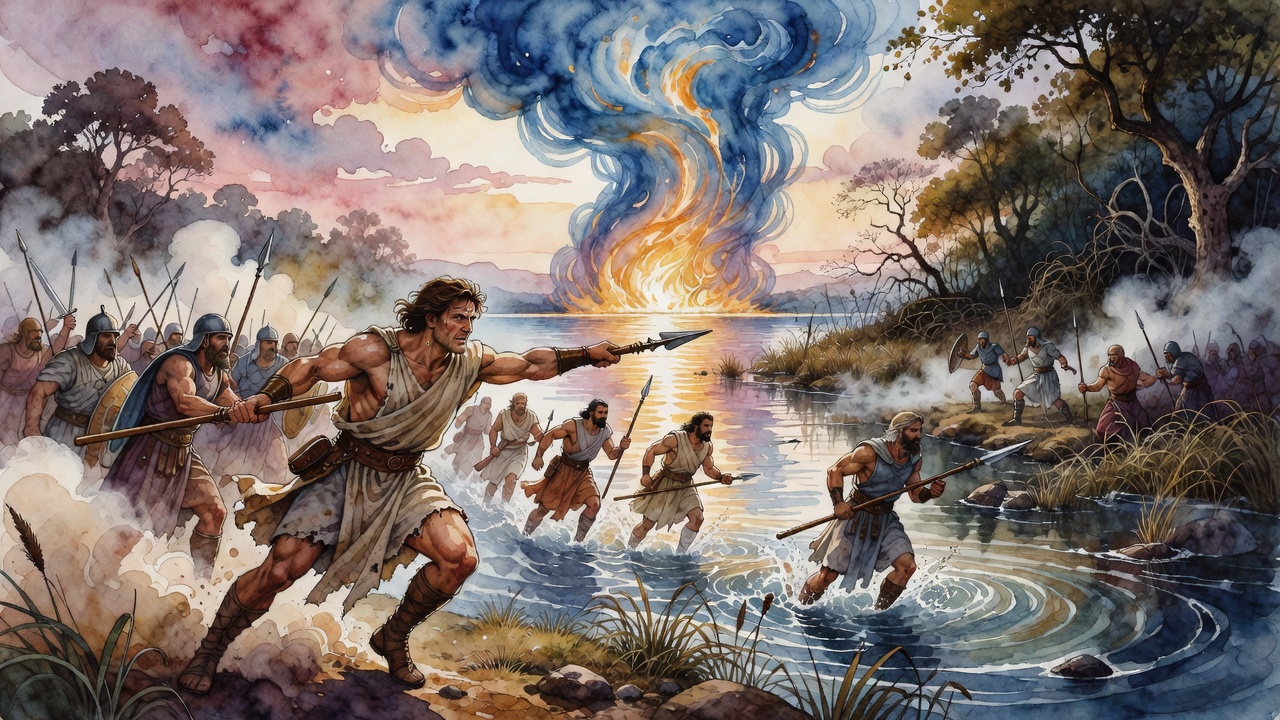
His brother John was taken on the road with the baggage. Bacchides pinned the band against the Jordan, and Jonathan's blow missed as the general turned aside.

Curated by Arthur · Told by Maggid ·
Table of Contents
  1. Peaceable Words Deceitfully
  2. Wilderness of Tekoa and a Lost Brother
  3. The Leap
  4. What the River Kept

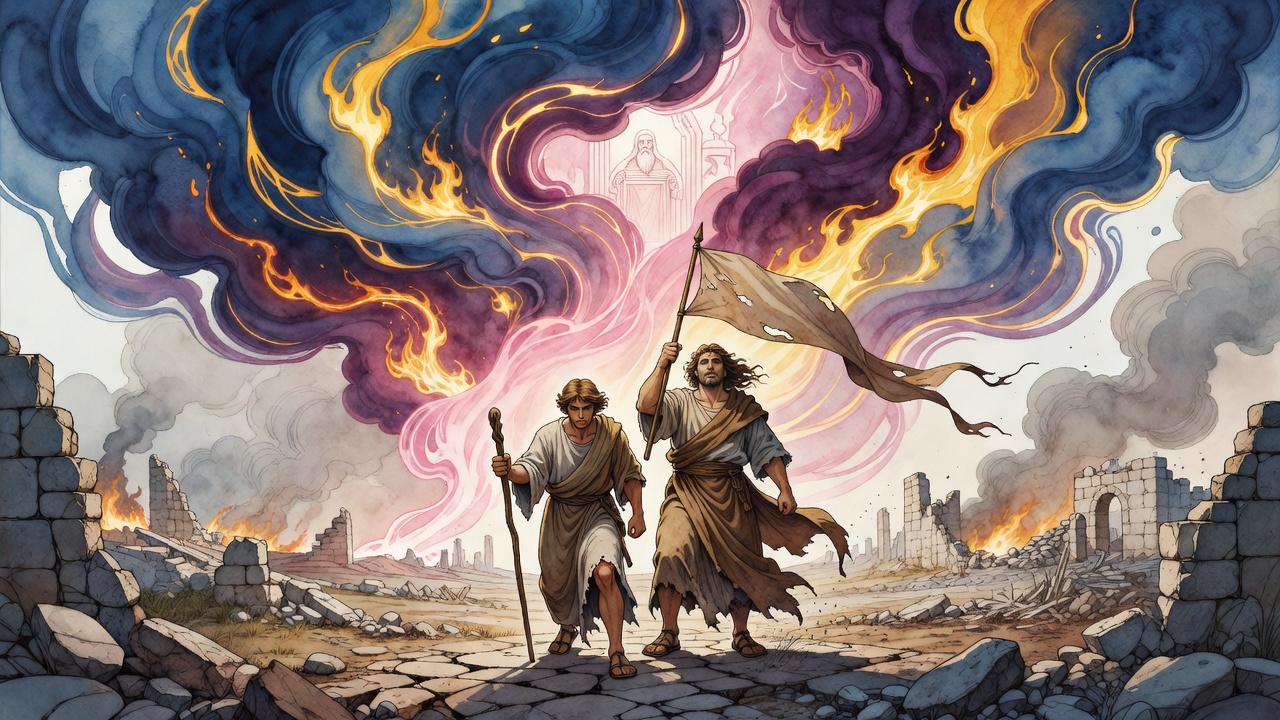
The Jordan held one flank. Marsh and wood held others. Battle pressed front and rear. Jonathan told his men the truth without ointment. "Let us go up now and fight for our lives, for it standeth not with us today, as in time past." Past victories would not swim for them. The water would.

Jonathan Struck at Bacchides and Swam the Jordan to Escape Click for full size

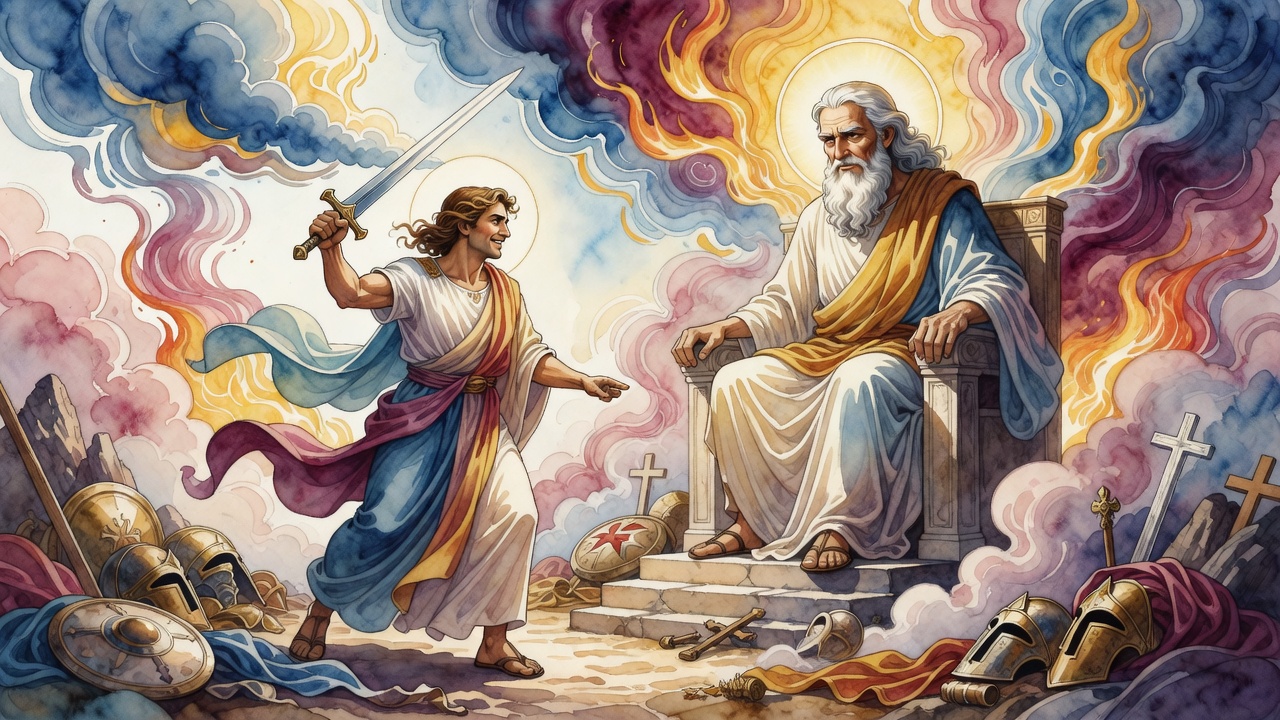
"Cry ye now unto heaven, that ye may be delivered from the hand of your enemies." The cry went up from a pocket of ground that offered no sideways exit. Then they joined battle. Jonathan stretched out his hand to smite Bacchides. The general turned aside from the blow. Almost was not enough. The river remained.

Peaceable Words Deceitfully

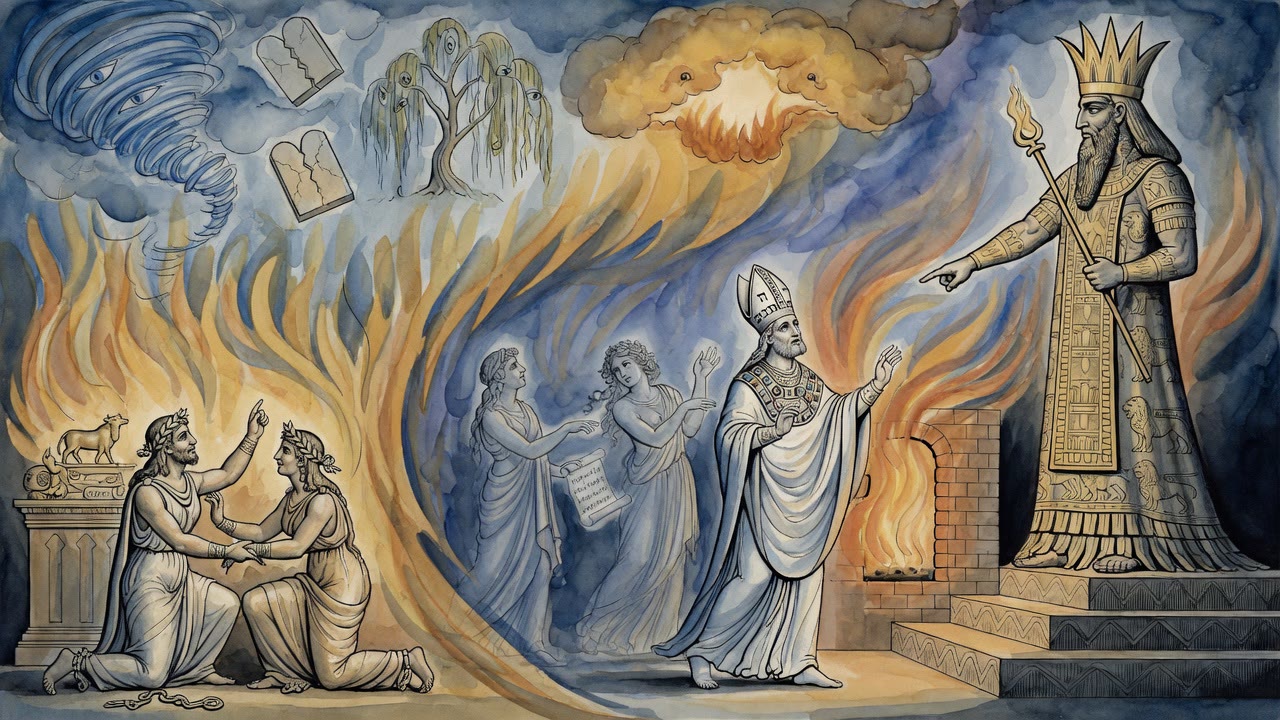
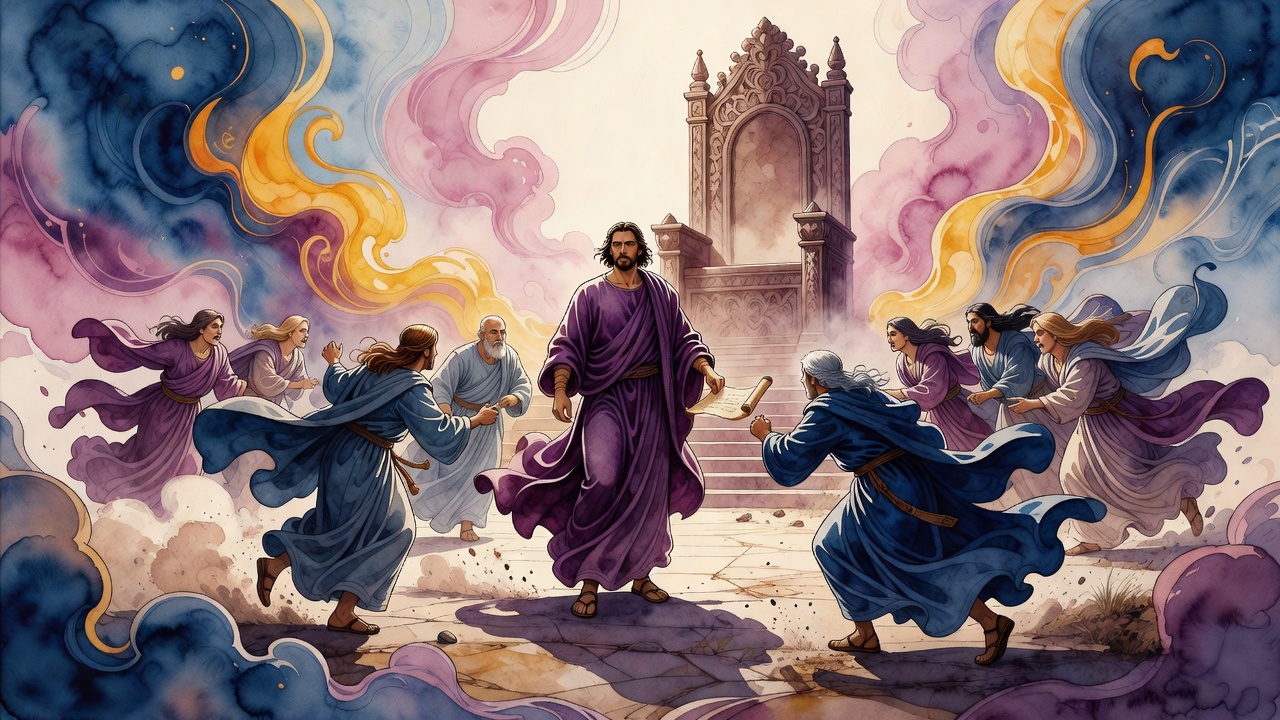
Bacchides had entered the land as a friend of the king who ruled beyond the flood, great and faithful, paired with wicked Alcimus, made high priest by foreign appointment. They came with a great power into Judea and sent messengers to Judas and his brothers with peaceable words deceitfully. The book refuses to pretty the tactic. Diplomacy arrived already knifed.

Alcimus gathered all such as troubled the people. They seized the land of Judah and did much hurt in Israel. Judas had answered that internal wound with a hard campaign that kept the troublemakers from daring the countryside. Steel against betrayal. Then Judas fell, and the math changed. Bacchides remained. Alcimus remained. Jonathan inherited a war that had learned to smile before it struck.

The king had said, send a man you trust to see what havoc has been made and to punish them and all who aid them. Bacchides was that trust. Jonathan was the havoc that refused to finish dying.

Wilderness of Tekoa and a Lost Brother

Jonathan, Simon, and their company fled into the wilderness of Tekoa and pitched by the water of the pool Asphar. Respite tasted like muddy safety. Bacchides heard and brought his whole host toward the Jordan, even on the Sabbath, as if rest were a joke told by weaker peoples.

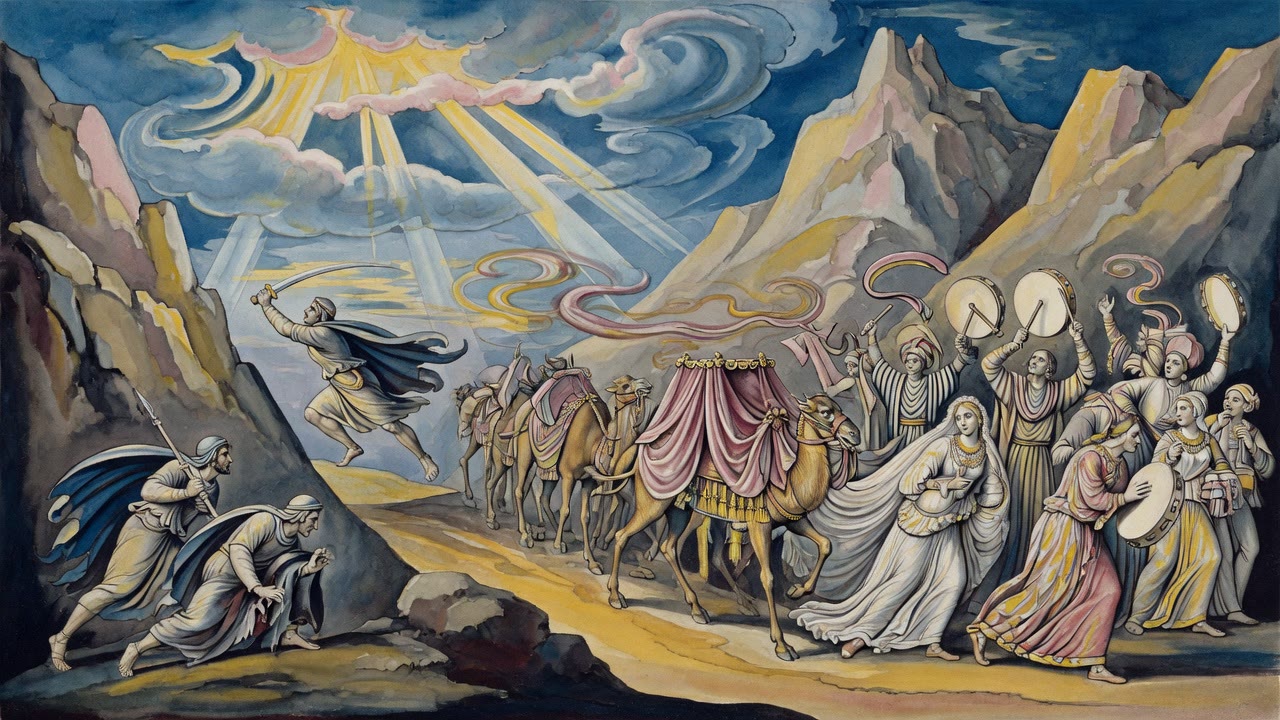
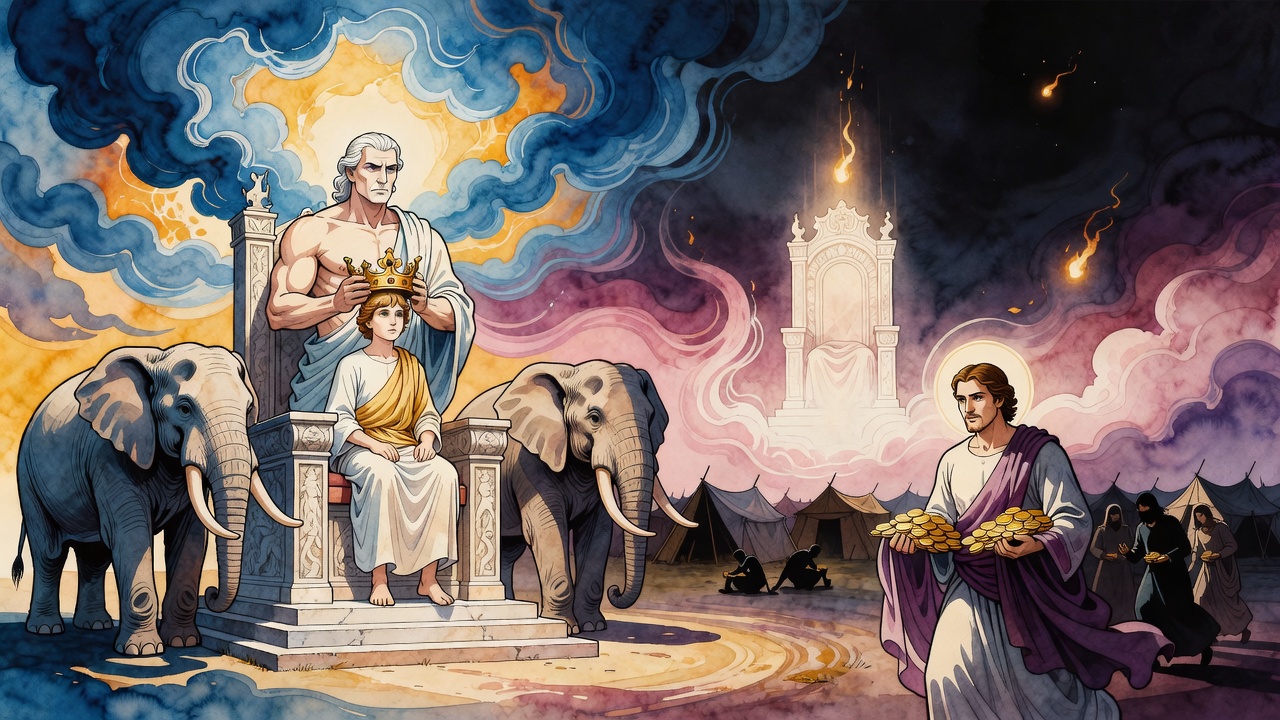
Jonathan had sent his brother John to the Nabateans with the baggage, a considerable carriage of the war's dull necessities. The children of Jambri from Medaba intercepted John, seized him and all he had, and vanished. A plan for safekeeping became a wound. Supplies gone. A brother taken. The band at Asphar felt the war shrink their options again.

Family was the logistics chain. When the chain broke, prayer and swimming became policy.

The Leap

At the Jordan pocket, after the missed blow at Bacchides, Jonathan and those with him leapt into the river and swam to the other bank. The enemy did not pass over after them. The book leaves the restraint unexplained. Fear, order, Sabbath calculation, divine refusal. The text only states the fact. They swam. The others did not cross. Delivery looked like wet clothes and burning lungs.

A leader who had almost killed Bacchides with one stretch of the arm accepted a different victory. Survival to fight on the far bank. The Maccabean war is full of almosts that become laters. Jonathan climbed out of the Jordan as a man still named commander because the water, for once, took his side.

Behind him, the marsh and wood kept their silence. Ahead, more years of Bacchides, more bargains, more Sabbaths broken by marching feet. The swim did not end the empire. It ended the trap of one afternoon.

What the River Kept

Bacchides had been sent to punish. Alcimus had been sent to wear holiness like a borrowed cloak. Together they made a Judea where peace-speech was a net. Jonathan learned to hear nets in soft words and to treat rivers as doors. When there was no place to turn aside, he turned into the current.

The men who swam with him carried the same math. Live today. Bury the almost. Remember John. Watch the far bank for dust that means Bacchides has found a ford. Cry to heaven when the ground offers no tactic but breath. The First Book of Maccabees keeps the scene short, as if long speeches would drown. The Jordan needed strokes more than sentences.

On the other shore, wet and alive, Jonathan's war continued under a sky that had heard the cry and watched a general refuse the water. That refusal became, for one night, the whole of salvation.

He had told them it was not as in time past. He was right. Past days had held Judas's shadow and wider ground. This day held marsh, wood, river, and a missed blow that could have ended Bacchides and did not. The swim rewrote the afternoon without rewriting the war. Alcimus still wore a title he had not earned from the people. Bacchides still held the king's trust. Jonathan held breath and a far bank and the loyalty of men willing to jump when the map closed.

Later campaigns would bring new bargains and new griefs. This hour stayed simple enough to teach children. When the trap has no door, pray, strike, and if the strike fails, take the river. Empire may pause at a current it does not understand. Sometimes that pause is all a remnant needs to become an army again on the other side.


← All myths

From the tradition

Sources

4 sources

The texts behind this telling. Some cards carry a translation of the source; others are our own retelling of it, and each card says which. Every card links out to the original.

The Book of Maccabees I 9:49The Book of Maccabees I

Retold in our words. Read the original at the link below.Sefaria Community Translation · CC-BY

They've got you pinned against the Yarden – the Jordan River. Surrounded. What do you do?

That's the situation we find ourselves in at the beginning of the ninth chapter of the First Book of Maccabees. This isn't just some historical account; it’s a story of courage, desperation, and faith in the face of impossible odds. A story that resonates even today.

This teaching paints a vivid picture: "Let us go up now and fight for our lives, for it standeth not with us to day, as in time past." A stark acknowledgement that things aren't going to be easy. That past victories offer no guarantee of future success.

The description of their predicament is almost claustrophobic. "For, behold, the battle is before us and behind us, and the water of Jordan on this side and that side, the marsh likewise and wood, neither is there place for us to turn aside." You can almost feel the weight of the enemy pressing in, the muddy ground under your feet, the cold water at your back. There’s nowhere to run.

What’s Jonathan's response? Does he succumb to despair? No. He urges his men to cry out to heaven. "Wherefore cry ye now unto heaven, that ye may be delivered from the hand of your enemies." It's a call to prayer, a plea for divine intervention. Recognizing their own limitations, they turn to something greater than themselves.

The ensuing battle is brief and brutal. Jonathan, ever the warrior, lunges at Bacchides, the opposing general. "With that they joined battle, and Jonathan stretched forth his hand to smite Bacchides, but he turned back from him." He almost gets him! But Bacchides evades the blow.

Then, in a moment of pure daring, Jonathan and his men leap into the Jordan River. "Then Jonathan and they that were with him leapt into Jordan, and swam over unto the other bank: howbeit the other passed not over Jordan unto them." They swim for their lives, finding refuge on the opposite shore. The enemy, for whatever reason, doesn't follow. They are delivered!

It’s a narrow escape, evidence of their courage and perhaps, just perhaps, an answer to their prayers.

It’s more than just a historical snapshot. It might require a leap of faith, a willingness to fight, and a reliance on something beyond ourselves. But as the story of Jonathan Maccabeus shows us, sometimes that's all it takes to survive another day.

Full source
The Book of Maccabees I 9:35The Book of Maccabees I

Retold in our words. Read the original at the link below.Sefaria Community Translation · CC-BY

That feeling, that desperate scramble for survival, echoes through the ancient story It's a snapshot of chaos and resilience, a moment where faith and family are tested in the crucible of conflict.

We find ourselves with Jonathan, that key figure in the Maccabean saga. He's not alone, of course. His brother Simon is right there with him, as are all their loyal followers. They're on the run, fleeing into the wilderness of Thecoe. Imagine them, exhausted and wary, finally finding a place to pitch their tents by the water of the pool Asphar. A moment of respite, perhaps? But in this story, peace is always fleeting.

News reaches Bacchides, the Seleucid general, that Jonathan and his band are near. And what does Bacchides do? He doesn't hesitate. He gathers his entire host and advances toward the Jordan River, ready to strike. And here's the kicker: it's the Shabbat, the Sabbath day. A day meant for rest and reflection. But war, it seems, knows no such boundaries.

Jonathan, ever the strategist, had anticipated some trouble. He had a plan. He sent his brother John – also a captain – on a crucial mission. John was to go to their friends, the Nabathites, and ask them to safeguard their baggage, their carriage, which, we’re told, was considerable. You can picture it, can't you? All their supplies, perhaps even valuables, entrusted to the care of these allies.

But tragedy strikes. The children of Jambri, emerging from Medaba, intercept John. They seize him and everything he has, and vanish. Just like that, a carefully constructed plan falls apart. A trusted brother captured. Vital supplies lost. It’s a devastating blow.

This brief passage from the Book of Maccabees I (9) isn’t just a historical account. It’s a study in the precariousness of life. The constant threat of betrayal, the ever-present danger lurking just around the corner. What would you do in Jonathan's place? How would you carry on after such a crushing setback?

Full source
The Book of Maccabees I 7:10The Book of Maccabees I

Retold in our words. Read the original at the link below.Sefaria Community Translation · CC-BY

The Book of Maccabees is full of such moments. the story turns to one.

The king, seeing the damage done by someone who dared challenge his authority, is understandably upset. "Now therefore," he commands, "send some man whom thou trustest, and let him go and see what havock he hath made among us, and in the king’s land, and let him punish them with all them that aid them." A simple enough directive. Find someone loyal, assess the damage, and exact revenge.

Who to send?

The king settles on Bacchides, described as "a friend of the king, who ruled beyond the flood, and was a great man in the kingdom, and faithful to the king." This guy sounds like the perfect choice, a model of loyalty and competence. He's got experience, authority, and the king's complete trust.

However, and this is a big however, Bacchides isn't going alone. The king pairs him with someone else: "that wicked Alcimus, whom he made high priest."

Wait a minute. Why send a "wicked" person to handle such a delicate situation? And made him High Priest, no less!

Here's where things get really interesting, and where we see the seeds of treachery being sown. The Book of Maccabees is subtly telling us something about the king's motivations and the complex politics at play. This isn't just about restoring order; it's about consolidating power, and perhaps playing different factions against each other. Alcimus' appointment is particularly galling given his Hellenistic leanings, a direct challenge to the traditional Jewish practices Judas Maccabeus and his brothers are fighting to protect.

So, Bacchides and Alcimus set out "with a great power into the land of Judea." And what's their first move? They "sent messengers to Judas and his brethren with peaceable words deceitfully."

Did you catch that? "Peaceable words deceitfully."

It's right there in the text. They aren't even trying to hide their intentions. This isn't diplomacy; it's a trap. It's a classic example of using deception as a weapon, a tactic that, sadly, appears all too often in history.

What's fascinating here is the contrast. On the one hand, we have Bacchides, the loyal and powerful general. On the other, we have Alcimus, the "wicked" High Priest. Together, they represent a potent combination of military might and religious manipulation. And their mission begins with a lie.

What does this tell us? Perhaps that appearances can be deceiving. That even those in positions of power can be driven by ulterior motives. And that, sometimes, the most dangerous enemies are the ones who come bearing false promises of peace. It certainly speaks to the dangers of blind trust, and the importance of looking beyond the surface to understand the true intentions of those around us. A lesson as relevant today as it was in the time of the Maccabees.

Full source
The Book of Maccabees I 7:22The Book of Maccabees I

Retold in our words. Read the original at the link below.Sefaria Community Translation · CC-BY

Bacchides, a Syrian general, having installed Alcimus in charge, heads back to the king. It seems like a moment of relative calm, but beneath the surface, things are far from peaceful.

Alcimus, now, he's an interesting character. He's not just any leader; he's vying for the position of Kohen Gadol, the High Priest. A deeply coveted role, a position of immense spiritual and political power. And who does he surround himself with? Well, "all such as troubled the people," says the Book of Maccabees. These are the folks causing unrest, the ones stirring up trouble. They seize control of the land of Judah, and the verse says they "did much hurt in Israel."

What kind of hurt? We aren't told specifically here, but imagine the possibilities: undermining traditions, spreading dissent, perhaps even violence. All done in the name of consolidating power.

What about Judas Maccabeus? Remember him, the hero of the hour? He's not sitting idly by. When he sees the devastation wrought by Alcimus and his crew, a devastation, that surpasses even the harm done by "the heathen," he takes action. This is a strong statement. It suggests that the internal strife, the betrayal from within, is even more damaging than the external oppression.

So, Judas goes on the offensive. He sweeps through the Judean countryside, seeking vengeance on those who betrayed him. He's not just fighting for territory; he's fighting for the soul of his people. And he's effective. The text says that his actions instill such fear that the betrayers "durst no more go forth into the country."

But is that really a victory? Has he truly solved the problem, or merely suppressed it? Has he addressed the underlying issues that led to this internal conflict in the first place? These are the questions that linger. Because sometimes, the greatest battles aren't fought on the battlefield, but within our own communities, and even within ourselves. And those are the battles that often prove the hardest to win.

Full source