5 min read

Jonathan Wore Purple While Accusers Fled

Judas was dead, and his friends asked Jonathan to lead them in his brother's place. He scraped Jordan mud off his calves with a stick and kept moving.

Curated by Arthur · Told by Maggid ·
Table of Contents
  1. After Judas, a Circle of Friends
  2. Pestilent Fellows Before a King
  3. Three Hundred Talents for Breathing Room
  4. Captain of Battles, Guest of Kings
  5. What the Purple Could Not Promise
Jonathan Wore Purple While Accusers Fled Click for full size

After Judas, a Circle of Friends

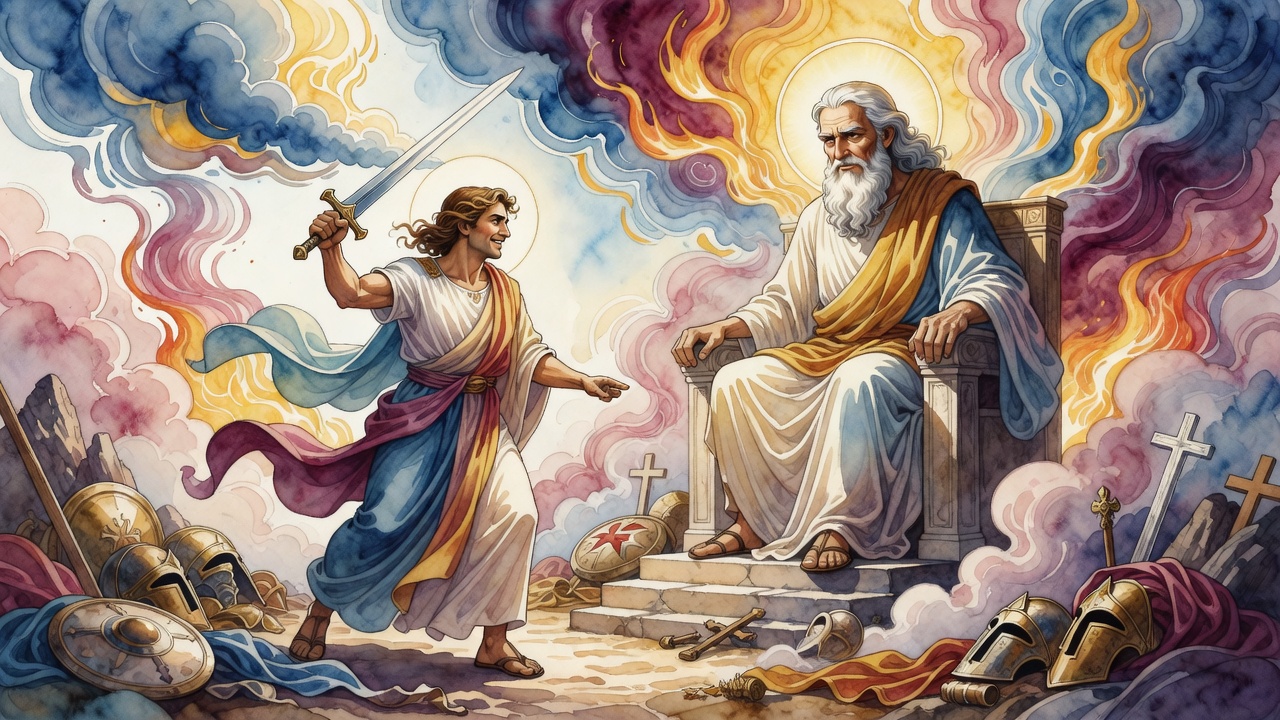
The friends of Judas stood in a ring that felt smaller than yesterday. Their captain was dead. Bacchides still hunted. Enemies inside the nation still smiled with knives under their tongues. They turned to Jonathan and said the plain thing. We have no man like him to go forth against our foes. Be our prince and captain in his stead. Fight our battles.

Jonathan took the governance. He rose in his brother's place the way a man rises into a coat still warm from the fallen. When Bacchides heard, he sought to slay him. The war did not pause for grief. It only changed the name on the enemy's list.

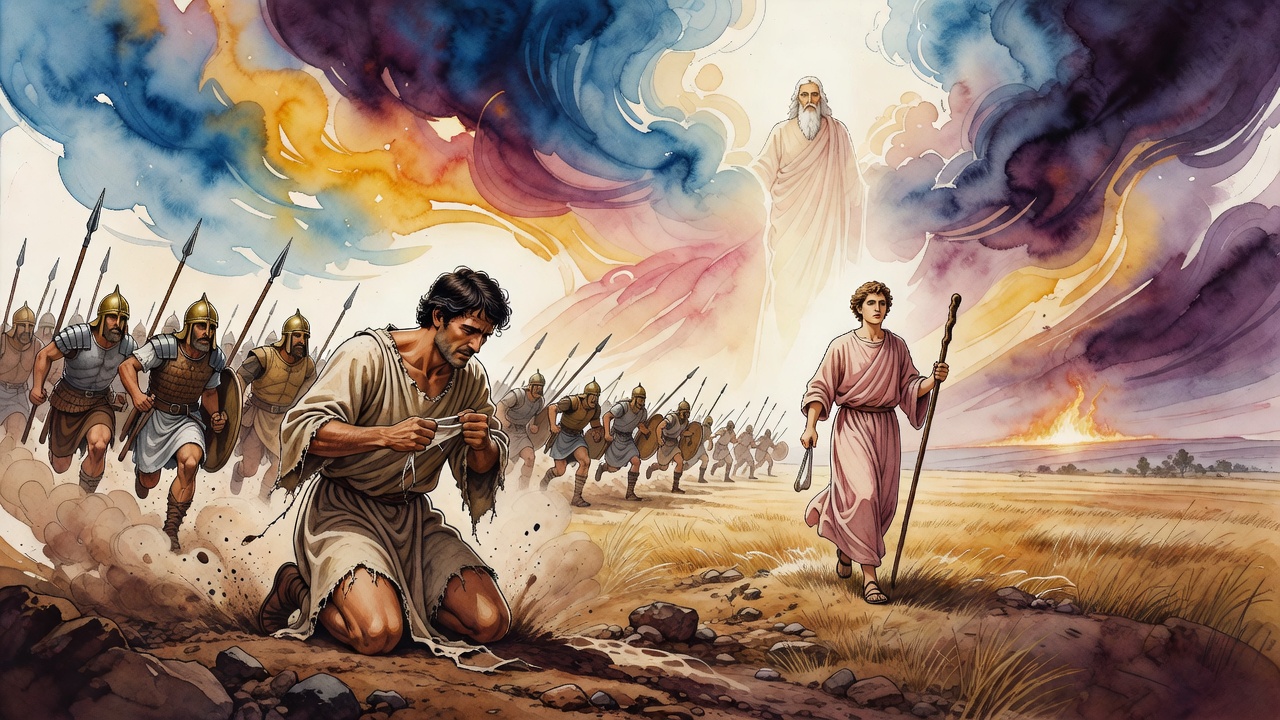
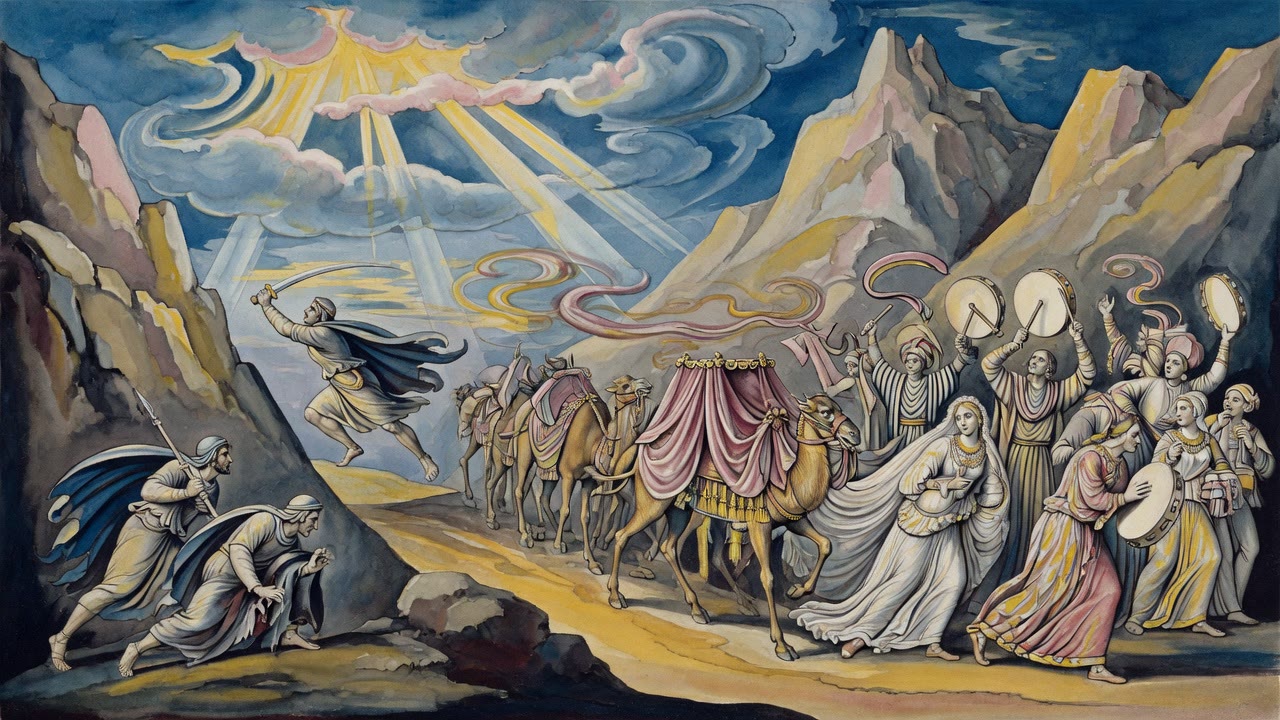
At the Jordan, Jonathan and those with him rose from ambush. Many fell. The remnant fled to the mountain. Spoils changed hands. A marriage nearby had turned to mourning when blood answered blood. Melody became lamentation. Then they turned again to the marsh of Jordan, vengeance spent, sabbath danger still approaching with Bacchides and a great power. Mud clung to Jonathan's calves. He scraped it off with a stick and kept moving.

Pestilent Fellows Before a King

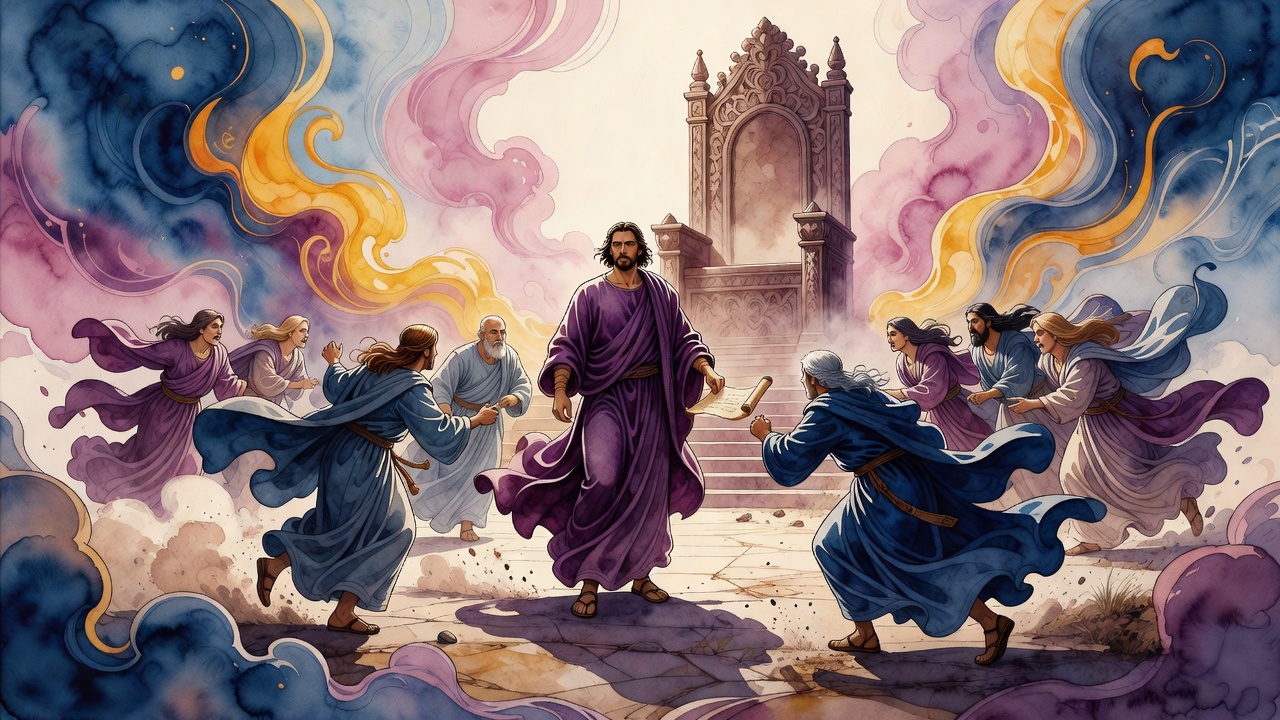
Later, in a different court, certain pestilent fellows of Israel, men of a wicked life, assembled to accuse Jonathan. They brought their words like unpaid debts. The king would not hear them. More than silence, he ordered Jonathan's garments removed and purple put on him. Purple dye cost a fortune and spoke royalty without needing a speech.

They seated him apart. Princes were told to walk him into the midst of the city and proclaim that no man complain against him, no man trouble him for any cause. The accusers saw the cloth and the escort and fled. Slander cannot stand when the throne dresses its target as a friend.

Jonathan felt the fabric settle on shoulders that had carried ambush mud. Court honor is a different warfare. It still requires a man who will not drop the nation's life while smiling for diplomats. A child in the crowd pointed at the color and asked if the war was over. No one answered well.

Three Hundred Talents for Breathing Room

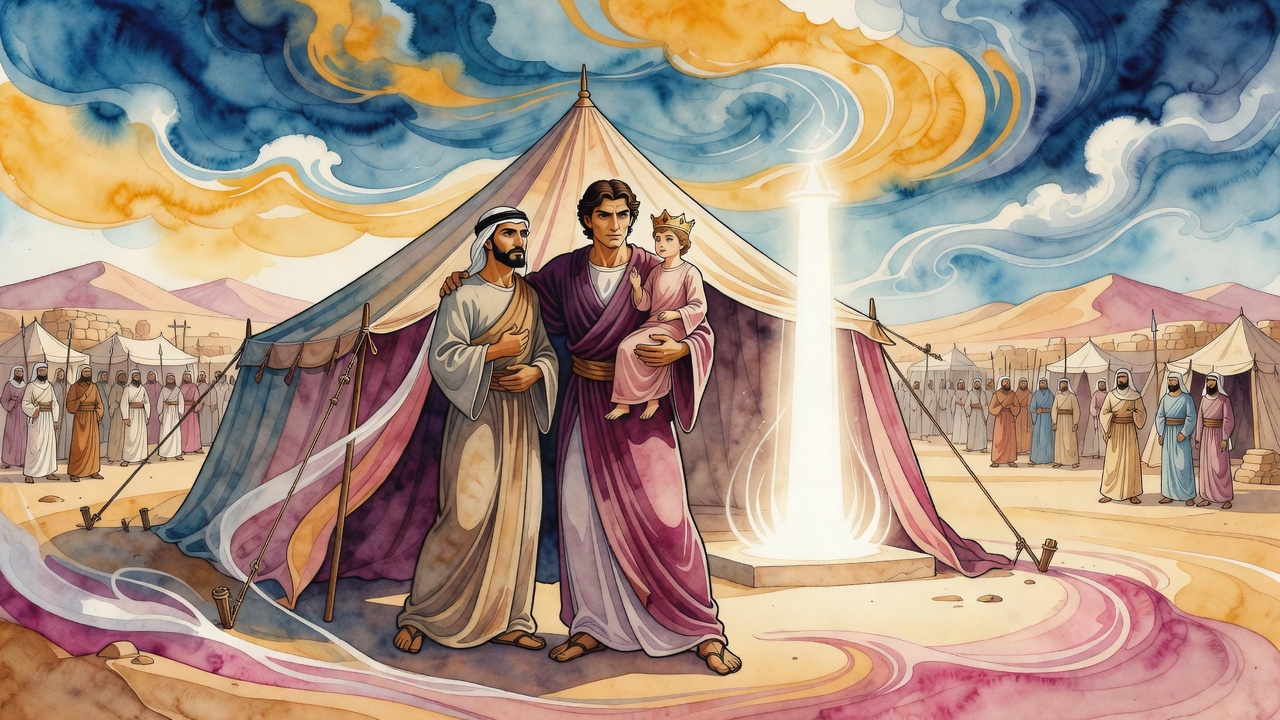
Before Demetrius, Jonathan named a price for peace with structure. Make Judea free from tribute, and the three governments, and the country of Samaria. In return, three hundred talents. The sum was heavy enough to prove seriousness. The request was heavier. A people tired of bleeding for foreign ledgers wanted their laws and their land to stop funding someone else's crown.

The king consented. Letters went out. King Demetrius unto his brother Jonathan, and unto the nation of the Jews, greeting. Copies for Lasthenes. Paper that could outlive a battlefield if men honored ink. Jonathan had fought with steel. Now he bargained with silver and titles of brotherhood that every court knows can thin overnight.

For a span, the proclamation stood. Purple in the street. Tax relief on the page. Accusers in flight. The dead Judas could not see it. The living nation could taste a season without the collector's constant hand. Scribes sealed the letters with care that looked almost like prayer.

Captain of Battles, Guest of Kings

Jonathan's life held both registers at once. Marsh of Jordan and banquet of purple. Ambush at dawn and letters at noon. Friends who chose him because no one else could fight, and a king who clothed him because accusation looked cheap beside usefulness.

He did not confuse the two. Purple does not stop a sabbath march of enemies if the captain forgets the ford. Tax freedom does not feed orphans if the walls fall. So he kept the double skill. Kill when the ambush is just. Speak when the throne will listen. Carry his brother's unfinished war without turning it into a private throne of cruelty.

In the city that heard the proclamation, a merchant who had hated Jonathan for faction reasons watched the purple pass and closed his mouth. Fear is a poor ally, but sometimes it buys a quiet street long enough for real law to breathe. Jonathan counted that quiet as partial payment on Judas's blood.

What the Purple Could Not Promise

No cloth lasts forever. No letter binds a dynasty that is already cracking from within. Jonathan knew courts shift. He had seen how fast melody becomes lament. For the hours the purple held and the talents sealed a promise, Judea stood a little taller in its own name.

A boy who later heard the story would remember the flight of accusers more than the weight of gold. A priest would remember the word brother in a foreign king's mouth and wonder how long kinship-by-treaty can last. Jonathan himself, if the night was honest, would remember Judas first, then the Jordan, then the strange lightness of silk on a soldier's back.

The nation needed both the ambush and the audience. One without the other leaves either corpses without a future or treaties without teeth. Jonathan wore the purple as a tool, not as a dream that replaced the sword. When he slept, he still woke reaching for a weapon that was not there, then remembered the letters, then remembered the marsh. Both were true. Both were unfinished.


← All myths

From the tradition

Sources

4 sources

The texts behind this telling. Some cards carry a translation of the source; others are our own retelling of it, and each card says which. Every card links out to the original.

The Book of Maccabees I 10:70The Book of Maccabees I

Retold in our words. Read the original at the link below.Sefaria Community Translation · CC-BY

Politics in the ancient world could turn on a single whispered accusation. In (1 Maccabees 10), Jonathan, a key figure in the Maccabean revolt, finds himself in exactly that kind of precarious spot. He's facing accusations from some "pestilent fellows of Israel, men of a wicked life." Not exactly a ringing endorsement. These men are out to get him, trying to bring him down before the king.

The king? He’s not buying it. He refuses to even listen to their accusations.

Then things take an even wilder turn. The king, instead of punishing Jonathan, decides to honor him. I mean, this is just chef's kiss levels of unexpected.

The verse reads, "the king commanded to take off his garments, and clothe him in purple: and they did so." Purple! In ancient times, purple dye was incredibly expensive and associated with royalty. To be clothed in purple was a sign of immense favor and power. It was a public statement.

But it doesn’t stop there. The king then orders his princes to escort Jonathan through the city with a proclamation.

The message? "That no man complain against him of any matter, and that no man trouble him for any manner of cause." Basically, "Leave Jonathan alone. He’s with us."

Can you imagine the look on the faces of Jonathan’s accusers? They were probably sputtering with disbelief. They thought they had him cornered, and suddenly, he's being paraded through the city like a conquering hero.

The text concludes with this satisfying little detail: "Now when his accusers saw that he was honoured according to the proclamation, and clothed in purple, they fled all away." They vanished. Poof! Gone. They knew they were beat.

What's so compelling about this passage? It’s the sheer audacity of it all. The complete reversal of fortune. Sometimes, in the most unexpected ways, justice prevails, and the truth shines through. Maybe, just maybe, there's a little bit of divine intervention at play, too.

Full source
The Book of Maccabees I 11:35The Book of Maccabees I

Retold in our words. Read the original at the link below.Sefaria Community Translation · CC-BY

After years of war and strife, the Maccabees were looking for lasting peace and autonomy for Judea. And in 1 Maccabees 11, we see Jonathan, the leader of the Maccabees after his brother Judah's death, engaging in some serious diplomacy.

Jonathan approached King Demetrius with a proposition: make Judea free from tribute – that is, from paying taxes – and also include the three governments (likely districts within the region) along with the country of Samaria in this exemption. In return, Jonathan promised Demetrius three hundred talents – a hefty sum of money.

Three hundred talents was no small change. A talent was a unit of weight, and in this context, it likely refers to silver or gold. It was a significant financial commitment on Jonathan's part, showing just how much he valued Judea's freedom. Was it worth it? He certainly thought so.

Here's where it gets interesting: the king agreed!

Demetrius not only consented but also sent letters to Jonathan outlining the agreement. He addresses Jonathan as "brother," a term of respect and alliance, and sends greetings to the entire Jewish nation. This isn't just a business transaction; it's a recognition of the Jews as a significant political entity.

The text of 1 Maccabees then includes copies of letters, including one from King Demetrius to his "father" (likely an advisor or high-ranking official) named Lasthenes. This letter serves as confirmation of the agreement and presumably instructs Lasthenes to implement the terms. It's a peek behind the curtain, showing the internal workings of the Seleucid court and how decisions affecting Judea were being made.

What's fascinating here is the power dynamic. Jonathan, a leader of a relatively small nation that had been in rebellion, is able to negotiate with a powerful king on equal footing. He secures a significant concession – freedom from tribute – which would have had a profound impact on Judea's economy and its ability to govern itself.

This passage reminds us that freedom is rarely given freely. It often requires negotiation, compromise, and a willingness to invest in a better future. And sometimes, it takes a courageous leader like Jonathan Maccabeus to stand up and make the deal happen. What would you be willing to trade for freedom?

Full source
The Book of Maccabees I 9:31The Book of Maccabees I

Retold in our words. Read the original at the link below.Sefaria Community Translation · CC-BY

His brother, the legendary Judas Maccabeus, had just fallen in battle. Judas, the hammer – that's what his name meant in Hebrew, Maccabee comes from the word for hammer, makevet – had led the Jewish people to unbelievable victories against the Seleucid Empire. He was a hero, a symbol of hope.

So, what happens when that light goes out?

That's where we pick up the story in the First Book of Maccabees. The situation is dire. Judas is gone, and the people are desperate. "For this cause," the verse says, "all Judas' friends came together." They turn to Jonathan, Judas' brother. scene for a moment. A group of battle-hardened warriors, grieving, scared, looking for someone – anyone – to lead them. They say to Jonathan, "Since thy brother Judas died, we have no man like him to go forth against our enemies." And they name their enemies explicitly: Bacchides, the Seleucid general, and "them of our nation that are adversaries to us" – the Hellenized Jews who had sided with the oppressors.

The request is blunt, almost a demand born of desperation: "Now therefore we have chosen thee this day to be our prince and captain in his stead, that thou mayest fight our battles."

What would you do?

Jonathan, to his credit, doesn't hesitate. "Upon this," the Book of Maccabees says, "Jonathan took the governance upon him at that time, and rose up instead of his brother Judas." He accepts the mantle, the responsibility, the terrifying challenge.

But the story doesn’t let him – or us – breathe for long. The threat is immediate. "But when Bacchides gat knowledge thereof, he sought for to slay him." The enemy knows Jonathan is now the leader, and they're coming for him.

This moment is so raw, so human. It's not just a historical account; it's a story about succession, about grief, about the weight of expectation. Jonathan steps up, knowing full well the dangers he faces, and knowing that the enemy is already hunting him.

The Maccabean story, as we see here with Jonathan, is not just about military victories and political maneuvering. It’s about courage in the face of overwhelming odds, about leadership in times of crisis, and about the enduring power of hope – even when that hope seems fragile and fleeting. And it all starts with a brother stepping into the impossible shadow of a legend. What happens next? Well, that's a story for another time. But let me tell you, it's a wild ride.

Full source
The Book of Maccabees I 9:43The Book of Maccabees I

Retold in our words. Read the original at the link below.Sefaria Community Translation · CC-BY

The Book of Maccabees I turns to Jonathan Springs an Ambush at the Jordan River.

Then, all at once, they sprang into action! The Book of Maccabees I 9 tells us that Jonathan and his men rose up and "made a slaughter of them in such sort, as many fell down dead, and the remnant fled into the mountain, and they took all their spoils."

The battle is fierce, decisive. Jonathan's strategy works, and the enemy is routed. They claim victory, seizing the spoils of war.

Here's where the story takes a somber turn. The verse reads, "Thus was the marriage turned into mourning, and the noise of their melody into lamentation."

A marriage! A time of joy, of music, of celebration… turned into mourning. What a stark contrast. What could have caused such a drastic shift? The text doesn't explicitly say at this point, but the implication is clear: the battle, the violence, the loss of life, has cast a dark shadow over what should have been a joyous occasion. Perhaps the wedding party was ambushed or perhaps the enemies Jonathan was fighting were somehow linked to the celebration.

And it doesn't end there. The text continues, "So when they had avenged fully the blood of their brother, they turned again to the marsh of Jordan."

This adds another layer to the story. It seems that this battle was not just a strategic move, but an act of vengeance. They sought to avenge the blood of their brother. It speaks volumes about the motivations behind their actions, the deep-seated sense of loyalty and the burning desire for justice. Having accomplished this, they retreat to the marsh of Jordan, perhaps to regroup, to mourn, or to prepare for what comes next.

And what does come next?

"Now when Bacchides heard hereof, he came on the sabbath day unto the banks of Jordan with a great power."

Bacchides, a name that likely inspires dread in the hearts of Jonathan's men, arrives with a formidable force. And he arrives on the Sabbath, the day of rest and prayer. The audacity! It's a clear sign of his disregard for Jewish traditions and beliefs. It emphasizes the severity of the conflict, the determination of their enemies, and the challenges that lie ahead for Jonathan and his people.

This passage from Maccabees leaves us with a sense of unease, of anticipation. The story is far from over. The initial victory is tempered by the tragic turn of events, the need for vengeance, and the looming threat of Bacchides. It’s evidence of the human condition: the highs and lows, the triumphs and tragedies, all intertwined in the tradition of life. What will happen next? We're left to wonder, and to reflect on the complexities of this ancient struggle.

Full source