Tryphon Stole a Boy King from an Arab Tent
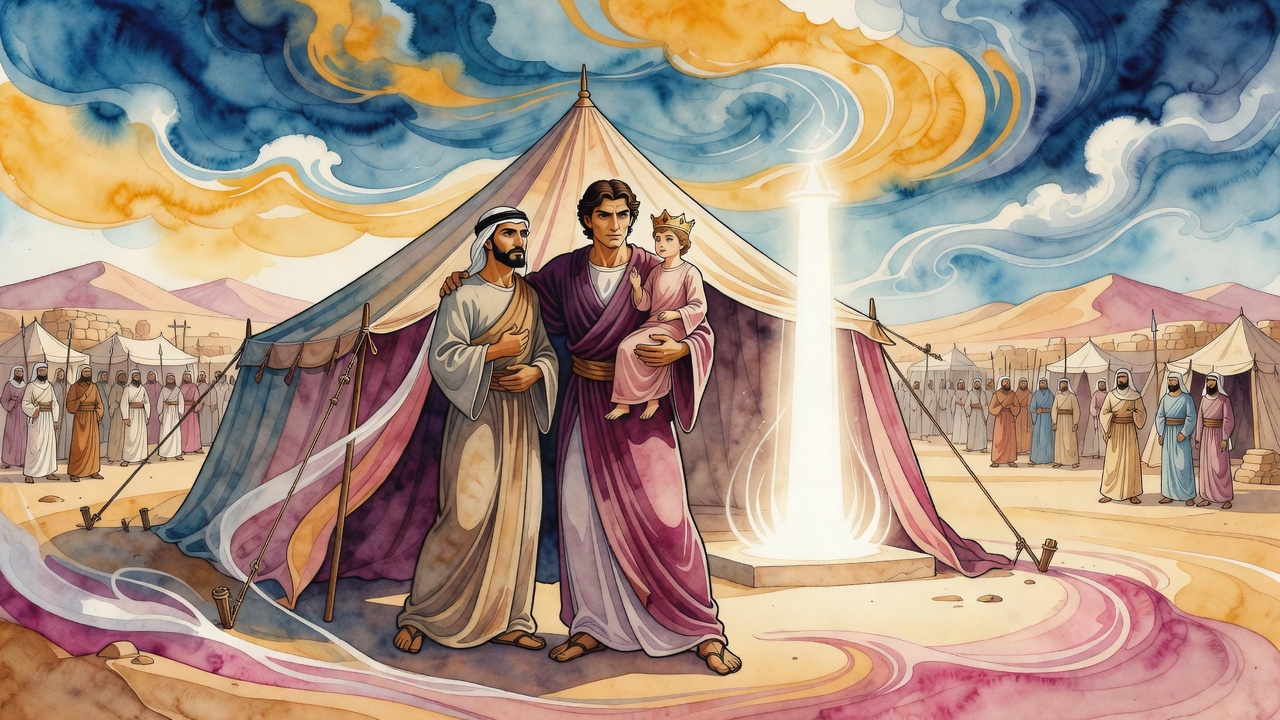
The boy slept in an Arab tent and did not know his name was already a crown. Tryphon stayed a long season until the guardian's patience broke.
Table of Contents
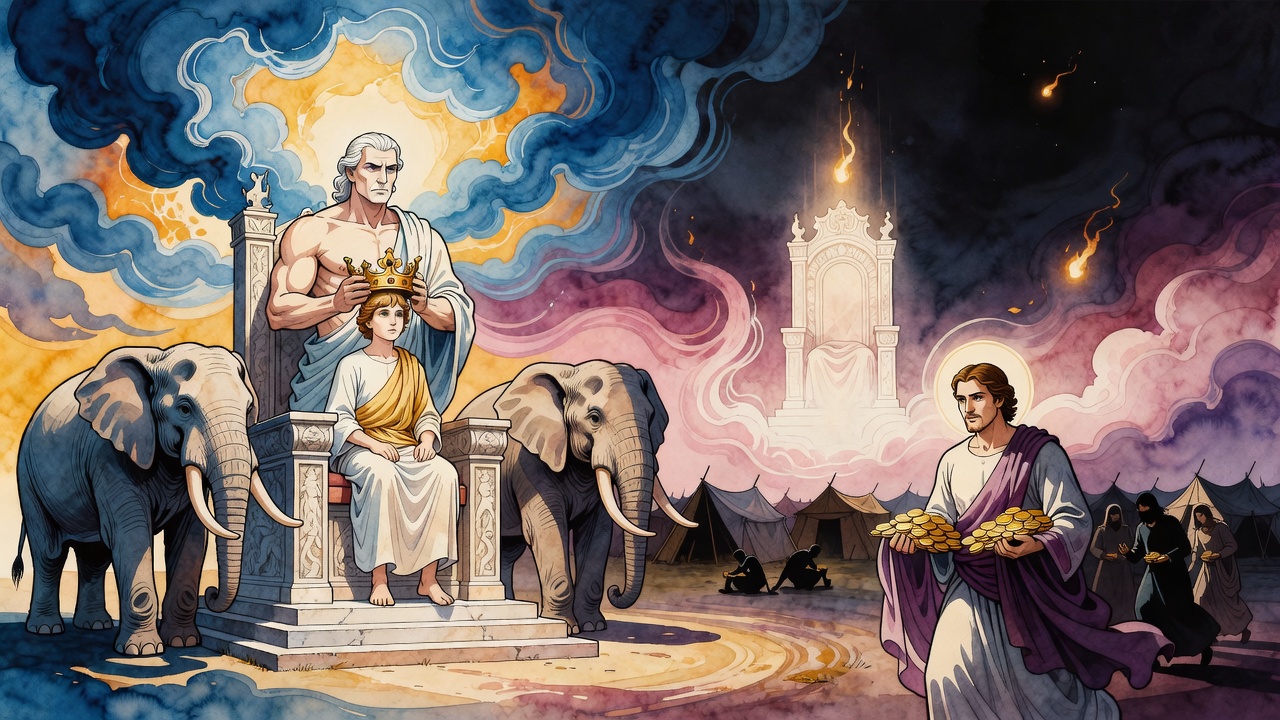
The boy slept under goat-hair and did not know his name was already a tool. Night in the Arabian camp smelled of animals and smoke. Tryphon sat across the fire from Simalcue and did not go home.
 Click for full size
Demetrius still wore a crown, but his army's love had gone thin. Men murmured loud enough for opportunists to hear. Tryphon, once of Alexander's party, smelled the break. He did not raise a banner first. He rode toward the Arabian who was raising Antiochus, Alexander's young son, far from mosaic floors.
A Season at the Tent Flap
Tryphon laid the case on thick. "Deliver this boy to me, that he may reign in his father's place," he said. Hear how Demetrius has mishandled the men of war. Hear how they hate him. He stayed a long season, pressure without rest, a siege on a guardian's patience.
Simalcue stared into the fire and measured risks that had no clean scale. The child chased a goat in the daytime and slept without knowing the talk. Tryphon's messengers kept coming until the tent flap felt like a court door. At last the guardian's hands opened. The boy left the tent as a flag.
Jonathan Bought Relief from a Thin Crown
While Tryphon wore Simalcue down, Jonathan sent word to Demetrius. He asked the king to make Judea free from tribute, and to fold three districts and the country of Samaria into that relief. In return he promised three hundred talents. Demetrius agreed. He wrote letters that called Jonathan brother and sent greetings to the whole nation. He even wrote to Lasthenes, his own officer, to put the terms into force.
The letter was real. The army that hated Demetrius was also real. A sealed promise is thin shelter against a captain who no longer loves his king. Jonathan kept playing the board with the throne that had once called him brother on paper, because pieces still moved and he would not surrender the board while they did.
Peaceable Manner, Soldiers in Every Gate
Another royal traveler moved through Syria in "peaceable manner." Cities opened because King Alexander had ordered welcome for his brother-in-law Ptolemy. Gates swung. Speeches smiled. Then the mask slipped into stone. As Ptolemy entered each city, he set a garrison of soldiers to keep it. Friendship arrived with locks.
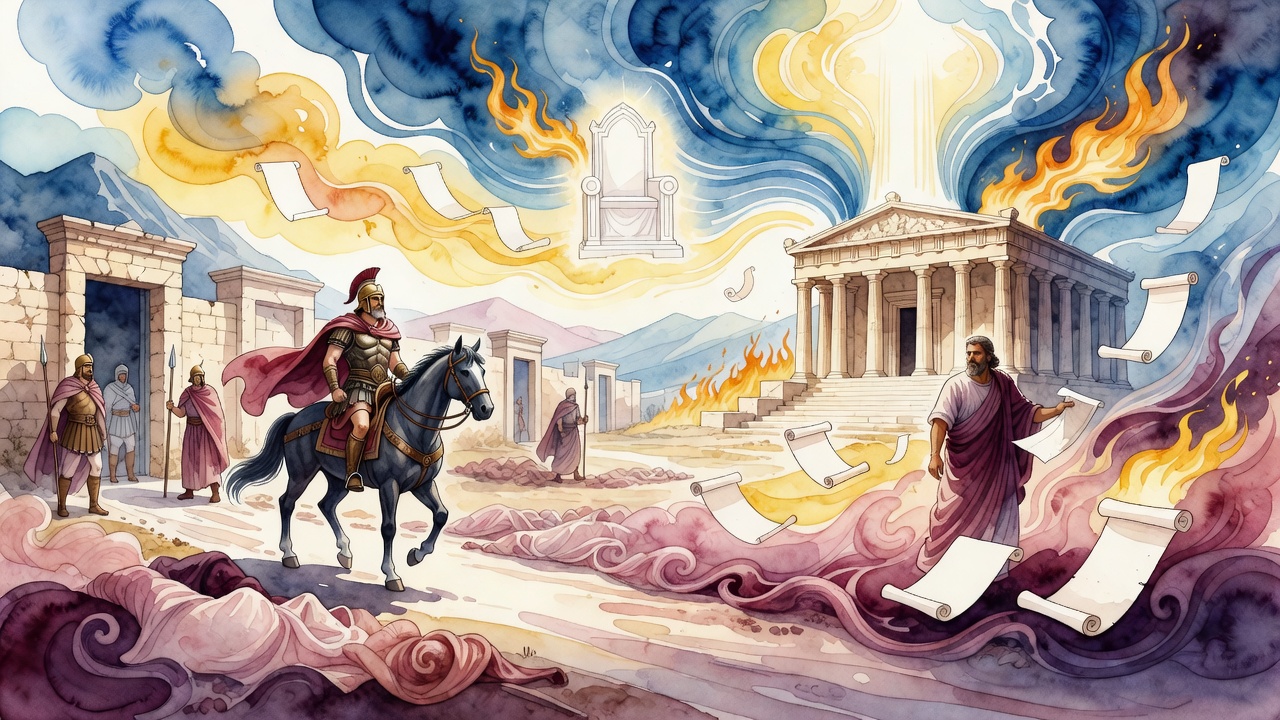
Near Azotus they showed him the temple of Dagon burned, suburbs destroyed, bodies heaped along the road he must pass, remnants of earlier battle fire. Dogs nosed the heaps and were driven off with stones. The smell followed Ptolemy's column for miles. A gatekeeper who had opened for peace watched foreign boots take the tower and spat into the dust when no one looked.
Judeans watching from a distance learned again that a dynastic marriage does not equal safety for a small nation under the route.
Tryphon Fled by Ship
Later Tryphon fled by ship to Orthosias. Demetrius, still juggling enemies, made Cendebeus captain of the sea coast, gave him footmen and horsemen, and ordered him toward Judea. Build up Cedron. Fortify the gates. War against the people. The king himself chased Tryphon as if one manhunt could steady a cracking realm.
Cendebeus came to Jamnia, provoked, invaded, took prisoners, slew. He built Cedron and seeded it with cavalry and infantry so they could raid the ways of Judea at will. The coast became a thorn factory. Farmers learned new routes. Mothers counted children twice at dusk.
Jonathan's tax bargain sat in memory like a receipt from a shop that might already be burning. Treaties need living kings who still control their captains.
A Broken Fence on the Cedron Road
On the road from Cedron, a raiding party took a flock and left a broken fence. The shepherd walked to Jonathan's people with the story and a demand that no letter of tribute relief could answer. In Jerusalem's markets, prices twitched with every rumor from the coast. In Cedron's new walls, a conscript sharpened a spear and wondered whether he served a policy or a grudge.
The boy in the tent may wear a crown or die as a footnote. Cedron may stand or fall. Jonathan already knew the work. Fight when the road is raided. Bargain when a throne will listen. A garrisoned peace is not the real thing.
Secondary wars eat primary promises one fence at a time. A small people outlasts clever secondary men, season after season, road after road.
← All myths