The Two Soldiers Who Won by Not Fighting
Jonathan the Maccabee tears his clothes in the dirt while his army flees. David walks onto a field no one sent him to. Both win the same way.
Table of Contents
 Click for full size
The Man Who Knew How Ambushes Work
Jonathan had sprung one himself, years before, in the marshes by the Jordan. His men came up out of the reeds and cut the enemy down until the survivors broke for the mountain, and then his soldiers went through the dead and took the spoils, because that is what the day is for after the killing stops.
It was a wedding party they were avenging. Their brother had gone to a marriage and the marriage had turned into mourning, the music into keening, and the Maccabees had come to the marsh with that arithmetic in their heads and settled it in an afternoon. Bacchides heard about it and came down to the banks of the Jordan on the Sabbath with a great force, since a man who chooses that day has already told everyone what he thinks of the people he is fighting.
So Jonathan knew the shape of the thing from the winning side. He knew what it feels like to be the reeds.
The Plain Where the Mountains Opened
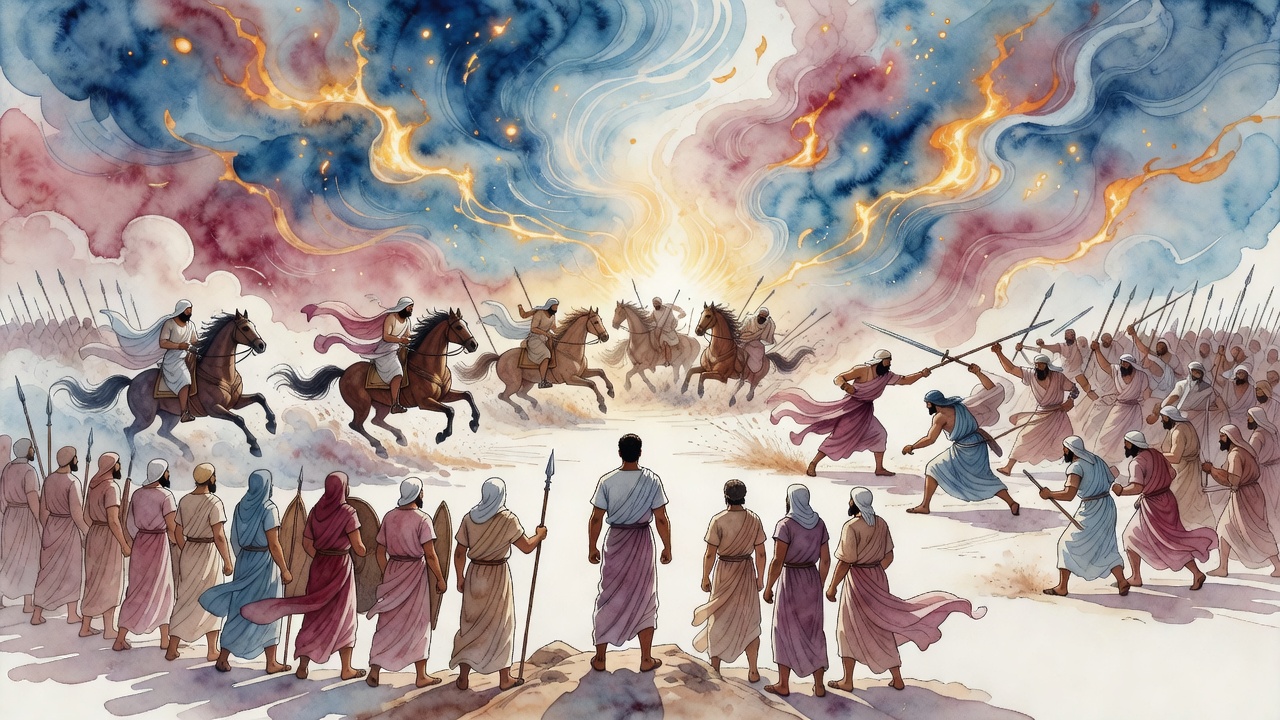
Later, on a wide plain, the shape came at him from the other direction.
The host of strangers was standing in the open where he could count it, which should have been the first warning, because armies that let themselves be counted are usually not the whole army. The men in the mountains on both sides came down when the middle was committed.
His line did not bend. It went. All that were of Jonathan's side fled, every one of them, in every direction the ground allowed. Two men stayed, Mattathias son of Absalom and Judas son of Calphi, captains standing in a field with nothing behind them, and their staying did not turn anything, because two men in a rout are not a formation. They were simply two men who had not run yet.
Jonathan did not go after his soldiers. He did not shout for the line, or look for high ground, or send anyone to hold a road, since there was no road left to hold and he could see it.
Earth on His Head
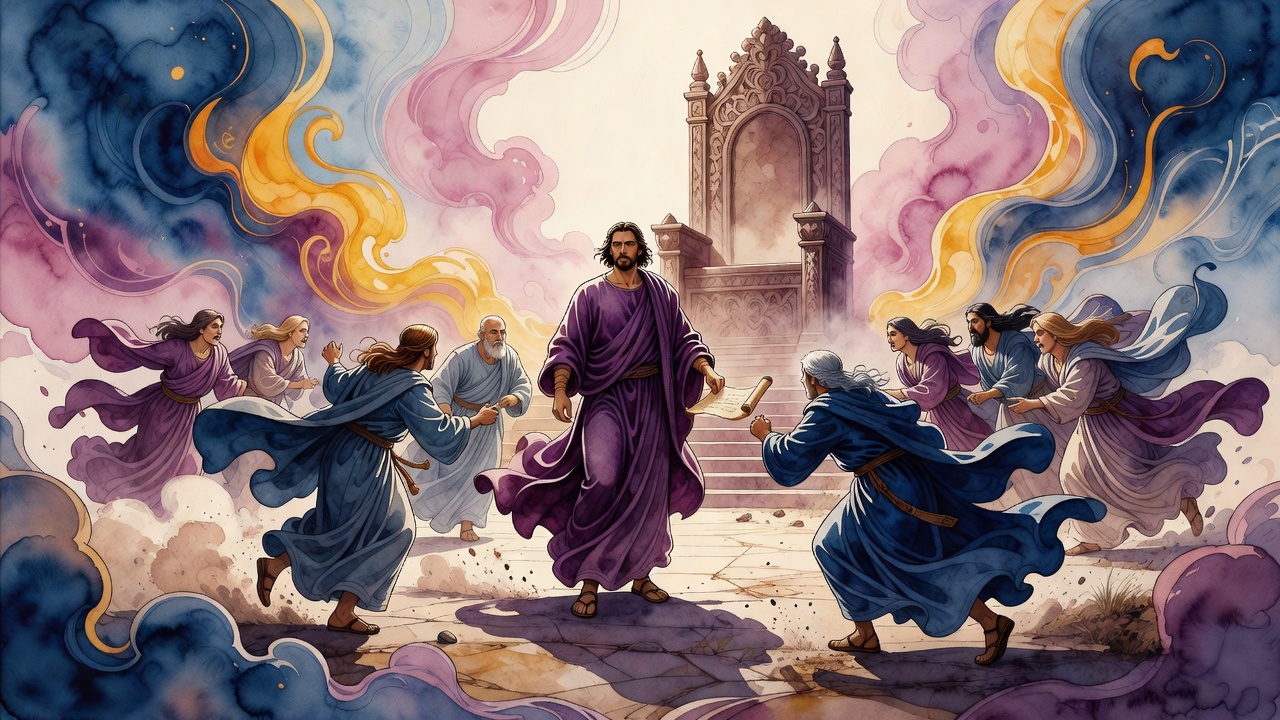
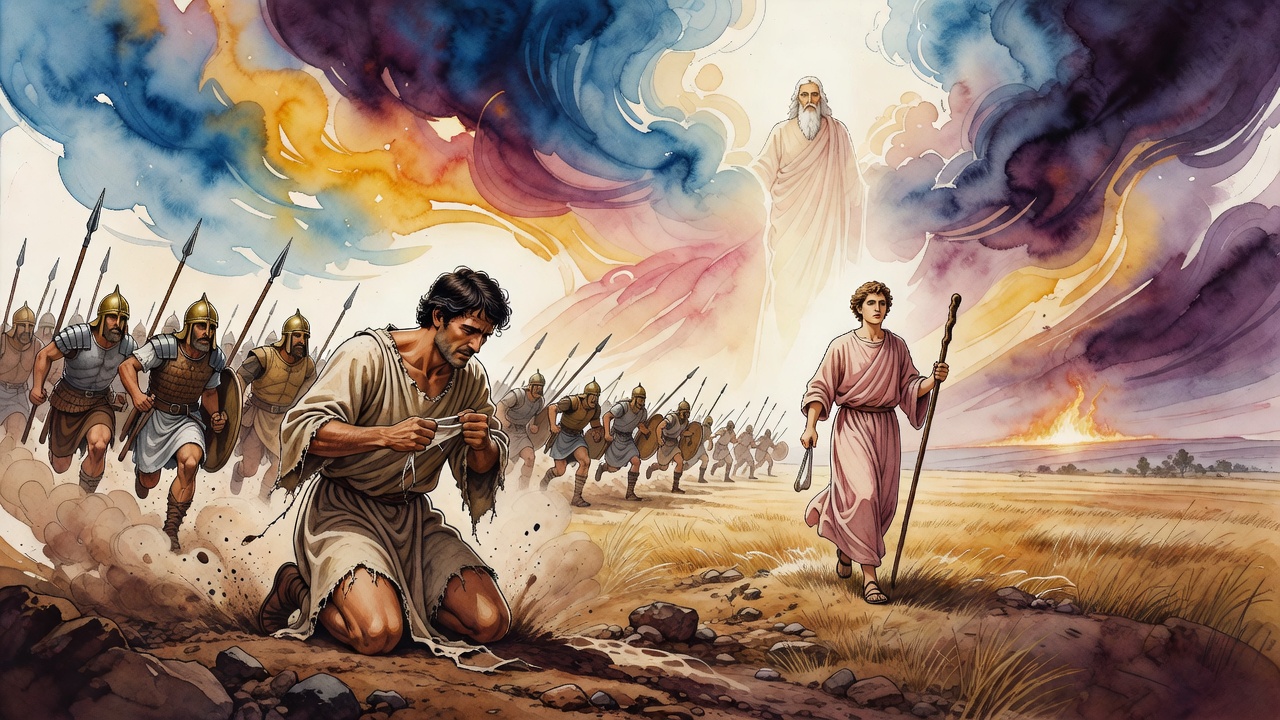
He tore his clothes.
Then he bent down in front of the whole ruin of his army and took up two handfuls of the plain and put the dirt on his own head, which is what a man does over a body. He was not doing it for the dead. He was doing it for the battle, and for himself, and he was doing it in daylight where anyone still standing could watch a commander stop being a commander.
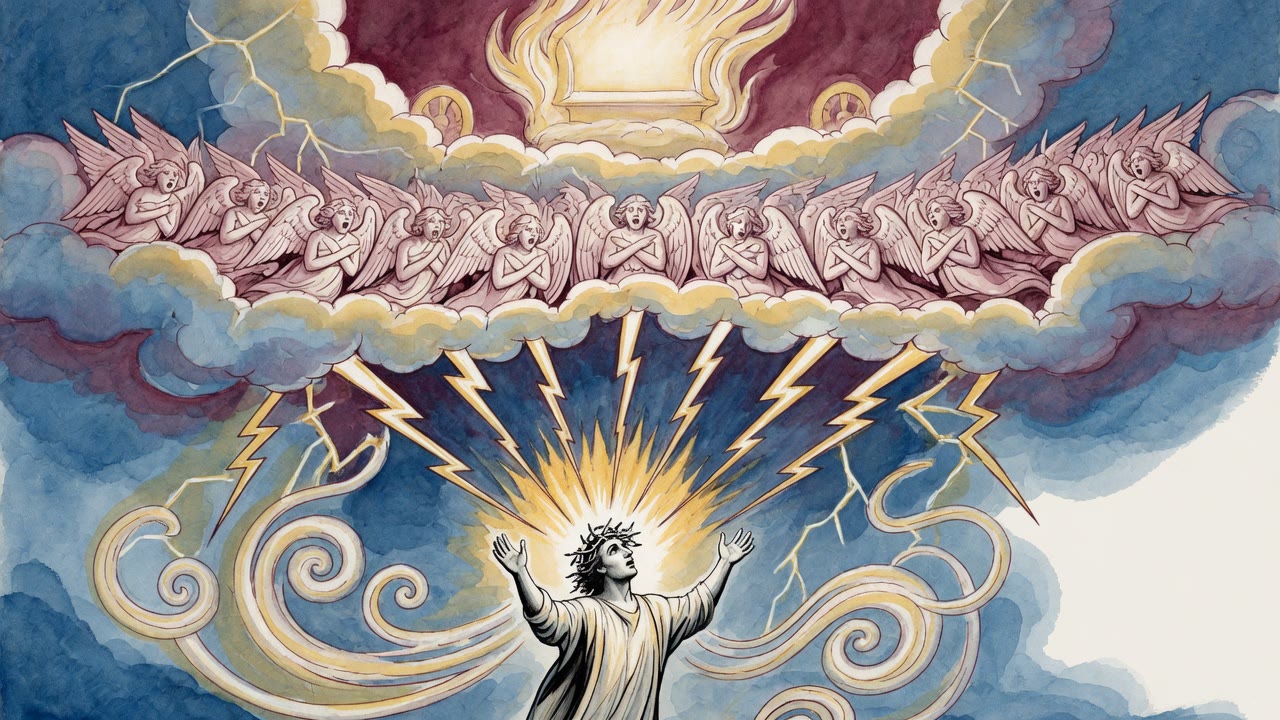
He prayed. Nobody wrote down what he said.
Then he stood up with the dirt still in his hair and turned back toward the fighting, and the strangers who had him surrounded and beaten broke and ran. No one afterward could give a reason. No reserve came over the hill, and there had been no ambush of his own waiting in the rocks, and the ground was the same ground. He put earth on his head and got up and they fled from him.
The Son Jesse Did Not Send For
Something like it had happened long before, in Bethlehem, in a house with seven sons in it.
Samuel had come with a horn of oil, and the reason he had come was Agag. Saul had been told to destroy Amalek entirely and had kept the Amalekite king alive because the man was tall and good to look at, and had kept the best of the livestock as well, destroying only what was worthless. That is selective obedience, which is disobedience with better manners, and it cost him the kingdom. When Samuel turned to leave, Saul grabbed at his cloak and tore it, and Samuel told him the kingdom would come off him the same way.
So Samuel stood in Jesse's house and the sons came through one at a time, tall, handsome, the kind of men a nation is glad to look at. Heaven refused all seven. A man looks at what is in front of his eyes, Samuel was told, but I look at the heart.
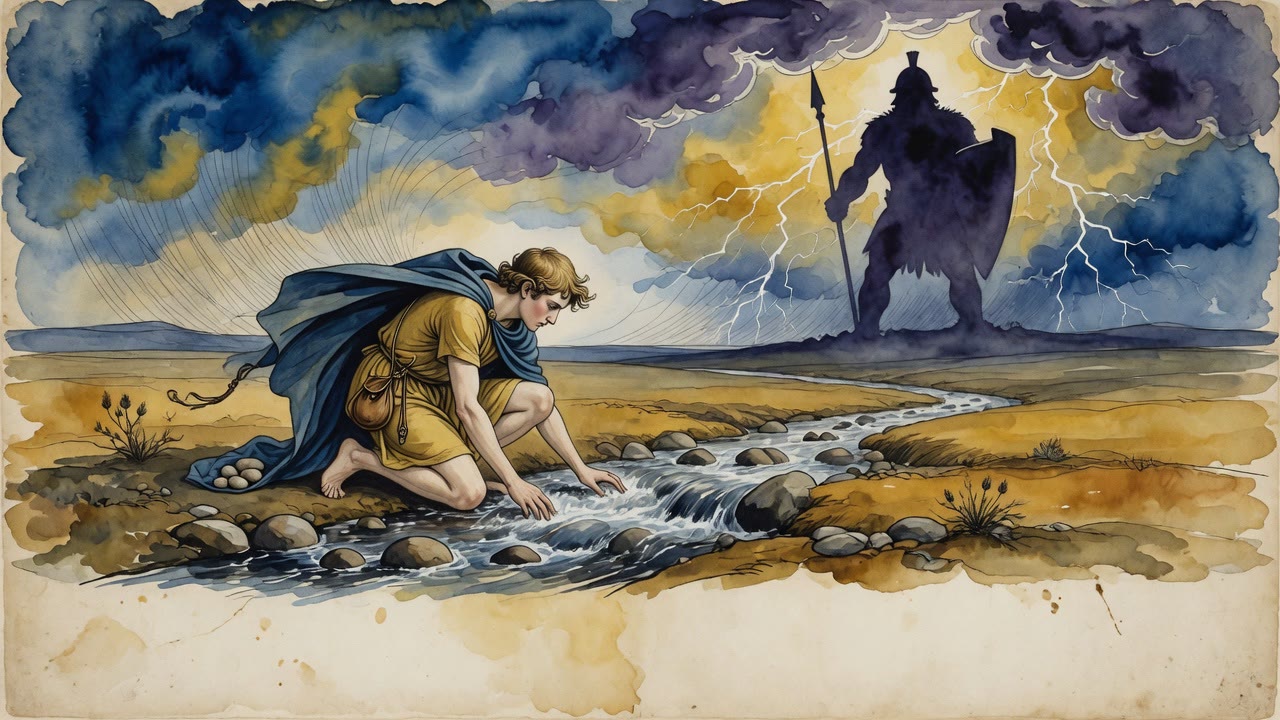
Nobody had sent for the youngest. He was out in the field with the sheep, red-faced and unwashed, and they had to go and fetch him in before there was anyone left to anoint. The oil went on him in that room and the spirit went with it, and the same day it left Saul, who from then on could only get through a night when a boy from Bethlehem played a harp in his chamber.
What Neither of Them Brought
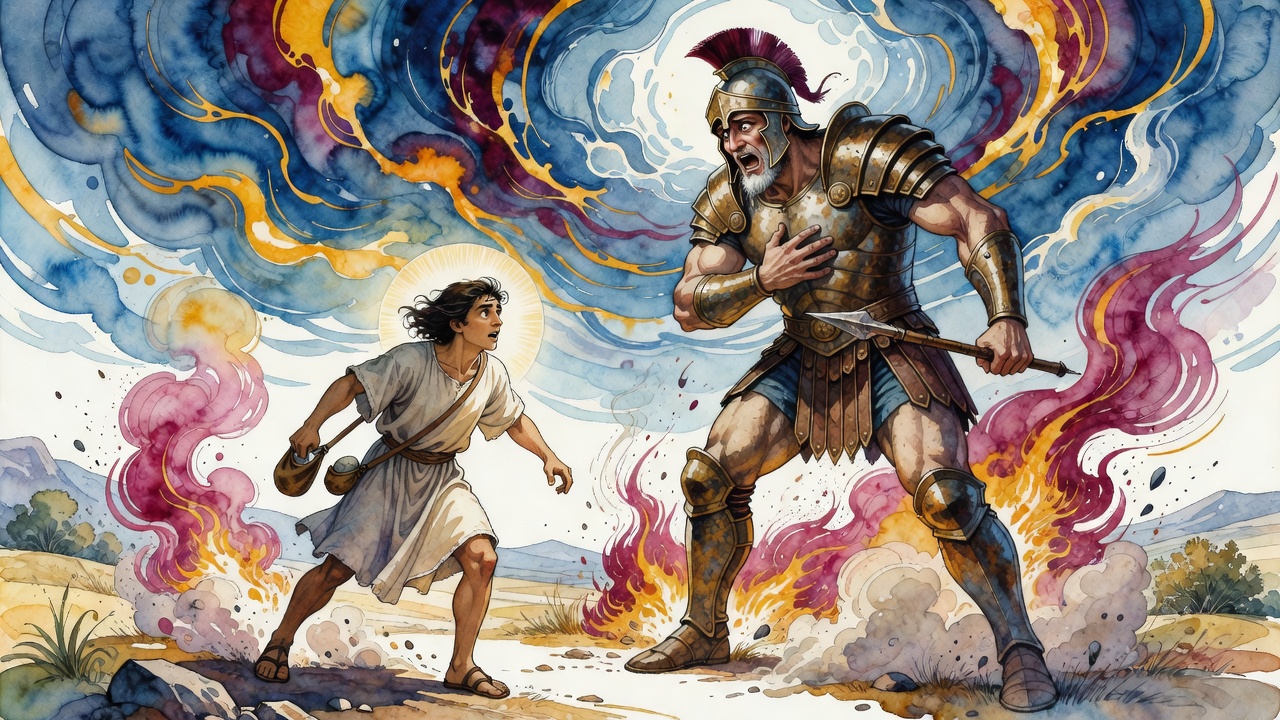
The giant was the last man in that whole story who still believed in size. He came out to fight the army of Israel and got a shepherd, and one stone out of a sling put him in the dirt.
Neither of them won with what they had. Jonathan had a rout and two handfuls of dirt. David had five stones and no armor he could walk in, and he came onto a field nobody had sent him to, exactly as no one had sent for him in his father's house. Saul had spared Agag for his height and had lost a kingdom over it, so height had already been ruled on before the giant ever crossed the valley.
Jonathan's men came back across the plain to a commander with dirt in his hair, and picked up the weapons they had dropped, and looked at him.
← All myths