5 min read

Bacchides Walled Judea with Hostage Sons

Judas Maccabeus was dead and his men picked Jonathan to lead. Bacchides rebuilt seven forts and locked the sons of leading families in Jerusalem.

Curated by Arthur · Told by Maggid ·
Table of Contents
  1. When the Hammer Fell Silent
  2. Walls, Gates, and Bars
  3. Simon and the Burning Engines
  4. Temple Smoke in Memory
  5. Hostages in the Citadel
Bacchides Walled Judea with Hostage Sons Click for full size

When the Hammer Fell Silent

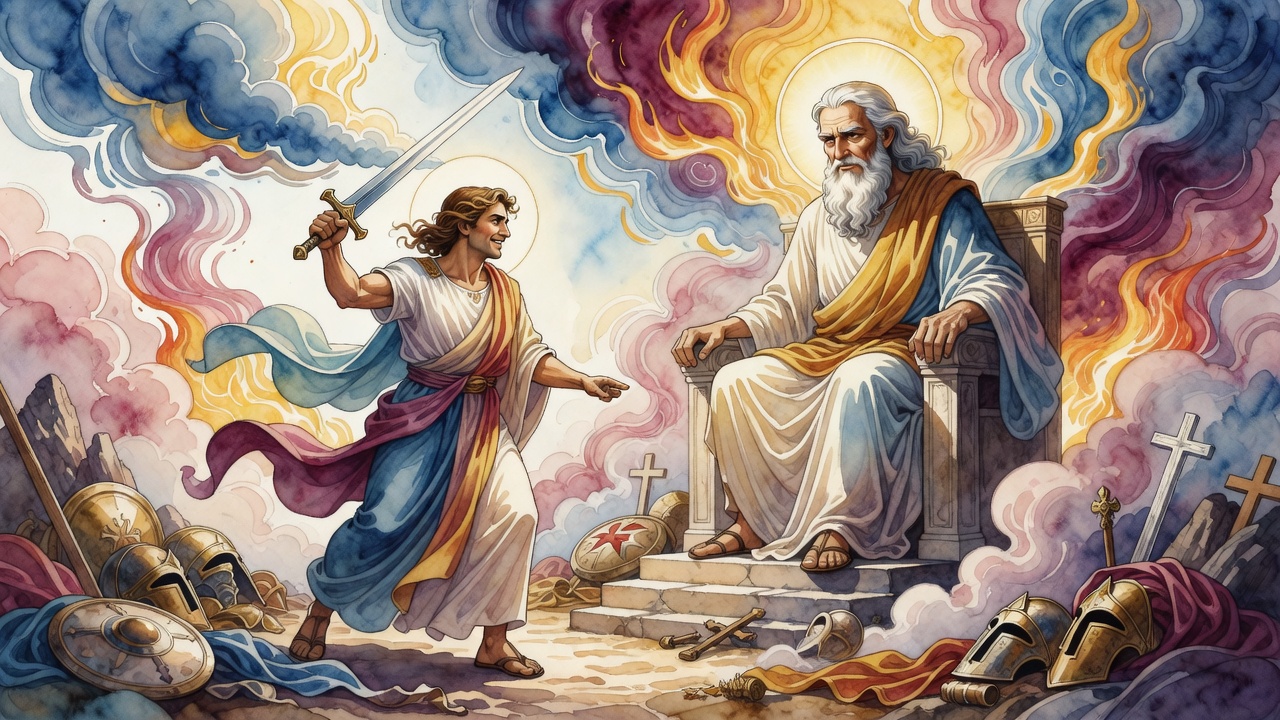
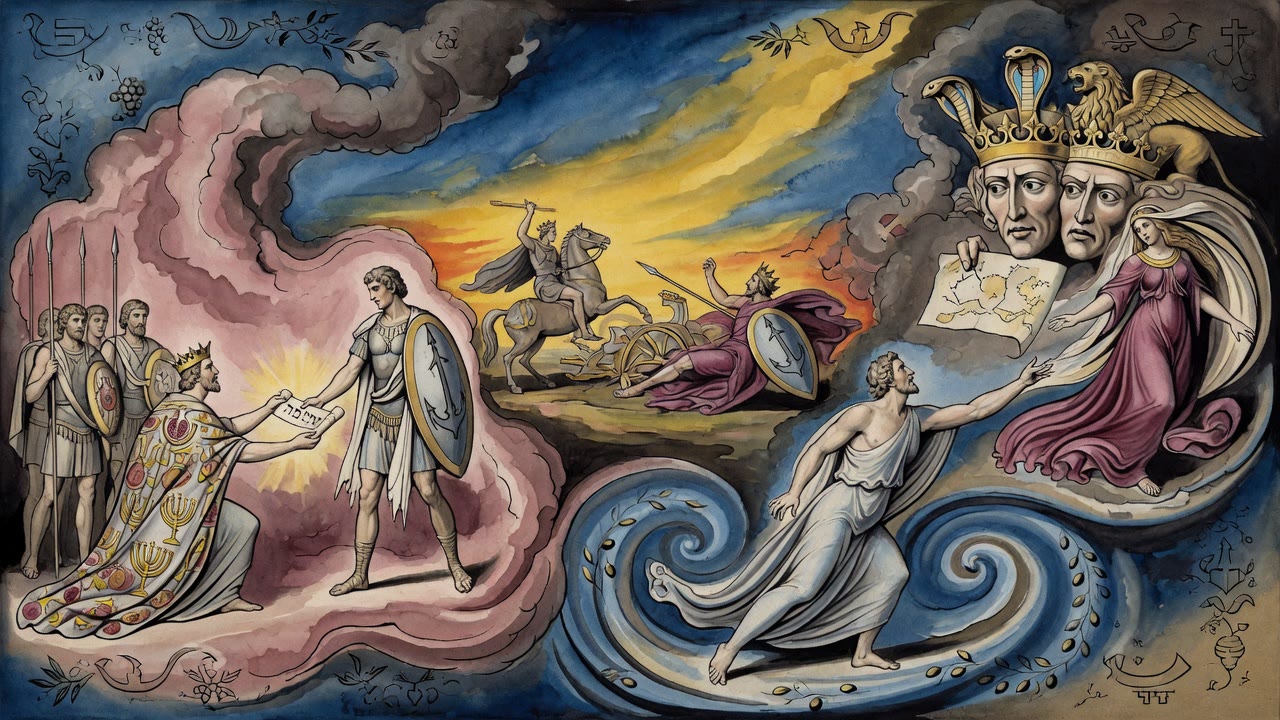
Judas Maccabeus was dead. The name that meant hammer no longer struck. His friends gathered in the hollow that grief leaves in a camp and looked at Jonathan, his brother. They had no man like Judas to go out against the enemies: Bacchides of the Seleucids, and the adversaries from their own nation who had chosen the empire's side and learned to speak its language of power.

"Since thy brother Judas died, we have no man like him to go forth against our enemies," they said. Then the demand born of desperation: "Now therefore we have chosen thee this day to be our prince and captain in his stead, that thou mayest fight our battles." Jonathan stepped into a war that had already eaten a legend and was still hungry.

The camp did not need a speech about destiny. It needed someone who would still ride out when the hammer was gone.

Walls, Gates, and Bars

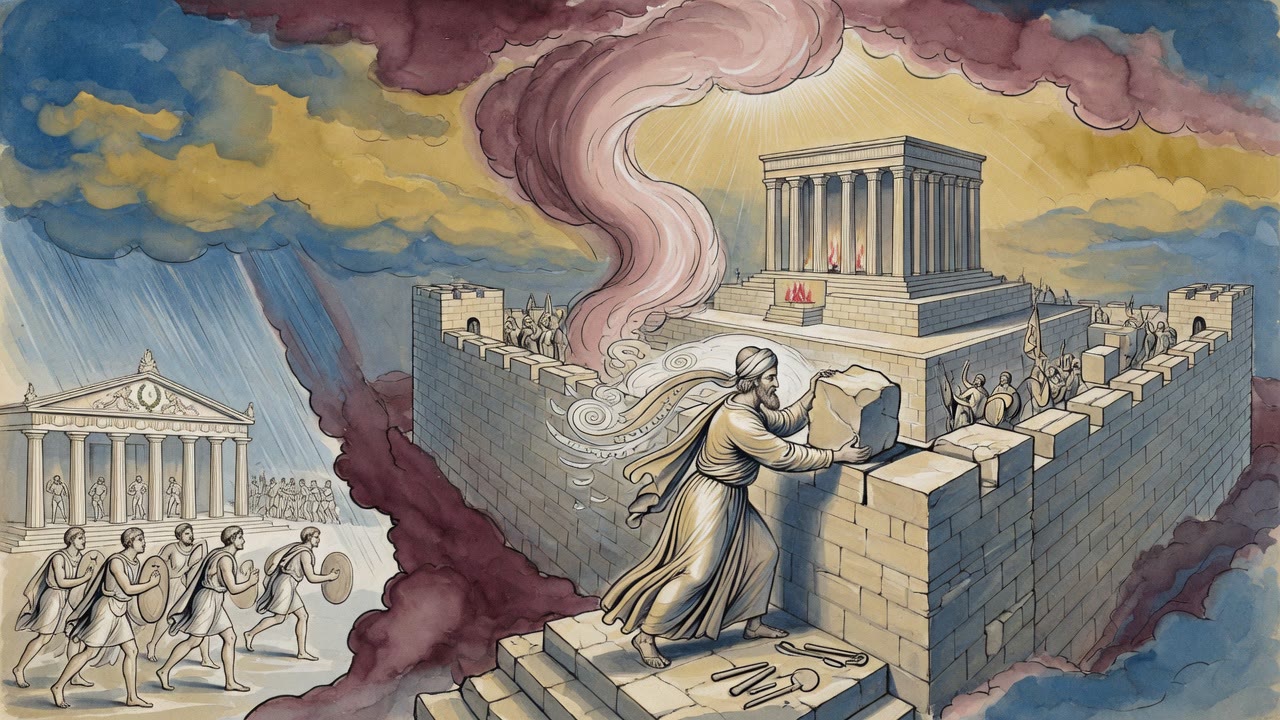
Bacchides did not treat a dented army as a reason to leave Judea. He returned to Jerusalem and repaired the strong cities: Jericho, Emmaus, Bethhoron, Bethel, Thamnatha, Pharathoni, Taphon. High walls rose. Gates shut. Bars slid into place. Garrisons settled "that they might work malice upon Israel."

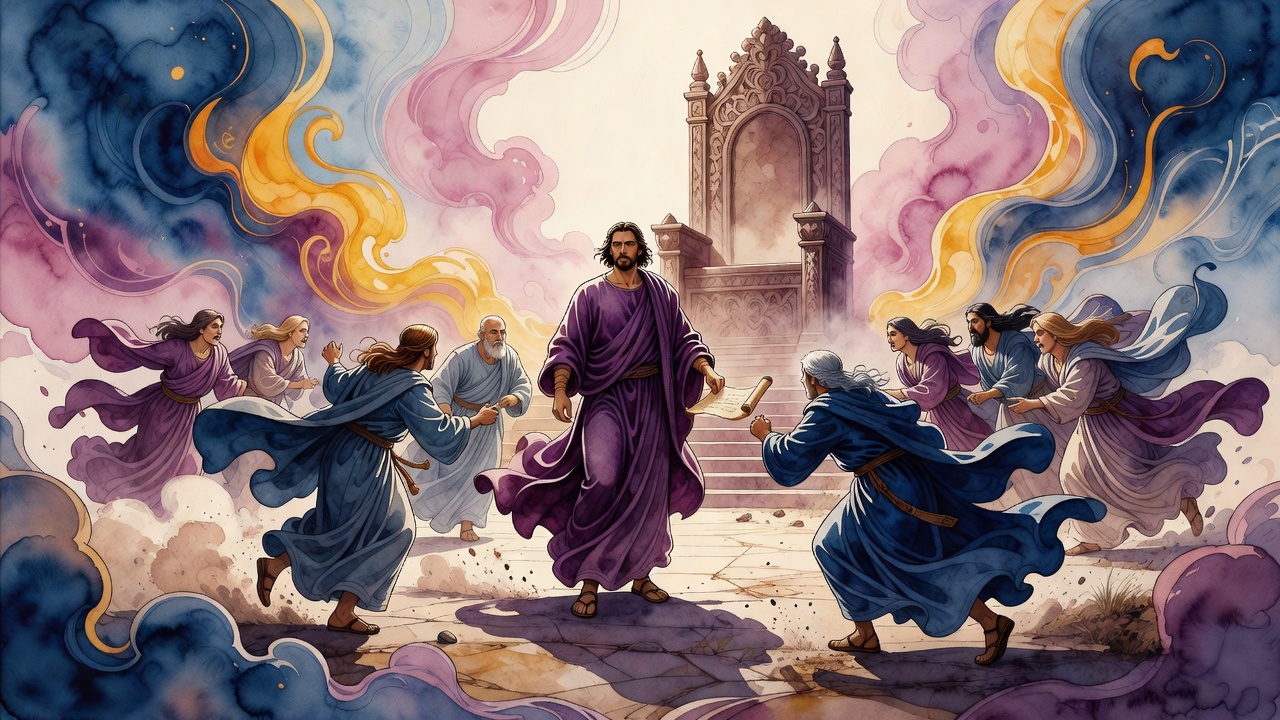
Malice was the stated purpose. Not peace. Not even quiet occupation. The map of Judea became a net of stone points designed to hurt. And he took the sons of the chief men as hostages and put them in the citadel at Jerusalem. Children became locks on the loyalty of fathers. A fortress controls a road. A hostage controls a heart. Bacchides built both kinds of wall in the same season.

Simon and the Burning Engines

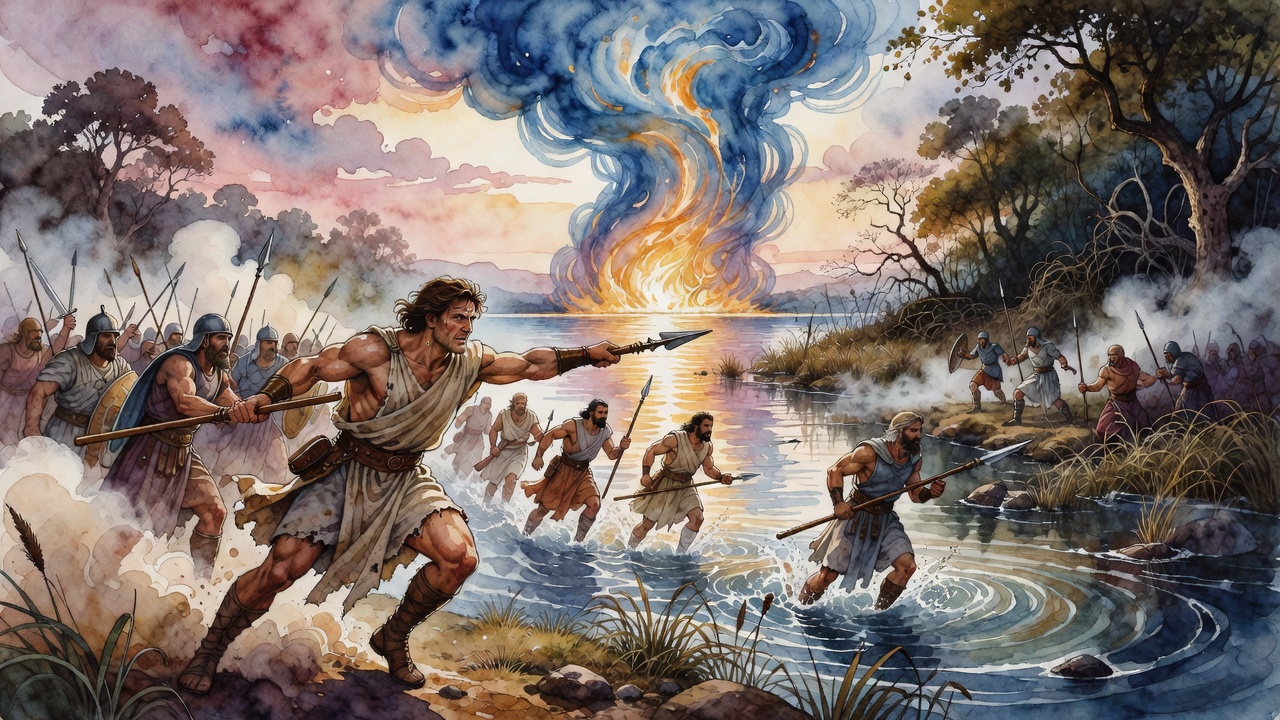
When Bacchides pressed hard, Simon and his men burst from the city and set the enemy's war machines on fire. Flames ate the engines meant to break walls. Smoke rose where wood and rope had promised conquest. Bacchides was discomfited and afflicted. His counsel and travail turned vain in the heat.

Rage found the nearest throats. He slaughtered many of the wicked advisers from among the Jews who had urged the invasion and promised easy victory. Betrayal paid betrayal in public blood. The general who built for malice discovered that malice also eats its friends when the plan fails and someone must be blamed before the soldiers see the failure too clearly.

Temple Smoke in Memory

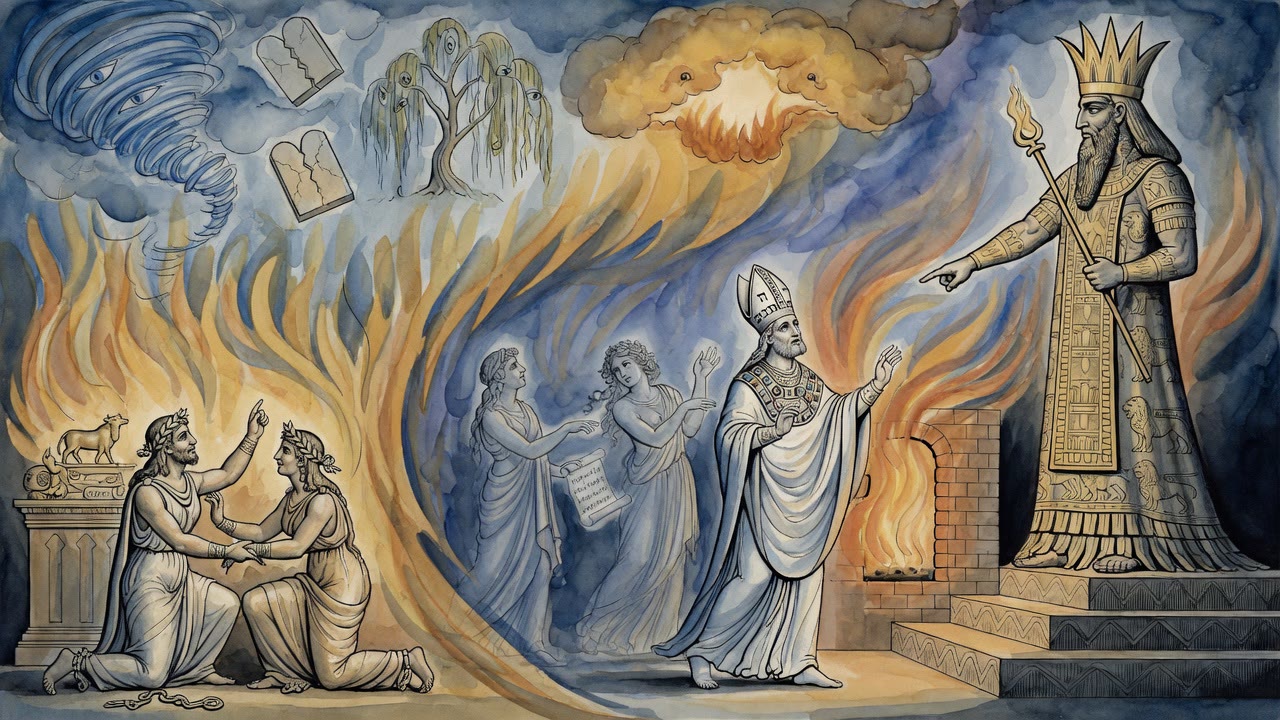
Behind the field campaigns stood an older wound the books refuse to forget: the Temple defiled, blood on the soil, courtyard gates on fire. Prayer rose from people who still knew who they were. Sacrifices returned. Fine flour for the Mincha. Lights rekindled. Show-bread set again on the table of the Lord. The plea went out to keep the dedication of the altar in Kislev with those who still remembered what fire had tried to erase.

Jonathan's war and Bacchides' forts sat on that scorched memory. Every garrison wall argued with every rekindled lamp. Every hostage in the citadel argued with every father who had once carried offerings up the mountain.

Hostages in the Citadel

The sons held in Jerusalem were not a side note in a list of forts. They were Bacchides' method for turning family love into a chain. Jonathan had to fight stone and stolen boys at once. Judea under those years learned a double literacy: how to read a skyline of new towers, and how to count which houses were missing which sons at the evening meal.

The hammer was gone. The brother who replaced him inherited a country stitched with bars. Freedom, if it came, would have to climb both kinds of wall, and the books keep both kinds in the same unblinking inventory.

Jericho and Emmaus did not ask to become malice posts. Bacchides chose them because roads and memories meet there. A garrison in Bethel is not only soldiers. It is a claim that the place of old dreams now serves a foreign general's schedule. The bars on the gates taught Judea a new grammar of night.

Jonathan inherited grief and a map of towers. Simon inherited fire enough to burn engines. The hostages inherited the citadel's cold. Together they make the years after Judas less a clean sequel and more a ledger of costs: one hammer gone, many sons missing, lamps rekindled under walls built to work malice upon Israel.

When Bacchides killed his own Jewish advisers, the lesson traveled faster than dispatches. Collaboration has a short half-life under a general who loses machines to flame. The empire's friends in Judea learned that malice, once loosed, does not check birth certificates before it chooses a throat.


← All myths

From the tradition

Sources

4 sources

The texts behind this telling. Some cards carry a translation of the source; others are our own retelling of it, and each card says which. Every card links out to the original.

The Book of Maccabees I 9:31The Book of Maccabees I

Retold in our words. Read the original at the link below.Sefaria Community Translation · CC-BY

His brother, the legendary Judas Maccabeus, had just fallen in battle. Judas, the hammer – that's what his name meant in Hebrew, Maccabee comes from the word for hammer, makevet – had led the Jewish people to unbelievable victories against the Seleucid Empire. He was a hero, a symbol of hope.

So, what happens when that light goes out?

That's where we pick up the story in the First Book of Maccabees. The situation is dire. Judas is gone, and the people are desperate. "For this cause," the verse says, "all Judas' friends came together." They turn to Jonathan, Judas' brother. scene for a moment. A group of battle-hardened warriors, grieving, scared, looking for someone – anyone – to lead them. They say to Jonathan, "Since thy brother Judas died, we have no man like him to go forth against our enemies." And they name their enemies explicitly: Bacchides, the Seleucid general, and "them of our nation that are adversaries to us" – the Hellenized Jews who had sided with the oppressors.

The request is blunt, almost a demand born of desperation: "Now therefore we have chosen thee this day to be our prince and captain in his stead, that thou mayest fight our battles."

What would you do?

Jonathan, to his credit, doesn't hesitate. "Upon this," the Book of Maccabees says, "Jonathan took the governance upon him at that time, and rose up instead of his brother Judas." He accepts the mantle, the responsibility, the terrifying challenge.

But the story doesn’t let him – or us – breathe for long. The threat is immediate. "But when Bacchides gat knowledge thereof, he sought for to slay him." The enemy knows Jonathan is now the leader, and they're coming for him.

This moment is so raw, so human. It's not just a historical account; it's a story about succession, about grief, about the weight of expectation. Jonathan steps up, knowing full well the dangers he faces, and knowing that the enemy is already hunting him.

The Maccabean story, as we see here with Jonathan, is not just about military victories and political maneuvering. It’s about courage in the face of overwhelming odds, about leadership in times of crisis, and about the enduring power of hope – even when that hope seems fragile and fleeting. And it all starts with a brother stepping into the impossible shadow of a legend. What happens next? Well, that's a story for another time. But let me tell you, it's a wild ride.

Full source
The Book of Maccabees I 9:53The Book of Maccabees I

Retold in our words. Read the original at the link below.Sefaria Community Translation · CC-BY

The Book of Maccabees I turns to Bacchides Fortifies Cities and Takes Hostages.

A thousand lives. Gone. But the story doesn't dwell on the tragedy. It swiftly moves to Bacchides' response.

Bacchides, a general in the Seleucid army, wasn't defeated, just… dented. And what does he do? He doesn't retreat. He doubles down. He "returned to Jerusalem and repaired the strong cites in Judea." image: Bacchides, in the wake of losing a thousand soldiers, surveying the landscape. Not with remorse, but with a strategic eye. He sees opportunity. He sees the need to control.

The passage then lists a series of towns: Jericho, Emmaus, Bethhoron, Bethel, Thamnatha, Pharathoni, and Taphon. These aren't just names on a map. They were vital points of control. Bacchides "did he strengthen with high walls, with gates and with bars."

Walls. Gates. Bars. These aren't symbols of peace. They are symbols of oppression, of control, of fear. They represent the tangible effort to subdue a people.

And what was the purpose of all this construction? The verse is stark: "And in them he set a garrison, that they might work malice upon Israel."

Malice. Not justice. Not peace. Malice. The intent is clear: to inflict harm, to sow discord, to break the spirit of the Israelites.

Bacchides wasn't just interested in controlling territory. He was interested in controlling the people. He understood that physical fortifications were only as strong as the will of the people they were meant to contain.

The passage continues, "He fortified also the city Bethsura, and Gazera, and the tower, and put forces in them, and provision of victuals." He's not just building walls; he's ensuring his army can sustain itself. He's planning for a long-term occupation. He's thinking of logistics, of supply lines. He's turning these cities into fortresses, ready for siege, ready for war.

It's easy to get lost in the sweep of history, to focus on the heroes and the villains, the battles won and lost. But passages like this remind us of the brutal, everyday realities of conflict. The slow, grinding oppression. The constant threat of violence. The systematic attempt to crush a people's spirit.

What does this passage tell us? Perhaps it is the reminder that freedom is never truly won. That vigilance is always necessary. That even in the wake of apparent victory, the forces of oppression can regroup, rebuild, and renew their efforts. And that sometimes, the most important battles are not fought on grand fields, but in the shadows of fortified cities, behind high walls, with gates and bars.

Full source
The Book of Maccabees I 9:72The Book of Maccabees I

Retold in our words. Read the original at the link below.Sefaria Community Translation · CC-BY

That feeling echoes through the ancient story

Bacchides, a general of the Seleucid Empire, is on a mission to crush the Jewish rebellion led by the Maccabees. He's been hitting them hard. But, according to Maccabees I 9, as Bacchides began to smite them. things started to shift.

Simon, one of the Maccabee brothers – a name that means "hammer," fitting for these warriors! – took decisive action. He and his men sallied forth from the city, torching the enemy’s war machines. The chaos, the flames, the sheer audacity of it all! They then turned on Bacchides himself. The text says he was "discomfited by them, and they afflicted him sore."

Here’s where it gets interesting. All of Bacchides’ plans, all his hard work, came to nothing, "his counsel and travail was in vain." He was furious, and his anger was directed at the very people who had advised him to invade Judea in the first place – the "wicked men" within the Jewish community who had sided with the Seleucids. In his rage, he slaughtered many of them. Betrayal breeding more betrayal.

Talk about a backfire! It's a stark reminder that bad advice can lead to devastating consequences, and that sometimes, even the most powerful leaders can be swayed by the wrong voices.

Humiliated and defeated, Bacchides decided to retreat back to his own country. But the story doesn’t end there.

Jonathan, another of the Maccabee brothers, seized this opportunity. He sent ambassadors to Bacchides with a proposal: peace. And a prisoner exchange.

What a move! While Bacchides was licking his wounds and dealing with the fallout of his failed campaign, Jonathan was reaching out, offering a chance to de-escalate the conflict. It's evidence of the Maccabees' strategic thinking, their ability to recognize an opening and seize it.

This passage from Maccabees I 9 leaves us with a few things to ponder. It's about the futility of violence, the dangers of bad counsel, and the enduring hope for peace, even in the midst of war.

Full source
The Book of Maccabees II 1:12The Book of Maccabees II

Retold in our words. Read the original at the link below.Sefaria-hosted English translation · CC-BY

You remember who you are, what you stand for, and you fight back. That's the spirit that leaps off the page when we explore the story of Maccabees.

The Temple, once a beacon of hope, defiled. Innocent blood staining the very soil of the land. The gates to the courtyard? Engulfed in flames. It's a scene of utter devastation, ripped straight from the beginning of the second Book of Maccabees.

Even in the darkest hours, faith flickers. "We prayed to The Lord our God and he headed our voice," the verse says. It’s a simple statement, yet it resonates with profound meaning.

Action follows prayer. We read that they offered sacrifices – Mincha (the afternoon offering) with fine flour. They rekindled the sacred lights, and placed the show-bread, the lechem hapanim, on the table of The Lord. These weren't just rituals; they were acts of defiance, declarations that even in the face of oppression, the flame of faith would not be extinguished.

It’s a message that transcends time.

Then comes a request, a plea for unity. "We requested of you to celebrate the dedication of the altar with us during the month of Kislev." Kislev – the month that holds Chanukah, the festival of lights. It’s an invitation to remember, to rejoice, to reaffirm their shared heritage.

The letter itself is dated to the year 188, and it marks a moment of resurgence, a turning of the tide.

And who is this letter addressed to? "The people of Judah and Jerusalem and the elders, to Aristobulos, Secretary of Ptolemy the king, from the tribe of the anointed priests, and to the Jews of Egypt, Peace and Salvation." Aristobulos… his exact role is debated; the text itself acknowledges uncertainty about his title. But what's clear is the intention: to reach out, to connect with Jews living far from Jerusalem, specifically in Egypt. A message of "Peace and Salvation" – powerful words in a time of turmoil.

What does this tell us? It speaks volumes about the importance of community, of reaching across geographical divides to maintain solidarity. Even in ancient times, the Jewish people understood the power of connection, of shared identity.

So, as we reflect on these words from the Second Book of Maccabees, let's consider their relevance today. How do we reach out to others, offering peace and salvation in a world that so desperately needs it?

The story of the Maccabees is more than just a historical account; it's a timeless reminder of the strength of the human spirit, the power of faith, and the enduring importance of community. It's a story that continues to resonate, inspiring us to stand strong in the face of adversity, just like those who came before us.

Full source