5 min read

Jonathan Found Empty Fires and a Burning City

Enemy camps lit fires and fled before dawn. Jonathan struck the Zabadeans instead, and elsewhere his men stormed a city with massive slaughter.

Curated by Arthur · Told by Maggid ·
Table of Contents
  1. Fires in a Camp That Was Already Empty
  2. When the Main Prey Escapes
  3. A Hundred Thousand in the Streets
  4. Letters to Rome While Heaven Fought
  5. What the Morning After Fear Looks Like
  6. Panic, Steel, and Paper
Jonathan Found Empty Fires and a Burning City Click for full size

Fires in a Camp That Was Already Empty

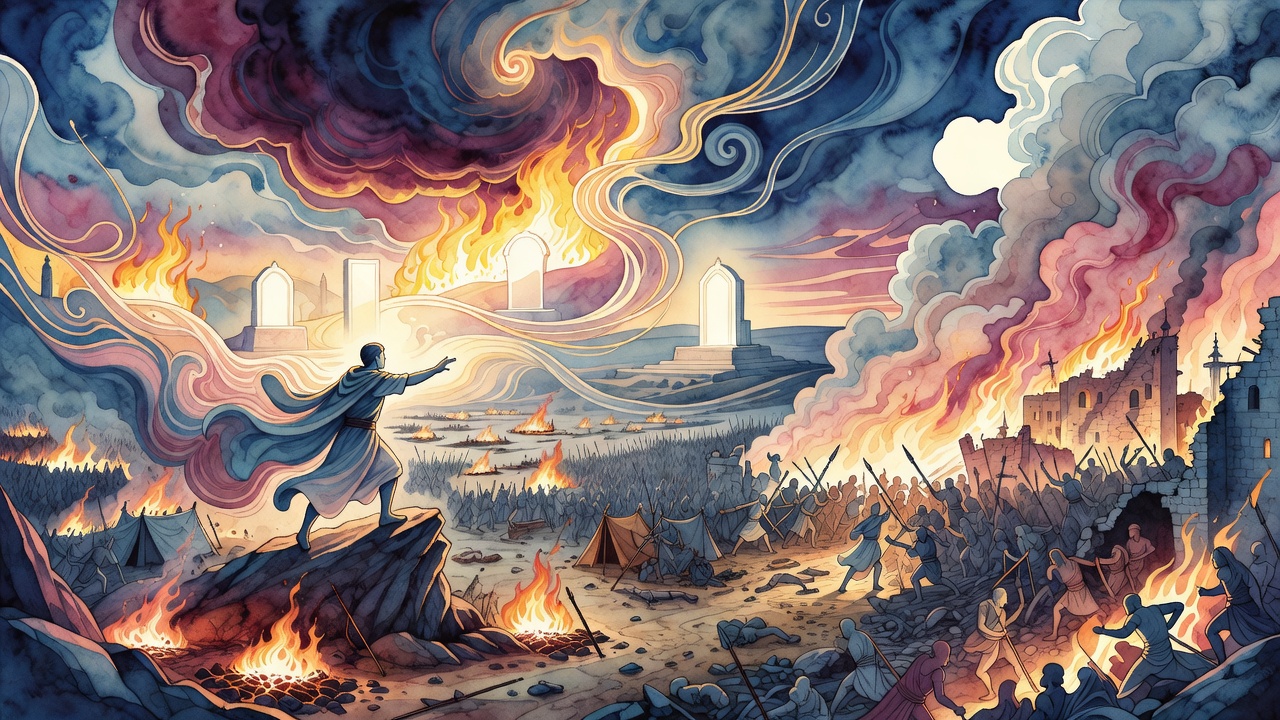
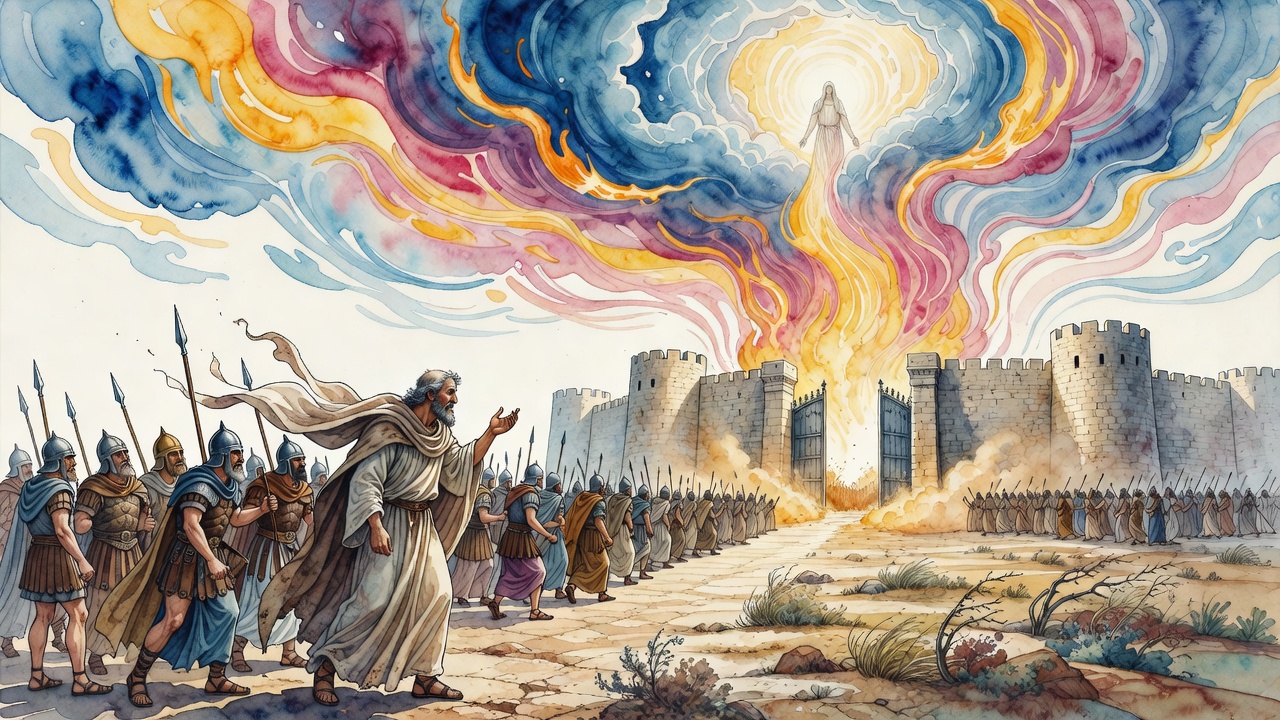
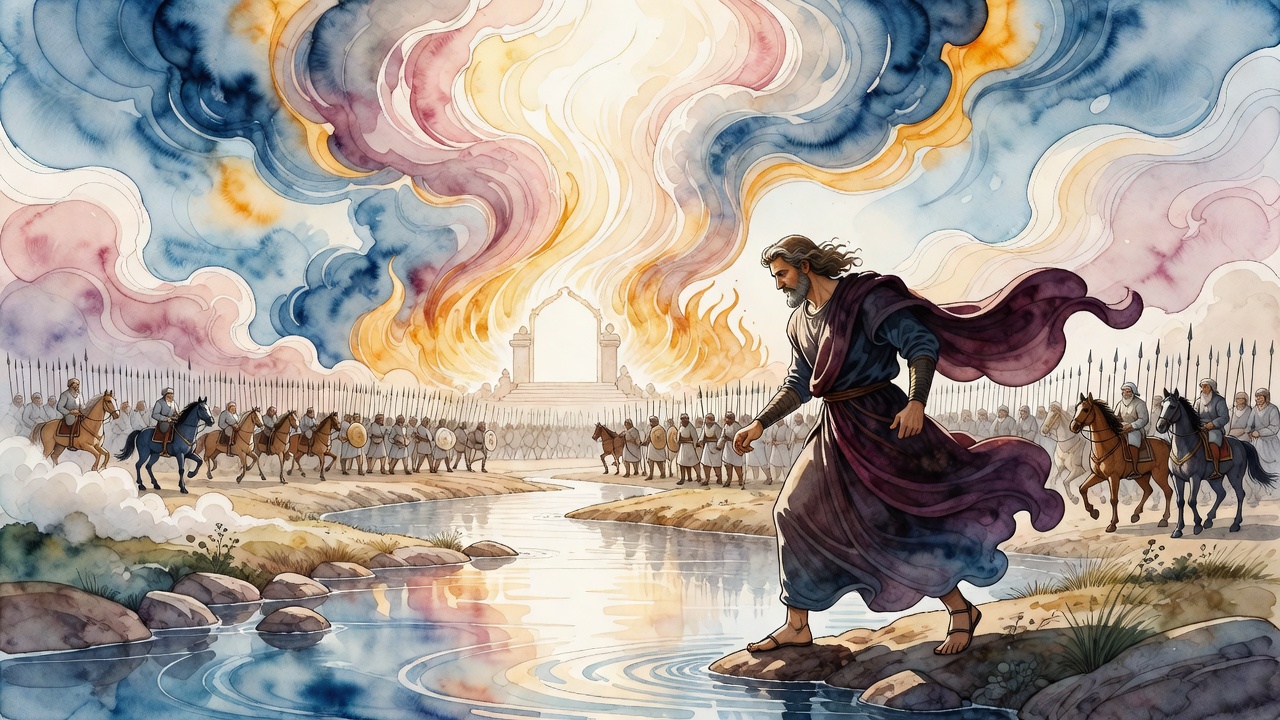
They feared and trembled in their hearts and kindled fires in their camp. Jonathan and his company slept through the theater. Only in the morning did they see the lights still burning. The enemy was gone. Panic had done the work of a night assault. Empty firelight stood where soldiers had been.

Jonathan pursued and did not overtake them. They had already crossed the river Eleutherus. The battle he had braced for dissolved into a cold river and a cold fact: fear of his name had moved faster than his feet.

Reputation killed the need for a clash.

When the Main Prey Escapes

He did not shrug and march home. He turned on the Arabians called Zabadeans, struck them, and took spoils, then passed through toward Damascus. A commander denied one fight invents another. The momentum of the Maccabean house could not sit still on a morning of abandoned hearths.

The Book of Maccabees keeps the sequence blunt. Fled enemy. Missed pursuit. Fresh blood elsewhere. Mercy is not the theme. Momentum is. A people fighting for temple and land under shifting Greek crowns learned to spend every hour that fear opened.

An empty camp was still a kind of victory if it left the road free.

A Hundred Thousand in the Streets

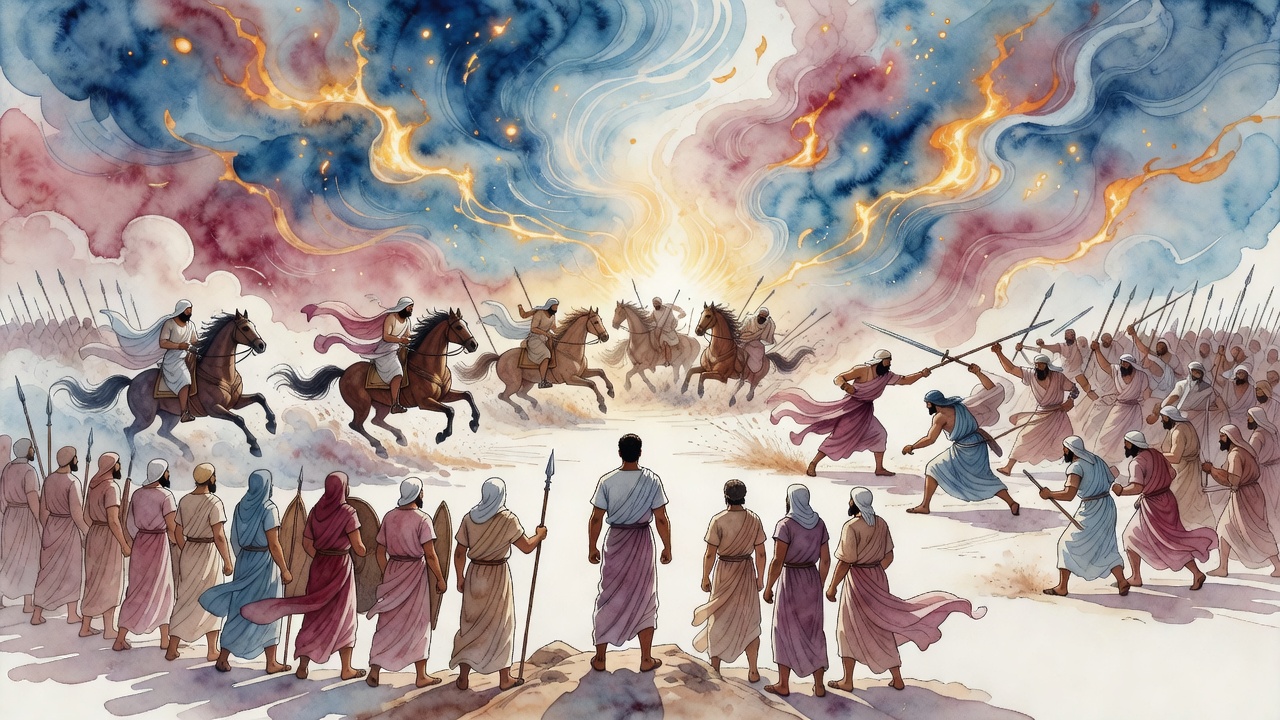
Elsewhere the same war library records a different temperature. A city under siege held its passages and fought. A king called the Jews for help. They came all at once, dispersed through the city, and slew that day to the number of a hundred thousand. Fire followed. Spoils followed. The king was delivered. The survivors' courage abated until they cried for terms.

The number is meant to stun. This is not a clean festival tale. It is the raw arithmetic of allies who can empty a city when a throne asks and pays in plunder. Jonathan's age was not only miracle oil. It was also street fighting at a scale the memory refuses to soften.

Deliverance and devastation shared the same week.

Letters to Rome While Heaven Fought

The house of the Maccabees also wrote. They told allies they would not be troublesome in these wars, for help from heaven already put enemies underfoot. Then they sent Numenius son of Antiochus and Antipater son of Jason to the Romans to renew amity and the former league, and to carry letters of brotherhood.

Faith and diplomacy sat in one dispatch. Heaven was credited. Rome was courted. A small people under larger empires refused to choose only prayer or only paper. They used both, and they named the envoys so the brotherhood would have human faces.

Empty enemy fires and sealed Roman letters were two instruments of the same survival.

What the Morning After Fear Looks Like

Jonathan woke to lights that meant absence. He chased a river too late and found another people to strike. In another theater Jewish fighters turned a siege into a slaughter that broke a city's will. Across the sea, envoys carried news that heaven helped and that friendship still mattered.

The Hanukkah house is often remembered for a lamp. The book remembers commanders who used panic, steel, and treaties in the same generation. Jonathan's empty fires and the burning city belong to that harder ledger.

Freedom was not only declared. It was pursued until the map changed.

Panic, Steel, and Paper

Jonathan's generation fought with more than one weapon. Enemy panic emptied a camp and left fires burning like a stage set. Missed pursuit across the Eleutherus did not end the day. The Zabadeans paid for the escape of someone else. In another theater, Jewish fighters answering a king's call turned city streets into a count of a hundred thousand dead, then fire and spoils, until courage abated and the survivors begged.

At the same time the house sent Numenius and Antipater to Rome with letters of brotherhood, insisting they would not be troublesome because help from heaven already put enemies underfoot. Faith credited the sky. Diplomacy courted the senate. Empty hearths, burning cities, and sealed treaties belonged to one ledger of survival under Greek crowns that changed shape every season.

The lamp of later memory sits on oil. The book also sits on commanders who spent fear, steel, and alliances before the map would hold.

None of this softens the number of the dead in the stormed city, and none of it turns the Zabadean raid into a hymn. The sources keep both the empty fires and the fire set on purpose. A people fighting for temple and land under shifting crowns used every hour panic opened and every ally paper could bind.


← All myths
From the tradition

Sources

3 sources

The texts behind this telling. Some cards carry a translation of the source; others are our own retelling of it, and each card says which. Every card links out to the original.

The Book of Maccabees I 12:33The Book of Maccabees I

Retold in our words. Read the original at the link below.Sefaria Community Translation · CC-BY

The Book of Maccabees I turns to Jonathan Maccabeus in Battle.

The text says they “feared, and trembled in their hearts, and they kindled fires in their camp. You can practically picture them huddled around those fires, jumpy and whispering, "Are they coming? Are they REALLY coming?"

Here's the funny thing: Jonathan and his crew don't even know what's going on! The verse reads, "Howbeit Jonathan and his company knew it not till the morning: for they saw the lights burning." They wake up, see the fires, and it’s like, "Wait, what's going on over there?"

The scene. They probably thought it was some kind of trick at first, some elaborate ruse. But then they realize… the enemy is GONE. Vanished. Fled into the night.

Jonathan, being the leader that he is, doesn't let them get away with it. He pursues them, but it's too late. "Then Jonathan pursued after them, but overtook them not: for they were gone over the river Eleutherus." They’d crossed the line; the battle was off.

So, what does Jonathan do? Does he shrug and go home? Nope. He turns his attention to some other folks: "Wherefore Jonathan turned to the Arabians, who were called Zabadeans, and smote them, and took their spoils."

It's almost like a consolation prize! The main enemy chickened out, so Jonathan decided to teach another group a lesson.

And the story continues: "And removing thence, he came to Damascus, and so passed through all the country.." The momentum is with Jonathan. He's on a roll.

It shows us that sometimes, fear is a weapon in itself. The enemy’s fear, in this case, was just as effective as Jonathan’s army. It highlights the importance of reputation, of projecting strength, even when you might not feel it. What do you do when your enemy runs away? You find someone else to fight, of course.

Full source
The Book of Maccabees I 11:57The Book of Maccabees I

Retold in our words. Read the original at the link below.Sefaria Community Translation · CC-BY

The Book of Maccabees I turns to Jonathan's Men Storm a City Under Siege.

The tradition turns to the Book of Maccabees I, a historical account that gives us a glimpse into those turbulent times. Specifically, the story turns to a single, brutal moment in chapter 11.

The passage is short, stark. It plunges us right into the heart of a city under siege. "They of the city kept the passages of the city, and began to fight." Imagine the scene: desperate defenders, barricaded in narrow streets, clinging to their homes and lives.

Then, a twist. "Then the king called to the Jews for help, who came unto him all at once, and dispersing themselves through the city slew that day in the city to the number of an hundred thousand."

A hundred thousand.

The scale of the slaughter is almost unimaginable. It paints a grim picture of the conflict, far removed from the sanitized version we often hear. Jewish soldiers, answering the king's call, unleashing a devastating wave of violence. We see the raw brutality of war and the terrible choices people faced. Loyalties were complex and shifting.

The text continues: "Also they set fire on the city, and gat many spoils that day, and delivered the king." The victors didn't just defeat their enemies; they ransacked their homes, taking spoils and leaving a burning city in their wake.

What must it have been like to witness such destruction?

The final verse in this passage hints at the psychological impact of the defeat. "So when they of the city saw that the Jews had got the city as they would, their courage was abated: wherefore they made supplication to the king, and cried, saying…" Their spirit broken, the remaining inhabitants beg for mercy. The fight had gone out of them.

It's a chilling reminder that even victories come at a cost. This small snapshot from the Book of Maccabees I reveals the messy, violent reality behind the heroic tales. It forces us to confront the difficult moral questions raised by war, and to remember the human cost of conflict. What do we do with such a memory? What responsibilities does it bring?

Full source
The Book of Maccabees I 12:18The Book of Maccabees I

Retold in our words. Read the original at the link below.Sefaria Community Translation · CC-BY

The story

It comes to us from the Book of Maccabees I, a historical text not included in the Hebrew Bible (Tanakh) but revered in other traditions. It recounts the struggles of the Jewish people during the Hellenistic period, specifically the Maccabean revolt against the Seleucid Empire.

The scene: The Maccabees, a small band of Jewish rebels, are fighting for their religious freedom and national identity against a much larger, more powerful enemy. They’re reaching out to allies, seeking support in their desperate struggle.

This particular passage reflects a moment of both strength and humility. "Howbeit we would not be troublesome unto you, nor to others of our confederates and friends, in these wars. They acknowledge the burden their struggle places on their allies. They don't want to be a nuisance, a constant drain on resources and goodwill.

But then comes the assertion of faith: "For we have help from heaven that succoureth us, so as we are delivered from our enemies, and our enemies are brought under foot." It's not blind arrogance. It's a deep-seated belief in divine providence, a conviction that they are not alone in this fight. This reminds me of the many times we see the theme of divine intervention in Jewish texts.

And here's where diplomacy enters the picture. Recognizing the importance of alliances, the Maccabees send envoys: "For this cause we chose Numenius the son of Antiochus, and Antipater the son of Jason, and sent them unto the Romans, to renew the amity that we had with them, and the former league." They are actively working to strengthen their position, seeking support from powerful allies like the Romans.

These weren't just random messengers. They were carefully chosen individuals, tasked with a crucial mission: to reaffirm old alliances and forge new bonds of friendship. The names themselves – Numenius son of Antiochus, and Antipater son of Jason – carry weight. They’re not just names; they represent connections, lineages, and perhaps even shared values.

"We commanded them also to go unto you, and to salute and to deliver you our letters concerning the renewing of our brotherhood." The message is clear: this isn’t just about military alliances or political expediency. It’s about brotherhood. It’s about shared values, mutual support, and a commitment to standing together in the face of adversity. The word "brotherhood" here isn't just a nice sentiment. It implies a deep connection, a shared destiny.

It’s a reminder that even in the darkest of times, faith, resilience, and the bonds of community can provide strength and hope. The Maccabees, facing overwhelming odds, never lost sight of their values or their connections to others. They fought bravely, they sought support wisely, and they never gave up on the belief that they were fighting for something greater than themselves.

Perhaps we too can find strength in our faith, in our resilience, and in the enduring power of brotherhood.

Full source