Jonathan Holds Still Until Enemy Horses Collapse
The horses kept coming. Jonathan told his people not to charge. They stood until the animals spent themselves and began to fail.
Table of Contents
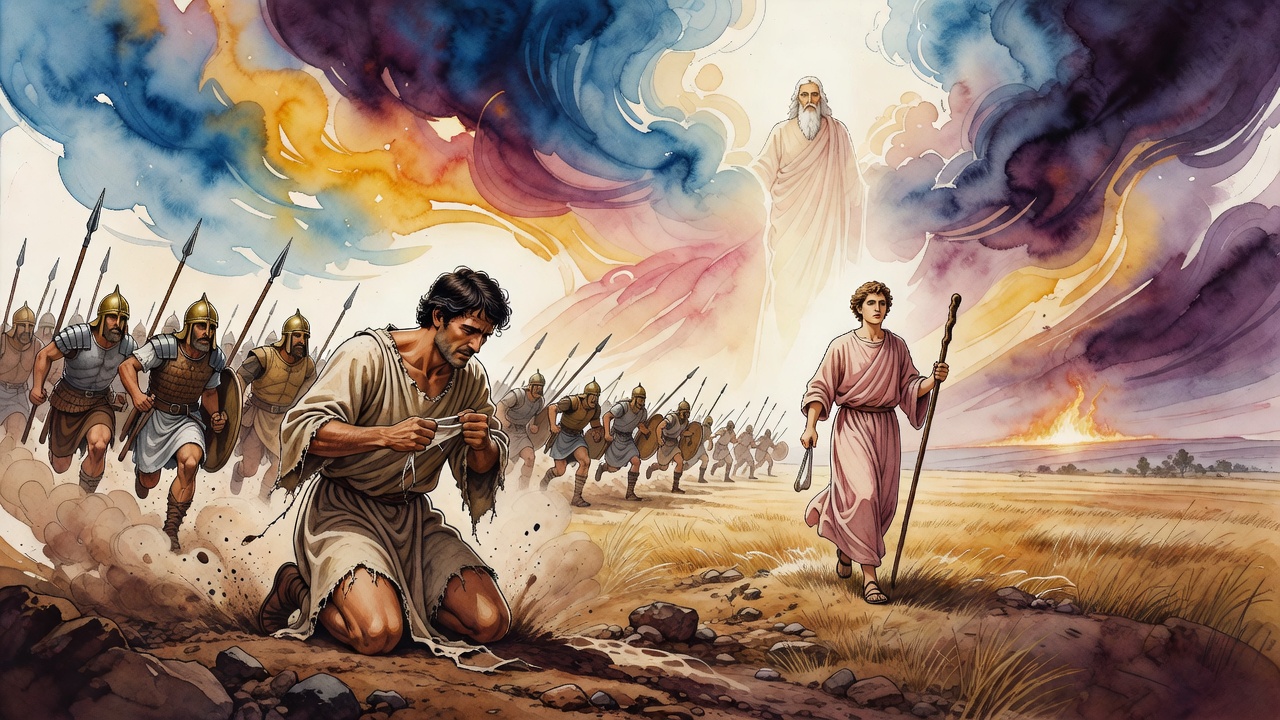
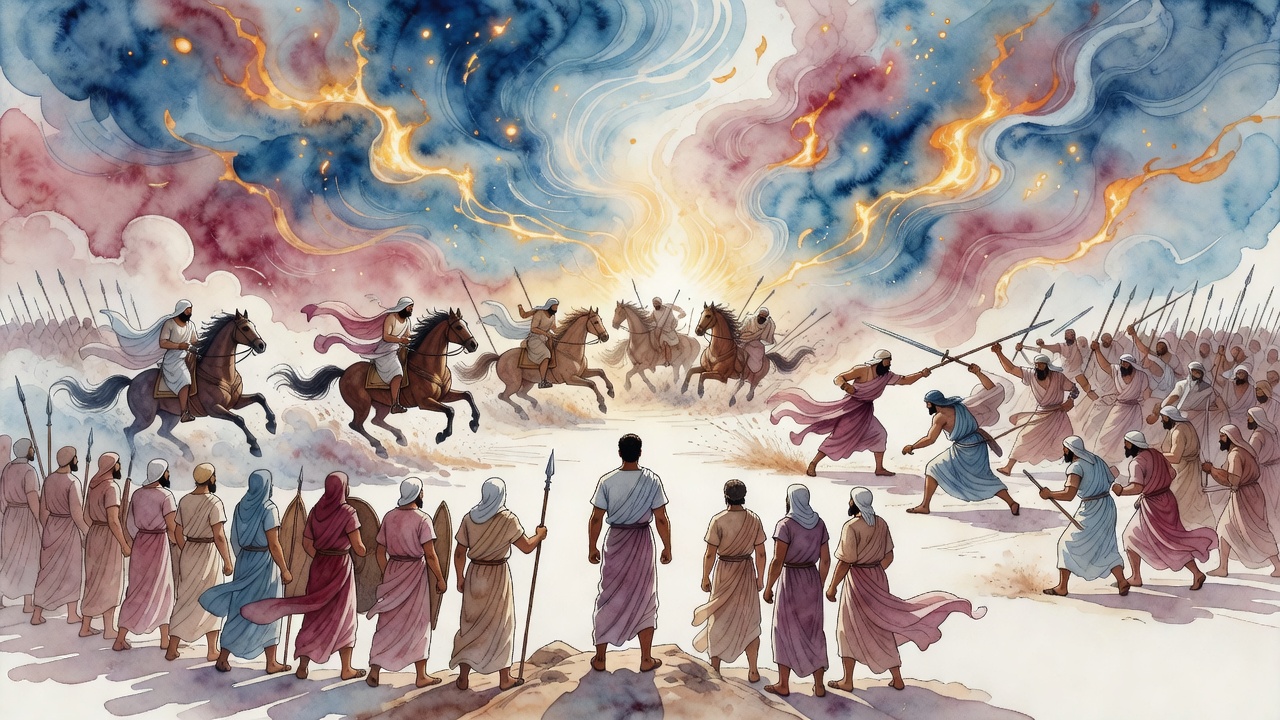
The horses kept coming, and Jonathan told his people to stand still. Not to run. Not to meet the charge halfway. "Hold still," he said, and he holds them on that ground until the horses collapse.
 Click for full size
They obeyed. The field filled with the sound of iron and breath. The horses that had looked tireless began to labor. Foam at the mouth. Slow turns. The moment when a beast that has been ridden too hard starts to argue with its rider.
The people stood still, as Jonathan had commanded them, and so the enemies' horses were tired. The line is almost quiet. The victory started as patience. Holding still is not empty. Men who watch cavalry come on and do not answer with panic are spending nerve. Jonathan spent it first. His people spent it with him.
Simon Struck the Foot Soldiers
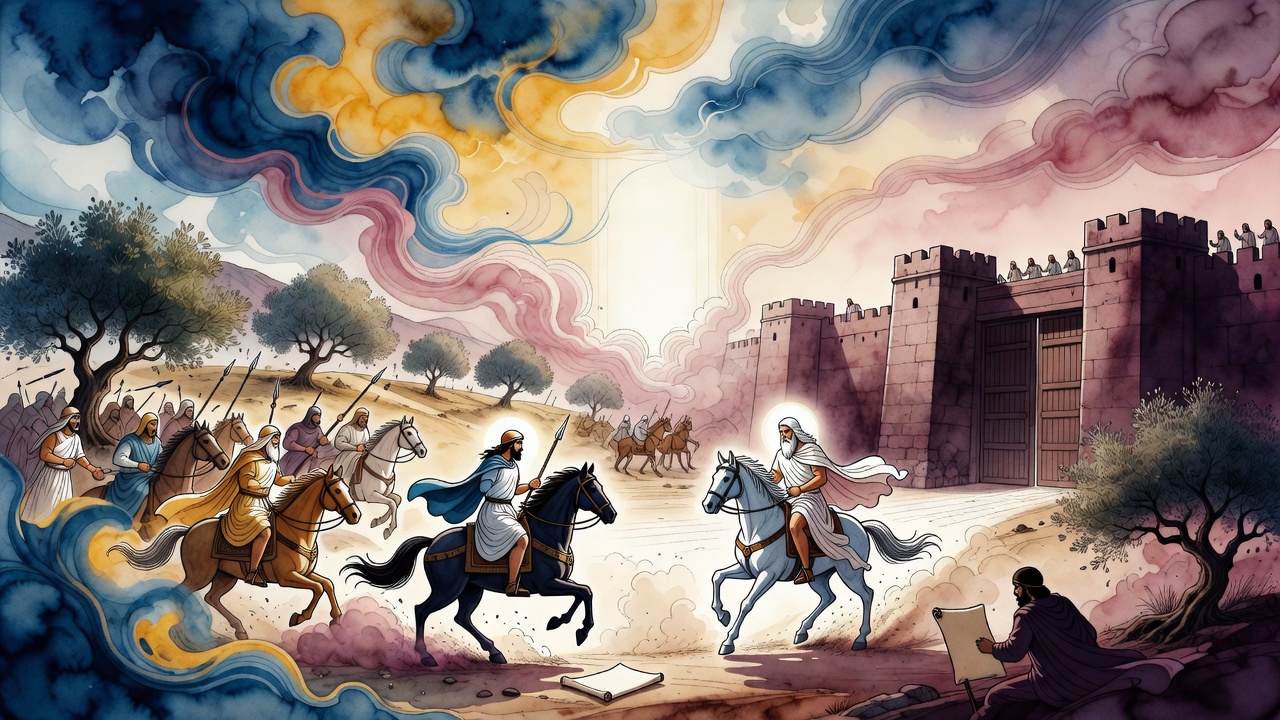
When the horsemen were spent, Simon brought his forces against the enemy's foot soldiers. Those men had trusted the cavalry screen. The screen was gone. Simon hit them while their protection was still failing in front of their eyes. They broke. They fled.
Coordination did the work a single charge could not. Jonathan held. Simon struck. The line that had looked solid tore into a scatter across the field.
The horsemen, already ruined, fled toward Azotus and pushed into Beth-dagon, the temple of their god, looking for safety behind a house of grain. It was not only a tactical retreat. It was a religious one. They ran toward the thing they trusted when iron failed.
Fire Took the House of Dagon
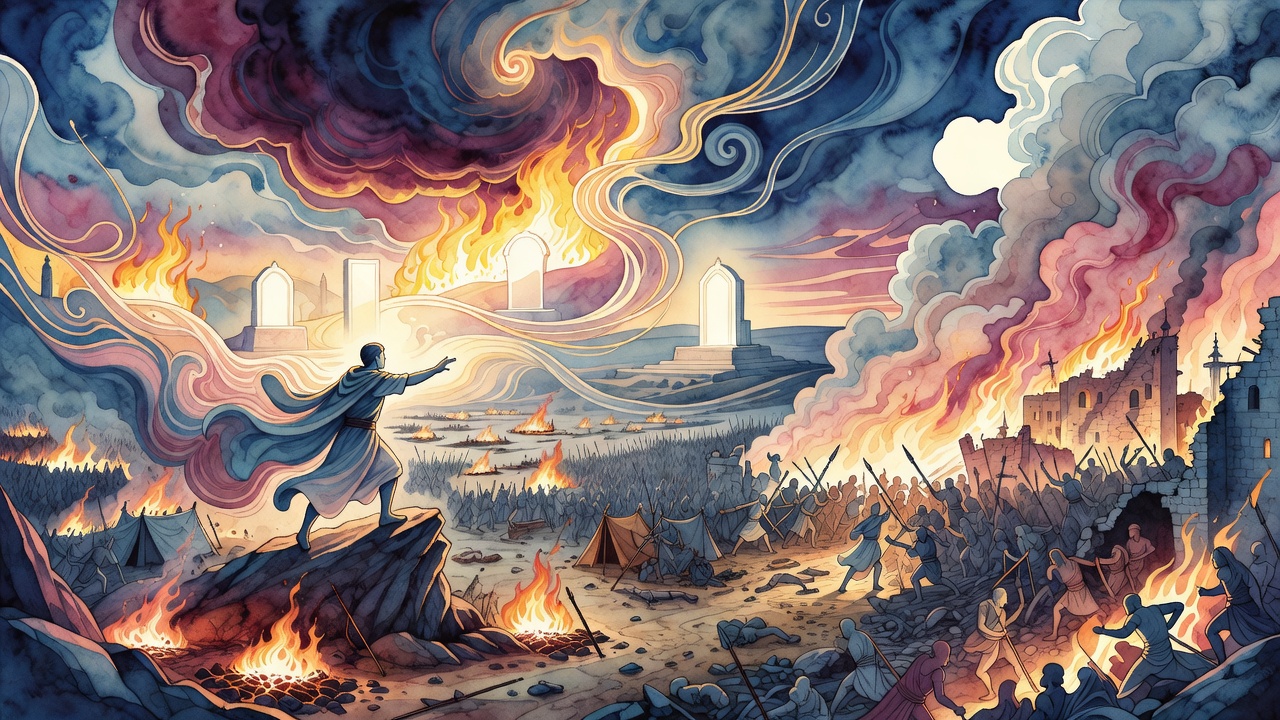
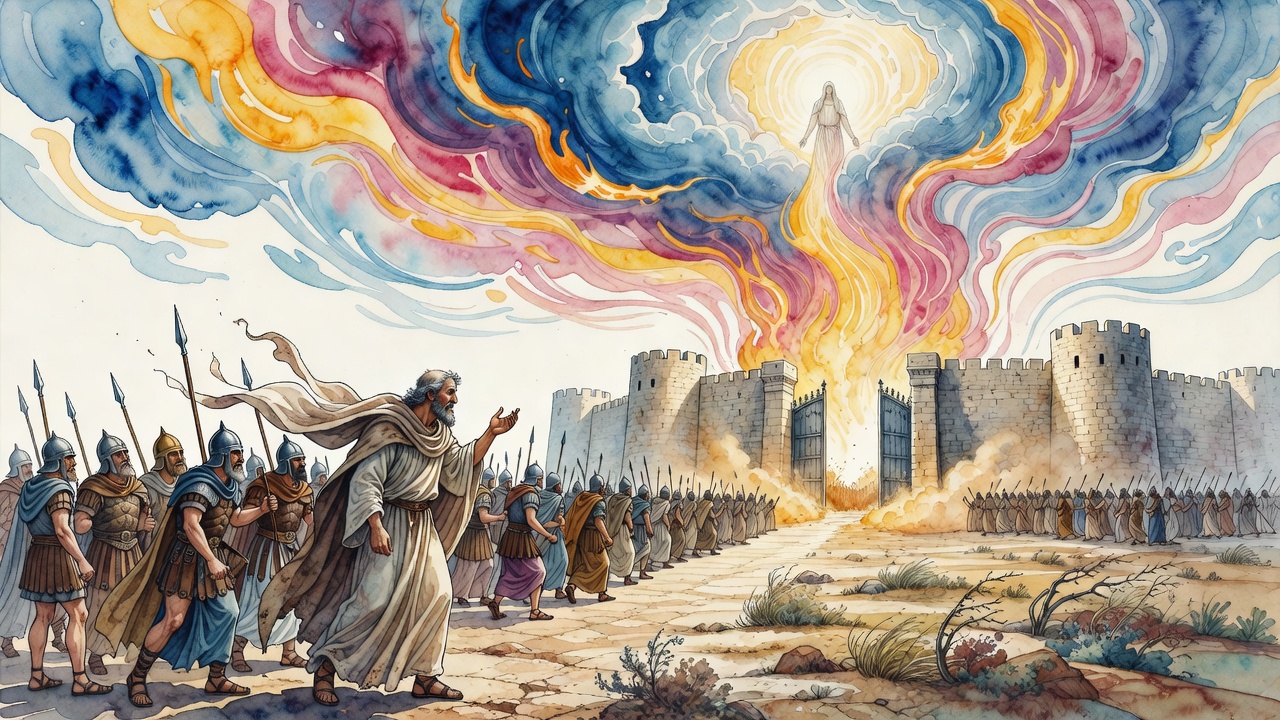
Jonathan did not stop at the edge of the battlefield. He set fire to Azotus and the cities around it, took spoils, and burned the temple of Dagon with those who had fled into it. Military victory and the rejection of that house arrived in the same blaze.
The people who had trusted Dagon found the building as mortal as the horses. Smoke rose where offerings had been meant to rise. The land had seen such houses before. This campaign was not only about borders. It was about which presence would be allowed to stand in the cities Jonathan took.
Dust settled on the tracks where the cavalry had wheeled and failed. The temple that had looked safe proved flammable. The people who had held still lived to take the field.
Watchfires After Azotus
On the night after Azotus burned, the men who had stood still ate in shifts and cleaned weapons that had barely been needed for the first half of the day. Patience had won them the ground, and patience is a hard habit to drop once blood has cooled.
Jonathan walked the line of watchfires and counted faces. The horses of the enemy were gone or dead or scattered. The temple of Dagon was a black shell. Between those two facts sat a people still intact, still named, still able to say which God they would not bow to when the next cavalry crest appeared on a ridge.
Someone wanted to chase farther in the dark. Jonathan held them again. The day's lesson was not speed. It was the nerve to wait until the other side's strength spent itself, then to strike what remained, then to burn the refuge that had pretended to be a god.
A Later Court Asked If They Were New
Generations later, after the Temple in Jerusalem had fallen, Josephus stood in another kind of field. Rome liked to treat the conquered as recent. He piled proofs of antiquity because a people that had held a line against cavalry could still be talked out of its own age if the records were ignored.
He did not call friendly witnesses first. He named Egyptians and Phoenicians, nations known for ill will, so no one could say the testimony was a family favor. If those who hated Israel still had to admit the nation's years, the rumor of lateness would have nowhere to stand. He wrote after fire of a different kind, with ledgers and priestly lists instead of horses, and the pressure was the same: prove belonging to time, not to a rumor.
In an earlier court of that same Second Temple age, a Hellenistic king hosted translators and sages and paid them for answers about law and rule. He said he had profited from their teaching on the art of ruling. Then he ordered three talents of silver for each of them, and a slave to deliver the money. The banquet shouted. The king gave himself to festivity. Written and oral teaching sat next to cups and applause.
Jonathan had spent nerve on a still line. The king spent silver on answers. Between those rooms stood a people that would not dissolve into the nearest temple of Dagon when the horses broke, and would not accept being called a late invention when the horses were long gone.
The field ended with smoke and spoils. The horses that looked endless proved mortal. The house of Dagon proved wood. The people who stood still were still there to be counted at the watchfires.
← All myths