When Empire Panicked at the Maccabean Flame
Mattathias dies and Judas rises, and the Seleucid court sends larger and larger armies as the revolt refuses to be finished.
Table of Contents
 Click for full size
Mattathias Left a Fire Behind Him
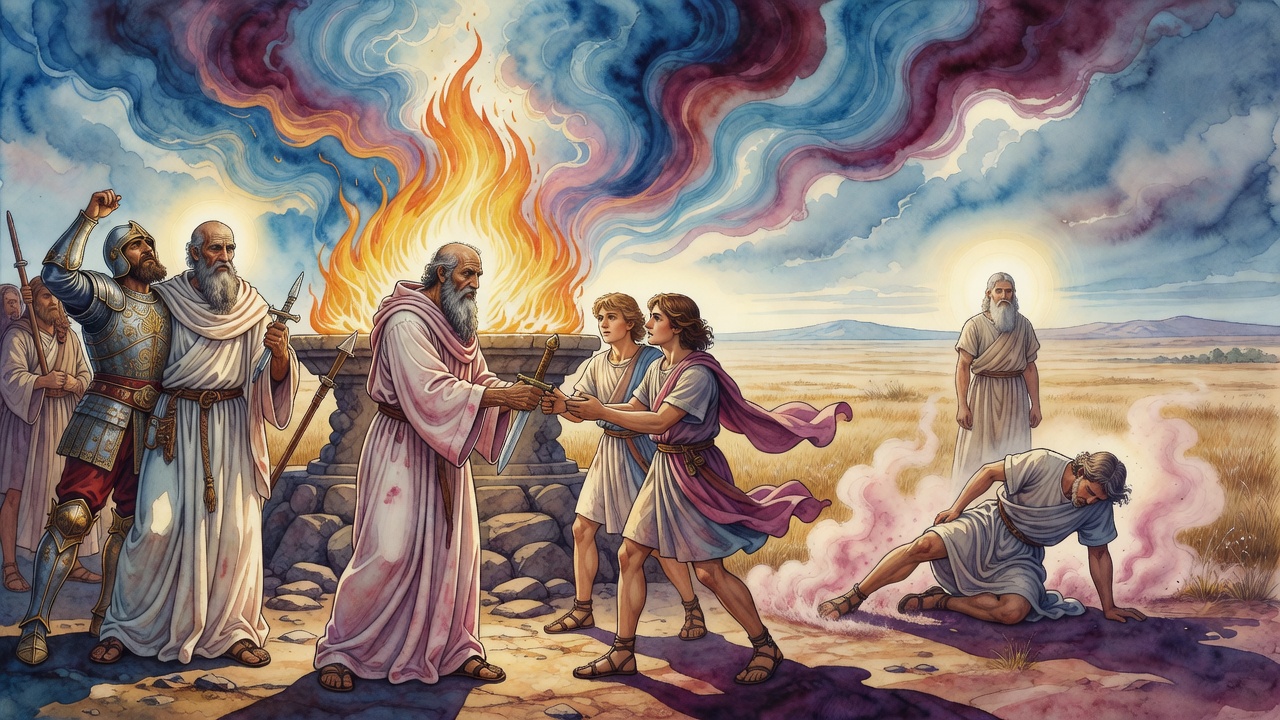
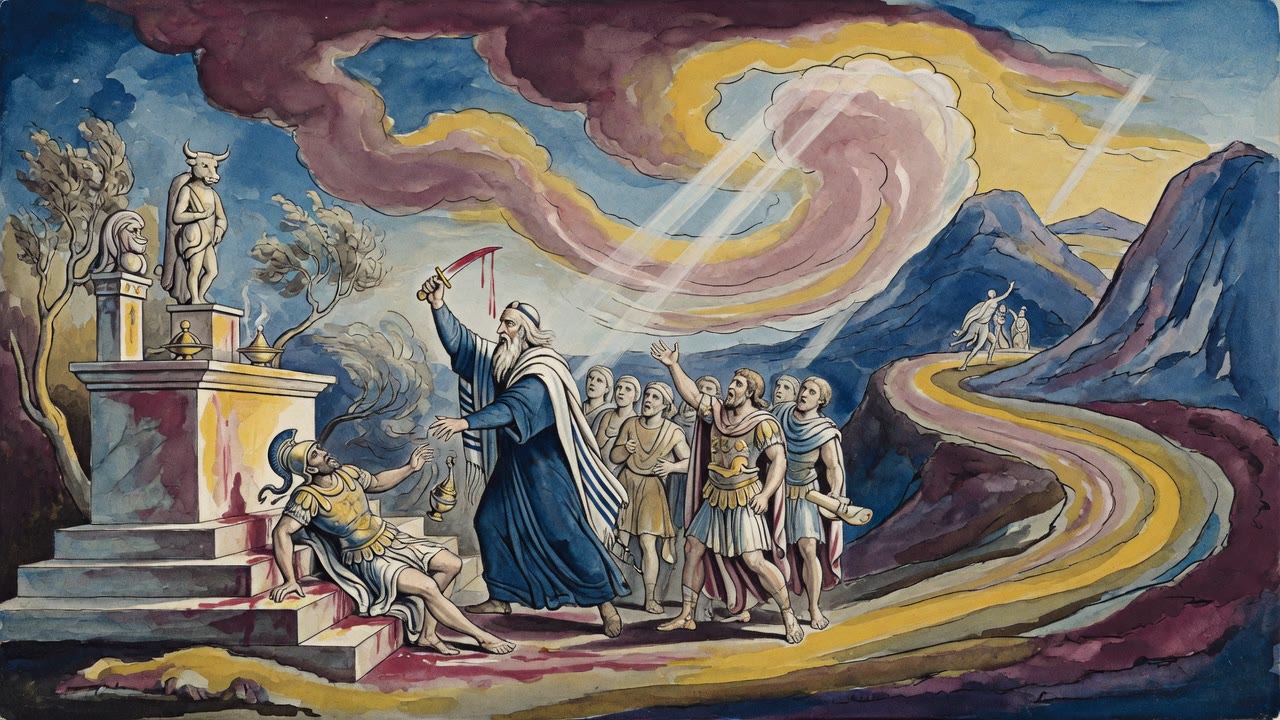
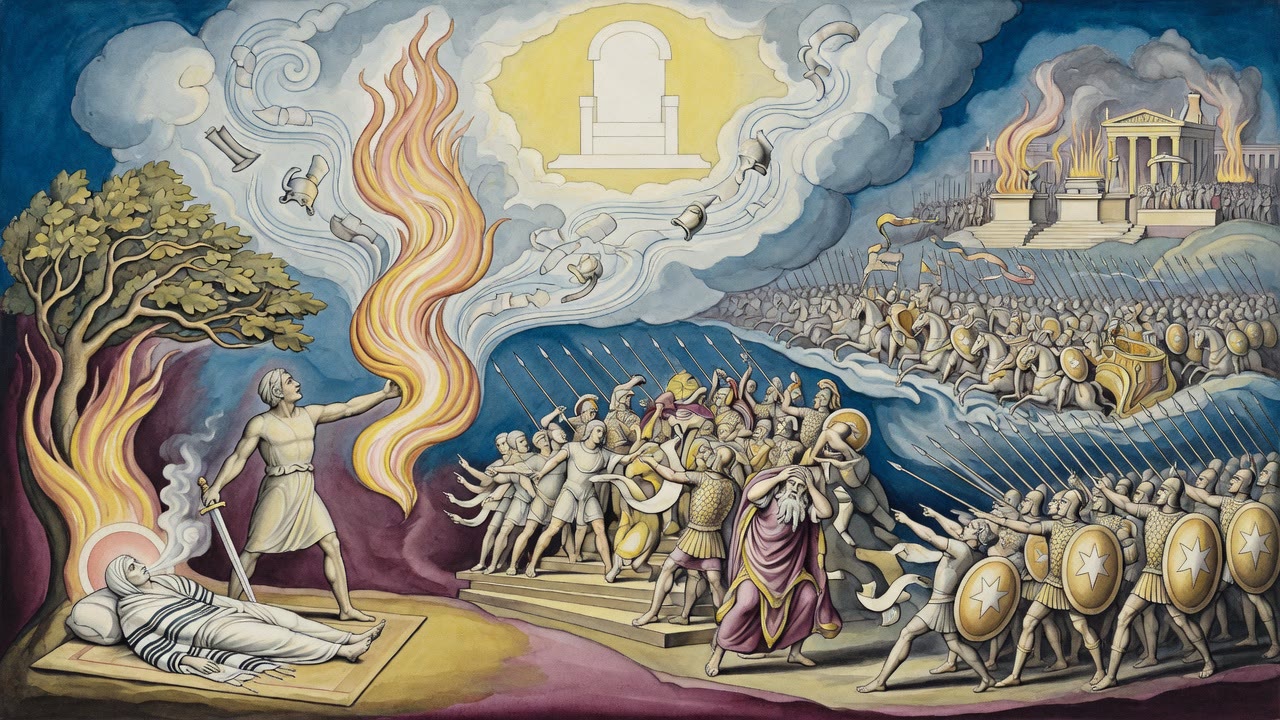
Mattathias died before the revolt became a war. He had started it: in the town of Modein, when a royal officer arrived to enforce apostasy and a Jew stepped forward to comply, Mattathias killed the man at the altar and killed the king's officer alongside him. Then he fled to the hills with his sons, calling out for everyone zealous for Torah and the covenant to follow.
People came. They came because the alternative was to watch the covenant be treated as a conquered province, to watch the Temple converted into something else, to watch the Sabbath erased and circumcision criminalized and the Torah burned. Mattathias gave the resistance a name and a direction. Then he died, leaving five sons and a revolt that had not yet decided whether it was survivable.
His final speech, as 1 Maccabees records it, moved through the names of the faithful: Abraham, Joseph, Phinehas, Joshua, Caleb, David, Elijah. These were men who had stayed steady under pressure and received what the faithful receive in the end. The speech was not a tactical plan. It was an argument about what kind of story this was. The sons were being told that they were not the first people to stand against overwhelming power in the name of covenant, and they were not going to be the last.
Judas Took the Name Maccabee
The transfer of command from Mattathias to Judas is described in a single verse of 1 Maccabees with the compression of something that happened quickly and could not be questioned. Judas Maccabeus rose in his father's place, and all his brothers helped him, and all who had joined his father, and they fought the battle of Israel with gladness.
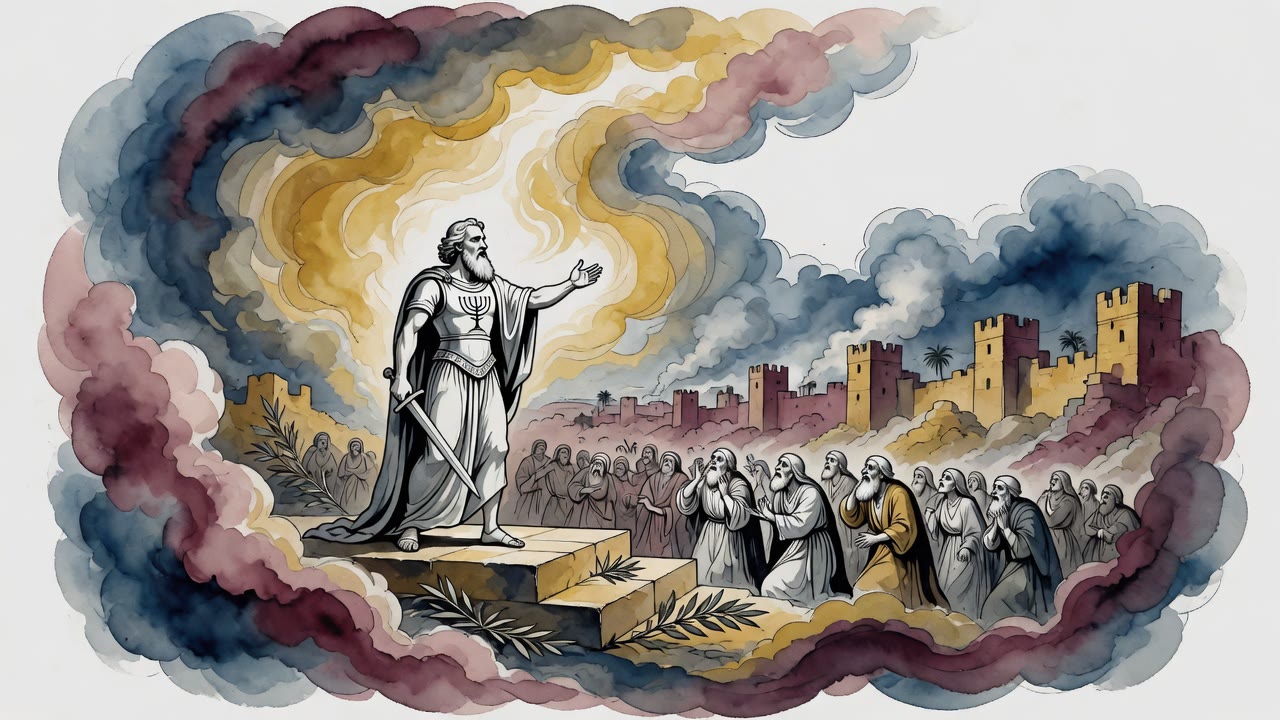
Maccabee means hammer. It was Judas's fighting name and it stuck to the whole family and the whole revolt. A hammer does not negotiate. A hammer does not wait for favorable odds. A hammer hits the same place repeatedly until something breaks or the hammer does.
Judas hit hard and fast and in unexpected directions. He attacked before dawn. He withdrew before armies could encircle him. He used the terrain of Judea the way a person uses their own house in a fire: every alley and hillside and ravine that a foreign commander had to study from a map, Judas knew from having walked it. The Seleucid armies were larger, better equipped, and trained for open-field battle. Judas refused to fight in the open field.
The Court Took Notice
The Seleucid court noticed, and its response to noticing was to send more troops. The initial reports reaching Antioch described a Jewish priest's sons fighting in Judea, which sounded like a manageable regional disturbance. The later reports described columns of soldiers retreating, burned camps, generals outmaneuvered, and a growing number of Jews who had concluded that the revolt might actually succeed joining the fighters in the hills.
The panic in the Seleucid court was not military panic at first. It was political panic. An empire's authority rests less on its actual capacity for violence than on the universal belief in that capacity. When a small group in a subject province defeats one army, the empire sends another. When that army also fails, the problem is no longer military. Every other subject province is watching. Every other group with a grievance is calculating whether the moment has come.
Antiochus IV's decrees had been an attempt to solve the Jewish problem through assimilation: remove the Torah, the Sabbath, the circumcision, and what remained was just another Hellenized people who would cause no further trouble. The revolt proved that the attempt had not only failed but produced its opposite. The decrees had transformed observant Jews from a culturally distinctive minority into an armed resistance.
Survival as Covenant
1 Maccabees presents the revolt not as a story about military genius, though Judas was genuinely gifted, but as a story about what a covenant requires. The covenant between Israel and God was not simply a theological assertion. It was a living obligation that demanded bodies and blood when the alternative was its annihilation.
The fighters who came out of the hills were not uniformly zealous. Some were frightened. Some were poorly armed. Some melted away before battles that looked too dangerous. 1 Maccabees does not hide this. It records the moment before Emmaus when Judas looked at his depleted force and the men asked to be dismissed to return to their families, and Judas held the line by invoking every precedent he could find for a smaller army trusting that God fights alongside the faithful.
The revolt kept moving because enough people decided, repeatedly, to come back. The flame that Mattathias lit could not be maintained by one man's decision. It required the same decision to be made again and again by different people in different conditions. Empire panicked because it had no mechanism for extinguishing a fire that burned that way.
← All myths