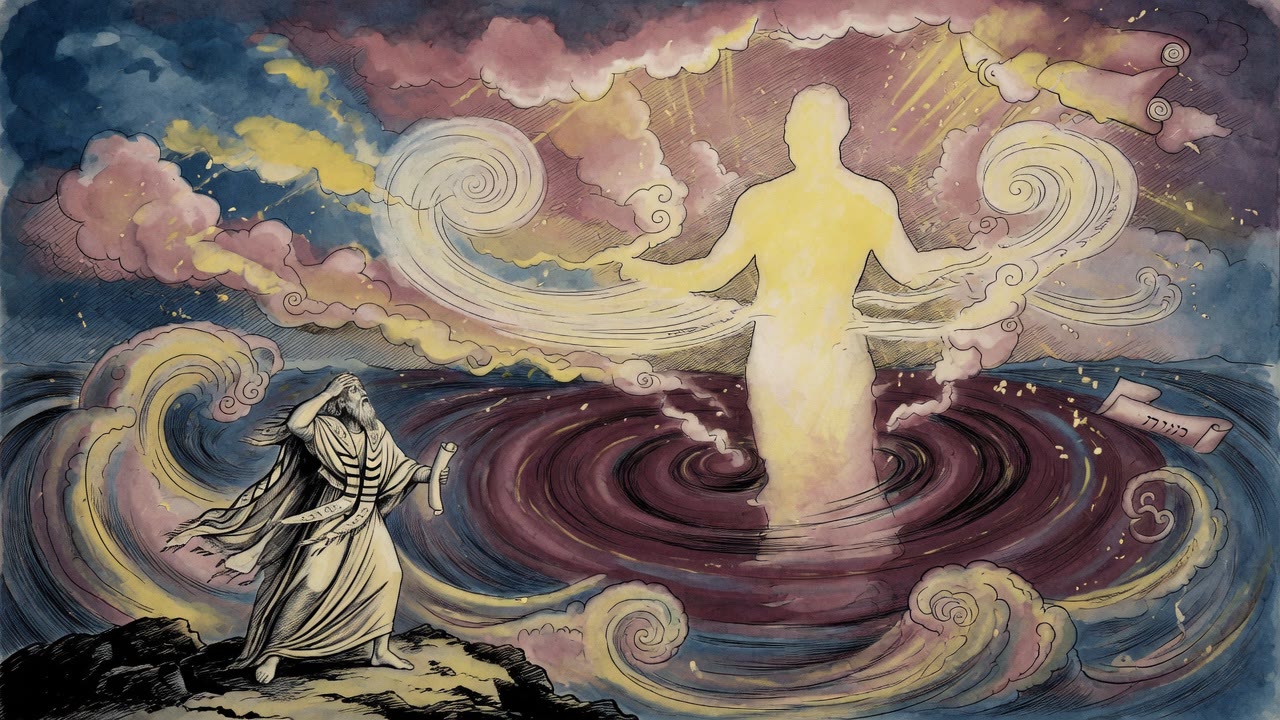
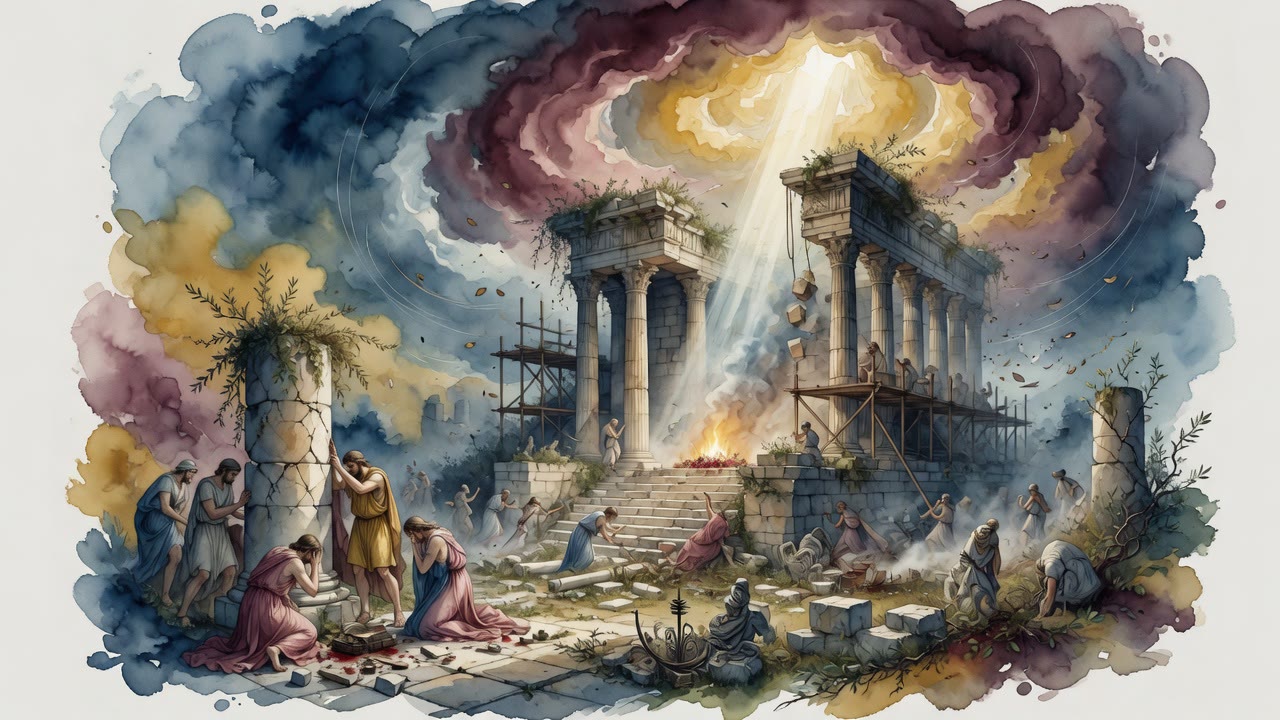
Mattathias Refused the King's Altar at Modin
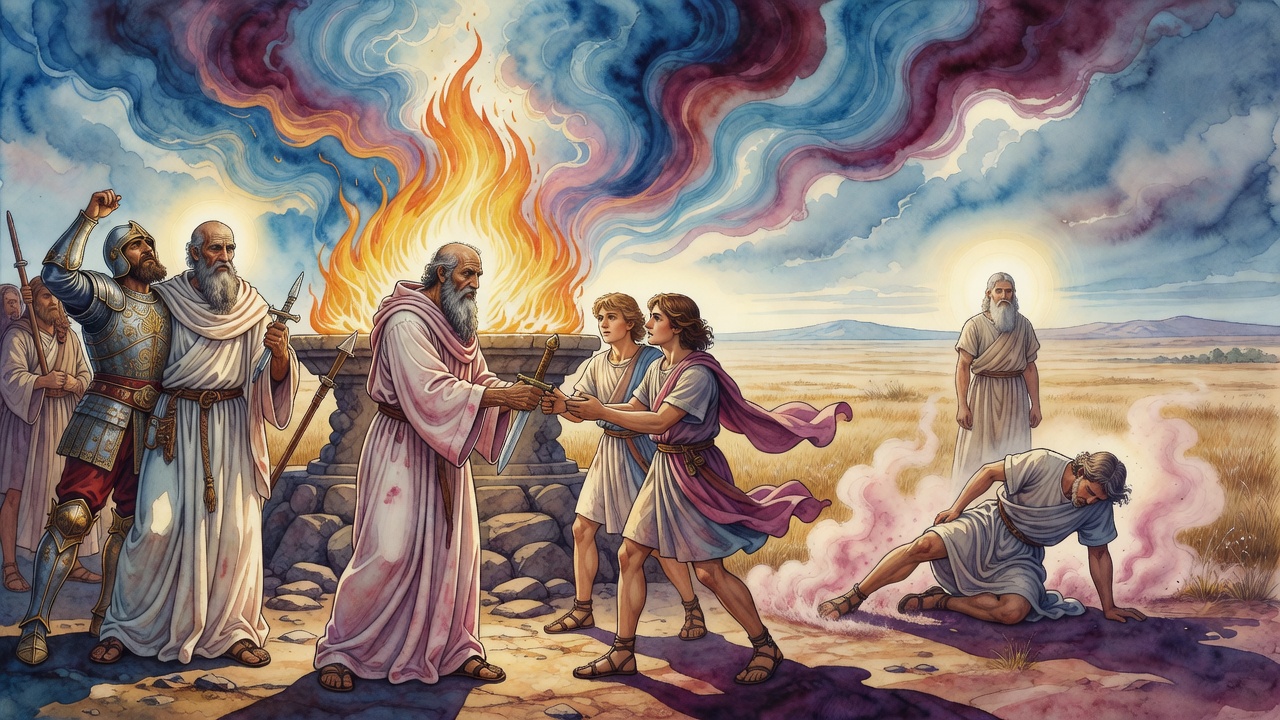
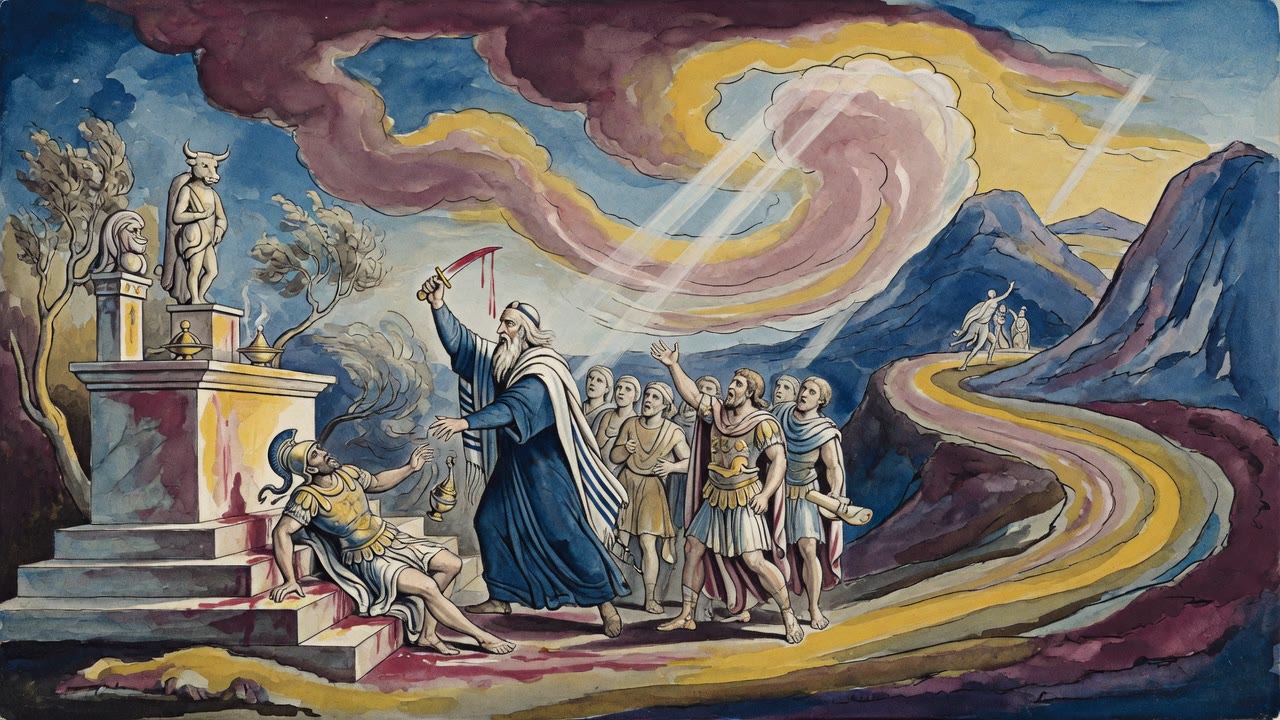
The king's officers praised Mattathias and offered his family safety. He refused, struck down the man who stepped forward to comply, and fled into the hills.
Table of Contents
 Click for full size
The Month the Books Burned
The king's men worked the towns of Judea on a schedule, and once a month they came back through.
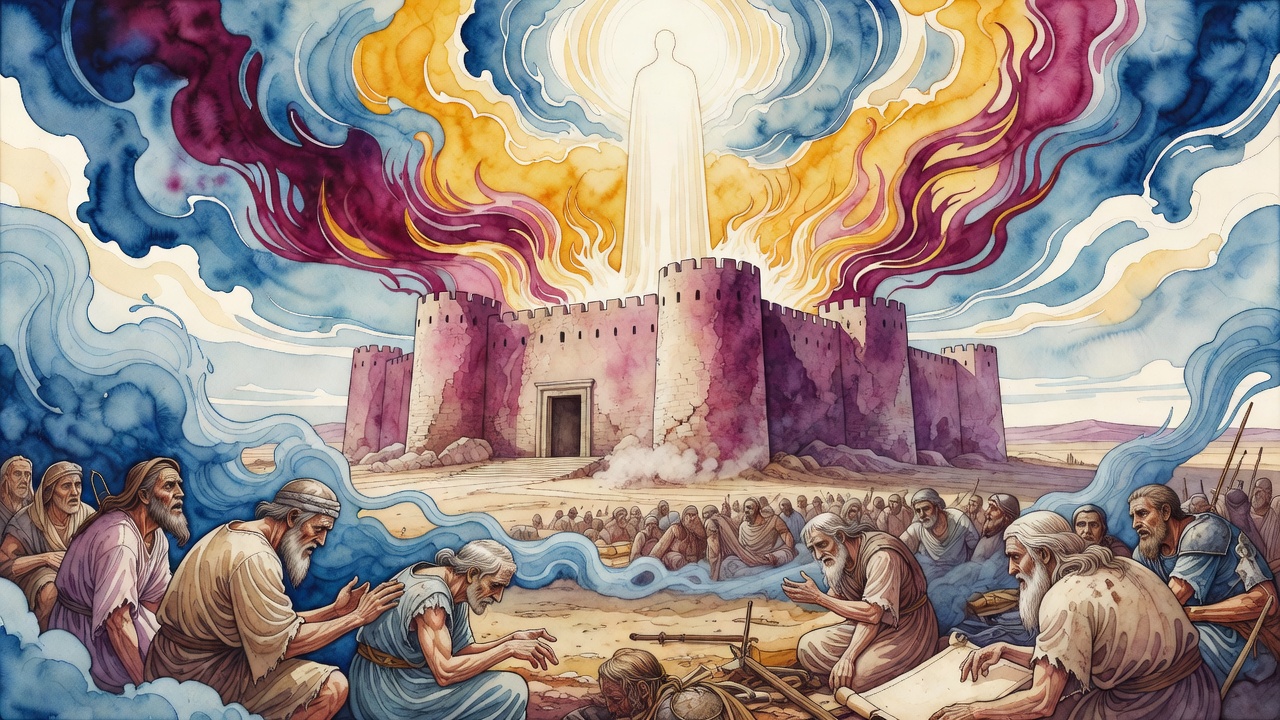
They went into houses. If they found a scroll of the Torah they tore it apart in the doorway, burned the pieces in the street, and killed whoever admitted the book was his. They burned incense at the front doors and in the lanes, so a family could not sit down to supper without smelling it. On the twenty-fifth of the month they had gone up to Jerusalem and offered a sacrifice on an idol altar built over the altar of God, and after that there was nothing in a village like Modin they could be told was too much to ask.
So an altar went up in Modin, and the officers wanted the town to use it without a fight, because a town that obeys quietly costs the empire nothing.
The Offer That Came With Silver
They started with Mattathias, a priest of the house of Hasmon, since one obedient priest in front of a crowd does the work of a garrison.
They were courteous about it. "Thou art a ruler, and an honourable and great man in this city, and strengthened with sons and brethren," they told him, and every word of that was true, which was why they had chosen him. Then they explained that everyone had already done it. The nations under the king had done it, the men of Judah had done it, the ones left in Jerusalem had done it. Come first, they said, and be the example. Then they named the price they were paying rather than charging: his household numbered among the king's friends, and his children honored with silver and gold and many rewards.
Five sons stood behind him while he listened to that. The new altar was perhaps twenty steps from where he was standing, and at the end of those twenty steps his sons would be rich men, and no officer would ever look at their doorways again.
He did not walk it.
The Answer the Whole Town Heard
He answered in a voice pitched for the back of the crowd, since the crowd was the part of the gathering that mattered. "Though all the nations that are under the king's dominion obey him, and fall away every one from the religion of their fathers, and give consent to his commandments, yet will I and my sons and my brethren walk in the covenant of our fathers. God forbid that we should forsake the law and the ordinances. We will not hearken to the king's words, to go from our religion, either on the right hand, or the left."
The officers had come to Modin to spend his standing in the town, so he spent it first, and spent it against them. But a speech does not take an altar apart. The stone was still there, the fire on it was still lit, and the officers still had the rest of the day.
The Man Who Walked to the Altar
While Mattathias was still standing where he had spoken, a Jew of Modin came forward in sight of everyone to make the sacrifice.
He did not look at the old priest as he passed him.
Mattathias watched the first step and could not get his breath under him. His reins trembled. The noise of the crowd thinned out until he could hear the man's sandals on the packed dirt and the small crackle of the fire waiting on the stone, and somewhere inside those few seconds he stopped weighing anything at all.
He ran. He killed the man on the altar, and then he killed the king's commissioner standing beside it, the officer whose whole assignment was compelling men to sacrifice. Then he got his hands under the stones and pulled the altar down.
The Spear Behind the Knife
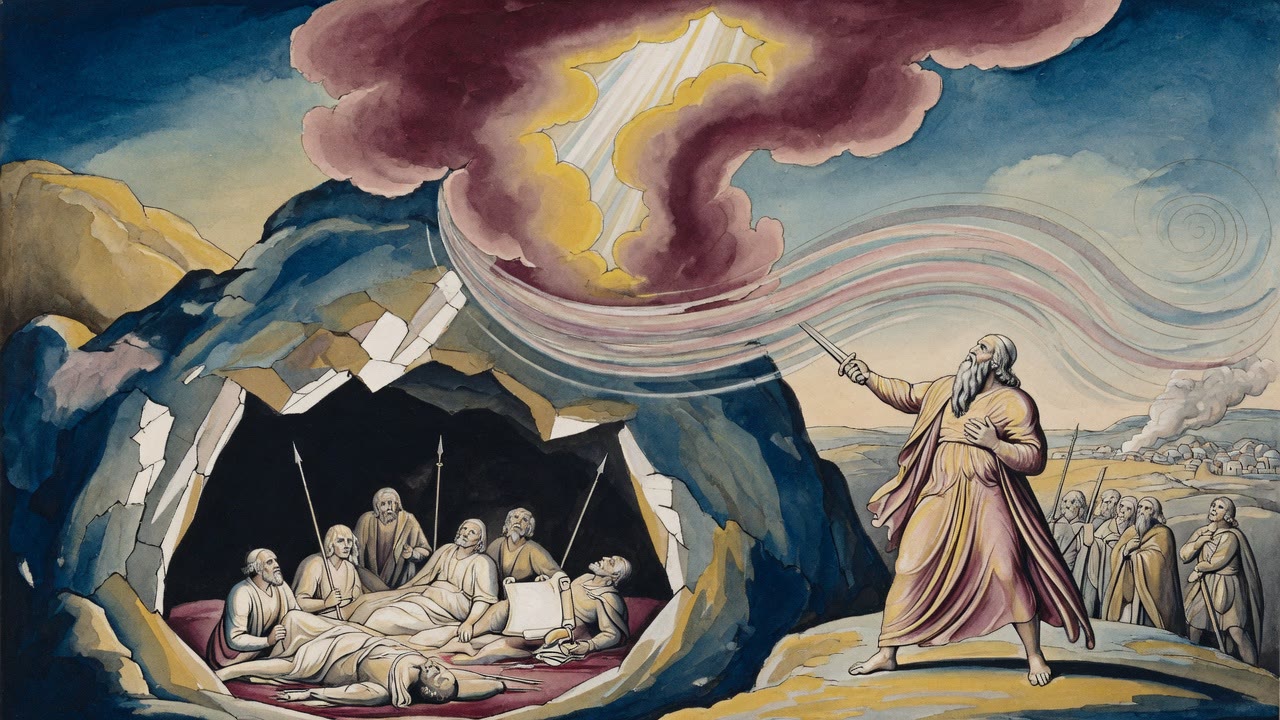
What he had just done had a precedent, and he knew the precedent because it was in the books the officers had been burning. Phinehas had taken a spear to Zimri son of Salu while a plague ran through the camp in the wilderness, and heaven had answered that killing with a covenant instead of a trial. Mattathias had no spear and no wilderness, only a village altar and a crowd assembled to watch him bend at it. He judged it the same case and acted with the same authority, in front of witnesses, on a working morning.
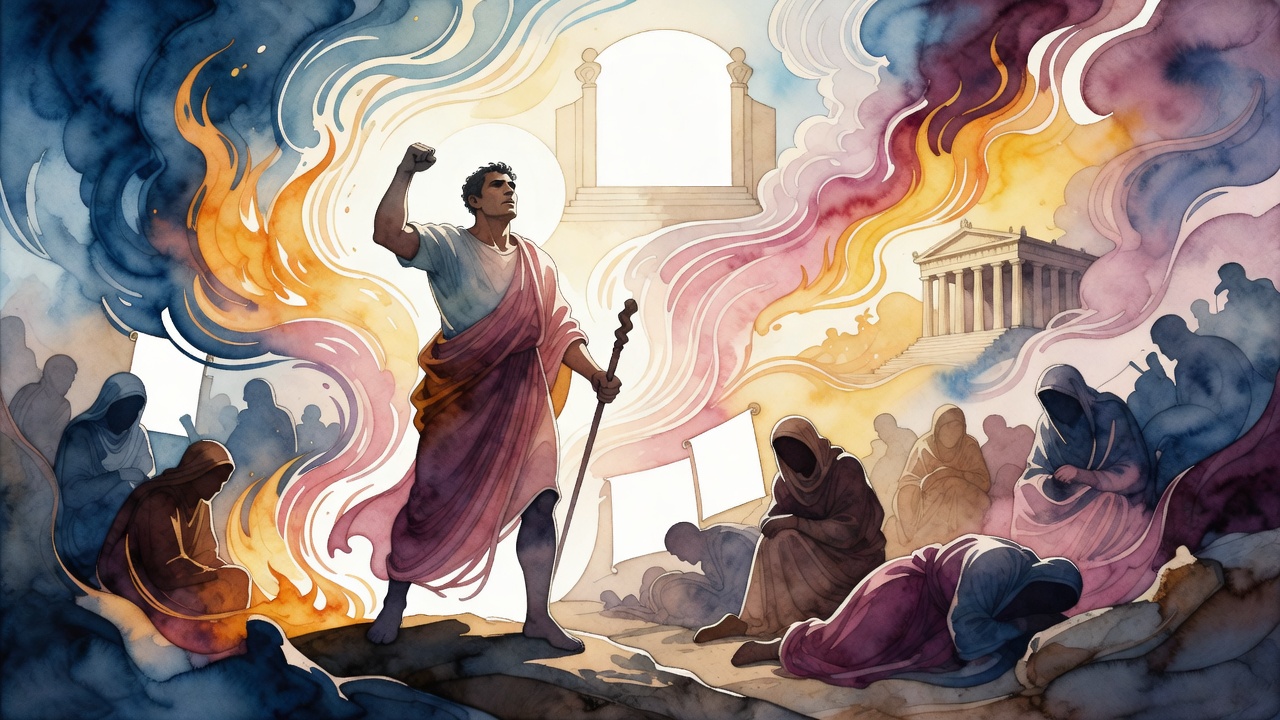
Then he went through the town shouting so that men in back rooms would hear him. "Whosoever is zealous of the law, and maintaineth the covenant, let him follow me."
They came out with nothing packed, because there was no longer time to pack. He and his sons went up into the hills that day and left everything they owned standing in their rooms.
The broken stones of the altar stayed where he had thrown them, since nobody in Modin would touch them and the two men who might have ordered it done were lying beside them.
← All myths