Nehemiah Found Hidden Fire Beneath Thick Water
When the exiles returned, Nehemiah's priests dug for the sacred altar fire and found only thick water. He ordered them to pour it anyway.
Table of Contents
 Click for full size
The Priests Come Back Empty
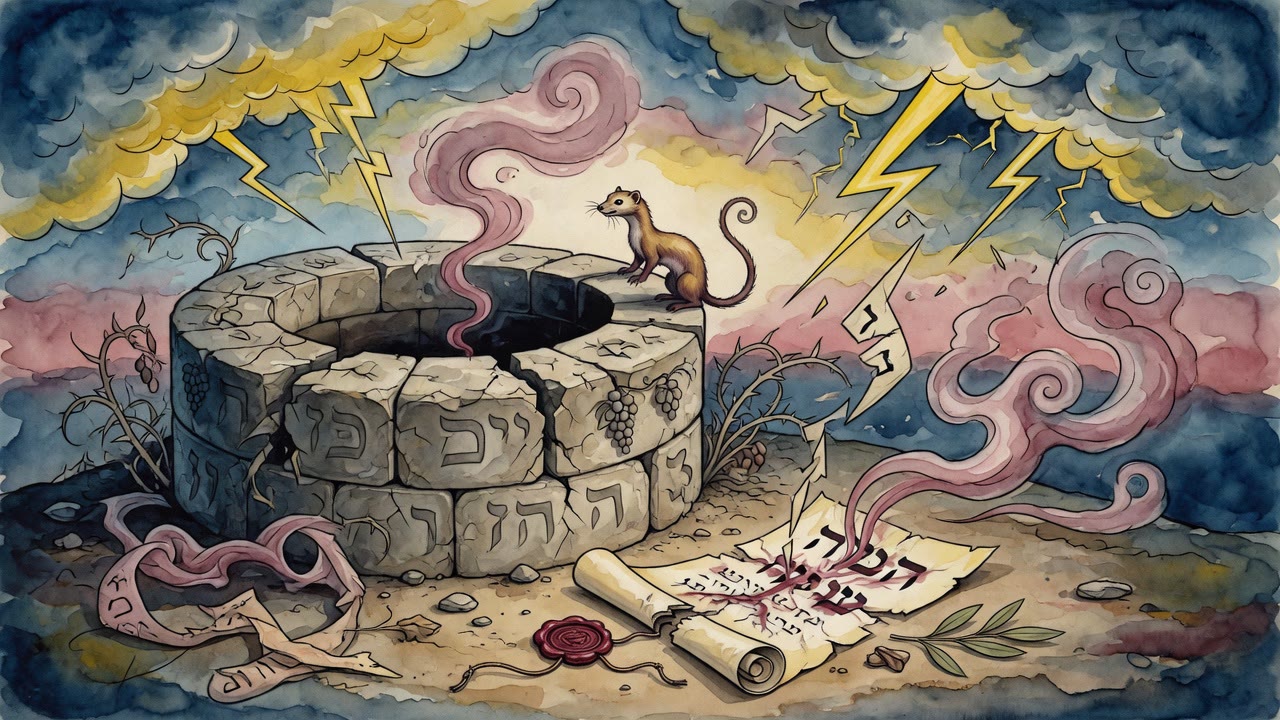
Nehemiah sent the priests with one task. Before the exile, other priests had hidden the Temple's sacred fire in a dry pit. Generations had passed. Now the exiles were back, the Temple was being rebuilt, and someone had to recover the flame that had burned on the altar since Solomon's dedication. Without it, what fire would they use? What continuity would the new service have to the old one?
The priests dug. They searched. They did not find fire.
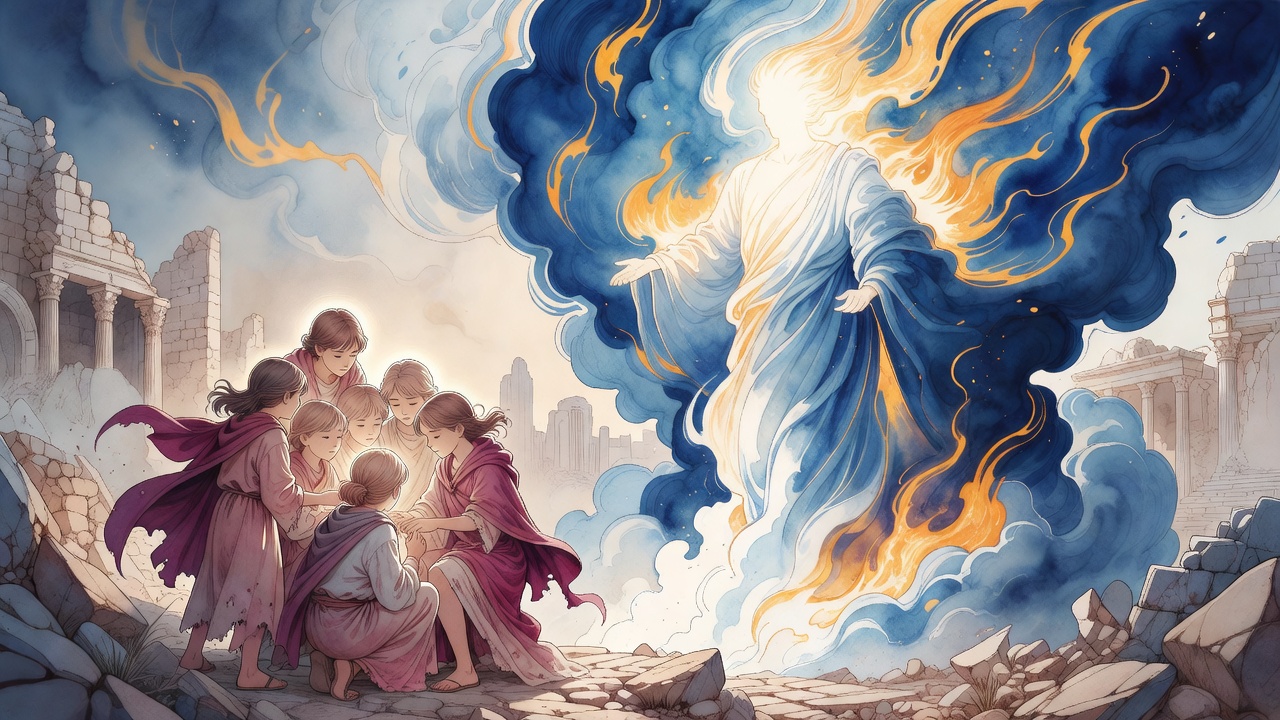
They found thick water instead. A viscous, dark liquid sitting at the bottom of the pit. Naphtha, by some accounts. Something wet and unlikely, the opposite of the brightness they had come to retrieve. For a people trying to rebuild after rupture, there is no crueler discovery. The sign of continuity had become liquid. The inheritance was gone. What they needed was not there, and what was there was nothing they had asked for.
Nehemiah Orders Them to Pour It
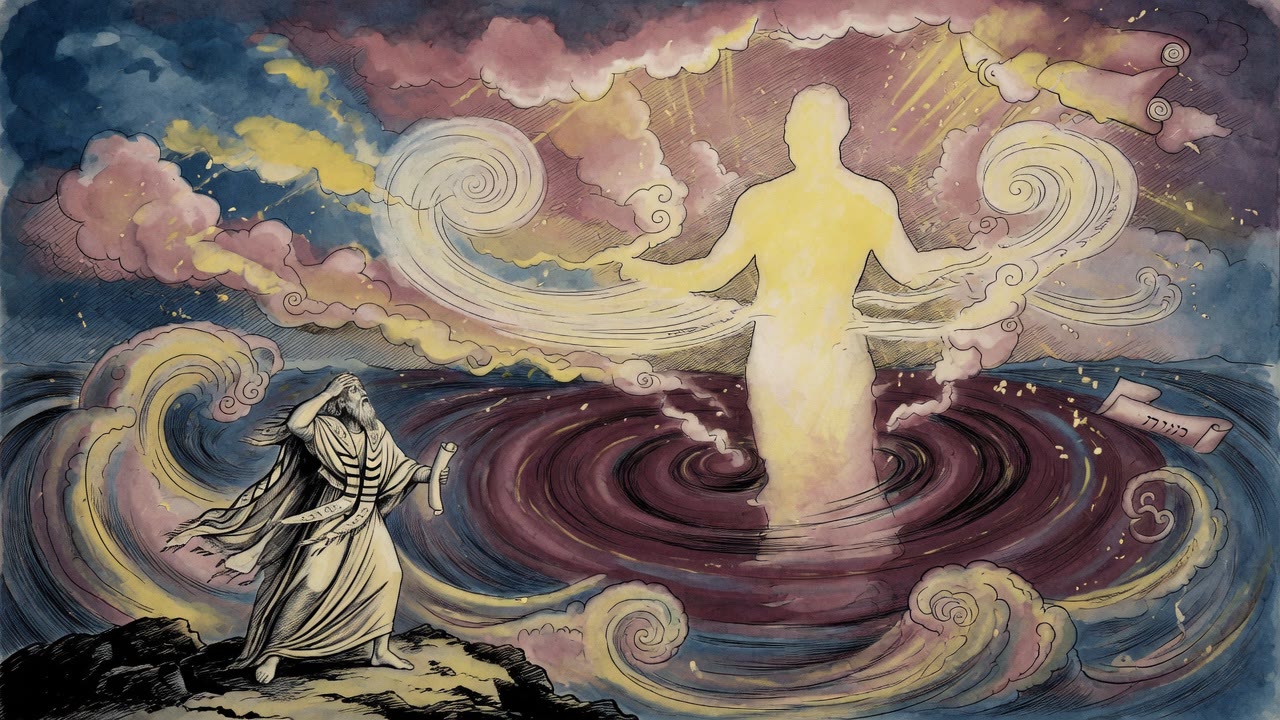
He did not send them back to look again. He told them to draw the water up and carry it to the altar and pour it over the wood and the sacrifice. That was the whole instruction. Take the disappointing thing. Treat it as if it still contains what you came for. Act as if the fire is inside the water, waiting.
This is what leadership looked like in the moment of return. Not certainty. Not the triumphant recovery of a lost treasure. Refusal to discard the strange thing that memory had returned. Nehemiah had no proof the water would do anything. He had only the conviction that the pit had once held fire, and the pit had given back this, and that the connection between the two was real even if it was invisible.
The Fire Came Out
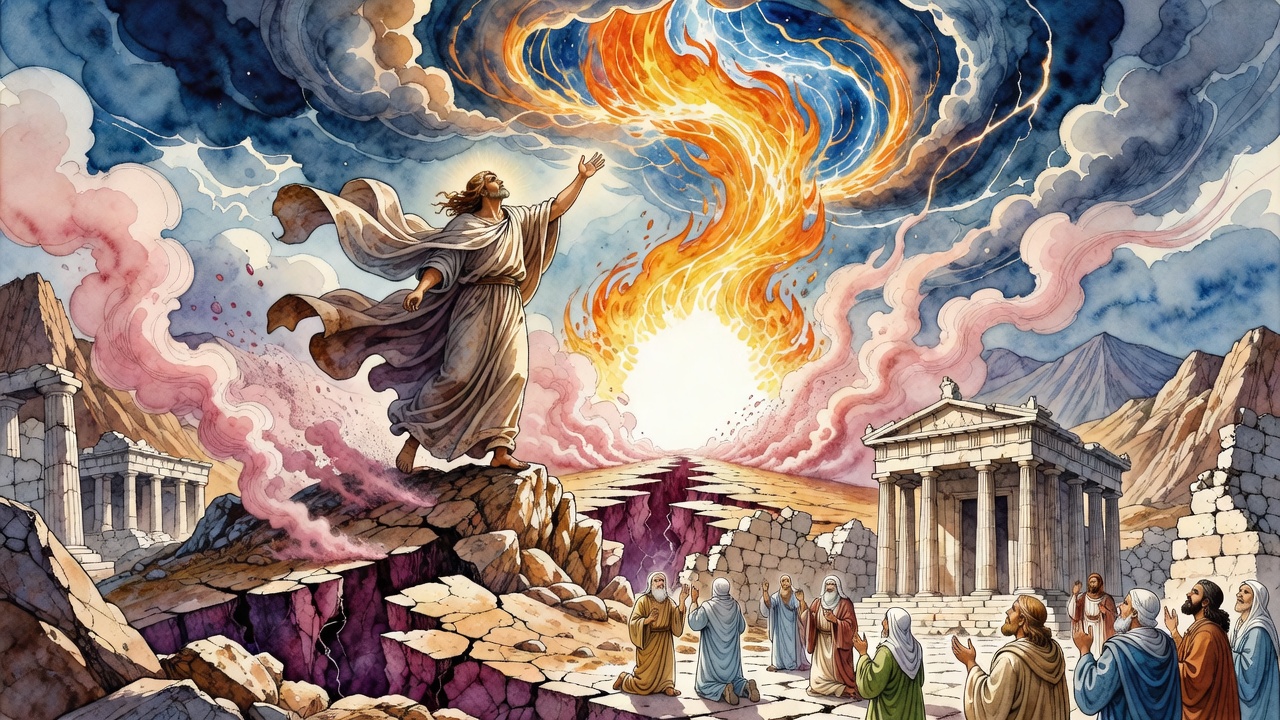
When the sun came out and fell on the altar, the water ignited. The sacrifice consumed itself in a flame that had no ordinary explanation. Nehemiah ordered the remaining water poured onto the ground, and the same thing happened. Another fire rose where liquid had been. Word reached the Persian king, who investigated and ordered the site enclosed and declared sacred. What had been a pit of hidden darkness was recognized by the empire as a place of divine power.
The Chronicles of Jerahmeel adds another thread to the restoration. When Zerubbabel won a riddle contest before King Darius, he asked not for treasure but for the promise that Cyrus had made to God: let the Jews return, let the Temple be rebuilt, let the sacred vessels be restored. Darius issued a decree to every governor in the region. Even the Edomites, who had helped the Chaldeans burn the first Temple, were ordered to contribute. Restoration required enemies to participate in repair.
The Fire That Started It All
The second book of Maccabees reaches further back to explain why the altar fire mattered so much. At the dedication of Solomon's Temple, fire had fallen from heaven and consumed the sacrifice. Not ordinary fire, kindled by priests with torches. A fire that descended. That original fire was the sign of divine acceptance, the moment when God answered the sacrifice with flame from above and the whole people fell on their faces.
Every altar fire afterward carried that origin inside it. When Nehemiah's thick water burst into flame, the claim being made was not only that the liquid had unusual chemical properties. It was that the fire of Solomon's dedication had survived in hidden form through the generations of exile, waiting in a dry pit, compressed into something wet and unrecognizable, until a moment of trust brought it back out.
← All myths